



Wenjie Luo
@wjnyc.bsky.social
Alzheimer’s disease researcher, microglia, lipid, tau, inflammation
Reposted by Wenjie Luo
RESEARCH | M Giera, @rikvanderkant.bsky.social et al (LUMC, VU; NL)
Neurolipid Atlas- lipidomic insights into neurodegenerative diseases e.g. cholesterol's role in Alzheimer’s disease 🧪
Neurolipid Atlas- lipidomic insights into neurodegenerative diseases e.g. cholesterol's role in Alzheimer’s disease 🧪
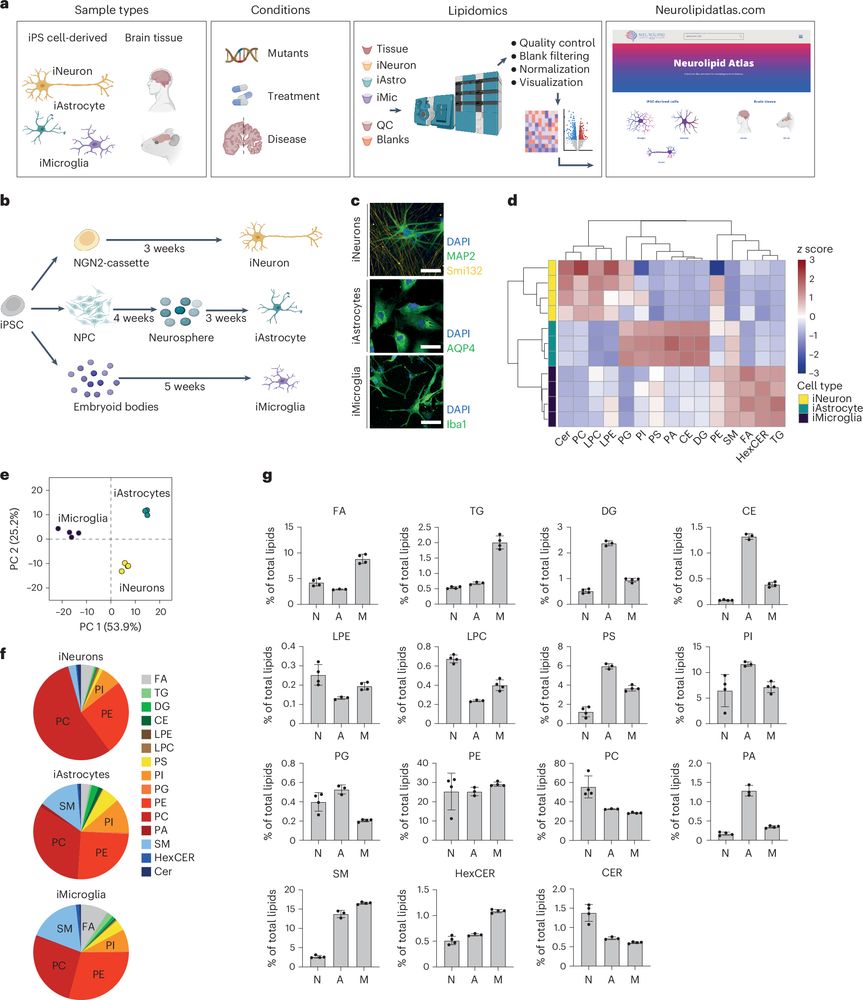
The Neurolipid Atlas: a lipidomics resource for neurodegenerative diseases - Nature Metabolism
The authors introduce the Neurolipid Atlas, a dynamic resource for the community to gain insight into lipid alterations in neurodegenerative disease, and they leverage the platform to show how cholesterol alterations in astrocytes can dysregulate neuroinflammatory pathways in Alzheimer disease.
bit.ly
November 16, 2025 at 4:45 PM
RESEARCH | M Giera, @rikvanderkant.bsky.social et al (LUMC, VU; NL)
Neurolipid Atlas- lipidomic insights into neurodegenerative diseases e.g. cholesterol's role in Alzheimer’s disease 🧪
Neurolipid Atlas- lipidomic insights into neurodegenerative diseases e.g. cholesterol's role in Alzheimer’s disease 🧪
Reposted by Wenjie Luo
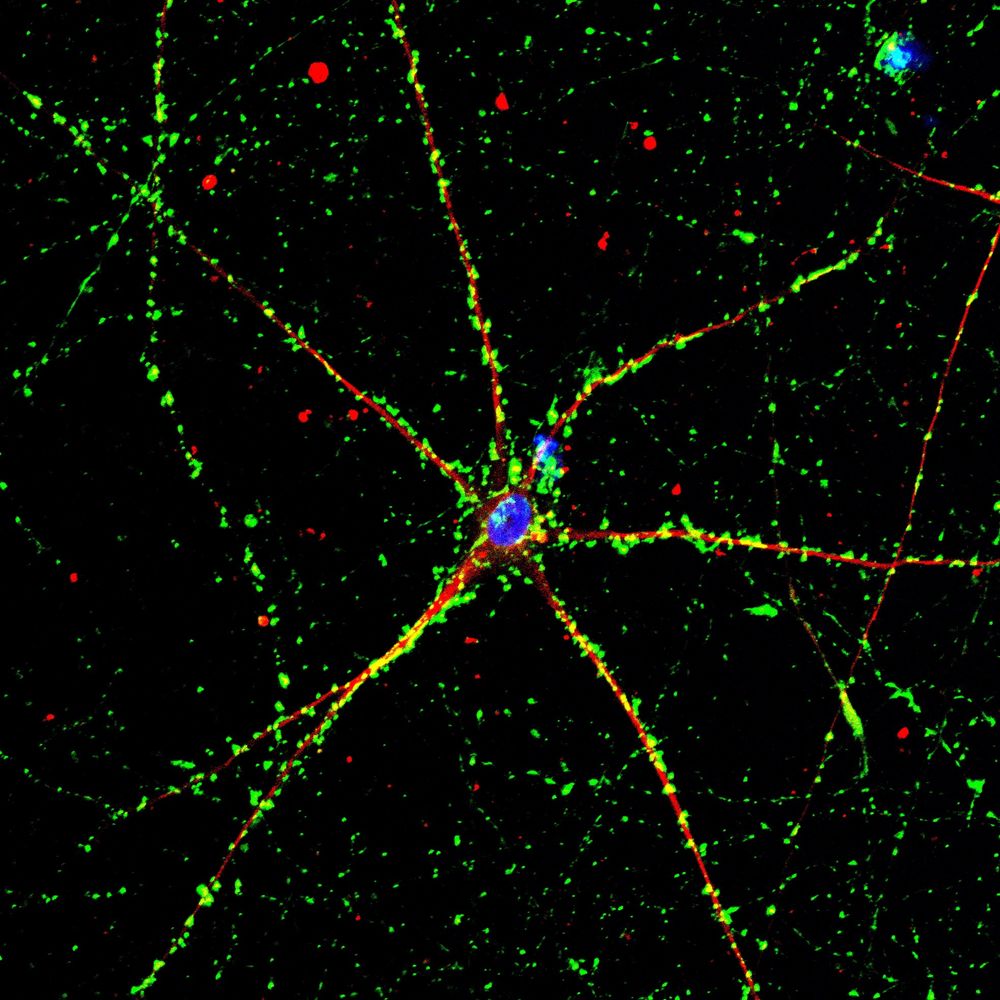
New study from Jiang group gives clues to Down syndrome patients' resilience to AD: a DS-linked myeloid mutation (CSF2RB A455D) protects engrafted human microglia against tau by suppressing harmful IFN signaling, boosting phagocytosis, & reducing microglial senescence www.nature.com/articles/s41...

A myeloid trisomy 21-associated gene variant is protective from Alzheimer’s disease - Nature Neuroscience
Engineering human microglia with a Down-syndrome-linked myeloid gene variant resists tau-induced dysfunction and protects neurons in chimeric brains, offering proof of concept for transformative micro...
www.nature.com
November 26, 2025 at 10:16 PM
New study from Jiang group gives clues to Down syndrome patients' resilience to AD: a DS-linked myeloid mutation (CSF2RB A455D) protects engrafted human microglia against tau by suppressing harmful IFN signaling, boosting phagocytosis, & reducing microglial senescence www.nature.com/articles/s41...
Reposted by Wenjie Luo
🍁Feeling grateful. Happy Thanksgiving from the Gan lab & Appel Institute!🍁

November 26, 2025 at 7:49 PM
🍁Feeling grateful. Happy Thanksgiving from the Gan lab & Appel Institute!🍁
Always excited to see my colleagues pushing the limits of technology-congrats to @hagentilgner.bsky.social @liganlab.bsky.social
New from Tilgner & Gan labs: Using ScISOr–ATAC, we found that splicing patterns differ across cell states within the same cell type in frozen primate cortex, and that oligodendrocytes in Alzheimer’s show high dysregulation in splicing & chromatin. Read more: www.nature.com/articles/s41...
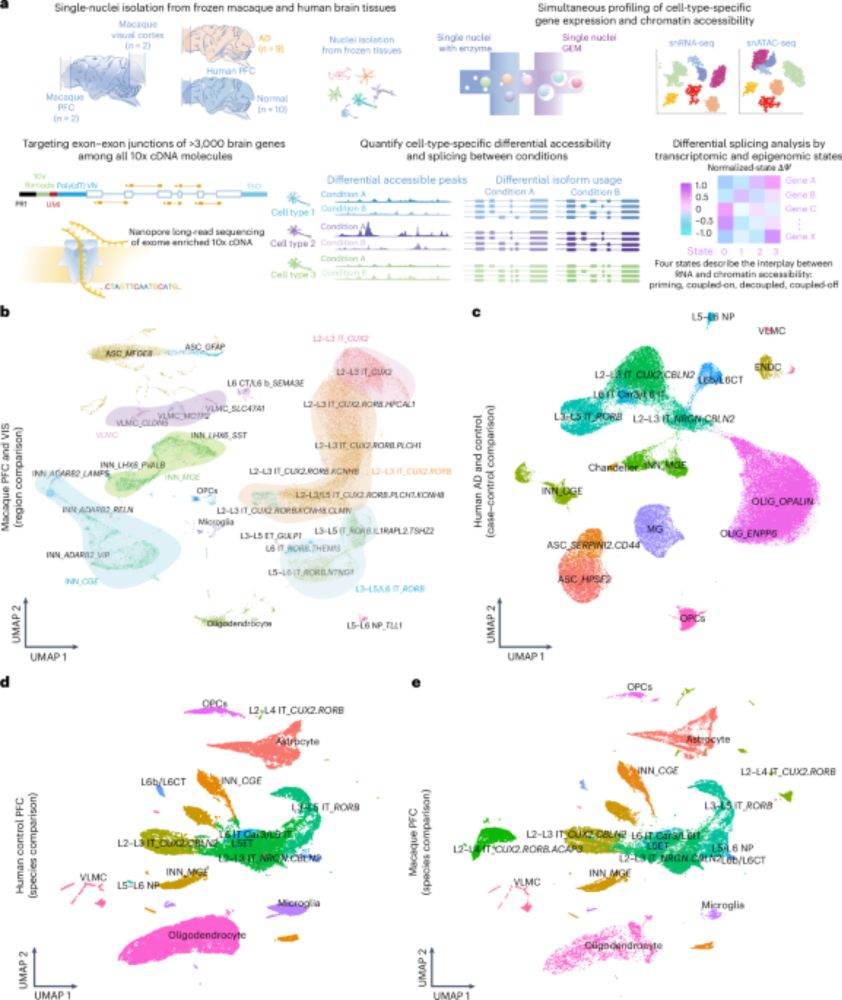
Combined single-cell profiling of chromatin–transcriptome and splicing across brain cell types, regions and disease state - Nature Biotechnology
Joint profiling of chromatin and splicing in the brain uncovers shared and distinct patterns.
www.nature.com
July 23, 2025 at 5:09 PM
Always excited to see my colleagues pushing the limits of technology-congrats to @hagentilgner.bsky.social @liganlab.bsky.social
Reposted by Wenjie Luo
🚨Our new paper is out!🚨 We uncover a protective mechanism of the rare APOE3 Christchurch (R136S) mutation against tauopathy—by suppressing microglial cGAS–STING–interferon (IFN) pathway, a key inflammatory axis triggered by tau. www.sciencedirect.com/science/arti...
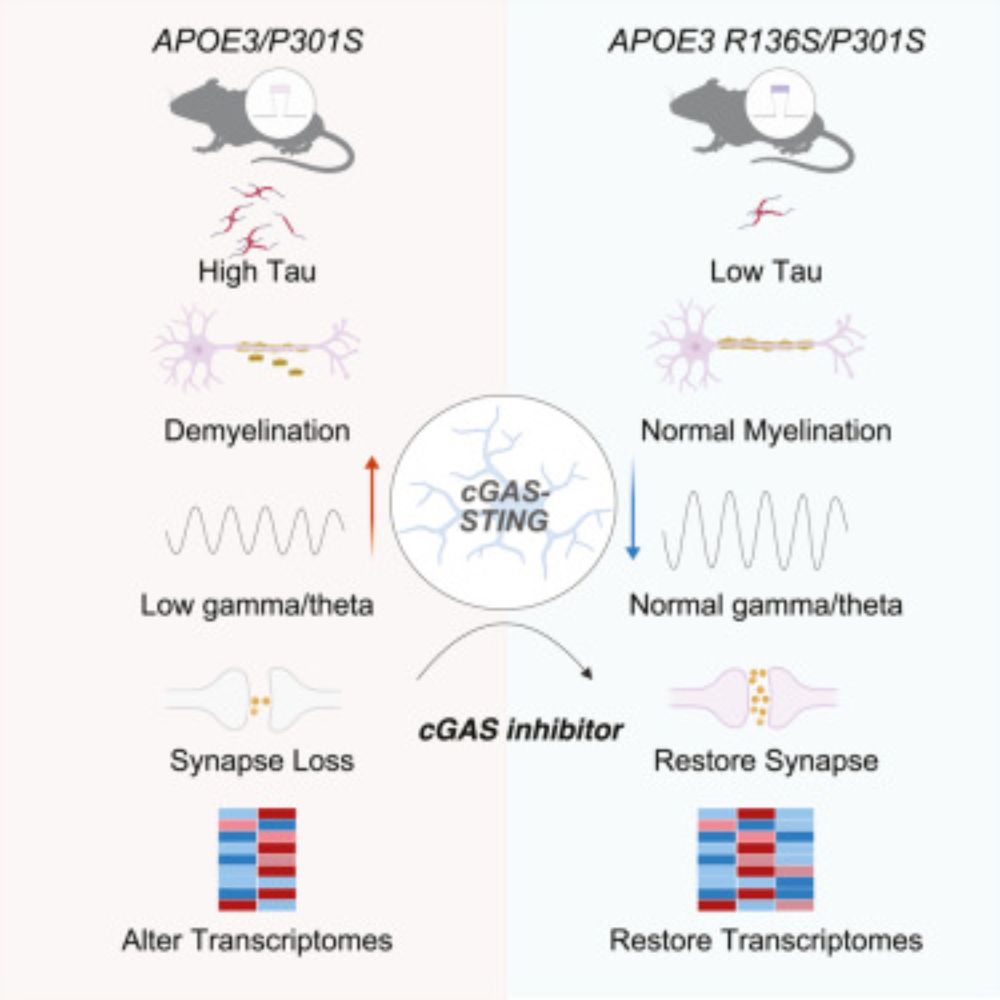
The R136S mutation in the APOE3 gene confers resilience against tau pathology via inhibition of the cGAS-STING-IFN pathway
The Christchurch mutation (R136S) in the APOE3 (E3S/S) gene is associated with attenuated tau load and cognitive decline despite the presence of a cau…
www.sciencedirect.com
June 24, 2025 at 12:58 PM
🚨Our new paper is out!🚨 We uncover a protective mechanism of the rare APOE3 Christchurch (R136S) mutation against tauopathy—by suppressing microglial cGAS–STING–interferon (IFN) pathway, a key inflammatory axis triggered by tau. www.sciencedirect.com/science/arti...
A fantastic two-days NYAS conference with a stellar lineup of researchers leading the field. Looking forward to next event in person!

April 30, 2025 at 12:35 AM
A fantastic two-days NYAS conference with a stellar lineup of researchers leading the field. Looking forward to next event in person!
Reposted by Wenjie Luo

Investing in Alzheimer’s and dementia research, gives scientists the tools they need to better understand how to prevent, detect, diagnose and treat dementia.
Ask Congress to increase research funding at the NIH by an additional $113.485 million: bit.ly/42ze7l0.
Ask Congress to increase research funding at the NIH by an additional $113.485 million: bit.ly/42ze7l0.

April 16, 2025 at 6:21 PM
Investing in Alzheimer’s and dementia research, gives scientists the tools they need to better understand how to prevent, detect, diagnose and treat dementia.
Ask Congress to increase research funding at the NIH by an additional $113.485 million: bit.ly/42ze7l0.
Ask Congress to increase research funding at the NIH by an additional $113.485 million: bit.ly/42ze7l0.
Reposted by Wenjie Luo
A CSF proteomics study in Nature Medicine of 3,397 individuals identified synaptic proteins YWHAG:NPTX2 as key correlates of cognitive impairment in AD, highlighting synapse dysfunction as a core driver of AD dementia. #Alzheimers #Proteomics #Neurodegeneration www.nature.com/articles/s41...
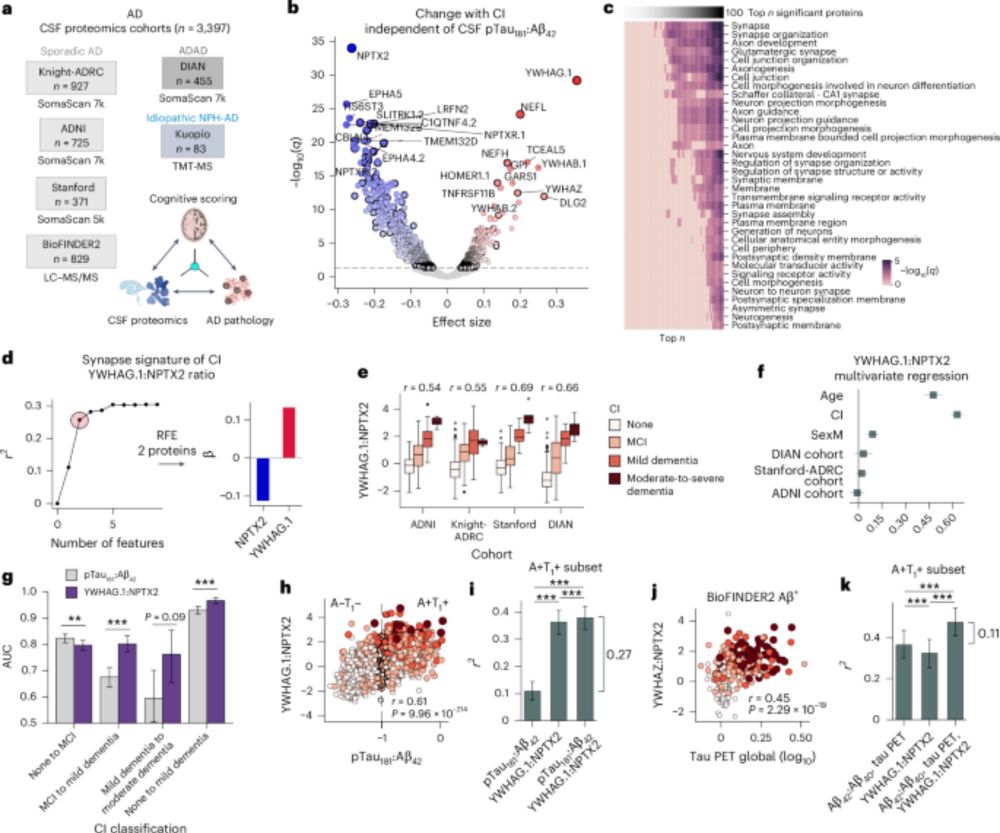
A cerebrospinal fluid synaptic protein biomarker for prediction of cognitive resilience versus decline in Alzheimer’s disease - Nature Medicine
The ratio between the levels of two synaptic proteins in cerebrospinal fluid predicts future cognitive resilience versus decline among presymptomatic individuals and individuals with early Alzheimer’s...
www.nature.com
April 4, 2025 at 4:23 PM
A CSF proteomics study in Nature Medicine of 3,397 individuals identified synaptic proteins YWHAG:NPTX2 as key correlates of cognitive impairment in AD, highlighting synapse dysfunction as a core driver of AD dementia. #Alzheimers #Proteomics #Neurodegeneration www.nature.com/articles/s41...
Reposted by Wenjie Luo
Fascinating study from Nature reveals crosstalk between mitochondrial translation, ROS activity, and the membrane retromer complex. www.nature.com/articles/s41...
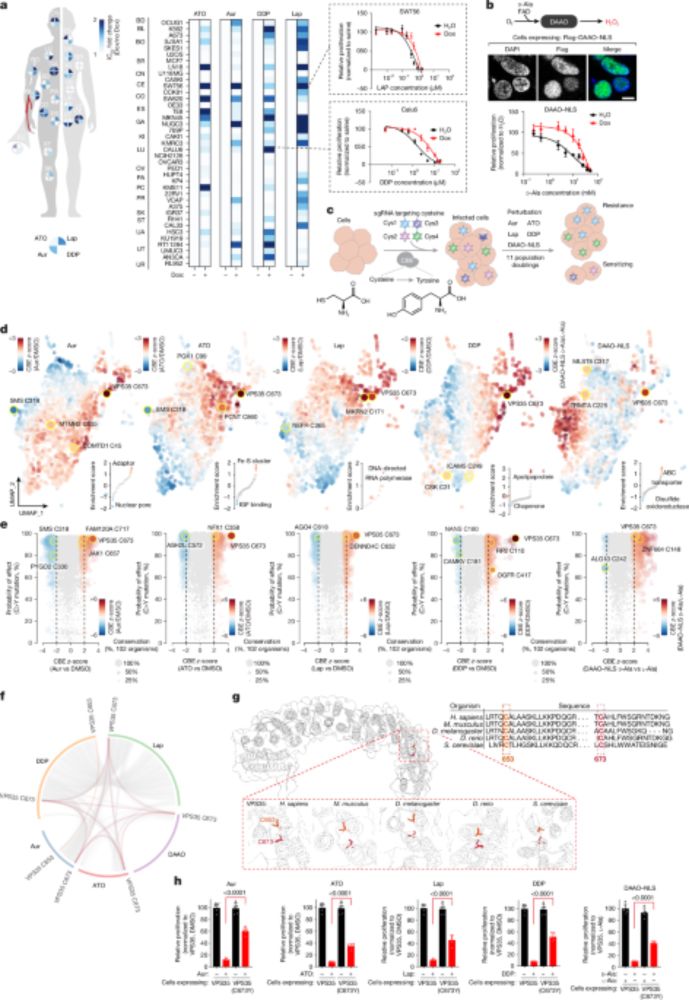
Oxidation of retromer complex controls mitochondrial translation - Nature
Systematic base-editing and computational screens identify specific cysteine residues on VPS35 in the retromer complex as key sensors that decrease mitochondrial translation in response to reactive ox...
www.nature.com
April 4, 2025 at 5:26 PM
Fascinating study from Nature reveals crosstalk between mitochondrial translation, ROS activity, and the membrane retromer complex. www.nature.com/articles/s41...