



Brooke Simmons
@vrooje.net
Professor of Astrophysics: Galaxies, Black Holes, the Changing Sky. Also Zooniverse humanitarian and disaster relief lead. People first, then science. She/her
Pinned
Brooke Simmons
@vrooje.net
· Oct 18
Hello Bluesky people. I’ve given up on the idea I will be a pithy prolific poster, and mainly I like to amplify other voices and congratulate people on their wins big and small. Post your good news and if I see it I’m gonna be there telling you you rock. Because you do. Hi.
Hello new followers! The below is basically still how I use this site, though I’ve since added “repost @allthegalaxies.galaxyzoo.org images in appreciation” to the rotation. Sometimes that contains science. Sometimes it’s just “ooh pretty”, which astronomers absolutely do too with space pics 🧪🔭
It is time for universities — not just staff and student unions, but the senior management too — to admit out loud that this government is actively trying to make universities fail. We *all* need to come together and collectively try to fight their attempts to loot and pillage.

i: Reeves to unveil £600m raid on foreign student
university fees #TomorrowsPapersToday
university fees #TomorrowsPapersToday

November 24, 2025 at 10:25 AM
It is time for universities — not just staff and student unions, but the senior management too — to admit out loud that this government is actively trying to make universities fail. We *all* need to come together and collectively try to fight their attempts to loot and pillage.
We are live for a crisis mapping project post-Melissa! Excellent thread by Izzy below on the details and how to join ( planetaryresponsenetwork.org )
A lot of the methods we use to accurately crowdsource this mapping are derived from astrophysics citizen science work like @galaxyzoo.org 🔭🌎
A lot of the methods we use to accurately crowdsource this mapping are derived from astrophysics citizen science work like @galaxyzoo.org 🔭🌎
🧪 One of the groups I'm in does disaster relief, and we're mobilising for Hurricane Melissa.
Short version, go to www.zooniverse.org/projects/ali..., help classify images of the aftermath, multiple people look at each image, we make maps and send them to rescue workers!
Share if you can!!
Short version, go to www.zooniverse.org/projects/ali..., help classify images of the aftermath, multiple people look at each image, we make maps and send them to rescue workers!
Share if you can!!

Zooniverse
The Zooniverse is the world’s largest and most popular platform for people-powered research.
www.zooniverse.org
November 6, 2025 at 3:54 PM
We are live for a crisis mapping project post-Melissa! Excellent thread by Izzy below on the details and how to join ( planetaryresponsenetwork.org )
A lot of the methods we use to accurately crowdsource this mapping are derived from astrophysics citizen science work like @galaxyzoo.org 🔭🌎
A lot of the methods we use to accurately crowdsource this mapping are derived from astrophysics citizen science work like @galaxyzoo.org 🔭🌎
This is on the rise as large projects with large teams become more common.
When I was a postdoc I separated my CV publist into “led and supervised”, “major contributor”, and “team contributor” sub-lists. When I’m reading CVs for a job panel, I appreciate similar sub-structures.
When I was a postdoc I separated my CV publist into “led and supervised”, “major contributor”, and “team contributor” sub-lists. When I’m reading CVs for a job panel, I appreciate similar sub-structures.

So I’m reviewing *post doc applications* and so far I’ve seen multiple applications with 30-80 papers. Astronomy what are you doing.
November 1, 2025 at 10:25 AM
This is on the rise as large projects with large teams become more common.
When I was a postdoc I separated my CV publist into “led and supervised”, “major contributor”, and “team contributor” sub-lists. When I’m reading CVs for a job panel, I appreciate similar sub-structures.
When I was a postdoc I separated my CV publist into “led and supervised”, “major contributor”, and “team contributor” sub-lists. When I’m reading CVs for a job panel, I appreciate similar sub-structures.
Reposted by Brooke Simmons

Mathematician Karl Weierstrass was born #OTD, Halloween, in 1815. 🧪 🎃
The fools at The Academy all said he was mad, but he showed them all in 1872 when he announced that he had created a MONSTER. Let's learn about the terrible thing he did.
Image: Smithsonian Institution Libraries
The fools at The Academy all said he was mad, but he showed them all in 1872 when he announced that he had created a MONSTER. Let's learn about the terrible thing he did.
Image: Smithsonian Institution Libraries

October 31, 2025 at 5:04 PM
Mathematician Karl Weierstrass was born #OTD, Halloween, in 1815. 🧪 🎃
The fools at The Academy all said he was mad, but he showed them all in 1872 when he announced that he had created a MONSTER. Let's learn about the terrible thing he did.
Image: Smithsonian Institution Libraries
The fools at The Academy all said he was mad, but he showed them all in 1872 when he announced that he had created a MONSTER. Let's learn about the terrible thing he did.
Image: Smithsonian Institution Libraries
When I was leading an interdisciplinary collaboration and my name would have been last for “funded this” reasons, I happily ceded that position to a valued colleague whose field elevates last authorship (mine doesn’t).
It was a win-win at the time, which Google will now punish me for? Coolcoolcool
It was a win-win at the time, which Google will now punish me for? Coolcoolcool

🧪For those of us who do complex collaborations with multiple corresponding authors this is terrible . I suspect it will also hit female authors disproportionately as they tend to have more collaborations across fields…https://www.nature.com/articles/d41586-025-03281-4

Google Scholar tool gives extra credit to first and last authors
Researchers welcome the initiative, but say it doesn’t go far enough to capture the nuance of researcher productivity and impact.
www.nature.com
October 26, 2025 at 12:24 PM
When I was leading an interdisciplinary collaboration and my name would have been last for “funded this” reasons, I happily ceded that position to a valued colleague whose field elevates last authorship (mine doesn’t).
It was a win-win at the time, which Google will now punish me for? Coolcoolcool
It was a win-win at the time, which Google will now punish me for? Coolcoolcool
Forgot to add the 🔭 🧪 for the feeds, and ran out of characters to note in this reply that this would all be happening as we get cooked by the photosphere of the Sun as it expands into its Red Giant phase
If the Milky Way collides with Andromeda in ~5 Gyr, it will initially look a lot like this. And scientists have images simulating the sky from Earth (about 3 minutes in) youtu.be/qnYCpQyRp-4?...
Our own @drbecky.bsky.social has a video on the possible collision too: youtu.be/BxylLJj5y4s?...
Our own @drbecky.bsky.social has a video on the possible collision too: youtu.be/BxylLJj5y4s?...

Milky Way Versus Andromeda As Seen from Earth
YouTube video by SpaceRip
youtu.be
September 7, 2025 at 12:37 AM
Forgot to add the 🔭 🧪 for the feeds, and ran out of characters to note in this reply that this would all be happening as we get cooked by the photosphere of the Sun as it expands into its Red Giant phase
Reposted by Brooke Simmons
Me: this is great, glad to see authors ripped off by AI getting their due.
Me after using the search tool: I am one of these ripped off authors.
Academics, it only takes a minute. Seven of my papers are in this and I had no idea.
Me after using the search tool: I am one of these ripped off authors.
Academics, it only takes a minute. Seven of my papers are in this and I had no idea.

There are tons of graphic novels, academic papers, film and TV scripts, & prose novels/nonfiction on the LibGen list Anthropic used.
As settlement approaches, make it easy for the class action lawyers to contact you! Here’s how
Part 1: is your work in Libgen?
www.theatlantic.com/technology/a...
As settlement approaches, make it easy for the class action lawyers to contact you! Here’s how
Part 1: is your work in Libgen?
www.theatlantic.com/technology/a...
Search LibGen, the Pirated-Books Database That Meta Used to Train AI
Millions of books and scientific papers are captured in the collection’s current iteration.
www.theatlantic.com
August 27, 2025 at 8:18 PM
Me: this is great, glad to see authors ripped off by AI getting their due.
Me after using the search tool: I am one of these ripped off authors.
Academics, it only takes a minute. Seven of my papers are in this and I had no idea.
Me after using the search tool: I am one of these ripped off authors.
Academics, it only takes a minute. Seven of my papers are in this and I had no idea.
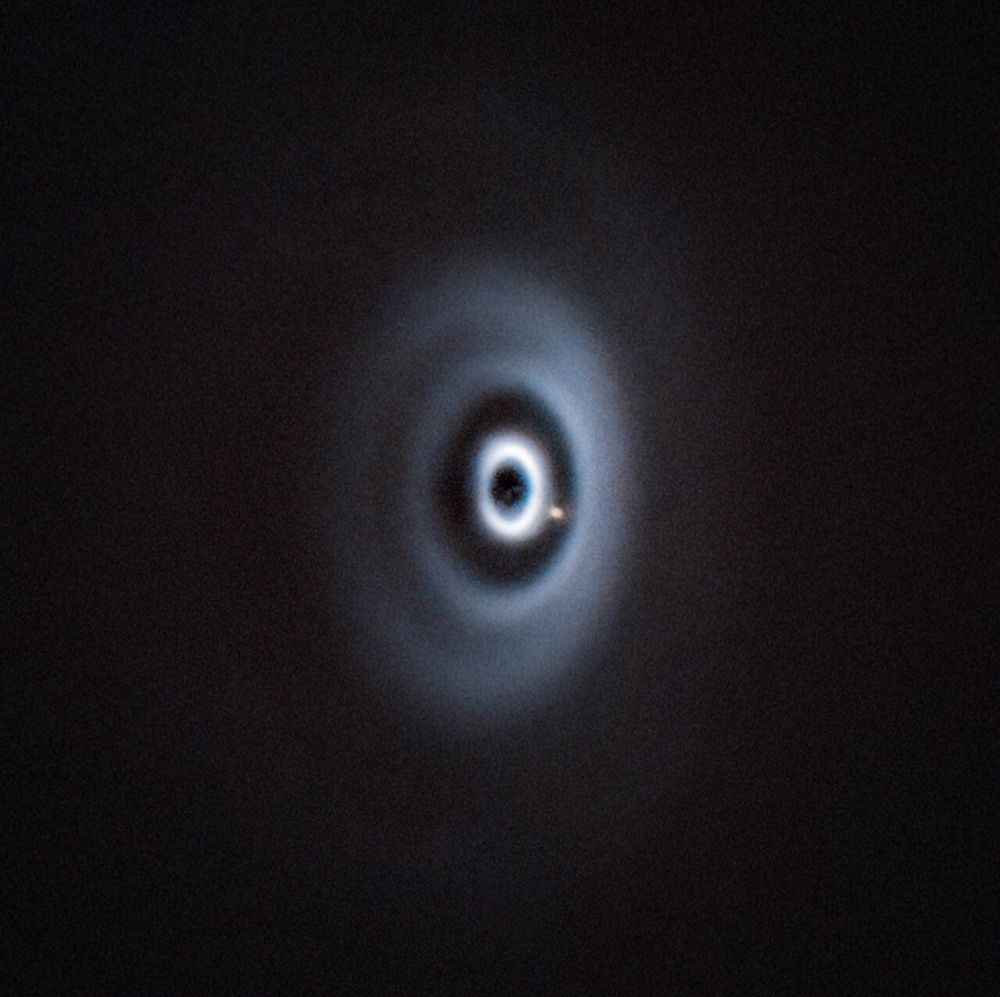
This image of a young planet clearing its orbit in the protoplanetary disk around a distant star (the star itself is obscured) is stunning. Of course it’s beautiful, but it’s also a remarkable technical achievement for the study authors, the observatory, and the instrument scientists. Well done!

A very hungry planet! 🪐
What appears to be a ripple in space is actually a newborn planet, eating its way through its dusty cradle around a younger version of our Sun 🌞
Read more: https://www.eso.org/public/images/potw2534a/
🔭 🧪 #exoplanets
📷 ESO/R. van Capelleveen et al.
What appears to be a ripple in space is actually a newborn planet, eating its way through its dusty cradle around a younger version of our Sun 🌞
Read more: https://www.eso.org/public/images/potw2534a/
🔭 🧪 #exoplanets
📷 ESO/R. van Capelleveen et al.
August 26, 2025 at 2:46 PM
This image of a young planet clearing its orbit in the protoplanetary disk around a distant star (the star itself is obscured) is stunning. Of course it’s beautiful, but it’s also a remarkable technical achievement for the study authors, the observatory, and the instrument scientists. Well done!
Reposted by Brooke Simmons

It's paper day! We use our Ōtautahi-Oxford model of the Galaxy's interstellar object population to understand the origins of 3I/ATLAS, from only its velocity
@astrohopkins.bsky.social, Dorsey, @redshiftless.bsky.social, @astrokiwi.bsky.social, @chrislintott.bsky.social & Leicester, submitted
A 🧵🔭
@astrohopkins.bsky.social, Dorsey, @redshiftless.bsky.social, @astrokiwi.bsky.social, @chrislintott.bsky.social & Leicester, submitted
A 🧵🔭

From a Different Star: 3I/ATLAS in the context of the Ōtautahi-Oxford interstellar object population model
The discovery of the third interstellar object (ISO), 3I/ATLAS (`3I'), provides a rare chance to directly observe a small body from another Solar System. Studying its chemistry and dynamics will add t...
arxiv.org
July 9, 2025 at 3:29 AM
It's paper day! We use our Ōtautahi-Oxford model of the Galaxy's interstellar object population to understand the origins of 3I/ATLAS, from only its velocity
@astrohopkins.bsky.social, Dorsey, @redshiftless.bsky.social, @astrokiwi.bsky.social, @chrislintott.bsky.social & Leicester, submitted
A 🧵🔭
@astrohopkins.bsky.social, Dorsey, @redshiftless.bsky.social, @astrokiwi.bsky.social, @chrislintott.bsky.social & Leicester, submitted
A 🧵🔭
Reposted by Brooke Simmons

I suspect that fact that the vast majority of LLM users don’t seem to have received this (really very simple!) message is because the AI companies have a vested interest in us not understanding it. “ChatGPT is smart, it just makes mistakes sometimes” is much more marketable than the truth.
Chatbots — LLMs — do not know facts and are not designed to be able to accurately answer factual questions. They are designed to find and mimic patterns of words, probabilistically. When they’re “right” it’s because correct things are often written down, so those patterns are frequent. That’s all.
June 19, 2025 at 11:36 AM
I suspect that fact that the vast majority of LLM users don’t seem to have received this (really very simple!) message is because the AI companies have a vested interest in us not understanding it. “ChatGPT is smart, it just makes mistakes sometimes” is much more marketable than the truth.
Reposted by Brooke Simmons

Reason #1 why I am 'violently angry' about AI:
A huge amount of the work to train these models has been outsourced to a hidden, low-paid African workforce. It's modern-day economic colonialism another way.
E.g.:
1. restofworld.org/2025/big-tec...
2. www.wired.com/story/low-pa...
A huge amount of the work to train these models has been outsourced to a hidden, low-paid African workforce. It's modern-day economic colonialism another way.
E.g.:
1. restofworld.org/2025/big-tec...
2. www.wired.com/story/low-pa...

The Low-Paid Humans Behind AI’s Smarts Ask Biden to Free Them From ‘Modern Day Slavery’
African workers who label AI data or screen social posts for US tech giants are calling on President Biden to raise their plight with Kenya's president, William Ruto, who visits the US this week.
www.wired.com
May 3, 2025 at 3:59 PM
Reason #1 why I am 'violently angry' about AI:
A huge amount of the work to train these models has been outsourced to a hidden, low-paid African workforce. It's modern-day economic colonialism another way.
E.g.:
1. restofworld.org/2025/big-tec...
2. www.wired.com/story/low-pa...
A huge amount of the work to train these models has been outsourced to a hidden, low-paid African workforce. It's modern-day economic colonialism another way.
E.g.:
1. restofworld.org/2025/big-tec...
2. www.wired.com/story/low-pa...
Reposted by Brooke Simmons

A new, thorough reanalysis of the data that led to claims of biosignatures on K2-18b from @luiswel.bsky.social & friends - a nicely written lesson on why this stuff is hard. They find no significant evidence for DMS, the gas the Cambridge team claimed to have found. arxiv.org/abs/2504.21788

The Challenges of Detecting Gases in Exoplanet Atmospheres
Claims of detections of gases in exoplanet atmospheres often rely on comparisons between models including and excluding specific chemical species. However, the space of molecular combinations availabl...
arxiv.org
May 1, 2025 at 3:01 AM
A new, thorough reanalysis of the data that led to claims of biosignatures on K2-18b from @luiswel.bsky.social & friends - a nicely written lesson on why this stuff is hard. They find no significant evidence for DMS, the gas the Cambridge team claimed to have found. arxiv.org/abs/2504.21788
Reposted by Brooke Simmons
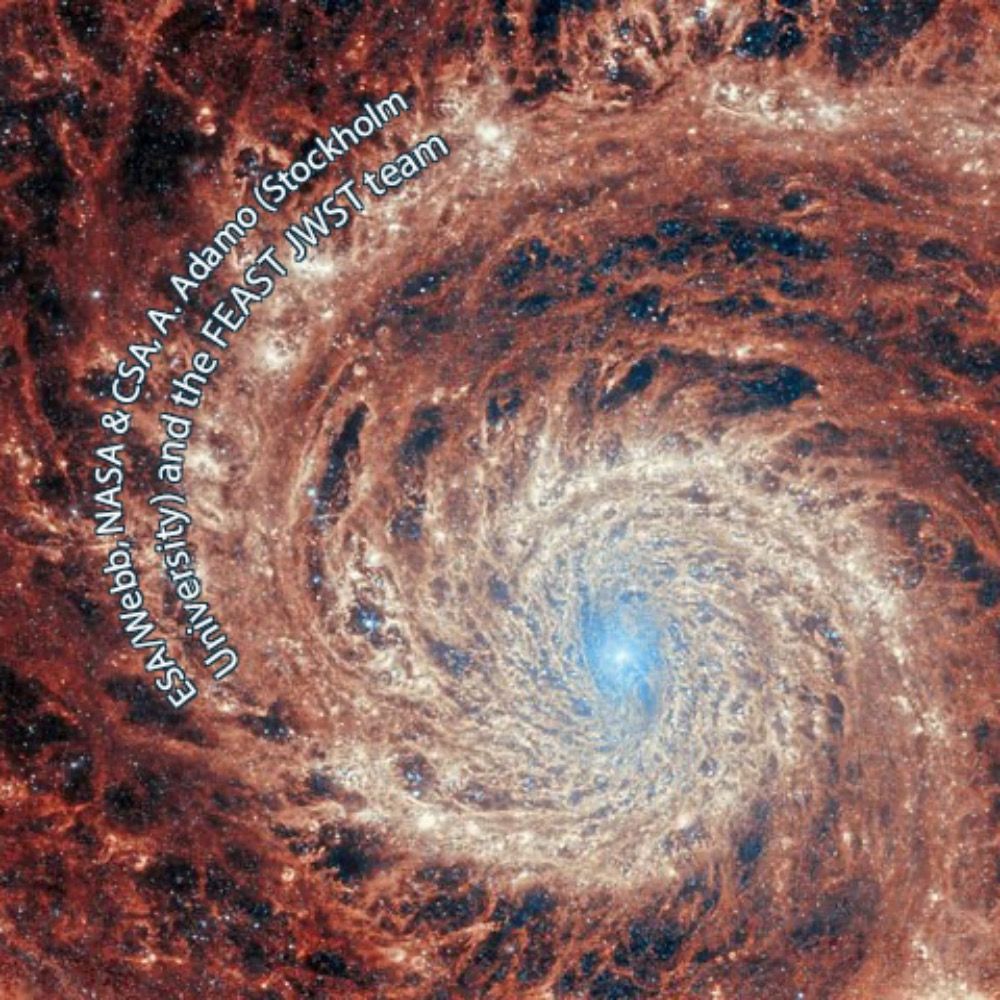
A barred spiral galaxy, observed with the Apache Point 2.5m Telescope in the SDSS survey.
It is at redshift 0.018 (lookback time 257.3 million years) with coordinates (141.53929, 49.31021).
33 volunteers classified this galaxy in Galaxy Zoo 2.
It is at redshift 0.018 (lookback time 257.3 million years) with coordinates (141.53929, 49.31021).
33 volunteers classified this galaxy in Galaxy Zoo 2.

April 16, 2025 at 8:26 PM
A barred spiral galaxy, observed with the Apache Point 2.5m Telescope in the SDSS survey.
It is at redshift 0.018 (lookback time 257.3 million years) with coordinates (141.53929, 49.31021).
33 volunteers classified this galaxy in Galaxy Zoo 2.
It is at redshift 0.018 (lookback time 257.3 million years) with coordinates (141.53929, 49.31021).
33 volunteers classified this galaxy in Galaxy Zoo 2.
Reposted by Brooke Simmons

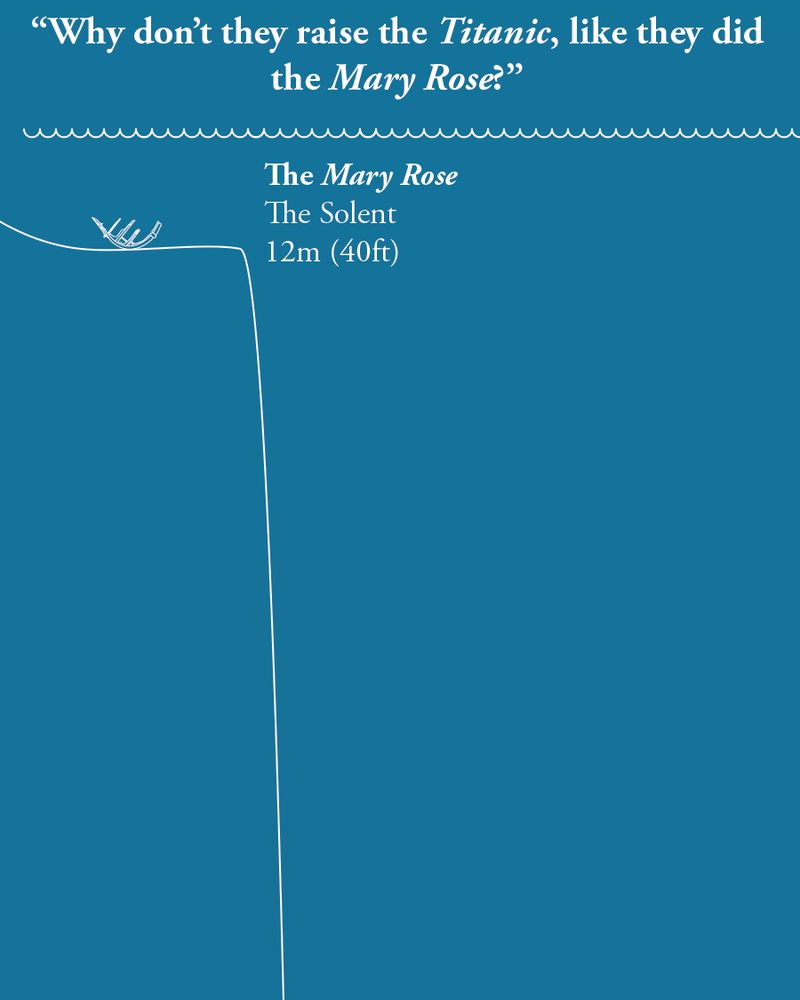
On the anniversary of the sinking of the Titanic, we thought we'd answer a question that's often asked,
"If they raised the Mary Rose, why not raise the Titanic?"
Allow our scaled diagram to explain...
"If they raised the Mary Rose, why not raise the Titanic?"
Allow our scaled diagram to explain...
April 15, 2025 at 8:21 AM
On the anniversary of the sinking of the Titanic, we thought we'd answer a question that's often asked,
"If they raised the Mary Rose, why not raise the Titanic?"
Allow our scaled diagram to explain...
"If they raised the Mary Rose, why not raise the Titanic?"
Allow our scaled diagram to explain...
Reposted by Brooke Simmons
RAS members: *please* vote in the elections (check your inbox), and please read the **CVs** of the council nominees. One has a vaguely plausible statement and a CV screed that makes clear they will be actively hostile to certain vulnerable community members. Please vote to show that isn’t us! ☄️🔭🚩🚩🚩
March 18, 2025 at 4:24 PM
RAS members: *please* vote in the elections (check your inbox), and please read the **CVs** of the council nominees. One has a vaguely plausible statement and a CV screed that makes clear they will be actively hostile to certain vulnerable community members. Please vote to show that isn’t us! ☄️🔭🚩🚩🚩
RAS members: *please* vote in the elections (check your inbox), and please read the **CVs** of the council nominees. One has a vaguely plausible statement and a CV screed that makes clear they will be actively hostile to certain vulnerable community members. Please vote to show that isn’t us! ☄️🔭🚩🚩🚩
March 18, 2025 at 4:24 PM
RAS members: *please* vote in the elections (check your inbox), and please read the **CVs** of the council nominees. One has a vaguely plausible statement and a CV screed that makes clear they will be actively hostile to certain vulnerable community members. Please vote to show that isn’t us! ☄️🔭🚩🚩🚩
Matt and Izzy both did excellent work in this paper!
It's paper day! We've been using HST data to investigate some of the most luminous AGN in the most bulgeless galaxies at low redshift. The majority of this work was done by @vrooje.net's masters student, Matthew Fahey. academic.oup.com/mnras/articl...

Structural decomposition of merger-free galaxies hosting luminous AGNs
ABSTRACT. Active galactic nucleus (AGN) growth in disc-dominated, merger-free galaxies is poorly understood, largely due to the difficulty in disentangling
academic.oup.com
February 26, 2025 at 6:35 PM
Matt and Izzy both did excellent work in this paper!
Saving this one for Valentine’s Day ❤️🧪🔭
A possible merger, observed with the Hubble Space Telescope in the CANDELS-GOODS survey.
It is at redshift 2.13 (lookback time 10.72 billion years) with coordinates (53.02066, -27.70083).
71 volunteers classified this galaxy in Galaxy Zoo CANDELS.
It is at redshift 2.13 (lookback time 10.72 billion years) with coordinates (53.02066, -27.70083).
71 volunteers classified this galaxy in Galaxy Zoo CANDELS.

January 22, 2025 at 9:04 AM
Saving this one for Valentine’s Day ❤️🧪🔭
What a beauty! So many cool features, and a background galaxy peeking through the edge of the disk. This is pretty much a textbook spiral. 🧪🔭
A spiral galaxy, observed with the Apache Point 2.5m Telescope in the SDSS survey.
It is at redshift 0.008 (lookback time 114.4 million years) with coordinates (121.85345, 39.19448).
54 volunteers classified this galaxy in Galaxy Zoo 2.
It is at redshift 0.008 (lookback time 114.4 million years) with coordinates (121.85345, 39.19448).
54 volunteers classified this galaxy in Galaxy Zoo 2.

January 19, 2025 at 9:15 PM
What a beauty! So many cool features, and a background galaxy peeking through the edge of the disk. This is pretty much a textbook spiral. 🧪🔭
Lovely example of a nearly-edge-on disk galaxy, whose features would be clearer if we viewed it from a different angle. I’m so glad we put lookback time into these posts; I love being reminded that even at z=0.34 the lookback time is almost the full age of the Sun. 🧪🔭
A galaxy with non-smooth features, observed with the Hubble Space Telescope in the COSMOS survey.
It is at redshift 0.34 (lookback time 3.91 billion years) with coordinates (150.32168, 1.61307).
52 volunteers classified this galaxy in Galaxy Zoo: Hubble.
It is at redshift 0.34 (lookback time 3.91 billion years) with coordinates (150.32168, 1.61307).
52 volunteers classified this galaxy in Galaxy Zoo: Hubble.

January 11, 2025 at 11:24 PM
Lovely example of a nearly-edge-on disk galaxy, whose features would be clearer if we viewed it from a different angle. I’m so glad we put lookback time into these posts; I love being reminded that even at z=0.34 the lookback time is almost the full age of the Sun. 🧪🔭
What a beauty. Do we think the little blue smudge is an overlapping dwarf galaxy, or a wee star-forming part of the main galaxy? Something else? 🔭🧪
A barred spiral galaxy, observed with the Hubble Space Telescope in the COSMOS survey.
It is at redshift 0.23 (lookback time 2.84 billion years) with coordinates (150.09030, 2.29384).
46 volunteers classified this galaxy in Galaxy Zoo: Hubble.
It is at redshift 0.23 (lookback time 2.84 billion years) with coordinates (150.09030, 2.29384).
46 volunteers classified this galaxy in Galaxy Zoo: Hubble.

December 28, 2024 at 3:08 PM
What a beauty. Do we think the little blue smudge is an overlapping dwarf galaxy, or a wee star-forming part of the main galaxy? Something else? 🔭🧪
Merry Christmas and Happy Hanukkah to all who celebrate, and especially to this tree-topper centrepiece beauty 🔭😍
A barred spiral galaxy, observed with the Apache Point 2.5m Telescope in the SDSS survey.
It is at redshift 0.018 (lookback time 257.3 million years) with coordinates (176.69655, 20.67542).
54 volunteers classified this galaxy in Galaxy Zoo 2.
It is at redshift 0.018 (lookback time 257.3 million years) with coordinates (176.69655, 20.67542).
54 volunteers classified this galaxy in Galaxy Zoo 2.

December 25, 2024 at 12:49 PM
Merry Christmas and Happy Hanukkah to all who celebrate, and especially to this tree-topper centrepiece beauty 🔭😍
As I gear up to do some astrophysics literature review report marking today, I’m reminded of the 4th year report I read years ago that started with the line, “Since the start of the Universe, a lot has changed.”
I hope that former student is currently living their best life. 🔭
I hope that former student is currently living their best life. 🔭
December 19, 2024 at 10:46 AM
As I gear up to do some astrophysics literature review report marking today, I’m reminded of the 4th year report I read years ago that started with the line, “Since the start of the Universe, a lot has changed.”
I hope that former student is currently living their best life. 🔭
I hope that former student is currently living their best life. 🔭
I recognise this clumpy W galaxy from the GOODS field! I don’t know how it came to look like this, but I love it anyway. Plus, stars in CANDELS look like spiky psychedelic jewels. 😍🔭
I don’t typically know specific galaxies by heart, but sometimes they’re just so distinctive that you remember them.
I don’t typically know specific galaxies by heart, but sometimes they’re just so distinctive that you remember them.
A clumpy galaxy, possibly merging, observed with the Hubble Space Telescope in the CANDELS-GOODS survey.
It is at redshift 0.95 (lookback time 7.74 billion years) with coordinates (53.15072, -27.71619).
79 volunteers classified this galaxy in Galaxy Zoo CANDELS.
It is at redshift 0.95 (lookback time 7.74 billion years) with coordinates (53.15072, -27.71619).
79 volunteers classified this galaxy in Galaxy Zoo CANDELS.

December 18, 2024 at 10:53 PM
I recognise this clumpy W galaxy from the GOODS field! I don’t know how it came to look like this, but I love it anyway. Plus, stars in CANDELS look like spiky psychedelic jewels. 😍🔭
I don’t typically know specific galaxies by heart, but sometimes they’re just so distinctive that you remember them.
I don’t typically know specific galaxies by heart, but sometimes they’re just so distinctive that you remember them.
Reposted by Brooke Simmons

There's so much stuff on our social media timelines that we scroll past quickly, maybe with a "oh cool" and then moving on, but if you stop and think about what you are seeing here, it's really amazing.
You're watching a high-resolution panorama view from *another* *world*.
Wow. Just wow. 🔭
You're watching a high-resolution panorama view from *another* *world*.
Wow. Just wow. 🔭

After several months of climbing up the steep slopes of the Jezero crater rim, Perseverance has reached the top!
The afternoon sun provides a spectacular view on landscape which the rover will explore soon! 🔭
Full panorama: www.360cities.net/image/marsro...
Credit: NASA/JPL-Caltech/Simeon Schmauß
The afternoon sun provides a spectacular view on landscape which the rover will explore soon! 🔭
Full panorama: www.360cities.net/image/marsro...
Credit: NASA/JPL-Caltech/Simeon Schmauß
December 13, 2024 at 12:19 AM
There's so much stuff on our social media timelines that we scroll past quickly, maybe with a "oh cool" and then moving on, but if you stop and think about what you are seeing here, it's really amazing.
You're watching a high-resolution panorama view from *another* *world*.
Wow. Just wow. 🔭
You're watching a high-resolution panorama view from *another* *world*.
Wow. Just wow. 🔭