



Syoju Endo
@syojuendo.bsky.social
PhD student in @bunsyo.bsky.social Lab, Dept. of Genome Stress Signaling at Tokyo, Japan
I'm interested in DNA replication stress and replication fork maintenance mechanism.
I'm interested in DNA replication stress and replication fork maintenance mechanism.
Very interesting result classifying replication stress tolerance mechanism.
Replication fork stalling at DNA lesions is driven by competition between damage bypass pathways
www.researchsquare.com/article/rs-8...
Replication fork stalling at DNA lesions is driven by competition between damage bypass pathways
www.researchsquare.com/article/rs-8...
Replication fork stalling at DNA lesions is driven by competition between damage bypass pathways
Replication fork stalling or slowdown is a hallmark of replication stress and can lead to DNA damage-induced fork collapse and genetic instability. Stalled replication forks must be stabilized to enab...
www.researchsquare.com
January 21, 2026 at 2:23 PM
Very interesting result classifying replication stress tolerance mechanism.
Replication fork stalling at DNA lesions is driven by competition between damage bypass pathways
www.researchsquare.com/article/rs-8...
Replication fork stalling at DNA lesions is driven by competition between damage bypass pathways
www.researchsquare.com/article/rs-8...
Reposted by Syoju Endo
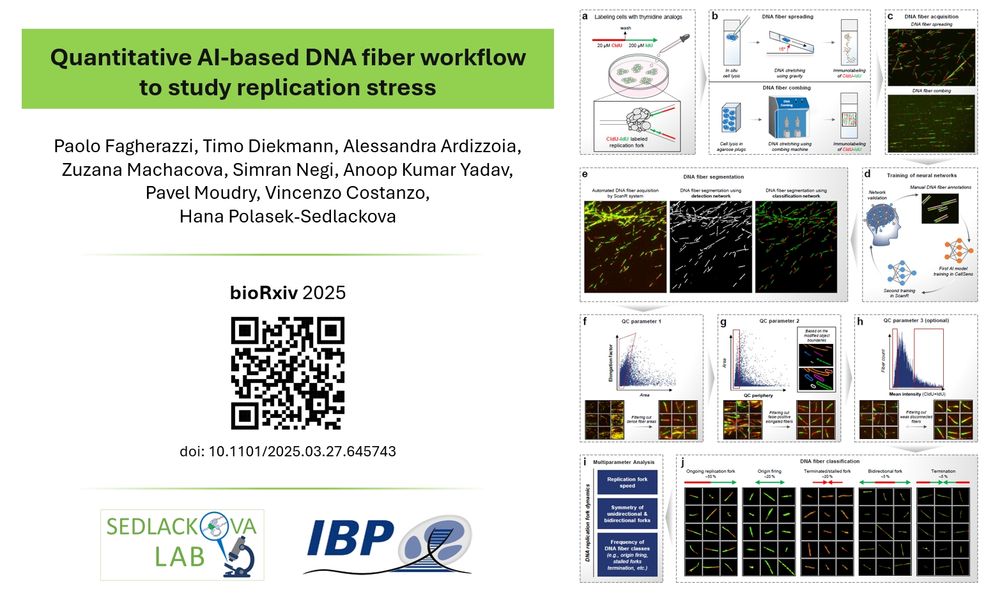
📢 For all DNA fiber enthusiasts! 🟥🟩 We are thrilled to announce the release of our long-awaited AI-based workflow for the automated and quantitative analysis of DNA fibers. It's an exciting step forward—check it out on bioRxiv! lnkd.in/dQWUPtsP
March 30, 2025 at 9:54 AM
📢 For all DNA fiber enthusiasts! 🟥🟩 We are thrilled to announce the release of our long-awaited AI-based workflow for the automated and quantitative analysis of DNA fibers. It's an exciting step forward—check it out on bioRxiv! lnkd.in/dQWUPtsP
Reposted by Syoju Endo

We are delighted to share our latest work, characterising the role of BRCA2 and its binding partner PALB2 at centromeres, just out in the latest issue of Cell Reports. ⬇️
www.cell.com/cell-reports...
www.cell.com/cell-reports...
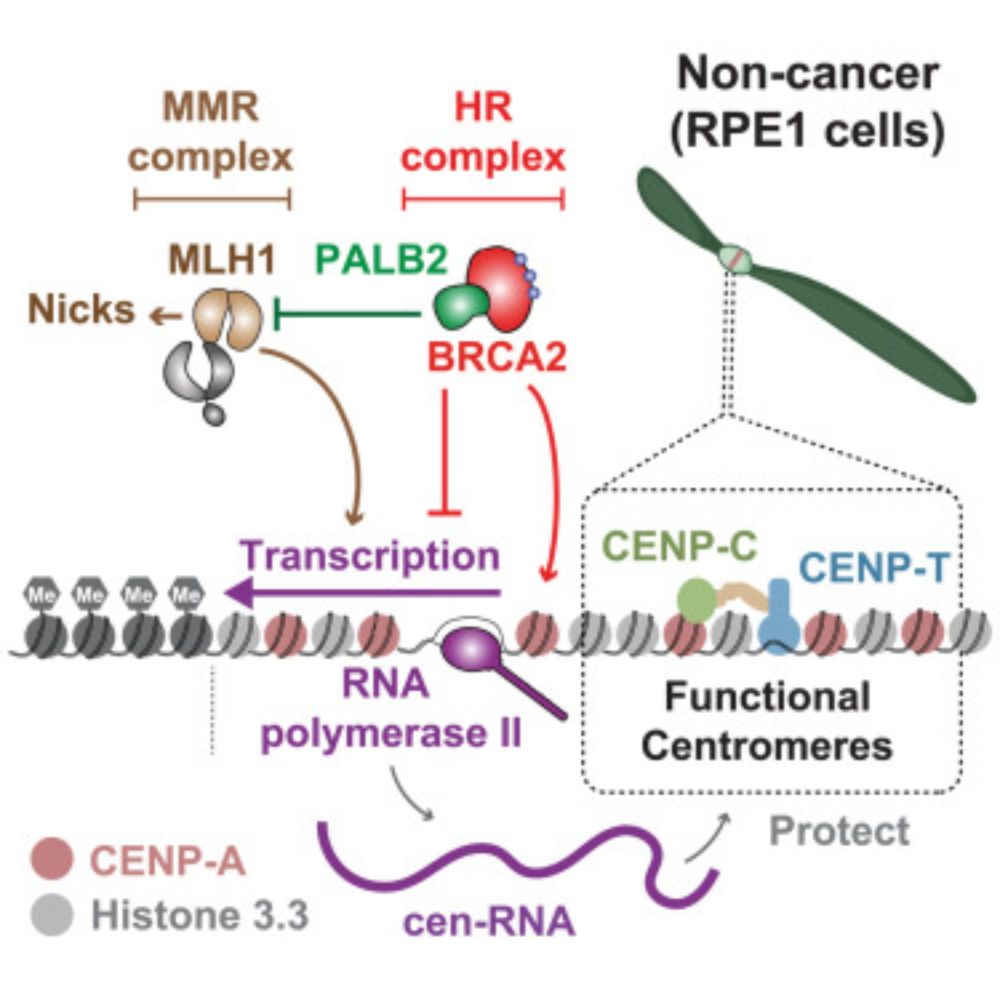
The homologous recombination factors BRCA2 and PALB2 interplay with mismatch repair pathways to maintain centromere stability and cell viability
Graham et al. demonstrate that BRCA2 and PALB2 protect centromere integrity in non-cancerous
cells through distinct mechanisms, partly counteracting the mismatch repair factor
MLH1. In cancer cells, B...
www.cell.com
February 25, 2025 at 5:56 PM
We are delighted to share our latest work, characterising the role of BRCA2 and its binding partner PALB2 at centromeres, just out in the latest issue of Cell Reports. ⬇️
www.cell.com/cell-reports...
www.cell.com/cell-reports...
Reposted by Syoju Endo
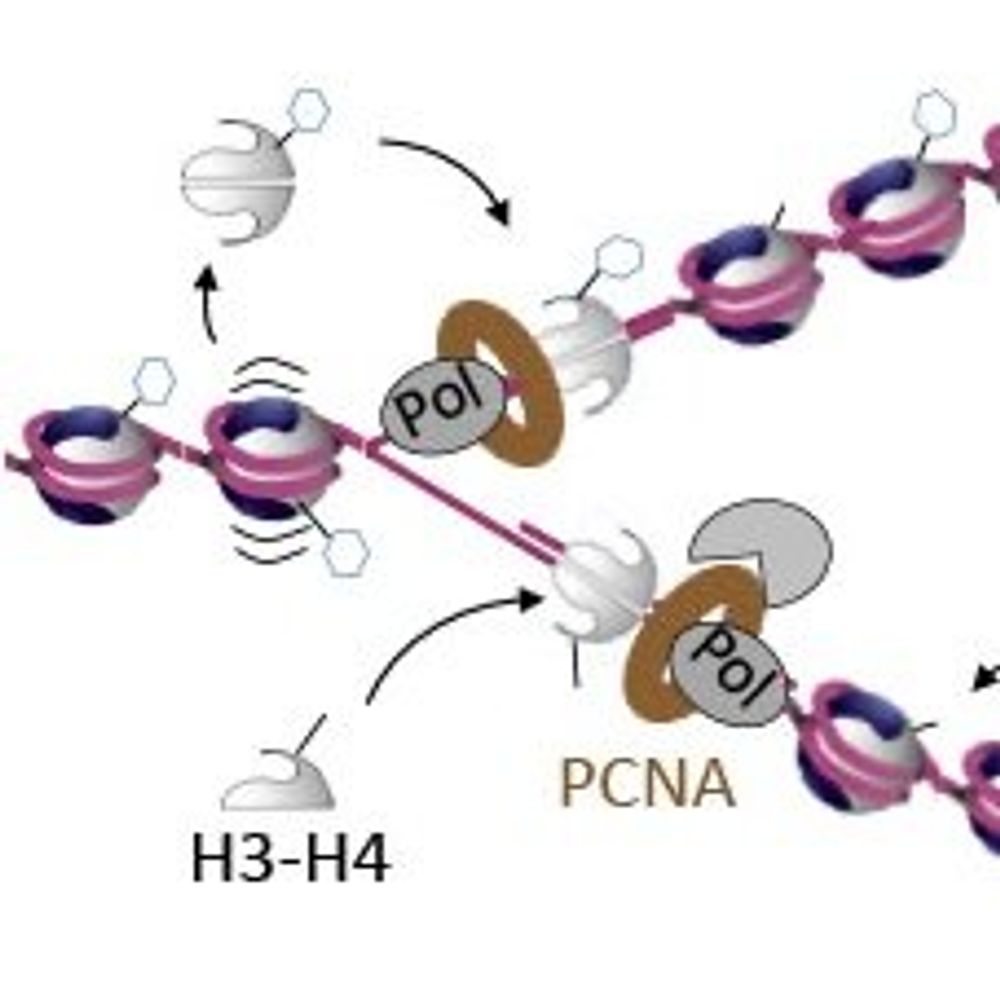
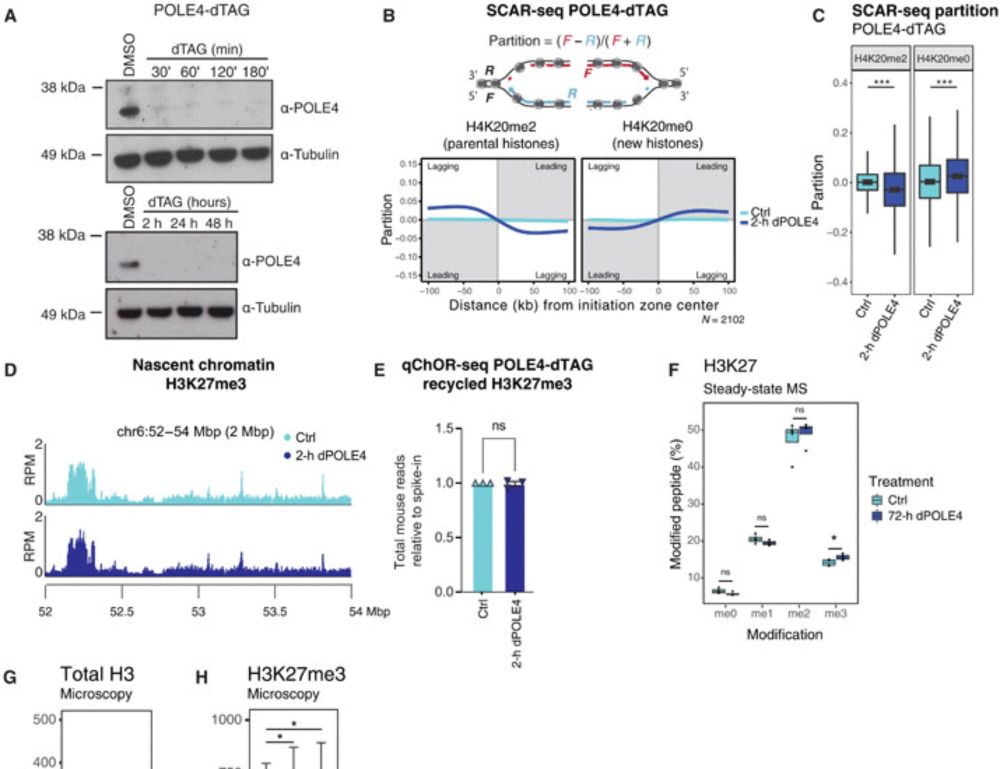
𝐇𝐨𝐰 𝐝𝐨 𝐜𝐞𝐥𝐥𝐬 𝐫𝐞𝐦𝐞𝐦𝐛𝐞𝐫 𝐰𝐡𝐨 𝐭𝐡𝐞𝐲 𝐚𝐫𝐞 𝐚𝐟𝐭𝐞𝐫 𝐃𝐍𝐀 𝐫𝐞𝐩𝐥𝐢𝐜𝐚𝐭𝐢𝐨𝐧? Our new study “Disabling leading and lagging strand histone transmission results in parental histones loss and reduced cell plasticity and viability” is out in 𝘚𝘤𝘪𝘦𝘯𝘤𝘦 𝘈𝘥𝘷𝘢𝘯𝘤𝘦𝘴. Led by @lleonie.bsky.social @biranalva.bsky.social 🧵 More below👇
Disabling leading and lagging strand histone transmission results in parental histones loss and reduced cell plasticity and viability
Losing parental histones during DNA replication fork passage challenges differentiation competence and cell viability.
tinyurl.com
February 19, 2025 at 7:35 PM
𝐇𝐨𝐰 𝐝𝐨 𝐜𝐞𝐥𝐥𝐬 𝐫𝐞𝐦𝐞𝐦𝐛𝐞𝐫 𝐰𝐡𝐨 𝐭𝐡𝐞𝐲 𝐚𝐫𝐞 𝐚𝐟𝐭𝐞𝐫 𝐃𝐍𝐀 𝐫𝐞𝐩𝐥𝐢𝐜𝐚𝐭𝐢𝐨𝐧? Our new study “Disabling leading and lagging strand histone transmission results in parental histones loss and reduced cell plasticity and viability” is out in 𝘚𝘤𝘪𝘦𝘯𝘤𝘦 𝘈𝘥𝘷𝘢𝘯𝘤𝘦𝘴. Led by @lleonie.bsky.social @biranalva.bsky.social 🧵 More below👇
My co-author paper was published! I'm honored to contribute to Dr. Yano's persistent work!

New PAPER alert! Led by Yano, our latest study presents how PARPi-induced heterochromatin boosts replication stress and ATRi sensitivity, revealing a new strategy for targeting SMARCA4-deficient tumors.
Link: www.nature.com/articles/s41...
Link: www.nature.com/articles/s41...

PARP inhibition-associated heterochromatin confers increased DNA replication stress and vulnerability to ATR inhibition in SMARCA4-deficient cells - Cell Death Discovery
Cell Death Discovery - PARP inhibition-associated heterochromatin confers increased DNA replication stress and vulnerability to ATR inhibition in SMARCA4-deficient cells
www.nature.com
January 29, 2025 at 12:56 PM
My co-author paper was published! I'm honored to contribute to Dr. Yano's persistent work!
HMGA1 is in the spotlight!
www.nature.com/articles/s41...
www.nature.com/articles/s41...

Satellite DNA shapes dictate pericentromere packaging in female meiosis - Nature
Divergent satellite DNA shapes influence architectural protein binding and chromatin organization in two mouse species so that the satellites can be packaged and centromere function maintained, mitiga...
www.nature.com
January 12, 2025 at 6:06 AM
HMGA1 is in the spotlight!
www.nature.com/articles/s41...
www.nature.com/articles/s41...