



Alexander Krappe
@rubialab.bsky.social
M.Sc. Chemistry, Doctoral Candiate in the Eigler group @freieuniversitaet.bsky.social and hobby photographer.
www.rubialab.de
www.rubialab.de
Reposted by Alexander Krappe
🎁 It’s Day 21 of ChemSci Advent! Celebrate our 15th anniversary year with us and unwrap “Data-Driven Recommendation of Agents, Temperature, and Equivalence Ratios for Organic Synthesis” by Connor Coley et al. from MIT!
Read it for free here: pubs.rsc.org/doi/D5S...
Read it for free here: pubs.rsc.org/doi/D5S...

December 21, 2025 at 2:00 PM
🎁 It’s Day 21 of ChemSci Advent! Celebrate our 15th anniversary year with us and unwrap “Data-Driven Recommendation of Agents, Temperature, and Equivalence Ratios for Organic Synthesis” by Connor Coley et al. from MIT!
Read it for free here: pubs.rsc.org/doi/D5S...
Read it for free here: pubs.rsc.org/doi/D5S...
Reposted by Alexander Krappe
Seven new P(V)-stereogenic #organocatalysts synthesized! 🔬
Mathias Christmann ( @christmann.bsky.social ) & co-workers explore #squaramide & #thiourea linkers in asymmetric transfer hydrogenation & Mukaiyama–Mannich reactions — showing promising first results✨
#phosphorus
👉 buff.ly/zSmzJqJ
Mathias Christmann ( @christmann.bsky.social ) & co-workers explore #squaramide & #thiourea linkers in asymmetric transfer hydrogenation & Mukaiyama–Mannich reactions — showing promising first results✨
#phosphorus
👉 buff.ly/zSmzJqJ

December 5, 2025 at 8:01 AM
Seven new P(V)-stereogenic #organocatalysts synthesized! 🔬
Mathias Christmann ( @christmann.bsky.social ) & co-workers explore #squaramide & #thiourea linkers in asymmetric transfer hydrogenation & Mukaiyama–Mannich reactions — showing promising first results✨
#phosphorus
👉 buff.ly/zSmzJqJ
Mathias Christmann ( @christmann.bsky.social ) & co-workers explore #squaramide & #thiourea linkers in asymmetric transfer hydrogenation & Mukaiyama–Mannich reactions — showing promising first results✨
#phosphorus
👉 buff.ly/zSmzJqJ
Reposted by Alexander Krappe

Our next Full Octet matchup of the ChemPics Bracket Challenge sees the separation funnel of Alexander Krappe facing off against Gustavo P. Caraballo's scanning electron microscope. Vote for your favorite and check out the full set of matchups: cen.acs.org/education/sc...
#CENChemPics #chemsky 🧪
#CENChemPics #chemsky 🧪


November 29, 2025 at 8:47 PM
Our next Full Octet matchup of the ChemPics Bracket Challenge sees the separation funnel of Alexander Krappe facing off against Gustavo P. Caraballo's scanning electron microscope. Vote for your favorite and check out the full set of matchups: cen.acs.org/education/sc...
#CENChemPics #chemsky 🧪
#CENChemPics #chemsky 🧪
Reposted by Alexander Krappe
Our next Full Octet matchup of the ChemPics Bracket Challenge sees the scanning electron microscope of Gustavo Porrata Caraballo facing off against @rubialab.bsky.social's separation funnel. Vote for your favorite and check out the full set of matchups: cen.acs.org/education/sc...
#CENChemPics
#CENChemPics


November 25, 2025 at 6:59 PM
Our next Full Octet matchup of the ChemPics Bracket Challenge sees the scanning electron microscope of Gustavo Porrata Caraballo facing off against @rubialab.bsky.social's separation funnel. Vote for your favorite and check out the full set of matchups: cen.acs.org/education/sc...
#CENChemPics
#CENChemPics
Reposted by Alexander Krappe
Our next Round of 16 matchup of the ChemPics Bracket Challenge sees the separation funnel of @rubialab.bsky.social facing off against Hailee Shin's light switch. Vote for your favorite and check out the full set of matchups here: cen.acs.org/education/sc...
#CENChemPics #chemsky 🧪
#CENChemPics #chemsky 🧪

November 21, 2025 at 12:31 PM
Our next Round of 16 matchup of the ChemPics Bracket Challenge sees the separation funnel of @rubialab.bsky.social facing off against Hailee Shin's light switch. Vote for your favorite and check out the full set of matchups here: cen.acs.org/education/sc...
#CENChemPics #chemsky 🧪
#CENChemPics #chemsky 🧪
My fluorescent funnel was chosen as #cenchempics of the month July and is now in the contest for the year!
Have a vote for your favourite chemistry pics here (of course I’d be happy, if my funnel makes it to the next level):
cen.acs.org/education/sc...
Have a vote for your favourite chemistry pics here (of course I’d be happy, if my funnel makes it to the next level):
cen.acs.org/education/sc...

Our first-ever Chempics Bracket is here. Vote for your favorite science photo
Only one photo will emerge victorious
cen.acs.org
November 18, 2025 at 7:45 PM
My fluorescent funnel was chosen as #cenchempics of the month July and is now in the contest for the year!
Have a vote for your favourite chemistry pics here (of course I’d be happy, if my funnel makes it to the next level):
cen.acs.org/education/sc...
Have a vote for your favourite chemistry pics here (of course I’d be happy, if my funnel makes it to the next level):
cen.acs.org/education/sc...
Reposted by Alexander Krappe

We're getting to the end of 2025, so why not: We made a bracket. VOTE on our best science photos. These scientists ... man, are they doin' some wild stuff! #CENChempics @cenmag.bsky.social cen.acs.org/education/sc...

Our first-ever Chempics Bracket is here. Vote for your favorite science photo
Only one photo will emerge victorious
cen.acs.org
November 18, 2025 at 3:28 PM
We're getting to the end of 2025, so why not: We made a bracket. VOTE on our best science photos. These scientists ... man, are they doin' some wild stuff! #CENChempics @cenmag.bsky.social cen.acs.org/education/sc...
Reposted by Alexander Krappe
Thermite burns at more than 2,200 °C—hotter than molten lava—and yields aluminum oxide and metallic iron. It’s an excellent way to teach chemistry students about activation energy and exothermic reactions, says Yilei Wu: cen.acs.org/education/un...
#CENChemPics #chemsky 🧪
#CENChemPics #chemsky 🧪

November 8, 2025 at 12:17 PM
Thermite burns at more than 2,200 °C—hotter than molten lava—and yields aluminum oxide and metallic iron. It’s an excellent way to teach chemistry students about activation energy and exothermic reactions, says Yilei Wu: cen.acs.org/education/un...
#CENChemPics #chemsky 🧪
#CENChemPics #chemsky 🧪
Reposted by Alexander Krappe
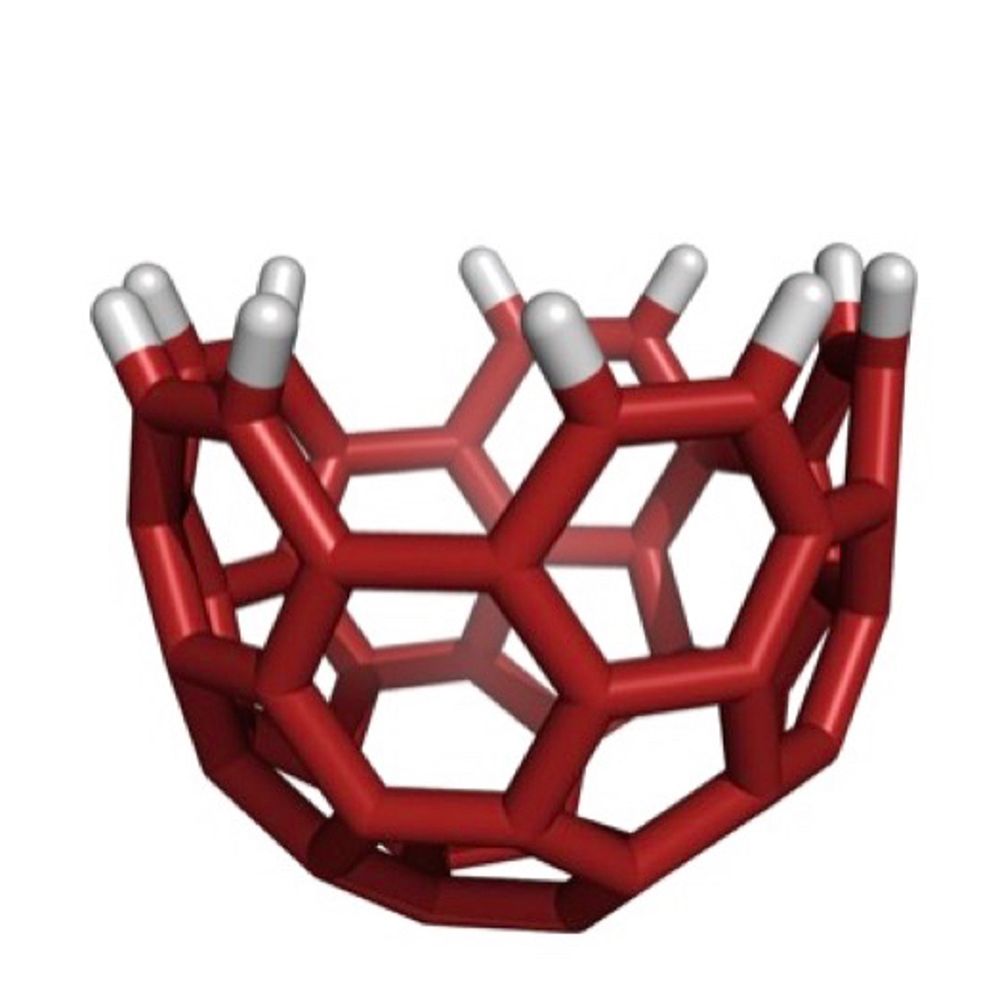
Well-Structured Narrow Near-Infrared Absorption Based on Nonaggregated Hexarylene-Bisimide toward a Colorless Dye | The Journal of Organic Chemistry pubs.acs.org/doi/10.1021/... #PiSky

Well-Structured Narrow Near-Infrared Absorption Based on Nonaggregated Hexarylene-Bisimide toward a Colorless Dye
Extended π-conjugated systems are often insoluble, and their aggregation manner greatly affects their absorption spectra. This study produced a planar, soluble, and nonaggregated hexarylene-bisimide (HB) with appropriate substituents. The single-crystal X-ray structure of HB confirmed the planar molecular structure with small twist angles and the dimerization behavior of HB in the solid state. The concentration-dependent 1H NMR experiments in CDCl3 indicated that the association constant Kdimer is 4.6 × 10³ M–1 at 298 K and ΔGdimer (298 K) = −20.8 kJ mol–1. The longest absorption of HB at the monomeric state exhibits a sharp and intense peak at 921 nm (ε = 230,000 M–1 cm–1, full width at half-maximum = 718 cm–1) in toluene. 75% of the absorption of HB above 400 nm appears in the near-infrared region, thus giving a practically colorless solution. Magnetic circular dichroism spectra of a series of oligorylene-bisimides reveal the predominant contribution of the linear polyene-like conjugation over the annulene-like conjugation for larger [n]oligorylene-bisimides.
pubs.acs.org
October 28, 2025 at 3:21 PM
Well-Structured Narrow Near-Infrared Absorption Based on Nonaggregated Hexarylene-Bisimide toward a Colorless Dye | The Journal of Organic Chemistry pubs.acs.org/doi/10.1021/... #PiSky
Maybe a few crumbs dropped accidentally into the oil bath…

September 17, 2025 at 9:05 PM
Maybe a few crumbs dropped accidentally into the oil bath…
Reposted by Alexander Krappe
C48 Cyclocarbon catenane! Congratulations, Harry - phys.org/news/2025-08... #PiSky

Chemists synthesize a new allotrope of carbon
In a new study led by Oxford University's Department of Chemistry, chemists have demonstrated the synthesis of a cyclocarbon that is stable enough for spectroscopic characterization in solution at roo...
phys.org
August 15, 2025 at 4:16 PM
C48 Cyclocarbon catenane! Congratulations, Harry - phys.org/news/2025-08... #PiSky
Excited to see that my fluorescent funnel was chosen as #CENChemPics of the week in @cenmag.bsky.social !
cen.acs.org/synthesis/Ch...
cen.acs.org/synthesis/Ch...

Chemistry in Pictures: Fluorescent funnel
Chemical & Engineering News (C&EN): Keeping you up to date with the chemistry news that matters most. Published by the American Chemical Society.
cen.acs.org
July 28, 2025 at 6:03 PM
Excited to see that my fluorescent funnel was chosen as #CENChemPics of the week in @cenmag.bsky.social !
cen.acs.org/synthesis/Ch...
cen.acs.org/synthesis/Ch...
Reposted by Alexander Krappe
Alexander Krappe set up his separation funnel just as he always did to extract impurities from the compound he was synthesizing. Read more about this edition of #CENChemPics: cen.acs.org/synthesis/Ch... #chemsky

July 27, 2025 at 2:06 PM
Alexander Krappe set up his separation funnel just as he always did to extract impurities from the compound he was synthesizing. Read more about this edition of #CENChemPics: cen.acs.org/synthesis/Ch... #chemsky
Reposted by Alexander Krappe

Check out our new #preprint 📢😀"Bicyclo[1.1.1]pentane Ketones via Friedel-Crafts Acylation" #BCP #isostere @chemrxiv.bsky.social
chemrxiv.org/engage/chemr... great work by Freya and Karolina and coop with #PavelMykhailiuk #EnamineLtd
🇺🇦 supported by @researchireland.ie @ias-tum.bsky.social
chemrxiv.org/engage/chemr... great work by Freya and Karolina and coop with #PavelMykhailiuk #EnamineLtd
🇺🇦 supported by @researchireland.ie @ias-tum.bsky.social
![Bicyclo[1.1.1]pentane is a rigid aliphatic hydrocarbon with a three-dimensional (3D), propeller-like shape and a molecular size which makes it a targeted bioisosteric replacement for phenylene and acetylene groups in medicinal chemistry. For the pharmaceutical application of BCP, simple, efficient, and cost-effective synthetic tools are required to enable the exploration of BCP’s potential as a bioisostere across a broad chemical space. The synthesis of BCP mono- and diketones remains a challenging task, limited by both substrate scope and expensive photocatalysts. Here we present a protocol for Friedel-Crafts acylation of (hetero)aromatic hydrocarbons with BCP acyl chlorides; in particular, the first method to access diaromatic BCP 1,3-diketones. Reaction optimization, substrate scope, and reactivity of the products are discussed. 35 mono- and diketones are reported accompanied by 7 examples of post-synthetic modifications. The synthesis of a BCP analogue of fenofibrate is reported.](https://cdn.bsky.app/img/feed_thumbnail/plain/did:plc:ls54voiihm3bxde2dkgrxbm3/bafkreigzyfnz4ckoa7ifg3rjuuzk7tt3vdih5xlizy6ledhqn5ua3urgie@jpeg)
July 17, 2025 at 8:13 AM
Check out our new #preprint 📢😀"Bicyclo[1.1.1]pentane Ketones via Friedel-Crafts Acylation" #BCP #isostere @chemrxiv.bsky.social
chemrxiv.org/engage/chemr... great work by Freya and Karolina and coop with #PavelMykhailiuk #EnamineLtd
🇺🇦 supported by @researchireland.ie @ias-tum.bsky.social
chemrxiv.org/engage/chemr... great work by Freya and Karolina and coop with #PavelMykhailiuk #EnamineLtd
🇺🇦 supported by @researchireland.ie @ias-tum.bsky.social
Reposted by Alexander Krappe
Years in the making, finally published! Congrats Bob and Yanwen, and thanks for the great collaboration @guldi-group.bsky.social!
Excited State Dynamics of Odd [n]Cumulenes
pubs.acs.org/doi/full/10....
Excited State Dynamics of Odd [n]Cumulenes
pubs.acs.org/doi/full/10....
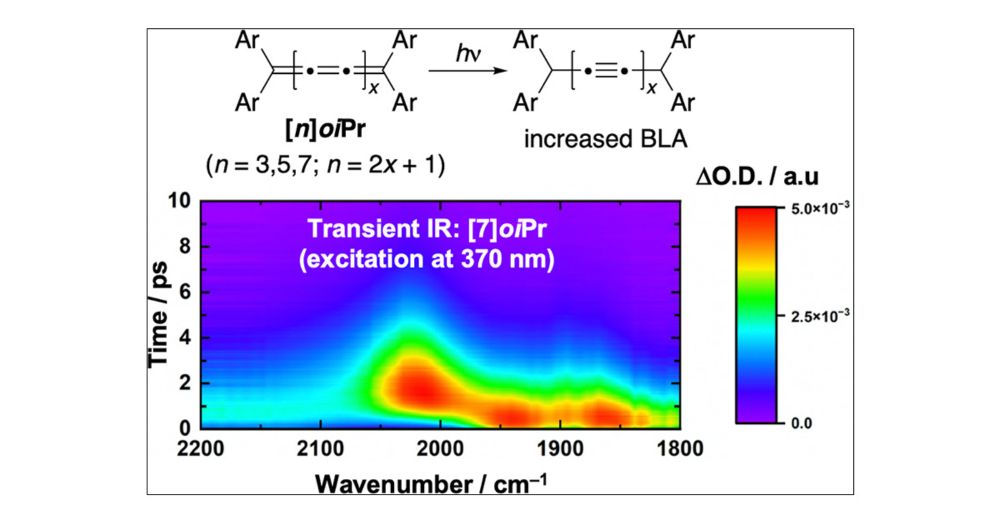
Excited State Dynamics of Odd [n]Cumulenes: Chain Length and Conformational Effects
Over the past decades, carbon allotropes have been extensively studied and applied to various technological applications due to their unique electronic and optical properties. Contemporary research ha...
pubs.acs.org
June 17, 2025 at 1:41 PM
Years in the making, finally published! Congrats Bob and Yanwen, and thanks for the great collaboration @guldi-group.bsky.social!
Excited State Dynamics of Odd [n]Cumulenes
pubs.acs.org/doi/full/10....
Excited State Dynamics of Odd [n]Cumulenes
pubs.acs.org/doi/full/10....
My first publication as first author is now online in Chem Eur. J.! We synthesized a highly emissive PAH and show that it can readily be used as OLED material.
@chemistryeurope.bsky.social
chemistry-europe.onlinelibrary.wiley.com/doi/10.1002/...
@chemistryeurope.bsky.social
chemistry-europe.onlinelibrary.wiley.com/doi/10.1002/...

Highly Emissive Hexa‐peri‐benzocoronene‐fluoranthene Hybrid as Easily Processable and Stable OLED Material
A “symmetry-broken” hexabenzocoronene-fluoranthene fluorescent dye was synthesized using an easily scalable reaction. Green emission at around 500 nm, a maximum photoluminescence quantum yield of 67%....
chemistry-europe.onlinelibrary.wiley.com
May 3, 2025 at 8:22 PM
My first publication as first author is now online in Chem Eur. J.! We synthesized a highly emissive PAH and show that it can readily be used as OLED material.
@chemistryeurope.bsky.social
chemistry-europe.onlinelibrary.wiley.com/doi/10.1002/...
@chemistryeurope.bsky.social
chemistry-europe.onlinelibrary.wiley.com/doi/10.1002/...
Reposted by Alexander Krappe

Dear ORCA community,
it took a while, but now the ORCA 6.0 article is out! It serves as generic reference for ORCA 6.x. However, if you are serious about supporting our efforts, please take note of the suggested citations at the end of each ORCA run.
wires.onlinelibrary.wiley.com/doi/10.1002/...
it took a while, but now the ORCA 6.0 article is out! It serves as generic reference for ORCA 6.x. However, if you are serious about supporting our efforts, please take note of the suggested citations at the end of each ORCA run.
wires.onlinelibrary.wiley.com/doi/10.1002/...
Software Update: The ORCA Program System—Version 6.0
This article describes the philosophy behind- and new features in the ORCA quantum chemistry program suite, version 6.0.
wires.onlinelibrary.wiley.com
April 28, 2025 at 9:01 AM
Dear ORCA community,
it took a while, but now the ORCA 6.0 article is out! It serves as generic reference for ORCA 6.x. However, if you are serious about supporting our efforts, please take note of the suggested citations at the end of each ORCA run.
wires.onlinelibrary.wiley.com/doi/10.1002/...
it took a while, but now the ORCA 6.0 article is out! It serves as generic reference for ORCA 6.x. However, if you are serious about supporting our efforts, please take note of the suggested citations at the end of each ORCA run.
wires.onlinelibrary.wiley.com/doi/10.1002/...
Reposted by Alexander Krappe
Twisted nanographenes pubs.acs.org/doi/10.1021/... #PiSky

Synthesis of Alternatively-Twisted Nanographenes by Semi-Deprotection-Induced Cyclization
Twisted nanographenes (NGs) are currently attracting a lot of attention owing to their geometrical and electronic structures that differ substantively from conventional planar and nonplanar NGs, while...
pubs.acs.org
March 21, 2025 at 3:14 PM
Twisted nanographenes pubs.acs.org/doi/10.1021/... #PiSky
Reposted by Alexander Krappe

Reposted by Alexander Krappe
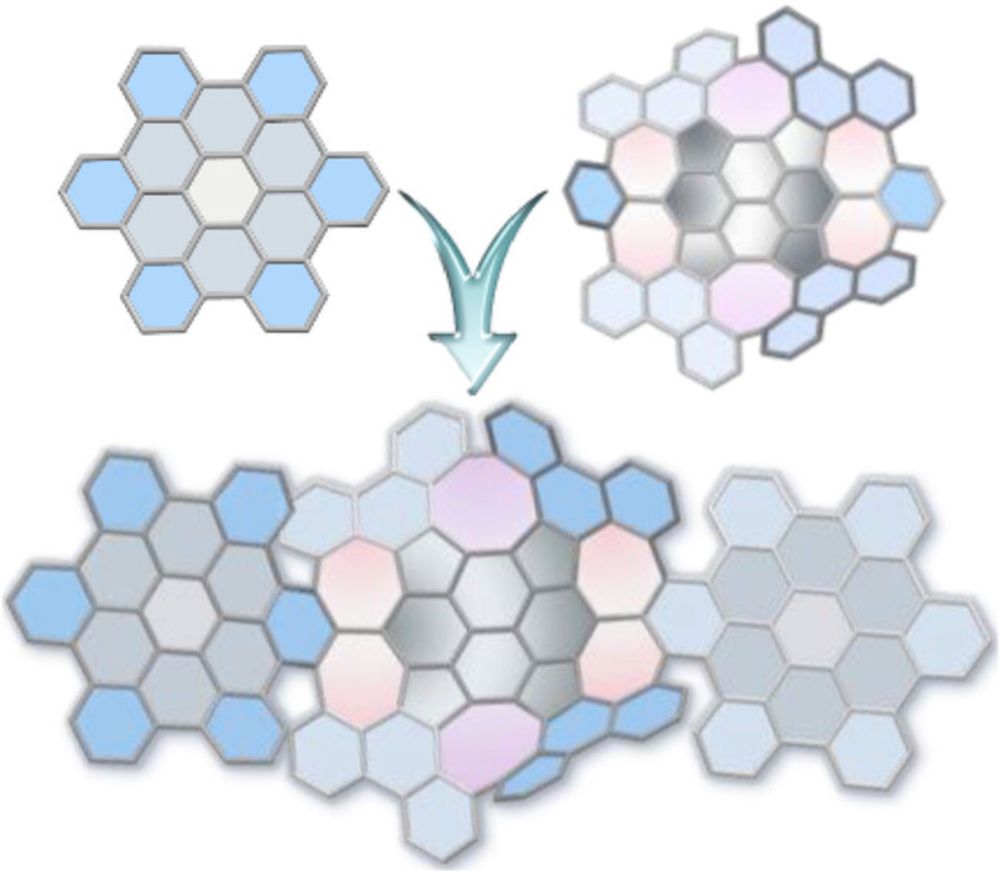
Now released: pySupport
pySupport is a small python package to generate nice tables for your Supporting Information from ORCA or Gaussian calculations.
Have a look here: github.com/RubiaLab/pyS...
pySupport is a small python package to generate nice tables for your Supporting Information from ORCA or Gaussian calculations.
Have a look here: github.com/RubiaLab/pyS...

GitHub - RubiaLab/pySupport: Python package for the generation of Supporting Information files from quantum chemical calculation output
Python package for the generation of Supporting Information files from quantum chemical calculation output - RubiaLab/pySupport
github.com
February 12, 2025 at 12:07 PM
Now released: pySupport
pySupport is a small python package to generate nice tables for your Supporting Information from ORCA or Gaussian calculations.
Have a look here: github.com/RubiaLab/pyS...
pySupport is a small python package to generate nice tables for your Supporting Information from ORCA or Gaussian calculations.
Have a look here: github.com/RubiaLab/pyS...
Reposted by Alexander Krappe

Theoretical chemist Martin Karplus died on 28 December. He won the 2013 Nobel prize in chemistry for ‘the development of multi-scale models for complex chemical systems’.

Computational chemist and Nobel prize-winner Martin Karplus dies at 94
Karplus's techniques combined classical and quantum mechanical approaches to model complex chemical systems
www.chemistryworld.com
January 11, 2025 at 4:06 PM
Theoretical chemist Martin Karplus died on 28 December. He won the 2013 Nobel prize in chemistry for ‘the development of multi-scale models for complex chemical systems’.
Reposted by Alexander Krappe

A new video in my X-ray series - how to grow good crystals? I show some metods that work well (in my personal experience) and comment on them, as well as how to handle air-sensitive samples. Share with your research group! 😇 #crystallography #chemsky youtu.be/__FQUIutJ2w?...

How to grow crystals for single crystal X-ray diffraction experiments?
YouTube video by Wojtek Stawski
youtu.be
December 16, 2024 at 10:10 PM
A new video in my X-ray series - how to grow good crystals? I show some metods that work well (in my personal experience) and comment on them, as well as how to handle air-sensitive samples. Share with your research group! 😇 #crystallography #chemsky youtu.be/__FQUIutJ2w?...