



Quinn Cowan
@quinncowan.bsky.social
Postdoc in the Conklin & Shipman labs at the Gladstone Institutes/UCSF! Previously in the Komor lab at UCSD and the Michael & Chiolo labs at USC
Reposted by Quinn Cowan
Now published in PLOS Biology! We found new retron containing bacteria in the wild, figured out defense mechanisms, and turned them into genome editors. From a cupful of dirt to new parts for genome editing in one story! journals.plos.org/plosbiology/...
October 23, 2025 at 6:48 PM
Now published in PLOS Biology! We found new retron containing bacteria in the wild, figured out defense mechanisms, and turned them into genome editors. From a cupful of dirt to new parts for genome editing in one story! journals.plos.org/plosbiology/...
Reposted by Quinn Cowan

Scientists at Gladstone show the new method could treat the majority of patients with Charcot-Marie-Tooth disease.

Gene Editing Strategy Could Treat Hundreds of Inherited Diseases More Effectively
Scientists at Gladstone show the new method could treat the majority of patients with Charcot-Marie-Tooth disease.
bit.ly
December 16, 2025 at 8:05 PM
Scientists at Gladstone show the new method could treat the majority of patients with Charcot-Marie-Tooth disease.
Reposted by Quinn Cowan
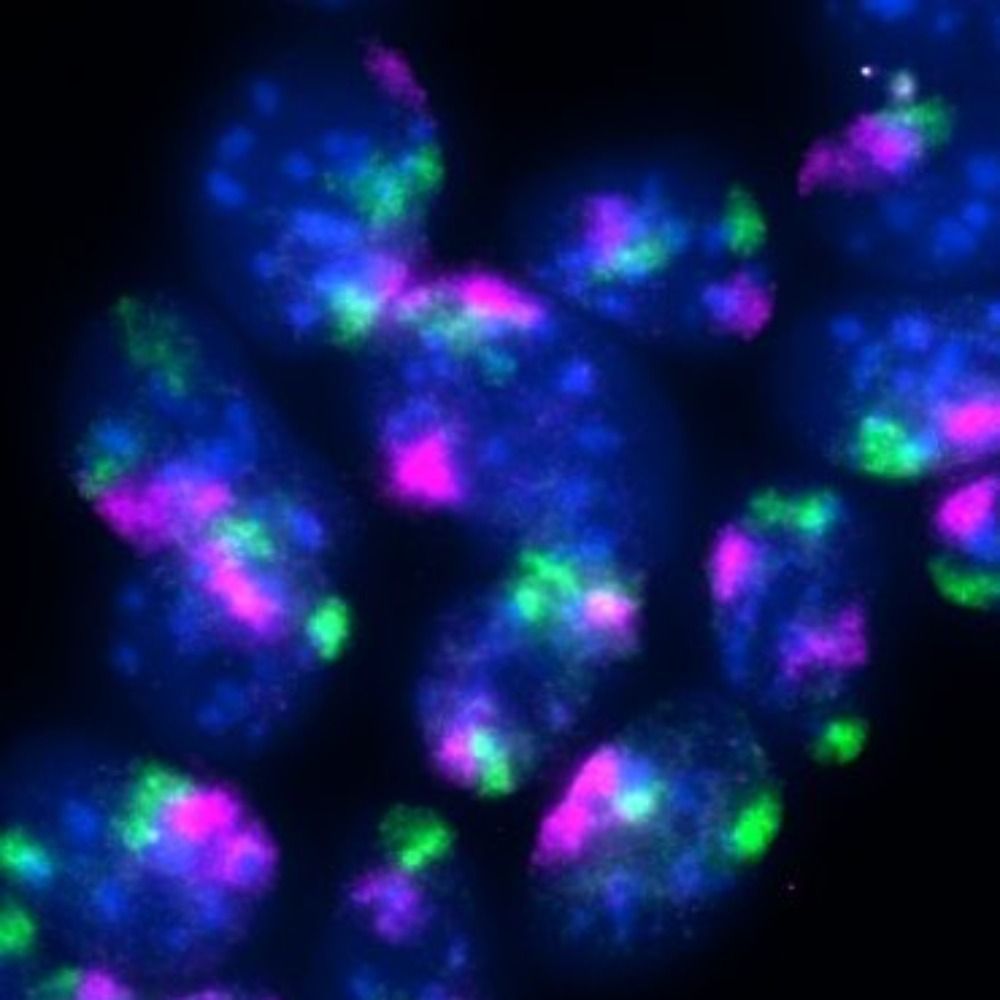
New preprint with @gfudenberg.bsky.social
We find the rate of cohesin loop extrusion in cells is set by NIPBL dosage and tunes many aspects of chromosome folding.
This provides a molecular basis for NIPBL haploinsufficiency in humans. 🧵👇
www.biorxiv.org/content/10.1...
We find the rate of cohesin loop extrusion in cells is set by NIPBL dosage and tunes many aspects of chromosome folding.
This provides a molecular basis for NIPBL haploinsufficiency in humans. 🧵👇
www.biorxiv.org/content/10.1...

NIPBL dosage shapes genome folding by tuning the rate of cohesin loop extrusion
Cohesin loop extrusion is a major driver of chromosome folding, but how its dynamics are controlled to shape the genome remains elusive. Here we disentangle the contributions of the cohesin cofactors ...
www.biorxiv.org
August 16, 2025 at 3:03 AM
New preprint with @gfudenberg.bsky.social
We find the rate of cohesin loop extrusion in cells is set by NIPBL dosage and tunes many aspects of chromosome folding.
This provides a molecular basis for NIPBL haploinsufficiency in humans. 🧵👇
www.biorxiv.org/content/10.1...
We find the rate of cohesin loop extrusion in cells is set by NIPBL dosage and tunes many aspects of chromosome folding.
This provides a molecular basis for NIPBL haploinsufficiency in humans. 🧵👇
www.biorxiv.org/content/10.1...
Reposted by Quinn Cowan
Check out MitoScribe in our new preprint led by Linhan Wang: www.biorxiv.org/content/10.1...
It's an analog molecular recorder that uses neutral base edits to the mitochondrial genome to store information about historical signaling in a cell. Single cell resolution at scale (see next post)!
It's an analog molecular recorder that uses neutral base edits to the mitochondrial genome to store information about historical signaling in a cell. Single cell resolution at scale (see next post)!

September 8, 2025 at 5:13 PM
Check out MitoScribe in our new preprint led by Linhan Wang: www.biorxiv.org/content/10.1...
It's an analog molecular recorder that uses neutral base edits to the mitochondrial genome to store information about historical signaling in a cell. Single cell resolution at scale (see next post)!
It's an analog molecular recorder that uses neutral base edits to the mitochondrial genome to store information about historical signaling in a cell. Single cell resolution at scale (see next post)!
Reposted by Quinn Cowan

Doomscrolling pause to chat CRISPR libraries! Preprint describes our new, data-driven approach to combine on-target and off-target predictions much more intelligently for *selecting* guides, which we use to develop our newest Cas9 knockout library, Jacquere. Thread: www.biorxiv.org/content/10.1...

Balancing off-target and on-target considerations for optimized Cas9 CRISPR knockout library design
The continued development of high-dimensional CRISPR screen readouts, such as single-cell RNA sequencing and high-content imaging, necessitates compact libraries to enable functional interrogation at ...
www.biorxiv.org
September 7, 2025 at 5:02 PM
Doomscrolling pause to chat CRISPR libraries! Preprint describes our new, data-driven approach to combine on-target and off-target predictions much more intelligently for *selecting* guides, which we use to develop our newest Cas9 knockout library, Jacquere. Thread: www.biorxiv.org/content/10.1...
Reposted by Quinn Cowan
Hello Community!
Are you a postdoc/grad student preparing to launch a faculty search? Do you have a track record of excellence in research, leadership, mentorship & community engagement? Apply to the 2025 Next Generation Faculty Symposium: www.berkeleystanfordnextgensymposium.com! Pls repost! (1/3)
Are you a postdoc/grad student preparing to launch a faculty search? Do you have a track record of excellence in research, leadership, mentorship & community engagement? Apply to the 2025 Next Generation Faculty Symposium: www.berkeleystanfordnextgensymposium.com! Pls repost! (1/3)

April 21, 2025 at 7:21 PM
Hello Community!
Are you a postdoc/grad student preparing to launch a faculty search? Do you have a track record of excellence in research, leadership, mentorship & community engagement? Apply to the 2025 Next Generation Faculty Symposium: www.berkeleystanfordnextgensymposium.com! Pls repost! (1/3)
Are you a postdoc/grad student preparing to launch a faculty search? Do you have a track record of excellence in research, leadership, mentorship & community engagement? Apply to the 2025 Next Generation Faculty Symposium: www.berkeleystanfordnextgensymposium.com! Pls repost! (1/3)
Reposted by Quinn Cowan
Happy Friday! New preprint to discuss, led by @ekaplan.bsky.social, entitled "Activity-based selection for enhanced base editor mutational scanning"
www.biorxiv.org/content/10.1...
A thread...
www.biorxiv.org/content/10.1...
A thread...

Activity-based selection for enhanced base editor mutational scanning
Base editing is a CRISPR-based technology that enables high-throughput, nucleotide-level functional interrogation of the genome, which is essential for understanding the genetic basis of human disease...
www.biorxiv.org
November 15, 2024 at 1:18 PM
Happy Friday! New preprint to discuss, led by @ekaplan.bsky.social, entitled "Activity-based selection for enhanced base editor mutational scanning"
www.biorxiv.org/content/10.1...
A thread...
www.biorxiv.org/content/10.1...
A thread...
Reposted by Quinn Cowan
🚨New Pub: High throughput variant libraries and machine learning yield design rules for retron gene editors, now out in Nucleic Acids Research. This is a great one, and the last bit of Kate Crawford's PhD, who is off to David Bakar's Lab for a postdoc.
academic.oup.com/nar/advance-...
academic.oup.com/nar/advance-...

High throughput variant libraries and machine learning yield design rules for retron gene editors
Abstract. The bacterial retron reverse transcriptase system has served as an intracellular factory for single-stranded DNA in many biotechnological applica
academic.oup.com
December 10, 2024 at 6:42 PM
🚨New Pub: High throughput variant libraries and machine learning yield design rules for retron gene editors, now out in Nucleic Acids Research. This is a great one, and the last bit of Kate Crawford's PhD, who is off to David Bakar's Lab for a postdoc.
academic.oup.com/nar/advance-...
academic.oup.com/nar/advance-...
Reposted by Quinn Cowan
We just posted a new preprint where we found retrons in bacteria out in the real world, in dirt and water. We describe the first retrons in a handful of new species, show how they defend against phages, and use them to edit genomes. Read about it here: www.biorxiv.org/content/10.1...
January 30, 2025 at 10:08 PM
We just posted a new preprint where we found retrons in bacteria out in the real world, in dirt and water. We describe the first retrons in a handful of new species, show how they defend against phages, and use them to edit genomes. Read about it here: www.biorxiv.org/content/10.1...