



Neuro David
@neuro-david.bsky.social
Geneticist in love with RNAs and neurons.
Pinned
Neuro David
@neuro-david.bsky.social
· Mar 1

The Human Developing Cerebral Cortex Is Characterized by an Elevated De Novo Expression of Long Noncoding RNAs in Excitatory Neurons
Abstract. The outstanding human cognitive capacities are computed in the cerebral cortex, a mammalian-specific brain region and the place of massive biolog
doi.org
I’m more than happy to finaly see my main PhD project out. Here I explored the relationship between long non-coding RNA and cerebral cortex evolution.
doi.org/10.1093/molb...
doi.org/10.1093/molb...
Reposted by Neuro David

Nature research paper: Uncovering the role of LINE-1 in the evolution of lung adenocarcinoma
go.nature.com/4oUHIPb
go.nature.com/4oUHIPb

Uncovering the role of LINE-1 in the evolution of lung adenocarcinoma - Nature
Lung adenocarcinomas bearing the ID2 mutational signature display increased LINE-1 retrotransposon activity, which contributes to their fast evolutionary dynamics and aggressive phenotype.
go.nature.com
December 15, 2025 at 9:40 AM
Nature research paper: Uncovering the role of LINE-1 in the evolution of lung adenocarcinoma
go.nature.com/4oUHIPb
go.nature.com/4oUHIPb
Reposted by Neuro David

New preprint from our lab: ‘Retroviral insertions contributed to the divergence of human and chimpanzee brains’. Very proud of this piece which took almost a decade to finish.
www.biorxiv.org/content/10.6...
www.biorxiv.org/content/10.6...

Retroviral insertions contributed to the divergence of human and chimpanzee brains
Over the past 5 to 7 million years, humans and chimpanzees have diverged in brain size, structural complexity, and cognitive abilities despite high conservation of protein-coding genes. Notably, the e...
www.biorxiv.org
December 14, 2025 at 8:16 PM
New preprint from our lab: ‘Retroviral insertions contributed to the divergence of human and chimpanzee brains’. Very proud of this piece which took almost a decade to finish.
www.biorxiv.org/content/10.6...
www.biorxiv.org/content/10.6...
Reposted by Neuro David
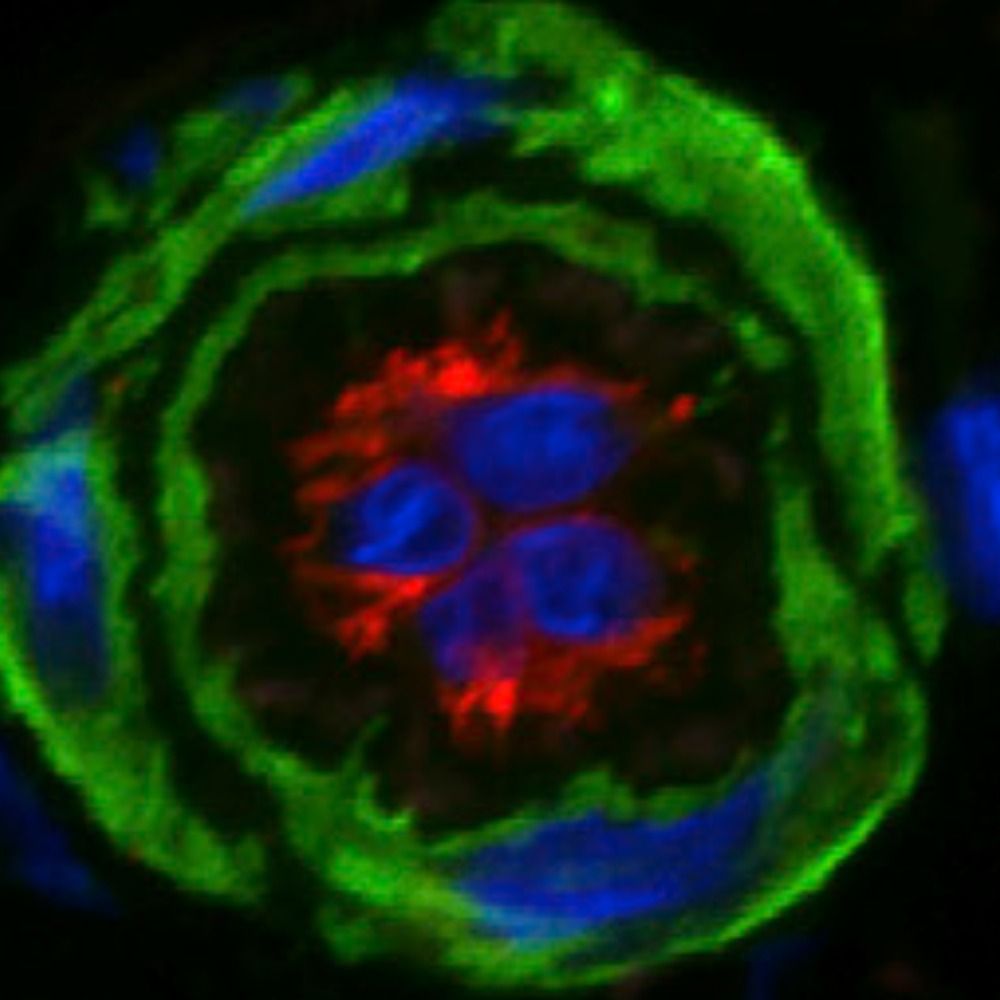
The dark proteome: translation from noncanonical open reading frames
1⃣5'-UTR 2⃣3'-UTR small ORF/sORF
3⃣out-of-frame 4⃣In-frame overlapping ORF
Translating micropeptide <100aa, proteins distinct from canonical ORFs, or isoforms
#TrendsCellBio 2022
www.sciencedirect.com/science/arti...
1⃣5'-UTR 2⃣3'-UTR small ORF/sORF
3⃣out-of-frame 4⃣In-frame overlapping ORF
Translating micropeptide <100aa, proteins distinct from canonical ORFs, or isoforms
#TrendsCellBio 2022
www.sciencedirect.com/science/arti...

December 13, 2025 at 1:34 PM
The dark proteome: translation from noncanonical open reading frames
1⃣5'-UTR 2⃣3'-UTR small ORF/sORF
3⃣out-of-frame 4⃣In-frame overlapping ORF
Translating micropeptide <100aa, proteins distinct from canonical ORFs, or isoforms
#TrendsCellBio 2022
www.sciencedirect.com/science/arti...
1⃣5'-UTR 2⃣3'-UTR small ORF/sORF
3⃣out-of-frame 4⃣In-frame overlapping ORF
Translating micropeptide <100aa, proteins distinct from canonical ORFs, or isoforms
#TrendsCellBio 2022
www.sciencedirect.com/science/arti...
Reposted by Neuro David

Transcriptomics in the era of long-read sequencing
Free to read here: rdcu.be/efBjP
Free to read here: rdcu.be/efBjP
December 10, 2025 at 3:43 PM
Transcriptomics in the era of long-read sequencing
Free to read here: rdcu.be/efBjP
Free to read here: rdcu.be/efBjP
Reposted by Neuro David
FYI: New online! Harnessing evolution to infer protein networks
Harnessing evolution to infer protein networks
Nature Reviews Genetics, Published online: 18 November 2025; doi:10.1038/s41576-025-00919-xIn this Journal Club, Nozomu Yachie recalls a 1999 paper by Pellegrini, Marcotte and colleagues that demonstrated how functional information, such as protein--protein interactions, could be revealed through patterns of genetic diversity across species.
www.nature.com
December 9, 2025 at 8:09 PM
FYI: New online! Harnessing evolution to infer protein networks
Reposted by Neuro David

Metabolic environment-driven remodeling of mitochondrial ribosomes regulates translation and biogenesis
http://dlvr.it/TPh6Bf
Yifan Cheng, Chuankai Zhou & colleagues
@cp-molcell.bsky.social
#CellBio2025
http://dlvr.it/TPh6Bf
Yifan Cheng, Chuankai Zhou & colleagues
@cp-molcell.bsky.social
#CellBio2025

December 7, 2025 at 3:32 PM
Metabolic environment-driven remodeling of mitochondrial ribosomes regulates translation and biogenesis
http://dlvr.it/TPh6Bf
Yifan Cheng, Chuankai Zhou & colleagues
@cp-molcell.bsky.social
#CellBio2025
http://dlvr.it/TPh6Bf
Yifan Cheng, Chuankai Zhou & colleagues
@cp-molcell.bsky.social
#CellBio2025
Reposted by Neuro David

Base Composition Influences the Position andPrecision of RNA Polymerase II Disassociation inBasal and Perturbed Conditions. https://www.biorxiv.org/content/10.64898/2025.12.02.691879v1
December 4, 2025 at 2:31 AM
Base Composition Influences the Position andPrecision of RNA Polymerase II Disassociation inBasal and Perturbed Conditions. https://www.biorxiv.org/content/10.64898/2025.12.02.691879v1
Reposted by Neuro David
A simple library preparation modification significantly reduces barcode crosstalk in ONT multiplexed sequencing https://www.biorxiv.org/content/10.1101/2025.11.19.689316v1
November 20, 2025 at 4:32 AM
A simple library preparation modification significantly reduces barcode crosstalk in ONT multiplexed sequencing https://www.biorxiv.org/content/10.1101/2025.11.19.689316v1
Reposted by Neuro David

🧠 The Cai Lab will be at #SfN25!
Be sure to stop by the poster sessions to check out Hailey's work on decision-making, @zachtpennington.bsky.social's work on stress, @zoechristensonwick.bsky.social's work on seizures, Alexa's work on cocaine seeking, and Sandra's work on context representations 🤓
Be sure to stop by the poster sessions to check out Hailey's work on decision-making, @zachtpennington.bsky.social's work on stress, @zoechristensonwick.bsky.social's work on seizures, Alexa's work on cocaine seeking, and Sandra's work on context representations 🤓

November 13, 2025 at 7:17 PM
🧠 The Cai Lab will be at #SfN25!
Be sure to stop by the poster sessions to check out Hailey's work on decision-making, @zachtpennington.bsky.social's work on stress, @zoechristensonwick.bsky.social's work on seizures, Alexa's work on cocaine seeking, and Sandra's work on context representations 🤓
Be sure to stop by the poster sessions to check out Hailey's work on decision-making, @zachtpennington.bsky.social's work on stress, @zoechristensonwick.bsky.social's work on seizures, Alexa's work on cocaine seeking, and Sandra's work on context representations 🤓
Reposted by Neuro David

First-ever atlas of brain development shows how stem cells turn into neurons
There are 6 excellent human brain development papers in Nature - www.nature.com/articles/d41... Check them out!
There are 6 excellent human brain development papers in Nature - www.nature.com/articles/d41... Check them out!

November 11, 2025 at 12:13 AM
First-ever atlas of brain development shows how stem cells turn into neurons
There are 6 excellent human brain development papers in Nature - www.nature.com/articles/d41... Check them out!
There are 6 excellent human brain development papers in Nature - www.nature.com/articles/d41... Check them out!
Reposted by Neuro David

Sphingolipid sensor degrades cGAMP to suppress antiviral host defense- #virus #lipids #hostdefense #innateImmunity
www.cell.com/immunity/ful...
www.cell.com/immunity/ful...

Membrane integrity changes upon viral infection activate sphingomyelinase SMPDL3B to restrict cGAS-STING signaling via cGAMP degradation
Wang et al. find that cell membrane stress upon viral infection induces expression
and stabilization of host sphingomyelin phosphodiesterase acid-like 3B (SMPDL3B),
which, in turn, degrades cGAMP to s...
www.cell.com
November 2, 2025 at 6:52 PM
Sphingolipid sensor degrades cGAMP to suppress antiviral host defense- #virus #lipids #hostdefense #innateImmunity
www.cell.com/immunity/ful...
www.cell.com/immunity/ful...
Reposted by Neuro David

Transcriptional interferences ensure one olfactory receptor per ant neuron
www.nature.com/articles/s41...
Caviar for RNA-Seq nerds! Check this out
www.nature.com/articles/s41...
Caviar for RNA-Seq nerds! Check this out

October 22, 2025 at 8:40 PM
Transcriptional interferences ensure one olfactory receptor per ant neuron
www.nature.com/articles/s41...
Caviar for RNA-Seq nerds! Check this out
www.nature.com/articles/s41...
Caviar for RNA-Seq nerds! Check this out
Reposted by Neuro David
Discussed @mrsantos.bsky.social lit review: Mechano-osmotic signals control chromatin state and fate transitions in pluripotent stem cells. www.biorxiv.org/content/10.1...

Mechano-osmotic signals control chromatin state and fate transitions in pluripotent stem cells
Acquisition of specific cell shapes and morphologies is a central component of cell fate transitions. Although signaling circuits and gene regulatory networks that regulate pluripotent stem cell diffe...
www.biorxiv.org
October 22, 2025 at 2:06 PM
Discussed @mrsantos.bsky.social lit review: Mechano-osmotic signals control chromatin state and fate transitions in pluripotent stem cells. www.biorxiv.org/content/10.1...
Reposted by Neuro David
Genetics of human handedness: microtubules and beyond. Check out this review by @ocklenburg.bsky.social published in @cp-trendsgenetics.bsky.social http://dlvr.it/TNjZCR #ASHG25

October 16, 2025 at 1:28 PM
Genetics of human handedness: microtubules and beyond. Check out this review by @ocklenburg.bsky.social published in @cp-trendsgenetics.bsky.social http://dlvr.it/TNjZCR #ASHG25
Reposted by Neuro David

In Science, researchers report the observation of dendritic nanotubes in brain tissue from mice and humans. The discovery suggests that the current understanding of the brain’s organization may be incomplete, overlooking a hidden layer of connectivity. #SciencePerspective https://scim.ag/470Cdr4

Hidden networks in the brain
Dendritic nanotubes extend brain connectivity beyond synapses
scim.ag
October 13, 2025 at 3:20 PM
In Science, researchers report the observation of dendritic nanotubes in brain tissue from mice and humans. The discovery suggests that the current understanding of the brain’s organization may be incomplete, overlooking a hidden layer of connectivity. #SciencePerspective https://scim.ag/470Cdr4
Reposted by Neuro David

Looking to do a postdoc? Explore this fantastic opportunity to do a postdoc at a Max Planck institute. Applications for this program are due by October 13, 2025.
hashtag#maxplancksociety hashtag#postdoc
www.mpg.de/en/max-planc...
hashtag#maxplancksociety hashtag#postdoc
www.mpg.de/en/max-planc...

Max Planck Postdoc Program
Launching in April 2025, the Max Planck Postdoc Program features structured application calls and a comprehensive support system for researchers.
www.mpg.de
October 8, 2025 at 1:12 PM
Looking to do a postdoc? Explore this fantastic opportunity to do a postdoc at a Max Planck institute. Applications for this program are due by October 13, 2025.
hashtag#maxplancksociety hashtag#postdoc
www.mpg.de/en/max-planc...
hashtag#maxplancksociety hashtag#postdoc
www.mpg.de/en/max-planc...
Reposted by Neuro David
🧪Happy to share our latest paper in Genome Biology.
We profiled #RNA isoforms from 31 neuropsychiatric risk genes in the human brain using long-read sequencing. Unannotated isoforms commonly made up a significant proportion of a gene's expression.
genomebiology.biomedcentral.com/articles/10....
We profiled #RNA isoforms from 31 neuropsychiatric risk genes in the human brain using long-read sequencing. Unannotated isoforms commonly made up a significant proportion of a gene's expression.
genomebiology.biomedcentral.com/articles/10....

Long-read sequencing reveals the RNA isoform repertoire of neuropsychiatric risk genes in human brain - Genome Biology
Background Neuropsychiatric disorders are highly complex conditions and the risk of developing a disorder has been tied to hundreds of genomic variants that alter the expression and/or RNA isoforms made by risk genes. However, how these genes contribute to disease risk and onset through altered expression and RNA splicing is not well understood. Results Combining our new bioinformatic pipeline IsoLamp with nanopore long-read amplicon sequencing, we deeply profile the RNA isoform repertoire of 31 high-confidence neuropsychiatric disorder risk genes in Human brain. We show most risk genes are more complex than previously reported, identifying 363 novel isoforms and 28 novel exons, including isoforms which alter protein domains, and genes such as ATG13 and GATAD2A where most expression was from previously undiscovered isoforms. The greatest isoform diversity is detected in the schizophrenia risk gene ITIH4. Mass spectrometry of brain protein isolates confirms translation of a novel exon skipping event in ITIH4, suggesting a new regulatory mechanism for this gene in the brain. Conclusions Our results emphasize the widespread presence of previously undetected RNA and protein isoforms in the human brain and provide an effective approach to address this knowledge gap. Uncovering the isoform repertoire of candidate neuropsychiatric risk genes will underpin future analyses of the functional impact these isoforms have on neuropsychiatric disorders, enabling the translation of genomic findings into a pathophysiological understanding of disease.
genomebiology.biomedcentral.com
October 3, 2025 at 4:18 AM
🧪Happy to share our latest paper in Genome Biology.
We profiled #RNA isoforms from 31 neuropsychiatric risk genes in the human brain using long-read sequencing. Unannotated isoforms commonly made up a significant proportion of a gene's expression.
genomebiology.biomedcentral.com/articles/10....
We profiled #RNA isoforms from 31 neuropsychiatric risk genes in the human brain using long-read sequencing. Unannotated isoforms commonly made up a significant proportion of a gene's expression.
genomebiology.biomedcentral.com/articles/10....
Reposted by Neuro David

Reposted by Neuro David

📊💿🧡🎉 Exciting news!!
'Release party' tomorrow Friday Oct 3rd at 3pm Eastern for #ggplot2 v4.0.0!
With developer and maintainer @teunbrand! bit.ly/join-gg-exte...
'Release party' tomorrow Friday Oct 3rd at 3pm Eastern for #ggplot2 v4.0.0!
With developer and maintainer @teunbrand! bit.ly/join-gg-exte...

October 2, 2025 at 2:34 PM
📊💿🧡🎉 Exciting news!!
'Release party' tomorrow Friday Oct 3rd at 3pm Eastern for #ggplot2 v4.0.0!
With developer and maintainer @teunbrand! bit.ly/join-gg-exte...
'Release party' tomorrow Friday Oct 3rd at 3pm Eastern for #ggplot2 v4.0.0!
With developer and maintainer @teunbrand! bit.ly/join-gg-exte...
Reposted by Neuro David

Intriguing links between autophagy and local protein synthesis at synapses! Preprint from Michael Kreutz and colleagues.
www.biorxiv.org/content/10.1...
www.biorxiv.org/content/10.1...

Amphisome biogenesis couples synaptic autophagy to local protein synthesis
Summary Amphisomes are hybrid organelles that result from fusion of late endosomes with autophagosomes. Here, we report that amphisomes containing BDNF/TrkB and capable of signaling are formed at pres...
www.biorxiv.org
September 29, 2025 at 12:17 PM
Intriguing links between autophagy and local protein synthesis at synapses! Preprint from Michael Kreutz and colleagues.
www.biorxiv.org/content/10.1...
www.biorxiv.org/content/10.1...
Reposted by Neuro David

Nice work from Val Wilson & co on neuromesodermal progenitors
SOX2/TBXT co-expressing cells are self-propagating bipotent NMPs
Increasing TBXT levels (not SOX2/TBXT ratio) switch NMPs from neural- to mesoderm-biased
www.biorxiv.org/content/10.1...
SOX2/TBXT co-expressing cells are self-propagating bipotent NMPs
Increasing TBXT levels (not SOX2/TBXT ratio) switch NMPs from neural- to mesoderm-biased
www.biorxiv.org/content/10.1...

Brachyury expression levels predict lineage potential and axis-forming ability of in vitro derived neuromesodermal progenitors
Neuromesodermal progenitors (NMPs) produce the spinal cord and musculoskeleton in the elongating anterior-posterior axis. In vivo, NMPs possess dual potency, coinciding with regions coexpressing SOX2 ...
www.biorxiv.org
September 29, 2025 at 8:33 AM
Nice work from Val Wilson & co on neuromesodermal progenitors
SOX2/TBXT co-expressing cells are self-propagating bipotent NMPs
Increasing TBXT levels (not SOX2/TBXT ratio) switch NMPs from neural- to mesoderm-biased
www.biorxiv.org/content/10.1...
SOX2/TBXT co-expressing cells are self-propagating bipotent NMPs
Increasing TBXT levels (not SOX2/TBXT ratio) switch NMPs from neural- to mesoderm-biased
www.biorxiv.org/content/10.1...
Reposted by Neuro David

New blog post!
Ever wonder what geom_histogram is actually doing? How about geom_boxplot?
In celebration of the release of #ggplot2 4.0.0 (ggplot8?), I explore the relationships between the “geoms” and “stats” offered by the core {ggplot2} functions.
#rstats
Ever wonder what geom_histogram is actually doing? How about geom_boxplot?
In celebration of the release of #ggplot2 4.0.0 (ggplot8?), I explore the relationships between the “geoms” and “stats” offered by the core {ggplot2} functions.
#rstats

Exploring {ggplot2}’s Geoms and Stats – Stat’s What It’s All About
blog.msbstats.info
September 22, 2025 at 9:07 AM
Reposted by Neuro David

New #miRNA paper from Lai lab!! 🧬🔥
some think this field, despite recent Nobel to Ambros and Ruvkun, doesn't have much surprises left. but, do we EVEN KNOW WHAT a miRNA precursor LOOKS LIKE? we found some conserved miRNA hairpins up to 10x longer than suspected. this is mir-12, just bonkers! 1/n
some think this field, despite recent Nobel to Ambros and Ruvkun, doesn't have much surprises left. but, do we EVEN KNOW WHAT a miRNA precursor LOOKS LIKE? we found some conserved miRNA hairpins up to 10x longer than suspected. this is mir-12, just bonkers! 1/n

September 12, 2025 at 2:02 AM
New #miRNA paper from Lai lab!! 🧬🔥
some think this field, despite recent Nobel to Ambros and Ruvkun, doesn't have much surprises left. but, do we EVEN KNOW WHAT a miRNA precursor LOOKS LIKE? we found some conserved miRNA hairpins up to 10x longer than suspected. this is mir-12, just bonkers! 1/n
some think this field, despite recent Nobel to Ambros and Ruvkun, doesn't have much surprises left. but, do we EVEN KNOW WHAT a miRNA precursor LOOKS LIKE? we found some conserved miRNA hairpins up to 10x longer than suspected. this is mir-12, just bonkers! 1/n
Reposted by Neuro David

🚀 Deadline approaching: apply by September 17 and become a GLOBAL POSTDOC FELLOW at the #mdcBerlin.
You'll co-develop projects with two supervising labs, tackling biomedical grand challenges – with full salary, modern infrastructure, and career support.
More:
👉 www.mdc-berlin.de/postdocs#t-g... 👈
You'll co-develop projects with two supervising labs, tackling biomedical grand challenges – with full salary, modern infrastructure, and career support.
More:
👉 www.mdc-berlin.de/postdocs#t-g... 👈

September 11, 2025 at 11:35 AM
🚀 Deadline approaching: apply by September 17 and become a GLOBAL POSTDOC FELLOW at the #mdcBerlin.
You'll co-develop projects with two supervising labs, tackling biomedical grand challenges – with full salary, modern infrastructure, and career support.
More:
👉 www.mdc-berlin.de/postdocs#t-g... 👈
You'll co-develop projects with two supervising labs, tackling biomedical grand challenges – with full salary, modern infrastructure, and career support.
More:
👉 www.mdc-berlin.de/postdocs#t-g... 👈
Reposted by Neuro David
Interested in using MAVEs for variant classification?
Read our review by Abbye E. McEwen, Malvika Tejura, @shawnfayer.bsky.social, @leastarita.bsky.social & @dougfowler.bsky.social:
Multiplexed assays of variant effect for clinical variant interpretation
go.nature.com/3IdCfUb
rdcu.be/eFmll
Read our review by Abbye E. McEwen, Malvika Tejura, @shawnfayer.bsky.social, @leastarita.bsky.social & @dougfowler.bsky.social:
Multiplexed assays of variant effect for clinical variant interpretation
go.nature.com/3IdCfUb
rdcu.be/eFmll

Multiplexed assays of variant effect for clinical variant interpretation - Nature Reviews Genetics
Multiplexed assays of variant effect (MAVEs) are highly scalable experimental approaches used to generate functional data for genetic variants. In this Review, McEwen et al. discuss the advances in MA...
go.nature.com
September 10, 2025 at 8:51 AM
Interested in using MAVEs for variant classification?
Read our review by Abbye E. McEwen, Malvika Tejura, @shawnfayer.bsky.social, @leastarita.bsky.social & @dougfowler.bsky.social:
Multiplexed assays of variant effect for clinical variant interpretation
go.nature.com/3IdCfUb
rdcu.be/eFmll
Read our review by Abbye E. McEwen, Malvika Tejura, @shawnfayer.bsky.social, @leastarita.bsky.social & @dougfowler.bsky.social:
Multiplexed assays of variant effect for clinical variant interpretation
go.nature.com/3IdCfUb
rdcu.be/eFmll