




Mohith M. Varma (Mo)
@mohithvarma.bsky.social
PhD Student at MRC CBU, University of Cambridge | Research Interests: Memory Control, Emotion Regulation, Reward Decision-Making, Mental Health
Pinned
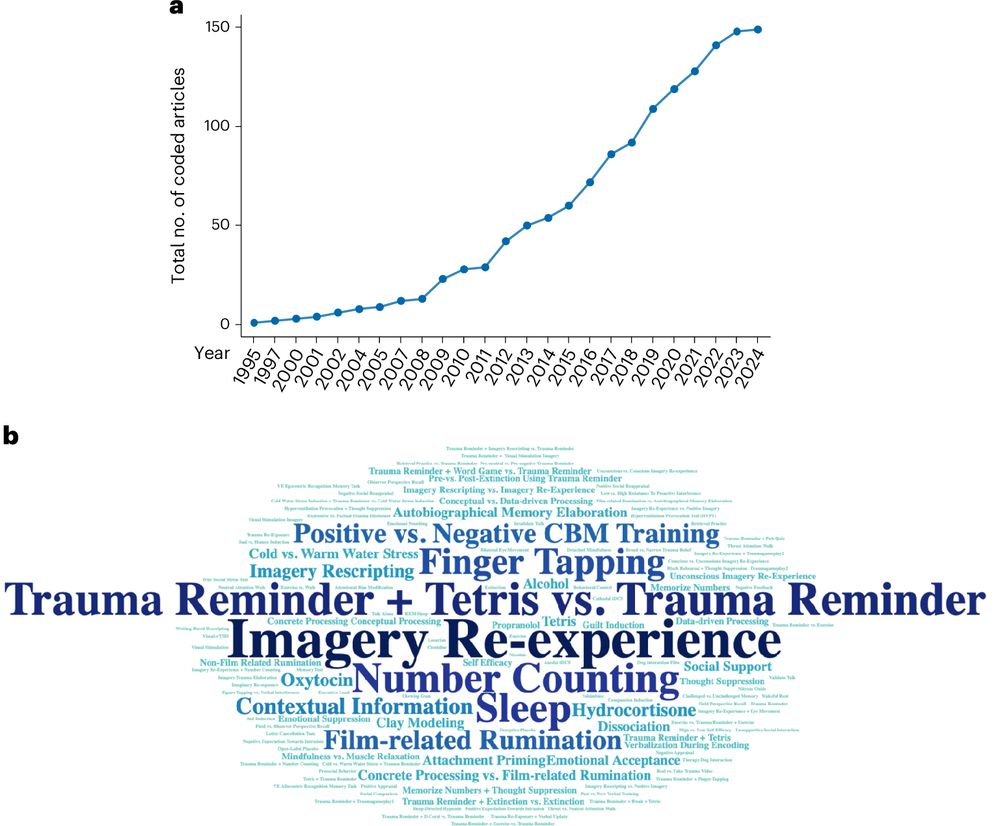
A systematic review and meta-analysis of experimental methods for modulating intrusive memories following lab-analogue trauma exposure in non-clinical populations
Nature Human Behaviour - Intrusive memories are a hallmark symptom of post-traumatic stress disorder (PTSD). This preregistered meta-analysis investigates how experimental techniques alter...
rdcu.be
Repost of my older X tweet:
🧵1/8
Thrilled to share our latest work @nathumbehav.nature.com
In this preregistered meta-analysis, we examine effectiveness of techniques aimed at modulating intrusive memories from lab-analogue trauma exposure in non-clinical human studies.
rdcu.be/enqhn
open access
🧵1/8
Thrilled to share our latest work @nathumbehav.nature.com
In this preregistered meta-analysis, we examine effectiveness of techniques aimed at modulating intrusive memories from lab-analogue trauma exposure in non-clinical human studies.
rdcu.be/enqhn
open access
Repost of my older X tweet:
🧵1/8
Thrilled to share our latest work @nathumbehav.nature.com
In this preregistered meta-analysis, we examine effectiveness of techniques aimed at modulating intrusive memories from lab-analogue trauma exposure in non-clinical human studies.
rdcu.be/enqhn
open access
🧵1/8
Thrilled to share our latest work @nathumbehav.nature.com
In this preregistered meta-analysis, we examine effectiveness of techniques aimed at modulating intrusive memories from lab-analogue trauma exposure in non-clinical human studies.
rdcu.be/enqhn
open access
A systematic review and meta-analysis of experimental methods for modulating intrusive memories following lab-analogue trauma exposure in non-clinical populations
Nature Human Behaviour - Intrusive memories are a hallmark symptom of post-traumatic stress disorder (PTSD). This preregistered meta-analysis investigates how experimental techniques alter...
rdcu.be
May 24, 2025 at 6:26 AM
Repost of my older X tweet:
🧵1/8
Thrilled to share our latest work @nathumbehav.nature.com
In this preregistered meta-analysis, we examine effectiveness of techniques aimed at modulating intrusive memories from lab-analogue trauma exposure in non-clinical human studies.
rdcu.be/enqhn
open access
🧵1/8
Thrilled to share our latest work @nathumbehav.nature.com
In this preregistered meta-analysis, we examine effectiveness of techniques aimed at modulating intrusive memories from lab-analogue trauma exposure in non-clinical human studies.
rdcu.be/enqhn
open access
Reposted by Mohith M. Varma (Mo)

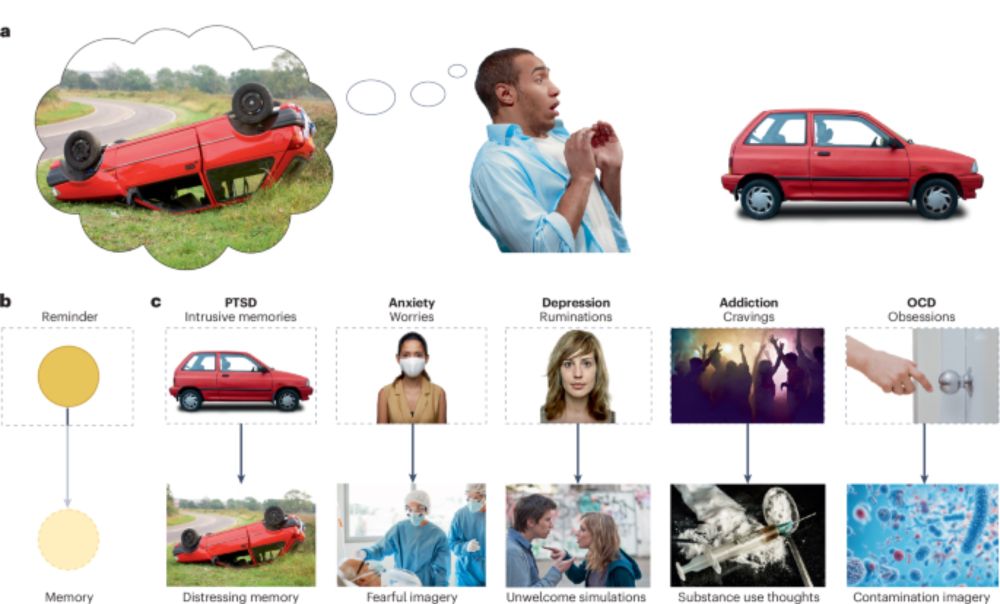
How does the brain stop thoughts? Find out in my article in @natrevneuro.nature.com with Subbu Subbulakshmi & Maite Crespo-Garcia www.nature.com/articles/s41... that integrates 25 yrs of psychology and neuroscience on this vital function.@mrccbu.bsky.social sky.social #neuroskyence #neuroscience
Brain mechanisms underlying the inhibitory control of thought - Nature Reviews Neuroscience
The capacity to prevent unwanted thoughts is important for cognitive function and mental health. Anderson et al. describe insights into the neural mechanisms of the inhibitory control of thought that ...
www.nature.com
May 20, 2025 at 9:36 AM
How does the brain stop thoughts? Find out in my article in @natrevneuro.nature.com with Subbu Subbulakshmi & Maite Crespo-Garcia www.nature.com/articles/s41... that integrates 25 yrs of psychology and neuroscience on this vital function.@mrccbu.bsky.social sky.social #neuroskyence #neuroscience