



@mengyingzhang.bsky.social
Postdoctoral fellow |Age research of genetics and single-cell multimodal data of aging related disorders in university of Rochester
Reposted

Large-scale genome-wide analyses with proteomics integration reveal novel loci and biological insights into frailty
->Nature | More info from EcoSearch
->Nature | More info from EcoSearch

Large-scale genome-wide analyses with proteomics integration reveal novel loci and biological insights into frailty
This work complies with all relevant ethical regulations. A full list of the ethics boards that approved the study protocols is provided at the end of this section. Samples FinnGen is a large national genetic resource (N = 520,210; release...
www.nature.com
August 9, 2025 at 5:47 AM
Reposted

Nature research paper: Evidence for improved DNA repair in long-lived bowhead whale
go.nature.com/4oNJSAG
go.nature.com/4oNJSAG

Evidence for improved DNA repair in long-lived bowhead whale - Nature
Analysis of the longest-lived mammal, the bowhead whale, reveals an improved ability to repair DNA breaks, mediated by high levels of cold-inducible RNA-binding protein.
go.nature.com
October 30, 2025 at 9:13 AM
Nature research paper: Evidence for improved DNA repair in long-lived bowhead whale
go.nature.com/4oNJSAG
go.nature.com/4oNJSAG
Reposted
Transcription factor switching drives subtype-specific pancreatic cancer
->Nature | More from Lil Dr Glen EcoChat at BigEarthData.ai
->Nature | More from Lil Dr Glen EcoChat at BigEarthData.ai

Transcription factor switching drives subtype-specific pancreatic cancer
We adopted an unbiased approach to identify driving transcription factors in PDAC and performed chromatin immunoprecipitation sequencing (ChIP–seq) of the active enhancer mark H3K27Ac on surplus tissue obtained after the resection of primary PDAC (Whipple surgical samples). We identified all...
www.nature.com
October 31, 2025 at 11:21 AM
Reposted

The enzyme cGAS senses DNA damage, but in humans and mice it inhibits a DNA repair pathway (homologous recombination), which reduces genome stability. In naked mole-rats, altering 4 amino acids in cGAS changes its role: instead of hampering repair, it boosts it.
www.science.org/doi/10.1126/...
www.science.org/doi/10.1126/...

A cGAS-mediated mechanism in naked mole-rats potentiates DNA repair and delays aging
Efficient DNA repair might make possible the longevity of naked mole-rats. However, whether they have distinctive mechanisms to optimize functions of DNA repair suppressors is unclear. We find that na...
www.science.org
October 18, 2025 at 12:42 PM
The enzyme cGAS senses DNA damage, but in humans and mice it inhibits a DNA repair pathway (homologous recombination), which reduces genome stability. In naked mole-rats, altering 4 amino acids in cGAS changes its role: instead of hampering repair, it boosts it.
www.science.org/doi/10.1126/...
www.science.org/doi/10.1126/...
Reposted
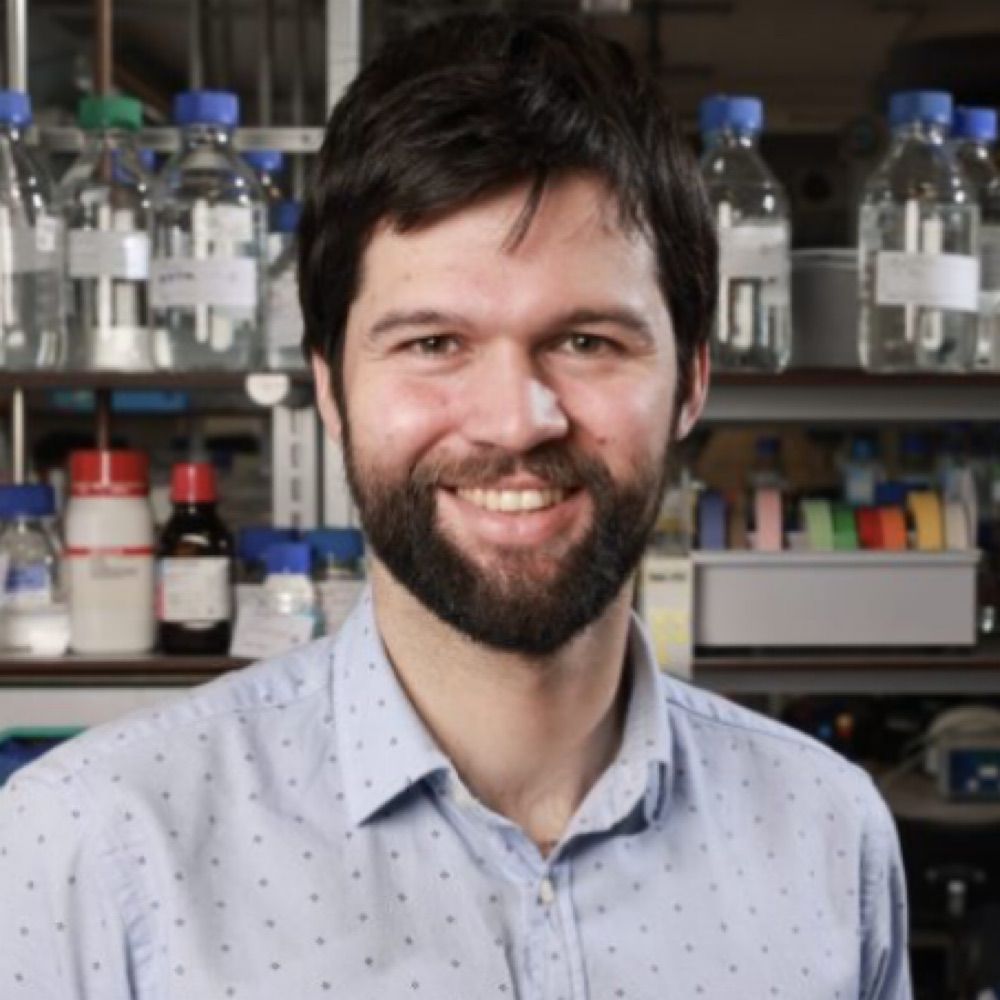
🚨The paper from my postdoc in @graeffjohannes.bsky.social’s lab at @epfl-brainmind.bsky.social is out! We show that memories can be switched on and off by simply changing the « packaging » of DNA in neurons through epigenetic editing. www.nature.com/articles/s41...

Cell-type- and locus-specific epigenetic editing of memory expression - Nature Genetics
CRISPR-based epigenetic editing is used in a cell-type-specific, locus-restricted and temporally controllable manner in the adult mouse brain to modulate memory expression.
www.nature.com
October 29, 2025 at 11:11 AM
🚨The paper from my postdoc in @graeffjohannes.bsky.social’s lab at @epfl-brainmind.bsky.social is out! We show that memories can be switched on and off by simply changing the « packaging » of DNA in neurons through epigenetic editing. www.nature.com/articles/s41...
Reposted

📢OUT TODAY @natgenet.nature.com
📰Single-cell Micro-C profiles 3D genome structures at high resolution and characterizes multi-enhancer hubs.
By Honggui Wu, @Xiaoliang Sunney Xie and colleagues.
⬇️
www.nature.com/articles/s41...
📰Single-cell Micro-C profiles 3D genome structures at high resolution and characterizes multi-enhancer hubs.
By Honggui Wu, @Xiaoliang Sunney Xie and colleagues.
⬇️
www.nature.com/articles/s41...

Single-cell Micro-C profiles 3D genome structures at high resolution and characterizes multi-enhancer hubs - Nature Genetics
scMicro-C is a new method that provides high-resolution maps of the 3D genome. scMicro-C identifies structures called ‘promoter stripes’, which link a gene promoter to multiple downstream enhancers.
www.nature.com
July 2, 2025 at 1:02 PM
📢OUT TODAY @natgenet.nature.com
📰Single-cell Micro-C profiles 3D genome structures at high resolution and characterizes multi-enhancer hubs.
By Honggui Wu, @Xiaoliang Sunney Xie and colleagues.
⬇️
www.nature.com/articles/s41...
📰Single-cell Micro-C profiles 3D genome structures at high resolution and characterizes multi-enhancer hubs.
By Honggui Wu, @Xiaoliang Sunney Xie and colleagues.
⬇️
www.nature.com/articles/s41...