Matt McLain
@mclainpaleo.bsky.social
Vertebrate paleontologist and professor at The Master’s University.
Reposted by Matt McLain

Reposted by Matt McLain

🚨NEW TRIASSIC THEROPOD NAMED🚨
a warm welcome to anteavis crurilongus, a basal theropod that was found in the late triassic ischigualasto formation of argentina! the paper by martinez et al. can be found here
www.nature.com/articles/s41...
(art by jorge blanco)
a warm welcome to anteavis crurilongus, a basal theropod that was found in the late triassic ischigualasto formation of argentina! the paper by martinez et al. can be found here
www.nature.com/articles/s41...
(art by jorge blanco)


October 14, 2025 at 12:46 PM
🚨NEW TRIASSIC THEROPOD NAMED🚨
a warm welcome to anteavis crurilongus, a basal theropod that was found in the late triassic ischigualasto formation of argentina! the paper by martinez et al. can be found here
www.nature.com/articles/s41...
(art by jorge blanco)
a warm welcome to anteavis crurilongus, a basal theropod that was found in the late triassic ischigualasto formation of argentina! the paper by martinez et al. can be found here
www.nature.com/articles/s41...
(art by jorge blanco)
Reposted by Matt McLain
Arnaout, B., Brzezinski, K., Chen, A. et al. Galloanseran cranial development highlights exceptions to von Baer’s laws. EvoDevo 16, 17 (2025). doi.org/10.1186/s132...

Galloanseran cranial development highlights exceptions to von Baer’s laws - EvoDevo
The remarkable morphological disparity of the animal kingdom is underpinned by changes in embryonic development across the tree of life; as such, deciphering evolutionary patterns of developmental divergence depends on investigations of different species across a range of comparable developmental stages. Among the most influential ideas regarding such developmental divergences are von Baer’s Laws of Development and Haeckel’s Theory of Recapitulation. Here, we assess several predictions following from these ideas at the tissue-level by comparing skull osteogenesis in representatives of the bird clade Galloanserae. We investigated high-resolution µCT scans of embryonic series for four galloanseran species: chickens and quails, representing Galliformes (landfowl), and ducks and geese, representing Anseriformes (waterfowl). To compare skull osteogenesis across our taxon sample, we devised a skull-specific staging system based on ossification sequences to discretise the process into five stages. During skull osteogenesis, we found that the location of the onset of ossification within each element and the direction of ossification progression were the same in all species in our sample, implying a conserved developmental programme for induction and ossification progression across Galloanserae. Moreover, we found that the appearance of synapomorphies diagnostic of broader clades often overlapped with species-specific ones during osteogenesis. Indeed, many diagnostic features of deep clades, such as osteological synapomorphies of the phylogenetically inclusive clade Galloanserae, appear at surprisingly late stages of development. These observations fail to support several predictions of von Baer’s Laws of Development and Haeckel’s Theory of Recapitulation, instead suggesting what we term a ‘braiding’ pattern of developmental divergence in which degrees of interspecific morphological similarity wax and wane during development as a result of the interplay between developmental constraints and phyletic variation.
doi.org
October 6, 2025 at 3:16 PM
Arnaout, B., Brzezinski, K., Chen, A. et al. Galloanseran cranial development highlights exceptions to von Baer’s laws. EvoDevo 16, 17 (2025). doi.org/10.1186/s132...
Reposted by Matt McLain
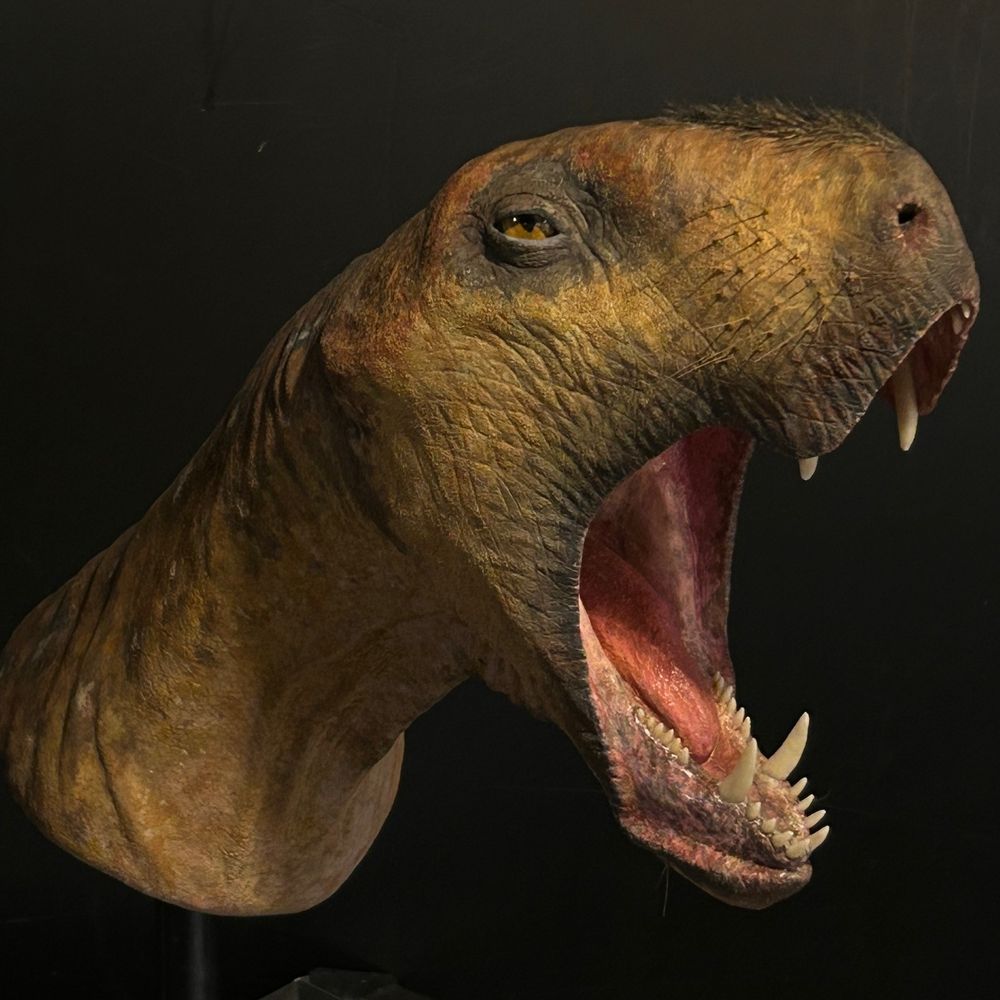
This summer I had the pleasure of collaborating w/ researchers Naiomi Cookson & Arjan Mann (Field Museum) to reconstruct a flesh-model bust of Cyonosaurus. After getting to meet the holotype, I started roughing out the skull armature. More of the process to follow!
#paleoart
#paleoart


September 19, 2025 at 1:29 PM
This summer I had the pleasure of collaborating w/ researchers Naiomi Cookson & Arjan Mann (Field Museum) to reconstruct a flesh-model bust of Cyonosaurus. After getting to meet the holotype, I started roughing out the skull armature. More of the process to follow!
#paleoart
#paleoart
Reposted by Matt McLain
HONE, D. W. E., & PRONDVAI, E.. (2025). The shape, structure, function, and evolution of the pterosaurian uropatagium. Anais Da Academia Brasileira De Ciências, 97, e20250129. doi.org/10.1590/0001...
Establishing a secure connection ...
doi.org
September 16, 2025 at 12:00 PM
HONE, D. W. E., & PRONDVAI, E.. (2025). The shape, structure, function, and evolution of the pterosaurian uropatagium. Anais Da Academia Brasileira De Ciências, 97, e20250129. doi.org/10.1590/0001...
Reposted by Matt McLain

If you don't have access to Nature, but would like to read our paper on the new specimen of #Spicomellus, you can read it online at this link with no subscription: rdcu.be/eCJK3
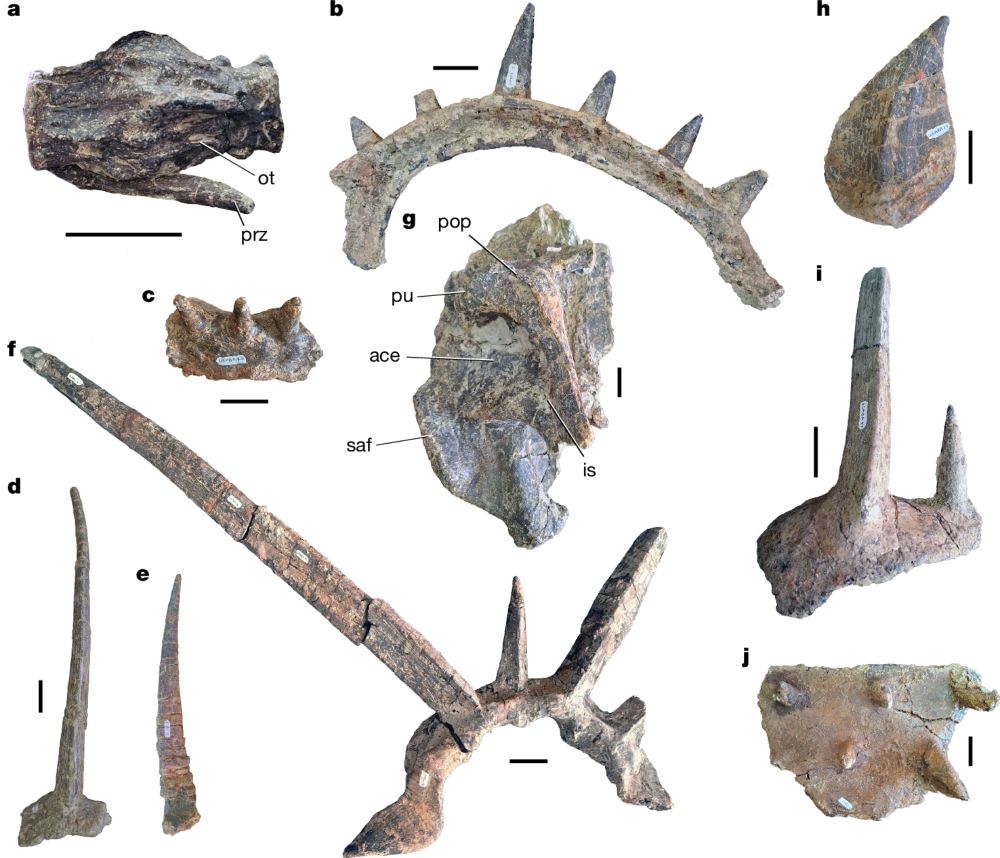
Extreme armour in the world’s oldest ankylosaur
Nature - The ankylosaurian dinosaur Spicomellus afer possessed a tail weapon and uniquely elaborate dermal armour.
rdcu.be
August 27, 2025 at 4:34 PM
If you don't have access to Nature, but would like to read our paper on the new specimen of #Spicomellus, you can read it online at this link with no subscription: rdcu.be/eCJK3
Reposted by Matt McLain
The most chilling science video ever shot
www.youtube.com/watch?time_c...
www.youtube.com/watch?time_c...

Whelks overwhelm and consume lobsters
YouTube video by Christie Wilcox
www.youtube.com
August 25, 2025 at 4:33 PM
The most chilling science video ever shot
www.youtube.com/watch?time_c...
www.youtube.com/watch?time_c...
Reposted by Matt McLain
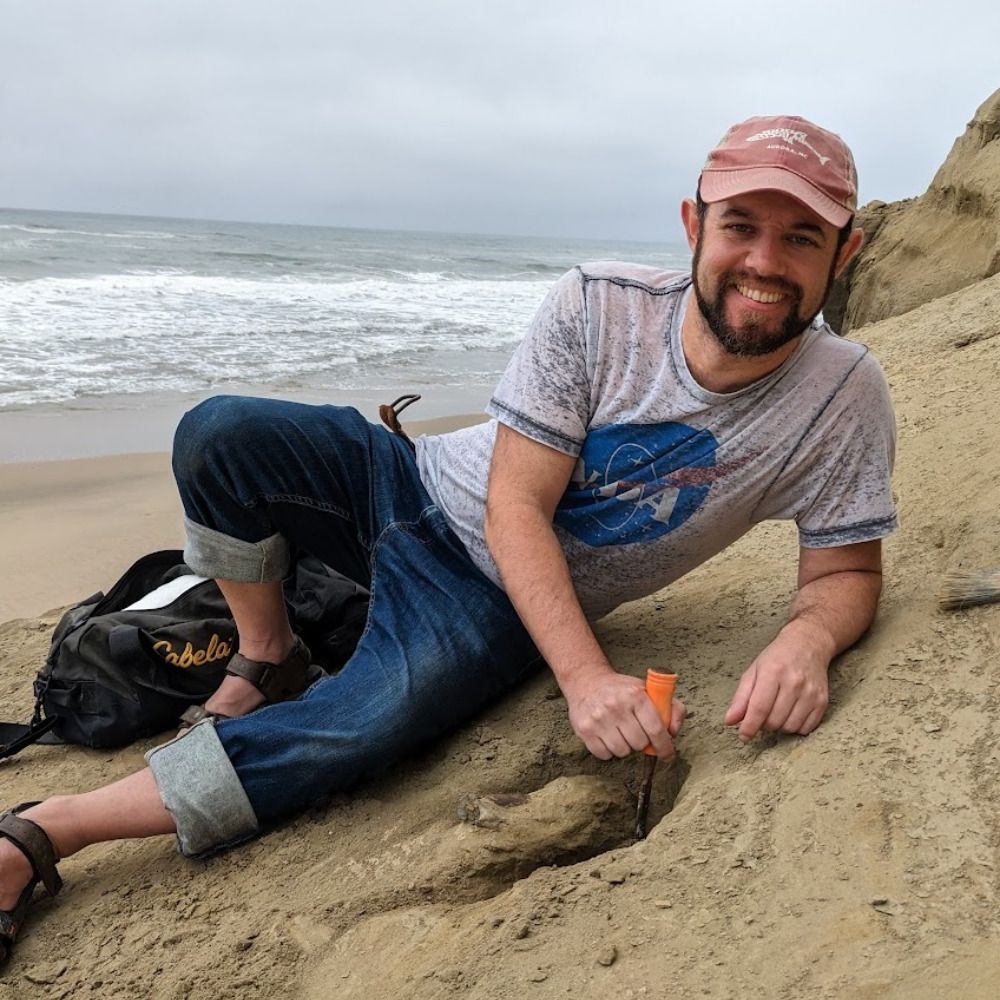
Otaria byronia is an absolute beast

Watching this video 10 times has significantly improved my mood.
August 18, 2025 at 11:06 PM
Otaria byronia is an absolute beast
Reposted by Matt McLain
happy #fossilfriday! this is meilifeilong, a pterosaur from early cretaceous china. the holotype is the most complete chaoyangopterid yet discovered; chaoyangopterids, although smaller, had a similar lifestyle to the related azhdarchids, hunting on the ground
(art by zhao chuang)
(art by zhao chuang)


August 8, 2025 at 3:04 PM
happy #fossilfriday! this is meilifeilong, a pterosaur from early cretaceous china. the holotype is the most complete chaoyangopterid yet discovered; chaoyangopterids, although smaller, had a similar lifestyle to the related azhdarchids, hunting on the ground
(art by zhao chuang)
(art by zhao chuang)
Reposted by Matt McLain
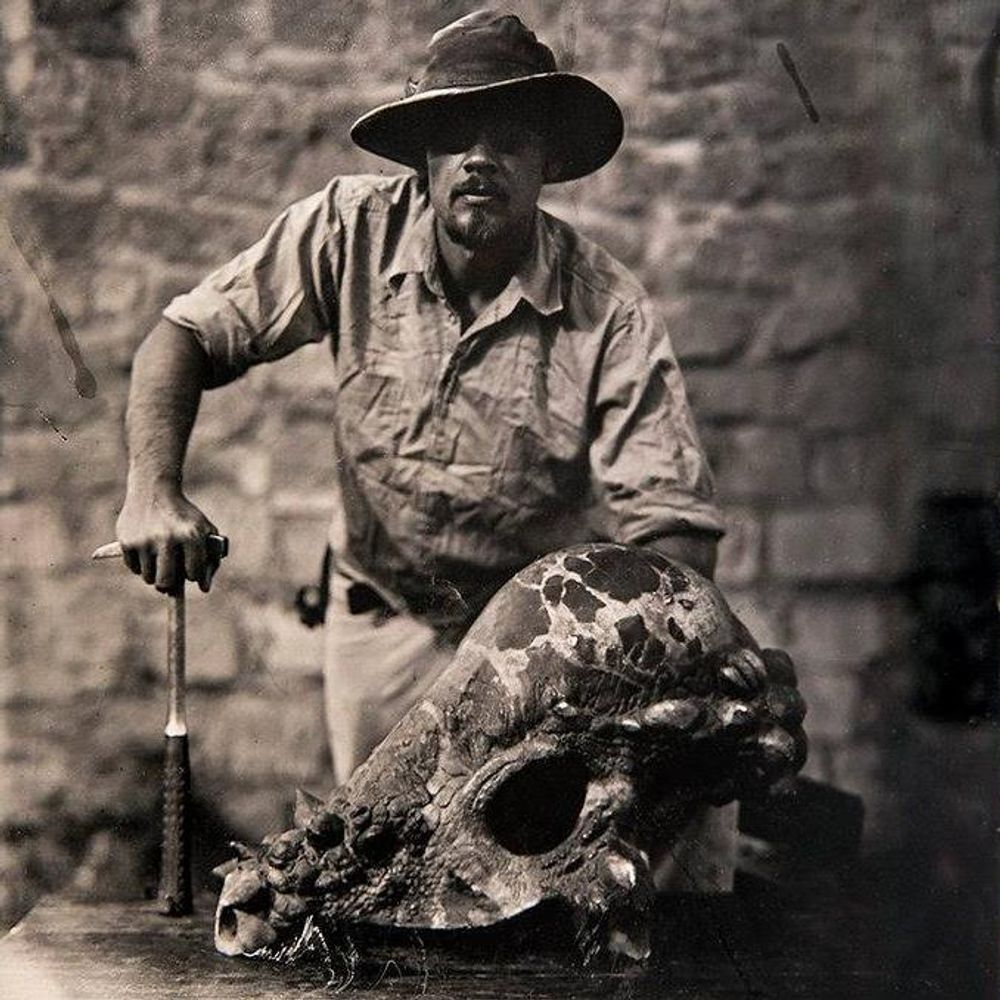
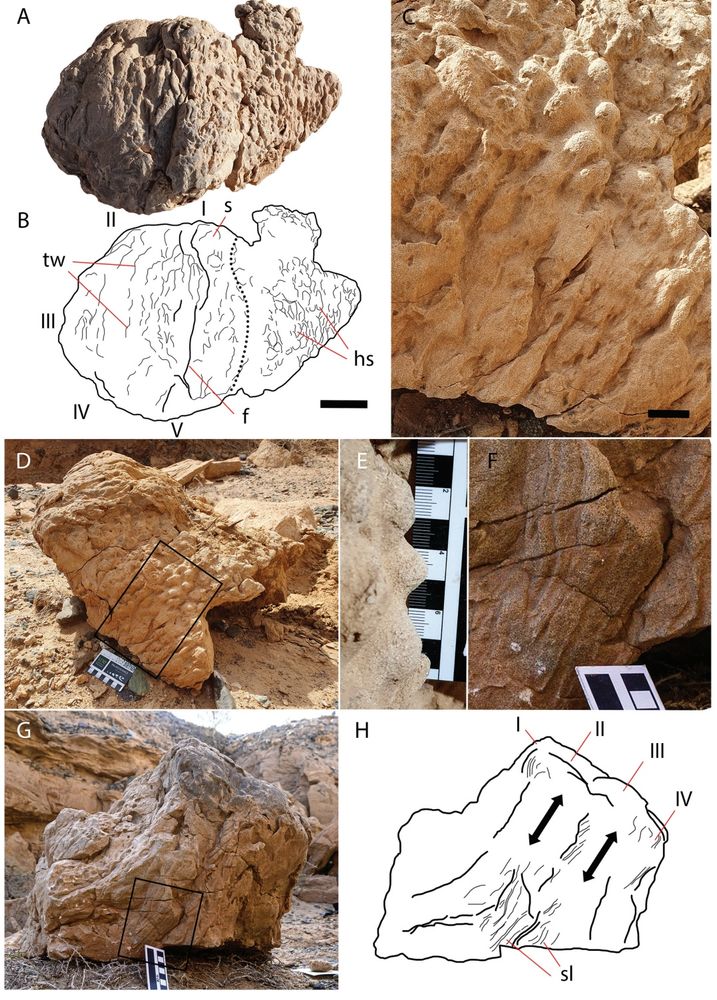
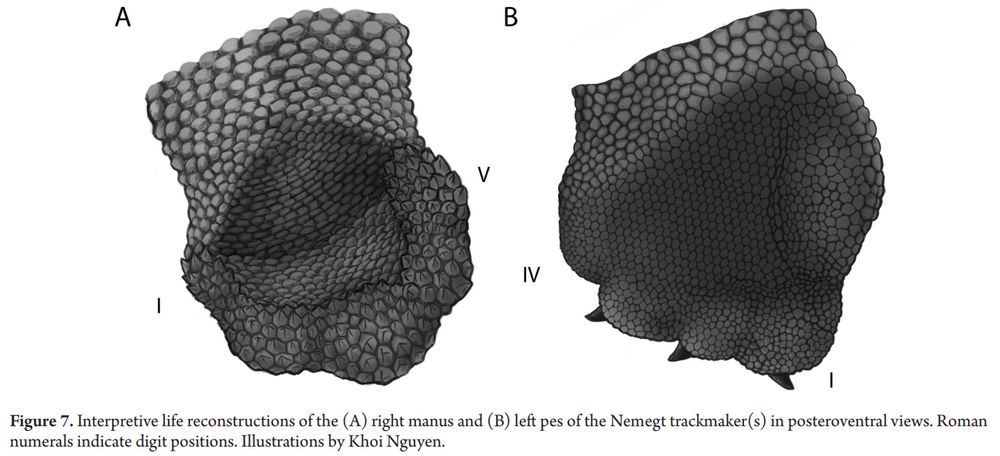
New paper day! Phil Bell led a great study on some *INSANELY COOL* titanosaur tracks our expedition found in Mongolia. The scales in particular are extra awesome - they're like little pyramids, and they *may* have helped with scratch digging and/or walking on sandy surfaces!
July 17, 2025 at 5:16 PM
New paper day! Phil Bell led a great study on some *INSANELY COOL* titanosaur tracks our expedition found in Mongolia. The scales in particular are extra awesome - they're like little pyramids, and they *may* have helped with scratch digging and/or walking on sandy surfaces!
Reposted by Matt McLain

Among my favourite marine reptiles are the temnodontosaurs, mostly big, predatory #ichthyosaurs, mostly from the European Early #Jurassic. WHAT were they doing, how were they making a living? An extraordinary new #OA paper in Nature provides some answers... www.nature.com/articles/s41...

Adaptations for stealth in the wing-like flippers of a large ichthyosaur - Nature
Analysis of a fossilized front flipper of the Jurassic ichthyosaur Temnodontosaurus that preserves details of soft tissue indicates the presence of a serrated trailing edge that would have reduced noi...
www.nature.com
July 16, 2025 at 3:34 PM
Among my favourite marine reptiles are the temnodontosaurs, mostly big, predatory #ichthyosaurs, mostly from the European Early #Jurassic. WHAT were they doing, how were they making a living? An extraordinary new #OA paper in Nature provides some answers... www.nature.com/articles/s41...
Reposted by Matt McLain

I am 💯 down with referring to anything AI related as “clanker” based.
July 16, 2025 at 12:56 AM
I am 💯 down with referring to anything AI related as “clanker” based.
Reposted by Matt McLain
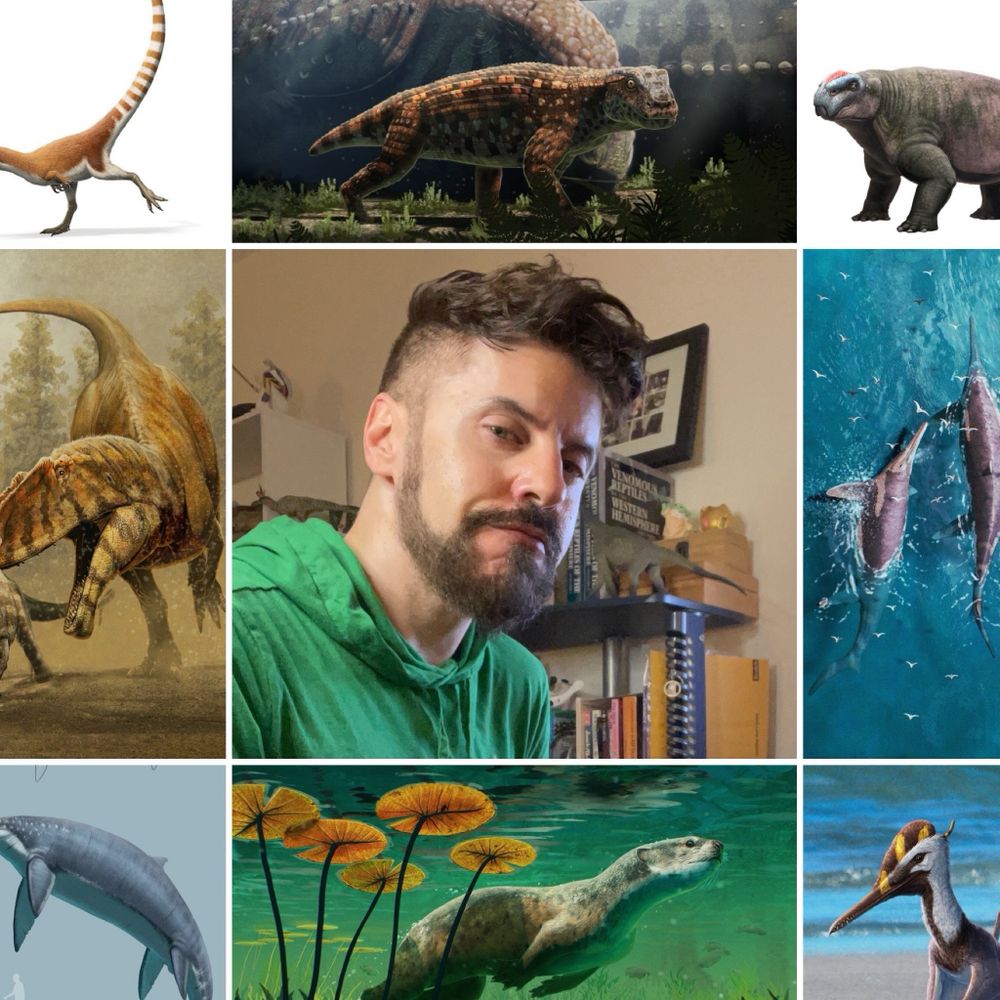
I’m thinking about some of the coolest reptiles of the Triassic: Phytosaurs! No, these AREN’T crocodiles. They are not even closely related to them. Phytosaurs evolved a body plan similar to crocodilians completely separately from them and WAY before they appeared in the fossil record
#paleoart #art
#paleoart #art

July 14, 2025 at 3:36 PM
Reposted by Matt McLain

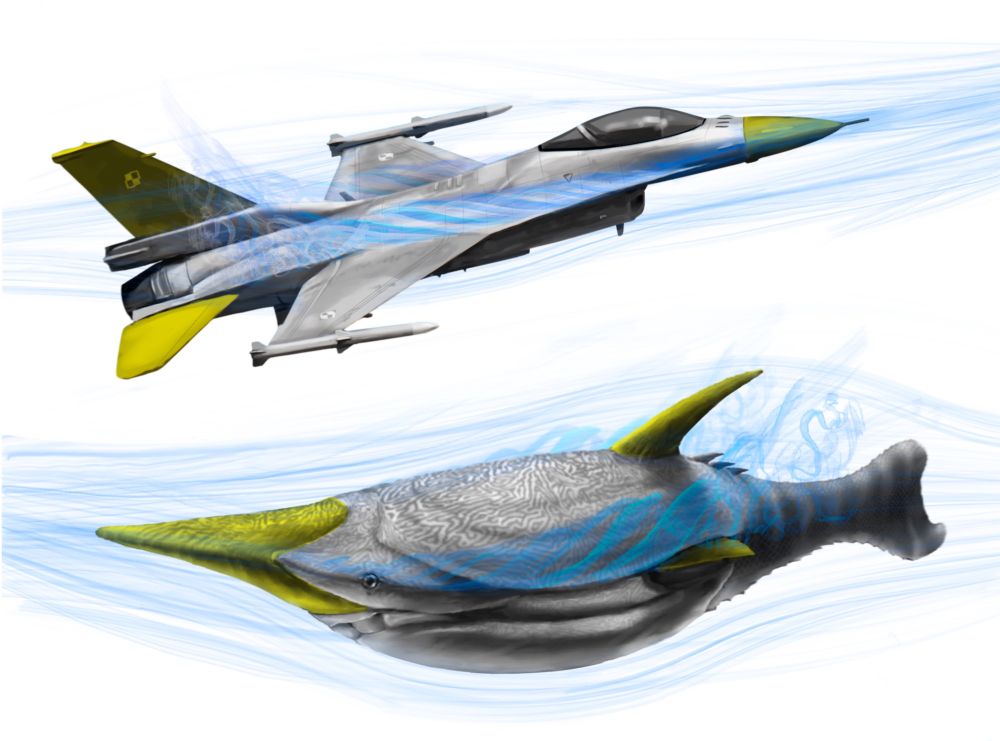
New publication on how headshield processes in ostracoderm fishes worked like control surfaces on planes to stabilize and maneuver. 🐟🧪
Sanchez-Sanchez V, Sanisidro O, Ferrón HG. Functional aspects of the headshield processes in ostracoderms. Paleobiology. 2025:1-13.
doi.org/10.1017/pab....
Sanchez-Sanchez V, Sanisidro O, Ferrón HG. Functional aspects of the headshield processes in ostracoderms. Paleobiology. 2025:1-13.
doi.org/10.1017/pab....
July 11, 2025 at 5:08 PM
New publication on how headshield processes in ostracoderm fishes worked like control surfaces on planes to stabilize and maneuver. 🐟🧪
Sanchez-Sanchez V, Sanisidro O, Ferrón HG. Functional aspects of the headshield processes in ostracoderms. Paleobiology. 2025:1-13.
doi.org/10.1017/pab....
Sanchez-Sanchez V, Sanisidro O, Ferrón HG. Functional aspects of the headshield processes in ostracoderms. Paleobiology. 2025:1-13.
doi.org/10.1017/pab....
Reposted by Matt McLain
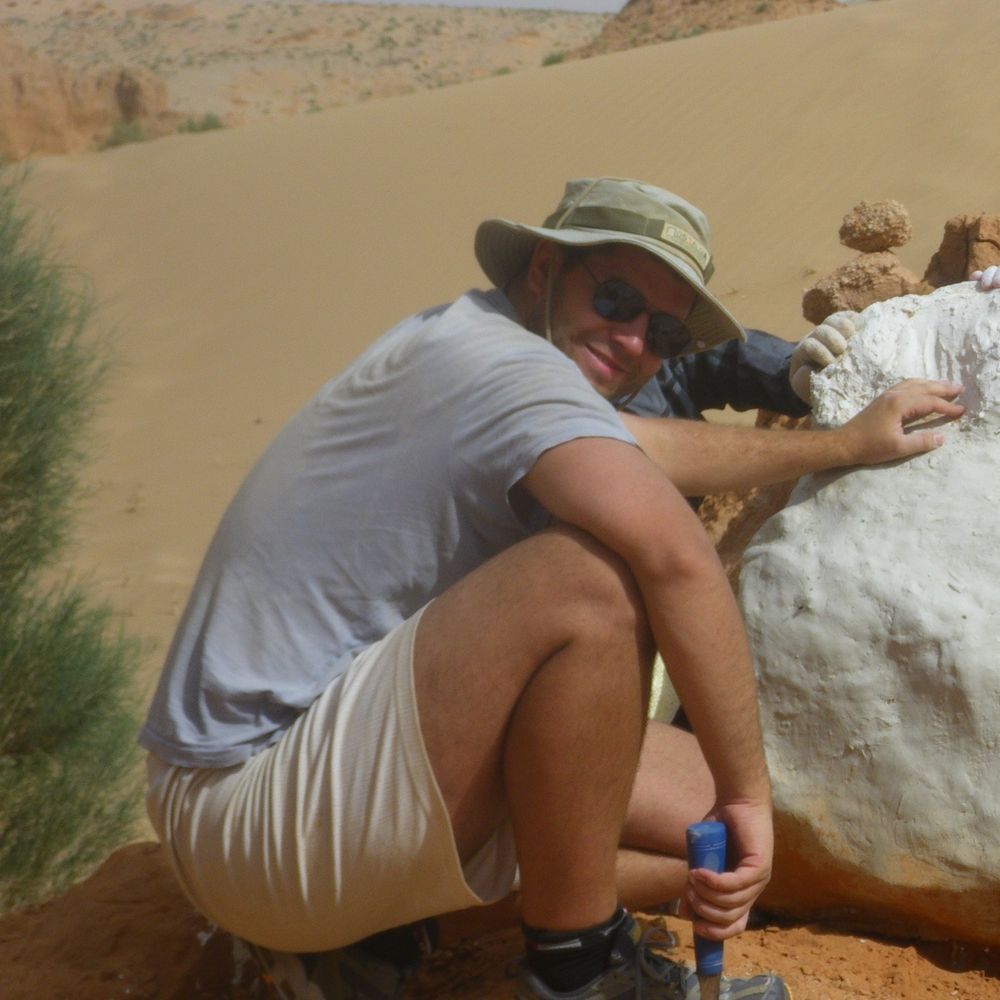
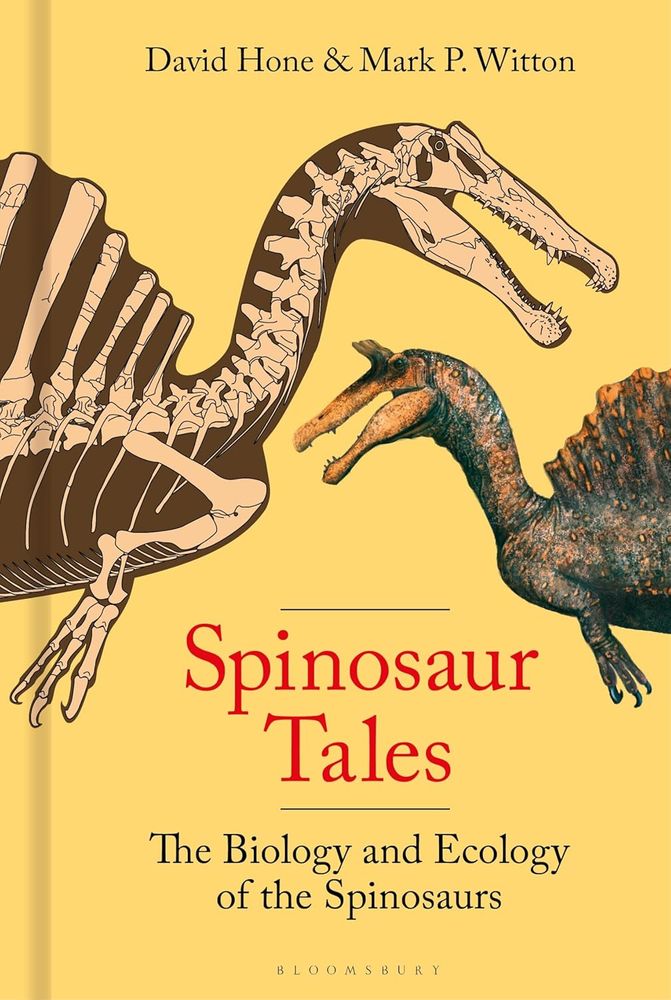
This afternoon's job is proofing Spinosaur Tales. It should be out in November in the UK, and North America in Feb 2026. Chock full of illustrations by @markwitton.bsky.social and I even graciously allowed him to write some of the text too.
July 11, 2025 at 2:44 PM
This afternoon's job is proofing Spinosaur Tales. It should be out in November in the UK, and North America in Feb 2026. Chock full of illustrations by @markwitton.bsky.social and I even graciously allowed him to write some of the text too.
Reposted by Matt McLain
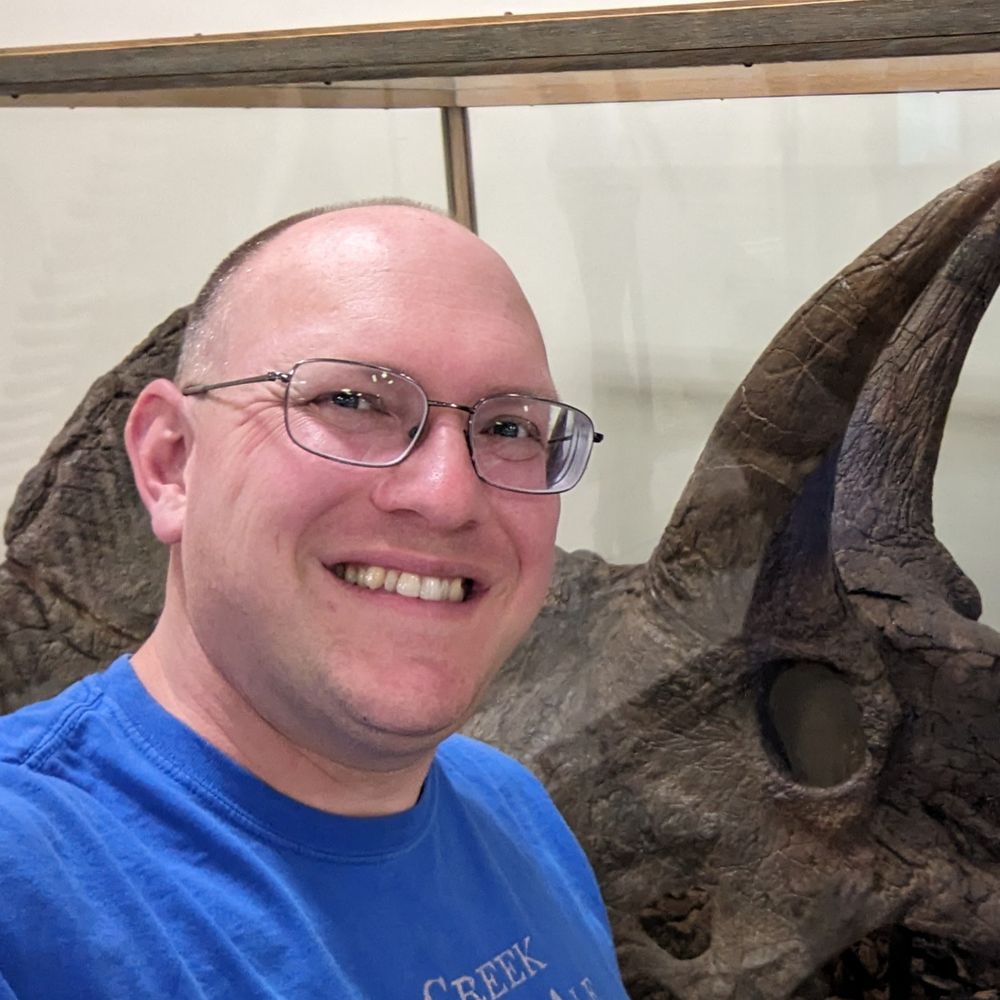
Now, some thoughts on seeing Aquilops on the big screen! "Our" little dino was one of the stars of Jurassic World, and that was quite an experience as one of the scientists behind the research. (1/n)
July 6, 2025 at 1:34 PM
Now, some thoughts on seeing Aquilops on the big screen! "Our" little dino was one of the stars of Jurassic World, and that was quite an experience as one of the scientists behind the research. (1/n)
Reposted by Matt McLain


July 4, 2025 at 12:50 PM
Reposted by Matt McLain
Adam D. Marsh (2025)
A large silesaurid specimen from Petrified Forest National Park, U.S.A., with comments on large body sizes in latest Triassic ornithodirans
Lithodendron 2: 1–15
doi: doi/10.69575/RPK...
petrifiedforestfieldinstitute.org/lithodendron...
A large silesaurid specimen from Petrified Forest National Park, U.S.A., with comments on large body sizes in latest Triassic ornithodirans
Lithodendron 2: 1–15
doi: doi/10.69575/RPK...
petrifiedforestfieldinstitute.org/lithodendron...
A large Silesaurid Specimen from Petrified Forest National Park – Lithodendron
petrifiedforestfieldinstitute.org
July 2, 2025 at 6:20 PM
Adam D. Marsh (2025)
A large silesaurid specimen from Petrified Forest National Park, U.S.A., with comments on large body sizes in latest Triassic ornithodirans
Lithodendron 2: 1–15
doi: doi/10.69575/RPK...
petrifiedforestfieldinstitute.org/lithodendron...
A large silesaurid specimen from Petrified Forest National Park, U.S.A., with comments on large body sizes in latest Triassic ornithodirans
Lithodendron 2: 1–15
doi: doi/10.69575/RPK...
petrifiedforestfieldinstitute.org/lithodendron...
Reposted by Matt McLain
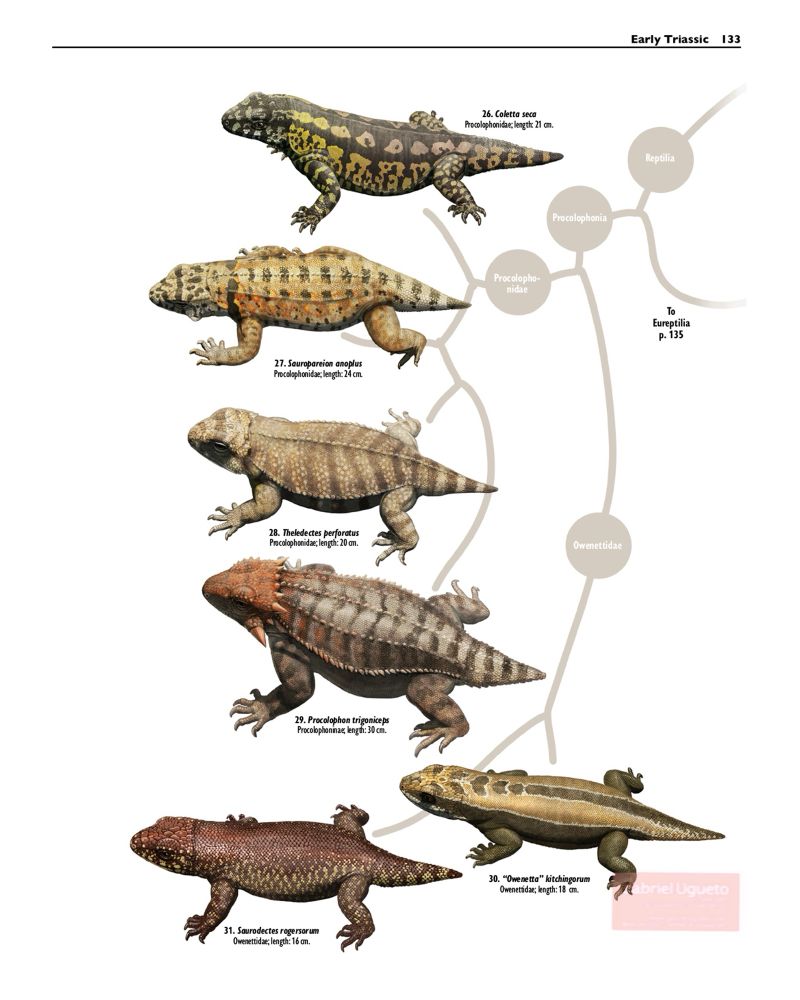
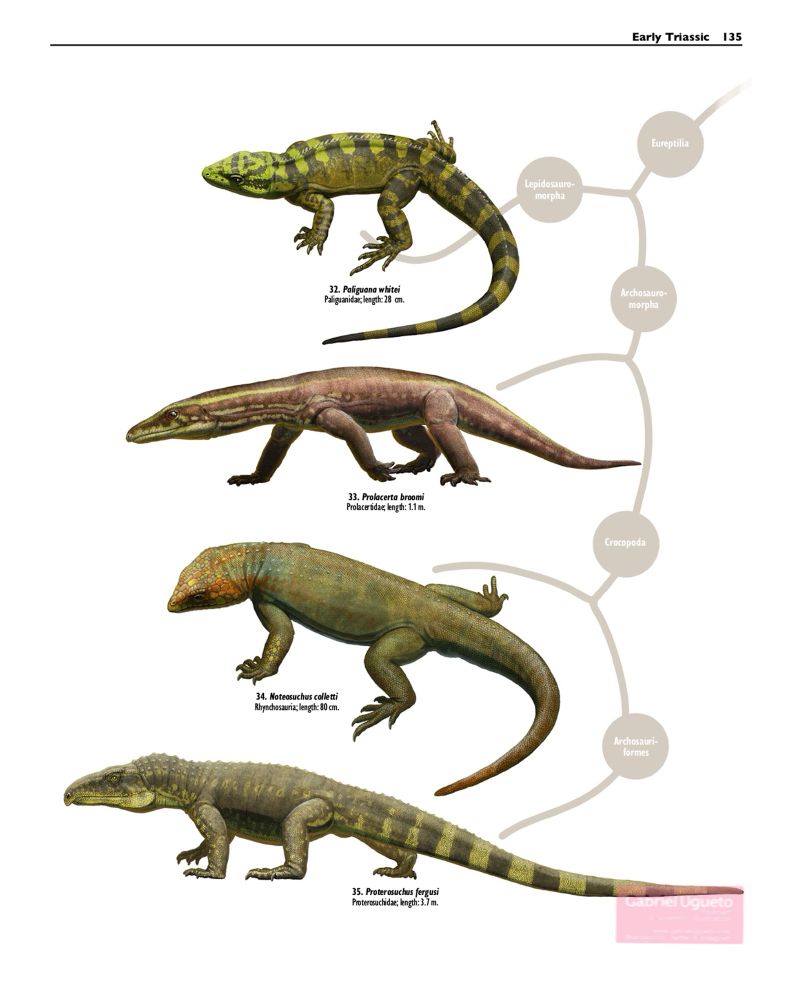
Reptiles of the Early Triassic Beaufort Group (mostly the Katberg Formation) of South Africa (ca. 251 million years ago)
Sneak peek at two plates from my book (in preparation) about the tetrapods of the Triassic
#paleoart #paleontology #art #reptiles #sciart
Sneak peek at two plates from my book (in preparation) about the tetrapods of the Triassic
#paleoart #paleontology #art #reptiles #sciart
June 21, 2025 at 2:07 PM
Reptiles of the Early Triassic Beaufort Group (mostly the Katberg Formation) of South Africa (ca. 251 million years ago)
Sneak peek at two plates from my book (in preparation) about the tetrapods of the Triassic
#paleoart #paleontology #art #reptiles #sciart
Sneak peek at two plates from my book (in preparation) about the tetrapods of the Triassic
#paleoart #paleontology #art #reptiles #sciart
Reposted by Matt McLain
🎉 Join us for the 7th International Paleontological Congress in Cape Town! 🇿🇦
Paleontologists from around the world will gather to share discoveries, ideas, and inspiration.
Don't miss this unforgettable event!
🔗 ipc7.site
#IPC7 #Paleontology
Paleontologists from around the world will gather to share discoveries, ideas, and inspiration.
Don't miss this unforgettable event!
🔗 ipc7.site
#IPC7 #Paleontology
June 21, 2025 at 3:47 AM
🎉 Join us for the 7th International Paleontological Congress in Cape Town! 🇿🇦
Paleontologists from around the world will gather to share discoveries, ideas, and inspiration.
Don't miss this unforgettable event!
🔗 ipc7.site
#IPC7 #Paleontology
Paleontologists from around the world will gather to share discoveries, ideas, and inspiration.
Don't miss this unforgettable event!
🔗 ipc7.site
#IPC7 #Paleontology
Reposted by Matt McLain
Pêgas, R.V. 2025. On the systematics and phylogenetic nomenclature of the Ornithocheiriformes (Pterosauria, Pteranodontoidea). Palaeontologia Electronica, 28(2):a25.
doi.org/10.26879/20
palaeo-electronica.org/content/2025/5546-systematics-of-ornithocheiriform-pterosaurs
doi.org/10.26879/20
palaeo-electronica.org/content/2025/5546-systematics-of-ornithocheiriform-pterosaurs

Systematics of ornithocheiriform pterosaurs
On the systematics and phylogenetic nomenclature of the Ornithocheiriformes (Pterosauria, Pteranodontoidea)
doi.org
June 20, 2025 at 5:27 PM
Pêgas, R.V. 2025. On the systematics and phylogenetic nomenclature of the Ornithocheiriformes (Pterosauria, Pteranodontoidea). Palaeontologia Electronica, 28(2):a25.
doi.org/10.26879/20
palaeo-electronica.org/content/2025/5546-systematics-of-ornithocheiriform-pterosaurs
doi.org/10.26879/20
palaeo-electronica.org/content/2025/5546-systematics-of-ornithocheiriform-pterosaurs
Reposted by Matt McLain
#FossilFriday The Permian pareiasaur Scutosaurus karpinskii @amnh.org

June 6, 2025 at 1:44 PM
#FossilFriday The Permian pareiasaur Scutosaurus karpinskii @amnh.org
Reposted by Matt McLain
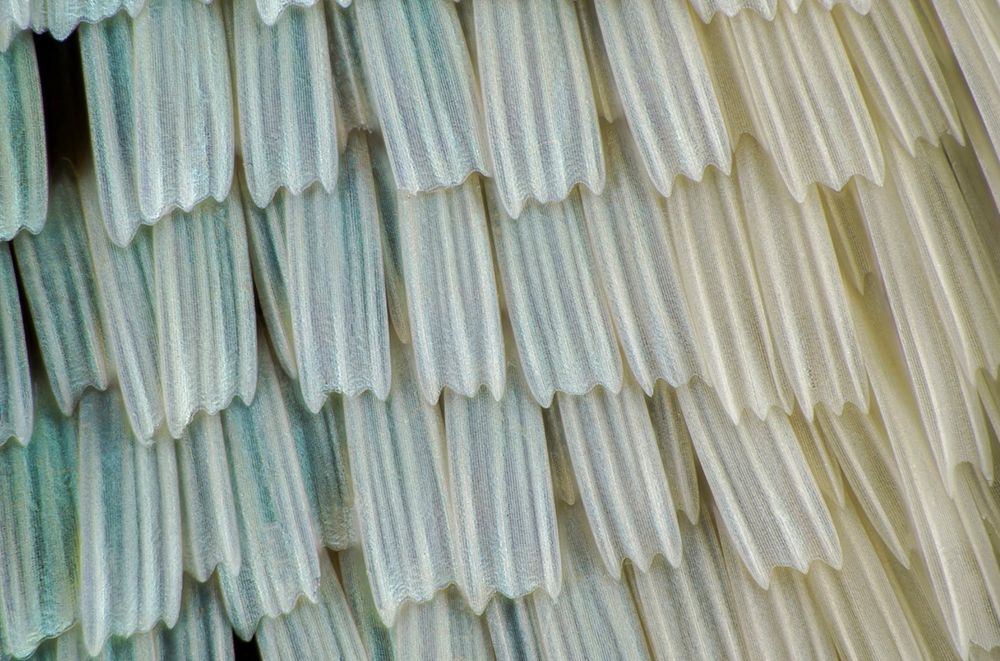
Oldest known fossil evidence of lepidopterans (butterflies & moths), from the Triassic (~236 mya) of Argentina! Scales from the wings of these insects were preserved in dicynodont coprolites, & were likely on plants eaten by the dicynodonts. www.science.org/content/arti... #PoopScience 🧪💩🪨🦋
Ancient poop yields world’s oldest butterfly fossils
Tiny wing scales suggest the proboscis evolved 100 million years before flowers
www.science.org
June 2, 2025 at 11:37 PM
Oldest known fossil evidence of lepidopterans (butterflies & moths), from the Triassic (~236 mya) of Argentina! Scales from the wings of these insects were preserved in dicynodont coprolites, & were likely on plants eaten by the dicynodonts. www.science.org/content/arti... #PoopScience 🧪💩🪨🦋
Reposted by Matt McLain