



@maciejdrwal.bsky.social
Reposted

The Big Data fallacy 😱
Research by Vosgerau et al suggests decision-makers tend to interpret correlational relationships as causal when sample sizes are large (vs small)—even when given experimental evidence showing no or opposite causal effect:
buff.ly/5ZjWJ8E
Research by Vosgerau et al suggests decision-makers tend to interpret correlational relationships as causal when sample sizes are large (vs small)—even when given experimental evidence showing no or opposite causal effect:
buff.ly/5ZjWJ8E

October 23, 2025 at 3:09 PM
The Big Data fallacy 😱
Research by Vosgerau et al suggests decision-makers tend to interpret correlational relationships as causal when sample sizes are large (vs small)—even when given experimental evidence showing no or opposite causal effect:
buff.ly/5ZjWJ8E
Research by Vosgerau et al suggests decision-makers tend to interpret correlational relationships as causal when sample sizes are large (vs small)—even when given experimental evidence showing no or opposite causal effect:
buff.ly/5ZjWJ8E
Reposted

The trend is real, but this NYT analysis at the Congressional district level has big ecological bias
Poor *areas* vote Republican, but it's often the richer *individuals* within those poorer areas that are most Republican
And many poor *individuals* rich blue urban *areas* vote Dem
Poor *areas* vote Republican, but it's often the richer *individuals* within those poorer areas that are most Republican
And many poor *individuals* rich blue urban *areas* vote Dem


October 24, 2025 at 2:17 PM
The trend is real, but this NYT analysis at the Congressional district level has big ecological bias
Poor *areas* vote Republican, but it's often the richer *individuals* within those poorer areas that are most Republican
And many poor *individuals* rich blue urban *areas* vote Dem
Poor *areas* vote Republican, but it's often the richer *individuals* within those poorer areas that are most Republican
And many poor *individuals* rich blue urban *areas* vote Dem
Reposted

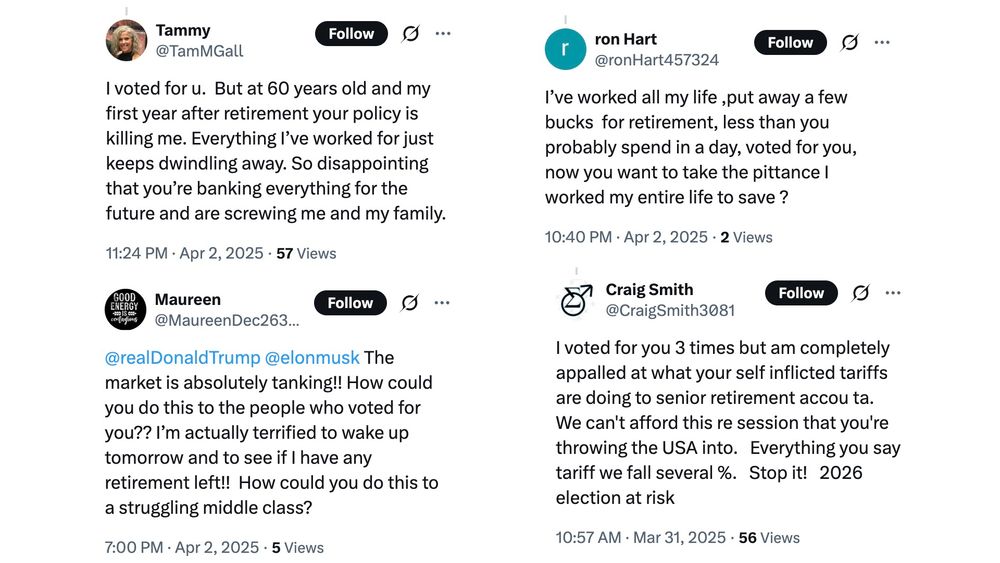
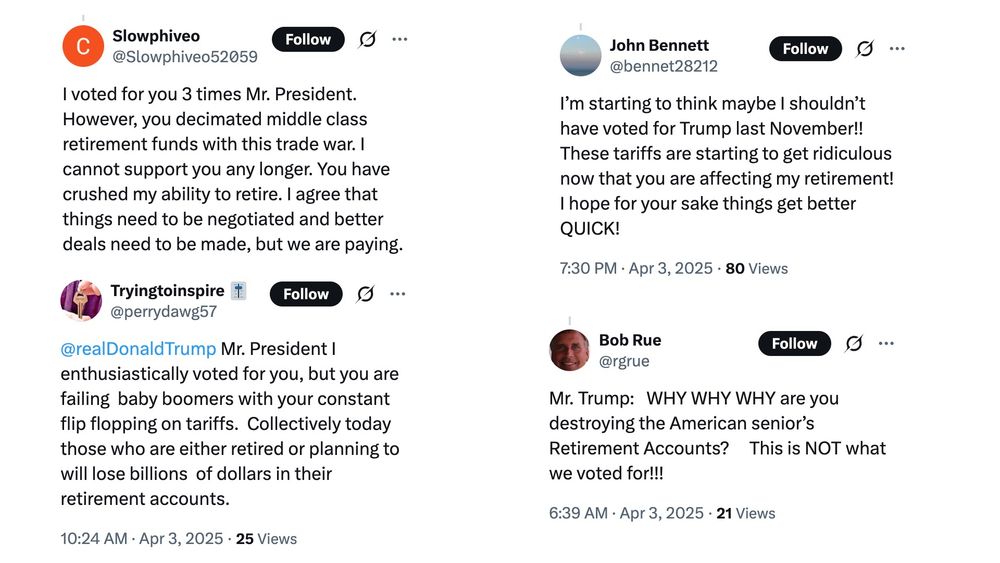
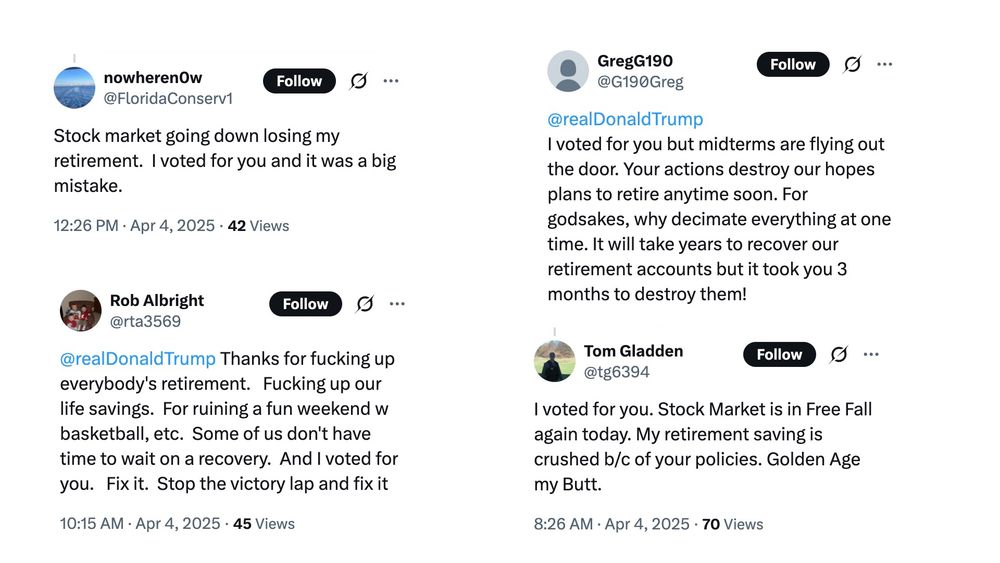
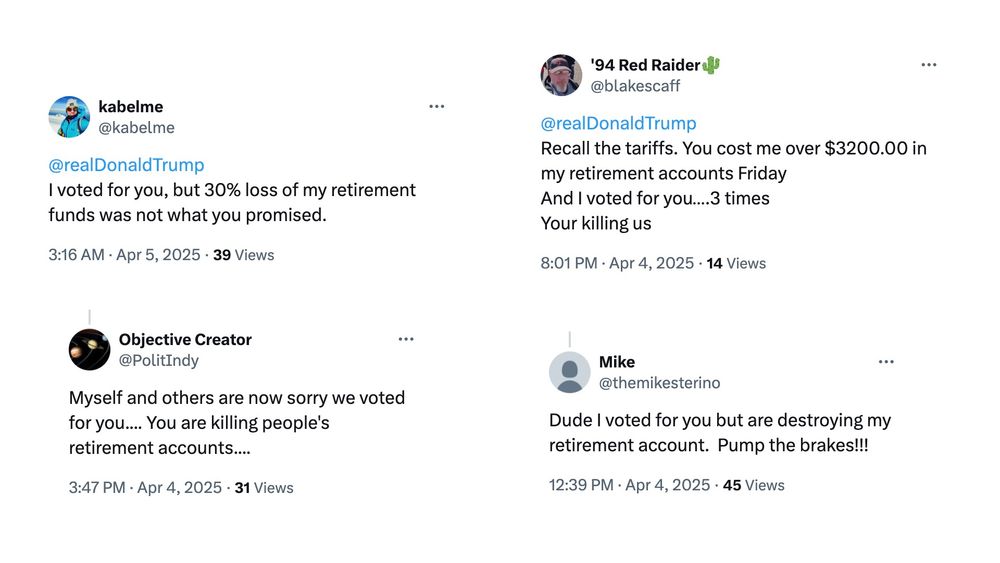
Economic anxiety did not bring voters to Trump, authoritarianism and nativism did. Economic anxiety turns them away from him!

April 6, 2025 at 10:41 PM
Economic anxiety did not bring voters to Trump, authoritarianism and nativism did. Economic anxiety turns them away from him!
Reposted
Just like centrist parties in Western Europe, the Democratic Party is more concerned about the voters of the far right than with its own voters.
We are truly without leaders or even political representation.

Chuck Schumer says he won't block Republican funding bill amid Democratic divisions over shutdown strategy
Schumer relented one day after vowing that Senate Democrats would thwart the "partisan" measure, saying the "chaos" of a government shutdown would be a worse option.
www.nbcnews.com
March 14, 2025 at 12:03 AM
Just like centrist parties in Western Europe, the Democratic Party is more concerned about the voters of the far right than with its own voters.
Reposted
It’s ok to say “I don’t know the answer to that question”. Really! Try it some time. It’s liberating. And you will probably be respected and trusted more for your answers to the questions you do know the answer to.
March 11, 2025 at 11:40 AM
It’s ok to say “I don’t know the answer to that question”. Really! Try it some time. It’s liberating. And you will probably be respected and trusted more for your answers to the questions you do know the answer to.
Reposted
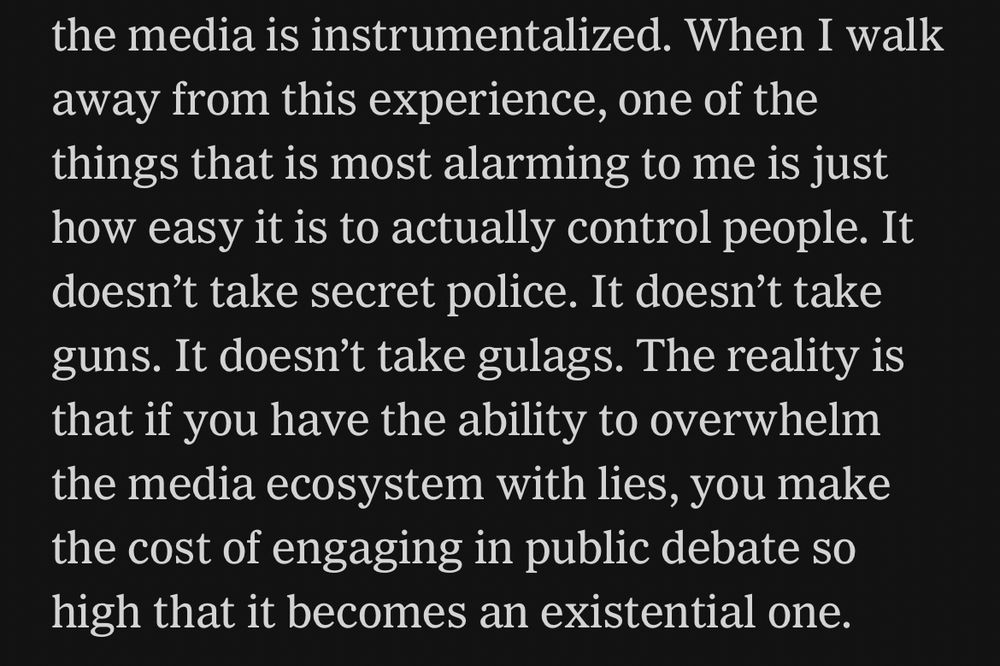
Excellent NYT interview with the outgoing U.S. ambassador to Hungary. This is a key insight!
January 19, 2025 at 4:13 PM
Excellent NYT interview with the outgoing U.S. ambassador to Hungary. This is a key insight!
Reposted
Important new study -> OPEN ACCESS! 🚨
Note for the media:
"Misinformation and radical-right populism must hence be under- stood as inextricable and synergistic—two expressions of the same political moment."
Note for public debate:
Misinformation is POLITICAL rather than social media phenomenon!
Note for the media:
"Misinformation and radical-right populism must hence be under- stood as inextricable and synergistic—two expressions of the same political moment."
Note for public debate:
Misinformation is POLITICAL rather than social media phenomenon!

Sage Journals: Discover world-class research
Subscription and open access journals from Sage, the world's leading independent academic publisher.
journals.sagepub.com
January 15, 2025 at 6:13 PM
Important new study -> OPEN ACCESS! 🚨
Note for the media:
"Misinformation and radical-right populism must hence be under- stood as inextricable and synergistic—two expressions of the same political moment."
Note for public debate:
Misinformation is POLITICAL rather than social media phenomenon!
Note for the media:
"Misinformation and radical-right populism must hence be under- stood as inextricable and synergistic—two expressions of the same political moment."
Note for public debate:
Misinformation is POLITICAL rather than social media phenomenon!
Reposted
An important new study provides further evidence that the rise of far-right parties is primarily a consequence of a shift from socio-economic to socio-cultural issues. This allowed these parties to tap into their full electoral potential.
Question now is: how and why did this shift happen?
Question now is: how and why did this shift happen?
Decomposing the rise of the populist radical right: How changes in priorities explain the electoral politics of our time
Support for populist radical right parties has increased dramatically across Europe. This column looks at drivers of the rise of the populist right between 2005 and 2020and finds that the primary driver in Europe is changing priorities of voters rather than changes in party position or voter attributes. Older, non-unionised, less-educated men are particularly, and increasingly, inclined to prioritise nationalist cultural issues over a party’s economic positions.
cepr.org
January 14, 2025 at 1:07 PM
An important new study provides further evidence that the rise of far-right parties is primarily a consequence of a shift from socio-economic to socio-cultural issues. This allowed these parties to tap into their full electoral potential.
Question now is: how and why did this shift happen?
Question now is: how and why did this shift happen?
Reposted

🚨Why is ethnic & racial homogeneity correlated with higher trust & social cohesion?🚨
Using new historical data from Brazil, our paper shows how cohesive & homogenous communities are both more likely to develop under stronger state institutions:
www.sciencedirect.com/science/arti...
Using new historical data from Brazil, our paper shows how cohesive & homogenous communities are both more likely to develop under stronger state institutions:
www.sciencedirect.com/science/arti...

December 11, 2024 at 4:41 PM
🚨Why is ethnic & racial homogeneity correlated with higher trust & social cohesion?🚨
Using new historical data from Brazil, our paper shows how cohesive & homogenous communities are both more likely to develop under stronger state institutions:
www.sciencedirect.com/science/arti...
Using new historical data from Brazil, our paper shows how cohesive & homogenous communities are both more likely to develop under stronger state institutions:
www.sciencedirect.com/science/arti...