




John S. Wilkins
@jswilkins.fediscience.org.ap.brid.gy
HPS PhD Uni Melb. Writer of a number of non-income-producing books. Semi retired. Dad jokes and bad puns are free.
🌉 bridged from https://fediscience.org/@jswilkins on the fediverse by https://fed.brid.gy/
🌉 bridged from https://fediscience.org/@jswilkins on the fediverse by https://fed.brid.gy/
So SubRussia is following in Russia's footsteps and seizing things illegally
https://www.abc.net.au/news/2025-12-11/us-seizes-oil-tanker-off-coast-of-venezuela/106128382
https://www.abc.net.au/news/2025-12-11/us-seizes-oil-tanker-off-coast-of-venezuela/106128382

US seizes oil tanker off coast of Venezuela, Trump says
US President Donald Trump says the tanker is "the largest one ever seized".
www.abc.net.au
December 11, 2025 at 5:31 AM
So SubRussia is following in Russia's footsteps and seizing things illegally
https://www.abc.net.au/news/2025-12-11/us-seizes-oil-tanker-off-coast-of-venezuela/106128382
https://www.abc.net.au/news/2025-12-11/us-seizes-oil-tanker-off-coast-of-venezuela/106128382
Reposted by John S. Wilkins

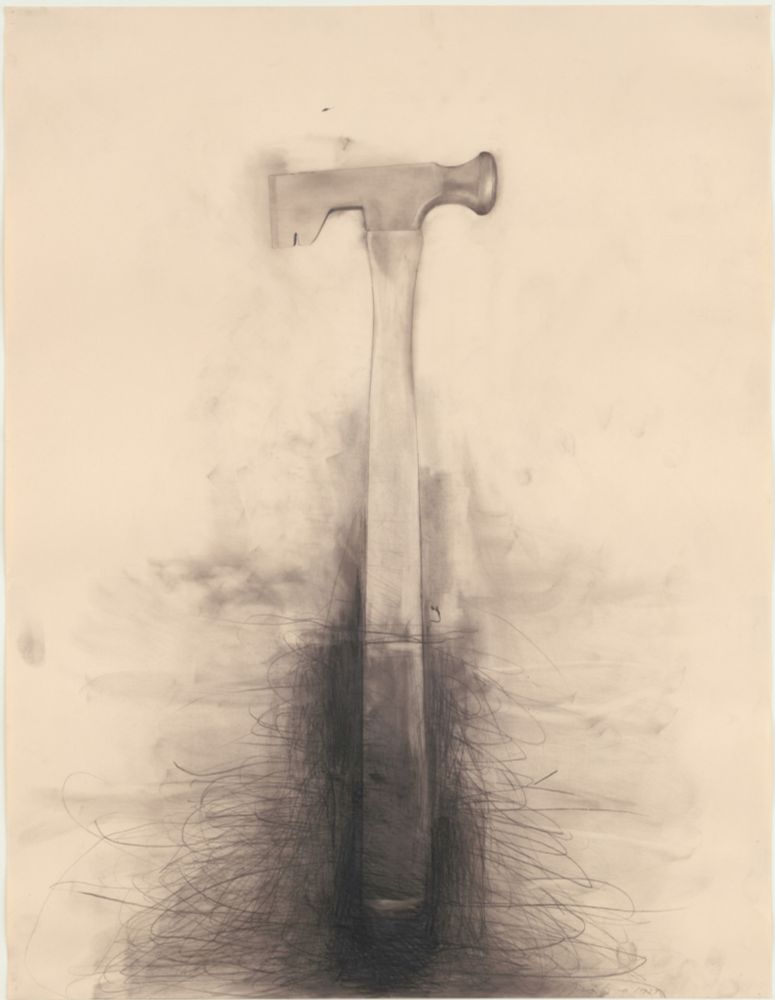
When budget cuts and state laws end philosophy major programs, how can philosophy still have a role in the education of undergraduates?
Philosophy in College Beyond the Philosophy Major - Daily Nous
It's not just budget cuts that are leading some colleges and universities to get rid of their philosophy major programs. Sometimes its legislation. For example, as reported this summer, the state legi...
dailynous.com
October 27, 2025 at 1:44 PM
When budget cuts and state laws end philosophy major programs, how can philosophy still have a role in the education of undergraduates?
I’m making great progress on my chapter. No more than four readings per sentence. At this rate I’ll only be two or three months past the deadline.
October 9, 2025 at 6:16 AM
I’m making great progress on my chapter. No more than four readings per sentence. At this rate I’ll only be two or three months past the deadline.
Reposted by John S. Wilkins

Alarming piece from @carolecadwalla.bsky.social on Blair + Murdoch + Ellison + Ellison Jr + a touch of Musk and the new world order.
www.thenerve.news/p/tony-blair...
www.thenerve.news/p/tony-blair...

'WHAT WILL JESUS SAY?' TONY BLAIR, BIG TECH AND THE ISRAEL CONNECTION
As Trump announces the former British PM as his choice to help govern Gaza, Carole Cadwalladr investigates the opaque workings of Blair's institute, its funding from friends of Israel – including bill...
www.thenerve.news
October 5, 2025 at 12:51 PM
Alarming piece from @carolecadwalla.bsky.social on Blair + Murdoch + Ellison + Ellison Jr + a touch of Musk and the new world order.
www.thenerve.news/p/tony-blair...
www.thenerve.news/p/tony-blair...
Reposted by John S. Wilkins
A light has gone out of the world.
https://www.theguardian.com/science/2025/oct/01/jane-goodall-world-renowned-primatologist-dies
https://www.theguardian.com/science/2025/oct/01/jane-goodall-world-renowned-primatologist-dies
October 1, 2025 at 7:49 PM
A light has gone out of the world.
https://www.theguardian.com/science/2025/oct/01/jane-goodall-world-renowned-primatologist-dies
https://www.theguardian.com/science/2025/oct/01/jane-goodall-world-renowned-primatologist-dies
So, I am trawling through the literature (thank you, BHL!) from the late 17th century to the mid 20th century on the development of the discipline and name of "systematics". This will become one or more papers. If anyone has suggestions other than what's found in Mayr, Cain, or Stevens, let me know.
September 22, 2025 at 7:23 AM
So, I am trawling through the literature (thank you, BHL!) from the late 17th century to the mid 20th century on the development of the discipline and name of "systematics". This will become one or more papers. If anyone has suggestions other than what's found in Mayr, Cain, or Stevens, let me know.
Reposted by John S. Wilkins

Ask your local police if they will protect residents from masked marauders
September 21, 2025 at 1:19 AM
Ask your local police if they will protect residents from masked marauders
Reposted by John S. Wilkins

The majority of animals do show various forms of hierarchy - but is the concept of ‚alpha‘ relevant or even real?
https://www.livescience.com/animals/are-alpha-males-real
https://www.livescience.com/animals/are-alpha-males-real

Are alpha males real?
The term "alpha male" was coined in 1970 to describe wolves. But what does science think about the term now?
www.livescience.com
September 12, 2025 at 3:11 PM
The majority of animals do show various forms of hierarchy - but is the concept of ‚alpha‘ relevant or even real?
https://www.livescience.com/animals/are-alpha-males-real
https://www.livescience.com/animals/are-alpha-males-real
Reposted by John S. Wilkins
New research on the question of whether studying philosophy makes students better thinkers...

Studying Philosophy Makes People Better Thinkers: Further Data - Daily Nous
A new study "offers the strongest evidence to date that studying philosophy does indeed make people better thinkers." Readers may recall the previous research of Michael Prinzing (Baylor) & Michael Va...
dailynous.com
July 14, 2025 at 2:29 PM
New research on the question of whether studying philosophy makes students better thinkers...
Reposted by John S. Wilkins

On the practical equivalence between semantic and syntactic conceptions of theories
https://pragmatictheories.blogspot.com/2025/07/having-reviewed-work-of-most.html
#philsci #philosophyofscience
https://pragmatictheories.blogspot.com/2025/07/having-reviewed-work-of-most.html
#philsci #philosophyofscience

Reflections (1): on the practical equivalence between semantic and syntactic conceptions of theories
Having reviewed the work of the most influential authors on the syntactic and semantic views of theories (and having read a bunch of article...
pragmatictheories.blogspot.com
July 14, 2025 at 6:14 PM
On the practical equivalence between semantic and syntactic conceptions of theories
https://pragmatictheories.blogspot.com/2025/07/having-reviewed-work-of-most.html
#philsci #philosophyofscience
https://pragmatictheories.blogspot.com/2025/07/having-reviewed-work-of-most.html
#philsci #philosophyofscience
Reposted by John S. Wilkins

TYPES 2025 has been lots of fun so far—I’ve been learning heaps, and I’m seeing unexpected connections between recent work in type theory and other issues I’m curious about.
I have no idea how I (or my audience) will cope with a 20 minute timeslot straight after lunch, but my talk is more of a […]
I have no idea how I (or my audience) will cope with a 20 minute timeslot straight after lunch, but my talk is more of a […]
Original post on hcommons.social
hcommons.social
June 10, 2025 at 10:47 AM
TYPES 2025 has been lots of fun so far—I’ve been learning heaps, and I’m seeing unexpected connections between recent work in type theory and other issues I’m curious about.
I have no idea how I (or my audience) will cope with a 20 minute timeslot straight after lunch, but my talk is more of a […]
I have no idea how I (or my audience) will cope with a 20 minute timeslot straight after lunch, but my talk is more of a […]
Reposted by John S. Wilkins

For weeks I have been telling reporters that #trump could have the power to switch off our tech in #europe. It felt a bit alarmist until I just read the #microsoft, on the behest of the #US gov has suspended the email account of Karim Khan, #ICC chief prosecutor.
One of the most important […]
One of the most important […]
Original post on eupolicy.social
eupolicy.social
May 15, 2025 at 3:01 PM
For weeks I have been telling reporters that #trump could have the power to switch off our tech in #europe. It felt a bit alarmist until I just read the #microsoft, on the behest of the #US gov has suspended the email account of Karim Khan, #ICC chief prosecutor.
One of the most important […]
One of the most important […]
Reposted by John S. Wilkins

(Not so) controversial opinion: immigration is good actually.
May 11, 2025 at 6:00 PM
(Not so) controversial opinion: immigration is good actually.
Reposted by John S. Wilkins
Alphonso Lingis, professor emeritus of philosophy at Penn State, has died.

Alphonso Lingis (1933-2025) - Daily Nous
Alphonso Lingis, professor emeritus of philosophy at Penn State University, has died. Professor Lingis specialized in phenomenology, existentialism, modern philosophy, and continental philosophy. He w...
dailynous.com
May 9, 2025 at 6:45 PM
Alphonso Lingis, professor emeritus of philosophy at Penn State, has died.
Reposted by John S. Wilkins
After having a few conversations with Christoph Schuringa about analytic philosophy and its history, I’m very much looking forward to reading his social history, and it’s not too long to wait, now.
https://www.versobooks.com/en-gb/products/3018-a-social-history-of-analytic-philosophy
https://www.versobooks.com/en-gb/products/3018-a-social-history-of-analytic-philosophy

A Social History of Analytic Philosophy
Analytic philosophy is the leading form of philosophy in the English-speaking world. What explains its continued success? Christoph Schuringa argues that its enduring power can only be understood by examining its social history. Analytic philosophy tends to think of itself as concerned with eternal questions, transcend
www.versobooks.com
May 9, 2025 at 7:25 PM
After having a few conversations with Christoph Schuringa about analytic philosophy and its history, I’m very much looking forward to reading his social history, and it’s not too long to wait, now.
https://www.versobooks.com/en-gb/products/3018-a-social-history-of-analytic-philosophy
https://www.versobooks.com/en-gb/products/3018-a-social-history-of-analytic-philosophy
Reposted by John S. Wilkins
April 26, 2025 at 4:38 AM
Reposted by John S. Wilkins

I've got a quick favour to ask. If you're reading this post on Mastodon (or the Fediverse), please click share.
How come?
I recently moved across to my own self-hosted single-user server (using GoToSocial.org). For a bunch of reasons, including visibility across the Fedi, it would really help out.
How come?
I recently moved across to my own self-hosted single-user server (using GoToSocial.org). For a bunch of reasons, including visibility across the Fedi, it would really help out.
April 20, 2025 at 6:59 AM
I've got a quick favour to ask. If you're reading this post on Mastodon (or the Fediverse), please click share.
How come?
I recently moved across to my own self-hosted single-user server (using GoToSocial.org). For a bunch of reasons, including visibility across the Fedi, it would really help out.
How come?
I recently moved across to my own self-hosted single-user server (using GoToSocial.org). For a bunch of reasons, including visibility across the Fedi, it would really help out.
Reposted by John S. Wilkins

If you replace 'woke' with 'empathetic' it's pretty clear that the conservatives are looking to craft a less-empathetic world, where they and their mates are at the top of the pile.
Australia better do the right thing next month […]
Australia better do the right thing next month […]
Original post on fediscience.org
fediscience.org
April 3, 2025 at 8:38 AM
If you replace 'woke' with 'empathetic' it's pretty clear that the conservatives are looking to craft a less-empathetic world, where they and their mates are at the top of the pile.
Australia better do the right thing next month […]
Australia better do the right thing next month […]
Reposted by John S. Wilkins

The brain remembers what gave you food poisoning.
@PopularScience reports on a new study about food aversion: https://flip.it/FVSg8f
#food #brain #neuroscience #health #science
@PopularScience reports on a new study about food aversion: https://flip.it/FVSg8f
#food #brain #neuroscience #health #science

If you get food poisoning after eating eggs, there’s a good chance that it will take awhile before you can even handle the thought of eating a nice savory omelet again. That food aversion can be really strong. Now, a team of neuroscientists studying mice have found the exact “memory hub” in their brain that is responsible for this reaction. The findings are detailed in a study published April 2 in the journal _Nature_ and could lead to future clinical treatments.
## ‘One-shot learning’ vs. the ‘meal-to-malaise’ delay
Instead of learning through repeated trial and error or experiences, one-shot learning is when a single experience creates a lasting memory in the brain. It is most commonly associated with traumatic events that lead to anxiety, post-traumatic stress disorder (PTSD), and psychosis.
Something similar can happen with a food poisoning experience and it is all too common. The CDC estimates that food poisoning sickens 48 million people in the United States every year.
“I haven’t had food poisoning in a while, but now whenever I talk to people at meetings, I hear all about their food poisoning experiences,” Christopher Zimmerman, a study co-author and lead postdoctoral fellow at the Princeton Neuroscience Institute (PNI) at Princeton University, said in a statement.
While this kind of one-shot learning is common with food poisoning–and makes logical sense–the time gap involved has puzzled scientists. Unlike touching something hot and feeling immediate pain, food poisoning involves a significant delay between when the contaminated food is eaten and getting sick. Zimmerman calls this the “meal-to-malaise” delay.
## Drinking the Kool-Aid
For a closer look at the brain mechanisms behind avoiding certain sickening foods, Zimmerman turned to an item that might be sitting in your kitchen pantry–grape Kool-Aid. The lab mice had never had this specific flavor and were asked to try it.
“It’s a better model for how we actually learn,” Zimmerman said. “Normally, scientists in the field will use sugar alone, but that’s not a normal flavor that you would encounter in a meal. Kool-Aid, while it’s still not typical, is a little bit closer since it has more dimensions to its flavor profile.”
The mice eventually learned that poking their nose in a special area of their cage would deliver a drop of Kool-Aid. Thirty minutes after their first taste, the mice received a one-time injection which caused a temporary food poisoning-like illness.
When the mice were offered a choice two days later, the mice strongly avoided the once-appealing purple drink and preferred plain water.
**[ Related:****Scientists finally figured out why tomatoes don’t kill you****. ]**
## Into the central amygdala
What stuck out to Zimmerman and study co-author and Princeton neuroscientist Ilana Witten is where in the brain this juice/illness association is found: the central amygdala. This small group of cells towards the bottom of the brain is involved in emotion and fear learning. It also processes a great deal of information from our environment, including both smell and taste.
“If you look across the entire brain, at where novel versus familiar flavors are represented, the amygdala turns out to be a really interesting place because it’s preferentially activated by novel flavors at every stage in learning,” Zimmerman said. “It’s active when the mouse is drinking, when the mouse is feeling sick later, and then when the mouse retrieves that negative memory days later.”
According to the team, these results show how critical the central amygdala is at every step along the way of learning.
They then traced how illness signals from the gut reach the brain. Using hints from previous research, they identified specialized hindbrain cells that have a specific protein called Calcitonin Gene-Related Peptide (CGRP) and is directly connected to the central amygdala. Stimulating these cells 30 minutes after a mouse’s Kool-Aid experience re-created the same aversion as real food poisoning. Feeling sick also caused the Kool-Aid-activated neurons to reactivate.
“It was as if the mice were thinking back and remembering the prior experience that caused them to later feel sick,” Witten said in a statement. “It was very cool to see this unfolding at the level of individual neurons.”
## Leveraging memory recall
The team suspects that new flavors may “tag” certain brain cells to stay sensitive to illness signals for hours after eating. This tag allows those cells to be specifically reactivated by sickness and connect a cause and effect despite the time delay.
According to the team, this type of research opens up new ways of understanding how the brain forms connections between a variety of distant events.
“Often when we learn in the real world, there’s a long delay between whatever choice we’ve made and the outcome. But that’s not typically studied in the lab, so we don’t really understand the neural mechanisms that support this kind of long delay learning,” Zimmerman said. “Our hope is that these findings will provide a framework for thinking about how the brain might leverage memory recall to solve this learning problem in other situations.”
### More deals, reviews, and buying guides
The PopSci team has tested hundreds of products and spent thousands of hours trying to find the best gear and gadgets you can buy.
SEE MORE GEAR
## Laura Baisas
### News Editor
Laura is Popular Science’s news editor, overseeing coverage of a wide variety of subjects. Laura is particularly fascinated by all things aquatic, paleontology, nanotechnology, and exploring how science influences daily life.
*
* Biology
* Science
www.popsci.com
April 4, 2025 at 11:02 AM
The brain remembers what gave you food poisoning.
@PopularScience reports on a new study about food aversion: https://flip.it/FVSg8f
#food #brain #neuroscience #health #science
@PopularScience reports on a new study about food aversion: https://flip.it/FVSg8f
#food #brain #neuroscience #health #science
Reposted by John S. Wilkins

When the physicists need burner phones,
that’s when you know America’s changed
https://www.theguardian.com/us-news/2025/mar/29/when-the-physicists-need-burner-phones-thats-when-you-know-americas-changed?CMP=Share_iOSApp_Other
that’s when you know America’s changed
https://www.theguardian.com/us-news/2025/mar/29/when-the-physicists-need-burner-phones-thats-when-you-know-americas-changed?CMP=Share_iOSApp_Other

When the physicists need burner phones, that’s when you know America’s changed | John Naughton
US academics, fearing persecution by their own government, are becoming ideological refugees. Europe, and Britain, must offer them sanctuary
www.theguardian.com
March 29, 2025 at 5:02 PM
When the physicists need burner phones,
that’s when you know America’s changed
https://www.theguardian.com/us-news/2025/mar/29/when-the-physicists-need-burner-phones-thats-when-you-know-americas-changed?CMP=Share_iOSApp_Other
that’s when you know America’s changed
https://www.theguardian.com/us-news/2025/mar/29/when-the-physicists-need-burner-phones-thats-when-you-know-americas-changed?CMP=Share_iOSApp_Other
Reposted by John S. Wilkins
Philosophy at SUNY Fredonia is dead.

Fredonia Cuts Kershnar, Kills Philosophy Program - Daily Nous
"The BA Philosophy was approved for discontinuation and the Philosophy minor will be sunset, which will abolish the Philosophy department, and your continuing appointment will be terminated as of the ...
dailynous.com
March 21, 2025 at 12:44 PM
Philosophy at SUNY Fredonia is dead.