



This greenbriar leafminer, Marmara smilacisella, adorned its cocoon with clusters of pearlescent bubbles. I wish my holiday decorations were so neat!

December 26, 2025 at 3:46 AM
This greenbriar leafminer, Marmara smilacisella, adorned its cocoon with clusters of pearlescent bubbles. I wish my holiday decorations were so neat!
Reposted by Jim Hayden
Jess Awad from Naturalis (massive Dutch biodiversity institute, formerly known as RMNH)— massive collection in a gorgeous new building (2019)

November 9, 2025 at 5:25 PM
Jess Awad from Naturalis (massive Dutch biodiversity institute, formerly known as RMNH)— massive collection in a gorgeous new building (2019)
On this night, let's not forget that the reason for the season is souls coming out of holes in the ground.

November 1, 2025 at 3:44 AM
On this night, let's not forget that the reason for the season is souls coming out of holes in the ground.
Reposted by Jim Hayden

Spookiest decoration at the "Zoo Goes Boo" event at the John Ball Zoo in Grand Rapids? Giant model of parasitoid wasps hatching from cocoons affixed to their caterpillar host.

October 13, 2025 at 12:27 AM
Spookiest decoration at the "Zoo Goes Boo" event at the John Ball Zoo in Grand Rapids? Giant model of parasitoid wasps hatching from cocoons affixed to their caterpillar host.
Reposted by Jim Hayden

Just published! A new discovery in biological pest control: Synopeas ruficoxum, a natural enemy of the soybean gall midge in North America. 🧪🧵 doi.org/10.3897/jhr....

August 25, 2025 at 1:36 PM
Just published! A new discovery in biological pest control: Synopeas ruficoxum, a natural enemy of the soybean gall midge in North America. 🧪🧵 doi.org/10.3897/jhr....
Reposted by Jim Hayden

through the magic of AI, MS word suggested the following alt-text for this image: "a closeup of human skin".
It's moth butts
(credit: Arnaud Martin lab)
It's moth butts
(credit: Arnaud Martin lab)

August 22, 2025 at 9:43 PM
through the magic of AI, MS word suggested the following alt-text for this image: "a closeup of human skin".
It's moth butts
(credit: Arnaud Martin lab)
It's moth butts
(credit: Arnaud Martin lab)
Reposted by Jim Hayden
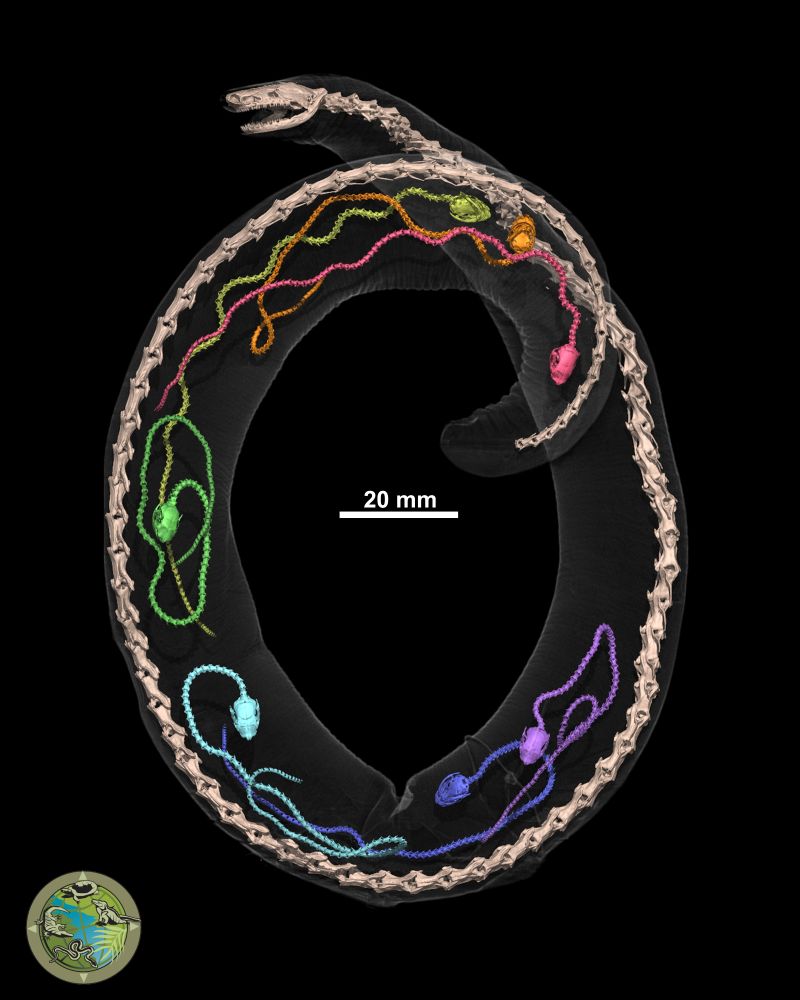
Say hello to Florida's newest established species, Typhlonectes natans - the Rio Cauca Caecilian! You can read about their relative abundance, distribution, & natural history, in our brand new paper:
journals.ku.edu/reptilesanda...
Here is one individual I CT scanned that had 7 babies inside!
journals.ku.edu/reptilesanda...
Here is one individual I CT scanned that had 7 babies inside!
July 26, 2025 at 11:12 PM
Say hello to Florida's newest established species, Typhlonectes natans - the Rio Cauca Caecilian! You can read about their relative abundance, distribution, & natural history, in our brand new paper:
journals.ku.edu/reptilesanda...
Here is one individual I CT scanned that had 7 babies inside!
journals.ku.edu/reptilesanda...
Here is one individual I CT scanned that had 7 babies inside!
Reposted by Jim Hayden

Oh to be a moth that cannot fly...
Meet the newly described genus/species Coloradactria frigida, a moth with females that don't fly- they scurry around on the ground like a spider or silverfish...
lepscience.com/wp-content/u...
@inaturalist.bsky.social observations helped us locate populations!
Meet the newly described genus/species Coloradactria frigida, a moth with females that don't fly- they scurry around on the ground like a spider or silverfish...
lepscience.com/wp-content/u...
@inaturalist.bsky.social observations helped us locate populations!


June 16, 2025 at 6:49 PM
Oh to be a moth that cannot fly...
Meet the newly described genus/species Coloradactria frigida, a moth with females that don't fly- they scurry around on the ground like a spider or silverfish...
lepscience.com/wp-content/u...
@inaturalist.bsky.social observations helped us locate populations!
Meet the newly described genus/species Coloradactria frigida, a moth with females that don't fly- they scurry around on the ground like a spider or silverfish...
lepscience.com/wp-content/u...
@inaturalist.bsky.social observations helped us locate populations!
Micromoths & company from a UV trap in scrub west of Gainesville. Every time, I get a range from common species to things I've never seen before.

May 24, 2025 at 4:18 PM
Micromoths & company from a UV trap in scrub west of Gainesville. Every time, I get a range from common species to things I've never seen before.
Reposted by Jim Hayden

Charles Darwin famously laboured for years to write a 4-volume monograph on barnacles. It won him accolades and helped establish his reputation as a zoologist - well before 'The Origin of Species'. And these are some of his own specimens (at the Danish Natural History Museum, Copenhagen).
1/2
1/2

May 11, 2025 at 12:52 PM
Charles Darwin famously laboured for years to write a 4-volume monograph on barnacles. It won him accolades and helped establish his reputation as a zoologist - well before 'The Origin of Species'. And these are some of his own specimens (at the Danish Natural History Museum, Copenhagen).
1/2
1/2

Reposted by Jim Hayden

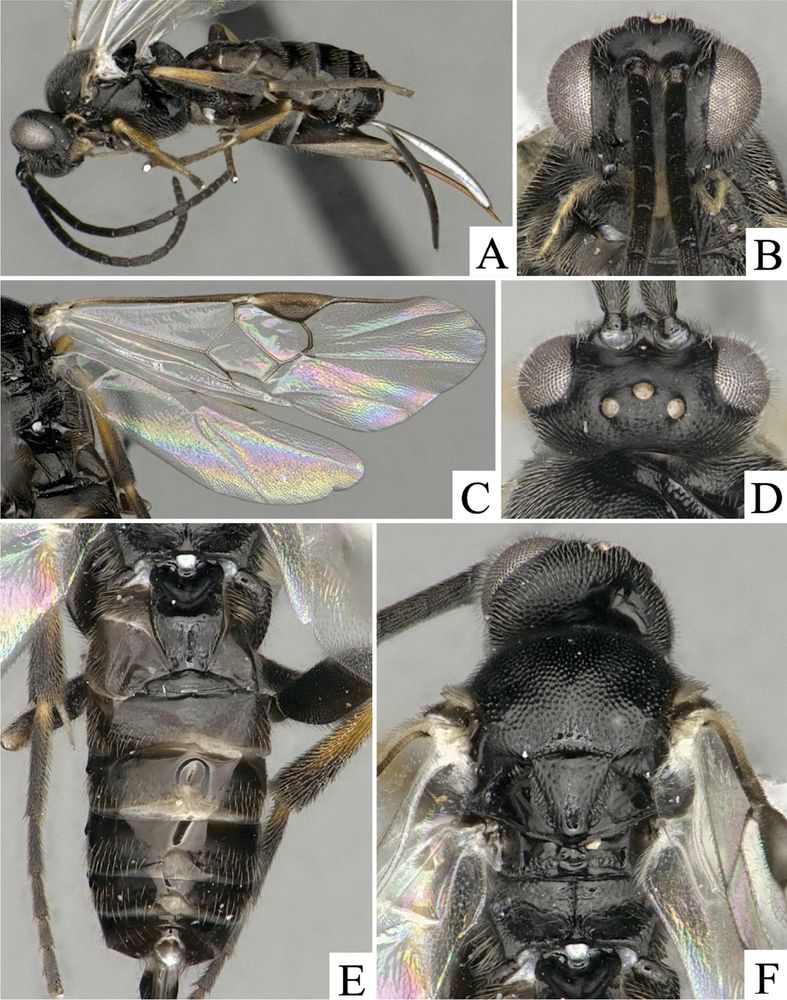
This is Iconella melitaraevora, a new wasp species parasitoid of Melitara subumbrella caterpillars. Find out more about it here: doi.org/10.3897/jhr....
#wasps #newspecies #entomology @texasscience.bsky.social #biodiversity
#wasps #newspecies #entomology @texasscience.bsky.social #biodiversity
May 2, 2025 at 9:37 AM
This is Iconella melitaraevora, a new wasp species parasitoid of Melitara subumbrella caterpillars. Find out more about it here: doi.org/10.3897/jhr....
#wasps #newspecies #entomology @texasscience.bsky.social #biodiversity
#wasps #newspecies #entomology @texasscience.bsky.social #biodiversity
Reposted by Jim Hayden
I propose we start calling parasitoid wasps "friend wasps" and launch a massive PR campaign to make people love them
Research from @smnstuttgart.bsky.social shows #LLM #AI chatbots reflect typical human biases about insects:
- Bees/butterflies good, wasps bad
- 'Bees' restricted to honeybees, 'wasps' to yellowjackets, underplaying masses of vital species
onlinelibrary.wiley.com/doi/pdf/10.1...
#bugsky #scicomm
- Bees/butterflies good, wasps bad
- 'Bees' restricted to honeybees, 'wasps' to yellowjackets, underplaying masses of vital species
onlinelibrary.wiley.com/doi/pdf/10.1...
#bugsky #scicomm

Some Insects Are More Equal Than Others: A Comparison of Popular Large Language Model Chatbots' Treatment of Different Insect Groups
Our research demonstrates that in mirroring prevailing human biases towards different insect groups, LLM chatbots oversimplify insect diversity by predominantly restricting “bees” to honeybees and “w...
onlinelibrary.wiley.com
April 28, 2025 at 9:52 AM
I propose we start calling parasitoid wasps "friend wasps" and launch a massive PR campaign to make people love them
On the La Chua Trail at Paynes Prairie today, we stopped counting at 160 alligators.


March 15, 2025 at 11:15 PM
On the La Chua Trail at Paynes Prairie today, we stopped counting at 160 alligators.
Reposted by Jim Hayden
How small can moths get? 🔎
Very.
shield bearer #moth at UV light #Heliozelidae: #Coptodisca
Raleigh, NC, USA
@dradriansmith.bsky.social finger for scale
Very.
shield bearer #moth at UV light #Heliozelidae: #Coptodisca
Raleigh, NC, USA
@dradriansmith.bsky.social finger for scale


February 16, 2025 at 5:46 PM
How small can moths get? 🔎
Very.
shield bearer #moth at UV light #Heliozelidae: #Coptodisca
Raleigh, NC, USA
@dradriansmith.bsky.social finger for scale
Very.
shield bearer #moth at UV light #Heliozelidae: #Coptodisca
Raleigh, NC, USA
@dradriansmith.bsky.social finger for scale
Reposted by Jim Hayden
Gall midges and their parasitoids are abundant, megadiverse, and very hard to identify! Such "double dark taxa" systems present special challenges for ecology and agriculture. 🧵🧪🐙 @smnstuttgart.bsky.social @marinamoser.bsky.social @krogmann.bsky.social doi.org/10.1093/aesa...

Untangling host specialization in a “double dark taxa” system
Abstract. Platygastrine wasps (Hymenoptera: Platygastridae) are parasitoids of gall midges (Diptera: Cecidomyiidae). They and their hosts are exceptionally
doi.org
February 12, 2025 at 11:01 PM
Gall midges and their parasitoids are abundant, megadiverse, and very hard to identify! Such "double dark taxa" systems present special challenges for ecology and agriculture. 🧵🧪🐙 @smnstuttgart.bsky.social @marinamoser.bsky.social @krogmann.bsky.social doi.org/10.1093/aesa...

Pyraloid moths aren't into blue so much, but this Parotis sp. from Indonesia is a delicate aquamarine. Parotis prasinalis in Madagascar looks similar. Specimen in the Florida State Collection of Arthropods / FLMNH McGuire Center. #BlueBugs

January 21, 2025 at 2:16 AM
Pyraloid moths aren't into blue so much, but this Parotis sp. from Indonesia is a delicate aquamarine. Parotis prasinalis in Madagascar looks similar. Specimen in the Florida State Collection of Arthropods / FLMNH McGuire Center. #BlueBugs