



Javier Gonzalez
@j-t-gonzalez.bsky.social
Scientist
Nutrition and Metabolism
Energy, Carbohydrate and Fat Metabolism
University of Bath, UK
https://researchportal.bath.ac.uk/en/persons/javier-gonzalez
https://gonzalezjt1.wordpress.com/2024/03/
Nutrition and Metabolism
Energy, Carbohydrate and Fat Metabolism
University of Bath, UK
https://researchportal.bath.ac.uk/en/persons/javier-gonzalez
https://gonzalezjt1.wordpress.com/2024/03/
We conclude that blunting of key aspects of exercise-induced skeletal muscle signalling with high carbohydrate availability are not due to the concomitant low fatty acid availability
(7/7)
Check out the paper for more detail: doi.org/10.1113/JP28...
(7/7)
Check out the paper for more detail: doi.org/10.1113/JP28...

November 17, 2025 at 7:15 AM
We conclude that blunting of key aspects of exercise-induced skeletal muscle signalling with high carbohydrate availability are not due to the concomitant low fatty acid availability
(7/7)
Check out the paper for more detail: doi.org/10.1113/JP28...
(7/7)
Check out the paper for more detail: doi.org/10.1113/JP28...
We found that carbohydrate ingestion suppressed exercise-induced skeletal muscle ACC phosphorylation compared with both the fasted state and with niacin ingestion
(6/7)
(6/7)

November 17, 2025 at 7:15 AM
We found that carbohydrate ingestion suppressed exercise-induced skeletal muscle ACC phosphorylation compared with both the fasted state and with niacin ingestion
(6/7)
(6/7)
We confirmed that we were able to suppress fatty acid availability with niacin independent from ingesting carbohydrates and without raising insulin concentrations...
(5/7)
(5/7)

November 17, 2025 at 7:15 AM
We confirmed that we were able to suppress fatty acid availability with niacin independent from ingesting carbohydrates and without raising insulin concentrations...
(5/7)
(5/7)
In the current study, we employed a paradigm that can dissociated fat from carbohydrate availability and used this to understand the effects on exercise induced skeletal muscle signalling
(4/7)
(4/7)

November 17, 2025 at 7:15 AM
In the current study, we employed a paradigm that can dissociated fat from carbohydrate availability and used this to understand the effects on exercise induced skeletal muscle signalling
(4/7)
(4/7)
A review of this topic in
@JPhysiol
can be found here
doi.org/10.1113/jp28...
However, one limitation of the previous evidence is that high carbohydrate availability always comes with low fat availability, and therefore the independent effects of each were unknown...
(3/7)
@JPhysiol
can be found here
doi.org/10.1113/jp28...
However, one limitation of the previous evidence is that high carbohydrate availability always comes with low fat availability, and therefore the independent effects of each were unknown...
(3/7)

Impact of pre‐exercise feeding status on metabolic adaptations to endurance‐type exercise training
Abstract figure legend Candidate mechanisms linking nutrient–exercise timing to insulin sensitivity. Exercise performed in an overnight-fasted state (before nutrient intake), increases fatty acid ava...
doi.org
November 17, 2025 at 7:15 AM
A review of this topic in
@JPhysiol
can be found here
doi.org/10.1113/jp28...
However, one limitation of the previous evidence is that high carbohydrate availability always comes with low fat availability, and therefore the independent effects of each were unknown...
(3/7)
@JPhysiol
can be found here
doi.org/10.1113/jp28...
However, one limitation of the previous evidence is that high carbohydrate availability always comes with low fat availability, and therefore the independent effects of each were unknown...
(3/7)
We previously found consuming carbohydrate prior to exercise training blunts some skeletal muscle and whole-body adaptations to exercise.
We (and others) also found evidence that the effects may be mediated by fat as much as carbohydrate metabolism
doi.org/10.1210/clin...
(2/7)
We (and others) also found evidence that the effects may be mediated by fat as much as carbohydrate metabolism
doi.org/10.1210/clin...
(2/7)

November 17, 2025 at 7:15 AM
We previously found consuming carbohydrate prior to exercise training blunts some skeletal muscle and whole-body adaptations to exercise.
We (and others) also found evidence that the effects may be mediated by fat as much as carbohydrate metabolism
doi.org/10.1210/clin...
(2/7)
We (and others) also found evidence that the effects may be mediated by fat as much as carbohydrate metabolism
doi.org/10.1210/clin...
(2/7)
There could of course be a (at least) a third option! That people eating low satfat have other (unknown) confounders increasing their otherwise lower risk
October 27, 2025 at 6:52 AM
There could of course be a (at least) a third option! That people eating low satfat have other (unknown) confounders increasing their otherwise lower risk
Reposted by Javier Gonzalez

The ideal, of course, is to have randomisation embedded into routine practice … then, the real world data of the future will be randomised data giving the best of both worlds 9/9
August 18, 2025 at 6:35 AM
The ideal, of course, is to have randomisation embedded into routine practice … then, the real world data of the future will be randomised data giving the best of both worlds 9/9
Reposted by Javier Gonzalez

This is, however, not clever or safe writing, it is a bad collective habit that needs to stop. Not by avoiding references to causality but by clear referencing to it
pubmed.ncbi.nlm.nih.gov/37286459/
pubmed.ncbi.nlm.nih.gov/37286459/

Guidelines for Reporting Observational Research in Urology: The Importance of Clear Reference to Causality - PubMed
Observational studies often dance around the issue of causality. We propose guidelines to ensure that papers refer to whether or not the study aim is to investigate causality, and suggest language to ...
pubmed.ncbi.nlm.nih.gov
July 31, 2025 at 8:33 AM
This is, however, not clever or safe writing, it is a bad collective habit that needs to stop. Not by avoiding references to causality but by clear referencing to it
pubmed.ncbi.nlm.nih.gov/37286459/
pubmed.ncbi.nlm.nih.gov/37286459/
Read the paper for more considerations and recommendations
nature.com/articles/s41...
nature.com/articles/s41...
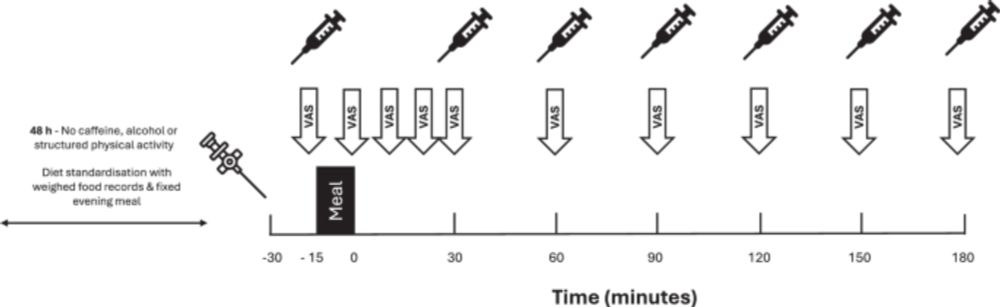
The mixed-meal tolerance test as an appetite assay: methodological and practical considerations - International Journal of Obesity
International Journal of Obesity - The mixed-meal tolerance test as an appetite assay: methodological and practical considerations
nature.com
July 31, 2025 at 10:52 AM
Read the paper for more considerations and recommendations
nature.com/articles/s41...
nature.com/articles/s41...
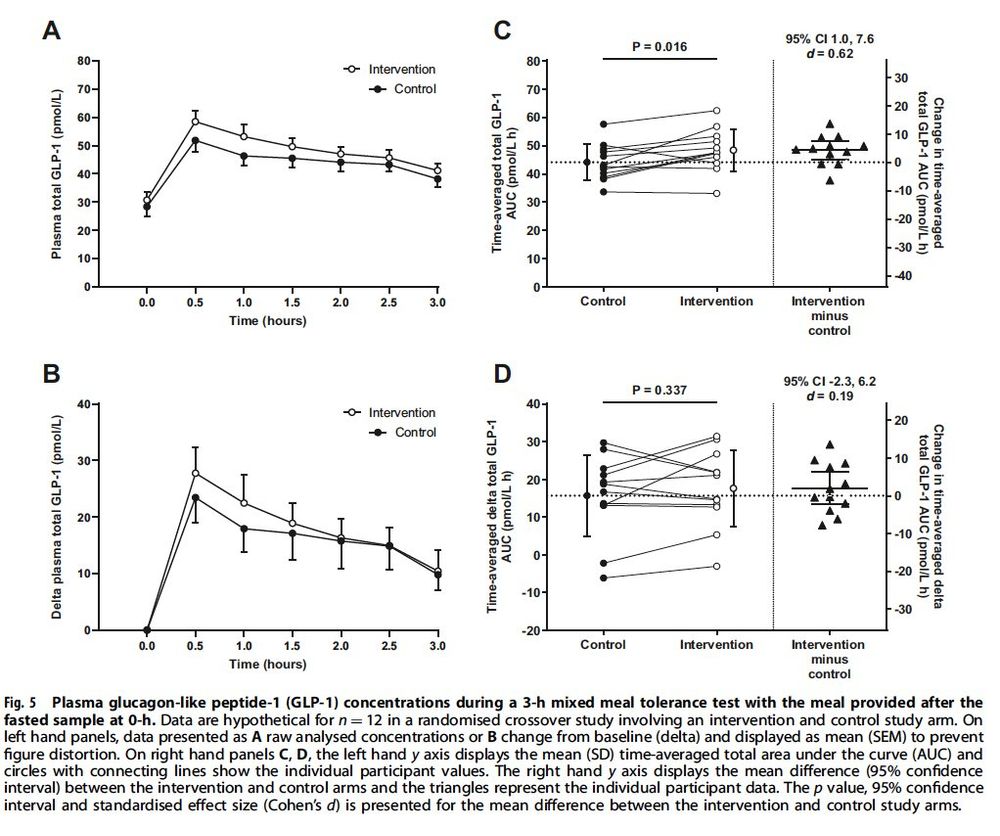
Expressing as change from baseline can improve efficiency and area under the curve is a useful summary statistic
July 31, 2025 at 10:52 AM
Expressing as change from baseline can improve efficiency and area under the curve is a useful summary statistic