




Federica Genovese
@genovesef.bsky.social
Neurobiologist, chemesthesis and olfaction
Reposted by Federica Genovese
New publication out
Led by Enrica Montalban, who did a fantastic work, our new paper demonstrate a role for striatal astrocytes in the context of diet-induced obesity in both metabolic and cognitive processes. Thanks to all the collaborators for their work!
www.nature.com/articles/s41...
Led by Enrica Montalban, who did a fantastic work, our new paper demonstrate a role for striatal astrocytes in the context of diet-induced obesity in both metabolic and cognitive processes. Thanks to all the collaborators for their work!
www.nature.com/articles/s41...
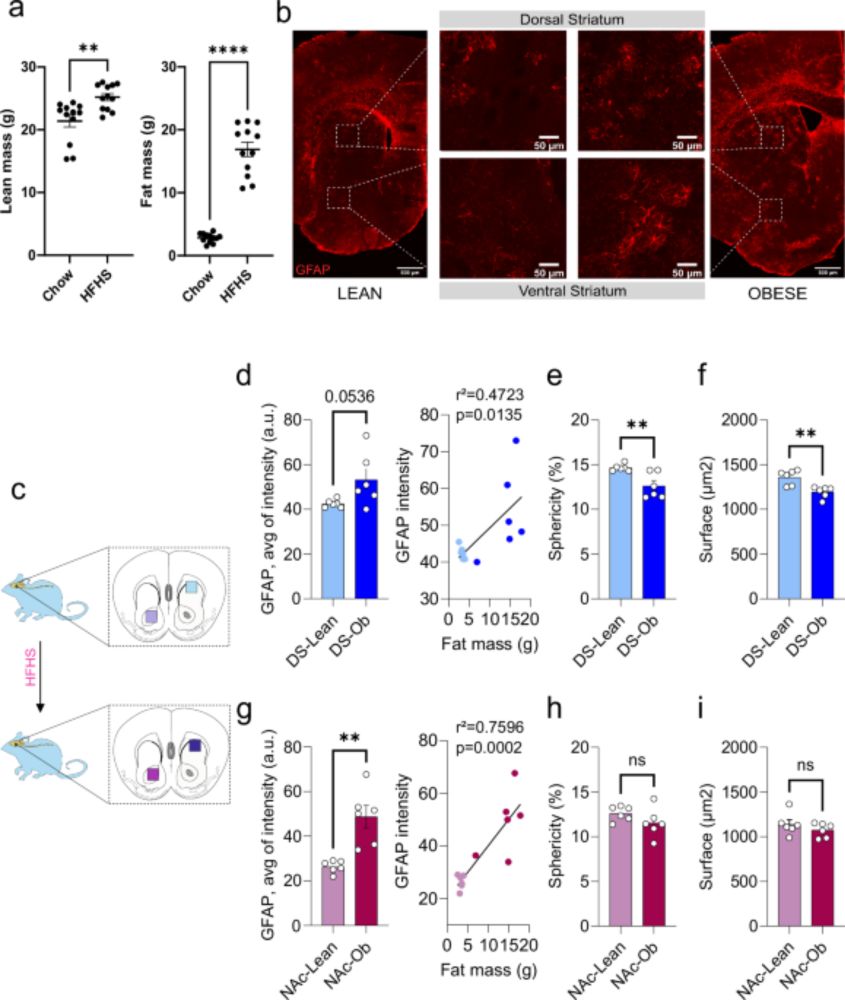
Striatal astrocytes modulate behavioral flexibility and whole-body metabolism in mice - Nature Communications
Striatal neural circuits control reward-associated behaviors but the role of astrocytes is still unclear. Here, the authors show that chemogenetic manipulation of striatal astrocyte in mice restore ob...
www.nature.com
July 14, 2025 at 1:21 PM
New publication out
Led by Enrica Montalban, who did a fantastic work, our new paper demonstrate a role for striatal astrocytes in the context of diet-induced obesity in both metabolic and cognitive processes. Thanks to all the collaborators for their work!
www.nature.com/articles/s41...
Led by Enrica Montalban, who did a fantastic work, our new paper demonstrate a role for striatal astrocytes in the context of diet-induced obesity in both metabolic and cognitive processes. Thanks to all the collaborators for their work!
www.nature.com/articles/s41...
Reposted by Federica Genovese

Excited to share our latest story: "The gut-brain vagal axis governs mesolimbic dopamine dynamics and reward events" 🎉.
Big congrats to 1st author Oriane Onimus 💪 🥳 & many thanks to all those involved 🙏🙏.
www.biorxiv.org/content/10.1...
Big congrats to 1st author Oriane Onimus 💪 🥳 & many thanks to all those involved 🙏🙏.
www.biorxiv.org/content/10.1...

The gut-brain vagal axis governs mesolimbic dopamine dynamics and reward events
Reward-related processes have traditionally been ascribed to neural circuits centered on the dopamine (DA) system. While exteroceptive stimuli, such as food and drugs of abuse, are well-established ac...
www.biorxiv.org
May 16, 2025 at 8:41 AM
Excited to share our latest story: "The gut-brain vagal axis governs mesolimbic dopamine dynamics and reward events" 🎉.
Big congrats to 1st author Oriane Onimus 💪 🥳 & many thanks to all those involved 🙏🙏.
www.biorxiv.org/content/10.1...
Big congrats to 1st author Oriane Onimus 💪 🥳 & many thanks to all those involved 🙏🙏.
www.biorxiv.org/content/10.1...
Reposted by Federica Genovese
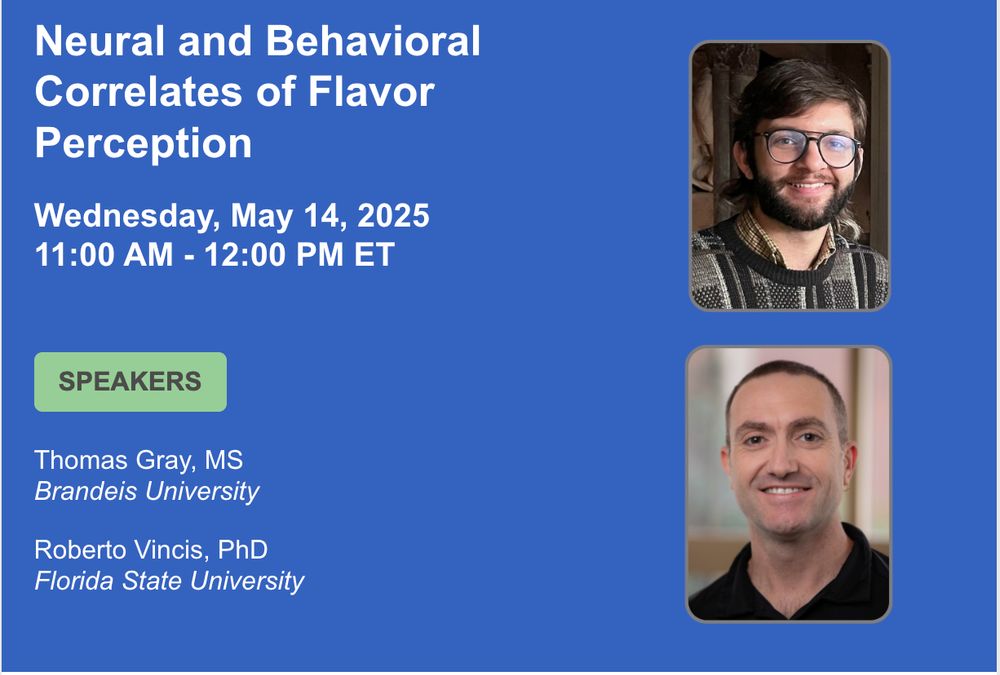
Don't miss out! Join us for the next Career Networking Seminar on May 14th from 11:00 AM - 12:00 PM ET. Sign up now: achems.org/web/seminars...
May 7, 2025 at 2:16 PM
Don't miss out! Join us for the next Career Networking Seminar on May 14th from 11:00 AM - 12:00 PM ET. Sign up now: achems.org/web/seminars...
Reposted by Federica Genovese

With a contemporary smartphone, capturing, transmitting, and replicating sounds and visuals is a breeze, yet replicating scents remains elusive. If you want to change this, consider joining the 2025 DREAM Olfaction Challenge at www.synapse.org/Synapse:syn6....
@oldbap.bsky.social
@oldbap.bsky.social
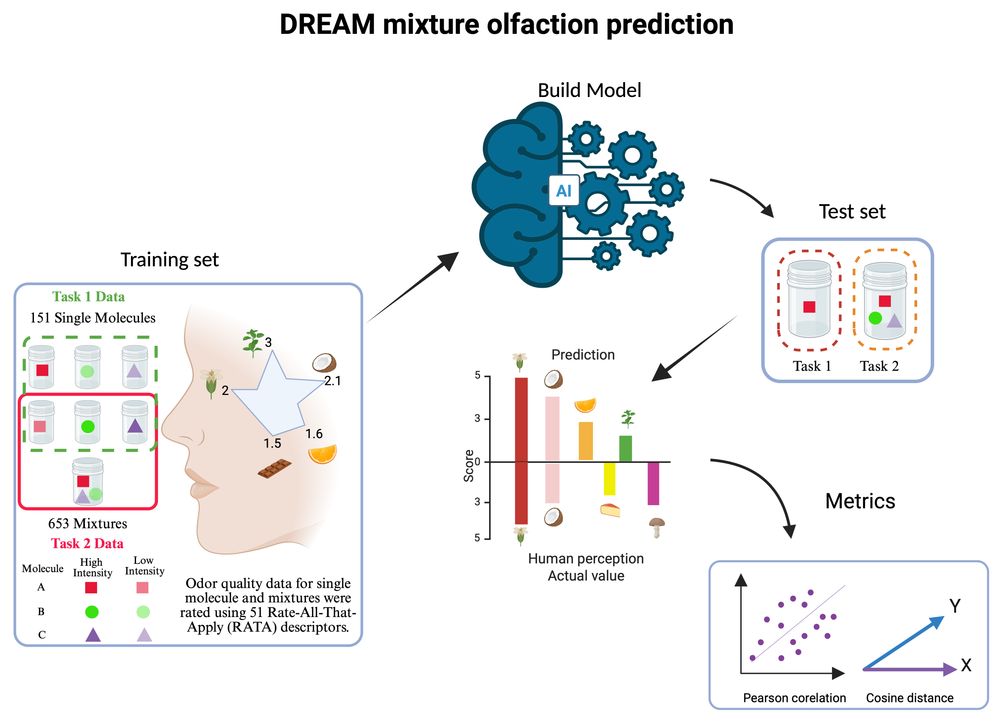
DREAM Olfactory Mixtures Prediction Challenge 2025
'DREAM Olfactory Mixtures Prediction Challenge 2025' (Synapse ID: syn64743570) is a project on Synapse. Synapse is a platform for supporting scientific collaborations centered around shared biomed...
www.synapse.org
May 7, 2025 at 11:38 PM
With a contemporary smartphone, capturing, transmitting, and replicating sounds and visuals is a breeze, yet replicating scents remains elusive. If you want to change this, consider joining the 2025 DREAM Olfaction Challenge at www.synapse.org/Synapse:syn6....
@oldbap.bsky.social
@oldbap.bsky.social
Reposted by Federica Genovese

Please support and spread this appeal by Senator Elena Cattaneo to the Italian Senate on the future of Italian research funding: www.scienzainrete.it/articolo/app...

Un appello per il futuro dell’Italia: sostenere la ricerca scientifica
La ricerca scientifica rappresenta un elemento strategico per lo sviluppo economico e sociale del nostro Paese. Tuttavia, la ricerca pubblica in Italia continua a soffrire di risorse limitate e spesso...
www.scienzainrete.it
February 17, 2025 at 5:07 PM
Please support and spread this appeal by Senator Elena Cattaneo to the Italian Senate on the future of Italian research funding: www.scienzainrete.it/articolo/app...
Reposted by Federica Genovese
Un monde sans odeur : Jean-Michel Maillard, Président de Anosmie.org avec l'éclairage médical de Véronique Marché
podcast.ausha.co/sens-figure/...
podcast.ausha.co/sens-figure/...

13* 1/2 Un monde sans odeur : Jean-Michel Maillard, Président de Anosmie.org avec l'éclairage médical de Véronique Marché | Ausha
Pour ce mois de février, j'ai souhaité mettre un coup de projecteur sur un handicap méconnu et souvent passé sous silence l'anosmie...
Qu'est-ce que l'anosmie ?
Ce mot vous rappelle peut-être vagu...
podcast.ausha.co
February 8, 2025 at 4:33 PM
Un monde sans odeur : Jean-Michel Maillard, Président de Anosmie.org avec l'éclairage médical de Véronique Marché
podcast.ausha.co/sens-figure/...
podcast.ausha.co/sens-figure/...
Reposted by Federica Genovese

Alexander Fjaeldstad and I have a new chapter in the book Smell, Taste, Eat: The Role of the Chemical Senses in Eating Behaviour, edited by @LorenzoDStafford. Lots of great insights here.
From our chapter, it’s clear that smell loss and its impact on ingestion remain vastly underexplored."
From our chapter, it’s clear that smell loss and its impact on ingestion remain vastly underexplored."
The Effect of Olfactory Disorder (and Other Chemosensory Disorders) on Perception, Acceptance, and Consumption of Food
People with changes in the overall sensory experience of food often complain of taste disturbances, although the problem is normally caused by the loss of aroma in the food (thus an olfactory disorder...
link.springer.com
January 26, 2025 at 3:31 PM
Alexander Fjaeldstad and I have a new chapter in the book Smell, Taste, Eat: The Role of the Chemical Senses in Eating Behaviour, edited by @LorenzoDStafford. Lots of great insights here.
From our chapter, it’s clear that smell loss and its impact on ingestion remain vastly underexplored."
From our chapter, it’s clear that smell loss and its impact on ingestion remain vastly underexplored."
Reposted by Federica Genovese
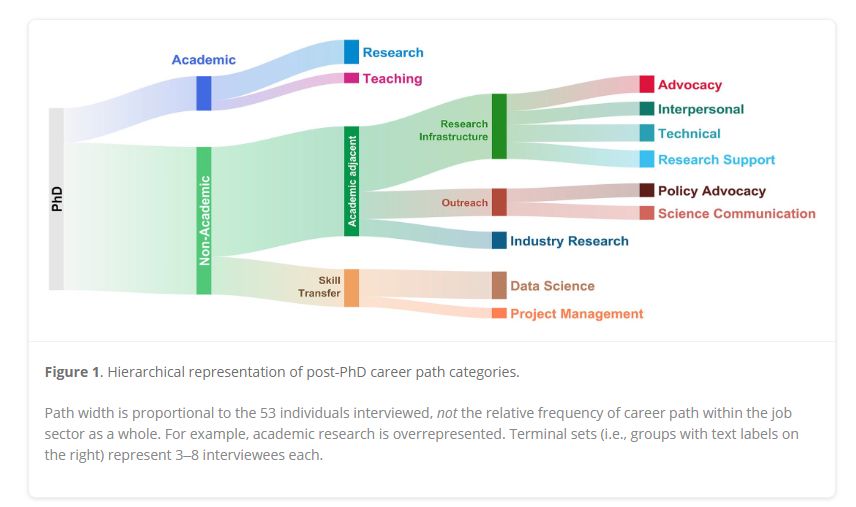
“What will you do after?” (a PhD)- Lessons from Academia and the World Beyond - Christopher Madan @engra.me journals.sagepub.com/doi/full/10....
January 22, 2025 at 4:45 PM
“What will you do after?” (a PhD)- Lessons from Academia and the World Beyond - Christopher Madan @engra.me journals.sagepub.com/doi/full/10....
Reposted by Federica Genovese

It's out! Awesome study by @kruthikamaheshwar.bsky.social.
We found that female rats sample for shorter times in odor habituation. Gamma and beta oscillations in the olfactory bulb are lower amplitude for females, but only during odor sampling. #ChemSenses #neuroskyence 🧪
doi.org/10.1152/jn.0...
We found that female rats sample for shorter times in odor habituation. Gamma and beta oscillations in the olfactory bulb are lower amplitude for females, but only during odor sampling. #ChemSenses #neuroskyence 🧪
doi.org/10.1152/jn.0...
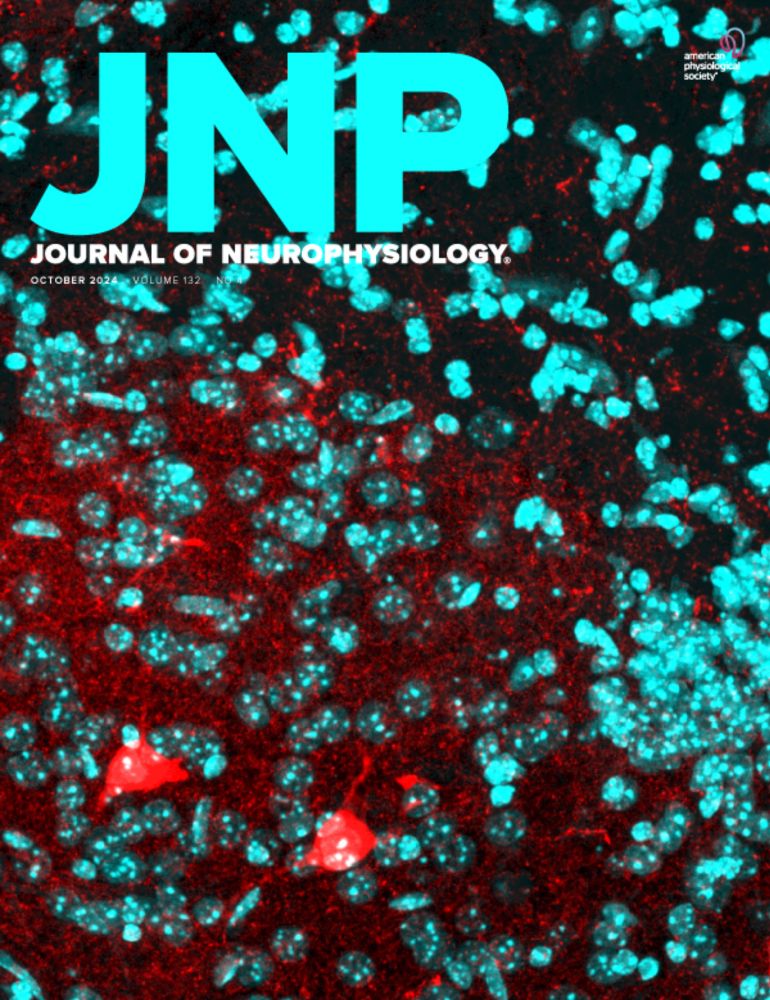
Sex differences in olfactory behavior and neurophysiology in Long Evans rats | Journal of Neurophysiology
In many species, olfactory abilities in females are more acute than those in males. Studies in humans show that women have lower olfactory thresholds and are better able to discriminate and identify odors than men. In mice, odorants elicit faster activation from a larger number of olfactory bulb glomeruli in females than in males. Our study explores sex differences in olfaction in Long Evans rats from a behavioral and electrophysiological perspective. Local field potentials (LFPs) in the olfactory bulb (OB) represent the coordinated activity of bulbar neurons. Olfactory gamma (65–120 Hz) and beta (15–30 Hz) oscillations have been functionally linked to odor perception. Spontaneous and odor-evoked OB LFPs were recorded from awake rats at the same time for 12 days. Odors used included urine of both sexes and monomolecular odorants characterized previously for correlation of volatility with behavior and OB oscillations. Sampling duration in a habituation context, baseline gamma and beta power, and odor-elicited beta and gamma power were analyzed. We find that females sample odorants for a shorter duration than males (just over 1-s difference). Although baseline gamma and beta power do not show significant differences between the two sexes, odor-elicited gamma and beta power in females is significantly lower than in males. Neither sampling duration nor beta and gamma power in females varied systematically with day of estrus. We further verify that variance of these behavioral and physiological measures is not different across sexes, adding to growing evidence that researchers need not be concerned about often-claimed additional variance in female subjects. NEW & NOTEWORTHY Olfaction plays a large role in evolutionary processes. However, we know little about sex differences in olfactory bulb neurophysiology, and many scientists believe that females are more variable because of estrus. We show that female rats sniff odors for shorter durations than males and have lower power in neural oscillations related to cognition. Estrus was not related to variance in any measures. Finally, males and females show equal variance on these behavioral and physiological processes.
doi.org
January 14, 2025 at 1:27 AM
It's out! Awesome study by @kruthikamaheshwar.bsky.social.
We found that female rats sample for shorter times in odor habituation. Gamma and beta oscillations in the olfactory bulb are lower amplitude for females, but only during odor sampling. #ChemSenses #neuroskyence 🧪
doi.org/10.1152/jn.0...
We found that female rats sample for shorter times in odor habituation. Gamma and beta oscillations in the olfactory bulb are lower amplitude for females, but only during odor sampling. #ChemSenses #neuroskyence 🧪
doi.org/10.1152/jn.0...
Reposted by Federica Genovese

Anne Churchland and Felicia Davatolhagh discuss why we must address the gender gap in neuroscience citations.
www.thetransmitter.org/publishing/w...
www.thetransmitter.org/publishing/w...

Women are systematically under-cited in neuroscience. New tools can change that.
An omitted citation in a high-profile paper led us to examine our own practices and to help others adopt tools that promote citation diversity.
www.thetransmitter.org
July 25, 2024 at 4:00 PM
Anne Churchland and Felicia Davatolhagh discuss why we must address the gender gap in neuroscience citations.
www.thetransmitter.org/publishing/w...
www.thetransmitter.org/publishing/w...
Reposted by Federica Genovese
We invite applicants for the #AChemS2025 Travel Fellowships for Diversity. Applicants need not be AChemS members. Encourage those who are eligible to apply today!! achems.org/web/award...

November 19, 2024 at 3:32 PM
We invite applicants for the #AChemS2025 Travel Fellowships for Diversity. Applicants need not be AChemS members. Encourage those who are eligible to apply today!! achems.org/web/award...
Reposted by Federica Genovese

Here's the article: www.nature.com/articles/s41...

Engineered odorant receptors illuminate the basis of odour discrimination - Nature
Use of the consensus protein design method facilitated the generation of stable engineered mammalian odorant receptors to gain insight into the molecular properties of odorant–receptor interactions.
www.nature.com
November 13, 2024 at 4:59 PM
Here's the article: www.nature.com/articles/s41...