



Julia L. Drewes
@dreweslab.bsky.social
Microbiologist studying host-microbe interactions in colorectal cancer. #Cdifficile #biofilms #fusobacteria
Reposted by Julia L. Drewes
“In a paper published in Nature Communications, the researchers have shown for the first time that mRNA can be delivered into the cells where HIV is hiding, by encasing it in a tiny, specially formulated fat bubble. The mRNA then instructs the cells to reveal the virus.”

Breakthrough in search for HIV cure leaves researchers ‘overwhelmed’
Exclusive: Melbourne team demonstrates way to make the virus visible within white blood cells, paving the way to fully clear it from the body
www.theguardian.com
June 5, 2025 at 12:31 PM
“In a paper published in Nature Communications, the researchers have shown for the first time that mRNA can be delivered into the cells where HIV is hiding, by encasing it in a tiny, specially formulated fat bubble. The mRNA then instructs the cells to reveal the virus.”
The only thing better than a snow day (as a PI) is a manuscript acceptance! Today we got a little bit of both. Can’t wait to see our latest biofilms manuscript finally see the light of day @ Gut Microbes. Happy Tuesday, everyone!

January 8, 2025 at 2:28 AM
The only thing better than a snow day (as a PI) is a manuscript acceptance! Today we got a little bit of both. Can’t wait to see our latest biofilms manuscript finally see the light of day @ Gut Microbes. Happy Tuesday, everyone!
Reposted by Julia L. Drewes

Fibre is good for health, fibre is good for the gut microbiota. Yes but which fiber? All types? Mixtures of types? That's what they looked at there, showing that (perhaps unsurprisingly) a mixture of fibres could enhance SCFA production better than single sources.
www.tandfonline.com/doi/full/10....
www.tandfonline.com/doi/full/10....

Systematically-designed mixtures outperform single fibers for gut microbiota support
Dietary fiber interventions to modulate the gut microbiota have largely relied on isolated fibers or specific fiber sources. We hypothesized that fibers systematically blended could promote more he...
www.tandfonline.com
January 7, 2025 at 4:39 AM
Fibre is good for health, fibre is good for the gut microbiota. Yes but which fiber? All types? Mixtures of types? That's what they looked at there, showing that (perhaps unsurprisingly) a mixture of fibres could enhance SCFA production better than single sources.
www.tandfonline.com/doi/full/10....
www.tandfonline.com/doi/full/10....
Reposted by Julia L. Drewes
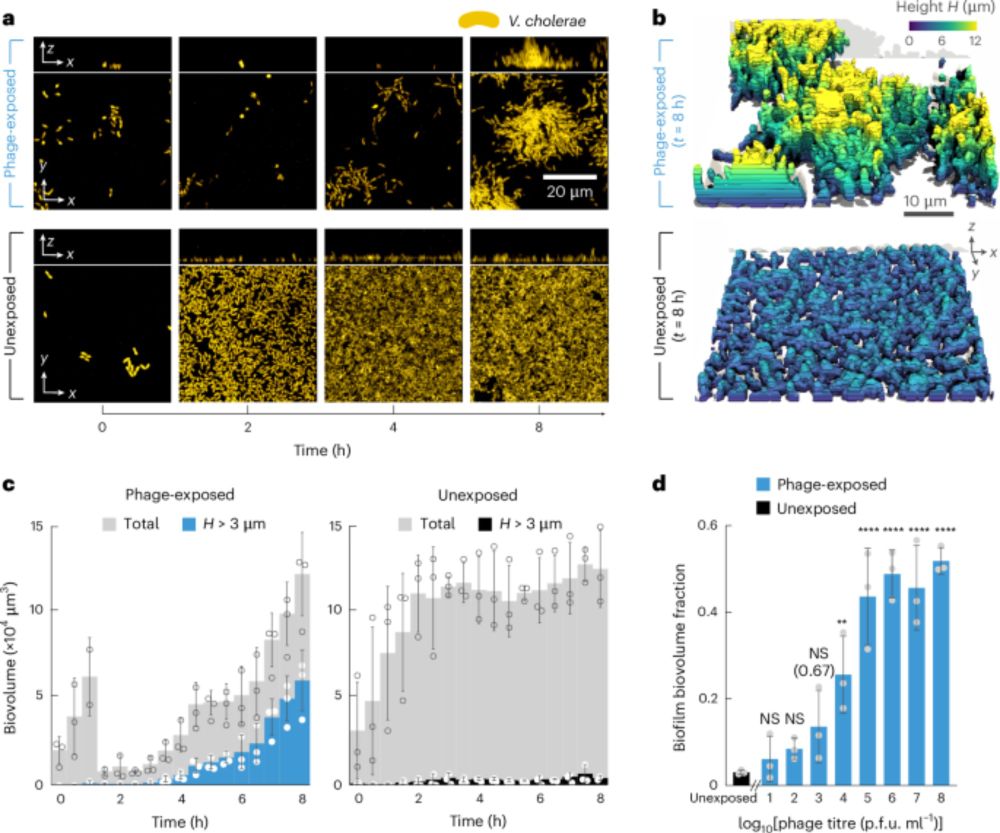
We found that many bacterial species use exogenous peptidoglycan fragments - released by lysis of neighboring cells - as a general danger signal, triggering a danger response that protects bacteria against many dangers: biofilm formation.
Details here 👇
www.nature.com/articles/s41...
Details here 👇
www.nature.com/articles/s41...
Bacteria use exogenous peptidoglycan as a danger signal to trigger biofilm formation - Nature Microbiology
Peptidoglycan released by neighbouring kin or non-kin cell lysis induces physiological changes that protect from a range of stresses, including phage predation.
www.nature.com
January 6, 2025 at 10:13 AM
We found that many bacterial species use exogenous peptidoglycan fragments - released by lysis of neighboring cells - as a general danger signal, triggering a danger response that protects bacteria against many dangers: biofilm formation.
Details here 👇
www.nature.com/articles/s41...
Details here 👇
www.nature.com/articles/s41...
Reposted by Julia L. Drewes

Bacteria use exogenous peptidoglycan as a danger signal to trigger biofilm formation
#Vibriocholerae
@naturemicrobiol.bsky.social from @knutdrescher.bsky.social
www.nature.com/articles/s41...
#Vibriocholerae
@naturemicrobiol.bsky.social from @knutdrescher.bsky.social
www.nature.com/articles/s41...

Bacteria use exogenous peptidoglycan as a danger signal to trigger biofilm formation - Nature Microbiology
Peptidoglycan released by neighbouring kin or non-kin cell lysis induces physiological changes that protect from a range of stresses, including phage predation.
www.nature.com
January 4, 2025 at 4:57 PM
Bacteria use exogenous peptidoglycan as a danger signal to trigger biofilm formation
#Vibriocholerae
@naturemicrobiol.bsky.social from @knutdrescher.bsky.social
www.nature.com/articles/s41...
#Vibriocholerae
@naturemicrobiol.bsky.social from @knutdrescher.bsky.social
www.nature.com/articles/s41...
Reposted by Julia L. Drewes

Check out this bombshell publication by Michael Fischbach @mfgrp.bsky.social and coworkers @stanford-chemh.bsky.social @stanfordmedicine.bsky.social, imagine a cancer immune therapy/vaccine where treatment begins and ends with a painless topical skin treatment! 🤯
www.nature.com/articles/s41...
www.nature.com/articles/s41...
Discovery and engineering of the antibody response to a prominent skin commensal - Nature
Nature - Discovery and engineering of the antibody response to a prominent skin commensal
www.nature.com
December 11, 2024 at 7:26 PM
Check out this bombshell publication by Michael Fischbach @mfgrp.bsky.social and coworkers @stanford-chemh.bsky.social @stanfordmedicine.bsky.social, imagine a cancer immune therapy/vaccine where treatment begins and ends with a painless topical skin treatment! 🤯
www.nature.com/articles/s41...
www.nature.com/articles/s41...
Reposted by Julia L. Drewes
Campylobacter jejuni-derived cytolethal distending toxin promotes colorectal cancer metastasis | Cell Host & Microbe @cellpress.bsky.social
www.sciencedirect.com/science/arti...
www.sciencedirect.com/science/arti...

Campylobacter jejuni-derived cytolethal distending toxin promotes colorectal cancer metastasis
Various forms of solid tumors harbor intracellular bacteria, but the physiological consequences of these microorganisms are poorly understood. We show…
www.sciencedirect.com
December 10, 2024 at 11:05 AM
Campylobacter jejuni-derived cytolethal distending toxin promotes colorectal cancer metastasis | Cell Host & Microbe @cellpress.bsky.social
www.sciencedirect.com/science/arti...
www.sciencedirect.com/science/arti...
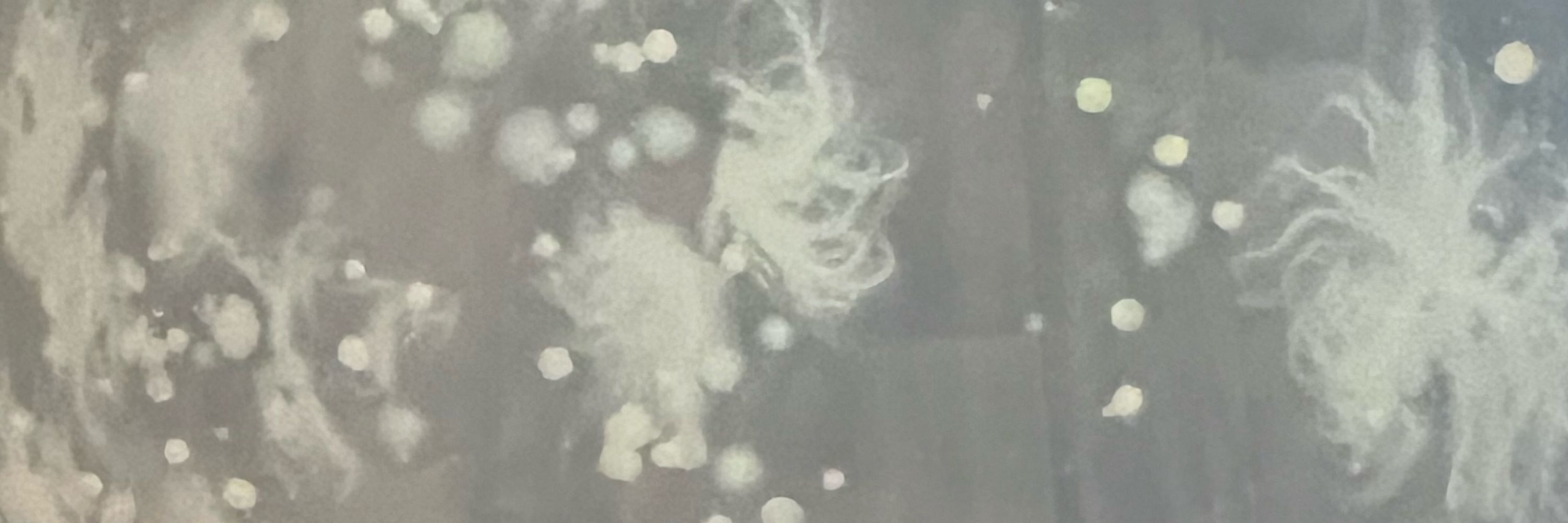
Lab hack #2, for all the microbiologists doing CFUs: use the spot plate method to save on plates! Do a 10-fold dilution series of your samples in a 96-well plate, then use a multi-channel pipettor to plate 4-5 uL onto (very dry) agar plates in duplicate. Not my finest example, but you get the point.

November 30, 2024 at 1:33 PM
Lab hack #2, for all the microbiologists doing CFUs: use the spot plate method to save on plates! Do a 10-fold dilution series of your samples in a 96-well plate, then use a multi-channel pipettor to plate 4-5 uL onto (very dry) agar plates in duplicate. Not my finest example, but you get the point.
Thought I’d kick off my bsky account with some of my fav lab hacks. First up, how to balance a centrifuge with any number of tubes (except 1 and 23). Courtesy of a post on Reddit from a few years ago (u/aliyoh). The colors represent up to 2 different tube weights. www.reddit.com/r/labrats/s/...

November 25, 2024 at 1:36 AM
Thought I’d kick off my bsky account with some of my fav lab hacks. First up, how to balance a centrifuge with any number of tubes (except 1 and 23). Courtesy of a post on Reddit from a few years ago (u/aliyoh). The colors represent up to 2 different tube weights. www.reddit.com/r/labrats/s/...