


Dr. Catherine Macdonald
@drcatmac.bsky.social
Marine scientist and teacher Field School & University of Miami. Director of sharktagging. NatGeo Explorer. Shark & ray ecology, biology, conservation. She/her.
Also: I have absolutely no problem with people conducting research that doesn’t have clear management or conservation implications. I still read and enjoy those papers! Answer the questions that excite you! But ideally, don’t assume all scientific information is automatically policy-relevant.
Some of our past surveys have revealed that early career scientists studying threatened species want their research to be useful for conservation and management policy, but they lack the policy training to make that happen.
Our paper can help!
www.southernfriedscience.com/shark-scient...
Our paper can help!
www.southernfriedscience.com/shark-scient...

Shark scientists want their research to help save threatened species, but don’t know how. Our new paper can help.
Sharks are some of the most threatened animals on Earth, and accordingly many scientists who study sharks want their research to be useful for conservation. However, most scientific training does n…
www.southernfriedscience.com
December 1, 2025 at 1:15 PM
Also: I have absolutely no problem with people conducting research that doesn’t have clear management or conservation implications. I still read and enjoy those papers! Answer the questions that excite you! But ideally, don’t assume all scientific information is automatically policy-relevant.
Reposted by Dr. Catherine Macdonald

I am excited to share with you a new paper, probably my last of 2025. @drcatmac.bsky.social is a coauthor.
Our paper presents advice for early career shark scientists who want their work to be useful for conservation and management policy.
conbio.onlinelibrary.wiley.com/doi/10.1111/... 🧪🦑🌍🦈
Our paper presents advice for early career shark scientists who want their work to be useful for conservation and management policy.
conbio.onlinelibrary.wiley.com/doi/10.1111/... 🧪🦑🌍🦈

“This research is important for the conservation and Management of Sharks”: A proposed framework for ensuring that this is actually true
Many scientists want their research to inform policy and help manage endangered species, but many common research practices hinder potential policy relevance. The results of our survey provide advice...
conbio.onlinelibrary.wiley.com
December 1, 2025 at 1:08 PM
I am excited to share with you a new paper, probably my last of 2025. @drcatmac.bsky.social is a coauthor.
Our paper presents advice for early career shark scientists who want their work to be useful for conservation and management policy.
conbio.onlinelibrary.wiley.com/doi/10.1111/... 🧪🦑🌍🦈
Our paper presents advice for early career shark scientists who want their work to be useful for conservation and management policy.
conbio.onlinelibrary.wiley.com/doi/10.1111/... 🧪🦑🌍🦈
Reposted by Dr. Catherine Macdonald

“Reasons are for reasonable people.” Boy howdy, I wish I’d had this response in my pocket back in the days when I frequented academe!
Dear grad students,
Reminder: it’s also totally fine to ignore your [uncle] who thinks your research is a waste of time and resources. You don’t owe people an explanation! They don’t have to get it!
Or, as someone told me as a life-changing piece of advice: reasons are for reasonable people.
Reminder: it’s also totally fine to ignore your [uncle] who thinks your research is a waste of time and resources. You don’t owe people an explanation! They don’t have to get it!
Or, as someone told me as a life-changing piece of advice: reasons are for reasonable people.
Every year around Thanksgiving, I see tons of grad students post heartbreaking messages on social media about how their loved ones don’t understand or support their decision to study what seems like something pointless or silly.
Perhaps my American Scientist essay can help!
🧪🌎🦑 #SciComm
Perhaps my American Scientist essay can help!
🧪🌎🦑 #SciComm
November 30, 2025 at 2:29 PM
“Reasons are for reasonable people.” Boy howdy, I wish I’d had this response in my pocket back in the days when I frequented academe!
Reposted by Dr. Catherine Macdonald
Hot off the press, "A zero annual export quota for wild-taken specimens traded for commercial purposes" annotation has been adopted for Giant Guitarfish (Glaucostegus spp.) at the #CITESCoP20
Follow along as more updates happen live!
#CITES #CoP20 #guitarfish #shark #ray #chimaera #biodiversity
Follow along as more updates happen live!
#CITES #CoP20 #guitarfish #shark #ray #chimaera #biodiversity

November 28, 2025 at 6:19 AM
Hot off the press, "A zero annual export quota for wild-taken specimens traded for commercial purposes" annotation has been adopted for Giant Guitarfish (Glaucostegus spp.) at the #CITESCoP20
Follow along as more updates happen live!
#CITES #CoP20 #guitarfish #shark #ray #chimaera #biodiversity
Follow along as more updates happen live!
#CITES #CoP20 #guitarfish #shark #ray #chimaera #biodiversity
The Makah have the right to hunt whale by treaty with the US. They have approval by international agreement under the subsistence whaling provisions of the International Whaling Commission. Their rights have been ignored, dismissed, and deprioritized.

The Makah Tribe has the right to hunt whales by treaty (the only tribe in the lower 48). But they have been waiting on a government permit to exercise that right for TWO DECADES.

Makah Tribe’s treaty-protected whaling rights remain blocked more than two decades later - ICT
Federal officials have not responded to the October deadline for the tribe’s permit for a traditional summer/fall subsistence hunt of eastern North Pacific gray whales, covered by the Makahs’ 10-year…
ictnews.org
November 26, 2025 at 2:29 PM
The Makah have the right to hunt whale by treaty with the US. They have approval by international agreement under the subsistence whaling provisions of the International Whaling Commission. Their rights have been ignored, dismissed, and deprioritized.
Remember that when you buy wild-caught fish, fisheries which meet demanding sustainability standards are also much less likely to involve horrifying human rights abuses including forced labor.

Deceptive recruitment practices in Indonesia and the Philippines can be compared to a “black market”.
On board, workers are denied their promised salaries, end up on ships against their will, and face abuse, poor working conditions and extreme working hours.
On board, workers are denied their promised salaries, end up on ships against their will, and face abuse, poor working conditions and extreme working hours.

Deceived, Abused, Forgotten: The Untold Story of Filipino Migrant Workers Exploited at Sea
YouTube video by Environmental Justice Foundation (EJF)
www.youtube.com
November 26, 2025 at 12:36 PM
Remember that when you buy wild-caught fish, fisheries which meet demanding sustainability standards are also much less likely to involve horrifying human rights abuses including forced labor.
Dear grad students,
Reminder: it’s also totally fine to ignore your [uncle] who thinks your research is a waste of time and resources. You don’t owe people an explanation! They don’t have to get it!
Or, as someone told me as a life-changing piece of advice: reasons are for reasonable people.
Reminder: it’s also totally fine to ignore your [uncle] who thinks your research is a waste of time and resources. You don’t owe people an explanation! They don’t have to get it!
Or, as someone told me as a life-changing piece of advice: reasons are for reasonable people.
Every year around Thanksgiving, I see tons of grad students post heartbreaking messages on social media about how their loved ones don’t understand or support their decision to study what seems like something pointless or silly.
Perhaps my American Scientist essay can help!
🧪🌎🦑 #SciComm
Perhaps my American Scientist essay can help!
🧪🌎🦑 #SciComm
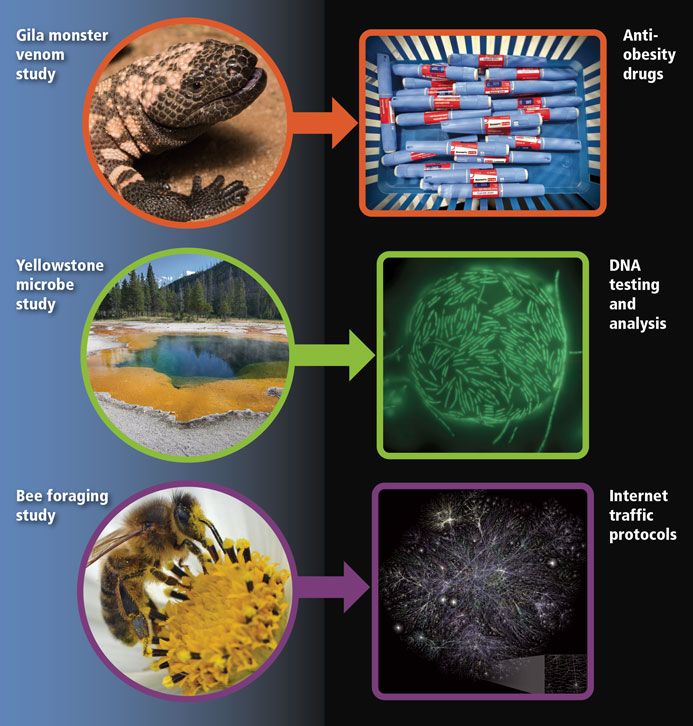
“Why Are We Funding This?”
Long-standing myths about “silly science” have contributed to the reckless slashing of government-supported research.
www.americanscientist.org
November 25, 2025 at 7:01 PM
Dear grad students,
Reminder: it’s also totally fine to ignore your [uncle] who thinks your research is a waste of time and resources. You don’t owe people an explanation! They don’t have to get it!
Or, as someone told me as a life-changing piece of advice: reasons are for reasonable people.
Reminder: it’s also totally fine to ignore your [uncle] who thinks your research is a waste of time and resources. You don’t owe people an explanation! They don’t have to get it!
Or, as someone told me as a life-changing piece of advice: reasons are for reasonable people.
Reposted by Dr. Catherine Macdonald

From our new #research: Of the 35 newspaper texts we analyzed (2021-2024), 60% focused entirely on Rice's whales. The remaining 40% often included the whales as an example, but in the context of some other topic.
Read to find out what this means & why it matters: doi.org/10.1007/s13280-025-02265-y
Read to find out what this means & why it matters: doi.org/10.1007/s13280-025-02265-y

November 25, 2025 at 3:03 PM
From our new #research: Of the 35 newspaper texts we analyzed (2021-2024), 60% focused entirely on Rice's whales. The remaining 40% often included the whales as an example, but in the context of some other topic.
Read to find out what this means & why it matters: doi.org/10.1007/s13280-025-02265-y
Read to find out what this means & why it matters: doi.org/10.1007/s13280-025-02265-y
David, every bird is an edible bird if you’re brave enough.
You were all having a good day and I am here to ruin it:
All of the birds given as gifts in “12 days of Christmas” are edible birds, and I am not sure why so many of you believe they were all intended to be kept as pets for years after receipt.
All of the birds given as gifts in “12 days of Christmas” are edible birds, and I am not sure why so many of you believe they were all intended to be kept as pets for years after receipt.
November 24, 2025 at 1:31 PM
David, every bird is an edible bird if you’re brave enough.
Reposted by Dr. Catherine Macdonald
ICYMI: I have a new commentary out in MongaBay about important new shark conservation research and what it means for the Convention on International Trade in Endangered Species. The CITES COP starts today.
@wcs.org 🌎🧪🦑🐠
news.mongabay.com/2025/11/for-...
@wcs.org 🌎🧪🦑🐠
news.mongabay.com/2025/11/for-...

For sharks on the brink of extinction, CITES Appendix II isn’t protective enough (commentary)
Sharks are some of the most threatened animals on Earth, with approximately one-third of all species assessed as threatened with extinction on the IUCN Red List. These animals are not only older than ...
news.mongabay.com
November 24, 2025 at 12:49 PM
ICYMI: I have a new commentary out in MongaBay about important new shark conservation research and what it means for the Convention on International Trade in Endangered Species. The CITES COP starts today.
@wcs.org 🌎🧪🦑🐠
news.mongabay.com/2025/11/for-...
@wcs.org 🌎🧪🦑🐠
news.mongabay.com/2025/11/for-...
Reposted by Dr. Catherine Macdonald

The EPA's new proposed definition of the WOTUS provision of the Clean Water Act, as written currently, would dramatically reduce the reasonable science-based protections for our nation's wetlands, streams, lakes, and rivers.
Read our statement: www.americanrivers.org/media-item/a...
Read our statement: www.americanrivers.org/media-item/a...

American Rivers Concerned EPA’s New Proposed Clean Water Act Rule Will Damage Wetlands, Increase Flood Risk
American Rivers is today announcing its disapproval of the Environmental Protection Agency’s new proposed definition of the “Waters of the United States” (WOTUS) provision of the Clean Water Act.
www.americanrivers.org
November 19, 2025 at 6:33 PM
The EPA's new proposed definition of the WOTUS provision of the Clean Water Act, as written currently, would dramatically reduce the reasonable science-based protections for our nation's wetlands, streams, lakes, and rivers.
Read our statement: www.americanrivers.org/media-item/a...
Read our statement: www.americanrivers.org/media-item/a...
Reposted by Dr. Catherine Macdonald

New Publication:
Discovering the world’s most endangered great whale species did not advance an issue-attention cycle in news media: Implications for Rice’s whale conservation and management
Open access link: link.springer.com/article/10.1...
Discovering the world’s most endangered great whale species did not advance an issue-attention cycle in news media: Implications for Rice’s whale conservation and management
Open access link: link.springer.com/article/10.1...

Discovering the world’s most endangered great whale species did not advance an issue-attention cycle in news media: Implications for Rice’s whale conservation and management - Ambio
Issue-attention cycles (IACs) follow the predictable rise and fall of media and public attention to topics through five defined stages. Using content analysis and critical discourse analysis, we analy...
link.springer.com
November 23, 2025 at 6:57 AM
New Publication:
Discovering the world’s most endangered great whale species did not advance an issue-attention cycle in news media: Implications for Rice’s whale conservation and management
Open access link: link.springer.com/article/10.1...
Discovering the world’s most endangered great whale species did not advance an issue-attention cycle in news media: Implications for Rice’s whale conservation and management
Open access link: link.springer.com/article/10.1...
Reposted by Dr. Catherine Macdonald
f you’ve never heard of the Circular Seabird Economy, it’s the idea that seabirds feed on marine prey, and at their colonial nesting sites, primarily on islands, they deposit significant amounts of those nutrients (mostly in the form of guano) onto land.
🧪
🧪

October 27, 2025 at 2:36 PM
f you’ve never heard of the Circular Seabird Economy, it’s the idea that seabirds feed on marine prey, and at their colonial nesting sites, primarily on islands, they deposit significant amounts of those nutrients (mostly in the form of guano) onto land.
🧪
🧪
Reposted by Dr. Catherine Macdonald
🐋📰 New #OpenAccess #Research 📰🐋
In 2021 scientists id'd a new species of endangered whale in the Gulf of Mexico: the Rice’s whale. @emilyyeager9.bsky.social & I wanted to know if that discovery started a news cycle. Tl;dr - it didn't.
Read it in Ambio by @springernature.com: bit.ly/RicesWhaleNews
In 2021 scientists id'd a new species of endangered whale in the Gulf of Mexico: the Rice’s whale. @emilyyeager9.bsky.social & I wanted to know if that discovery started a news cycle. Tl;dr - it didn't.
Read it in Ambio by @springernature.com: bit.ly/RicesWhaleNews

November 21, 2025 at 3:58 PM
🐋📰 New #OpenAccess #Research 📰🐋
In 2021 scientists id'd a new species of endangered whale in the Gulf of Mexico: the Rice’s whale. @emilyyeager9.bsky.social & I wanted to know if that discovery started a news cycle. Tl;dr - it didn't.
Read it in Ambio by @springernature.com: bit.ly/RicesWhaleNews
In 2021 scientists id'd a new species of endangered whale in the Gulf of Mexico: the Rice’s whale. @emilyyeager9.bsky.social & I wanted to know if that discovery started a news cycle. Tl;dr - it didn't.
Read it in Ambio by @springernature.com: bit.ly/RicesWhaleNews
A friendly reminder that your perception of whether the ESA “works” depends a lot on what you believe it is intended to do. It is GREAT at preventing species from going extinct, but some feel ineffective because species often remain on listed long-term. 1/2

The Interior Department proposed reviving a suite of changes to Endangered Species Act regulations first made during the Republican's first term. Those changes were reversed under former President Biden. n.pr/49Yn5Oc

Trump administration seeks to roll back protections for imperiled species and habitat
The Interior Department proposed reviving a suite of changes to Endangered Species Act regulations first made during the Republican's first term. Those changes were reversed under former President Biden.
n.pr
November 20, 2025 at 2:17 AM
A friendly reminder that your perception of whether the ESA “works” depends a lot on what you believe it is intended to do. It is GREAT at preventing species from going extinct, but some feel ineffective because species often remain on listed long-term. 1/2
Reposted by Dr. Catherine Macdonald
We have another publication out! 🎉🎉🎉
“Hybrids along a natural–anthropogenic gradient: improving policy and management across all levels of biodiversity.”
We explore how to deal with hybrids in conservation — scientifically and practically. A thread 🧵
conbio.onlinelibrary.wiley.com/doi/10.1111/...
“Hybrids along a natural–anthropogenic gradient: improving policy and management across all levels of biodiversity.”
We explore how to deal with hybrids in conservation — scientifically and practically. A thread 🧵
conbio.onlinelibrary.wiley.com/doi/10.1111/...

Hybrids Along a Natural‐Anthropogenic Gradient: Improving Policy and Management Across All Levels of Biodiversity
Hybridization has long been a central topic in evolution and conservation. Recent developments in genomics have increased the ability to detect hybridization, defined here as breeding between species....
conbio.onlinelibrary.wiley.com
November 14, 2025 at 3:37 PM
We have another publication out! 🎉🎉🎉
“Hybrids along a natural–anthropogenic gradient: improving policy and management across all levels of biodiversity.”
We explore how to deal with hybrids in conservation — scientifically and practically. A thread 🧵
conbio.onlinelibrary.wiley.com/doi/10.1111/...
“Hybrids along a natural–anthropogenic gradient: improving policy and management across all levels of biodiversity.”
We explore how to deal with hybrids in conservation — scientifically and practically. A thread 🧵
conbio.onlinelibrary.wiley.com/doi/10.1111/...
Reposted by Dr. Catherine Macdonald
New PhD studentship opportunity in my lab & with collaborators from the Pinniped Genomes Consortium. Come help us unravel the genomics of seal physiological super powers! Closing date 7th January 2026 🧪🦭🧬🌍🦑🐳 #marine #mammals
#consgen #popgen #phylo #molevol #evolution
yes-dtn.ac.uk/research/the...
#consgen #popgen #phylo #molevol #evolution
yes-dtn.ac.uk/research/the...

The evolutionary genomics of life-history adaptations in pinnipeds - Yorkshire Environmental Sciences • Doctoral Training Network
Project summary Pinnipeds (seals, sea lions, fur seals and walrus) are keystone marine predators, and sentinels for marine ecosystem health. Advances in genomic technology open up the possibility to u...
yes-dtn.ac.uk
November 10, 2025 at 8:23 AM
New PhD studentship opportunity in my lab & with collaborators from the Pinniped Genomes Consortium. Come help us unravel the genomics of seal physiological super powers! Closing date 7th January 2026 🧪🦭🧬🌍🦑🐳 #marine #mammals
#consgen #popgen #phylo #molevol #evolution
yes-dtn.ac.uk/research/the...
#consgen #popgen #phylo #molevol #evolution
yes-dtn.ac.uk/research/the...
Reposted by Dr. Catherine Macdonald
The Taxonomic Distinctiveness Hypothesis (Ricciardi & Atkinson 2004) predicts that invaders with no relatives in an area will have the largest ecological impacts.
We found evidence of this for various aquatic systems. It is also supported by terrestrial studies. Eco-evolutionary context matters!
We found evidence of this for various aquatic systems. It is also supported by terrestrial studies. Eco-evolutionary context matters!


November 16, 2025 at 12:10 AM
The Taxonomic Distinctiveness Hypothesis (Ricciardi & Atkinson 2004) predicts that invaders with no relatives in an area will have the largest ecological impacts.
We found evidence of this for various aquatic systems. It is also supported by terrestrial studies. Eco-evolutionary context matters!
We found evidence of this for various aquatic systems. It is also supported by terrestrial studies. Eco-evolutionary context matters!
Reposted by Dr. Catherine Macdonald
🚨 PUBLICATION ALERT 🚨 New research targeting the bull shark (Carcharhinus leucas) in the Latin American region published in "Neotropical Ichthyology" 🐂🦈🌊 In this paper, we outlined research goals for this species important for its conservation 🌍 Read more here: www.ni.bio.br/1982-0224-20...

November 14, 2025 at 11:51 AM
🚨 PUBLICATION ALERT 🚨 New research targeting the bull shark (Carcharhinus leucas) in the Latin American region published in "Neotropical Ichthyology" 🐂🦈🌊 In this paper, we outlined research goals for this species important for its conservation 🌍 Read more here: www.ni.bio.br/1982-0224-20...
Reposted by Dr. Catherine Macdonald

This was amazing. There was something incredibly inspiring about seeing these massive beautiful creatures wrestled out of the water and then scienced on the boat and then returned to their home as if they just had a brief time-out. Max and I are so grateful.
November 12, 2025 at 12:20 AM
This was amazing. There was something incredibly inspiring about seeing these massive beautiful creatures wrestled out of the water and then scienced on the boat and then returned to their home as if they just had a brief time-out. Max and I are so grateful.
Reposted by Dr. Catherine Macdonald
Today @mikegrunwald.bsky.social and his son Max joined us for a day of shark research! Thanks for the book!

November 11, 2025 at 9:39 PM
Today @mikegrunwald.bsky.social and his son Max joined us for a day of shark research! Thanks for the book!
Reposted by Dr. Catherine Macdonald
🚨 Fully funded PhD alert 🚨
Want to use big data to tackle to help biodiversity loss?
Apply for a PhD quantifying how human pressures are affecting the resilience and extinction risk of vertebrate populations 🌍🦴
📍University of Bristol 🎓 Starts Sept 2026
🔗 tinyurl.com/cfdzrsj9
Want to use big data to tackle to help biodiversity loss?
Apply for a PhD quantifying how human pressures are affecting the resilience and extinction risk of vertebrate populations 🌍🦴
📍University of Bristol 🎓 Starts Sept 2026
🔗 tinyurl.com/cfdzrsj9

November 11, 2025 at 11:17 AM
🚨 Fully funded PhD alert 🚨
Want to use big data to tackle to help biodiversity loss?
Apply for a PhD quantifying how human pressures are affecting the resilience and extinction risk of vertebrate populations 🌍🦴
📍University of Bristol 🎓 Starts Sept 2026
🔗 tinyurl.com/cfdzrsj9
Want to use big data to tackle to help biodiversity loss?
Apply for a PhD quantifying how human pressures are affecting the resilience and extinction risk of vertebrate populations 🌍🦴
📍University of Bristol 🎓 Starts Sept 2026
🔗 tinyurl.com/cfdzrsj9
Thanks, NOAA!
In the century leading up to 1975, nearly 6000 freighters went down in the Great Lakes.
The Edmund Fitzgerald was the last.
The last. In 50 years, not a single commercial freighter has been lost in the Great Lakes.
Why?
It's NOAA. Of course it's NOAA.
The Edmund Fitzgerald was the last.
The last. In 50 years, not a single commercial freighter has been lost in the Great Lakes.
Why?
It's NOAA. Of course it's NOAA.
November 11, 2025 at 2:22 AM
Thanks, NOAA!
Reposted by Dr. Catherine Macdonald
PhD position - Changing Ecological Role of Coral Reef Marine Protected Areas.
One of the new @exageo-dla.bsky.social advertised projects: www.exageo.org/phd-student-... - deadline for applications 9th January. International applications welcome.
Come and join us @lec-reefs.bsky.social
One of the new @exageo-dla.bsky.social advertised projects: www.exageo.org/phd-student-... - deadline for applications 9th January. International applications welcome.
Come and join us @lec-reefs.bsky.social

November 10, 2025 at 3:28 PM
PhD position - Changing Ecological Role of Coral Reef Marine Protected Areas.
One of the new @exageo-dla.bsky.social advertised projects: www.exageo.org/phd-student-... - deadline for applications 9th January. International applications welcome.
Come and join us @lec-reefs.bsky.social
One of the new @exageo-dla.bsky.social advertised projects: www.exageo.org/phd-student-... - deadline for applications 9th January. International applications welcome.
Come and join us @lec-reefs.bsky.social
Reposted by Dr. Catherine Macdonald

Thanks to @whysharksmatter.bsky.social and the University of Miami team for letting me join! We caught and tagged 2 sharks!
Today @cbquist.bsky.social of @scifri.bsky.social joined us for a day of shark research!

November 9, 2025 at 11:08 PM
Thanks to @whysharksmatter.bsky.social and the University of Miami team for letting me join! We caught and tagged 2 sharks!