



Do Won Kim
@dowonkim.bsky.social
Reposted by Do Won Kim
Very cool pilot study from @dowonkim.bsky.social using chatbots to examine how people respond to out-group agreement and in-group disagreement. Looking forward to seeing this project develop into the full study! #pacss2025 #polnet2025


August 13, 2025 at 6:36 PM
Very cool pilot study from @dowonkim.bsky.social using chatbots to examine how people respond to out-group agreement and in-group disagreement. Looking forward to seeing this project develop into the full study! #pacss2025 #polnet2025
Reposted by Do Won Kim
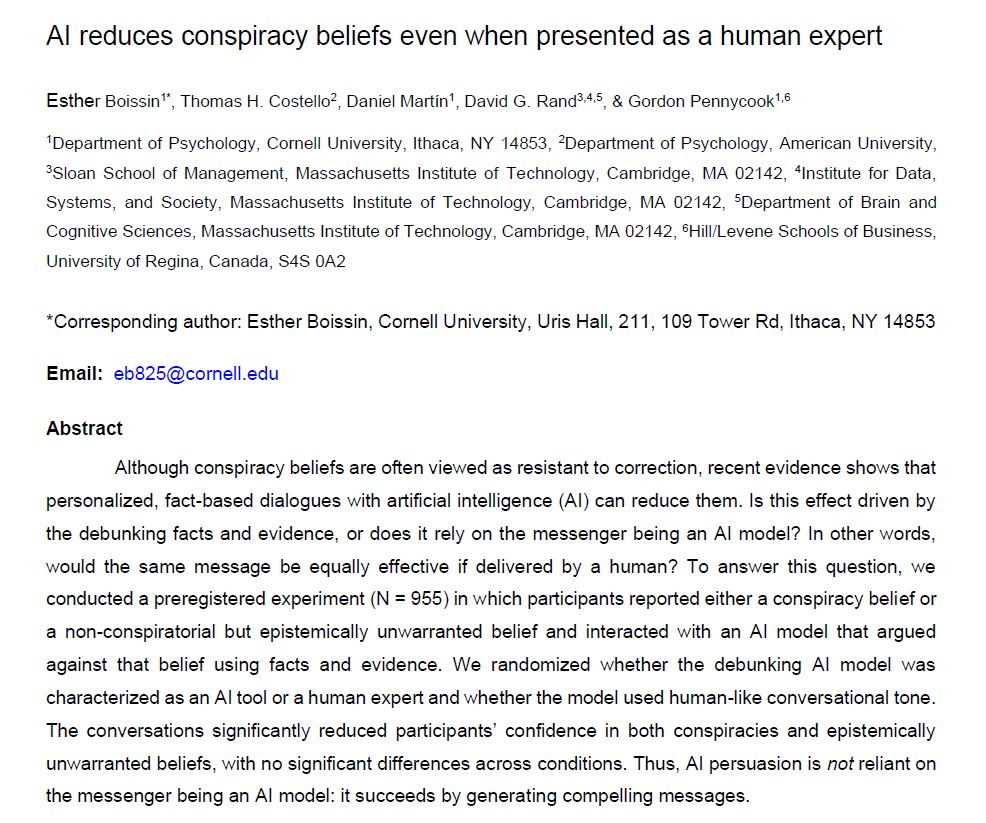
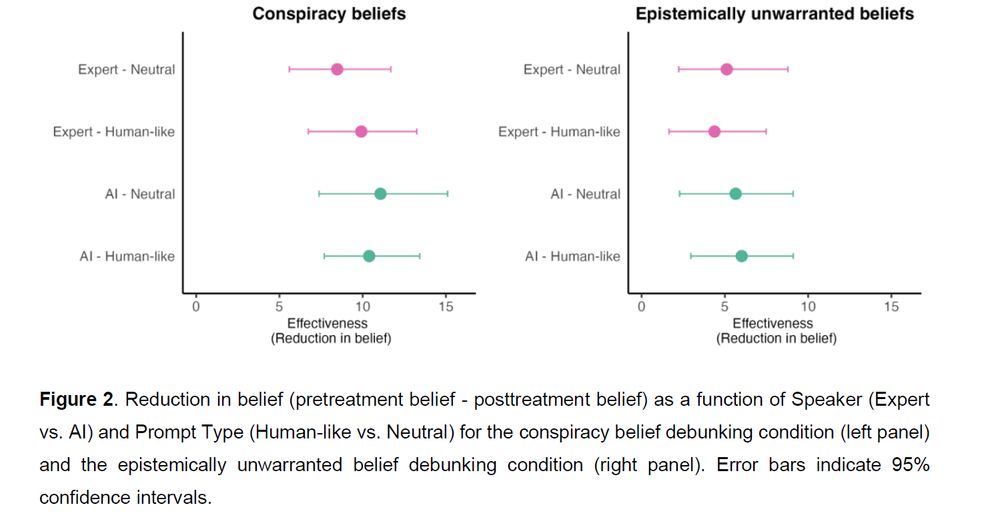
Recent research shows that AI can durably reduce belief in conspiracies. But does this work b/c the AI is good at producing evidence, or b/c ppl really trust AI?
In a new working paper, we show that the effect persists even if the person thinks they're talking to a human: osf.io/preprints/ps...
🧵
In a new working paper, we show that the effect persists even if the person thinks they're talking to a human: osf.io/preprints/ps...
🧵
May 15, 2025 at 3:54 PM
Recent research shows that AI can durably reduce belief in conspiracies. But does this work b/c the AI is good at producing evidence, or b/c ppl really trust AI?
In a new working paper, we show that the effect persists even if the person thinks they're talking to a human: osf.io/preprints/ps...
🧵
In a new working paper, we show that the effect persists even if the person thinks they're talking to a human: osf.io/preprints/ps...
🧵
Reposted by Do Won Kim
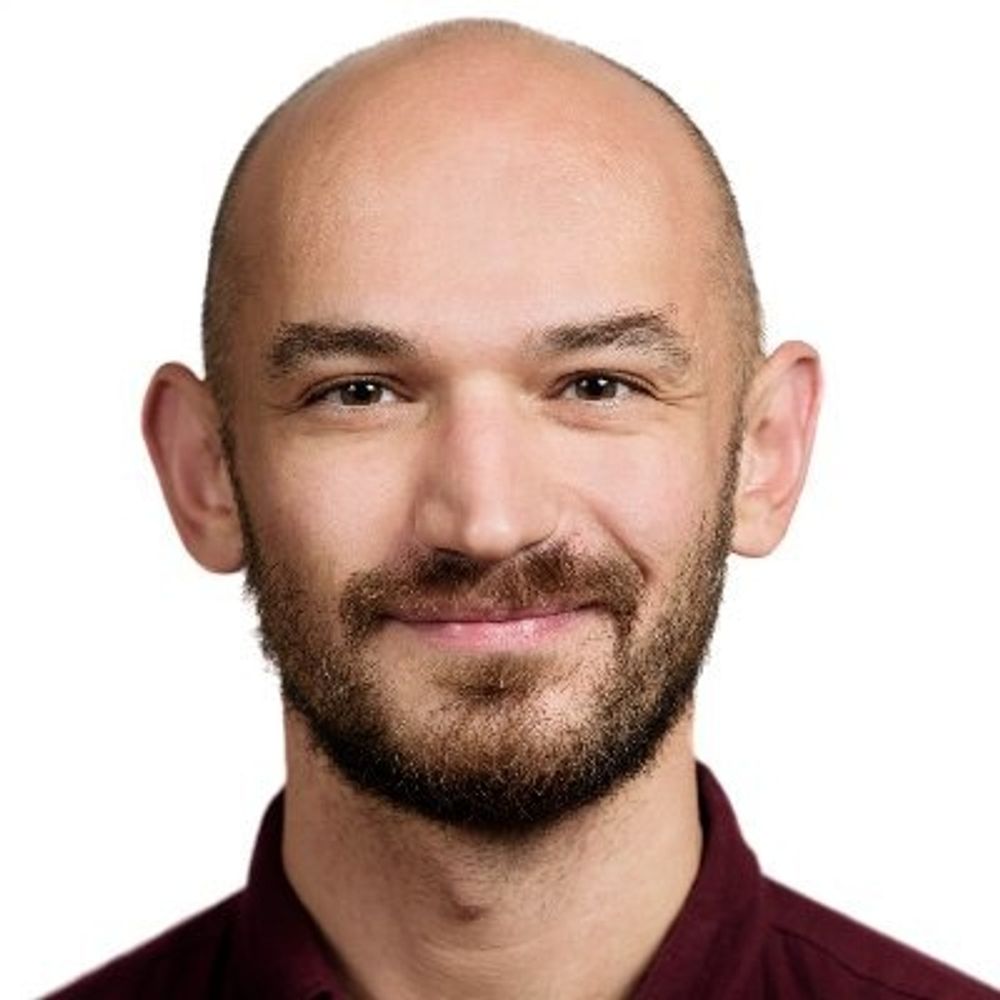
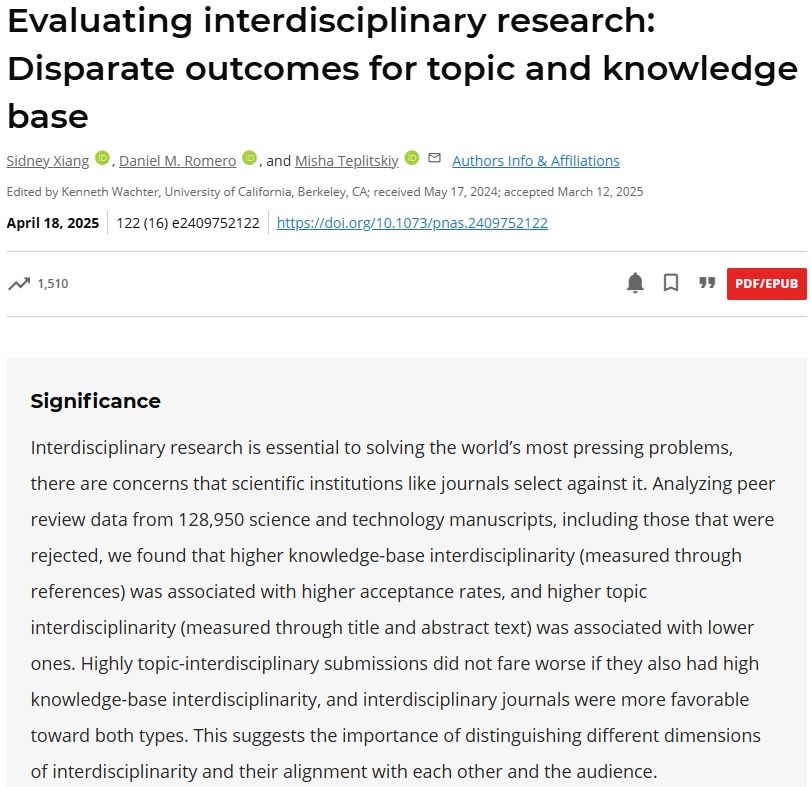
Conventional wisdom says interdisciplinary research is valuable but harder to get through peer review (need to please diverse reviewers, etc).
@sdxiang.bsky.social Daniel and I partnered with @ioppublishing.bsky.social to test this wisdom and add nuance
@sdxiang.bsky.social Daniel and I partnered with @ioppublishing.bsky.social to test this wisdom and add nuance
May 15, 2025 at 1:03 AM
Conventional wisdom says interdisciplinary research is valuable but harder to get through peer review (need to please diverse reviewers, etc).
@sdxiang.bsky.social Daniel and I partnered with @ioppublishing.bsky.social to test this wisdom and add nuance
@sdxiang.bsky.social Daniel and I partnered with @ioppublishing.bsky.social to test this wisdom and add nuance
Reposted by Do Won Kim
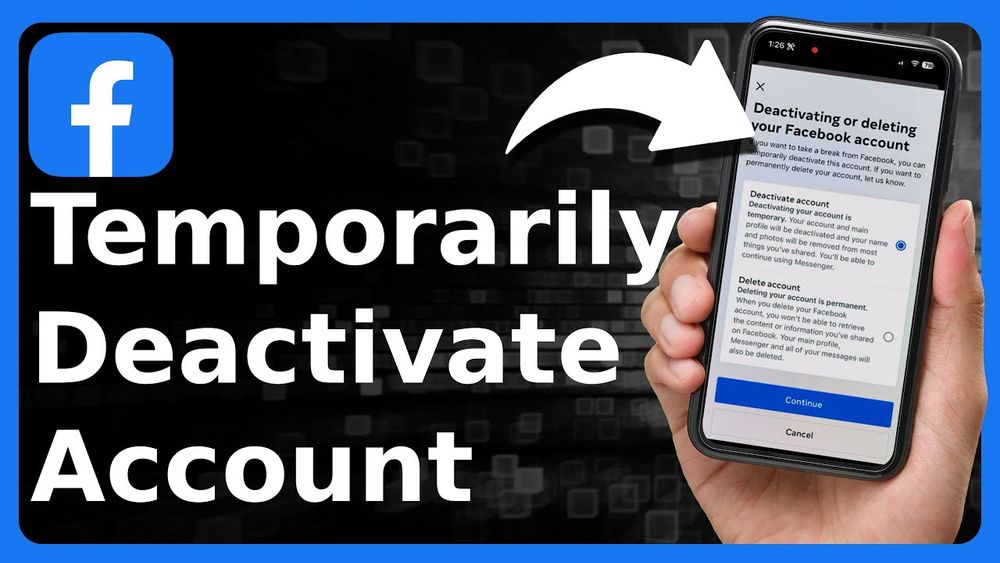
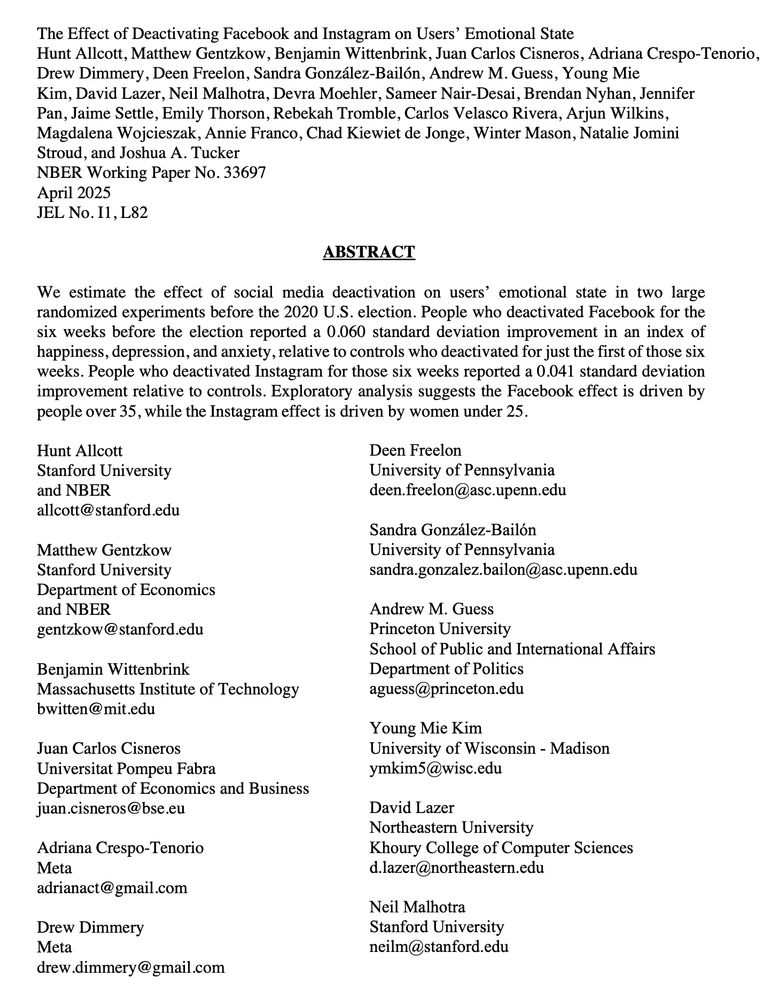
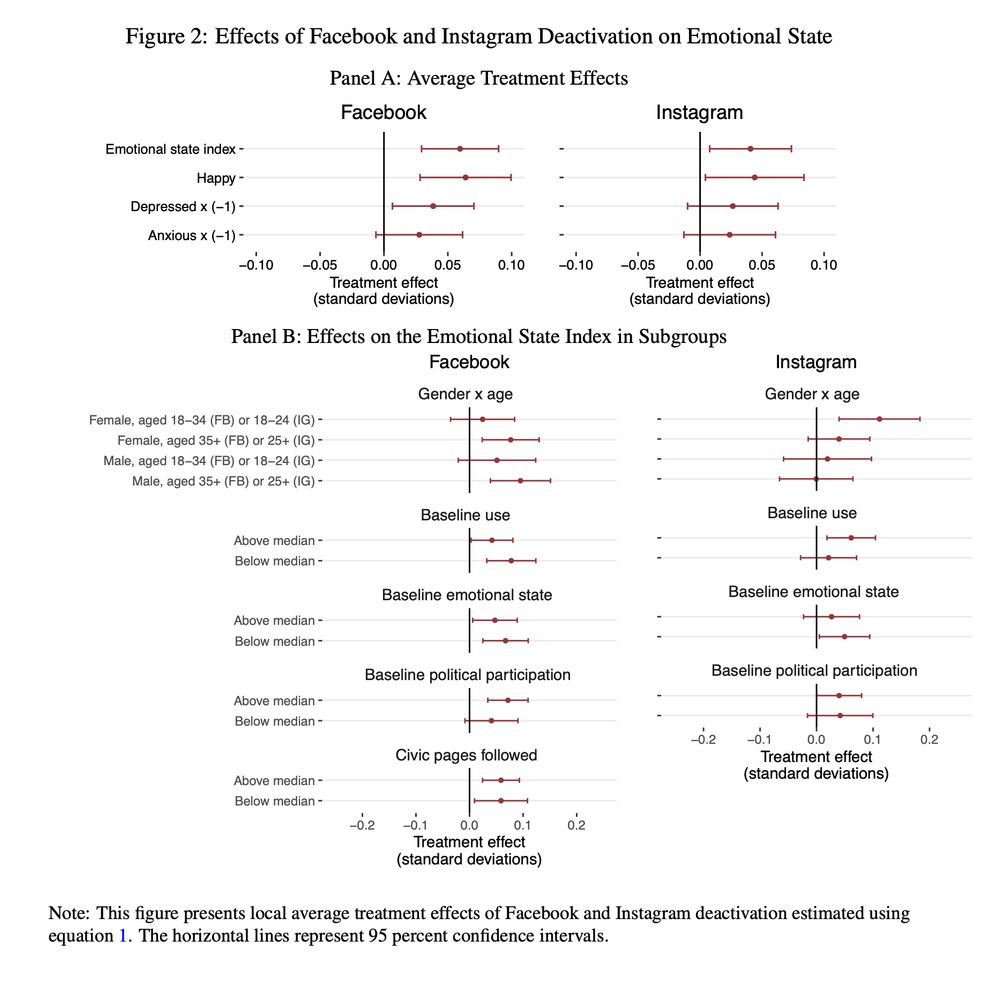
What happens to people when researchers encourage them to deactivate Facebook or Instagram for a few weeks in the lead up to an election?
People get modestly* happier/less depressed/less anxious.
"The Facebook effect is driven by people >35, while the Instagram effect is driven by women <25."
People get modestly* happier/less depressed/less anxious.
"The Facebook effect is driven by people >35, while the Instagram effect is driven by women <25."
April 21, 2025 at 11:48 AM
What happens to people when researchers encourage them to deactivate Facebook or Instagram for a few weeks in the lead up to an election?
People get modestly* happier/less depressed/less anxious.
"The Facebook effect is driven by people >35, while the Instagram effect is driven by women <25."
People get modestly* happier/less depressed/less anxious.
"The Facebook effect is driven by people >35, while the Instagram effect is driven by women <25."
Reposted by Do Won Kim
New paper with @dianamejordan.bsky.social and sky-less Trent Ollerenshaw! We provide large-N tests of repeated measure designs in survey experiments, showing that they slightly attenuate ATEs relative to post-only designs, but provide large gains to precision. Thread below.
Preprint: osf.io/q6czp
Preprint: osf.io/q6czp

April 3, 2025 at 7:10 PM
New paper with @dianamejordan.bsky.social and sky-less Trent Ollerenshaw! We provide large-N tests of repeated measure designs in survey experiments, showing that they slightly attenuate ATEs relative to post-only designs, but provide large gains to precision. Thread below.
Preprint: osf.io/q6czp
Preprint: osf.io/q6czp
Reposted by Do Won Kim

📄NEW PAPER📄
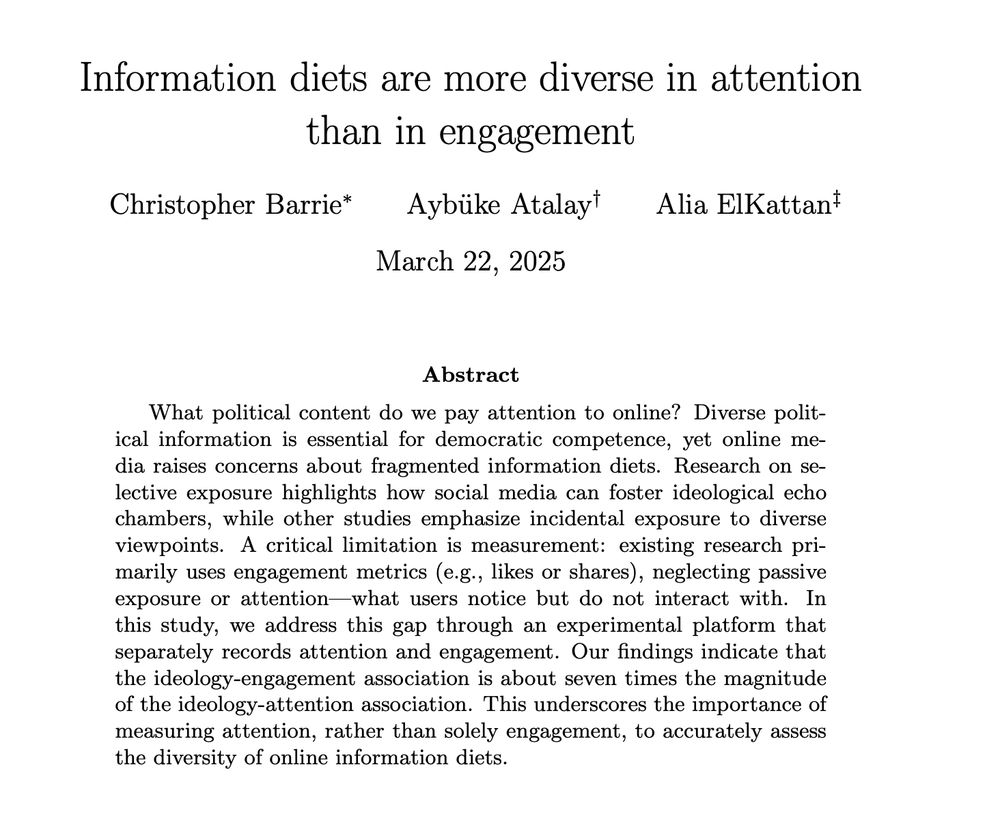
Ever wondered content people actually pay *attention* to online? Our new research reveals that you likely pay attention to far more varied political content than your likes and shares suggest
Ever wondered content people actually pay *attention* to online? Our new research reveals that you likely pay attention to far more varied political content than your likes and shares suggest
March 25, 2025 at 12:04 PM
📄NEW PAPER📄
Ever wondered content people actually pay *attention* to online? Our new research reveals that you likely pay attention to far more varied political content than your likes and shares suggest
Ever wondered content people actually pay *attention* to online? Our new research reveals that you likely pay attention to far more varied political content than your likes and shares suggest
Reposted by Do Won Kim
Interesting results, I wonder if stated preferences match behaviours, e.g., how many people are using bsky custom feeds?

People in 26 countries prefer more control over their online environment
In a conjoint study (N = 11,868), we explored preferences for regulating online environments by examining binary choices between different regulation scenarios.
Preprint:https://osf.io/preprints/osf/haqu9
In a conjoint study (N = 11,868), we explored preferences for regulating online environments by examining binary choices between different regulation scenarios.
Preprint:https://osf.io/preprints/osf/haqu9
December 19, 2024 at 10:30 AM
Interesting results, I wonder if stated preferences match behaviours, e.g., how many people are using bsky custom feeds?