



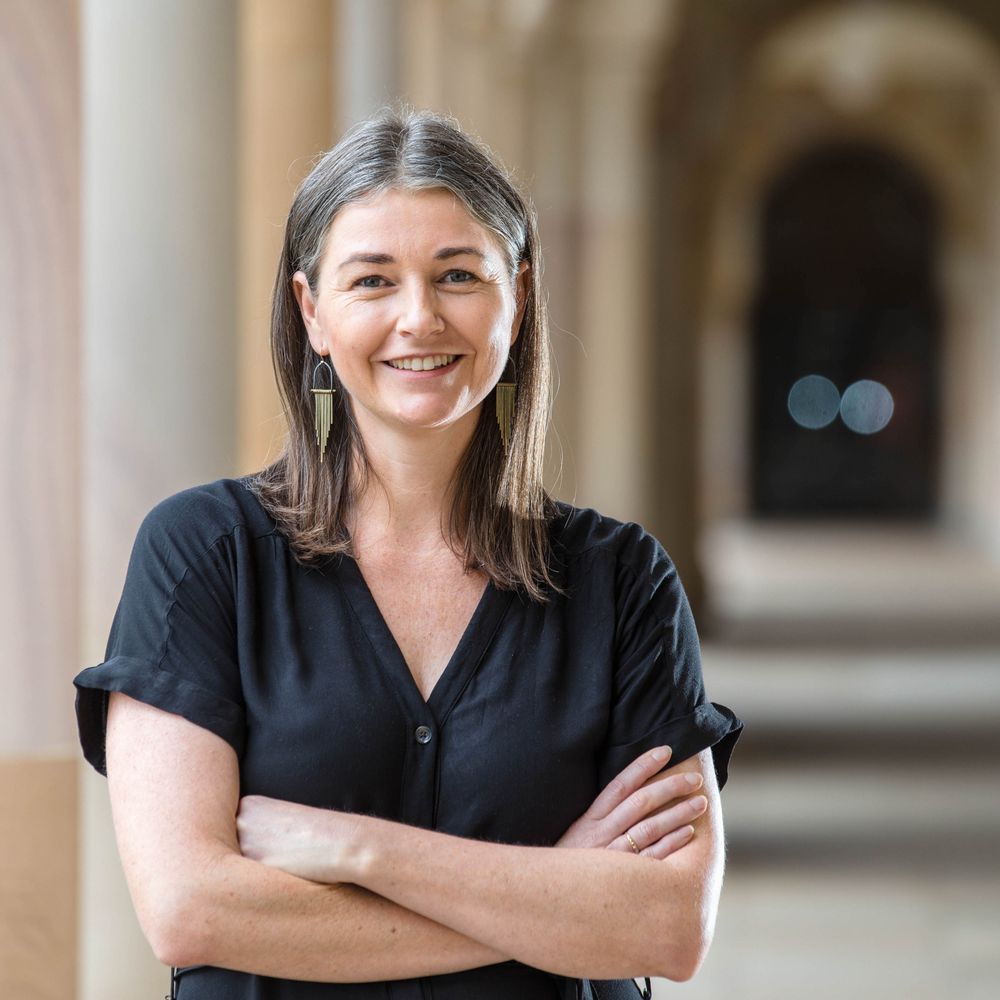
Cassandra Chapman
@cassandrachapman.bsky.social
Associate Professor at University of Queensland researching the psychology of generosity: philanthropy, fundraising, & all things nonprofits | Kiwi who loves hiking, latin dance, art, architecture, & F1 | www.donorpsych.org
Also,
- Login screen doesn't work on Safari
- Preregistrations impossible (got many error messages & after I was finally able to submit got an email saying trouble archiving my preregistration so it wasn't completed)... this means I can't actually run my study :(
- Symbols not rendering (e.g., &, <)
- Login screen doesn't work on Safari
- Preregistrations impossible (got many error messages & after I was finally able to submit got an email saying trouble archiving my preregistration so it wasn't completed)... this means I can't actually run my study :(
- Symbols not rendering (e.g., &, <)
October 22, 2025 at 9:38 PM
Also,
- Login screen doesn't work on Safari
- Preregistrations impossible (got many error messages & after I was finally able to submit got an email saying trouble archiving my preregistration so it wasn't completed)... this means I can't actually run my study :(
- Symbols not rendering (e.g., &, <)
- Login screen doesn't work on Safari
- Preregistrations impossible (got many error messages & after I was finally able to submit got an email saying trouble archiving my preregistration so it wasn't completed)... this means I can't actually run my study :(
- Symbols not rendering (e.g., &, <)
I didn’t get an email but was surprised by this when I just tried to log in for the first time in a while
August 26, 2025 at 4:27 AM
I didn’t get an email but was surprised by this when I just tried to log in for the first time in a while
Most of this research is open access, & has been done in collaboration with (or sometimes led by) other cool folks, including Blueskyers @annayahprosser.bsky.social & @bleiker.bsky.social
July 21, 2025 at 2:31 AM
Most of this research is open access, & has been done in collaboration with (or sometimes led by) other cool folks, including Blueskyers @annayahprosser.bsky.social & @bleiker.bsky.social
* Finally, we encourage the increasing adoption of transparency practices in nonprofit research. To this end, we outline the benefits of transparency and offer concrete suggestions for different ways to demonstrate transparency in nonprofit research in this article: link.springer.com/article/10.1...

Let us be Clear: Why and how to Demonstrate data and Methods Transparency in Nonprofit Research - VOLUNTAS: International Journal of Voluntary and Nonprofit Organizations
Transparency means being honest and open about one’s practices. Transparency is considered a gold standard in the nonprofit sector and associated with a range of positive outcomes. We propose that tra...
link.springer.com
July 21, 2025 at 2:31 AM
* Finally, we encourage the increasing adoption of transparency practices in nonprofit research. To this end, we outline the benefits of transparency and offer concrete suggestions for different ways to demonstrate transparency in nonprofit research in this article: link.springer.com/article/10.1...
* We systematically reviewed research on charitable giving (437 articles): 73% included subjective (i.e. self-reported) measures & only 33% included objective (i.e. observed behavior) measures. Objective measurement varied across disciplines, geographic regions, & methods: doi.org/10.1177/0899...


July 21, 2025 at 2:31 AM
* We systematically reviewed research on charitable giving (437 articles): 73% included subjective (i.e. self-reported) measures & only 33% included objective (i.e. observed behavior) measures. Objective measurement varied across disciplines, geographic regions, & methods: doi.org/10.1177/0899...
* Thematic analyses reveal fundraisers walk an ethical tightrope by having to consider the needs of three key stakeholders - donors, beneficiaries, & fundraisers. They also mention diverse considerations around how beneficiaries are or should be depicted in campaigns: doi.org/10.1177/0899...


July 21, 2025 at 2:31 AM
* Thematic analyses reveal fundraisers walk an ethical tightrope by having to consider the needs of three key stakeholders - donors, beneficiaries, & fundraisers. They also mention diverse considerations around how beneficiaries are or should be depicted in campaigns: doi.org/10.1177/0899...
* A natural experiment involving 213,404 donors to 45 charities shows that mass market fundraising methods that involve interpersonal interaction are linked to lower donation values over time, possibly because people feel pressured to give: doi.org/10.1177/0899...


July 21, 2025 at 2:31 AM
* A natural experiment involving 213,404 donors to 45 charities shows that mass market fundraising methods that involve interpersonal interaction are linked to lower donation values over time, possibly because people feel pressured to give: doi.org/10.1177/0899...
* Eight key factors influence which beneficiaries generate the most financial support - (1) temporal proximity, (2) young age, (3) female gender, (4) misery, (5) innocence, (6) ingroup status, (7) identifiability, and (8) high proportion: doi.org/10.1080/1046...

Beneficiary effects in prosocial decision making: Understanding unequal valuations of lives
To understand human prosocial behaviour, one must consider not only the helpers and the requesters, but also the characteristics of the beneficiaries. To this aim, this articles reviews research on...
doi.org
July 21, 2025 at 2:31 AM
* Eight key factors influence which beneficiaries generate the most financial support - (1) temporal proximity, (2) young age, (3) female gender, (4) misery, (5) innocence, (6) ingroup status, (7) identifiability, and (8) high proportion: doi.org/10.1080/1046...
* Systematic review of 153 studies shows giving can be incentivized by either material or social rewards & by offers benefiting either the donor or some other. Thank you gifts in fundraising appeals may backfire, while offers like matches & recognition should promote giving: doi.org/10.1177/0899...


July 21, 2025 at 2:31 AM
* Systematic review of 153 studies shows giving can be incentivized by either material or social rewards & by offers benefiting either the donor or some other. Thank you gifts in fundraising appeals may backfire, while offers like matches & recognition should promote giving: doi.org/10.1177/0899...
I suppose it depends on if you see “minority” as a collective status (in which case use intra) or see different minority groups as having distinct identities (in which case use inter). My feeling is that intra is perhaps a bit homogenizing?
June 6, 2025 at 6:42 AM
I suppose it depends on if you see “minority” as a collective status (in which case use intra) or see different minority groups as having distinct identities (in which case use inter). My feeling is that intra is perhaps a bit homogenizing?
We are thrilled to finally be able to share these learnings & hope they'll be valuable to scholars & practitioners alike. Please share with your networks. If you find content like this useful, please also subscribe to our research translation website www.donorpsych.org or YouTube channel @DonorPsych

Home | Donor Psychology
Improve your strategy and fundraising with the latest research on the psychology of charitable giving.
www.donorpsych.org
February 27, 2025 at 1:38 AM
We are thrilled to finally be able to share these learnings & hope they'll be valuable to scholars & practitioners alike. Please share with your networks. If you find content like this useful, please also subscribe to our research translation website www.donorpsych.org or YouTube channel @DonorPsych
Thanks to my tireless co-authors: Jessica Spence, Matt Hornsey, & Lucas Dixon. Those who know, know that meta-analyses are complex & laborious and this one has been in progress for over 5 years!
February 27, 2025 at 1:38 AM
Thanks to my tireless co-authors: Jessica Spence, Matt Hornsey, & Lucas Dixon. Those who know, know that meta-analyses are complex & laborious and this one has been in progress for over 5 years!
You can read or download the full paper online (and for free!): doi.org/10.1177/0899...

Social Identification and Charitable Giving: A Systematic Review and Meta-Analysis - Cassandra M. Chapman, Jessica L. Spence, Matthew J. Hornsey, Lucas Dixon, 2025
To enhance their effectiveness, nonprofit fundraisers may wish to harness the power of identification. Informed by Social Identity Theory and Charitable Triad T...
doi.org
February 27, 2025 at 1:38 AM
You can read or download the full paper online (and for free!): doi.org/10.1177/0899...
Also, effects of social identification (whether strength of identification or shared identity) were smaller for actual behavior than for self-reported giving & were only found when giving was mediated through charities but not when giving directly to individuals.
February 27, 2025 at 1:38 AM
Also, effects of social identification (whether strength of identification or shared identity) were smaller for actual behavior than for self-reported giving & were only found when giving was mediated through charities but not when giving directly to individuals.
The strength of identification (i.e., how strongly one identifies with the target) was more strongly associated with charitable giving than merely sharing a social identity with the target (e.g., both being from the same country).
February 27, 2025 at 1:38 AM
The strength of identification (i.e., how strongly one identifies with the target) was more strongly associated with charitable giving than merely sharing a social identity with the target (e.g., both being from the same country).
Testing Charitable Triad Theory (onlinelibrary.wiley.com/doi/10.1002/...), we found that identification with (1) other donors, (2) beneficiaries, & (3) fundraising organizations were all equally important. In the video, I give ideas for how each may be leveraged by fundraisers.

Charitable Triad Theory: How donors, beneficiaries, and fundraisers influence charitable giving
Nonprofits address some of the world's most pressing problems, and many rely on donations to fund their essential work. Nonprofit marketers are, therefore, tasked with promoting charitable giving. Re....
onlinelibrary.wiley.com
February 27, 2025 at 1:38 AM
Testing Charitable Triad Theory (onlinelibrary.wiley.com/doi/10.1002/...), we found that identification with (1) other donors, (2) beneficiaries, & (3) fundraising organizations were all equally important. In the video, I give ideas for how each may be leveraged by fundraisers.
Briefly, we meta-analyzed 40 years of research & found positive relationship btwn social identification & charitable giving (r=.29, for the nerds). This means about 8% of the observed variance in people's charitable decisions could be explained by variation in identification with relevant targets.


February 27, 2025 at 1:38 AM
Briefly, we meta-analyzed 40 years of research & found positive relationship btwn social identification & charitable giving (r=.29, for the nerds). This means about 8% of the observed variance in people's charitable decisions could be explained by variation in identification with relevant targets.