



Butterfly
@butterfly-project.bsky.social
#HorizonEU project. We aim to enhance society’s capacity to appraise, foresee, and respond to the threats posed by cascading impacts of pollinator decline.
🌐 https://butterfly-europe.eu/
🌐 https://butterfly-europe.eu/
🧵5/5
Read more:
🔬 Science Robotics: www.science.org/doi/10.1126/...
🌍 Pop-science:
www.popsci.com/technology/b...
news.mit.edu/2023/resilie...
#ProjectButterfly #Bumblebees #Science #Biodiversity #ResilientDesign #Pollinators #Bioinspiration #Robotics #Conservation #ScienceForNature
Read more:
🔬 Science Robotics: www.science.org/doi/10.1126/...
🌍 Pop-science:
www.popsci.com/technology/b...
news.mit.edu/2023/resilie...
#ProjectButterfly #Bumblebees #Science #Biodiversity #ResilientDesign #Pollinators #Bioinspiration #Robotics #Conservation #ScienceForNature

Laser-assisted failure recovery for dielectric elastomer actuators in aerial robots
Laser ablation and self-clearing recover severely damaged soft actuators, restoring flight in a biomimetic aerial robot.
www.science.org
November 26, 2025 at 12:10 PM
🧵5/5
Read more:
🔬 Science Robotics: www.science.org/doi/10.1126/...
🌍 Pop-science:
www.popsci.com/technology/b...
news.mit.edu/2023/resilie...
#ProjectButterfly #Bumblebees #Science #Biodiversity #ResilientDesign #Pollinators #Bioinspiration #Robotics #Conservation #ScienceForNature
Read more:
🔬 Science Robotics: www.science.org/doi/10.1126/...
🌍 Pop-science:
www.popsci.com/technology/b...
news.mit.edu/2023/resilie...
#ProjectButterfly #Bumblebees #Science #Biodiversity #ResilientDesign #Pollinators #Bioinspiration #Robotics #Conservation #ScienceForNature
🧵4/5
Resilient micro-robots like these could one day navigate forests, collapsed buildings, or disaster zones — going where humans can’t.
Nature still sets the gold standard, but we’re learning fast from its finest flyers. 🐝🤖
Resilient micro-robots like these could one day navigate forests, collapsed buildings, or disaster zones — going where humans can’t.
Nature still sets the gold standard, but we’re learning fast from its finest flyers. 🐝🤖
November 26, 2025 at 12:10 PM
🧵4/5
Resilient micro-robots like these could one day navigate forests, collapsed buildings, or disaster zones — going where humans can’t.
Nature still sets the gold standard, but we’re learning fast from its finest flyers. 🐝🤖
Resilient micro-robots like these could one day navigate forests, collapsed buildings, or disaster zones — going where humans can’t.
Nature still sets the gold standard, but we’re learning fast from its finest flyers. 🐝🤖
🧵3/5
To tackle this, engineers used self-clearing — brief high-voltage pulses that isolate damaged spots — and added laser cauterisation for larger tears.
The results? Stable flight after damage, and up to 87% function restored after laser repair.
To tackle this, engineers used self-clearing — brief high-voltage pulses that isolate damaged spots — and added laser cauterisation for larger tears.
The results? Stable flight after damage, and up to 87% function restored after laser repair.
November 26, 2025 at 12:10 PM
🧵3/5
To tackle this, engineers used self-clearing — brief high-voltage pulses that isolate damaged spots — and added laser cauterisation for larger tears.
The results? Stable flight after damage, and up to 87% function restored after laser repair.
To tackle this, engineers used self-clearing — brief high-voltage pulses that isolate damaged spots — and added laser cauterisation for larger tears.
The results? Stable flight after damage, and up to 87% function restored after laser repair.
🧵2/5
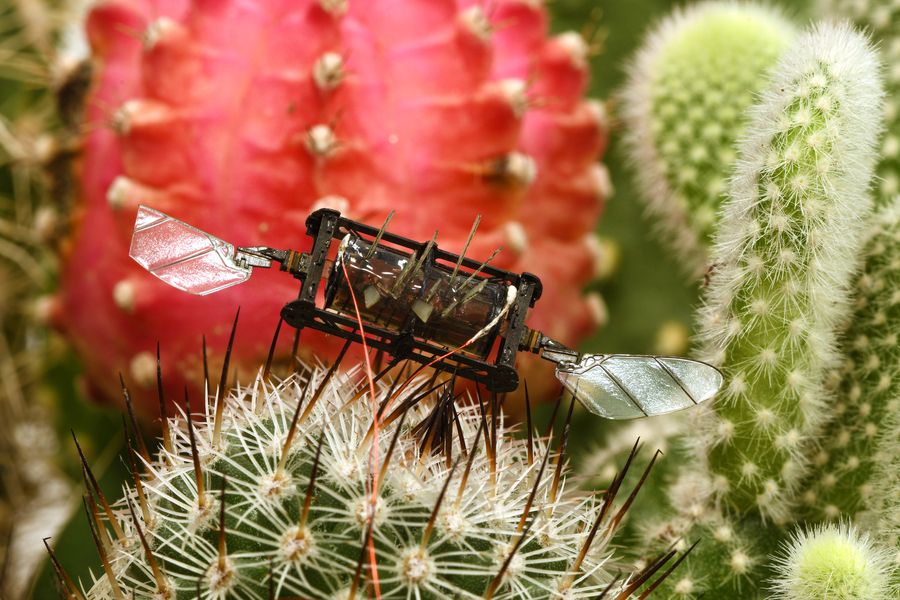
Researchers created ultrathin dielectric elastomer actuators (DEAs) rolled into tiny tubes to power robotic wings.
Apply voltage → the elastomer compresses → the wings flap.
Simple in principle, but vulnerable in practice: even microscopic flaws can trigger electrical breakdown in DEAs.
Researchers created ultrathin dielectric elastomer actuators (DEAs) rolled into tiny tubes to power robotic wings.
Apply voltage → the elastomer compresses → the wings flap.
Simple in principle, but vulnerable in practice: even microscopic flaws can trigger electrical breakdown in DEAs.
November 26, 2025 at 12:10 PM
🧵2/5
Researchers created ultrathin dielectric elastomer actuators (DEAs) rolled into tiny tubes to power robotic wings.
Apply voltage → the elastomer compresses → the wings flap.
Simple in principle, but vulnerable in practice: even microscopic flaws can trigger electrical breakdown in DEAs.
Researchers created ultrathin dielectric elastomer actuators (DEAs) rolled into tiny tubes to power robotic wings.
Apply voltage → the elastomer compresses → the wings flap.
Simple in principle, but vulnerable in practice: even microscopic flaws can trigger electrical breakdown in DEAs.
🧵4/4
So next time you raise a glass of tequila, remember: somewhere, a bat helped make it possible. 💚
🔬 Learn more
📘 The evolution of bat pollination → pmc.ncbi.nlm.nih.gov/articles/PMC...
🌍 Why bats matter → www.bats.org.uk/about-bats/w...
🦇 Made Possible by... Bats → www.nps.gov/articles/000...
So next time you raise a glass of tequila, remember: somewhere, a bat helped make it possible. 💚
🔬 Learn more
📘 The evolution of bat pollination → pmc.ncbi.nlm.nih.gov/articles/PMC...
🌍 Why bats matter → www.bats.org.uk/about-bats/w...
🦇 Made Possible by... Bats → www.nps.gov/articles/000...

The evolution of bat pollination: a phylogenetic perspective
Most tropical and subtropical plants are biotically pollinated, and insects are the major pollinators. A small but ecologically and economically important group of plants classified in 28 orders, 67 families and about 528 species of angiosperms are ...
pmc.ncbi.nlm.nih.gov
November 12, 2025 at 4:15 PM
🧵4/4
So next time you raise a glass of tequila, remember: somewhere, a bat helped make it possible. 💚
🔬 Learn more
📘 The evolution of bat pollination → pmc.ncbi.nlm.nih.gov/articles/PMC...
🌍 Why bats matter → www.bats.org.uk/about-bats/w...
🦇 Made Possible by... Bats → www.nps.gov/articles/000...
So next time you raise a glass of tequila, remember: somewhere, a bat helped make it possible. 💚
🔬 Learn more
📘 The evolution of bat pollination → pmc.ncbi.nlm.nih.gov/articles/PMC...
🌍 Why bats matter → www.bats.org.uk/about-bats/w...
🦇 Made Possible by... Bats → www.nps.gov/articles/000...
🧵3/4
But here’s the catch: in modern cultivation, most agaves are cloned and harvested before they flower. That means bats lose their food source — and plants lose their pollinators.
This makes entire agave fields vulnerable to disease, threatening both wildlife and the future of tequila itself. 🍸
But here’s the catch: in modern cultivation, most agaves are cloned and harvested before they flower. That means bats lose their food source — and plants lose their pollinators.
This makes entire agave fields vulnerable to disease, threatening both wildlife and the future of tequila itself. 🍸
November 12, 2025 at 4:15 PM
🧵3/4
But here’s the catch: in modern cultivation, most agaves are cloned and harvested before they flower. That means bats lose their food source — and plants lose their pollinators.
This makes entire agave fields vulnerable to disease, threatening both wildlife and the future of tequila itself. 🍸
But here’s the catch: in modern cultivation, most agaves are cloned and harvested before they flower. That means bats lose their food source — and plants lose their pollinators.
This makes entire agave fields vulnerable to disease, threatening both wildlife and the future of tequila itself. 🍸
🧵2/4
Among the plants relying on bats are the agaves — iconic succulents behind agave syrup, mezcal, and tequila.
Their nocturnal visitors, like the lesser long-nosed bat (Leptonycteris yerbabuenae), travel huge distances at night, sipping nectar and carrying pollen from bloom to bloom. 🌵🦇
Among the plants relying on bats are the agaves — iconic succulents behind agave syrup, mezcal, and tequila.
Their nocturnal visitors, like the lesser long-nosed bat (Leptonycteris yerbabuenae), travel huge distances at night, sipping nectar and carrying pollen from bloom to bloom. 🌵🦇

November 12, 2025 at 4:15 PM
🧵2/4
Among the plants relying on bats are the agaves — iconic succulents behind agave syrup, mezcal, and tequila.
Their nocturnal visitors, like the lesser long-nosed bat (Leptonycteris yerbabuenae), travel huge distances at night, sipping nectar and carrying pollen from bloom to bloom. 🌵🦇
Among the plants relying on bats are the agaves — iconic succulents behind agave syrup, mezcal, and tequila.
Their nocturnal visitors, like the lesser long-nosed bat (Leptonycteris yerbabuenae), travel huge distances at night, sipping nectar and carrying pollen from bloom to bloom. 🌵🦇
🧵4/5
So next time you unwrap a bar of chocolate, remember: behind its sweetness lies a delicate web of ecology, economy, and resilience — one that begins with a flower and a midge. 🌺🍫
#ProjectButterfly #SaveThePollinators #FutureForPollinators
So next time you unwrap a bar of chocolate, remember: behind its sweetness lies a delicate web of ecology, economy, and resilience — one that begins with a flower and a midge. 🌺🍫
#ProjectButterfly #SaveThePollinators #FutureForPollinators

October 22, 2025 at 5:02 AM
🧵4/5
So next time you unwrap a bar of chocolate, remember: behind its sweetness lies a delicate web of ecology, economy, and resilience — one that begins with a flower and a midge. 🌺🍫
#ProjectButterfly #SaveThePollinators #FutureForPollinators
So next time you unwrap a bar of chocolate, remember: behind its sweetness lies a delicate web of ecology, economy, and resilience — one that begins with a flower and a midge. 🌺🍫
#ProjectButterfly #SaveThePollinators #FutureForPollinators
🧵3/5
The stakes are high. Cacao is grown mainly by smallholder farmers across West Africa, Latin America, and Southeast Asia — more than five million families who depend on it. When midges vanish, harvests fall and livelihoods falter.
The stakes are high. Cacao is grown mainly by smallholder farmers across West Africa, Latin America, and Southeast Asia — more than five million families who depend on it. When midges vanish, harvests fall and livelihoods falter.

October 22, 2025 at 5:02 AM
🧵3/5
The stakes are high. Cacao is grown mainly by smallholder farmers across West Africa, Latin America, and Southeast Asia — more than five million families who depend on it. When midges vanish, harvests fall and livelihoods falter.
The stakes are high. Cacao is grown mainly by smallholder farmers across West Africa, Latin America, and Southeast Asia — more than five million families who depend on it. When midges vanish, harvests fall and livelihoods falter.
🧵2/5
These minute insects are among the few capable of pollinating cacao’s intricate flowers. But their numbers are falling fast — victims of habitat loss, pesticides, and climate change. Even in good conditions, fewer than 1 in 10 flowers ever become pods.
(photo by U.S. National Park Service)
These minute insects are among the few capable of pollinating cacao’s intricate flowers. But their numbers are falling fast — victims of habitat loss, pesticides, and climate change. Even in good conditions, fewer than 1 in 10 flowers ever become pods.
(photo by U.S. National Park Service)

October 22, 2025 at 5:02 AM
🧵2/5
These minute insects are among the few capable of pollinating cacao’s intricate flowers. But their numbers are falling fast — victims of habitat loss, pesticides, and climate change. Even in good conditions, fewer than 1 in 10 flowers ever become pods.
(photo by U.S. National Park Service)
These minute insects are among the few capable of pollinating cacao’s intricate flowers. But their numbers are falling fast — victims of habitat loss, pesticides, and climate change. Even in good conditions, fewer than 1 in 10 flowers ever become pods.
(photo by U.S. National Park Service)
🧵4/4
⚠️ Yet pollinators face threats from deforestation, pesticides and climate change. Without them, coffee could dwindle in quality and supply. Protecting pollinators safeguards ecosystems, livelihoods—and your coffee. 🌍
#ProjectButterfly #SaveThePollinators #FutureForPollinators
⚠️ Yet pollinators face threats from deforestation, pesticides and climate change. Without them, coffee could dwindle in quality and supply. Protecting pollinators safeguards ecosystems, livelihoods—and your coffee. 🌍
#ProjectButterfly #SaveThePollinators #FutureForPollinators

October 1, 2025 at 5:03 AM
🧵4/4
⚠️ Yet pollinators face threats from deforestation, pesticides and climate change. Without them, coffee could dwindle in quality and supply. Protecting pollinators safeguards ecosystems, livelihoods—and your coffee. 🌍
#ProjectButterfly #SaveThePollinators #FutureForPollinators
⚠️ Yet pollinators face threats from deforestation, pesticides and climate change. Without them, coffee could dwindle in quality and supply. Protecting pollinators safeguards ecosystems, livelihoods—and your coffee. 🌍
#ProjectButterfly #SaveThePollinators #FutureForPollinators
🧵3/4
🐝 Wild pollinators such as stingless and carpenter bees often surpass managed honeybees. Their success shows how vital biodiversity is—not only for nature’s balance but for the taste in your morning cup.
Photo: Carlos Alexandre Mattos Raposo https://f.mtr.cool/gmcqklwbgc
🐝 Wild pollinators such as stingless and carpenter bees often surpass managed honeybees. Their success shows how vital biodiversity is—not only for nature’s balance but for the taste in your morning cup.
Photo: Carlos Alexandre Mattos Raposo https://f.mtr.cool/gmcqklwbgc

October 1, 2025 at 5:03 AM
🧵3/4
🐝 Wild pollinators such as stingless and carpenter bees often surpass managed honeybees. Their success shows how vital biodiversity is—not only for nature’s balance but for the taste in your morning cup.
Photo: Carlos Alexandre Mattos Raposo https://f.mtr.cool/gmcqklwbgc
🐝 Wild pollinators such as stingless and carpenter bees often surpass managed honeybees. Their success shows how vital biodiversity is—not only for nature’s balance but for the taste in your morning cup.
Photo: Carlos Alexandre Mattos Raposo https://f.mtr.cool/gmcqklwbgc
🧵2/4
🌸 Without pollinators, coffee still fruits—but with them, yields rise 20–50%. Beans grow larger, more even, and richer in flavour. Pollinators don’t just boost quantity; they elevate quality and value.
🌸 Without pollinators, coffee still fruits—but with them, yields rise 20–50%. Beans grow larger, more even, and richer in flavour. Pollinators don’t just boost quantity; they elevate quality and value.

October 1, 2025 at 5:03 AM
🧵2/4
🌸 Without pollinators, coffee still fruits—but with them, yields rise 20–50%. Beans grow larger, more even, and richer in flavour. Pollinators don’t just boost quantity; they elevate quality and value.
🌸 Without pollinators, coffee still fruits—but with them, yields rise 20–50%. Beans grow larger, more even, and richer in flavour. Pollinators don’t just boost quantity; they elevate quality and value.
🧵4/4
Nature keeps handing us solutions—we just have to notice.
🔗 Read more: www.psu.edu/news/researc...
Original study doi.org/10.1016/j.ij...
#ProjectButterfly #FutureForPollinators
Nature keeps handing us solutions—we just have to notice.
🔗 Read more: www.psu.edu/news/researc...
Original study doi.org/10.1016/j.ij...
#ProjectButterfly #FutureForPollinators

Firefly-inspired surfaces improve efficiency of LED lightbulbs | Penn State University
A new type of light-emitting diode lightbulb could one day light homes and reduce power bills, according to Penn State researchers who suggest that LEDs made with firefly-mimicking structures could im...
www.psu.edu
September 18, 2025 at 1:05 PM
🧵4/4
Nature keeps handing us solutions—we just have to notice.
🔗 Read more: www.psu.edu/news/researc...
Original study doi.org/10.1016/j.ij...
#ProjectButterfly #FutureForPollinators
Nature keeps handing us solutions—we just have to notice.
🔗 Read more: www.psu.edu/news/researc...
Original study doi.org/10.1016/j.ij...
#ProjectButterfly #FutureForPollinators