




BioInteractive
@biointeractive.bsky.social
Free resources for science education
Real science, real stories, and real data to engage students in exploring the living world.
Real science, real stories, and real data to engage students in exploring the living world.
🔬Attention undergraduate educators! Please share this exciting research and mentorship opportunity with your students. 🔬 #AcademicSky
Calling all rising juniors & seniors: Interested in biological or biomedical research? Applications for our ’26 Summer Undergraduate Research Experience Program are now open! Nine weeks, hands-on research, & mentorship from some of the nation’s top scientists — learn more: bit.ly/CechFellows

Summer Undergraduate Research Experience | HHMI
The Cech Fellows Program is a paid, nine-week summer research experience empowering the next generation of scientific leaders.
bit.ly
November 18, 2025 at 4:57 PM
🔬Attention undergraduate educators! Please share this exciting research and mentorship opportunity with your students. 🔬 #AcademicSky
Because of ongoing issues with Cloudflare, the BioInteractive website may be temporarily unavailable. Thank you for your patience.
November 18, 2025 at 2:43 PM
Because of ongoing issues with Cloudflare, the BioInteractive website may be temporarily unavailable. Thank you for your patience.
Reposted by BioInteractive

What roots the animal tree of life — the sponge, or the comb jelly?
HHMI Investigator Nicole King & her team used a new method to answer an old question, & their results offer strong evidence that sponges may have evolved first. hhmi.news/3M2JkbG
HHMI Investigator Nicole King & her team used a new method to answer an old question, & their results offer strong evidence that sponges may have evolved first. hhmi.news/3M2JkbG

Which Came First: The Sponge or the Comb Jelly? HHMI Scientists Weigh In | HHMI
HHMI Investigator Nicole King and her team implemented a new method to determine which animals evolved first. The new research strongly supports the hypothesis that sponges root the animal tree of lif...
hhmi.news
November 17, 2025 at 2:03 PM
What roots the animal tree of life — the sponge, or the comb jelly?
HHMI Investigator Nicole King & her team used a new method to answer an old question, & their results offer strong evidence that sponges may have evolved first. hhmi.news/3M2JkbG
HHMI Investigator Nicole King & her team used a new method to answer an old question, & their results offer strong evidence that sponges may have evolved first. hhmi.news/3M2JkbG
Reposted by BioInteractive
The world’s “most dangerous animal” just got easier to study 🦟
HHMI’s @leslievosshall.bsky.social & #VosshallLab at @rockefeller.edu have built the 1st cellular atlas of Aedes aegypti, mapping everything from legs to antennae. Available now to all researchers, & the public: bit.ly/4oO4MzB
HHMI’s @leslievosshall.bsky.social & #VosshallLab at @rockefeller.edu have built the 1st cellular atlas of Aedes aegypti, mapping everything from legs to antennae. Available now to all researchers, & the public: bit.ly/4oO4MzB

Researchers release the world’s first head-to-toe cellular atlas of the mosquito - News
The atlas makes the most dangerous animal in the world a lot easier to study—and perhaps defeat one day.
bit.ly
November 3, 2025 at 6:50 PM
The world’s “most dangerous animal” just got easier to study 🦟
HHMI’s @leslievosshall.bsky.social & #VosshallLab at @rockefeller.edu have built the 1st cellular atlas of Aedes aegypti, mapping everything from legs to antennae. Available now to all researchers, & the public: bit.ly/4oO4MzB
HHMI’s @leslievosshall.bsky.social & #VosshallLab at @rockefeller.edu have built the 1st cellular atlas of Aedes aegypti, mapping everything from legs to antennae. Available now to all researchers, & the public: bit.ly/4oO4MzB
Reposted by BioInteractive

The first detailed look at how mosquitoes mate from @leslievosshall.bsky.social's lab reverses the assumption that male mosquitoes control the process, finding that a subtle female behavior dictates whether mating will take place or not. @currentbiology.bsky.social
More here: https://bit.ly/4huwEpL
More here: https://bit.ly/4huwEpL

October 28, 2025 at 4:23 PM
The first detailed look at how mosquitoes mate from @leslievosshall.bsky.social's lab reverses the assumption that male mosquitoes control the process, finding that a subtle female behavior dictates whether mating will take place or not. @currentbiology.bsky.social
More here: https://bit.ly/4huwEpL
More here: https://bit.ly/4huwEpL
Reposted by BioInteractive
4 HHMI Investigators have been elected to the @nam.edu!
Election to the Academy is considered one of the highest honors in the fields of health and medicine. Learn how these investigators are advancing our understanding of biology and human health: hhmi.news/4oxodfS #NAMmtg
Election to the Academy is considered one of the highest honors in the fields of health and medicine. Learn how these investigators are advancing our understanding of biology and human health: hhmi.news/4oxodfS #NAMmtg

October 20, 2025 at 6:12 PM
4 HHMI Investigators have been elected to the @nam.edu!
Election to the Academy is considered one of the highest honors in the fields of health and medicine. Learn how these investigators are advancing our understanding of biology and human health: hhmi.news/4oxodfS #NAMmtg
Election to the Academy is considered one of the highest honors in the fields of health and medicine. Learn how these investigators are advancing our understanding of biology and human health: hhmi.news/4oxodfS #NAMmtg
We are aware that the BioInteractive site may be loading slowly for some users (or not loading at all). We are working to address this issue. Thank you for your patience!
September 2, 2025 at 3:47 PM
We are aware that the BioInteractive site may be loading slowly for some users (or not loading at all). We are working to address this issue. Thank you for your patience!
New to BioInteractive and not sure where to start? If you'd like free resources for the life science classroom, join us for a workshop will introduce you to our materials and connect you with a community of life science educators. www.biointeractive.org/professional...
Unlocking the Power of BioInteractive: Empowering Teachers with Dynamic Tools for Engaging Science Education
www.biointeractive.org
July 22, 2025 at 1:49 PM
New to BioInteractive and not sure where to start? If you'd like free resources for the life science classroom, join us for a workshop will introduce you to our materials and connect you with a community of life science educators. www.biointeractive.org/professional...
Reposted by BioInteractive
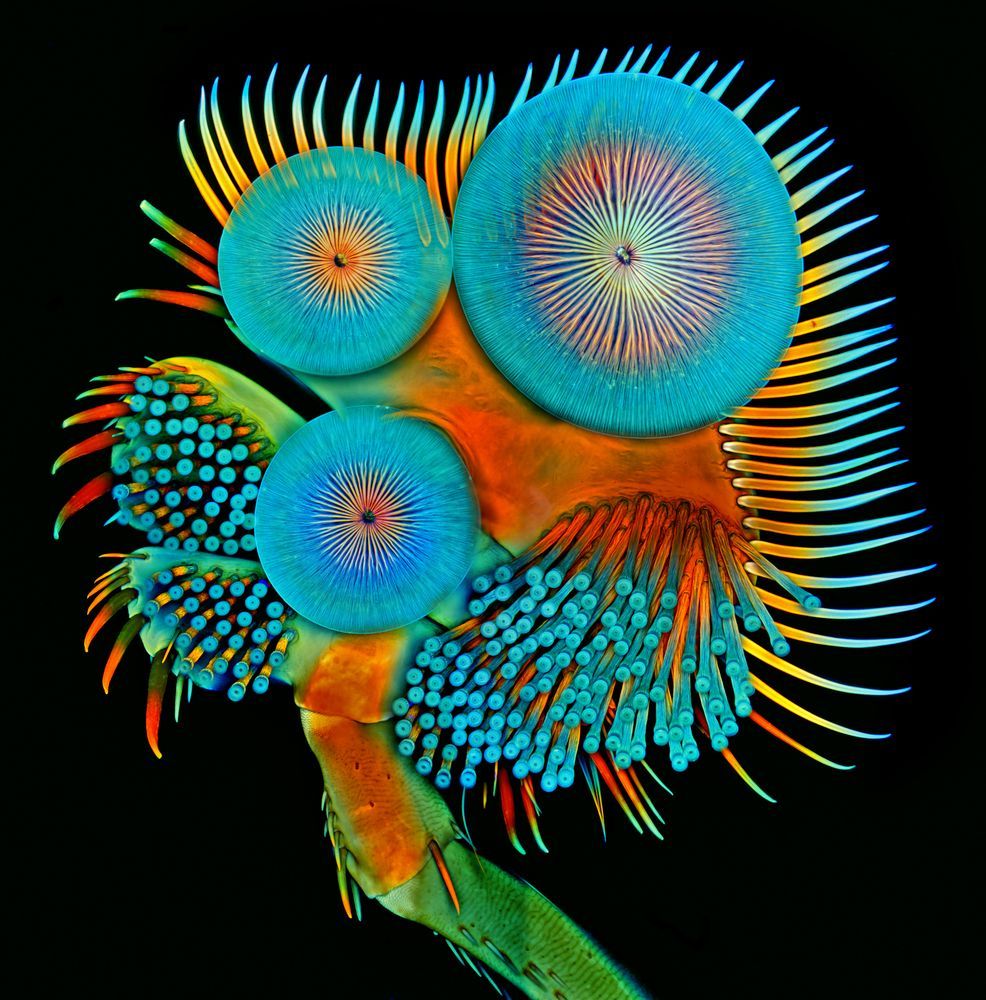
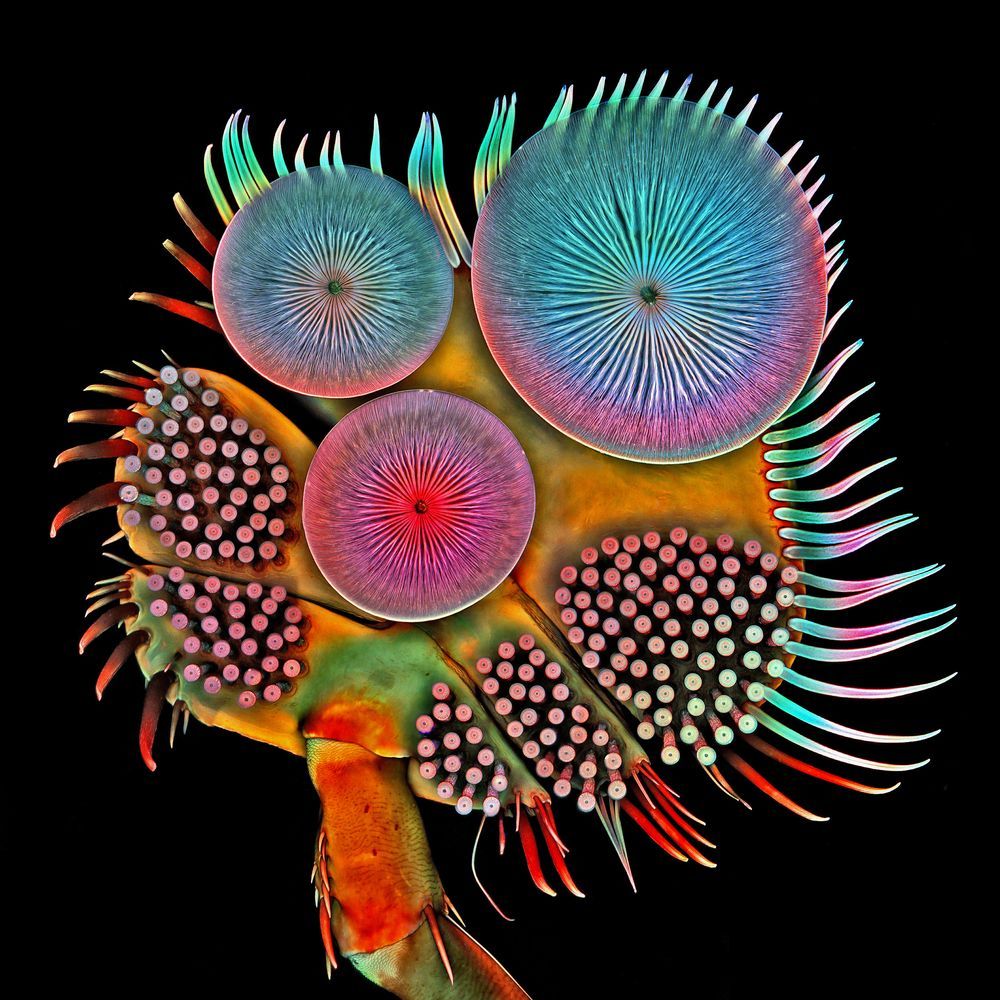
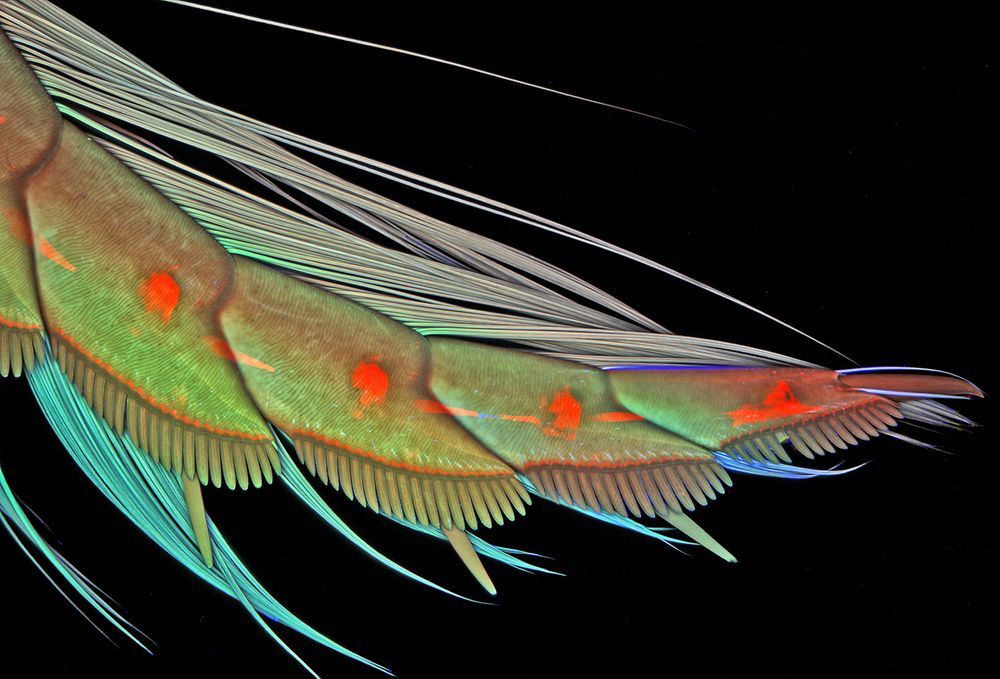
Igor Siwanowicz created these images of the underside of the front foot of a male diving beetle. You can see suction cups that are used during mating, as well as a broad plate and exterior spines that aid in swimming.
July 15, 2025 at 4:15 PM
Igor Siwanowicz created these images of the underside of the front foot of a male diving beetle. You can see suction cups that are used during mating, as well as a broad plate and exterior spines that aid in swimming.
Reposted by BioInteractive

📣Last Call to all librarians! Don't miss your chance to apply for “Flight Path” and bring fun, engaging, FREE resources about the science of bird migration to your library.
Applications are open until July 10.
Apply Today: community.starnetlibraries.org/flightpathap...
Applications are open until July 10.
Apply Today: community.starnetlibraries.org/flightpathap...

July 7, 2025 at 7:36 PM
📣Last Call to all librarians! Don't miss your chance to apply for “Flight Path” and bring fun, engaging, FREE resources about the science of bird migration to your library.
Applications are open until July 10.
Apply Today: community.starnetlibraries.org/flightpathap...
Applications are open until July 10.
Apply Today: community.starnetlibraries.org/flightpathap...
Reposted by BioInteractive
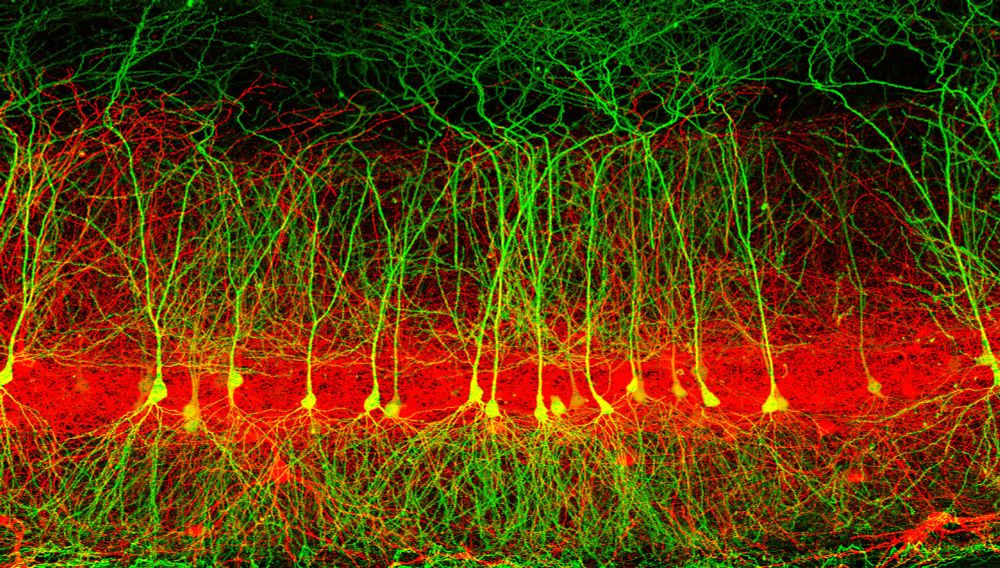
This fiery mixture of red and green neurons in the brain of a mouse shows how interconnected different types of neurons can be. Shown in green are the excitatory pyramidal neurons, and in red are inhibitory interneurons.
Credit: Nelson Spruston and Erik Bloss, @hhmijanelia.bsky.social
Credit: Nelson Spruston and Erik Bloss, @hhmijanelia.bsky.social
June 17, 2025 at 5:41 PM
This fiery mixture of red and green neurons in the brain of a mouse shows how interconnected different types of neurons can be. Shown in green are the excitatory pyramidal neurons, and in red are inhibitory interneurons.
Credit: Nelson Spruston and Erik Bloss, @hhmijanelia.bsky.social
Credit: Nelson Spruston and Erik Bloss, @hhmijanelia.bsky.social
Reposted by BioInteractive

🖥️ STIM, a new tool developed at Janelia & @mdc-berlin.bsky.social, aligns sections of irregularly spaced 2D spatial transcriptomics data & renders them as images to reconstruct 3D volumes of gene expression, allowing researchers to see how all genes are expressed & organized in 3D tissue. 🧬
June 13, 2025 at 2:55 PM
🖥️ STIM, a new tool developed at Janelia & @mdc-berlin.bsky.social, aligns sections of irregularly spaced 2D spatial transcriptomics data & renders them as images to reconstruct 3D volumes of gene expression, allowing researchers to see how all genes are expressed & organized in 3D tissue. 🧬
Reposted by BioInteractive
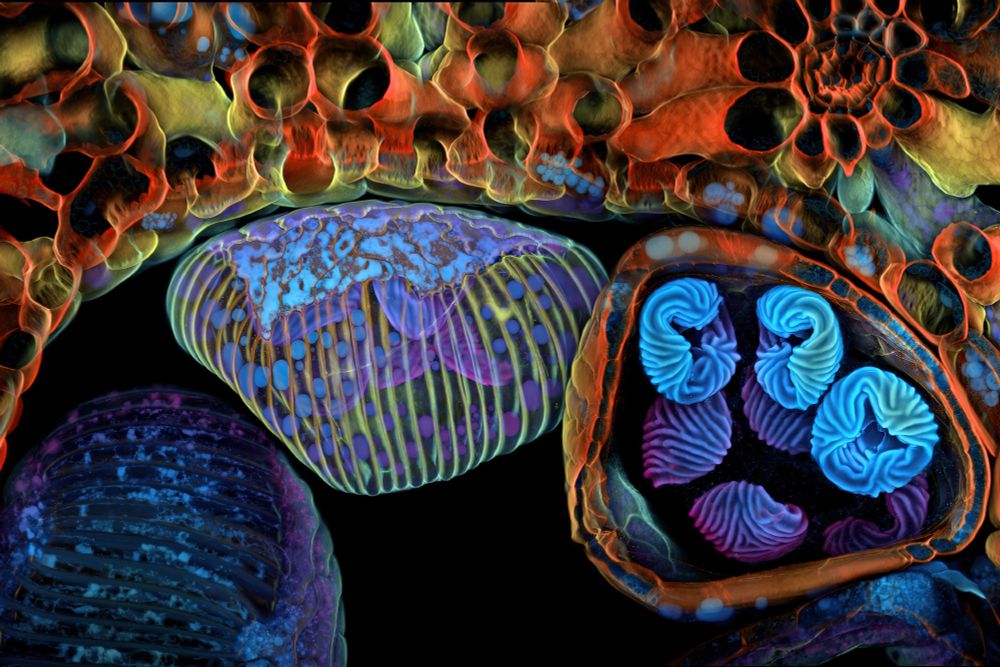
The spore, the merrier. 🌿
This image shows a cross section through the reproductive region of a fern (Ceratopteris richardii), revealing its intricate internal structures. The blue and purple ovals are spores, which ferns use to reproduce and spread.
This image shows a cross section through the reproductive region of a fern (Ceratopteris richardii), revealing its intricate internal structures. The blue and purple ovals are spores, which ferns use to reproduce and spread.
May 30, 2025 at 4:32 PM
The spore, the merrier. 🌿
This image shows a cross section through the reproductive region of a fern (Ceratopteris richardii), revealing its intricate internal structures. The blue and purple ovals are spores, which ferns use to reproduce and spread.
This image shows a cross section through the reproductive region of a fern (Ceratopteris richardii), revealing its intricate internal structures. The blue and purple ovals are spores, which ferns use to reproduce and spread.
Reposted by BioInteractive
On the sidelines no more: New research from @hhmijanelia.bsky.social shows astrocytes are active players in neuromodulation.
Read more: bit.ly/4jaNyJi
Read more: bit.ly/4jaNyJi
May 21, 2025 at 2:56 PM
On the sidelines no more: New research from @hhmijanelia.bsky.social shows astrocytes are active players in neuromodulation.
Read more: bit.ly/4jaNyJi
Read more: bit.ly/4jaNyJi
Reposted by BioInteractive
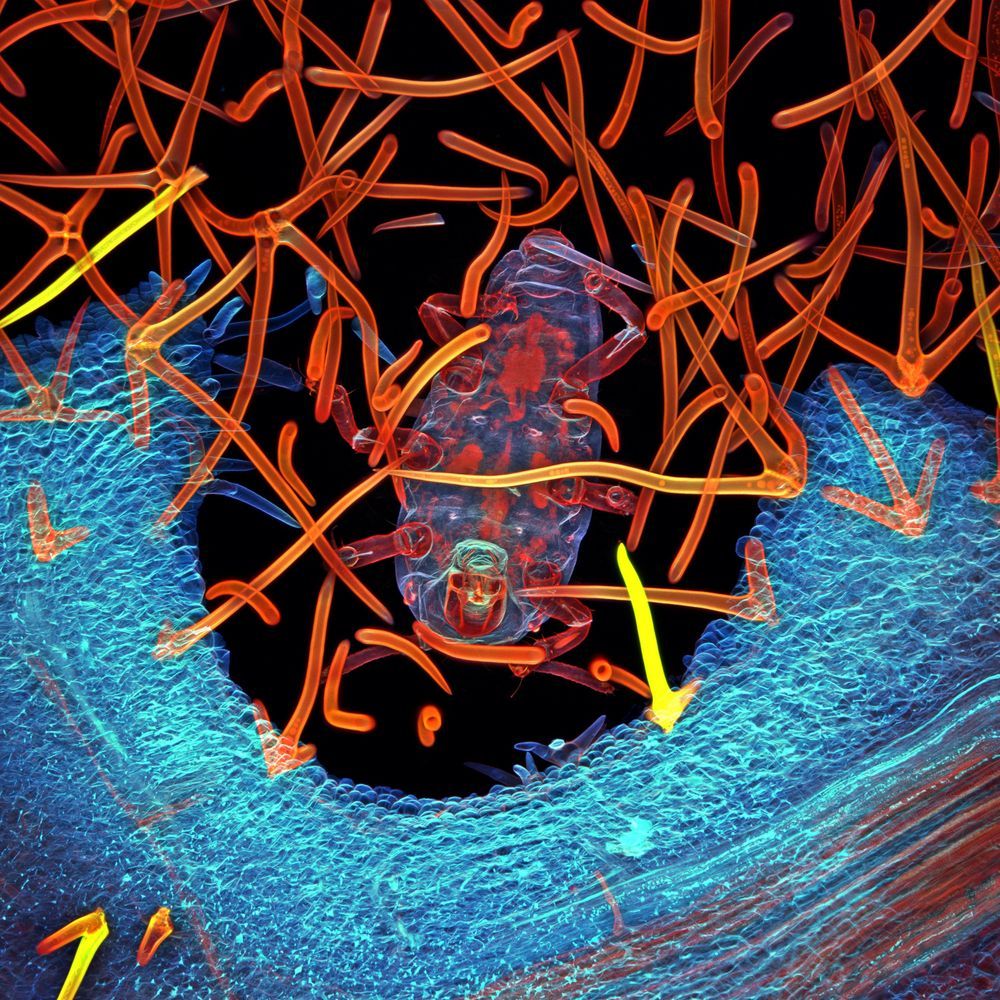
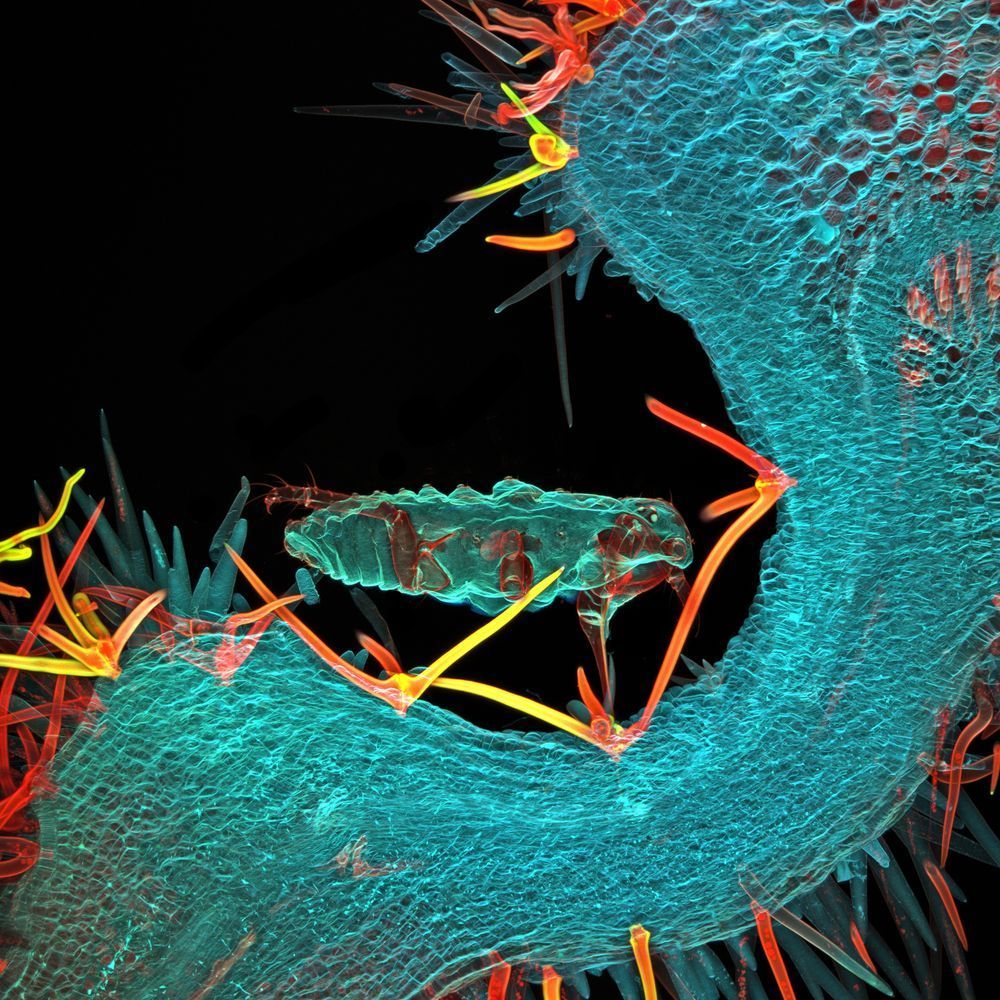
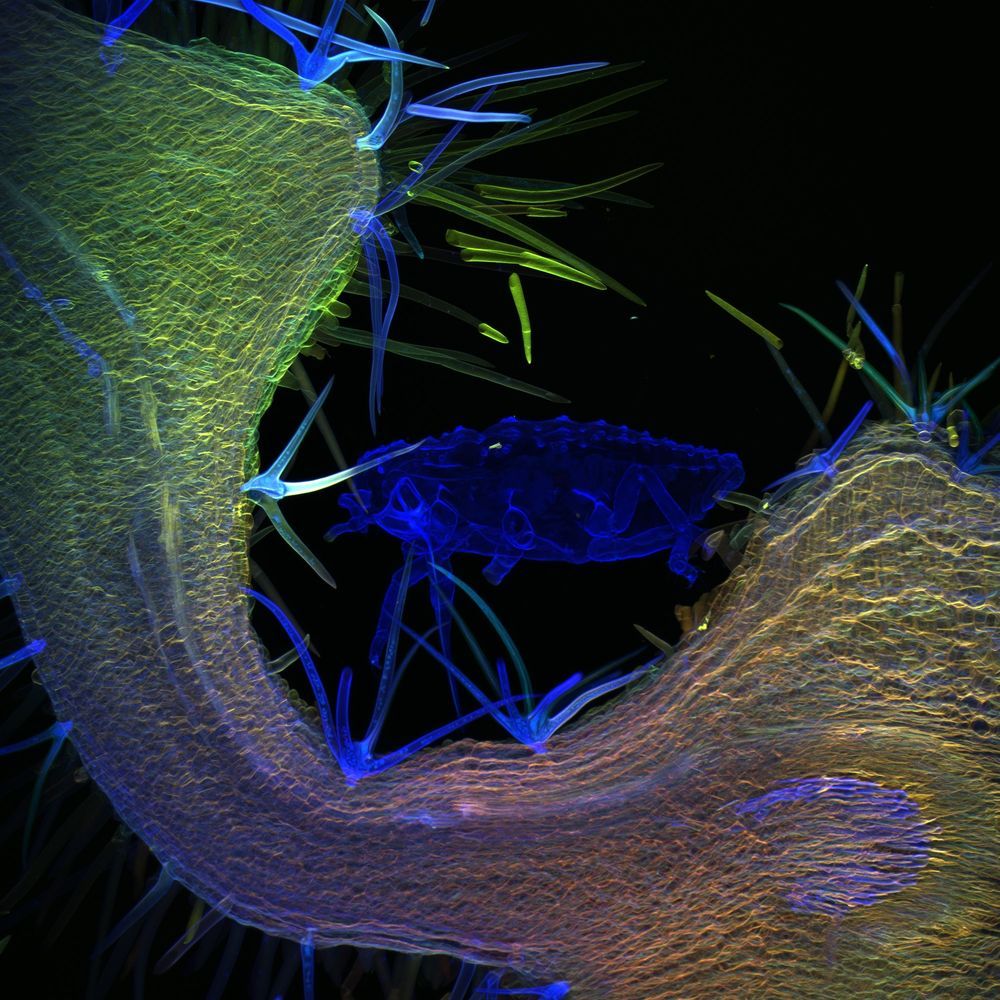
David Stern and Igor Siwanowicz @hhmijanelia.bsky.social, created this image which shows a female aphid nymph that just started inducing the formation of a gall in the tissues of a budding witch hazel leaf.
May 19, 2025 at 3:37 PM
David Stern and Igor Siwanowicz @hhmijanelia.bsky.social, created this image which shows a female aphid nymph that just started inducing the formation of a gall in the tissues of a budding witch hazel leaf.
Reposted by BioInteractive
Are you are someone you know looking for high-quality, free science teaching resources?
@biointeractive.bsky.social is now on LinkedIn — follow them for classroom-ready tools, award-winning videos, & free professional development for educators.
linkedin.com/showcase/biointeractive 👈 #Science
@biointeractive.bsky.social is now on LinkedIn — follow them for classroom-ready tools, award-winning videos, & free professional development for educators.
linkedin.com/showcase/biointeractive 👈 #Science

May 15, 2025 at 2:42 PM
Are you are someone you know looking for high-quality, free science teaching resources?
@biointeractive.bsky.social is now on LinkedIn — follow them for classroom-ready tools, award-winning videos, & free professional development for educators.
linkedin.com/showcase/biointeractive 👈 #Science
@biointeractive.bsky.social is now on LinkedIn — follow them for classroom-ready tools, award-winning videos, & free professional development for educators.
linkedin.com/showcase/biointeractive 👈 #Science
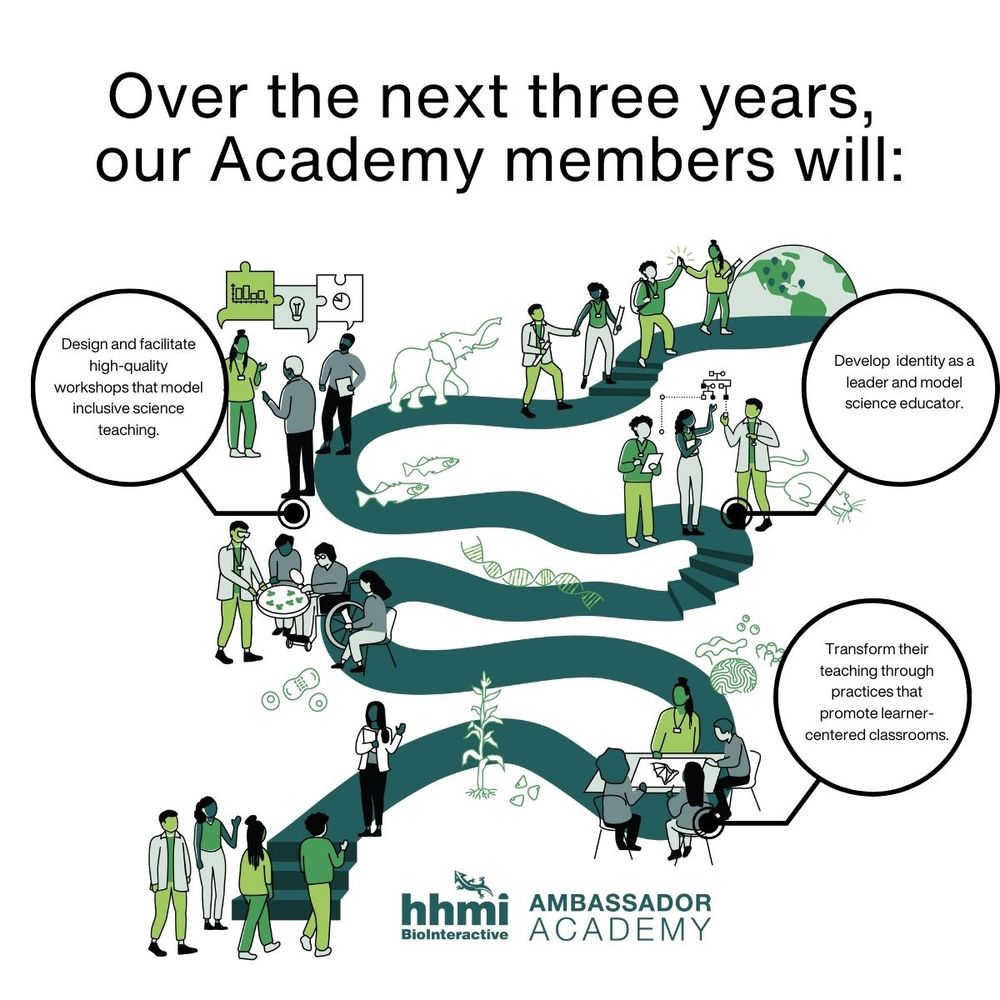
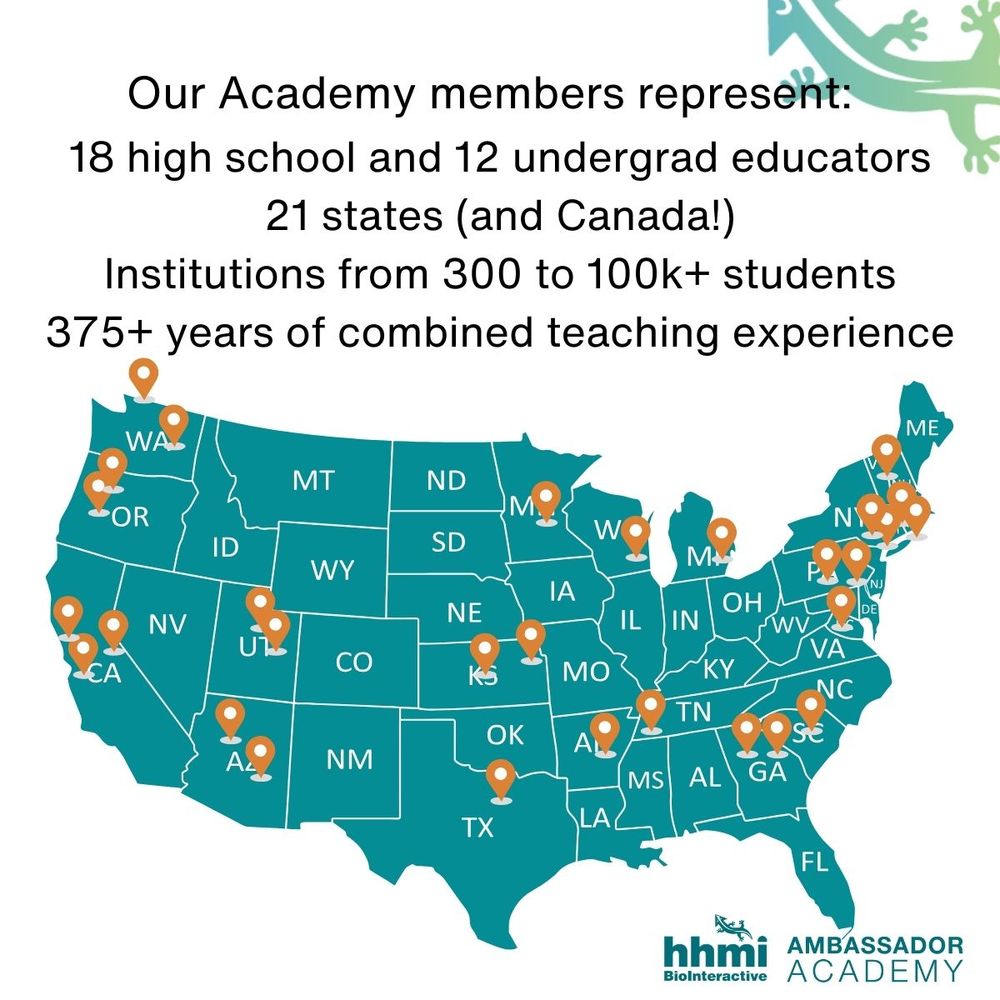
🗣️🗣️🗣️Announcing the second HHMI BioInteractive Ambassador Academy Cohort! 🗣️🗣️🗣️
These educators will engage in a three-year program on utilizing evidence-based practices and facilitating workshops for other educators. Join us in congratulating them! www.biointeractive.org/professional...
These educators will engage in a three-year program on utilizing evidence-based practices and facilitating workshops for other educators. Join us in congratulating them! www.biointeractive.org/professional...
May 12, 2025 at 3:42 PM
🗣️🗣️🗣️Announcing the second HHMI BioInteractive Ambassador Academy Cohort! 🗣️🗣️🗣️
These educators will engage in a three-year program on utilizing evidence-based practices and facilitating workshops for other educators. Join us in congratulating them! www.biointeractive.org/professional...
These educators will engage in a three-year program on utilizing evidence-based practices and facilitating workshops for other educators. Join us in congratulating them! www.biointeractive.org/professional...
Reposted by BioInteractive
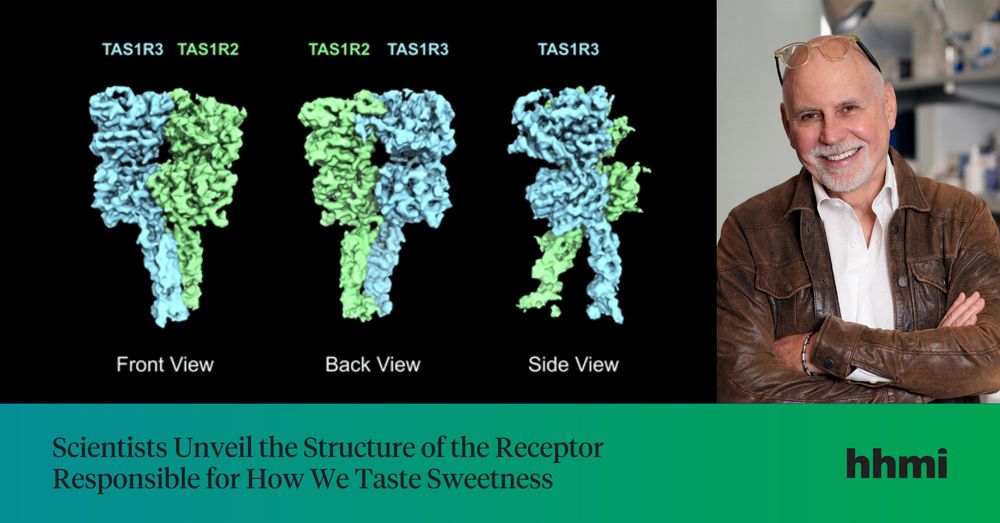
How do we taste sweetness?
HHMI Investigator Charles Zuker’s lab at @columbiauniversity.bsky.social just revealed the structure of the human sweet receptor. This discovery could help cut sugar without cutting taste—unlocking big possibilities for the future of food.
Read more: hhmi.news/3F0plr4
HHMI Investigator Charles Zuker’s lab at @columbiauniversity.bsky.social just revealed the structure of the human sweet receptor. This discovery could help cut sugar without cutting taste—unlocking big possibilities for the future of food.
Read more: hhmi.news/3F0plr4
May 8, 2025 at 1:04 PM
How do we taste sweetness?
HHMI Investigator Charles Zuker’s lab at @columbiauniversity.bsky.social just revealed the structure of the human sweet receptor. This discovery could help cut sugar without cutting taste—unlocking big possibilities for the future of food.
Read more: hhmi.news/3F0plr4
HHMI Investigator Charles Zuker’s lab at @columbiauniversity.bsky.social just revealed the structure of the human sweet receptor. This discovery could help cut sugar without cutting taste—unlocking big possibilities for the future of food.
Read more: hhmi.news/3F0plr4
Reposted by BioInteractive
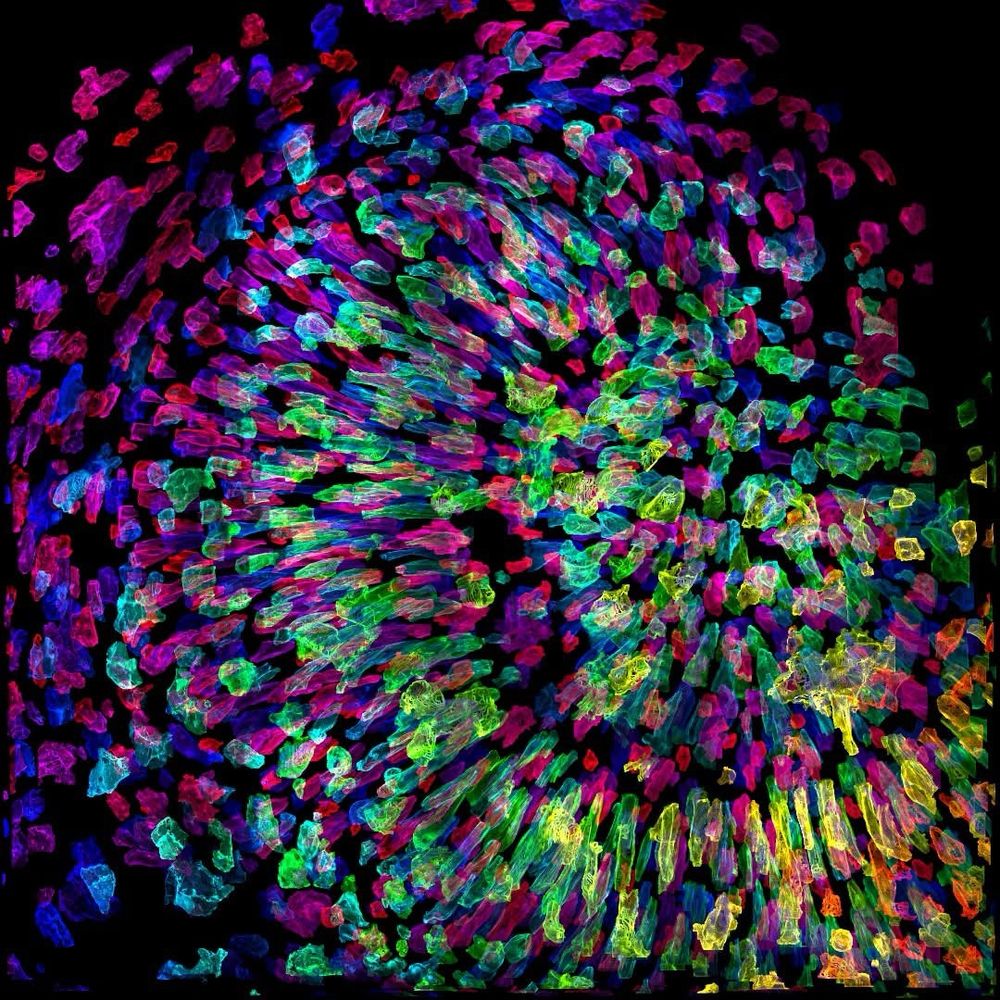
The Betzig Lab at @hhmijanelia.bsky.social’s Research Campus created this panorama of individual cells in the zebrafish eye which displays different layers of the developing eye and shows a variety of cellular organelles within each cell.
April 26, 2025 at 4:38 PM
The Betzig Lab at @hhmijanelia.bsky.social’s Research Campus created this panorama of individual cells in the zebrafish eye which displays different layers of the developing eye and shows a variety of cellular organelles within each cell.
Reposted by BioInteractive
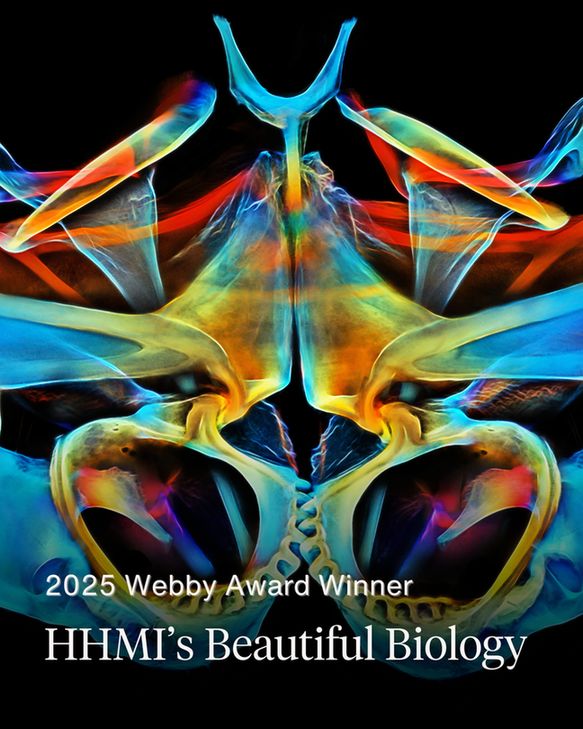
🎉Congratulations to HHMI’s Beautiful Biology, winner of a 2025 Webby Award in the Science Websites and Mobile Sites category ➡️ hhmi.news/42KRBpI
💻Explore the site ➡️ www.hhmi.org/beautifulbio...
📷Igor Siwanowicz
💻Explore the site ➡️ www.hhmi.org/beautifulbio...
📷Igor Siwanowicz
April 24, 2025 at 7:00 PM
🎉Congratulations to HHMI’s Beautiful Biology, winner of a 2025 Webby Award in the Science Websites and Mobile Sites category ➡️ hhmi.news/42KRBpI
💻Explore the site ➡️ www.hhmi.org/beautifulbio...
📷Igor Siwanowicz
💻Explore the site ➡️ www.hhmi.org/beautifulbio...
📷Igor Siwanowicz
Are you a life or environmental science faculty member at a 2-year or 4-year college and university looking to enhance student outcomes? We're inviting you to join our Fall 2025 Faculty Online Learning Communities —a free, semester-long professional development experience! bit.ly/FoLCFall2025...

April 21, 2025 at 4:29 PM
Are you a life or environmental science faculty member at a 2-year or 4-year college and university looking to enhance student outcomes? We're inviting you to join our Fall 2025 Faculty Online Learning Communities —a free, semester-long professional development experience! bit.ly/FoLCFall2025...
Reposted by BioInteractive
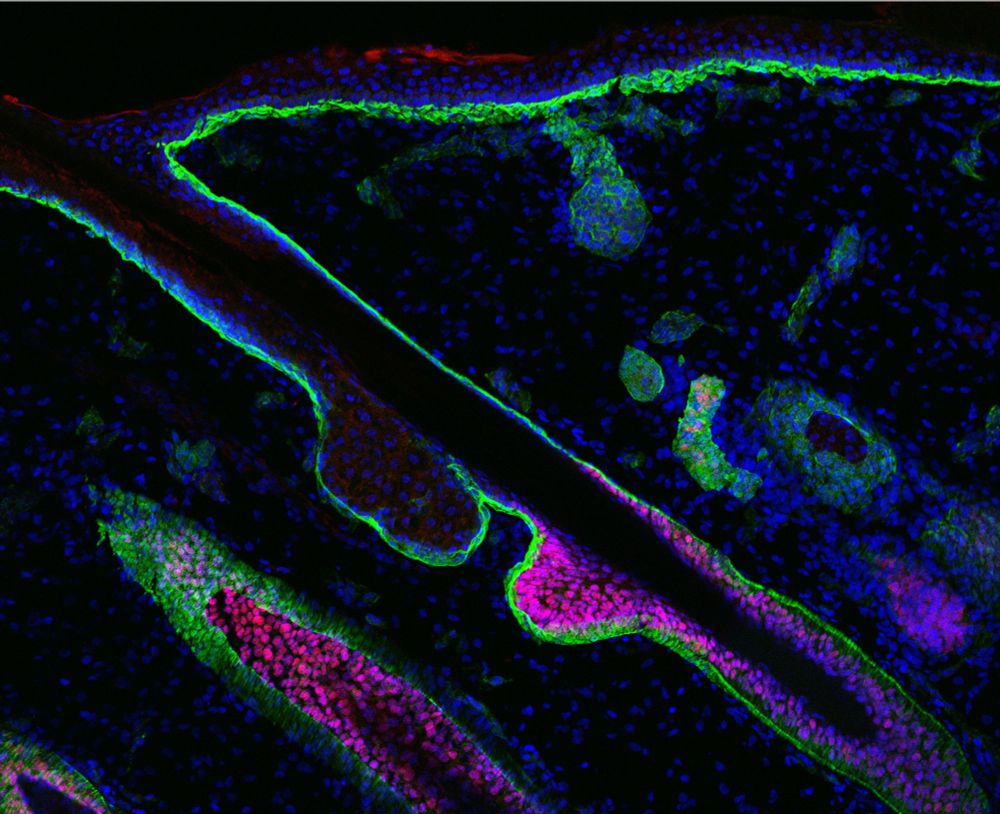
Zoom in on skin, and you will see the intricacies of the organ that protects us from the external environment and much more. This image shows a detailed view of both hair follicles and sweat glands embedded in our skin.
Credit: Catherine Lu and Elaine Fuchs, Rockefeller University
Credit: Catherine Lu and Elaine Fuchs, Rockefeller University
April 17, 2025 at 8:51 PM
Zoom in on skin, and you will see the intricacies of the organ that protects us from the external environment and much more. This image shows a detailed view of both hair follicles and sweat glands embedded in our skin.
Credit: Catherine Lu and Elaine Fuchs, Rockefeller University
Credit: Catherine Lu and Elaine Fuchs, Rockefeller University
Reposted by BioInteractive
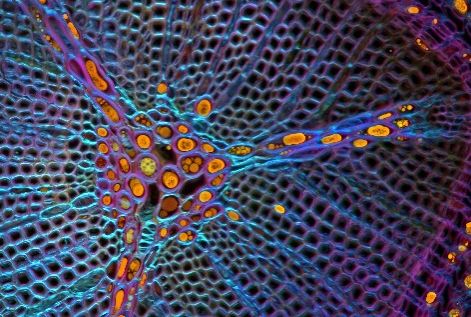
This image shows a young shoot on a cedar tree, created using confocal #microscopy. The web-like pattern radiating from the center of the image is created by the cell walls of the xylem cells, this helps move water from the roots to the rest of the tree.
📷: Igor Siwanowicz, @hhmijanelia.bsky.social
📷: Igor Siwanowicz, @hhmijanelia.bsky.social
April 15, 2025 at 3:36 PM
This image shows a young shoot on a cedar tree, created using confocal #microscopy. The web-like pattern radiating from the center of the image is created by the cell walls of the xylem cells, this helps move water from the roots to the rest of the tree.
📷: Igor Siwanowicz, @hhmijanelia.bsky.social
📷: Igor Siwanowicz, @hhmijanelia.bsky.social
Reposted by BioInteractive
This video shows one of a cell’s essential structural components: actin cross-linking proteins. These proteins are important for organizing actin filaments in a cell – allowing it to move, adhere to surfaces, and do much more.
Credit: Matt Tyska
Credit: Matt Tyska
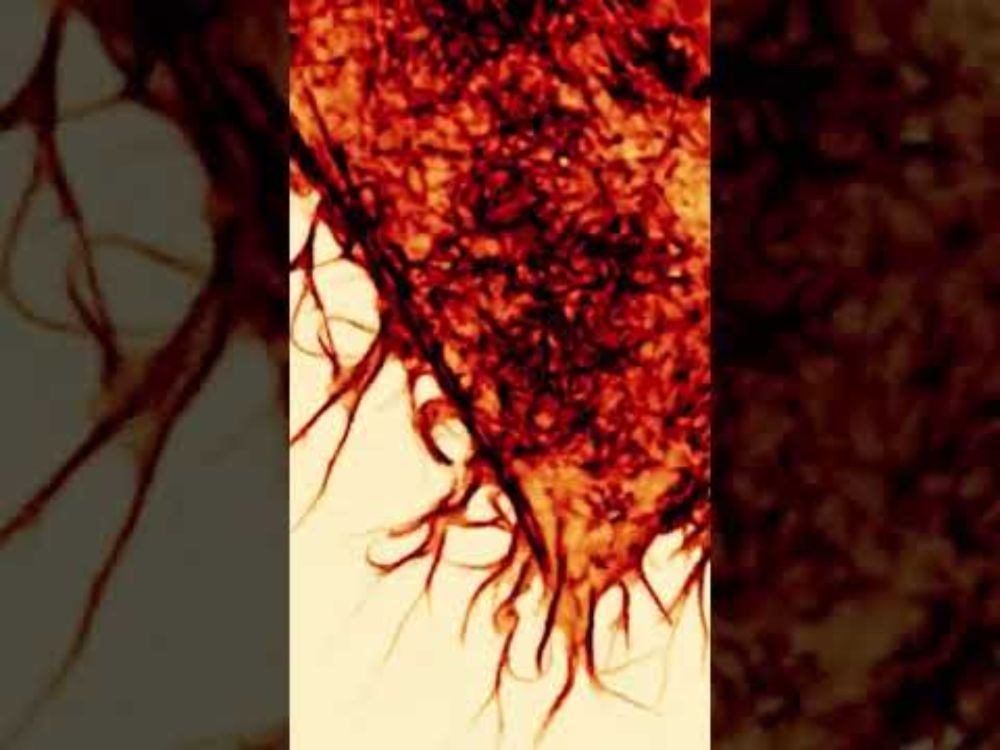
Cell Scaffolding #STEM #STEMEducation #ScienceCommunication #scicomm #science
YouTube video by Howard Hughes Medical Institute (HHMI)
youtube.com
April 8, 2025 at 7:42 PM
This video shows one of a cell’s essential structural components: actin cross-linking proteins. These proteins are important for organizing actin filaments in a cell – allowing it to move, adhere to surfaces, and do much more.
Credit: Matt Tyska
Credit: Matt Tyska
Reposted by BioInteractive
Congrats to HHMI Investigator David R. Liu on receiving the 2025 Breakthrough Prize in Life Sciences! He is recognized for developing base editing & prime editing: 2 breakthrough gene-editing technologies that enable the correction or replacement of virtually any genetic mutation. hhmi.news/3RA6shj

April 5, 2025 at 11:27 PM
Congrats to HHMI Investigator David R. Liu on receiving the 2025 Breakthrough Prize in Life Sciences! He is recognized for developing base editing & prime editing: 2 breakthrough gene-editing technologies that enable the correction or replacement of virtually any genetic mutation. hhmi.news/3RA6shj