



I guess I've also wondered about this for clean air project as well. My intuition is that enough clean air filters in the right places, e.g. schools, should force a disease like COVID to R0<1, but at close proximity, a person may still be best off masking. 😭
3/3
3/3
August 9, 2025 at 7:31 PM
I guess I've also wondered about this for clean air project as well. My intuition is that enough clean air filters in the right places, e.g. schools, should force a disease like COVID to R0<1, but at close proximity, a person may still be best off masking. 😭
3/3
3/3
--on an individual level, though, I don't know whether the measles vaccines lean more towards prevention or shorter/less severe infection. It probably varies per person, but was curious about the dominant mechanism.
2/3
2/3
August 9, 2025 at 7:31 PM
--on an individual level, though, I don't know whether the measles vaccines lean more towards prevention or shorter/less severe infection. It probably varies per person, but was curious about the dominant mechanism.
2/3
2/3
I guess I was just wondering about the individual versus population risk/mechanism, i.e.
--on a population level vaccines drive R0 below 1. This can be through preventing infection, shortening infection, etc... Eventually the disease stops spreading.
1/3
--on a population level vaccines drive R0 below 1. This can be through preventing infection, shortening infection, etc... Eventually the disease stops spreading.
1/3
August 9, 2025 at 7:31 PM
I guess I was just wondering about the individual versus population risk/mechanism, i.e.
--on a population level vaccines drive R0 below 1. This can be through preventing infection, shortening infection, etc... Eventually the disease stops spreading.
1/3
--on a population level vaccines drive R0 below 1. This can be through preventing infection, shortening infection, etc... Eventually the disease stops spreading.
1/3
Do they prevent infection or just allow the body to get a super quick jump on the disease?
Based on COVID, I thought we're still waiting on nasal vaccines to ensure disease prevention?
I feel herd immunity did most of our preventative work for measles, i.e. not enough hosts to move around.
Based on COVID, I thought we're still waiting on nasal vaccines to ensure disease prevention?
I feel herd immunity did most of our preventative work for measles, i.e. not enough hosts to move around.
August 9, 2025 at 7:28 AM
Do they prevent infection or just allow the body to get a super quick jump on the disease?
Based on COVID, I thought we're still waiting on nasal vaccines to ensure disease prevention?
I feel herd immunity did most of our preventative work for measles, i.e. not enough hosts to move around.
Based on COVID, I thought we're still waiting on nasal vaccines to ensure disease prevention?
I feel herd immunity did most of our preventative work for measles, i.e. not enough hosts to move around.
Do you have predictions on the wave size relative to last year? Are we expecting a very long summer wave again?
August 9, 2025 at 7:22 AM
Do you have predictions on the wave size relative to last year? Are we expecting a very long summer wave again?
I'm usually anonymous on sites like this.
I'd like to move into not masking at some point, but seems like the risk is still too high. An unfortunate wait and see game that may take a few years. 🤷
Figured Dr. Topol would be a good source to get an opinion from as he seems more measured.
I'd like to move into not masking at some point, but seems like the risk is still too high. An unfortunate wait and see game that may take a few years. 🤷
Figured Dr. Topol would be a good source to get an opinion from as he seems more measured.
August 9, 2025 at 5:59 AM
I'm usually anonymous on sites like this.
I'd like to move into not masking at some point, but seems like the risk is still too high. An unfortunate wait and see game that may take a few years. 🤷
Figured Dr. Topol would be a good source to get an opinion from as he seems more measured.
I'd like to move into not masking at some point, but seems like the risk is still too high. An unfortunate wait and see game that may take a few years. 🤷
Figured Dr. Topol would be a good source to get an opinion from as he seems more measured.
I figured there might be some risk reduction, but probably not a big enough amount, was hoping my impression was wrong, but guess it wasn't. 🙁
I'm really not sure how this plays out on a societal level. Maybe a few years from now a ton of people get sick all at once? Non-linearities.
I'm really not sure how this plays out on a societal level. Maybe a few years from now a ton of people get sick all at once? Non-linearities.
June 16, 2025 at 7:10 AM
I figured there might be some risk reduction, but probably not a big enough amount, was hoping my impression was wrong, but guess it wasn't. 🙁
I'm really not sure how this plays out on a societal level. Maybe a few years from now a ton of people get sick all at once? Non-linearities.
I'm really not sure how this plays out on a societal level. Maybe a few years from now a ton of people get sick all at once? Non-linearities.
Thank you. I'm mostly just interested in the post-vaccine Long COVID rate, e.g. for people who were vaccinated, what's the rate they get COVID at?
I've heard mixed things about there being risk reduction or no risk reduction.
I've heard mixed things about there being risk reduction or no risk reduction.
June 16, 2025 at 6:46 AM
Thank you. I'm mostly just interested in the post-vaccine Long COVID rate, e.g. for people who were vaccinated, what's the rate they get COVID at?
I've heard mixed things about there being risk reduction or no risk reduction.
I've heard mixed things about there being risk reduction or no risk reduction.
What conversation are you referring to?
June 16, 2025 at 6:44 AM
What conversation are you referring to?
Studies of hospitalized cases had generally HIGHER ESTIMATES than community-based studies."*
You can diagnose in a sample group. You estimate prevalence in a population.
*emphasis mine.
academic.oup.com/ofid/article...
2/2
You can diagnose in a sample group. You estimate prevalence in a population.
*emphasis mine.
academic.oup.com/ofid/article...
2/2

Systematic Review of the Prevalence of Long COVID
In a review of 130 publications, prevalence estimates of Long COVID (>12 weeks) after SARS-CoV-2 infection differed according to how persistent symptoms
academic.oup.com
June 16, 2025 at 6:42 AM
Studies of hospitalized cases had generally HIGHER ESTIMATES than community-based studies."*
You can diagnose in a sample group. You estimate prevalence in a population.
*emphasis mine.
academic.oup.com/ofid/article...
2/2
You can diagnose in a sample group. You estimate prevalence in a population.
*emphasis mine.
academic.oup.com/ofid/article...
2/2
Abstract from study reviewing studies.
"However, studies systematically investigating pathology in all participants at follow up tended to report the HIGHEST ESTIMATES of all 3 (PE, 51.7%; PI, 12.3% to 89.1%).
1/2
"However, studies systematically investigating pathology in all participants at follow up tended to report the HIGHEST ESTIMATES of all 3 (PE, 51.7%; PI, 12.3% to 89.1%).
1/2
Systematic Review of the Prevalence of Long COVID
In a review of 130 publications, prevalence estimates of Long COVID (>12 weeks) after SARS-CoV-2 infection differed according to how persistent symptoms
academic.oup.com
June 16, 2025 at 6:42 AM
Abstract from study reviewing studies.
"However, studies systematically investigating pathology in all participants at follow up tended to report the HIGHEST ESTIMATES of all 3 (PE, 51.7%; PI, 12.3% to 89.1%).
1/2
"However, studies systematically investigating pathology in all participants at follow up tended to report the HIGHEST ESTIMATES of all 3 (PE, 51.7%; PI, 12.3% to 89.1%).
1/2
Why don't you just cite a source?
June 16, 2025 at 6:28 AM
Why don't you just cite a source?
To the best of my knowledge, there's no official test for Long COVID right now.
Consequently, it's unclear to me how we'd be consistently diagnosing it.
The estimates I'm aware of are from scientific studies trying to estimate prevalence.
2/2
Consequently, it's unclear to me how we'd be consistently diagnosing it.
The estimates I'm aware of are from scientific studies trying to estimate prevalence.
2/2
June 16, 2025 at 6:23 AM
To the best of my knowledge, there's no official test for Long COVID right now.
Consequently, it's unclear to me how we'd be consistently diagnosing it.
The estimates I'm aware of are from scientific studies trying to estimate prevalence.
2/2
Consequently, it's unclear to me how we'd be consistently diagnosing it.
The estimates I'm aware of are from scientific studies trying to estimate prevalence.
2/2
What diagnostic statistics are you referring to?
I've heard estimates of Long COVID's prevalence at the moment and I am aware of America's growing disability rate right now, but the former inevitably conflates people who had COVID pre-vax and the latter conflates all causes of disability.
1/2
I've heard estimates of Long COVID's prevalence at the moment and I am aware of America's growing disability rate right now, but the former inevitably conflates people who had COVID pre-vax and the latter conflates all causes of disability.
1/2
June 16, 2025 at 6:23 AM
What diagnostic statistics are you referring to?
I've heard estimates of Long COVID's prevalence at the moment and I am aware of America's growing disability rate right now, but the former inevitably conflates people who had COVID pre-vax and the latter conflates all causes of disability.
1/2
I've heard estimates of Long COVID's prevalence at the moment and I am aware of America's growing disability rate right now, but the former inevitably conflates people who had COVID pre-vax and the latter conflates all causes of disability.
1/2
Have there been an studies lately about Long COVID rates? Are they still a concern for the general public?
June 8, 2025 at 7:33 PM
Have there been an studies lately about Long COVID rates? Are they still a concern for the general public?
Did you also use/still use a mask/respirator during that time?
May 12, 2025 at 11:06 AM
Did you also use/still use a mask/respirator during that time?
Reposted
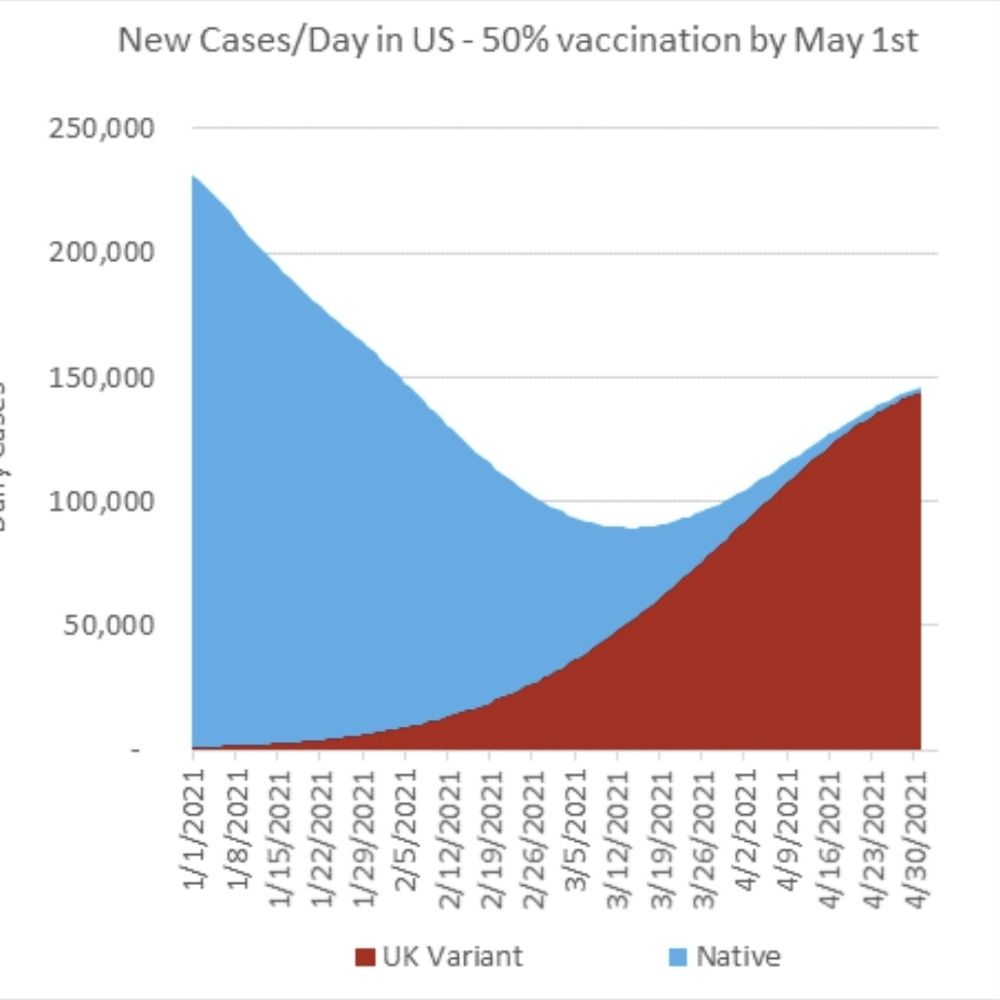
So what do the trends suggest is ahead of us? In my opinion, the diversity of antibodies today in the population are high enough that we probably won't see another Omicron event. But we could see more Pirola like events. It's hard to predict how often that may occur.
April 14, 2025 at 11:54 PM
So what do the trends suggest is ahead of us? In my opinion, the diversity of antibodies today in the population are high enough that we probably won't see another Omicron event. But we could see more Pirola like events. It's hard to predict how often that may occur.