



Patrick Murphy
@1patrickmurphy.bsky.social
Associate Professor @ UConn Medical School. Endothelial cells, RNA biology, extracellular matrix, leukocyte-endothelial interactions.
It was pleasure to host my former lab mate Noor Jailkhani from Matrisome Bio yesterday at The University of Connecticut School of Medicine. Not many can say that they both developed a new technology hands on, and then led this into the market as the CEO of a successful company.

November 14, 2025 at 12:14 AM
It was pleasure to host my former lab mate Noor Jailkhani from Matrisome Bio yesterday at The University of Connecticut School of Medicine. Not many can say that they both developed a new technology hands on, and then led this into the market as the CEO of a successful company.
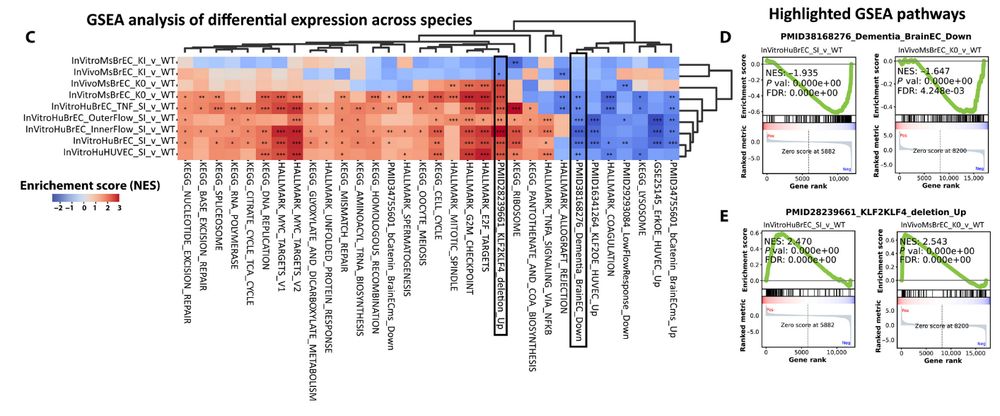
Moreover, Ashok observed changes in pathways that resembled those we had observed in capillary endothelial cells in ALS-FTD and AD of human donors. Together, this work suggests that brain endothelial TDP-43 dysfunction contributes to cognitive dysfunction.
April 17, 2025 at 1:32 AM
Moreover, Ashok observed changes in pathways that resembled those we had observed in capillary endothelial cells in ALS-FTD and AD of human donors. Together, this work suggests that brain endothelial TDP-43 dysfunction contributes to cognitive dysfunction.
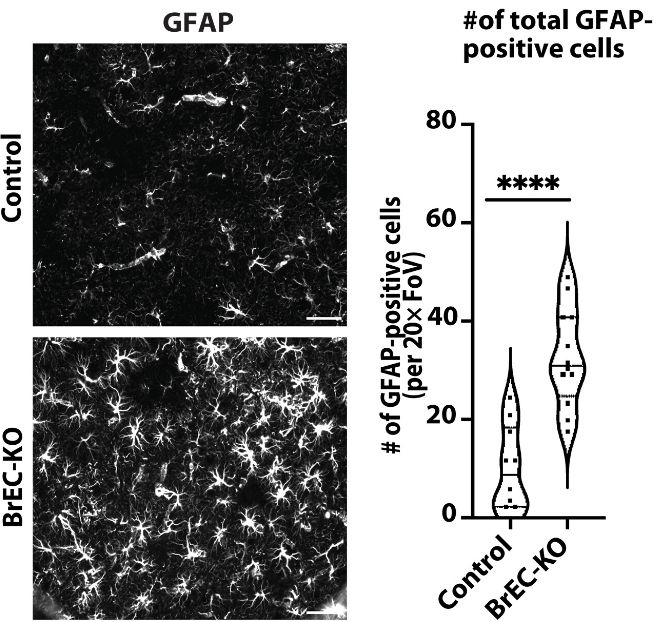
To more carefully examine brain endothelial function, Ashok used Slco1a1-CreERT2, and found acute BBB leak, and chronic fibrin deposition, basement membrane changes, gliosis, and pTau accumulation in neurons that ultimately lead to behaviors (social and memory) resembling a mouse model of FTD.
April 17, 2025 at 1:32 AM
To more carefully examine brain endothelial function, Ashok used Slco1a1-CreERT2, and found acute BBB leak, and chronic fibrin deposition, basement membrane changes, gliosis, and pTau accumulation in neurons that ultimately lead to behaviors (social and memory) resembling a mouse model of FTD.
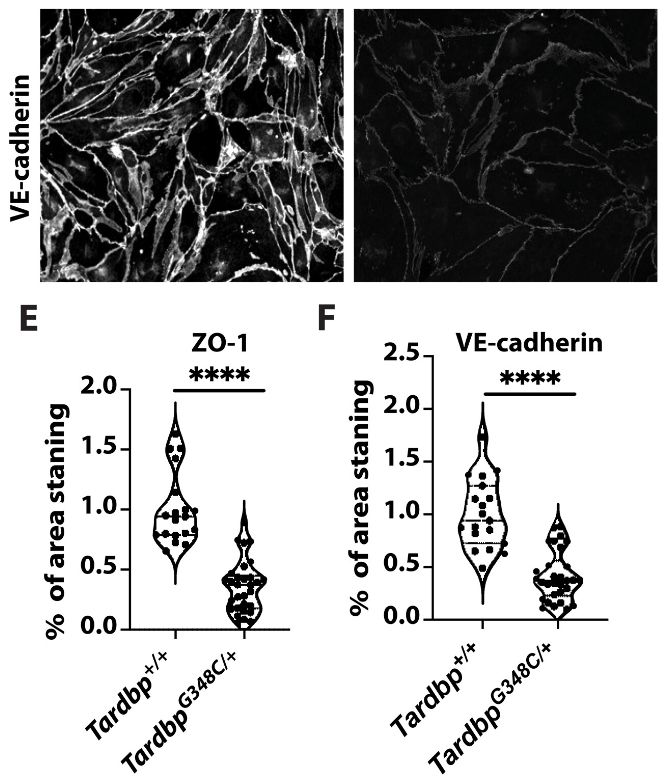
What Ashok was able to show, by isolating and culturing brain endothelial cells, is that a single allele ALS-FTD mutation in TDP-43 disrupts formation of VE-cadherin junctions, cytoskeletal organization and barrier integrity.
April 17, 2025 at 1:32 AM
What Ashok was able to show, by isolating and culturing brain endothelial cells, is that a single allele ALS-FTD mutation in TDP-43 disrupts formation of VE-cadherin junctions, cytoskeletal organization and barrier integrity.
We then took advantage of the seq data in both projects, to examine the overlap in pathways affected in the TDP-43 low population of human capillary endothelial cells and cells with targeted TDP-43 disruption - and found many of the same pathways were hit.

December 14, 2023 at 8:59 PM
We then took advantage of the seq data in both projects, to examine the overlap in pathways affected in the TDP-43 low population of human capillary endothelial cells and cells with targeted TDP-43 disruption - and found many of the same pathways were hit.
This appears to allow canonical NF-kB transcription, as we find large changes in RNA transcript level in high NF-kB nuclei in AD, ALS and FTD, but not in cognitively healthy donors.

December 14, 2023 at 8:58 PM
This appears to allow canonical NF-kB transcription, as we find large changes in RNA transcript level in high NF-kB nuclei in AD, ALS and FTD, but not in cognitively healthy donors.
The combined analysis of TDP-43 and NF-kB showed a striking pattern. The two followed almost exactly the same pattern in endothelial cells from cognitively normal donors, with TDP-43 rising with NF-kB. However, in AD, ALS and FTD, there was a precipitous drop in nuclear TDP-43.

December 14, 2023 at 8:57 PM
The combined analysis of TDP-43 and NF-kB showed a striking pattern. The two followed almost exactly the same pattern in endothelial cells from cognitively normal donors, with TDP-43 rising with NF-kB. However, in AD, ALS and FTD, there was a precipitous drop in nuclear TDP-43.
However, we noticed a very different pattern of cell clustering in the data, and that the NF-kB high nuclei in the disease cluster were tightly packed, suggesting a unique transcriptional signature in these cells not apparent in the endothelial nuclei from unaffected donors.

December 14, 2023 at 8:57 PM
However, we noticed a very different pattern of cell clustering in the data, and that the NF-kB high nuclei in the disease cluster were tightly packed, suggesting a unique transcriptional signature in these cells not apparent in the endothelial nuclei from unaffected donors.
Oddly, however nuclear p65/NF-kB was not altered, although transcriptional analysis of this cluster showed that the NF-kB pathway was the most upregulated pathway in the cluster.

December 14, 2023 at 8:57 PM
Oddly, however nuclear p65/NF-kB was not altered, although transcriptional analysis of this cluster showed that the NF-kB pathway was the most upregulated pathway in the cluster.
Things became much more interesting when looking at the ECs. He found that there was disease associated cluster of capillary EC nuclei, with reduced TDP-43 and b-Catenin, a downstream transcription factor in the Wnt pathway criticial for BBB maintenance.

December 14, 2023 at 8:56 PM
Things became much more interesting when looking at the ECs. He found that there was disease associated cluster of capillary EC nuclei, with reduced TDP-43 and b-Catenin, a downstream transcription factor in the Wnt pathway criticial for BBB maintenance.
Then he showed in microglia that a previously described DAM population was NF-kB+ (and also ID’d an intermediate NF-kB population new to our knowledge).

December 14, 2023 at 8:55 PM
Then he showed in microglia that a previously described DAM population was NF-kB+ (and also ID’d an intermediate NF-kB population new to our knowledge).
Omar labeled several other antibodies for this inCITEseq approach to track levels of transcription factors key to BBB homeostasis, including NF-kB and b-Catenin. First, he validated the approach in siRNA treated cells, and in neurons where nuclear TDP-43 levels are known to drop.

December 14, 2023 at 8:55 PM
Omar labeled several other antibodies for this inCITEseq approach to track levels of transcription factors key to BBB homeostasis, including NF-kB and b-Catenin. First, he validated the approach in siRNA treated cells, and in neurons where nuclear TDP-43 levels are known to drop.
We wondered, if TDP-43 loss could have this large an impact, are EC levels altered in neurodegenerative disease. MD/PhD candidate
@omaruximab
led this, by combining a technique for EC nuclei enrichment we developed with a method to measure nuclear proteins and RNA #SingleCell
@omaruximab
led this, by combining a technique for EC nuclei enrichment we developed with a method to measure nuclear proteins and RNA #SingleCell

December 14, 2023 at 8:54 PM
We wondered, if TDP-43 loss could have this large an impact, are EC levels altered in neurodegenerative disease. MD/PhD candidate
@omaruximab
led this, by combining a technique for EC nuclei enrichment we developed with a method to measure nuclear proteins and RNA #SingleCell
@omaruximab
led this, by combining a technique for EC nuclei enrichment we developed with a method to measure nuclear proteins and RNA #SingleCell
Effects on junctional proteins in isolated endothelial cells from these mice are truly striking, suggesting potent and cell-autonomous effects in the endothelium resulting from even partial loss of TDP-43 nuclear function.

December 14, 2023 at 8:51 PM
Effects on junctional proteins in isolated endothelial cells from these mice are truly striking, suggesting potent and cell-autonomous effects in the endothelium resulting from even partial loss of TDP-43 nuclear function.
We then asked whether a specific point mutation in TDP-43 found in ALS/FTD mice led to similar defects. We used a
@jacksonlab
mouse model recently developed and found BBB defects which could be recapitulated in isolated ECs, coinciding with a reduction in nuclear TDP-43.
@jacksonlab
mouse model recently developed and found BBB defects which could be recapitulated in isolated ECs, coinciding with a reduction in nuclear TDP-43.

December 14, 2023 at 8:51 PM
We then asked whether a specific point mutation in TDP-43 found in ALS/FTD mice led to similar defects. We used a
@jacksonlab
mouse model recently developed and found BBB defects which could be recapitulated in isolated ECs, coinciding with a reduction in nuclear TDP-43.
@jacksonlab
mouse model recently developed and found BBB defects which could be recapitulated in isolated ECs, coinciding with a reduction in nuclear TDP-43.
In TDP-43 pan EC-KO mice, we found widespread activation and vascular leak. A focused brain EC deletion led to more leak, fibrin deposition, astrogliosis and microgliosis, and reduced vascular perfusion - and ultimately cognitive defects (resembling gold-standard FTD model GRN).

December 14, 2023 at 8:50 PM
In TDP-43 pan EC-KO mice, we found widespread activation and vascular leak. A focused brain EC deletion led to more leak, fibrin deposition, astrogliosis and microgliosis, and reduced vascular perfusion - and ultimately cognitive defects (resembling gold-standard FTD model GRN).