


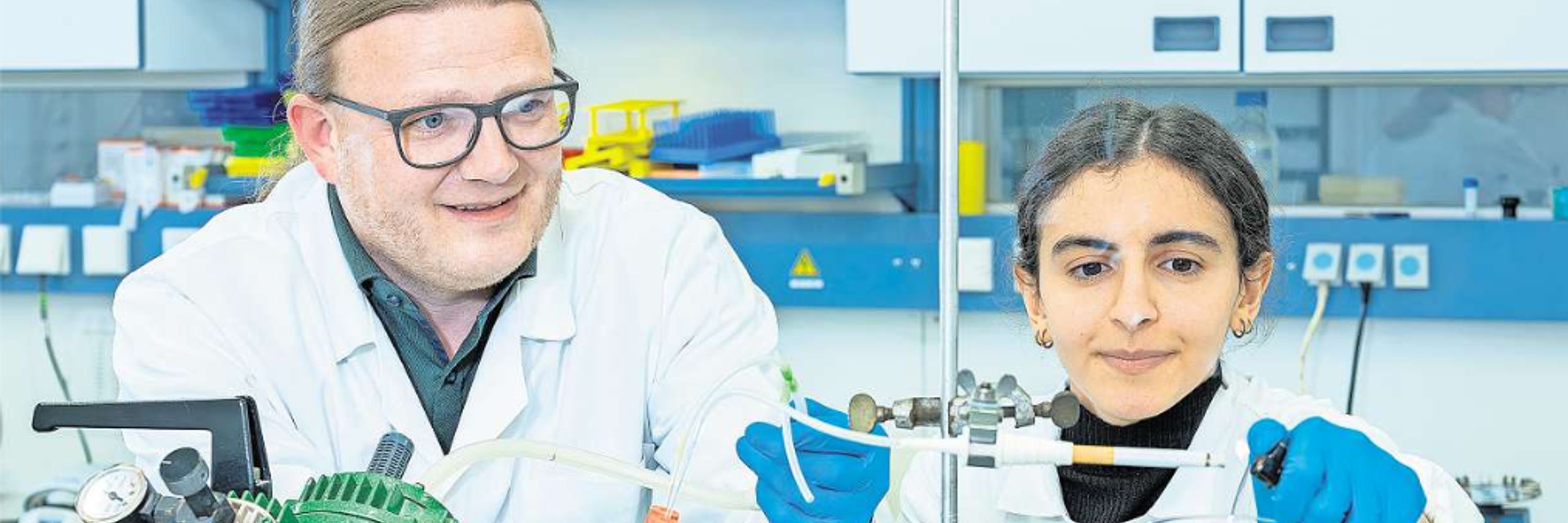
Uli Klümper
@ulikluemper.bsky.social
Microbial Ecologist @ TU Dresden
Focusing on Evolution, Ecology and Environmental dimensions of AMR & plasmids
Formerly @ DTU & UoExeter
He/him
Focusing on Evolution, Ecology and Environmental dimensions of AMR & plasmids
Formerly @ DTU & UoExeter
He/him
📄 New paper out in Water Research:
Impact of human activities on groundwater biogeochemical cycles and microbial communities: Insights from metagenomic analysis
Led by @pennyhan.bsky.social & Zhengxing Chen
🔗 doi.org/10.1016/j.wa...
Impact of human activities on groundwater biogeochemical cycles and microbial communities: Insights from metagenomic analysis
Led by @pennyhan.bsky.social & Zhengxing Chen
🔗 doi.org/10.1016/j.wa...

Impact of human activities on groundwater biogeochemical cycles and microbial communities: Insights from metagenomic analysis
Anthropogenic nitrogen pollution poses a systemic threat to microbial interaction networks and biogeochemical cycling in groundwater ecosystems, yet t…
www.sciencedirect.com
February 3, 2026 at 11:10 AM
📄 New paper out in Water Research:
Impact of human activities on groundwater biogeochemical cycles and microbial communities: Insights from metagenomic analysis
Led by @pennyhan.bsky.social & Zhengxing Chen
🔗 doi.org/10.1016/j.wa...
Impact of human activities on groundwater biogeochemical cycles and microbial communities: Insights from metagenomic analysis
Led by @pennyhan.bsky.social & Zhengxing Chen
🔗 doi.org/10.1016/j.wa...
Reposted by Uli Klümper
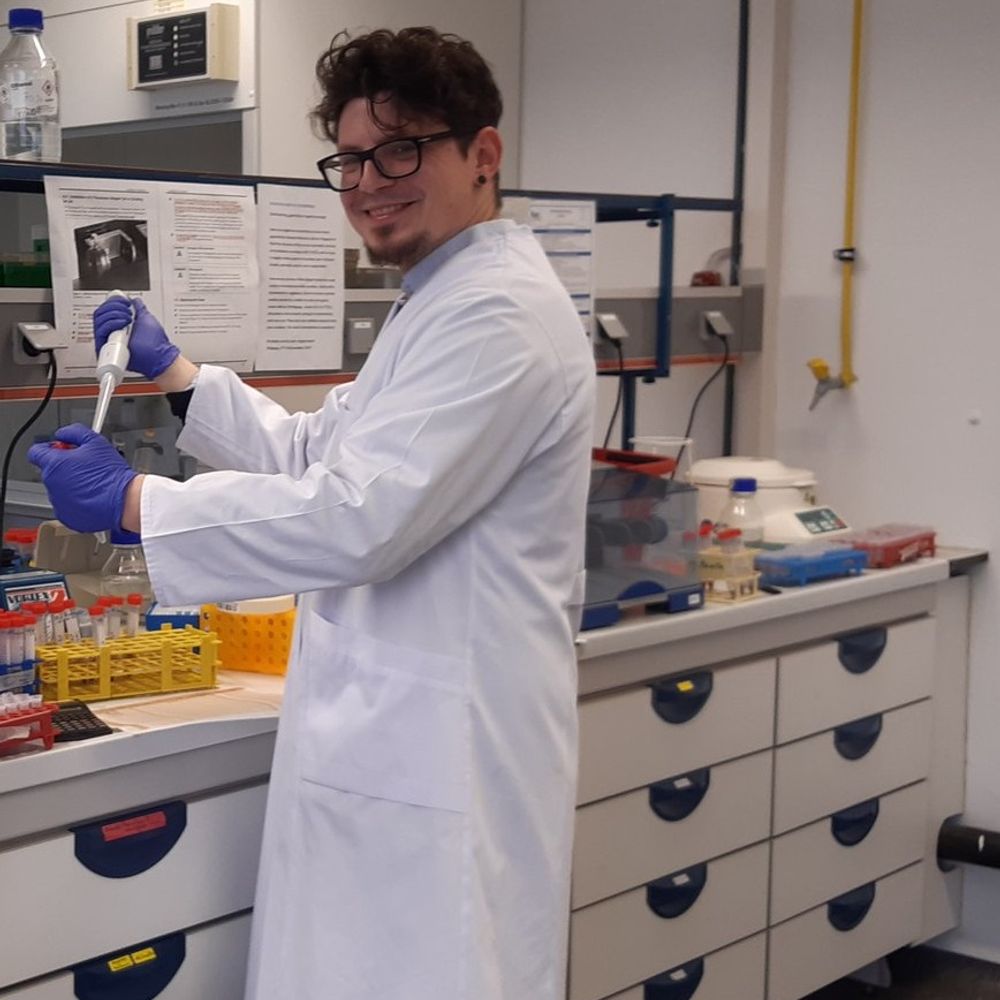
Before leaving Dresden to increase my knowledge and independence as a researcher, I participated in a large-scale sampling campaign for the EMBARK project... some years later, this new and amazing study (which included these samples as well) came out!!!!!
🧬 Our new paper in @ISMEJournal
"Cefiderocol resistance genes identified in environmental samples using functional metagenomics"
Led by Remi Gschwind and Etienne Ruppe as part of JPIAMR SEARCHER.
academic.oup.com/ismej/advanc...
#AMR #microsky
1/5
"Cefiderocol resistance genes identified in environmental samples using functional metagenomics"
Led by Remi Gschwind and Etienne Ruppe as part of JPIAMR SEARCHER.
academic.oup.com/ismej/advanc...
#AMR #microsky
1/5

Cefiderocol resistance genes identified in environmental samples using functional metagenomics
Abstract. Antibiotic resistance poses a global public health threat, which can originate from the transfer of environmental antibiotic resistance genes to
academic.oup.com
January 30, 2026 at 9:17 PM
Before leaving Dresden to increase my knowledge and independence as a researcher, I participated in a large-scale sampling campaign for the EMBARK project... some years later, this new and amazing study (which included these samples as well) came out!!!!!
🧬 Our new paper in @ISMEJournal
"Cefiderocol resistance genes identified in environmental samples using functional metagenomics"
Led by Remi Gschwind and Etienne Ruppe as part of JPIAMR SEARCHER.
academic.oup.com/ismej/advanc...
#AMR #microsky
1/5
"Cefiderocol resistance genes identified in environmental samples using functional metagenomics"
Led by Remi Gschwind and Etienne Ruppe as part of JPIAMR SEARCHER.
academic.oup.com/ismej/advanc...
#AMR #microsky
1/5
Cefiderocol resistance genes identified in environmental samples using functional metagenomics
Abstract. Antibiotic resistance poses a global public health threat, which can originate from the transfer of environmental antibiotic resistance genes to
academic.oup.com
January 30, 2026 at 1:26 PM
🧬 Our new paper in @ISMEJournal
"Cefiderocol resistance genes identified in environmental samples using functional metagenomics"
Led by Remi Gschwind and Etienne Ruppe as part of JPIAMR SEARCHER.
academic.oup.com/ismej/advanc...
#AMR #microsky
1/5
"Cefiderocol resistance genes identified in environmental samples using functional metagenomics"
Led by Remi Gschwind and Etienne Ruppe as part of JPIAMR SEARCHER.
academic.oup.com/ismej/advanc...
#AMR #microsky
1/5
New paper accepted in Microbiome 🎉
Weiss A, Elena AX, Klümper U, Dumack K
We show that viruses and microeukaryotes strongly shape bacterial and ARG diversity in wastewater, highlighting the role of multi-trophic ecology.
doi.org/10.1186/s401...
#AMR #Microbiome #Wastewater #MicrobialEcology
Weiss A, Elena AX, Klümper U, Dumack K
We show that viruses and microeukaryotes strongly shape bacterial and ARG diversity in wastewater, highlighting the role of multi-trophic ecology.
doi.org/10.1186/s401...
#AMR #Microbiome #Wastewater #MicrobialEcology
Client Challenge
doi.org
January 12, 2026 at 9:32 AM
New paper accepted in Microbiome 🎉
Weiss A, Elena AX, Klümper U, Dumack K
We show that viruses and microeukaryotes strongly shape bacterial and ARG diversity in wastewater, highlighting the role of multi-trophic ecology.
doi.org/10.1186/s401...
#AMR #Microbiome #Wastewater #MicrobialEcology
Weiss A, Elena AX, Klümper U, Dumack K
We show that viruses and microeukaryotes strongly shape bacterial and ARG diversity in wastewater, highlighting the role of multi-trophic ecology.
doi.org/10.1186/s401...
#AMR #Microbiome #Wastewater #MicrobialEcology
💊 🌊 🐷 Our new paper in Water Research💊 🌊 🐷
Combined exposure of enrofloxacin and disinfection byproducts under environmentally relevant concentrations enhances antibiotic resistance risks in livestock wastewater
www.sciencedirect.com/science/arti...
1/3
#AMR #microsky
Combined exposure of enrofloxacin and disinfection byproducts under environmentally relevant concentrations enhances antibiotic resistance risks in livestock wastewater
www.sciencedirect.com/science/arti...
1/3
#AMR #microsky

Combined exposure of enrofloxacin and disinfection byproducts under environmentally relevant concentrations enhances antibiotic resistance risks in livestock wastewater
Livestock wastewater is a crucial source of antibiotic resistance. However, the impact of disinfection byproducts (DBPs), stemming from disinfectants …
www.sciencedirect.com
December 16, 2025 at 4:04 PM
💊 🌊 🐷 Our new paper in Water Research💊 🌊 🐷
Combined exposure of enrofloxacin and disinfection byproducts under environmentally relevant concentrations enhances antibiotic resistance risks in livestock wastewater
www.sciencedirect.com/science/arti...
1/3
#AMR #microsky
Combined exposure of enrofloxacin and disinfection byproducts under environmentally relevant concentrations enhances antibiotic resistance risks in livestock wastewater
www.sciencedirect.com/science/arti...
1/3
#AMR #microsky
📢 New paper in @natcomms.nature.com
Geographics and bacterial networks differently shape the acquired and latent global sewage resistomes
doi.org/10.1038/s414...
Thrilled to share this massive global effort led by H.M. Martiny, @patrickmunk.bsky.social, F. Aarestrup & the Global Sewage Consortium
Geographics and bacterial networks differently shape the acquired and latent global sewage resistomes
doi.org/10.1038/s414...
Thrilled to share this massive global effort led by H.M. Martiny, @patrickmunk.bsky.social, F. Aarestrup & the Global Sewage Consortium

Geographics and bacterial networks differently shape the acquired and latent global sewage resistomes - Nature Communications
Antimicrobial resistance genes that have been mobilized between bacterial species represent a subset of the naturally occurring resistome. Here, the authors compare the abundance, diversity and geogra...
doi.org
November 23, 2025 at 11:18 AM
📢 New paper in @natcomms.nature.com
Geographics and bacterial networks differently shape the acquired and latent global sewage resistomes
doi.org/10.1038/s414...
Thrilled to share this massive global effort led by H.M. Martiny, @patrickmunk.bsky.social, F. Aarestrup & the Global Sewage Consortium
Geographics and bacterial networks differently shape the acquired and latent global sewage resistomes
doi.org/10.1038/s414...
Thrilled to share this massive global effort led by H.M. Martiny, @patrickmunk.bsky.social, F. Aarestrup & the Global Sewage Consortium
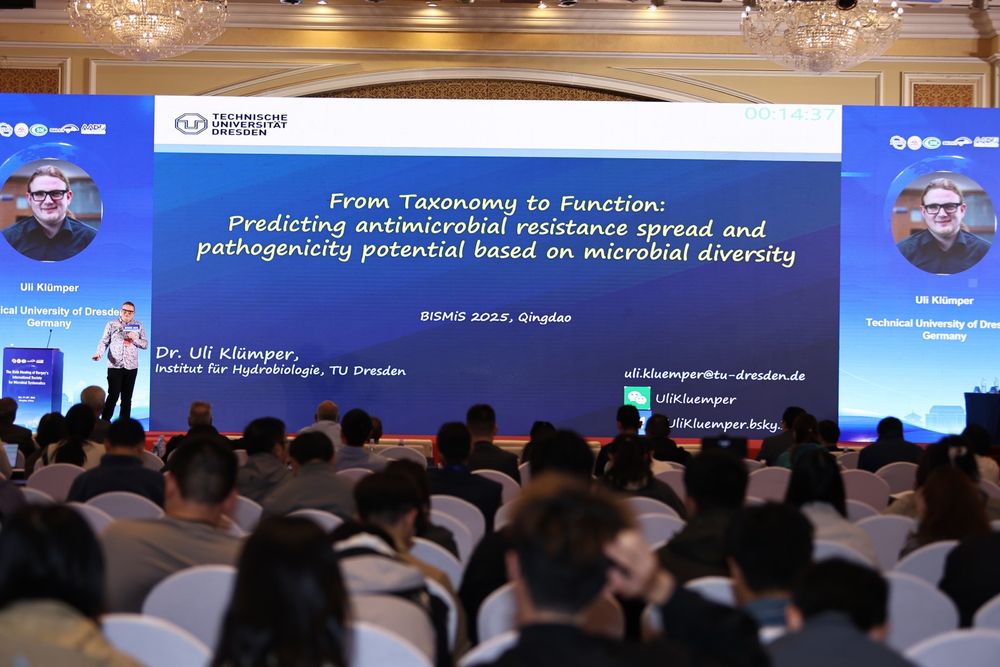
Having a great time at the 6th Meeting of Bergey’s Society for Microbial Systematics #BISMiS in Qingdao, China.
Thanks to the organizers for inviting me to give a talk on how we can infer pathogenicity and #AMR in environmental microbial communities based on their taxonomic makeup.
Thanks to the organizers for inviting me to give a talk on how we can infer pathogenicity and #AMR in environmental microbial communities based on their taxonomic makeup.

October 19, 2025 at 2:47 AM
Our first manuscript from the TARGIM project led by Masoud Haghshenasfard:
CFD and OCT-Based Optimisation of Impeller-Induced Shear Stress on Membrane Surfaces in a Circular Test Cell
www.sciencedirect.com/science/arti...
CFD and OCT-Based Optimisation of Impeller-Induced Shear Stress on Membrane Surfaces in a Circular Test Cell
www.sciencedirect.com/science/arti...

CFD and OCT-Based Optimisation of Impeller-Induced Shear Stress on Membrane Surfaces in a Circular Test Cell
This study investigates the distribution of shear stress in a lab-scale membrane bioreactor consisting of a 56 mm-diameter cylindrical test cell, a 0.…
www.sciencedirect.com
September 29, 2025 at 12:49 PM
Our first manuscript from the TARGIM project led by Masoud Haghshenasfard:
CFD and OCT-Based Optimisation of Impeller-Induced Shear Stress on Membrane Surfaces in a Circular Test Cell
www.sciencedirect.com/science/arti...
CFD and OCT-Based Optimisation of Impeller-Induced Shear Stress on Membrane Surfaces in a Circular Test Cell
www.sciencedirect.com/science/arti...
🚨WORKSHOP announcement 🚨
“Making environmental #AMR Surveillance Fit for Purpose: Data Integration and the Ecology of Resistance”
6th of October
Dresden, Germany
Free of charge
one-bridge.iwaterfood.gr/workshops/wo...
Register now!
Details below:
1/3
“Making environmental #AMR Surveillance Fit for Purpose: Data Integration and the Ecology of Resistance”
6th of October
Dresden, Germany
Free of charge
one-bridge.iwaterfood.gr/workshops/wo...
Register now!
Details below:
1/3
ONE-Bridge project | Conference | Workshops
Fostering collaboration and addressing the interconnected challenges at the interface of human, animal, and environmental health.
one-bridge.iwaterfood.gr
September 21, 2025 at 12:49 PM
🚨WORKSHOP announcement 🚨
“Making environmental #AMR Surveillance Fit for Purpose: Data Integration and the Ecology of Resistance”
6th of October
Dresden, Germany
Free of charge
one-bridge.iwaterfood.gr/workshops/wo...
Register now!
Details below:
1/3
“Making environmental #AMR Surveillance Fit for Purpose: Data Integration and the Ecology of Resistance”
6th of October
Dresden, Germany
Free of charge
one-bridge.iwaterfood.gr/workshops/wo...
Register now!
Details below:
1/3
🐟💊🦠Our new study in @natwater.nature.com 🐟💊🦠
"Microbial risks triggered by oral administration of antibiotics in fish aquaculture persist long after the legally mandated antibiotic withdrawal time"
www.nature.com/articles/s44...
#microsky #amr
1/8
"Microbial risks triggered by oral administration of antibiotics in fish aquaculture persist long after the legally mandated antibiotic withdrawal time"
www.nature.com/articles/s44...
#microsky #amr
1/8

Microbial risks triggered by oral administration of antibiotics in fish aquaculture persist long after the legally mandated antibiotic withdrawal time - Nature Water
Florfenicol treatment substantially increased the abundance and mobility of antibiotic resistance genes (ARGs) in the common carp gut microbiome. The resistome and mobilome profiles failed to return t...
www.nature.com
September 21, 2025 at 11:11 AM
🐟💊🦠Our new study in @natwater.nature.com 🐟💊🦠
"Microbial risks triggered by oral administration of antibiotics in fish aquaculture persist long after the legally mandated antibiotic withdrawal time"
www.nature.com/articles/s44...
#microsky #amr
1/8
"Microbial risks triggered by oral administration of antibiotics in fish aquaculture persist long after the legally mandated antibiotic withdrawal time"
www.nature.com/articles/s44...
#microsky #amr
1/8
Reposted by Uli Klümper

What was antibiotic resistance like before we ever used antibiotics? How did we change what antibiotic resistance genes looked like over 100 years?
Our paper looking at resistance genes from a century of NCTC historical isolates now out in mGen:
www.microbiologyresearch.org/content/jour...
Our paper looking at resistance genes from a century of NCTC historical isolates now out in mGen:
www.microbiologyresearch.org/content/jour...

Genomic resistance in historical clinical isolates increased in frequency and mobility after the age of antibiotics
Antibiotic resistance is frequently observed shortly after the clinical introduction of an antibiotic. Whether and how frequently that resistance occurred before the introduction is harder to determin...
www.microbiologyresearch.org
September 1, 2025 at 5:49 PM
What was antibiotic resistance like before we ever used antibiotics? How did we change what antibiotic resistance genes looked like over 100 years?
Our paper looking at resistance genes from a century of NCTC historical isolates now out in mGen:
www.microbiologyresearch.org/content/jour...
Our paper looking at resistance genes from a century of NCTC historical isolates now out in mGen:
www.microbiologyresearch.org/content/jour...
Excited to share our new Perspective in npj Antimicrobials & Resistance:
"Towards the integration of antibiotic resistance gene mobility into environmental surveillance and risk assessment.”
www.nature.com/articles/s44...
1/3
#AMR #microsky
"Towards the integration of antibiotic resistance gene mobility into environmental surveillance and risk assessment.”
www.nature.com/articles/s44...
1/3
#AMR #microsky

Towards the integration of antibiotic resistance gene mobility into environmental surveillance and risk assessment - npj Antimicrobials and Resistance
npj Antimicrobials and Resistance - Towards the integration of antibiotic resistance gene mobility into environmental surveillance and risk assessment
www.nature.com
September 16, 2025 at 12:26 PM
Excited to share our new Perspective in npj Antimicrobials & Resistance:
"Towards the integration of antibiotic resistance gene mobility into environmental surveillance and risk assessment.”
www.nature.com/articles/s44...
1/3
#AMR #microsky
"Towards the integration of antibiotic resistance gene mobility into environmental surveillance and risk assessment.”
www.nature.com/articles/s44...
1/3
#AMR #microsky
First @biorxivpreprint.bsky.social from Eda Deniz Erdem's PhD:
"Selective spread of mobile antibiotic resistance genes in wastewater microbiomes driven by the non-antibiotic pharmaceutical carbamazepine"
www.biorxiv.org/content/10.1...
#AMR #microsky
"Selective spread of mobile antibiotic resistance genes in wastewater microbiomes driven by the non-antibiotic pharmaceutical carbamazepine"
www.biorxiv.org/content/10.1...
#AMR #microsky

Selective spread of mobile antibiotic resistance genes in wastewater microbiomes driven by the non-antibiotic pharmaceutical carbamazepine
Carbamazepine (CBZ), a widely used anticonvulsant, is a persistent aquatic micropollutant that withstands biodegradation and accumulates in wastewater-impacted environments. While non-antibiotic pharm...
www.biorxiv.org
September 10, 2025 at 8:45 AM
First @biorxivpreprint.bsky.social from Eda Deniz Erdem's PhD:
"Selective spread of mobile antibiotic resistance genes in wastewater microbiomes driven by the non-antibiotic pharmaceutical carbamazepine"
www.biorxiv.org/content/10.1...
#AMR #microsky
"Selective spread of mobile antibiotic resistance genes in wastewater microbiomes driven by the non-antibiotic pharmaceutical carbamazepine"
www.biorxiv.org/content/10.1...
#AMR #microsky
🧬💊Our new paper in @ismepublications.bsky.social🧬💊
"Ecology-based approach to predict no-effect antibiotic concentrations for minimizing environmental selection of resistance"
In collaboration with @umweltbundesamt.bsky.social
Read the thread below:
academic.oup.com/ismej/advanc...
#AMR
1/9
"Ecology-based approach to predict no-effect antibiotic concentrations for minimizing environmental selection of resistance"
In collaboration with @umweltbundesamt.bsky.social
Read the thread below:
academic.oup.com/ismej/advanc...
#AMR
1/9
Ecology-based approach to predict no-effect antibiotic concentrations for minimizing environmental selection of resistance
Abstract. Selection for antibiotic resistance has been demonstrated at low, environmentally relevant antibiotic concentrations. The concept of minimum sele
academic.oup.com
August 11, 2025 at 11:57 AM
🧬💊Our new paper in @ismepublications.bsky.social🧬💊
"Ecology-based approach to predict no-effect antibiotic concentrations for minimizing environmental selection of resistance"
In collaboration with @umweltbundesamt.bsky.social
Read the thread below:
academic.oup.com/ismej/advanc...
#AMR
1/9
"Ecology-based approach to predict no-effect antibiotic concentrations for minimizing environmental selection of resistance"
In collaboration with @umweltbundesamt.bsky.social
Read the thread below:
academic.oup.com/ismej/advanc...
#AMR
1/9
🧬🦠💊
🚨NEW COLLECTION LAUNCH🚨
I'm editing a new collection in npj Antimicrobials & Resistance:
"Ecological and Evolutionary Drivers of Environmental AMR"
Calling for submissions on environmental HGT, selection, invasion, mutation & more
Open till Apr 26
www.nature.com/collections/...
🚨NEW COLLECTION LAUNCH🚨
I'm editing a new collection in npj Antimicrobials & Resistance:
"Ecological and Evolutionary Drivers of Environmental AMR"
Calling for submissions on environmental HGT, selection, invasion, mutation & more
Open till Apr 26
www.nature.com/collections/...

August 4, 2025 at 2:33 PM
🧬🦠💊
🚨NEW COLLECTION LAUNCH🚨
I'm editing a new collection in npj Antimicrobials & Resistance:
"Ecological and Evolutionary Drivers of Environmental AMR"
Calling for submissions on environmental HGT, selection, invasion, mutation & more
Open till Apr 26
www.nature.com/collections/...
🚨NEW COLLECTION LAUNCH🚨
I'm editing a new collection in npj Antimicrobials & Resistance:
"Ecological and Evolutionary Drivers of Environmental AMR"
Calling for submissions on environmental HGT, selection, invasion, mutation & more
Open till Apr 26
www.nature.com/collections/...
Engineering soil with phages to fight #AMR. Very cool.
"Harnessing phage consortia to mitigate the soil antibiotic resistome by targeting keystone taxa Streptomyces"
by Hanpeng Liao et al. in @microbiomej.bsky.social
microbiomejournal.biomedcentral.com/articles/10....
"Harnessing phage consortia to mitigate the soil antibiotic resistome by targeting keystone taxa Streptomyces"
by Hanpeng Liao et al. in @microbiomej.bsky.social
microbiomejournal.biomedcentral.com/articles/10....

Harnessing phage consortia to mitigate the soil antibiotic resistome by targeting keystone taxa Streptomyces - Microbiome
Background Antimicrobial resistance poses a substantial and growing threat to global health. While antibiotic resistance genes (ARGs) are tracked most closely in clinical settings, their spread remain...
microbiomejournal.biomedcentral.com
June 2, 2025 at 7:05 AM
Engineering soil with phages to fight #AMR. Very cool.
"Harnessing phage consortia to mitigate the soil antibiotic resistome by targeting keystone taxa Streptomyces"
by Hanpeng Liao et al. in @microbiomej.bsky.social
microbiomejournal.biomedcentral.com/articles/10....
"Harnessing phage consortia to mitigate the soil antibiotic resistome by targeting keystone taxa Streptomyces"
by Hanpeng Liao et al. in @microbiomej.bsky.social
microbiomejournal.biomedcentral.com/articles/10....
Our new paper is online in ES&T Engineering:
"Evaluation of a Low-Cost Active Air Sampler for the Surveillance of Airborne Transmission of Antibiotic Resistance Genes Using a Municipal Wastewater Treatment Plant as a Case Study"
led by Naixiang Zhai and Jake O’Brien
pubs.acs.org/doi/10.1021/...
"Evaluation of a Low-Cost Active Air Sampler for the Surveillance of Airborne Transmission of Antibiotic Resistance Genes Using a Municipal Wastewater Treatment Plant as a Case Study"
led by Naixiang Zhai and Jake O’Brien
pubs.acs.org/doi/10.1021/...

Evaluation of a Low-Cost Active Air Sampler for the Surveillance of Airborne Transmission of Antibiotic Resistance Genes Using a Municipal Wastewater Treatment Plant as a Case Study
Assessing the risks associated with antibiotic resistance genes (ARGs) in the environment remains challenging due to limited understanding of their distribution and transmission across various media, ...
pubs.acs.org
June 1, 2025 at 8:26 AM
Our new paper is online in ES&T Engineering:
"Evaluation of a Low-Cost Active Air Sampler for the Surveillance of Airborne Transmission of Antibiotic Resistance Genes Using a Municipal Wastewater Treatment Plant as a Case Study"
led by Naixiang Zhai and Jake O’Brien
pubs.acs.org/doi/10.1021/...
"Evaluation of a Low-Cost Active Air Sampler for the Surveillance of Airborne Transmission of Antibiotic Resistance Genes Using a Municipal Wastewater Treatment Plant as a Case Study"
led by Naixiang Zhai and Jake O’Brien
pubs.acs.org/doi/10.1021/...
Our new preprint as part of the #JPIAMR #SEARCHER project led by @remigsc.bsky.social & @etienneruppe.bsky.social uses functional metagenomics to identify novel resistances
"Environmental reservoir of resistance genes for the last resort antibiotic Cefiderocol"
www.biorxiv.org/content/10.1...
"Environmental reservoir of resistance genes for the last resort antibiotic Cefiderocol"
www.biorxiv.org/content/10.1...
May 29, 2025 at 11:42 AM
Our new preprint as part of the #JPIAMR #SEARCHER project led by @remigsc.bsky.social & @etienneruppe.bsky.social uses functional metagenomics to identify novel resistances
"Environmental reservoir of resistance genes for the last resort antibiotic Cefiderocol"
www.biorxiv.org/content/10.1...
"Environmental reservoir of resistance genes for the last resort antibiotic Cefiderocol"
www.biorxiv.org/content/10.1...
Always love a good bacterial warfare study:
"Horizontal gene transfer of molecular weapons can reshape bacterial competition"
by @prokaryota.bsky.social, @jdpal.bsky.social, et al. in @plosbiology.org
journals.plos.org/plosbiology/...
"Horizontal gene transfer of molecular weapons can reshape bacterial competition"
by @prokaryota.bsky.social, @jdpal.bsky.social, et al. in @plosbiology.org
journals.plos.org/plosbiology/...

Horizontal gene transfer of molecular weapons can reshape bacterial competition
Bacteria use molecular weapons such as toxins to outcompete rivals, but their horizontal gene transfer can undermine this advantage. This study shows that horizontal gene transfer of toxin plasmids is...
journals.plos.org
May 25, 2025 at 10:07 AM
Always love a good bacterial warfare study:
"Horizontal gene transfer of molecular weapons can reshape bacterial competition"
by @prokaryota.bsky.social, @jdpal.bsky.social, et al. in @plosbiology.org
journals.plos.org/plosbiology/...
"Horizontal gene transfer of molecular weapons can reshape bacterial competition"
by @prokaryota.bsky.social, @jdpal.bsky.social, et al. in @plosbiology.org
journals.plos.org/plosbiology/...
The link between antibiotic resistance level and soil physico-chemical properties
by M. Szadziul, A. Goryluk-Salmonowicz & M. Popowska from our @biodiversa.eu #ANTIVERSA project
doi.org/10.1101/2025...
#AMR
by M. Szadziul, A. Goryluk-Salmonowicz & M. Popowska from our @biodiversa.eu #ANTIVERSA project
doi.org/10.1101/2025...
#AMR
The link between antibiotic resistance level and soil physico-chemical properties
Antimicrobial resistance (AMR) is a critical global health concern. While AMR research has primarily focused on medical and veterinary settings, the spread of antibiotic-resistant bacteria (ARB) and a...
doi.org
May 7, 2025 at 7:31 AM
The link between antibiotic resistance level and soil physico-chemical properties
by M. Szadziul, A. Goryluk-Salmonowicz & M. Popowska from our @biodiversa.eu #ANTIVERSA project
doi.org/10.1101/2025...
#AMR
by M. Szadziul, A. Goryluk-Salmonowicz & M. Popowska from our @biodiversa.eu #ANTIVERSA project
doi.org/10.1101/2025...
#AMR
Our new paper is online:
"Novel multi-drug-resistant yeast efficiently removes ammonia nitrogen from antibiotic-contaminated aquaculture water"
led by Jie Hu & Ling Luo in International Biodeterioration & Biodegradation
www.sciencedirect.com/science/arti...
"Novel multi-drug-resistant yeast efficiently removes ammonia nitrogen from antibiotic-contaminated aquaculture water"
led by Jie Hu & Ling Luo in International Biodeterioration & Biodegradation
www.sciencedirect.com/science/arti...

Novel multi-drug-resistant yeast efficiently removed ammonia nitrogen from antibiotic-contaminated aquaculture water
Aquaculture waters often contain antibiotics, which inhibit the removal of ammonia nitrogen (NH4+-N) by traditional microbial technologies. Thus, it i…
www.sciencedirect.com
May 6, 2025 at 12:57 PM
Our new paper is online:
"Novel multi-drug-resistant yeast efficiently removes ammonia nitrogen from antibiotic-contaminated aquaculture water"
led by Jie Hu & Ling Luo in International Biodeterioration & Biodegradation
www.sciencedirect.com/science/arti...
"Novel multi-drug-resistant yeast efficiently removes ammonia nitrogen from antibiotic-contaminated aquaculture water"
led by Jie Hu & Ling Luo in International Biodeterioration & Biodegradation
www.sciencedirect.com/science/arti...
Reposted by Uli Klümper

🧬💧 Wastewater & resistance: a global warning
A new study analysed 226 sludge samples from wastewater treatment plants across 6 continents. It found diverse, abundant antibiotic resistance genes in all plants.
🔗 doi.org/10.1038/s414...
#SciComm #Microbiology 🧪 #AMR
A new study analysed 226 sludge samples from wastewater treatment plants across 6 continents. It found diverse, abundant antibiotic resistance genes in all plants.
🔗 doi.org/10.1038/s414...
#SciComm #Microbiology 🧪 #AMR

Global diversity and distribution of antibiotic resistance genes in human wastewater treatment systems - Nature Communications
Wastewater treatment plants are important reservoirs of antibiotic resistance genes (ARGs). Here, the authors analyze ARGs in a global collection of samples from wastewater treatment plants across six...
doi.org
May 1, 2025 at 4:19 AM
🧬💧 Wastewater & resistance: a global warning
A new study analysed 226 sludge samples from wastewater treatment plants across 6 continents. It found diverse, abundant antibiotic resistance genes in all plants.
🔗 doi.org/10.1038/s414...
#SciComm #Microbiology 🧪 #AMR
A new study analysed 226 sludge samples from wastewater treatment plants across 6 continents. It found diverse, abundant antibiotic resistance genes in all plants.
🔗 doi.org/10.1038/s414...
#SciComm #Microbiology 🧪 #AMR
A framework to assess pharmaceutical accumulation in crops: from wastewater irrigation to consumption
by J. Nightingale, @carterlj.bsky.social et al.
doi.org/10.1016/j.jh...
by J. Nightingale, @carterlj.bsky.social et al.
doi.org/10.1016/j.jh...
Redirecting
doi.org
April 29, 2025 at 11:39 AM
A framework to assess pharmaceutical accumulation in crops: from wastewater irrigation to consumption
by J. Nightingale, @carterlj.bsky.social et al.
doi.org/10.1016/j.jh...
by J. Nightingale, @carterlj.bsky.social et al.
doi.org/10.1016/j.jh...
Antimicrobial effects, and selection for AMR by non-antibiotic drugs in a wastewater bacterial community
by @aprilhayes.bsky.social, @edfeil.bsky.social, @willhgaze.bsky.social, @profjrsnape.bsky.social, @ecehh.org et al.
www.sciencedirect.com/science/arti...
by @aprilhayes.bsky.social, @edfeil.bsky.social, @willhgaze.bsky.social, @profjrsnape.bsky.social, @ecehh.org et al.
www.sciencedirect.com/science/arti...
www.sciencedirect.com
April 29, 2025 at 11:36 AM
Antimicrobial effects, and selection for AMR by non-antibiotic drugs in a wastewater bacterial community
by @aprilhayes.bsky.social, @edfeil.bsky.social, @willhgaze.bsky.social, @profjrsnape.bsky.social, @ecehh.org et al.
www.sciencedirect.com/science/arti...
by @aprilhayes.bsky.social, @edfeil.bsky.social, @willhgaze.bsky.social, @profjrsnape.bsky.social, @ecehh.org et al.
www.sciencedirect.com/science/arti...
Come to our conference:
International One Health Symposium 2025
Date: October 13th - 15th, 2025 in Berlin Germany.
Organized by the German @onehealthplatform.bsky.social
Registration and Abstract submission are open.
evis.events/event/571/
International One Health Symposium 2025
Date: October 13th - 15th, 2025 in Berlin Germany.
Organized by the German @onehealthplatform.bsky.social
Registration and Abstract submission are open.
evis.events/event/571/

April 29, 2025 at 9:42 AM
Come to our conference:
International One Health Symposium 2025
Date: October 13th - 15th, 2025 in Berlin Germany.
Organized by the German @onehealthplatform.bsky.social
Registration and Abstract submission are open.
evis.events/event/571/
International One Health Symposium 2025
Date: October 13th - 15th, 2025 in Berlin Germany.
Organized by the German @onehealthplatform.bsky.social
Registration and Abstract submission are open.
evis.events/event/571/