
Beuzón & Ruiz-Albert Lab
@type3lab.bsky.social
Research group on molecular plant-pathogen interactions (mainly Pseudomonas syringae), co-lead by Carmen R. Beuzon and Javier Ruiz-Albert at IHSM_CSIC_UMA (Málaga - Spain)
http://www.type3secretionlab.es
http://www.type3secretionlab.es
Pinned
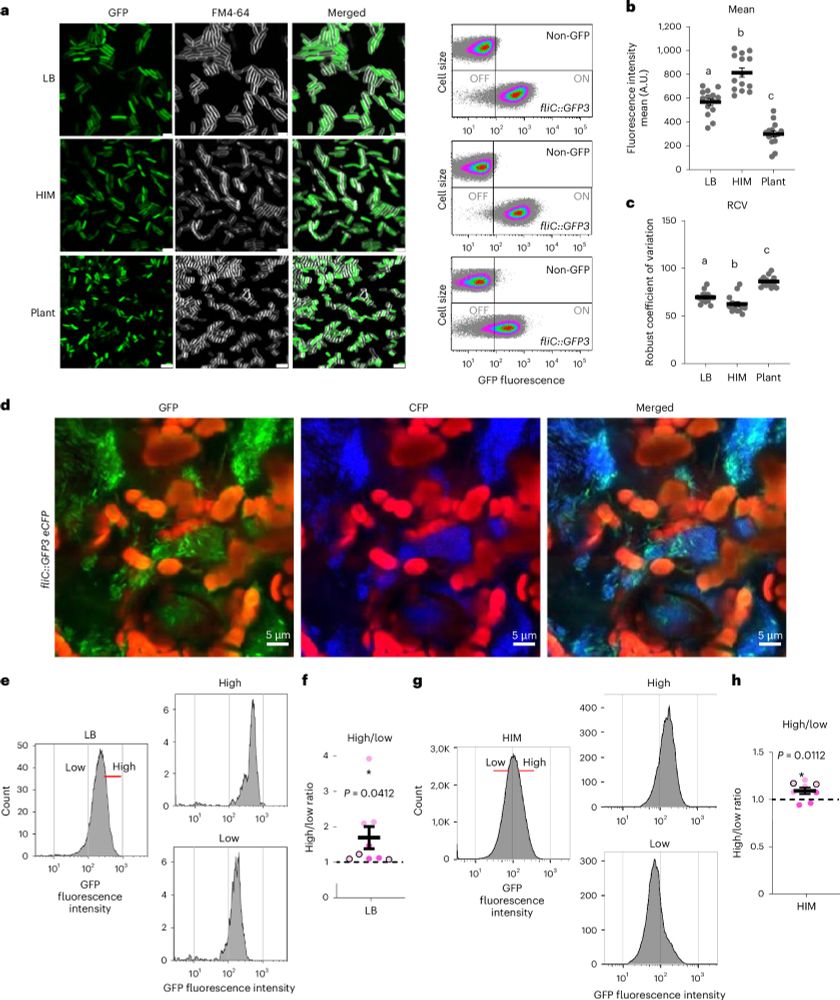
Pseudomonas syringae subpopulations cooperate by coordinating flagellar and type III secretion spatiotemporal dynamics to facilitate plant infection
Nature Microbiology - Single-cell gene expression analysis reveals phenotypic heterogeneity to enable bacterial specialization over the course of plant colonization.
rdcu.be
How Bacteria Outsmart Plants—Then Flee the Scene!
#MicroSky #PlantScience #Pseudomonas
Our new research in Nature Microbiology uncovers the sophisticated teamwork of Pseudomonas syringae, a notorious plant pathogen.
🔗 rdcu.be/egczU
#MicroSky #PlantScience #Pseudomonas
Our new research in Nature Microbiology uncovers the sophisticated teamwork of Pseudomonas syringae, a notorious plant pathogen.
🔗 rdcu.be/egczU
Reposted by Beuzón & Ruiz-Albert Lab

We are a Molecular Microbiology laboratory at the Andalusian Center of Developmental Biology (CABD) in Sevilla, Spain. Our main interests are gene regulation and signal transduction in the lifestyle switch between planktonic and biofilm growth. Also see us at baclifestyle.es
December 20, 2025 at 6:52 PM
We are a Molecular Microbiology laboratory at the Andalusian Center of Developmental Biology (CABD) in Sevilla, Spain. Our main interests are gene regulation and signal transduction in the lifestyle switch between planktonic and biofilm growth. Also see us at baclifestyle.es
Reposted by Beuzón & Ruiz-Albert Lab

🗣️ Today, Rosa Lozano-Durán from the Center for Molecular Plant Biology (ZMBP), @unituebingen.bsky.social (Germany) came to visit us in Málaga to share her research with a great talk entitled “The Cell Snatchers -- viral strategies to hijack a plant” as part of our #IHSMLaMayoraSeminars


December 19, 2025 at 9:52 AM
🗣️ Today, Rosa Lozano-Durán from the Center for Molecular Plant Biology (ZMBP), @unituebingen.bsky.social (Germany) came to visit us in Málaga to share her research with a great talk entitled “The Cell Snatchers -- viral strategies to hijack a plant” as part of our #IHSMLaMayoraSeminars
Reposted by Beuzón & Ruiz-Albert Lab

Born #OnThisDay in 1922, Esther Lederberg was the first to isolate the lambda phage in 1951. She characterised the lysogenic phase, whereby the phage are able to integrate into the bacterial genome, staying dormant. This discovery made them a model tool of study, leading to many more breakthroughs.

December 18, 2025 at 10:21 AM
Born #OnThisDay in 1922, Esther Lederberg was the first to isolate the lambda phage in 1951. She characterised the lysogenic phase, whereby the phage are able to integrate into the bacterial genome, staying dormant. This discovery made them a model tool of study, leading to many more breakthroughs.
Reposted by Beuzón & Ruiz-Albert Lab

MAY I REMIND ALL:

December 17, 2025 at 11:14 PM
MAY I REMIND ALL:
Reposted by Beuzón & Ruiz-Albert Lab
📋 Join us on Friday 19th for a fascinating talk by Rosa Lozano-Durán from Center for Molecular Plant Biology (ZMBP), University of Tübingen (Germany) @unituebingen.bsky.social as part of the #IHSMLaMayoraSeminars series
Don't miss it!
🕑 9:30 AM
📍 IHSM La Mayora Auditorium
More information here ⬇️
Don't miss it!
🕑 9:30 AM
📍 IHSM La Mayora Auditorium
More information here ⬇️

December 16, 2025 at 1:33 PM
📋 Join us on Friday 19th for a fascinating talk by Rosa Lozano-Durán from Center for Molecular Plant Biology (ZMBP), University of Tübingen (Germany) @unituebingen.bsky.social as part of the #IHSMLaMayoraSeminars series
Don't miss it!
🕑 9:30 AM
📍 IHSM La Mayora Auditorium
More information here ⬇️
Don't miss it!
🕑 9:30 AM
📍 IHSM La Mayora Auditorium
More information here ⬇️
Reposted by Beuzón & Ruiz-Albert Lab
IN BRIEF: Let’s keep in touch: How membrane contact sites drive immune responses (Sonhita Chakraborty) doi.org/10.1093/plce... #PlantScience @aspbofficial

Let's keep in touch: How membrane contact sites drive immune responses
Inside every cell, a pulsating network of molecular messengers orchestrates life's most critical conversations. While vesicular trafficking facilitates lon
doi.org
December 9, 2025 at 5:53 PM
IN BRIEF: Let’s keep in touch: How membrane contact sites drive immune responses (Sonhita Chakraborty) doi.org/10.1093/plce... #PlantScience @aspbofficial
Reposted by Beuzón & Ruiz-Albert Lab

Feeling festive?
Why not deck the halls with @cvrinfo.bsky.social's papercraft #VirusSnowflakes and celebrate the science of viruses and the fight against viral diseases.
Download for free: cvr-engagement.co.uk/virus-snowfl...
#scicomm #sciart #decorations
Why not deck the halls with @cvrinfo.bsky.social's papercraft #VirusSnowflakes and celebrate the science of viruses and the fight against viral diseases.
Download for free: cvr-engagement.co.uk/virus-snowfl...
#scicomm #sciart #decorations

December 1, 2025 at 9:51 AM
Feeling festive?
Why not deck the halls with @cvrinfo.bsky.social's papercraft #VirusSnowflakes and celebrate the science of viruses and the fight against viral diseases.
Download for free: cvr-engagement.co.uk/virus-snowfl...
#scicomm #sciart #decorations
Why not deck the halls with @cvrinfo.bsky.social's papercraft #VirusSnowflakes and celebrate the science of viruses and the fight against viral diseases.
Download for free: cvr-engagement.co.uk/virus-snowfl...
#scicomm #sciart #decorations
Reposted by Beuzón & Ruiz-Albert Lab
I just published: ERC-Plus: jackpot science or missed chance to fix academia?
My reflections on ERC-Plus, Europe’s newest ultra-competitive research grant and what it tells us about the academic culture we’re building.
medium.com/p/erc-plus-j...
My reflections on ERC-Plus, Europe’s newest ultra-competitive research grant and what it tells us about the academic culture we’re building.
medium.com/p/erc-plus-j...

ERC-Plus: jackpot science or missed chance to fix academia?
My reflections on ERC-Plus, Europe’s newest ultra-competitive research grant and what it tells us about the academic culture we’re…
medium.com
December 3, 2025 at 11:42 AM
I just published: ERC-Plus: jackpot science or missed chance to fix academia?
My reflections on ERC-Plus, Europe’s newest ultra-competitive research grant and what it tells us about the academic culture we’re building.
medium.com/p/erc-plus-j...
My reflections on ERC-Plus, Europe’s newest ultra-competitive research grant and what it tells us about the academic culture we’re building.
medium.com/p/erc-plus-j...
Reposted by Beuzón & Ruiz-Albert Lab
An unexpected mechanism for population heterogeneity in the gut microbiome:
www.cell.com/cell-host-mi...
www.cell.com/cell-host-mi...

A commensal bacterium secretes effector proteins to establish population heterogeneity in the gut
Zagieboylo and colleagues demonstrate that the human commensal Bacteroides thetaiotaomicron
secretes two self-targeting proteins that induce heterogeneity within its own population.
Differential expre...
www.cell.com
December 3, 2025 at 3:39 AM
An unexpected mechanism for population heterogeneity in the gut microbiome:
www.cell.com/cell-host-mi...
www.cell.com/cell-host-mi...
Reposted by Beuzón & Ruiz-Albert Lab
📋 Join us on Friday 5th for a fascinating seminar with the researcher Detlef Weigel (Max Planck Tübingen, Germany)
Don't miss it!
🕓 9:30 AM
📍 IHSM La Mayora Auditorium
More information here! ⬇️
Don't miss it!
🕓 9:30 AM
📍 IHSM La Mayora Auditorium
More information here! ⬇️

December 2, 2025 at 11:33 AM
📋 Join us on Friday 5th for a fascinating seminar with the researcher Detlef Weigel (Max Planck Tübingen, Germany)
Don't miss it!
🕓 9:30 AM
📍 IHSM La Mayora Auditorium
More information here! ⬇️
Don't miss it!
🕓 9:30 AM
📍 IHSM La Mayora Auditorium
More information here! ⬇️
Reposted by Beuzón & Ruiz-Albert Lab

Adding alt text to this because this is fucking amazing and everyone deserves to read it.

December 2, 2025 at 9:28 AM
Adding alt text to this because this is fucking amazing and everyone deserves to read it.
Reposted by Beuzón & Ruiz-Albert Lab


December 2, 2025 at 8:48 AM
Reposted by Beuzón & Ruiz-Albert Lab
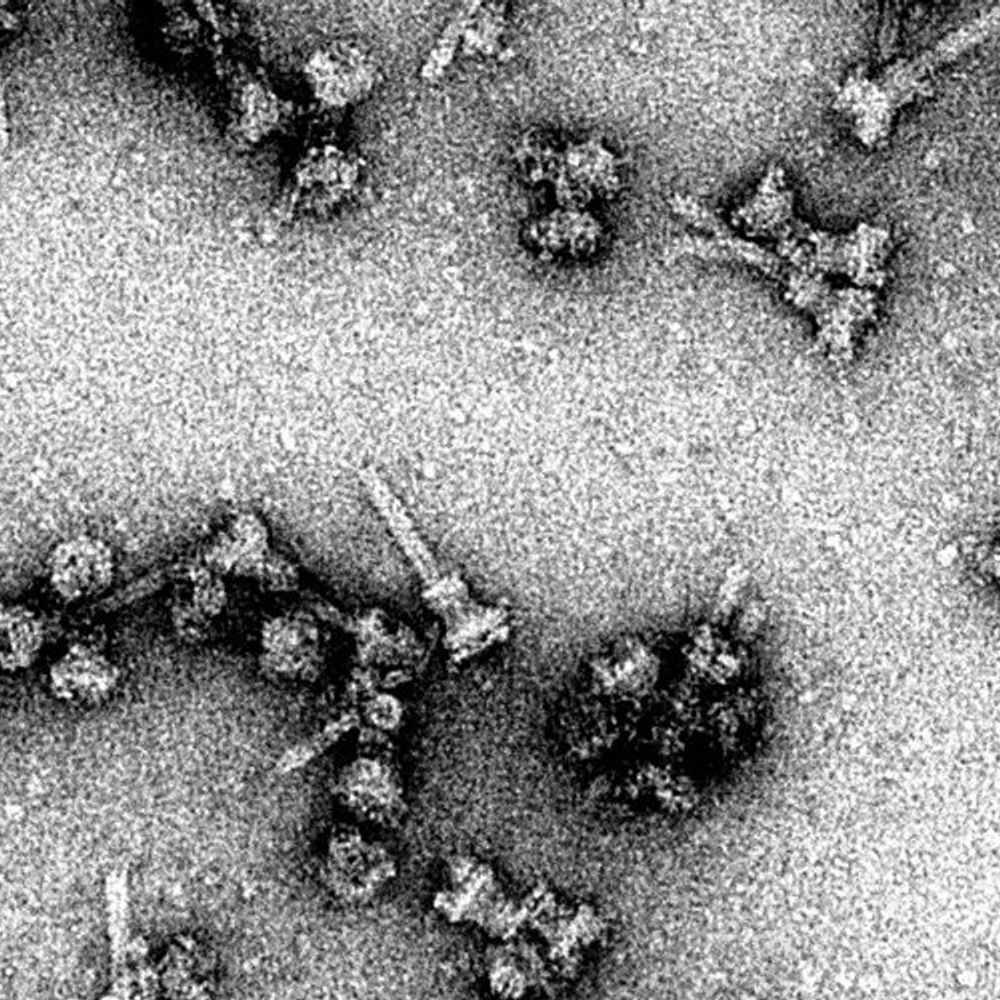
Bimodal expression of Type 3 Secretion System 2 enables cooperative virulence among intracellular Salmonella Typhimurium
dx.plos.org/10.1371/jour...
dx.plos.org/10.1371/jour...
dx.plos.org
December 2, 2025 at 2:50 PM
Bimodal expression of Type 3 Secretion System 2 enables cooperative virulence among intracellular Salmonella Typhimurium
dx.plos.org/10.1371/jour...
dx.plos.org/10.1371/jour...
Reposted by Beuzón & Ruiz-Albert Lab


Reposted by Beuzón & Ruiz-Albert Lab

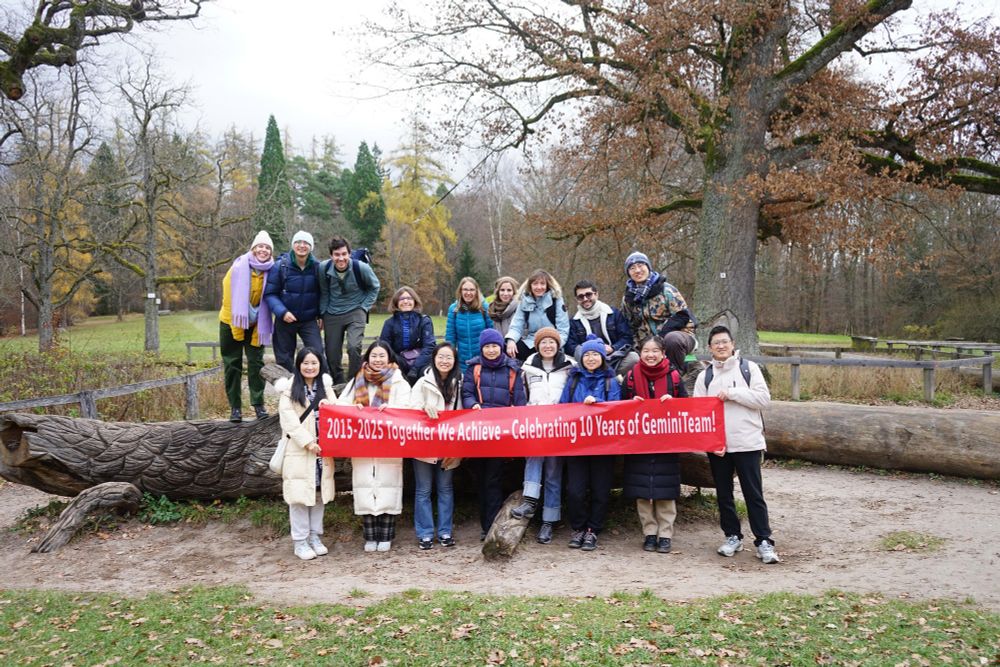
The GT goes to Stuttgart! A (brief) trip, nice scenery, good food, a touch of (mostly fictitious) science, and excellent company! What else could one wish for in a lab retreat? (Ah — it was also the 10th anniversary of the lab!) 🎂🌱🦠


November 27, 2025 at 6:37 PM
The GT goes to Stuttgart! A (brief) trip, nice scenery, good food, a touch of (mostly fictitious) science, and excellent company! What else could one wish for in a lab retreat? (Ah — it was also the 10th anniversary of the lab!) 🎂🌱🦠
Reposted by Beuzón & Ruiz-Albert Lab

What an incredible 10 years! Here’s to another 10 and beyond! 🥳🎉👏🏻CONGRATULATIONS, @geminiteamlab.bsky.social 💚🦠🌱 #plantvirus #postdoclife #virology #labretreat
The GT goes to Stuttgart! A (brief) trip, nice scenery, good food, a touch of (mostly fictitious) science, and excellent company! What else could one wish for in a lab retreat? (Ah — it was also the 10th anniversary of the lab!) 🎂🌱🦠
November 27, 2025 at 6:46 PM
What an incredible 10 years! Here’s to another 10 and beyond! 🥳🎉👏🏻CONGRATULATIONS, @geminiteamlab.bsky.social 💚🦠🌱 #plantvirus #postdoclife #virology #labretreat
Reposted by Beuzón & Ruiz-Albert Lab

How do plants fight disease? 🌱 #NASmember Jane Parker studies NLR proteins that help plants sense attackers and launch powerful immune defenses. She shares her latest findings on how these proteins signal plants to resist disease in a new @pnas.org QnAs: www.pnas.org/doi/10.1073/...

November 26, 2025 at 6:00 PM
How do plants fight disease? 🌱 #NASmember Jane Parker studies NLR proteins that help plants sense attackers and launch powerful immune defenses. She shares her latest findings on how these proteins signal plants to resist disease in a new @pnas.org QnAs: www.pnas.org/doi/10.1073/...
Reposted by Beuzón & Ruiz-Albert Lab

Excited to bring to your attention 2-year work by @sylvain-vicente.bsky.social and collaborators #BIOSP #MathNum @inrae-dpt-spe.bsky.social. A re-evaluation of STAMP modelling, introducing a much needed time-resolution. Works also on Animal-bacterial infection models. www.biorxiv.org/content/10.1...


November 23, 2025 at 5:34 PM
Excited to bring to your attention 2-year work by @sylvain-vicente.bsky.social and collaborators #BIOSP #MathNum @inrae-dpt-spe.bsky.social. A re-evaluation of STAMP modelling, introducing a much needed time-resolution. Works also on Animal-bacterial infection models. www.biorxiv.org/content/10.1...
Reposted by Beuzón & Ruiz-Albert Lab
Secreting bacteria undergo drastic changes.
We found that in Yersinia, T3SS activation triggers rapid, large-scale reorganisation of chromosomal and plasmid DNA. This links secretion to growth inhibition-revealing a new connection between virulence and bacterial cell biology.
doi.org/10.1016/j.ce...
We found that in Yersinia, T3SS activation triggers rapid, large-scale reorganisation of chromosomal and plasmid DNA. This links secretion to growth inhibition-revealing a new connection between virulence and bacterial cell biology.
doi.org/10.1016/j.ce...

November 24, 2025 at 10:56 PM
Secreting bacteria undergo drastic changes.
We found that in Yersinia, T3SS activation triggers rapid, large-scale reorganisation of chromosomal and plasmid DNA. This links secretion to growth inhibition-revealing a new connection between virulence and bacterial cell biology.
doi.org/10.1016/j.ce...
We found that in Yersinia, T3SS activation triggers rapid, large-scale reorganisation of chromosomal and plasmid DNA. This links secretion to growth inhibition-revealing a new connection between virulence and bacterial cell biology.
doi.org/10.1016/j.ce...
Reposted by Beuzón & Ruiz-Albert Lab
The scientific world would be a better place if reviews routinely reflected this degree of critical thinking and graphical excellence.
Thanks for putting this together @plaschkalab.bsky.social @rupertfaraway.bsky.social and @thezenklusen.bsky.social
Thanks for putting this together @plaschkalab.bsky.social @rupertfaraway.bsky.social and @thezenklusen.bsky.social

How does messenger RNA (mRNA) get out of the nucleus to become a protein? Eukaryotic mRNA is packaged, exported, and then translated in the cytoplasm. But how do these steps work? And what are open questions? Check out our new review for our take: www.annualreviews.org/content/jour... (1/3)

November 24, 2025 at 9:54 AM
The scientific world would be a better place if reviews routinely reflected this degree of critical thinking and graphical excellence.
Thanks for putting this together @plaschkalab.bsky.social @rupertfaraway.bsky.social and @thezenklusen.bsky.social
Thanks for putting this together @plaschkalab.bsky.social @rupertfaraway.bsky.social and @thezenklusen.bsky.social
Reposted by Beuzón & Ruiz-Albert Lab

Apply now to attend the next EMBO Bacterial Networks meeting #EMBOBacNet
🗓️13-18 September 2026
📍Sant Feliu de Guixols, Spain
📝Program and registration info: meetings.embo.org/event/26-bac...
👩🔬Organised with co-chair @s-lab.bsky.social and ECR @coralietesseur.bsky.social
#MicroSky
🗓️13-18 September 2026
📍Sant Feliu de Guixols, Spain
📝Program and registration info: meetings.embo.org/event/26-bac...
👩🔬Organised with co-chair @s-lab.bsky.social and ECR @coralietesseur.bsky.social
#MicroSky

November 20, 2025 at 10:16 AM
Apply now to attend the next EMBO Bacterial Networks meeting #EMBOBacNet
🗓️13-18 September 2026
📍Sant Feliu de Guixols, Spain
📝Program and registration info: meetings.embo.org/event/26-bac...
👩🔬Organised with co-chair @s-lab.bsky.social and ECR @coralietesseur.bsky.social
#MicroSky
🗓️13-18 September 2026
📍Sant Feliu de Guixols, Spain
📝Program and registration info: meetings.embo.org/event/26-bac...
👩🔬Organised with co-chair @s-lab.bsky.social and ECR @coralietesseur.bsky.social
#MicroSky
Reposted by Beuzón & Ruiz-Albert Lab
Flagellar location determines the stability of bacterial surface entrapment | PNAS www.pnas.org/doi/10.1073/...
PNAS
Proceedings of the National Academy of Sciences (PNAS), a peer reviewed journal of the National Academy of Sciences (NAS) - an authoritative source of high-impact, original research that broadly spans...
www.pnas.org
November 23, 2025 at 6:19 PM
Flagellar location determines the stability of bacterial surface entrapment | PNAS www.pnas.org/doi/10.1073/...
Reposted by Beuzón & Ruiz-Albert Lab
And now we have Arabidopsis plants with 8 chromosomes instead of 10 and no obvious phenotypic differences, this week in @science.org
#PlantScience
Paper here: www.science.org/doi/10.1126/...
Perspective here:
www.science.org/doi/10.1126/...
#PlantScience
Paper here: www.science.org/doi/10.1126/...
Perspective here:
www.science.org/doi/10.1126/...

CRISPR-Cas–mediated heritable chromosome fusions in Arabidopsis
The genome of Arabidopsis thaliana consists of 10 chromosomes. By inducing CRISPR-Cas–mediated breaks at subcentromeric and subtelomeric sequences, we fused entire chromosome arms, obtaining two eight...
www.science.org
November 21, 2025 at 10:20 AM
And now we have Arabidopsis plants with 8 chromosomes instead of 10 and no obvious phenotypic differences, this week in @science.org
#PlantScience
Paper here: www.science.org/doi/10.1126/...
Perspective here:
www.science.org/doi/10.1126/...
#PlantScience
Paper here: www.science.org/doi/10.1126/...
Perspective here:
www.science.org/doi/10.1126/...
Reposted by Beuzón & Ruiz-Albert Lab