



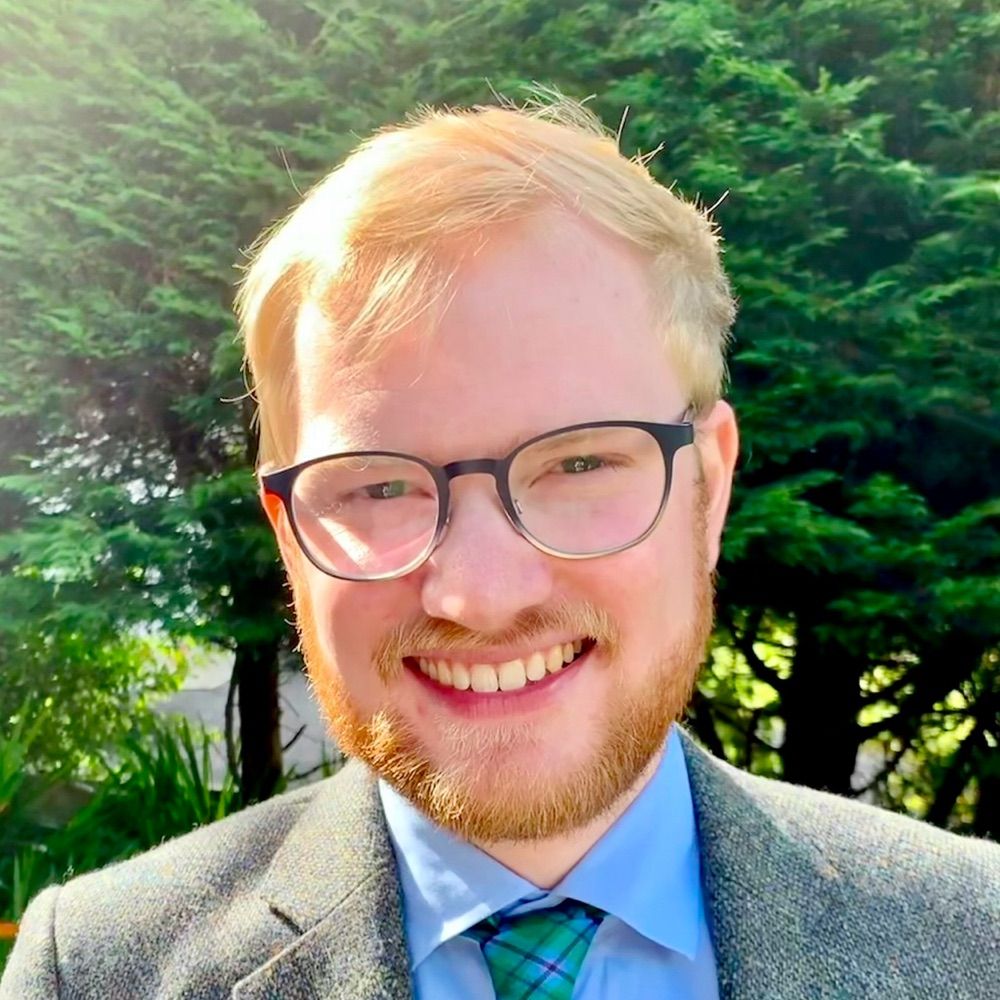
Tom Wright
@tomwrightuom.bsky.social
👨⚕️ UK Clinical Genetics SpR/Resident (OOPR)
🧬 PhD Researcher @fbmh-uom.bsky.social #RareConditions #Genomics #MentalHealth #DataScience @mft-imrare.bsky.social
💗 Proud Husband/Dad/Son/Sib + 🎭🎨🎾⚽️
🧬 PhD Researcher @fbmh-uom.bsky.social #RareConditions #Genomics #MentalHealth #DataScience @mft-imrare.bsky.social
💗 Proud Husband/Dad/Son/Sib + 🎭🎨🎾⚽️
Pinned
Tom Wright
@tomwrightuom.bsky.social
· Dec 24

1/ #SantaScience 🎅🧵
🐥1st Bluesky Rodeo
🔄💬X cross-post
A year ago today @theguardian.com featured our festive research
🔎We discovered Santa has a facial #phenotype distinct from elderly bearded men
💗Evidence #Santa is real
📰 www.theguardian.com/lifeandstyle...
📝 pubmed.ncbi.nlm.nih.gov/36548933
🐥1st Bluesky Rodeo
🔄💬X cross-post
A year ago today @theguardian.com featured our festive research
🔎We discovered Santa has a facial #phenotype distinct from elderly bearded men
💗Evidence #Santa is real
📰 www.theguardian.com/lifeandstyle...
📝 pubmed.ncbi.nlm.nih.gov/36548933
Reposted by Tom Wright
1/ #SantaScience 🎅🧵
🐥1st Bluesky Rodeo
🔄💬X cross-post
A year ago today @theguardian.com featured our festive research
🔎We discovered Santa has a facial #phenotype distinct from elderly bearded men
💗Evidence #Santa is real
📰 www.theguardian.com/lifeandstyle...
📝 pubmed.ncbi.nlm.nih.gov/36548933
🐥1st Bluesky Rodeo
🔄💬X cross-post
A year ago today @theguardian.com featured our festive research
🔎We discovered Santa has a facial #phenotype distinct from elderly bearded men
💗Evidence #Santa is real
📰 www.theguardian.com/lifeandstyle...
📝 pubmed.ncbi.nlm.nih.gov/36548933
December 24, 2024 at 4:15 PM
1/ #SantaScience 🎅🧵
🐥1st Bluesky Rodeo
🔄💬X cross-post
A year ago today @theguardian.com featured our festive research
🔎We discovered Santa has a facial #phenotype distinct from elderly bearded men
💗Evidence #Santa is real
📰 www.theguardian.com/lifeandstyle...
📝 pubmed.ncbi.nlm.nih.gov/36548933
🐥1st Bluesky Rodeo
🔄💬X cross-post
A year ago today @theguardian.com featured our festive research
🔎We discovered Santa has a facial #phenotype distinct from elderly bearded men
💗Evidence #Santa is real
📰 www.theguardian.com/lifeandstyle...
📝 pubmed.ncbi.nlm.nih.gov/36548933
Reposted by Tom Wright
Our new study defines a distinct #neurogenetic condition arising from recurrent structural variants at 16p13.3 palindrome.
Individuals show progressive ataxia, cognitive decline, and a characteristic MRI pattern with caudate & cerebellar atrophy.
#Genomics #RareDisease 🧵1/3
Individuals show progressive ataxia, cognitive decline, and a characteristic MRI pattern with caudate & cerebellar atrophy.
#Genomics #RareDisease 🧵1/3

December 8, 2025 at 8:42 AM
Our new study defines a distinct #neurogenetic condition arising from recurrent structural variants at 16p13.3 palindrome.
Individuals show progressive ataxia, cognitive decline, and a characteristic MRI pattern with caudate & cerebellar atrophy.
#Genomics #RareDisease 🧵1/3
Individuals show progressive ataxia, cognitive decline, and a characteristic MRI pattern with caudate & cerebellar atrophy.
#Genomics #RareDisease 🧵1/3
Reposted by Tom Wright
Very grateful to colleagues including @rdexeter.bsky.social, @nihrexeterbrc.bsky.social, @stefanbarakat.bsky.social, the NHS Rare & Inherited Disease Genomic Network of Excellence, and to the patients and families who made this work possible. 🙏
Paper: pubmed.ncbi.nlm.nih.gov/41349538/
Paper: pubmed.ncbi.nlm.nih.gov/41349538/

Palindrome-mediated 16p13.3 triplications cause a recognizable neurodegenerative disorder with ataxia - PubMed
Complex neurodegenerative conditions have occasionally been associated with copy-number gains. Using microarray and genome sequencing on DNA samples from eleven individuals from nine unrelated families, we show that copy-number gains at 16p13.3 cause a severe, recognizable disorder characterized by …
pubmed.ncbi.nlm.nih.gov
December 8, 2025 at 8:42 AM
Very grateful to colleagues including @rdexeter.bsky.social, @nihrexeterbrc.bsky.social, @stefanbarakat.bsky.social, the NHS Rare & Inherited Disease Genomic Network of Excellence, and to the patients and families who made this work possible. 🙏
Paper: pubmed.ncbi.nlm.nih.gov/41349538/
Paper: pubmed.ncbi.nlm.nih.gov/41349538/
Reposted by Tom Wright

another great international collaboration with our friends in UK and Australia to which we could contribute, describing a very unique disease mechanism for a novel neurodegenerative disorder #genetics #raredisease @ajhgnews.bsky.social @jamesfasham.bsky.social @rdexeter.bsky.social

📣New from @rdexeter.bsky.social
📄Palindrome-mediated 16p13.3 triplications cause a recognizable neurodegenerative disorder with ataxia
📄Palindrome-mediated 16p13.3 triplications cause a recognizable neurodegenerative disorder with ataxia

Palindrome-mediated 16p13.3 triplications cause a recognizable neurodegenerative disorder with ataxia
Fasham and colleagues report a palindrome-mediated genomic disorder causing a recognizable,
severe phenotype marked by early-onset progressive ataxia, cognitive decline, and
cerebellar atrophy. Microa...
www.cell.com
December 6, 2025 at 11:23 AM
another great international collaboration with our friends in UK and Australia to which we could contribute, describing a very unique disease mechanism for a novel neurodegenerative disorder #genetics #raredisease @ajhgnews.bsky.social @jamesfasham.bsky.social @rdexeter.bsky.social
Reposted by Tom Wright
📊Large-scale data sharing is indispensable for human genetics & genomics. ASHG calls for a broad data-sharing ethos and responsible stewardship that protects participants while enabling collaboration.
#HumanGenetics #OpenScience
www.cell.com/ajhg/fulltex...
#HumanGenetics #OpenScience
www.cell.com/ajhg/fulltex...

Collaborative science in genomics: The value of data sharing and thoughtful stewardship
Large-scale data sharing is indispensable for advancing human genetics and genomics (HGG) research and medicine. The willingness of study participants and researchers to share data has been the…
www.cell.com
December 5, 2025 at 10:52 AM
📊Large-scale data sharing is indispensable for human genetics & genomics. ASHG calls for a broad data-sharing ethos and responsible stewardship that protects participants while enabling collaboration.
#HumanGenetics #OpenScience
www.cell.com/ajhg/fulltex...
#HumanGenetics #OpenScience
www.cell.com/ajhg/fulltex...
Reposted by Tom Wright
Yesterday, our Chair and Secretary presented the latest ESHG-Young activities at the ERN-ITHACA Board Meeting 🧬
Great chance to show how we connect early-career human geneticists across Europe 🌍 and to recruit please for our next matchmaking at ESHG Gothenburg 🤝
#ERNITHACA #ESHGYoung #ESHG
Great chance to show how we connect early-career human geneticists across Europe 🌍 and to recruit please for our next matchmaking at ESHG Gothenburg 🤝
#ERNITHACA #ESHGYoung #ESHG


December 5, 2025 at 11:42 AM
Yesterday, our Chair and Secretary presented the latest ESHG-Young activities at the ERN-ITHACA Board Meeting 🧬
Great chance to show how we connect early-career human geneticists across Europe 🌍 and to recruit please for our next matchmaking at ESHG Gothenburg 🤝
#ERNITHACA #ESHGYoung #ESHG
Great chance to show how we connect early-career human geneticists across Europe 🌍 and to recruit please for our next matchmaking at ESHG Gothenburg 🤝
#ERNITHACA #ESHGYoung #ESHG
Reposted by Tom Wright
What do we mean by "actionability" in genomic medicine? An important question as we think more about using genomes for screening as well as diagnosis... read our new paper @gimjournal.bsky.social, authors.elsevier.com/a/1mBYc3vlFV...

December 1, 2025 at 8:43 AM
What do we mean by "actionability" in genomic medicine? An important question as we think more about using genomes for screening as well as diagnosis... read our new paper @gimjournal.bsky.social, authors.elsevier.com/a/1mBYc3vlFV...
Reposted by Tom Wright
More international collaborative work:
Single nucleotide variants in UNC13C associated with neurodevelopmental disorders affect ethanol sensitivity in Drosophila #raredisease #morbidgene #genetics #diseasemodelling www.sciencedirect.com/science/arti...
Single nucleotide variants in UNC13C associated with neurodevelopmental disorders affect ethanol sensitivity in Drosophila #raredisease #morbidgene #genetics #diseasemodelling www.sciencedirect.com/science/arti...

November 28, 2025 at 5:14 PM
More international collaborative work:
Single nucleotide variants in UNC13C associated with neurodevelopmental disorders affect ethanol sensitivity in Drosophila #raredisease #morbidgene #genetics #diseasemodelling www.sciencedirect.com/science/arti...
Single nucleotide variants in UNC13C associated with neurodevelopmental disorders affect ethanol sensitivity in Drosophila #raredisease #morbidgene #genetics #diseasemodelling www.sciencedirect.com/science/arti...
Reposted by Tom Wright

Our Ensembl 2026 paper is out!
Learn about 1,900+ new genomes, expanded pangenome support, new regulation interfaces, and what’s coming in our 2026 releases.
doi.org/10.1093/nar/gkaf1239
Learn about 1,900+ new genomes, expanded pangenome support, new regulation interfaces, and what’s coming in our 2026 releases.
doi.org/10.1093/nar/gkaf1239

Ensembl 2026
Abstract. The Ensembl project (https://www.ensembl.org) is a public and open resource providing access to genomes, annotations, high-quality tools, and met
academic.oup.com
November 28, 2025 at 4:30 PM
Our Ensembl 2026 paper is out!
Learn about 1,900+ new genomes, expanded pangenome support, new regulation interfaces, and what’s coming in our 2026 releases.
doi.org/10.1093/nar/gkaf1239
Learn about 1,900+ new genomes, expanded pangenome support, new regulation interfaces, and what’s coming in our 2026 releases.
doi.org/10.1093/nar/gkaf1239
Reposted by Tom Wright

I'm delighted to say we have won the Queen Elizabeth Prize for Education with our work on OpenSAFELY, inventing new methods that let researchers analyse NHS GP data while protecting everyone's privacy, and with complete transparency, in a hugely productive platform!
www.ox.ac.uk/news/2025-11...
www.ox.ac.uk/news/2025-11...

OpenSAFELY team awarded Queen Elizabeth Prize for Higher and Further
Oxford’s OpenSAFELY team wins the prestigious Queen Elizabeth Prize for revolutionising secure NHS data research, protecting patient privacy while unlocking life-saving health insights.
www.ox.ac.uk
November 26, 2025 at 5:53 PM
I'm delighted to say we have won the Queen Elizabeth Prize for Education with our work on OpenSAFELY, inventing new methods that let researchers analyse NHS GP data while protecting everyone's privacy, and with complete transparency, in a hugely productive platform!
www.ox.ac.uk/news/2025-11...
www.ox.ac.uk/news/2025-11...
🧠🧲 BRAIN-MAGNET: A functional genomics atlas for interpretation of non-coding variants
💡 Fantastic initiative from the Barakat Lab
👀 Great to have a sneak peak at #MDC25
🧬 Predicts enhancer activity from DNA sequence
🕵️♂️ Prioritises functional non-coding variants
👇🧵 Check it out
💡 Fantastic initiative from the Barakat Lab
👀 Great to have a sneak peak at #MDC25
🧬 Predicts enhancer activity from DNA sequence
🕵️♂️ Prioritises functional non-coding variants
👇🧵 Check it out
November 20, 2025 at 9:58 AM
🧠🧲 BRAIN-MAGNET: A functional genomics atlas for interpretation of non-coding variants
💡 Fantastic initiative from the Barakat Lab
👀 Great to have a sneak peak at #MDC25
🧬 Predicts enhancer activity from DNA sequence
🕵️♂️ Prioritises functional non-coding variants
👇🧵 Check it out
💡 Fantastic initiative from the Barakat Lab
👀 Great to have a sneak peak at #MDC25
🧬 Predicts enhancer activity from DNA sequence
🕵️♂️ Prioritises functional non-coding variants
👇🧵 Check it out
Reposted by Tom Wright
Very pleased to share our latest paper published in Cell:
BRAIN-MAGNET: A functional genomics atlas for interpretation of non-coding variants: Cell www.cell.com/cell/fulltex...
@cellpress.bsky.social, @cp-cell.bsky.social, @ruizhideng.bsky.social #enhancer
here is a thread about our findings:
BRAIN-MAGNET: A functional genomics atlas for interpretation of non-coding variants: Cell www.cell.com/cell/fulltex...
@cellpress.bsky.social, @cp-cell.bsky.social, @ruizhideng.bsky.social #enhancer
here is a thread about our findings:

BRAIN-MAGNET: A functional genomics atlas for interpretation of non-coding variants
BRAIN-MAGNET, a convolutional neural network trained on 148,198 functionally tested
non-coding regulatory elements, predicts enhancer activity directly from DNA sequence
and identifies nucleotides ess...
www.cell.com
November 20, 2025 at 9:38 AM
Very pleased to share our latest paper published in Cell:
BRAIN-MAGNET: A functional genomics atlas for interpretation of non-coding variants: Cell www.cell.com/cell/fulltex...
@cellpress.bsky.social, @cp-cell.bsky.social, @ruizhideng.bsky.social #enhancer
here is a thread about our findings:
BRAIN-MAGNET: A functional genomics atlas for interpretation of non-coding variants: Cell www.cell.com/cell/fulltex...
@cellpress.bsky.social, @cp-cell.bsky.social, @ruizhideng.bsky.social #enhancer
here is a thread about our findings:
Reposted by Tom Wright
So proud of the wonderful progress in the specialty and my colleagues in Manchester who contributed great science and organised this event
November 18, 2025 at 10:46 PM
So proud of the wonderful progress in the specialty and my colleagues in Manchester who contributed great science and organised this event
20th Manchester Dysmorphology and Developmental Disorders Conference opened with a warm welcome from @mft-imrare.bsky.social clinical director Prof Banka
Celebrating the history of the conference, we were treated to a glimpse of the original 1984 programme curated by @ddysmo.bsky.social 👑🧬
#MDC25
Celebrating the history of the conference, we were treated to a glimpse of the original 1984 programme curated by @ddysmo.bsky.social 👑🧬
#MDC25

November 16, 2025 at 3:20 PM
20th Manchester Dysmorphology and Developmental Disorders Conference opened with a warm welcome from @mft-imrare.bsky.social clinical director Prof Banka
Celebrating the history of the conference, we were treated to a glimpse of the original 1984 programme curated by @ddysmo.bsky.social 👑🧬
#MDC25
Celebrating the history of the conference, we were treated to a glimpse of the original 1984 programme curated by @ddysmo.bsky.social 👑🧬
#MDC25
Reposted by Tom Wright
We wrote the Strain on scientific publishing to highlight the problems of time & trust. With a fantastic group of co-authors, we present The Drain of Scientific Publishing:
a 🧵 1/n
Drain: arxiv.org/abs/2511.04820
Strain: direct.mit.edu/qss/article/...
Oligopoly: direct.mit.edu/qss/article/...
a 🧵 1/n
Drain: arxiv.org/abs/2511.04820
Strain: direct.mit.edu/qss/article/...
Oligopoly: direct.mit.edu/qss/article/...


November 11, 2025 at 11:52 AM
We wrote the Strain on scientific publishing to highlight the problems of time & trust. With a fantastic group of co-authors, we present The Drain of Scientific Publishing:
a 🧵 1/n
Drain: arxiv.org/abs/2511.04820
Strain: direct.mit.edu/qss/article/...
Oligopoly: direct.mit.edu/qss/article/...
a 🧵 1/n
Drain: arxiv.org/abs/2511.04820
Strain: direct.mit.edu/qss/article/...
Oligopoly: direct.mit.edu/qss/article/...
Reposted by Tom Wright
New pre-print on population penetrance - the first of a set exploring specific gene-disease pairs under consideration for genomic newborn screening. Spoiler alert: careful curation is essential, but penetrance is lower in population than clinical cohorts. www.medrxiv.org/content/10.1...

Reduced penetrance of COL1A1/2 pathogenic variants linked with osteogenesis imperfecta: analysis of a large population cohort
Osteogenesis imperfecta (OI) is under consideration for inclusion in several genomic newborn screening initiatives, but its penetrance in clinically-unselected populations is currently unknown. It is ...
www.medrxiv.org
October 24, 2025 at 12:45 PM
New pre-print on population penetrance - the first of a set exploring specific gene-disease pairs under consideration for genomic newborn screening. Spoiler alert: careful curation is essential, but penetrance is lower in population than clinical cohorts. www.medrxiv.org/content/10.1...
Reposted by Tom Wright


Reposted by Tom Wright

I am absolutely delighted to share our work describing a new *recessive* condition caused by variants in #RNU4-2. Yes, that #RNU4-2!
tinyurl.com/3j9r56s8
@rociorius.bsky.social @yuyangchen.bsky.social @gregfindlay.bsky.social @dgmacarthur.bsky.social @cassimons.bsky.social @nickywhiffin.bsky.social
tinyurl.com/3j9r56s8
@rociorius.bsky.social @yuyangchen.bsky.social @gregfindlay.bsky.social @dgmacarthur.bsky.social @cassimons.bsky.social @nickywhiffin.bsky.social

Biallelic variants in the non-coding RNA gene RNU4-2 cause a recessive neurodevelopmental syndrome with distinct white matter changes
Genetic variants in RNU4-2, which encodes U4, a key non-coding small nuclear RNA (snRNA) component of the major spliceosome, were recently shown to cause a prevalent neurodevelopmental disorder (NDD) ...
www.medrxiv.org
August 18, 2025 at 11:23 AM
I am absolutely delighted to share our work describing a new *recessive* condition caused by variants in #RNU4-2. Yes, that #RNU4-2!
tinyurl.com/3j9r56s8
@rociorius.bsky.social @yuyangchen.bsky.social @gregfindlay.bsky.social @dgmacarthur.bsky.social @cassimons.bsky.social @nickywhiffin.bsky.social
tinyurl.com/3j9r56s8
@rociorius.bsky.social @yuyangchen.bsky.social @gregfindlay.bsky.social @dgmacarthur.bsky.social @cassimons.bsky.social @nickywhiffin.bsky.social
Reposted by Tom Wright

Article summarising the the key themes identified at the ELSI Conference which look place earlier this year. Highlighting a range of different priorities and challenges of rare condition clinical trials.

A Day of Discussion: The ELSI Conference 2025
Authors: Emily Clarke, Tara Clancy, Amy Hunter, Faye Johnson, Simon Jones, Sinduja Manohar, Gracie Mellalieu, Yvette Mellalieu, Melissa McKie, Arti Patel, Peter Style, Shelley Wagon, Sarah Wynn Introd...
www.linkedin.com
July 31, 2025 at 1:09 PM
Article summarising the the key themes identified at the ELSI Conference which look place earlier this year. Highlighting a range of different priorities and challenges of rare condition clinical trials.
Reposted by Tom Wright

Our new study characterises ELFN1 deficiency as a novel autosomal recessive neurodevelopmental disorder marked by epilepsy, GDD/ID, & movement disorders. Biallelic ELFN1 variants disrupt synaptic protein trafficking to the cell surface—validated through functional assays and mouse/zebrafish models.
Neurogenetics alert! Biallelic loss of function variants in ELFN1 cause a neurodevelopmental disorder with DD/ID, seizures and movement disorder. bit.ly/4lLrZ46

July 26, 2025 at 10:11 PM
Our new study characterises ELFN1 deficiency as a novel autosomal recessive neurodevelopmental disorder marked by epilepsy, GDD/ID, & movement disorders. Biallelic ELFN1 variants disrupt synaptic protein trafficking to the cell surface—validated through functional assays and mouse/zebrafish models.
Reposted by Tom Wright
Super excited to share our new review paper - The role of untranslated region variants in Mendelian disease!
www.nature.com/articles/s41...
www.nature.com/articles/s41...
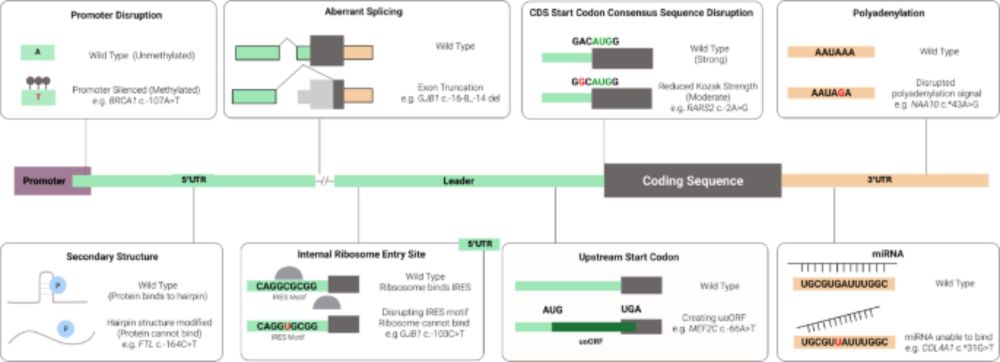
The role of untranslated region variants in Mendelian disease: a review - European Journal of Human Genetics
European Journal of Human Genetics - The role of untranslated region variants in Mendelian disease: a review
www.nature.com
July 4, 2025 at 8:08 AM
Super excited to share our new review paper - The role of untranslated region variants in Mendelian disease!
www.nature.com/articles/s41...
www.nature.com/articles/s41...
Reposted by Tom Wright

New research set to uncover lost ancient medical texts
A team of researchers at @manchester.ac.uk have secured a major €2.5 million grant from the @erc.europa.eu to uncover lost medical writings that could transform our understanding of ancient medicine. ⤵️
www.manchester.ac.uk/about/news/n...
A team of researchers at @manchester.ac.uk have secured a major €2.5 million grant from the @erc.europa.eu to uncover lost medical writings that could transform our understanding of ancient medicine. ⤵️
www.manchester.ac.uk/about/news/n...

New research set to uncover lost ancient medical texts
A team of researchers at the University of Manchester have secured a major €2.5 million (£2.1 million) grant from the European Research Council to uncover lost medical writings that could transform ou...
www.manchester.ac.uk
June 17, 2025 at 11:13 AM
New research set to uncover lost ancient medical texts
A team of researchers at @manchester.ac.uk have secured a major €2.5 million grant from the @erc.europa.eu to uncover lost medical writings that could transform our understanding of ancient medicine. ⤵️
www.manchester.ac.uk/about/news/n...
A team of researchers at @manchester.ac.uk have secured a major €2.5 million grant from the @erc.europa.eu to uncover lost medical writings that could transform our understanding of ancient medicine. ⤵️
www.manchester.ac.uk/about/news/n...
Reposted by Tom Wright
"Have you thought about applying the @opensafely model, for data privacy and efficiency, to non-health data?"
YES WE HAVE
Behold the new... OpenSAFELY-Schools!!
schools.opensafely.org
YES WE HAVE
Behold the new... OpenSAFELY-Schools!!
schools.opensafely.org
OpenSAFELY Schools
A collaboration between the National Institute of Teaching and the Bennett Institute for Applied Data Science
schools.opensafely.org
June 17, 2025 at 11:19 AM
"Have you thought about applying the @opensafely model, for data privacy and efficiency, to non-health data?"
YES WE HAVE
Behold the new... OpenSAFELY-Schools!!
schools.opensafely.org
YES WE HAVE
Behold the new... OpenSAFELY-Schools!!
schools.opensafely.org
Reposted by Tom Wright
New research investigates de novo variants in R-loop forming regions across large-scale genomic datasets identifying RNU2-2 and RNU5B-1 as novel #NDDs genes. Together with RNU4-2, these explain a high number of previously unsolved NDDs cases.
#snRNAs
www.nature.com/articles/s41...
#snRNAs
www.nature.com/articles/s41...
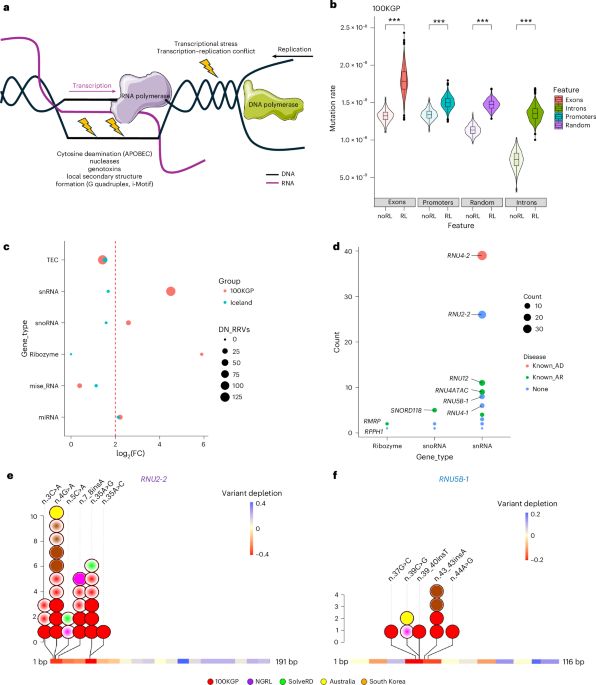
Analysis of R-loop forming regions identifies RNU2-2 and RNU5B-1 as neurodevelopmental disorder genes - Nature Genetics
Genomic analyses focused on regions that form R-loops identify rare mutations in RNU2-2 and RNU5B-1 in individuals with neurodevelopmental disorders.
www.nature.com
June 2, 2025 at 11:46 AM
New research investigates de novo variants in R-loop forming regions across large-scale genomic datasets identifying RNU2-2 and RNU5B-1 as novel #NDDs genes. Together with RNU4-2, these explain a high number of previously unsolved NDDs cases.
#snRNAs
www.nature.com/articles/s41...
#snRNAs
www.nature.com/articles/s41...
Reposted by Tom Wright
Great talk by Jamie Ellingford about UPD as a cause of rare conditions in the 100k Genomes at the ACGS meeting in Birmingham

June 12, 2025 at 9:38 AM
Great talk by Jamie Ellingford about UPD as a cause of rare conditions in the 100k Genomes at the ACGS meeting in Birmingham