Tamanash Bhattacharya
@tamanash.bsky.social
Helen Hay Whitney Foundation fellow in Harmit Malik lab at Fred Hutch | I study evolutionary adaptation | http://tamanashbhattacharya.wordpress.com
Pinned

The Sindbis virus nsP3 opal codon protects viral RNA and fitness by maintaining replication spherule integrity
Most alphaviruses encode an in-frame opal stop codon between nsP3 and nsP4 in their nsP ORF. This opal stop codon mediates a temperature-dependent balance between viral polymerase production and prote...
www.biorxiv.org
New preprint alert! 🦟 <-> 🦠 <-> 🧑
I am thrilled to share our latest study on alphavirus host adaptation. More specifically, on how a single codon helps blunt alphavirus-induced host innate immune responses in mosquito and human cells. Continue reading for more!
www.biorxiv.org/content/10.1...
I am thrilled to share our latest study on alphavirus host adaptation. More specifically, on how a single codon helps blunt alphavirus-induced host innate immune responses in mosquito and human cells. Continue reading for more!
www.biorxiv.org/content/10.1...

Reposted by Tamanash Bhattacharya

Excited to share our work on #AncientRNA from alcohol-preserved lungs, recovering the oldest human RNA virus genome (an 18th-century rhinovirus). Our study shows that viral RNA remnants persist in centuries-old tissue, opening new ways to study virus evolution and historical disease #Paleovirology🫁🦠
www.biorxiv.org
January 31, 2026 at 12:57 AM
Excited to share our work on #AncientRNA from alcohol-preserved lungs, recovering the oldest human RNA virus genome (an 18th-century rhinovirus). Our study shows that viral RNA remnants persist in centuries-old tissue, opening new ways to study virus evolution and historical disease #Paleovirology🫁🦠
Reposted by Tamanash Bhattacharya

I am super happy to share this paper in its final form. We used FIB milling to "dig in to" cell lines and mouse brains infected with tick-borne flaviviruses, followed by cryo-ET to study the virus replication. It's open access, so have a look!
#virology #teamtomo
www.nature.com/articles/s41...
#virology #teamtomo
www.nature.com/articles/s41...

Cryo-electron tomography reveals coupled flavivirus replication, budding and maturation - Nature Communications
In this study, Dahmane et al use a method called cryo-electron tomography to uncover new details of how tick-borne flaviviruses transform cells into virus factories.
www.nature.com
January 23, 2026 at 4:47 PM
I am super happy to share this paper in its final form. We used FIB milling to "dig in to" cell lines and mouse brains infected with tick-borne flaviviruses, followed by cryo-ET to study the virus replication. It's open access, so have a look!
#virology #teamtomo
www.nature.com/articles/s41...
#virology #teamtomo
www.nature.com/articles/s41...
Go Hoosiers!

a man in a suit and tie with a microphone that says it 's pretty simple
ALT: a man in a suit and tie with a microphone that says it 's pretty simple
media.tenor.com
January 20, 2026 at 4:20 AM
Go Hoosiers!
Reposted by Tamanash Bhattacharya
Sequences of 5′ untranslated regions in viral RNAs drive codon-usage-independent translation by blocking mRNA circularization, enabling viruses to evade the host’s codon-usage control of translation @nature.com
www.nature.com/articles/d41... on
www.nature.com/articles/s41...
www.nature.com/articles/d41... on
www.nature.com/articles/s41...

January 9, 2026 at 2:33 AM
Sequences of 5′ untranslated regions in viral RNAs drive codon-usage-independent translation by blocking mRNA circularization, enabling viruses to evade the host’s codon-usage control of translation @nature.com
www.nature.com/articles/d41... on
www.nature.com/articles/s41...
www.nature.com/articles/d41... on
www.nature.com/articles/s41...
Reposted by Tamanash Bhattacharya

Thrilled to share the first major preprint from the lab. Viruses are classically viewed as targets of host sensing. Do viruses also sense and respond to the host? We propose viruses may act as “biosensors” of the host signaling state. A thread👇🏾 www.biorxiv.org/content/10.1...

Global Landscape of Human Kinase Motifs in Viral Proteomes
Viruses are classically viewed as targets of host sensing, yet whether they also sense and respond to host cues remains largely unexplored. We propose that host-driven post-translational modification ...
www.biorxiv.org
December 31, 2025 at 4:27 PM
Thrilled to share the first major preprint from the lab. Viruses are classically viewed as targets of host sensing. Do viruses also sense and respond to the host? We propose viruses may act as “biosensors” of the host signaling state. A thread👇🏾 www.biorxiv.org/content/10.1...
Reposted by Tamanash Bhattacharya

My first lead author paper is out with Ben Kerr and @alisonfeder.bsky.social! We found that making an antiviral too strong can sometimes make resistance easier to evolve. This has implications for how we design drugs, choose doses, and think about viral evolution in the face of treatment. (1/n)

Intracellular interactions shape antiviral resistance outcomes in poliovirus via eco-evolutionary feedback - Nature Ecology & Evolution
A model of intrahost poliovirus replication shows that, after several rounds of replication, pocapavir, a poliovirus capsid inhibitor, collapses viral density, preventing intracellular interactions th...
www.nature.com
December 8, 2025 at 5:15 PM
My first lead author paper is out with Ben Kerr and @alisonfeder.bsky.social! We found that making an antiviral too strong can sometimes make resistance easier to evolve. This has implications for how we design drugs, choose doses, and think about viral evolution in the face of treatment. (1/n)
Reposted by Tamanash Bhattacharya
Flaviviridae RdRp exploits NSUN2-driven m5C methylation to establish persistent infection
journals.plos.org/plospathogen...
journals.plos.org/plospathogen...

Flaviviridae RdRp exploits NSUN2-driven m5C methylation to establish persistent infection
Author summary Flaviviridae viruses—including JEV, CSFV, and HCV—deploy intricate molecular strategies to subvert host innate immune surveillance and establish chronic infections, representing signifi...
journals.plos.org
December 5, 2025 at 2:15 PM
Flaviviridae RdRp exploits NSUN2-driven m5C methylation to establish persistent infection
journals.plos.org/plospathogen...
journals.plos.org/plospathogen...
Reposted by Tamanash Bhattacharya
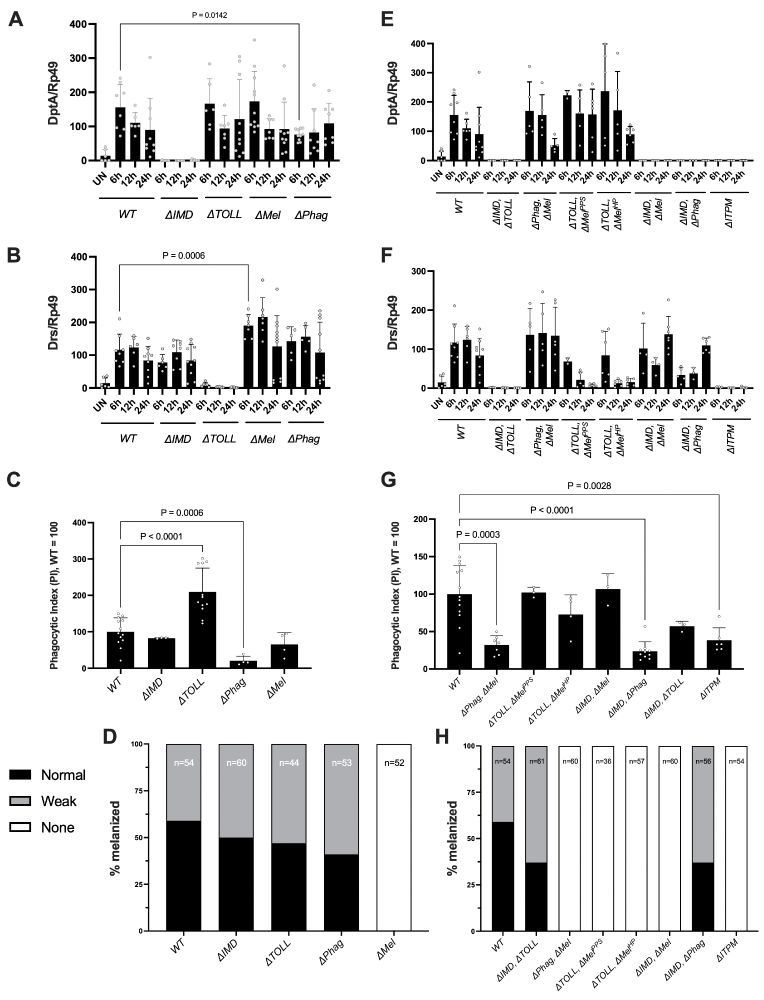
Now published as version of record at @elife.bsky.social !
Layers of Immunity: Deconstructing the Drosophila effector response. The tools are now deposited in the VDRC (link ⬇️)
elifesciences.org/articles/107...
shop.vbc.ac.at/vdrc_store/d...
#Drosophila #IDsky #SymbioSky #Infection #Immunology
Layers of Immunity: Deconstructing the Drosophila effector response. The tools are now deposited in the VDRC (link ⬇️)
elifesciences.org/articles/107...
shop.vbc.ac.at/vdrc_store/d...
#Drosophila #IDsky #SymbioSky #Infection #Immunology



November 28, 2025 at 9:34 PM
Now published as version of record at @elife.bsky.social !
Layers of Immunity: Deconstructing the Drosophila effector response. The tools are now deposited in the VDRC (link ⬇️)
elifesciences.org/articles/107...
shop.vbc.ac.at/vdrc_store/d...
#Drosophila #IDsky #SymbioSky #Infection #Immunology
Layers of Immunity: Deconstructing the Drosophila effector response. The tools are now deposited in the VDRC (link ⬇️)
elifesciences.org/articles/107...
shop.vbc.ac.at/vdrc_store/d...
#Drosophila #IDsky #SymbioSky #Infection #Immunology
Reposted by Tamanash Bhattacharya
How to keep in step when your (protein) partner speeds up…
Here we investigated the adaptive remodeling of a protein-protein interaction surface essential for telomere protection.
Congrats to whole team!
www.science.org/doi/10.1126/...
Here we investigated the adaptive remodeling of a protein-protein interaction surface essential for telomere protection.
Congrats to whole team!
www.science.org/doi/10.1126/...

Rapid compensatory evolution within a multiprotein complex preserves telomere integrity
Intragenomic conflict with selfish genetic elements spurs adaptive changes in subunits of essential multiprotein complexes. Whether and how these adaptive changes disrupt interactions within such comp...
www.science.org
November 28, 2025 at 5:22 PM
How to keep in step when your (protein) partner speeds up…
Here we investigated the adaptive remodeling of a protein-protein interaction surface essential for telomere protection.
Congrats to whole team!
www.science.org/doi/10.1126/...
Here we investigated the adaptive remodeling of a protein-protein interaction surface essential for telomere protection.
Congrats to whole team!
www.science.org/doi/10.1126/...
Reposted by Tamanash Bhattacharya

Deeply saddened by the passing of my colleague, Prof. Meng-Chao Yao, a remarkable scientist and mentor. He left an indelible mark on all of us fortunate enough to know him. His legacy in molecular and ciliate biology will endure. Rest well, my friend. 1/
obituaries.seattletimes.com/obituary/men...
obituaries.seattletimes.com/obituary/men...

Meng-Chao Yao Obituary | 1949 - 2025 | Seattle Times
View Meng-Chao Yao's complete obituary, share memories, and explore 1 tribute posts from the community.
obituaries.seattletimes.com
November 17, 2025 at 11:24 PM
Deeply saddened by the passing of my colleague, Prof. Meng-Chao Yao, a remarkable scientist and mentor. He left an indelible mark on all of us fortunate enough to know him. His legacy in molecular and ciliate biology will endure. Rest well, my friend. 1/
obituaries.seattletimes.com/obituary/men...
obituaries.seattletimes.com/obituary/men...
Reposted by Tamanash Bhattacharya

I’m excited to share my recent postdoc work. Here, we interrogate how different phage infection outcomes (productive vs. restrictive) affect the expression of phage defense systems. We find that a restricted infection not only inhibits the phage but also induces increased immune protein abundance.

Surviving phage attack dynamically regulates bacterial immunity to defeat counterdefenses https://www.biorxiv.org/content/10.1101/2025.11.13.688357v1
November 15, 2025 at 6:10 PM
I’m excited to share my recent postdoc work. Here, we interrogate how different phage infection outcomes (productive vs. restrictive) affect the expression of phage defense systems. We find that a restricted infection not only inhibits the phage but also induces increased immune protein abundance.
Reposted by Tamanash Bhattacharya

So awesome to have this great paper from Sam Reffsin and Sara Cherry out! In it, we use retrospective clone tracing to show that there are particular single cell states that are more susceptible to viral infection (both SARS-CoV-2 and flu)!
www.cell.com/cell/fulltex...
www.cell.com/cell/fulltex...

Single-cell susceptibility to viral infection is driven by variable cell states
Not all cells that can be infected by a virus become infected with that virus. Single-cell
clone tracing reveals intrinsic cell states with variable expression patterns that
increase susceptibility to...
www.cell.com
November 14, 2025 at 4:47 PM
So awesome to have this great paper from Sam Reffsin and Sara Cherry out! In it, we use retrospective clone tracing to show that there are particular single cell states that are more susceptible to viral infection (both SARS-CoV-2 and flu)!
www.cell.com/cell/fulltex...
www.cell.com/cell/fulltex...
Reposted by Tamanash Bhattacharya
Are you an early-stage graduate student (2nd or 3rd year) or early-stage postdoc based in the US or Canada, working primarily in Drosophila? Would you like to help improve the experience of all trainees working in Drosophila research? If so, read on.
(Please repost to reach a broad audience.)
(Please repost to reach a broad audience.)
November 12, 2025 at 4:49 AM
Are you an early-stage graduate student (2nd or 3rd year) or early-stage postdoc based in the US or Canada, working primarily in Drosophila? Would you like to help improve the experience of all trainees working in Drosophila research? If so, read on.
(Please repost to reach a broad audience.)
(Please repost to reach a broad audience.)
Reposted by Tamanash Bhattacharya
@andersonfbrito.bsky.social and I are seeking input from the community on hosting/sharing arbovirus sequencing data (DENV, CHIKV, OROV, ZIKV, & YFV) on @pathoplexus.org.
Please consider filling out this VERY SHORT survey about your interest and/or concerns.
docs.google.com/forms/d/e/1F...
Please consider filling out this VERY SHORT survey about your interest and/or concerns.
docs.google.com/forms/d/e/1F...

Community survey on the addition of Dengue, Chikungunya, Oropouche, Zika and Yellow fever virus to Pathoplexus
Pathoplexus is a new platform for sharing pathogen sequence data, launched in August 2024 [1], with the primary aim of making sharing and accessing pathogen genomic data easier, faster, and more effic...
docs.google.com
October 30, 2025 at 8:11 PM
@andersonfbrito.bsky.social and I are seeking input from the community on hosting/sharing arbovirus sequencing data (DENV, CHIKV, OROV, ZIKV, & YFV) on @pathoplexus.org.
Please consider filling out this VERY SHORT survey about your interest and/or concerns.
docs.google.com/forms/d/e/1F...
Please consider filling out this VERY SHORT survey about your interest and/or concerns.
docs.google.com/forms/d/e/1F...
Reposted by Tamanash Bhattacharya
More pictures of the brilliance that is (lab manager) Aida de la Cruz with her creation.


October 25, 2025 at 2:41 AM
More pictures of the brilliance that is (lab manager) Aida de la Cruz with her creation.
Reposted by Tamanash Bhattacharya
Muyuan Chen has turned structural biology into an immersive experience with his new video game Meowtabolism, now available on Steam.
Try the demo here: store.steampowered.com/app/4045010/...
Give Muyuan feedback: steamcommunity.com/app/4045010
#ScienceGaming #StructuralBiology #CryoEM #STEMOutreach
Try the demo here: store.steampowered.com/app/4045010/...
Give Muyuan feedback: steamcommunity.com/app/4045010
#ScienceGaming #StructuralBiology #CryoEM #STEMOutreach
October 4, 2025 at 1:34 PM
Muyuan Chen has turned structural biology into an immersive experience with his new video game Meowtabolism, now available on Steam.
Try the demo here: store.steampowered.com/app/4045010/...
Give Muyuan feedback: steamcommunity.com/app/4045010
#ScienceGaming #StructuralBiology #CryoEM #STEMOutreach
Try the demo here: store.steampowered.com/app/4045010/...
Give Muyuan feedback: steamcommunity.com/app/4045010
#ScienceGaming #StructuralBiology #CryoEM #STEMOutreach
Reposted by Tamanash Bhattacharya
Excitingly, we are now hiring at all levels!! Please reach out if you are interested in RNA viruses, viral replication, innate immunity, RNA imaging, or are just excited about having fun doing cool science! Information about specific positions here www.genoyerlab.com/join
Join — Genoyer Lab
www.genoyerlab.com
October 3, 2025 at 6:10 PM
Excitingly, we are now hiring at all levels!! Please reach out if you are interested in RNA viruses, viral replication, innate immunity, RNA imaging, or are just excited about having fun doing cool science! Information about specific positions here www.genoyerlab.com/join
New preprint alert! 🦟 <-> 🦠 <-> 🧑
I am thrilled to share our latest study on alphavirus host adaptation. More specifically, on how a single codon helps blunt alphavirus-induced host innate immune responses in mosquito and human cells. Continue reading for more!
www.biorxiv.org/content/10.1...
I am thrilled to share our latest study on alphavirus host adaptation. More specifically, on how a single codon helps blunt alphavirus-induced host innate immune responses in mosquito and human cells. Continue reading for more!
www.biorxiv.org/content/10.1...
The Sindbis virus nsP3 opal codon protects viral RNA and fitness by maintaining replication spherule integrity
Most alphaviruses encode an in-frame opal stop codon between nsP3 and nsP4 in their nsP ORF. This opal stop codon mediates a temperature-dependent balance between viral polymerase production and prote...
www.biorxiv.org
September 29, 2025 at 11:23 AM
New preprint alert! 🦟 <-> 🦠 <-> 🧑
I am thrilled to share our latest study on alphavirus host adaptation. More specifically, on how a single codon helps blunt alphavirus-induced host innate immune responses in mosquito and human cells. Continue reading for more!
www.biorxiv.org/content/10.1...
I am thrilled to share our latest study on alphavirus host adaptation. More specifically, on how a single codon helps blunt alphavirus-induced host innate immune responses in mosquito and human cells. Continue reading for more!
www.biorxiv.org/content/10.1...
Reposted by Tamanash Bhattacharya
And now this is the first statement from a named White House official, hours before the proclamation is set to go into effect.
Despite saying “to be clear,” her first tweet in this thread contained an FAQ posted yesterday which contains NONE of the information she lists below.
Despite saying “to be clear,” her first tweet in this thread contained an FAQ posted yesterday which contains NONE of the information she lists below.

September 20, 2025 at 9:12 PM
And now this is the first statement from a named White House official, hours before the proclamation is set to go into effect.
Despite saying “to be clear,” her first tweet in this thread contained an FAQ posted yesterday which contains NONE of the information she lists below.
Despite saying “to be clear,” her first tweet in this thread contained an FAQ posted yesterday which contains NONE of the information she lists below.
Reposted by Tamanash Bhattacharya
Any academic folks on H1B visas (even with stamps in passports) please get legal advice from your University attorneys before leaving the US.
September 20, 2025 at 4:09 AM
Any academic folks on H1B visas (even with stamps in passports) please get legal advice from your University attorneys before leaving the US.
Reposted by Tamanash Bhattacharya
So excited to see the first part of my thesis work with @harmitmalik.bsky.social and @melodygcampbell.bsky.social in print! www.science.org/doi/10.1126/... We have a bit of evolution and a whole lotta structure to figure out how new protein domains work

Molecular exaptation by the integrin αI domain
An ancient protein domain insertion seamlessly preserved conformational signaling while providing a novel surface for adaptation.
www.science.org
September 10, 2025 at 7:34 PM
So excited to see the first part of my thesis work with @harmitmalik.bsky.social and @melodygcampbell.bsky.social in print! www.science.org/doi/10.1126/... We have a bit of evolution and a whole lotta structure to figure out how new protein domains work
Reposted by Tamanash Bhattacharya

Excited to share that I’ll be joining @uicbios.bsky.social as an Asst. Prof. in Jan 2026! My lab will explore the epi/genetic principles of host–microbe interactions, symbiosis, and vector biology. We’ll be hiring postdocs and techs—details and lab website coming soon!
bios.uic.edu/news-stories...
bios.uic.edu/news-stories...

Meet the Faculty | Biological Sciences | University of Illinois Chicago
bios.uic.edu
September 9, 2025 at 6:39 PM
Excited to share that I’ll be joining @uicbios.bsky.social as an Asst. Prof. in Jan 2026! My lab will explore the epi/genetic principles of host–microbe interactions, symbiosis, and vector biology. We’ll be hiring postdocs and techs—details and lab website coming soon!
bios.uic.edu/news-stories...
bios.uic.edu/news-stories...
Reposted by Tamanash Bhattacharya