



Spencer Shelton
@sshelton.bsky.social
Postdoctoral fellow in the Sankaran Lab at Boston Children’s Hospital. Researching mitochondrial disease during hematopoiesis
Reposted by Spencer Shelton

Excited to share our new study, led by @dellaVolpe_L, now out in @natcellbio.nature.com! Blocking #ferroptosis enhances human 🩸 stem cell expansion, with implications for transplantation and gene therapy. www.nature.com/articles/s41...

November 18, 2025 at 5:49 PM
Excited to share our new study, led by @dellaVolpe_L, now out in @natcellbio.nature.com! Blocking #ferroptosis enhances human 🩸 stem cell expansion, with implications for transplantation and gene therapy. www.nature.com/articles/s41...
Reposted by Spencer Shelton
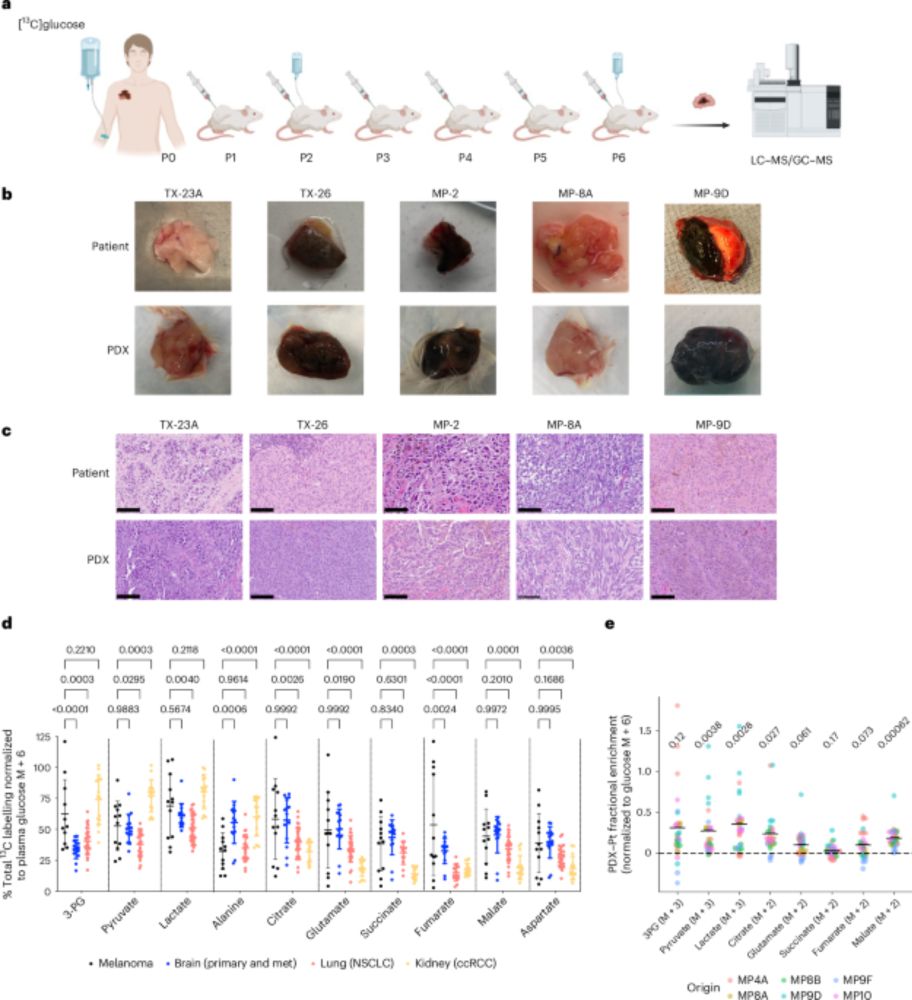
1/Patient-derived xenografts (PDXs) are used in preclinical testing of cancer therapies, including metabolic therapies. We determined which metabolic properties are retained, and which are lost, when melanomas from patients are implanted and passaged as PDXs in mice.
www.nature.com/articles/s42...
www.nature.com/articles/s42...
Conservation and divergence of metabolic phenotypes between patient tumours and matched xenografts - Nature Metabolism
Rao and Cai et al. perform a detailed metabolic comparison between primary tumours from patients and their matching xenografts, which identify conserved as well as divergent metabolic patterns.
www.nature.com
July 29, 2025 at 2:56 PM
1/Patient-derived xenografts (PDXs) are used in preclinical testing of cancer therapies, including metabolic therapies. We determined which metabolic properties are retained, and which are lost, when melanomas from patients are implanted and passaged as PDXs in mice.
www.nature.com/articles/s42...
www.nature.com/articles/s42...
Reposted by Spencer Shelton
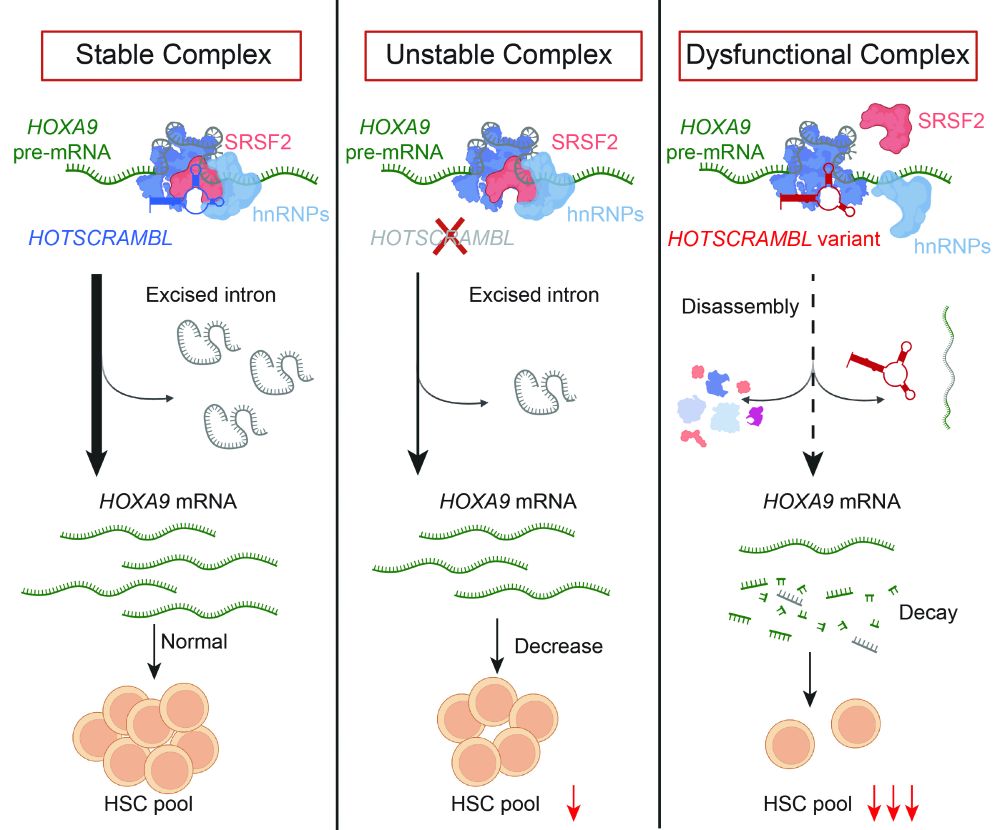
Delighted to have our preprint led by @lvchosen1.bsky.social
up: Genetic variation reveals a homeotic long noncoding RNA that modulates human hematopoietic stem cells
biorxiv.org/content/10.1...
🧵 below ...
up: Genetic variation reveals a homeotic long noncoding RNA that modulates human hematopoietic stem cells
biorxiv.org/content/10.1...
🧵 below ...
July 17, 2025 at 8:25 PM
Delighted to have our preprint led by @lvchosen1.bsky.social
up: Genetic variation reveals a homeotic long noncoding RNA that modulates human hematopoietic stem cells
biorxiv.org/content/10.1...
🧵 below ...
up: Genetic variation reveals a homeotic long noncoding RNA that modulates human hematopoietic stem cells
biorxiv.org/content/10.1...
🧵 below ...
Reposted by Spencer Shelton
Out today in @science.org!
What if you could chart cells' regulatory programs at unprecedented resolution?
In my work with Jorge Martin-Rufino from the @bloodgenes.bsky.social lab, we dissect the genome’s control circuits and find where key genetic variation hides
bit.ly/3YhBMoO
What if you could chart cells' regulatory programs at unprecedented resolution?
In my work with Jorge Martin-Rufino from the @bloodgenes.bsky.social lab, we dissect the genome’s control circuits and find where key genetic variation hides
bit.ly/3YhBMoO
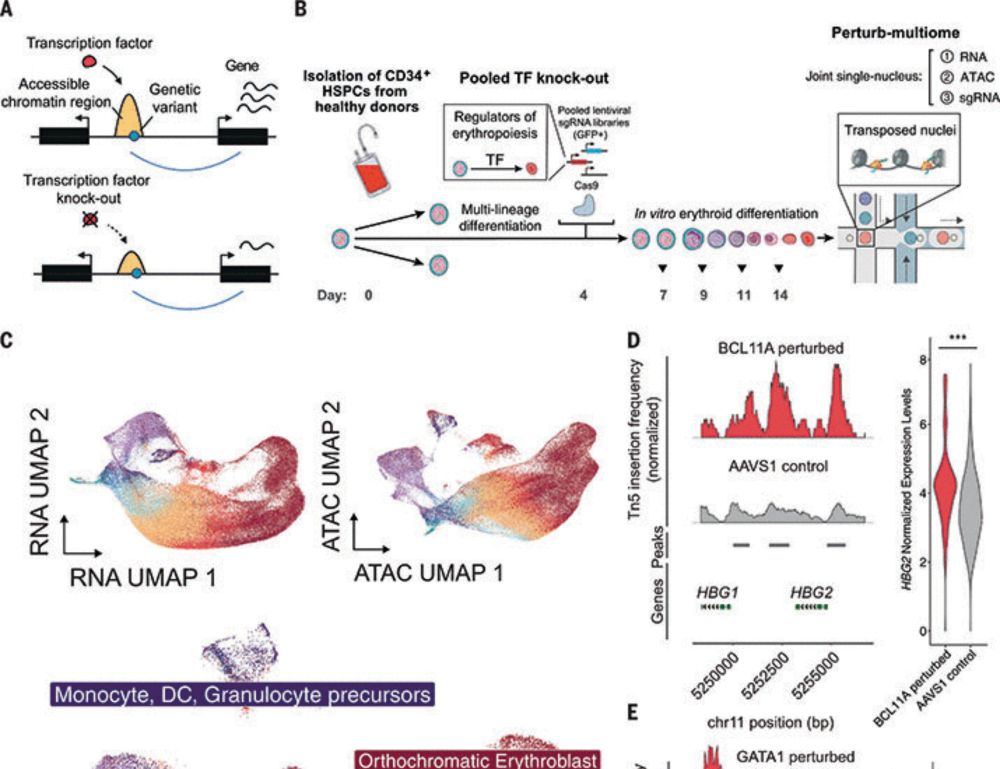
Transcription factor networks disproportionately enrich for heritability of blood cell phenotypes
Most phenotype-associated genetic variants map to noncoding regulatory regions of the human genome, but their mechanisms remain elusive in most cases. We developed a highly efficient strategy, Perturb...
bit.ly
April 3, 2025 at 9:20 PM
Out today in @science.org!
What if you could chart cells' regulatory programs at unprecedented resolution?
In my work with Jorge Martin-Rufino from the @bloodgenes.bsky.social lab, we dissect the genome’s control circuits and find where key genetic variation hides
bit.ly/3YhBMoO
What if you could chart cells' regulatory programs at unprecedented resolution?
In my work with Jorge Martin-Rufino from the @bloodgenes.bsky.social lab, we dissect the genome’s control circuits and find where key genetic variation hides
bit.ly/3YhBMoO
Reposted by Spencer Shelton
Delighted to have our Perturb-multiome paper, led by #JorgeMartinRufino and @hemagene.bsky.social from our lab, published today in @science.org. Please check out this powerful approach to decipher gene regulatory networks enriched for genetic variation: www.science.org/doi/10.1126/...
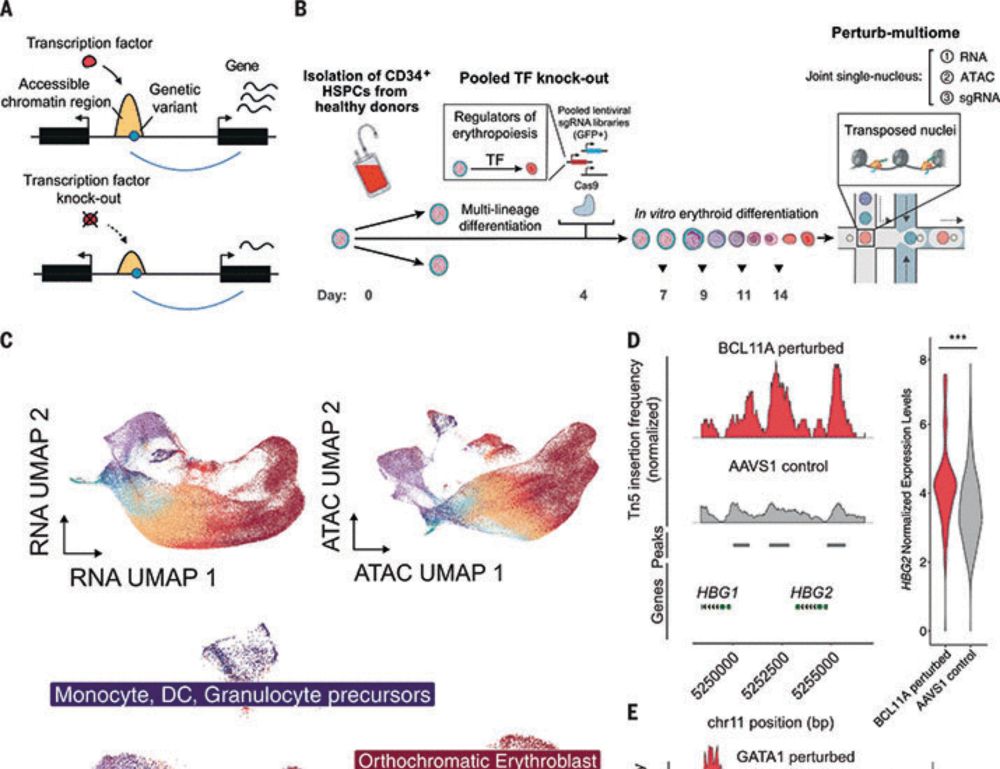
Transcription factor networks disproportionately enrich for heritability of blood cell phenotypes
Most phenotype-associated genetic variants map to noncoding regulatory regions of the human genome, but their mechanisms remain elusive in most cases. We developed a highly efficient strategy, Perturb...
www.science.org
April 3, 2025 at 11:57 PM
Delighted to have our Perturb-multiome paper, led by #JorgeMartinRufino and @hemagene.bsky.social from our lab, published today in @science.org. Please check out this powerful approach to decipher gene regulatory networks enriched for genetic variation: www.science.org/doi/10.1126/...
Reposted by Spencer Shelton

What protects individuals from developing blood cancers?
Thrilled to share my work in @bloodgenes.bsky.social lab, describing inherited resilience protecting blood stem cells from clonal hematopoiesis by modifying RNA regulation. 🧵👇 (1/n)
www.biorxiv.org/content/10.1...
Thrilled to share my work in @bloodgenes.bsky.social lab, describing inherited resilience protecting blood stem cells from clonal hematopoiesis by modifying RNA regulation. 🧵👇 (1/n)
www.biorxiv.org/content/10.1...

March 27, 2025 at 8:31 PM
What protects individuals from developing blood cancers?
Thrilled to share my work in @bloodgenes.bsky.social lab, describing inherited resilience protecting blood stem cells from clonal hematopoiesis by modifying RNA regulation. 🧵👇 (1/n)
www.biorxiv.org/content/10.1...
Thrilled to share my work in @bloodgenes.bsky.social lab, describing inherited resilience protecting blood stem cells from clonal hematopoiesis by modifying RNA regulation. 🧵👇 (1/n)
www.biorxiv.org/content/10.1...
A fun spotlight we put together on new promising gene therapy approaches utilizing hematopoietic stem cell transplantation! Check it out 👇
Fantastic to write this Spotlight piece for @cp-trendsmolecmed.bsky.social with @sshelton.bsky.social that covers an exciting recent @nejm.org study (www.nejm.org/doi/full/10....):
authors.elsevier.com/a/1koWQ5Eb1B...
authors.elsevier.com/a/1koWQ5Eb1B...

March 24, 2025 at 10:59 PM
A fun spotlight we put together on new promising gene therapy approaches utilizing hematopoietic stem cell transplantation! Check it out 👇
Reposted by Spencer Shelton
Stem cell-like states confer poor outcomes in blood cancer—but what mechanisms drive this and how can they be therapeutically targeted? In our new preprint, we show how a single TF represses one enhancer to maintain a subset of high-risk leukemias: 🧵👇
www.biorxiv.org/content/10.1...
www.biorxiv.org/content/10.1...

January 2, 2025 at 2:47 PM
Stem cell-like states confer poor outcomes in blood cancer—but what mechanisms drive this and how can they be therapeutically targeted? In our new preprint, we show how a single TF represses one enhancer to maintain a subset of high-risk leukemias: 🧵👇
www.biorxiv.org/content/10.1...
www.biorxiv.org/content/10.1...
Reposted by Spencer Shelton

Congrats to Salma Merchant for Cell Stem Cell paper: the effects of fatty acid oxidation in hematopoietic stem cells are context dependent. FAO is not necessary in young HSCs, but becomes necessary during aging, and is deleterious when upregulated by a high fat diet.
www.cell.com/cell-stem-ce...
www.cell.com/cell-stem-ce...
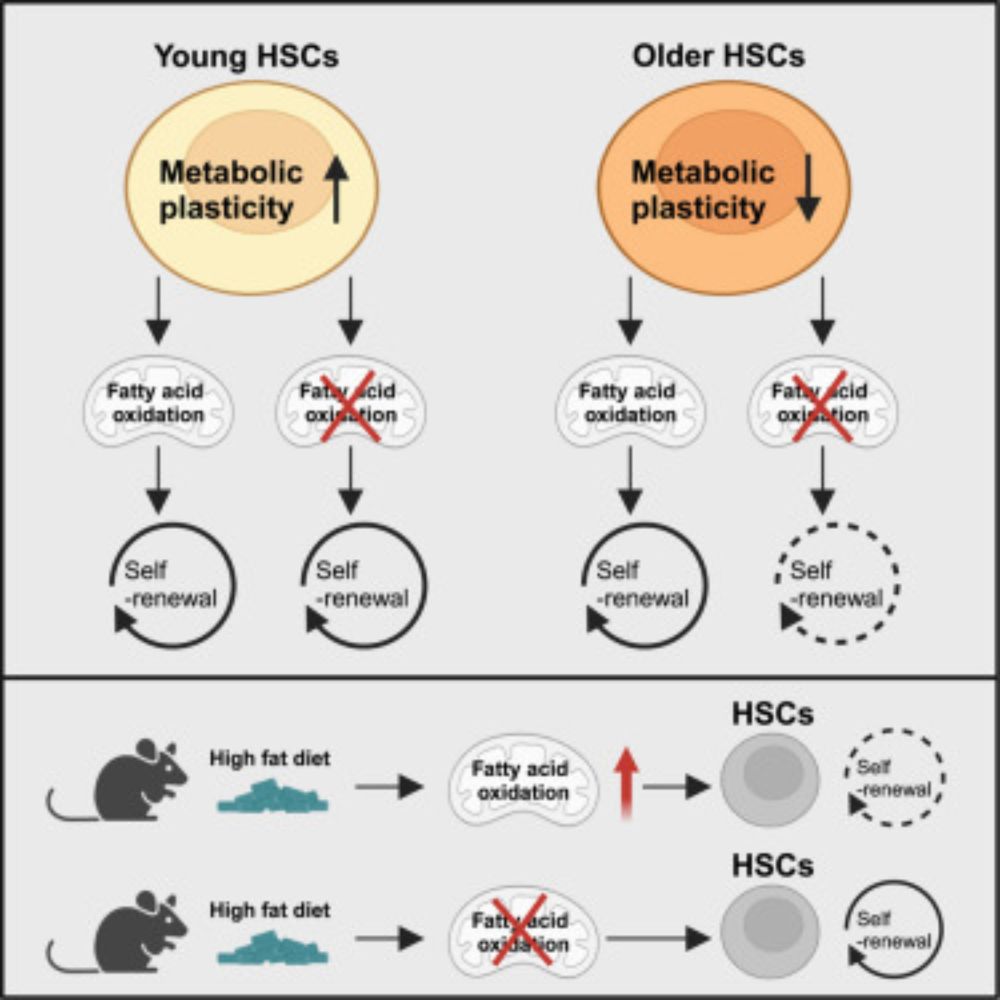
Different effects of fatty acid oxidation on hematopoietic stem cells based on age and diet
Morrison and colleagues show long-chain fatty acid oxidation has context-dependent effects on hematopoietic stem cells (HSCs). It is dispensable for HSC function in young mice. It becomes necessary for normal HSC function and hematopoiesis in older mice. A high-fat diet increases fatty acid oxidation, and this impairs HSC function.
www.cell.com
December 20, 2024 at 4:03 PM
Congrats to Salma Merchant for Cell Stem Cell paper: the effects of fatty acid oxidation in hematopoietic stem cells are context dependent. FAO is not necessary in young HSCs, but becomes necessary during aging, and is deleterious when upregulated by a high fat diet.
www.cell.com/cell-stem-ce...
www.cell.com/cell-stem-ce...