Shenhav Lab
@shenhavlab.bsky.social
Neuroscience of motivation, decision making, and cognitive control
shenhavlab.org
shenhavlab.org
If you’ve been taught to think of decisions as a tug-of-war 🪢 (e.g., DDM), our new chapter will try to convince you otherwise!
We show that these models miss key aspects of traditional choices, & prevent us from understanding non-traditional ones (e.g., whether/when/how many to choose).
🔗 below:
We show that these models miss key aspects of traditional choices, & prevent us from understanding non-traditional ones (e.g., whether/when/how many to choose).
🔗 below:

Excited to share our chapter "Breaking the Tug-of-War: What Neuroeconomics Can Gain by Moving Past Competition-Only Models" with Yi-Hsin Su, Romy Frömer, and @ashenhav.bsky.social, now out in the new volume, "Neuroeconomics: Core Topics and Current Directions"!
doi.org/10.1007/978-3-032-02925-6_10
doi.org/10.1007/978-3-032-02925-6_10

Breaking the Tug-of-War: What Neuroeconomics Can Gain by Moving Past Competition-Only Models
Popular models of decision-making characterize choice dynamics as a tug-of-war process, where evidence for competing options accumulates until a threshold is reached. While these models capture severa...
doi.org
February 5, 2026 at 10:09 PM
If you’ve been taught to think of decisions as a tug-of-war 🪢 (e.g., DDM), our new chapter will try to convince you otherwise!
We show that these models miss key aspects of traditional choices, & prevent us from understanding non-traditional ones (e.g., whether/when/how many to choose).
🔗 below:
We show that these models miss key aspects of traditional choices, & prevent us from understanding non-traditional ones (e.g., whether/when/how many to choose).
🔗 below:
Our latest paper, spearheaded by @hritz.bsky.social and Romy Frömer, is now out in Communications Psychology!! 🎉🎉
www.nature.com/articles/s44...
See Harrison's excellent 🧵 below to learn more about what we found:
www.nature.com/articles/s44...
See Harrison's excellent 🧵 below to learn more about what we found:
February 3, 2026 at 11:45 PM
Our latest paper, spearheaded by @hritz.bsky.social and Romy Frömer, is now out in Communications Psychology!! 🎉🎉
www.nature.com/articles/s44...
See Harrison's excellent 🧵 below to learn more about what we found:
www.nature.com/articles/s44...
See Harrison's excellent 🧵 below to learn more about what we found:
Reposted by Shenhav Lab

I’m now a proud alum of Lewis-Peacock lab🦚. I’ll be joining the @shenhavlab.bsky.social at UCB in January to study adaptive behaviors and dynamic cognitive control. So grateful for the great journey and excited for what’s next!
December 17, 2025 at 8:58 PM
I’m now a proud alum of Lewis-Peacock lab🦚. I’ll be joining the @shenhavlab.bsky.social at UCB in January to study adaptive behaviors and dynamic cognitive control. So grateful for the great journey and excited for what’s next!
Come see our lab’s presentations at #SFN2025! 🧠
1️⃣ NANO018.12: “Neural dynamics underlying divergent influences of reward and punishment on control allocation” (11/16, 3:45 PM) by @jasonleng.bsky.social
1️⃣ NANO018.12: “Neural dynamics underlying divergent influences of reward and punishment on control allocation” (11/16, 3:45 PM) by @jasonleng.bsky.social
November 11, 2025 at 11:32 PM
Come see our lab’s presentations at #SFN2025! 🧠
1️⃣ NANO018.12: “Neural dynamics underlying divergent influences of reward and punishment on control allocation” (11/16, 3:45 PM) by @jasonleng.bsky.social
1️⃣ NANO018.12: “Neural dynamics underlying divergent influences of reward and punishment on control allocation” (11/16, 3:45 PM) by @jasonleng.bsky.social
Check out our new preprint, led by Romy Froemer and in collaboration with Chih-Chung Ting and Sebastian Gluth:
“Goals shape dynamics of attention and selection for value-based decision-making”.
🔗 osf.io/preprints/ps...
“Goals shape dynamics of attention and selection for value-based decision-making”.
🔗 osf.io/preprints/ps...
OSF
osf.io
October 24, 2025 at 5:39 PM
Check out our new preprint, led by Romy Froemer and in collaboration with Chih-Chung Ting and Sebastian Gluth:
“Goals shape dynamics of attention and selection for value-based decision-making”.
🔗 osf.io/preprints/ps...
“Goals shape dynamics of attention and selection for value-based decision-making”.
🔗 osf.io/preprints/ps...
New preprint led by @debyee.bsky.social: "Neurocomputational mechanisms underlying the distinct motivational influences of reward and punishment on cognitive control".
🔗 www.biorxiv.org/content/10.1...
🔗 www.biorxiv.org/content/10.1...
October 20, 2025 at 9:36 PM
New preprint led by @debyee.bsky.social: "Neurocomputational mechanisms underlying the distinct motivational influences of reward and punishment on cognitive control".
🔗 www.biorxiv.org/content/10.1...
🔗 www.biorxiv.org/content/10.1...
At #SNE2025? Check out our lab's presentations!
➡️O.03.02: "Competitors or Opportunities? Mutual exclusivity alters neural and attentional processing of choice alternatives" by @jasonleng.bsky.social at 9:00 on 10/4.
(1/2)
➡️O.03.02: "Competitors or Opportunities? Mutual exclusivity alters neural and attentional processing of choice alternatives" by @jasonleng.bsky.social at 9:00 on 10/4.
(1/2)
October 3, 2025 at 4:37 AM
At #SNE2025? Check out our lab's presentations!
➡️O.03.02: "Competitors or Opportunities? Mutual exclusivity alters neural and attentional processing of choice alternatives" by @jasonleng.bsky.social at 9:00 on 10/4.
(1/2)
➡️O.03.02: "Competitors or Opportunities? Mutual exclusivity alters neural and attentional processing of choice alternatives" by @jasonleng.bsky.social at 9:00 on 10/4.
(1/2)
New preprint led by Ivan Grahek!
Shifting demands of daily life require constant adjustments in how we allocate cognitive resources. Here we show that slower transitions between different cognitive strategies limit cognitive flexibility across the lifespan: biorxiv.org/content/10.1...
🧵 A thread:
Shifting demands of daily life require constant adjustments in how we allocate cognitive resources. Here we show that slower transitions between different cognitive strategies limit cognitive flexibility across the lifespan: biorxiv.org/content/10.1...
🧵 A thread:

Slower transitions between control states lead to reductions in cognitive flexibility over the lifespan
Declines in cognitive flexibility are a hallmark of cognitive aging, but their causes remain elusive. Here, we examine a previously untested source of aging-related cognitive inflexibility, building o...
biorxiv.org
September 18, 2025 at 5:02 PM
New preprint led by Ivan Grahek!
Shifting demands of daily life require constant adjustments in how we allocate cognitive resources. Here we show that slower transitions between different cognitive strategies limit cognitive flexibility across the lifespan: biorxiv.org/content/10.1...
🧵 A thread:
Shifting demands of daily life require constant adjustments in how we allocate cognitive resources. Here we show that slower transitions between different cognitive strategies limit cognitive flexibility across the lifespan: biorxiv.org/content/10.1...
🧵 A thread:
In a TEDx talk just out, @ashenhav.bsky.social discusses what research from our lab teaches us about “How to choose when choosing is hardest” (the talk’s original title 😆):
➡️ www.youtube.com/watch?v=zeHg...
➡️ www.youtube.com/watch?v=zeHg...
September 9, 2025 at 4:26 PM
In a TEDx talk just out, @ashenhav.bsky.social discusses what research from our lab teaches us about “How to choose when choosing is hardest” (the talk’s original title 😆):
➡️ www.youtube.com/watch?v=zeHg...
➡️ www.youtube.com/watch?v=zeHg...
After scrolling Twitter, it will take you a while to get back into “work mode”. Why is this the case? Our new work (out now in Psych Review), led by Ivan Grahek and Xiamin Leng, explores the costs of adjusting cognitive control to meet different goals:
psycnet.apa.org/record/2026-...
🧵 A thread:
psycnet.apa.org/record/2026-...
🧵 A thread:
APA PsycNet
psycnet.apa.org
August 27, 2025 at 4:37 PM
After scrolling Twitter, it will take you a while to get back into “work mode”. Why is this the case? Our new work (out now in Psych Review), led by Ivan Grahek and Xiamin Leng, explores the costs of adjusting cognitive control to meet different goals:
psycnet.apa.org/record/2026-...
🧵 A thread:
psycnet.apa.org/record/2026-...
🧵 A thread:
Reposted by Shenhav Lab
Shameless advertising here, but if you have been asking yourself this question and are attending @cogscisociety.bsky.social come check out Ziwei’s talk tomorrow on her paper that received Cog Sci’s Computational Modeling Prize for Higher-Level Cognition!! 🎉🎉
bsky.app/profile/shen...
bsky.app/profile/shen...
Why do measures of putatively the same construct so often fail to correlate strongly across units of analysis (self/informant report, behavioral, physiological/neural): measurement problems or truly actually capturing different constructs (or some of both)?
July 31, 2025 at 8:28 PM
Shameless advertising here, but if you have been asking yourself this question and are attending @cogscisociety.bsky.social come check out Ziwei’s talk tomorrow on her paper that received Cog Sci’s Computational Modeling Prize for Higher-Level Cognition!! 🎉🎉
bsky.app/profile/shen...
bsky.app/profile/shen...
Come and see our work at #cogsci2025!
Ziwei Cheng will be presenting a talk “Incentive Effects Capture Variability in Task-General Control Allocation” on Fri 8/1 (4-5:30 pm, Cognition 7)
🔗Paper link: escholarship.org/content/qt7b...
Ziwei Cheng will be presenting a talk “Incentive Effects Capture Variability in Task-General Control Allocation” on Fri 8/1 (4-5:30 pm, Cognition 7)
🔗Paper link: escholarship.org/content/qt7b...
escholarship.org
July 30, 2025 at 8:52 PM
Come and see our work at #cogsci2025!
Ziwei Cheng will be presenting a talk “Incentive Effects Capture Variability in Task-General Control Allocation” on Fri 8/1 (4-5:30 pm, Cognition 7)
🔗Paper link: escholarship.org/content/qt7b...
Ziwei Cheng will be presenting a talk “Incentive Effects Capture Variability in Task-General Control Allocation” on Fri 8/1 (4-5:30 pm, Cognition 7)
🔗Paper link: escholarship.org/content/qt7b...
Our newest preprint “A novel approach-avoidance task to study decision making under outcome uncertainty” investigates the dynamics of approach-avoid decisions!
Check out www.biorxiv.org/cgi/content/..., led by Ziwei Cheng and @nadjagingjehli.bsky.social
Check out www.biorxiv.org/cgi/content/..., led by Ziwei Cheng and @nadjagingjehli.bsky.social
A Novel Approach-Avoidance Task to Study Decision Making Under Outcome Uncertainty
To behave adaptively, people need to integrate information about probabilistic outcomes and balance drives to approach positive outcomes and avoid negative outcomes. However, questions remain about ho...
www.biorxiv.org
July 22, 2025 at 9:58 PM
Our newest preprint “A novel approach-avoidance task to study decision making under outcome uncertainty” investigates the dynamics of approach-avoid decisions!
Check out www.biorxiv.org/cgi/content/..., led by Ziwei Cheng and @nadjagingjehli.bsky.social
Check out www.biorxiv.org/cgi/content/..., led by Ziwei Cheng and @nadjagingjehli.bsky.social
Our newest paper, led by Romy Froemer
and @fredcallaway.bsky.social, is now out in Open Mind: “Considering What We Know and What We Don’t Know: Expectations and Confidence Guide Value Integration in Value-Based Decision-Making”
direct.mit.edu/opmi/article...
and @fredcallaway.bsky.social, is now out in Open Mind: “Considering What We Know and What We Don’t Know: Expectations and Confidence Guide Value Integration in Value-Based Decision-Making”
direct.mit.edu/opmi/article...
Considering What We Know and What We Don’t Know: Expectations and Confidence Guide Value Integration in Value-Based Decision-Making
Abstract. When making decisions, we often have more information about some options than others. Previous work has shown that people are more likely to choose options that they look at more and those t...
direct.mit.edu
July 10, 2025 at 4:43 PM
Our newest paper, led by Romy Froemer
and @fredcallaway.bsky.social, is now out in Open Mind: “Considering What We Know and What We Don’t Know: Expectations and Confidence Guide Value Integration in Value-Based Decision-Making”
direct.mit.edu/opmi/article...
and @fredcallaway.bsky.social, is now out in Open Mind: “Considering What We Know and What We Don’t Know: Expectations and Confidence Guide Value Integration in Value-Based Decision-Making”
direct.mit.edu/opmi/article...
👉“Leveraging Continuous Psychophysics to Study Cognitive Control Allocation in Dynamic Environments” by Yihuan Dong (A117)
👉“The effect of acute stress on mental effort allocation across motivational contexts” by Tony El Nemer (A115)
[2/2]
👉“The effect of acute stress on mental effort allocation across motivational contexts” by Tony El Nemer (A115)
[2/2]
March 28, 2025 at 8:49 PM
👉“Leveraging Continuous Psychophysics to Study Cognitive Control Allocation in Dynamic Environments” by Yihuan Dong (A117)
👉“The effect of acute stress on mental effort allocation across motivational contexts” by Tony El Nemer (A115)
[2/2]
👉“The effect of acute stress on mental effort allocation across motivational contexts” by Tony El Nemer (A115)
[2/2]
Attending #CNS2025? Check out the following posters!
(A98, A115, A117)
👉“Decoding Cognitive Control Dynamics: Neural Evidence of Inertia in Cognitive Control Adjustments Following Goal Changes” by Ivan Grahek (A98)
[1/2]
(A98, A115, A117)
👉“Decoding Cognitive Control Dynamics: Neural Evidence of Inertia in Cognitive Control Adjustments Following Goal Changes” by Ivan Grahek (A98)
[1/2]
March 28, 2025 at 8:49 PM
Attending #CNS2025? Check out the following posters!
(A98, A115, A117)
👉“Decoding Cognitive Control Dynamics: Neural Evidence of Inertia in Cognitive Control Adjustments Following Goal Changes” by Ivan Grahek (A98)
[1/2]
(A98, A115, A117)
👉“Decoding Cognitive Control Dynamics: Neural Evidence of Inertia in Cognitive Control Adjustments Following Goal Changes” by Ivan Grahek (A98)
[1/2]
Also at #AffectScience2025,
📣 Ivan Grahek will give the talk “Towards Emotion Regulation Dynamics: A View from Cognitive Control Optimization” for the New Perspectives on Effort in Emotion Regulation Symposium. See you there!
📅: Friday March 21st at 6pm
📣 Ivan Grahek will give the talk “Towards Emotion Regulation Dynamics: A View from Cognitive Control Optimization” for the New Perspectives on Effort in Emotion Regulation Symposium. See you there!
📅: Friday March 21st at 6pm
March 20, 2025 at 11:04 PM
Also at #AffectScience2025,
📣 Ivan Grahek will give the talk “Towards Emotion Regulation Dynamics: A View from Cognitive Control Optimization” for the New Perspectives on Effort in Emotion Regulation Symposium. See you there!
📅: Friday March 21st at 6pm
📣 Ivan Grahek will give the talk “Towards Emotion Regulation Dynamics: A View from Cognitive Control Optimization” for the New Perspectives on Effort in Emotion Regulation Symposium. See you there!
📅: Friday March 21st at 6pm
Currently at #AffectScience2025? 😁
👉Come visit Ziwei Cheng's poster “Dissociable Influences Of Positive And Negative Incentives On Challenge And Threat States During Mental Effort Allocation“ in Poster Session P1 (P1.T.141)
👉Come visit Ziwei Cheng's poster “Dissociable Influences Of Positive And Negative Incentives On Challenge And Threat States During Mental Effort Allocation“ in Poster Session P1 (P1.T.141)
March 20, 2025 at 11:03 PM
Currently at #AffectScience2025? 😁
👉Come visit Ziwei Cheng's poster “Dissociable Influences Of Positive And Negative Incentives On Challenge And Threat States During Mental Effort Allocation“ in Poster Session P1 (P1.T.141)
👉Come visit Ziwei Cheng's poster “Dissociable Influences Of Positive And Negative Incentives On Challenge And Threat States During Mental Effort Allocation“ in Poster Session P1 (P1.T.141)
Reposted by Shenhav Lab
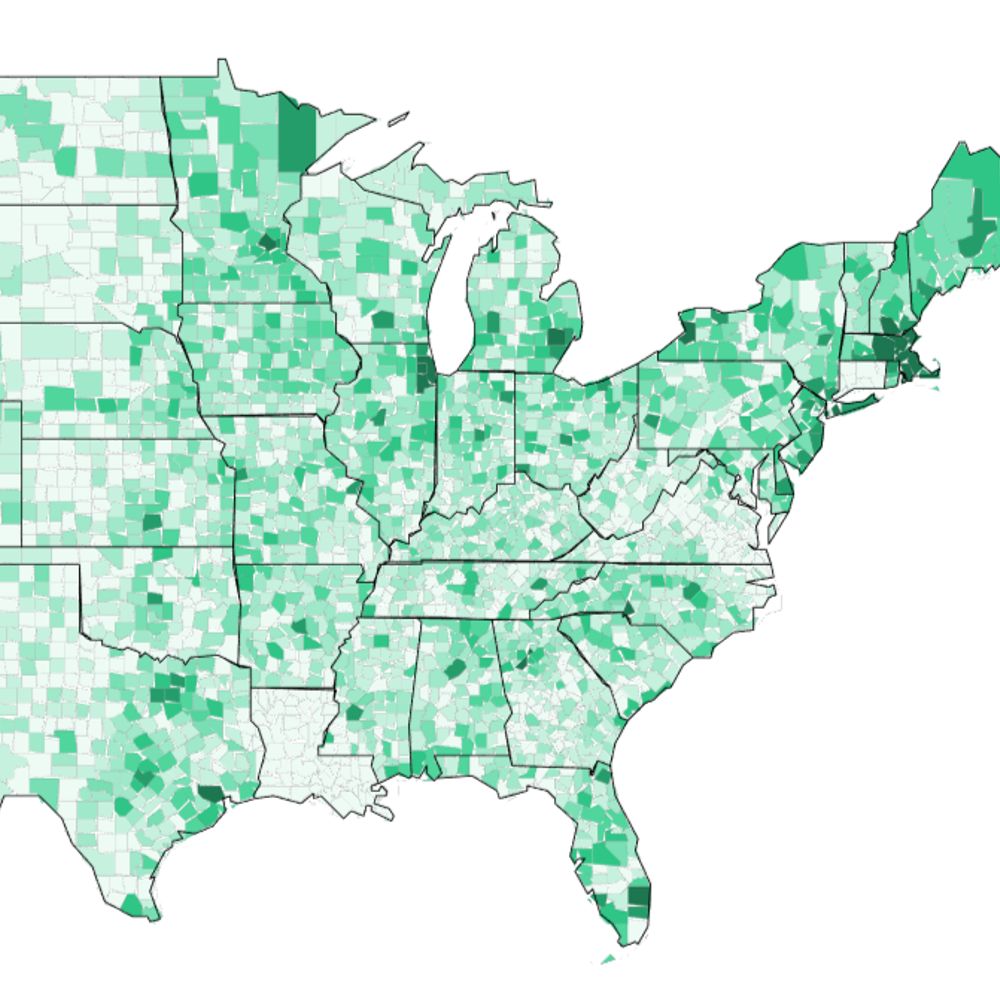
Neuroscientist Sarah Heilbronner is a proud product of Martin County schools in Florida 🌴. However, federal budget cuts threaten important work she's doing in brain research. 🧪🏠
@srheilbronner.bsky.social
www.tcpalm.com/story/opinio...
@srheilbronner.bsky.social
www.tcpalm.com/story/opinio...
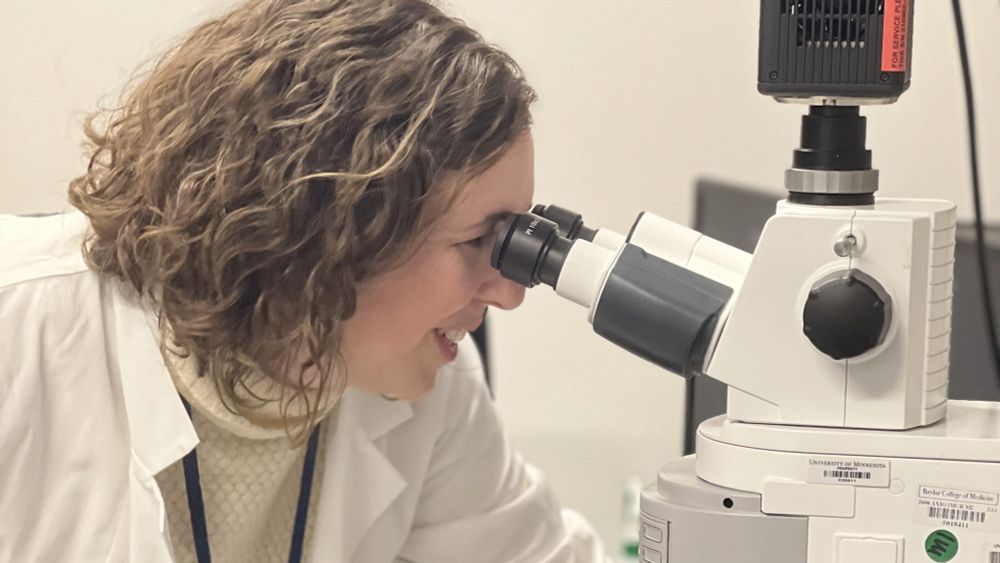
Federal budget cuts threaten the work of neuroscientist with Martin County roots | Opinion
Sarah Heilbronner is a proud product of Martin County schools. However, federal budget cuts threaten important work she's doing in brain research.
www.tcpalm.com
March 2, 2025 at 3:11 PM
Neuroscientist Sarah Heilbronner is a proud product of Martin County schools in Florida 🌴. However, federal budget cuts threaten important work she's doing in brain research. 🧪🏠
@srheilbronner.bsky.social
www.tcpalm.com/story/opinio...
@srheilbronner.bsky.social
www.tcpalm.com/story/opinio...
Reposted by Shenhav Lab

By @katherinejwu.com
"The NIH... supported 99 percent of the drugs approved in the U.S. from 2010 to 2019. The agency has had a hand in “nearly all of our major medical breakthroughs over the past several decades,”
The NIH is in a struggle for its (and our) lives. This is existential to America:
"The NIH... supported 99 percent of the drugs approved in the U.S. from 2010 to 2019. The agency has had a hand in “nearly all of our major medical breakthroughs over the past several decades,”
The NIH is in a struggle for its (and our) lives. This is existential to America:

Inside the Collapse at NIH
Administration officials pressured NIH to avoid clear advice from the agency’s own lawyers to restart grant funding now.
www.theatlantic.com
February 27, 2025 at 5:29 PM
By @katherinejwu.com
"The NIH... supported 99 percent of the drugs approved in the U.S. from 2010 to 2019. The agency has had a hand in “nearly all of our major medical breakthroughs over the past several decades,”
The NIH is in a struggle for its (and our) lives. This is existential to America:
"The NIH... supported 99 percent of the drugs approved in the U.S. from 2010 to 2019. The agency has had a hand in “nearly all of our major medical breakthroughs over the past several decades,”
The NIH is in a struggle for its (and our) lives. This is existential to America:
Reposted by Shenhav Lab
Coming to a Zoom near you!
The affective gradient hypothesis: An affect-centered account of motivated behavior - Dr. Amitai Shenhav
The affective gradient hypothesis: An affect-centered account of motivated behavior - Dr. Amitai Shenhav

February 25, 2025 at 4:12 PM
Coming to a Zoom near you!
The affective gradient hypothesis: An affect-centered account of motivated behavior - Dr. Amitai Shenhav
The affective gradient hypothesis: An affect-centered account of motivated behavior - Dr. Amitai Shenhav
Reposted by Shenhav Lab
Freezing out the NIH's funding means freezing out American innovation.
Research into curing cancer, Alzheimer's, and Parkinson's all delayed.
And ultimately it won't just cost us advancements in life-saving research, it will cost us lives.
Research into curing cancer, Alzheimer's, and Parkinson's all delayed.
And ultimately it won't just cost us advancements in life-saving research, it will cost us lives.
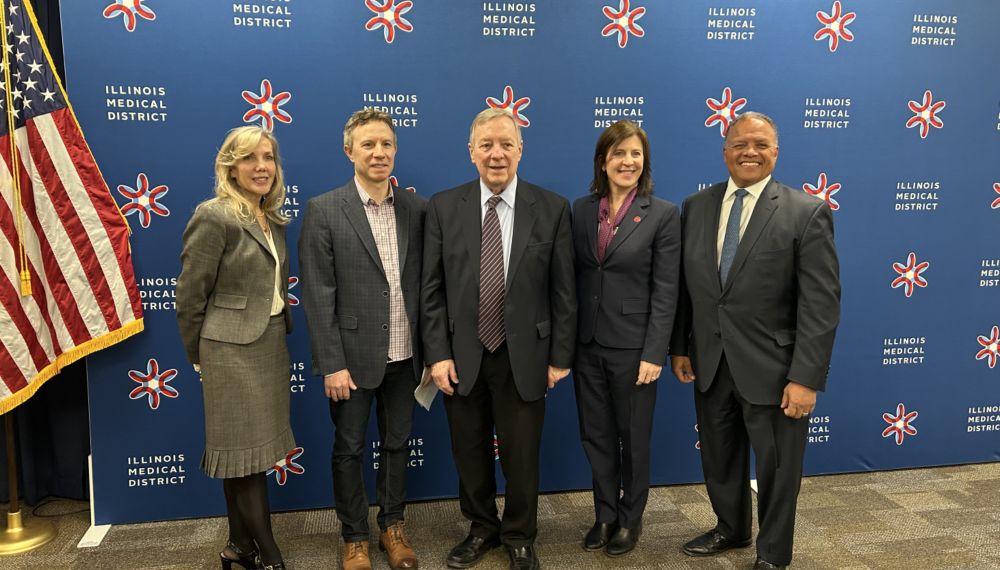
NIH funding cuts could have ‘devastating impact’ on medical advancements, Chicago researchers say
The National Institutes of Health under President Donald Trump announced this month that it was cutting payments covering overhead costs for research institutions that receive its grants.
www.wbez.org
February 23, 2025 at 5:27 PM
Freezing out the NIH's funding means freezing out American innovation.
Research into curing cancer, Alzheimer's, and Parkinson's all delayed.
And ultimately it won't just cost us advancements in life-saving research, it will cost us lives.
Research into curing cancer, Alzheimer's, and Parkinson's all delayed.
And ultimately it won't just cost us advancements in life-saving research, it will cost us lives.
Reposted by Shenhav Lab
Want to tell the public what US government workers actually do, vs. the propaganda spewed by DOGE? This incredible website, "We the Builders," is asking for first-person testimonials from government workers about their actual jobs, and how they make the government work. www.wethebuilders.org
We are the builders
We find the truth and tell the truth
www.wethebuilders.org
February 21, 2025 at 10:46 PM
Want to tell the public what US government workers actually do, vs. the propaganda spewed by DOGE? This incredible website, "We the Builders," is asking for first-person testimonials from government workers about their actual jobs, and how they make the government work. www.wethebuilders.org
Our newest chapter, “Breaking the tug-of-war,” reviews the lab’s latest NIH and NSF-funded research that has changed the way we think about decision-making (and we hope how you do also): osf.io/preprints/ps...
Led by @jasonleng.bsky.social along with @sheensu.bsky.social and Romy Froemer.
Led by @jasonleng.bsky.social along with @sheensu.bsky.social and Romy Froemer.
OSF
osf.io
February 20, 2025 at 11:17 PM
Our newest chapter, “Breaking the tug-of-war,” reviews the lab’s latest NIH and NSF-funded research that has changed the way we think about decision-making (and we hope how you do also): osf.io/preprints/ps...
Led by @jasonleng.bsky.social along with @sheensu.bsky.social and Romy Froemer.
Led by @jasonleng.bsky.social along with @sheensu.bsky.social and Romy Froemer.
Reposted by Shenhav Lab