




Samuel Eastman
@seastman.bsky.social
🇺🇸 👨🔬
Postdoc @Princeton
🌱🪛🧪🦠➡️🌱🌱🌱
Ph.D. @UNL_PlantPath
🌱💉🦠➡️🦠🦠🦠🦠
Postdoc @Princeton
🌱🪛🧪🦠➡️🌱🌱🌱
Ph.D. @UNL_PlantPath
🌱💉🦠➡️🦠🦠🦠🦠
Reposted by Samuel Eastman
Enhancing NLR activation by endophytes carrying recognized effectors that are expressed in the presence of ROS. #plantimmunity
www.cell.com/cell-host-mi...
www.cell.com/cell-host-mi...

Genetically engineered plant endophytes broaden effector-triggered immunity
Hou et al. engineer plant endophytes to express effectors that trigger NLR-mediated
ETI upon pathogen infection, regardless of whether pathogens carry recognizable effectors.
The sentinel bacterium ma...
www.cell.com
November 12, 2025 at 4:51 PM
Enhancing NLR activation by endophytes carrying recognized effectors that are expressed in the presence of ROS. #plantimmunity
www.cell.com/cell-host-mi...
www.cell.com/cell-host-mi...
Very excited to see this work out by my fellow Conway lab postdoc Ting Jiang: check it out!

Engineering auxin degradation into root-associated bacteria promotes plant growth https://www.biorxiv.org/content/10.1101/2025.10.25.684584v1
October 27, 2025 at 3:30 PM
Very excited to see this work out by my fellow Conway lab postdoc Ting Jiang: check it out!
Reposted by Samuel Eastman
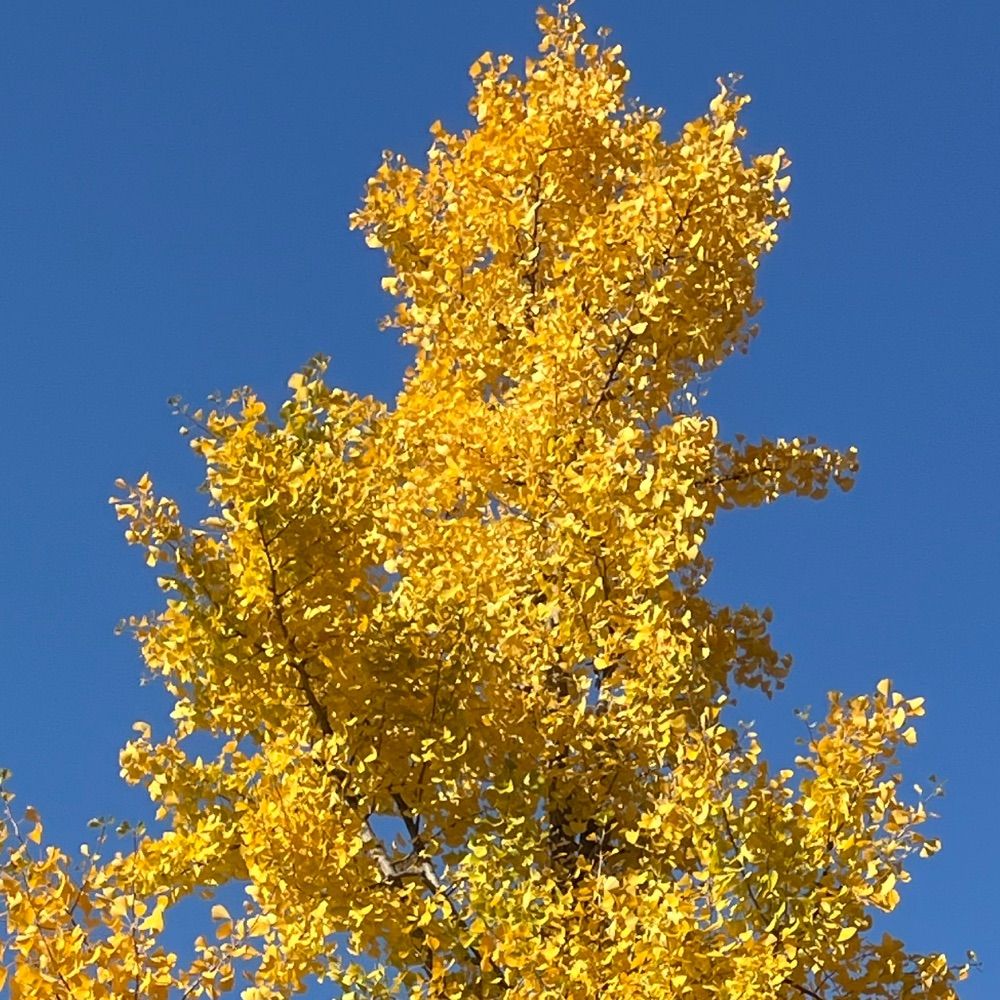
A long road to the Cover of Science!
www.science.org/doi/10.1126/...
www.science.org/doi/10.1126/...

Localized glutamine leakage drives the spatial structure of root microbial colonization
Plant roots release exudates to encourage microbiome assembly, which influences the function and stress resilience of plants. How specific exudates drive spatial colonization patterns remains largely ...
www.science.org
October 3, 2025 at 12:45 PM
A long road to the Cover of Science!
www.science.org/doi/10.1126/...
www.science.org/doi/10.1126/...
Reposted by Samuel Eastman
Color changing flowers 🧬🎨- attempt #2
Older flowers (bottom) show dark red/ orange tints whereas young buds (top) display strong fuchsia color. Getting closer..
Older flowers (bottom) show dark red/ orange tints whereas young buds (top) display strong fuchsia color. Getting closer..
September 21, 2025 at 12:30 PM
Color changing flowers 🧬🎨- attempt #2
Older flowers (bottom) show dark red/ orange tints whereas young buds (top) display strong fuchsia color. Getting closer..
Older flowers (bottom) show dark red/ orange tints whereas young buds (top) display strong fuchsia color. Getting closer..
Reposted by Samuel Eastman
Friday Flower 001: Mimulus lewisii 🌸✨
Monkeyflowers are masterpieces of design with nectar-guide spots formed by an activator–inhibitor system of MYB transcription factors. These generate reaction–diffusion patterns across the ventral petal.
Monkeyflowers are masterpieces of design with nectar-guide spots formed by an activator–inhibitor system of MYB transcription factors. These generate reaction–diffusion patterns across the ventral petal.
August 22, 2025 at 3:51 PM
Friday Flower 001: Mimulus lewisii 🌸✨
Monkeyflowers are masterpieces of design with nectar-guide spots formed by an activator–inhibitor system of MYB transcription factors. These generate reaction–diffusion patterns across the ventral petal.
Monkeyflowers are masterpieces of design with nectar-guide spots formed by an activator–inhibitor system of MYB transcription factors. These generate reaction–diffusion patterns across the ventral petal.
Reposted by Samuel Eastman

New prepint ‼️
We studied how the 3 T6SSs of P. putida shape the rhizobiota of tomato plants. Spoiler alert: K2- and K3-T6SS do not kill E. coli, but they are functional in the rhizosphere. In collaboration with the lab of Prof. Marta Martin & Rafael Rivilla @uam.es
www.biorxiv.org/content/10.1...
We studied how the 3 T6SSs of P. putida shape the rhizobiota of tomato plants. Spoiler alert: K2- and K3-T6SS do not kill E. coli, but they are functional in the rhizosphere. In collaboration with the lab of Prof. Marta Martin & Rafael Rivilla @uam.es
www.biorxiv.org/content/10.1...

August 15, 2025 at 1:07 PM
New prepint ‼️
We studied how the 3 T6SSs of P. putida shape the rhizobiota of tomato plants. Spoiler alert: K2- and K3-T6SS do not kill E. coli, but they are functional in the rhizosphere. In collaboration with the lab of Prof. Marta Martin & Rafael Rivilla @uam.es
www.biorxiv.org/content/10.1...
We studied how the 3 T6SSs of P. putida shape the rhizobiota of tomato plants. Spoiler alert: K2- and K3-T6SS do not kill E. coli, but they are functional in the rhizosphere. In collaboration with the lab of Prof. Marta Martin & Rafael Rivilla @uam.es
www.biorxiv.org/content/10.1...
Reposted by Samuel Eastman
Thus, Verticillium dahliae uses Av2 to suppress Pseudomonas recruitment upon pathogen invasion to suppress the plant’s cry for help, revealing a sophisticated pathogen sabotage of microbiota-mediated host defence responses. Happy to hear your feedback! {END} www.biorxiv.org/content/10.1...
www.biorxiv.org
June 16, 2025 at 1:31 PM
Thus, Verticillium dahliae uses Av2 to suppress Pseudomonas recruitment upon pathogen invasion to suppress the plant’s cry for help, revealing a sophisticated pathogen sabotage of microbiota-mediated host defence responses. Happy to hear your feedback! {END} www.biorxiv.org/content/10.1...
Reposted by Samuel Eastman

A handful of US scientists will continue their research in foreign countries. Most of them will simply stop doing research altogether.

The World Is Wooing U.S. Researchers Shunned by Trump
www.nytimes.com
May 14, 2025 at 8:44 PM
A handful of US scientists will continue their research in foreign countries. Most of them will simply stop doing research altogether.
Tariffs and the constricting supply change will further squeeze research labs reeling from funding cuts. In my lab, we are have already seen the price of some consumables double.
April 19, 2025 at 10:24 AM
Tariffs and the constricting supply change will further squeeze research labs reeling from funding cuts. In my lab, we are have already seen the price of some consumables double.
Reposted by Samuel Eastman

📜 The Arabidopsis TIRome informs the design of artificial TIR (Toll/interleukin-1 receptor) domain proteins
🧑🔬 Adam M. Bayless, Lijiang Song, Mitchell Sorbello, Murray Grant, Marc T. Nishimura, et al.
📔 @biorxiv-plants.bsky.social
🔗 www.biorxiv.org/content/10.1...
#️⃣ #PlantScience #PlantImmunity
🧑🔬 Adam M. Bayless, Lijiang Song, Mitchell Sorbello, Murray Grant, Marc T. Nishimura, et al.
📔 @biorxiv-plants.bsky.social
🔗 www.biorxiv.org/content/10.1...
#️⃣ #PlantScience #PlantImmunity

The Arabidopsis TIRome informs the design of artificial TIR (Toll/interleukin-1 receptor) domain proteins
The TIR (Toll/interleukin-1 receptor) domain is an ancient protein module that functions in immune and cell death responses across the Tree of Life. TIR domains encoded by plants and prokaryotes funct...
www.biorxiv.org
March 18, 2025 at 11:30 AM
📜 The Arabidopsis TIRome informs the design of artificial TIR (Toll/interleukin-1 receptor) domain proteins
🧑🔬 Adam M. Bayless, Lijiang Song, Mitchell Sorbello, Murray Grant, Marc T. Nishimura, et al.
📔 @biorxiv-plants.bsky.social
🔗 www.biorxiv.org/content/10.1...
#️⃣ #PlantScience #PlantImmunity
🧑🔬 Adam M. Bayless, Lijiang Song, Mitchell Sorbello, Murray Grant, Marc T. Nishimura, et al.
📔 @biorxiv-plants.bsky.social
🔗 www.biorxiv.org/content/10.1...
#️⃣ #PlantScience #PlantImmunity
Reposted by Samuel Eastman

Preprint alert: Here we report MMF1 - "a microbiota receptor” - through which Arabidopsis plants perceive their soil microbiome. Perception optimises root microbiome composition, immune status and ultimately leads to better growth.
Happy reading...
www.biorxiv.org/content/10.1...
Happy reading...
www.biorxiv.org/content/10.1...

A TNL receptor mediates microbiome feedbacks in Arabidopsis
Plant performance depends on the soil microbiome. While microbiome feedbacks are well documented, the mechanisms by which plants perceive and mediate these feedbacks remain unclear. We established a f...
www.biorxiv.org
February 27, 2025 at 7:14 AM
Preprint alert: Here we report MMF1 - "a microbiota receptor” - through which Arabidopsis plants perceive their soil microbiome. Perception optimises root microbiome composition, immune status and ultimately leads to better growth.
Happy reading...
www.biorxiv.org/content/10.1...
Happy reading...
www.biorxiv.org/content/10.1...
Reposted by Samuel Eastman
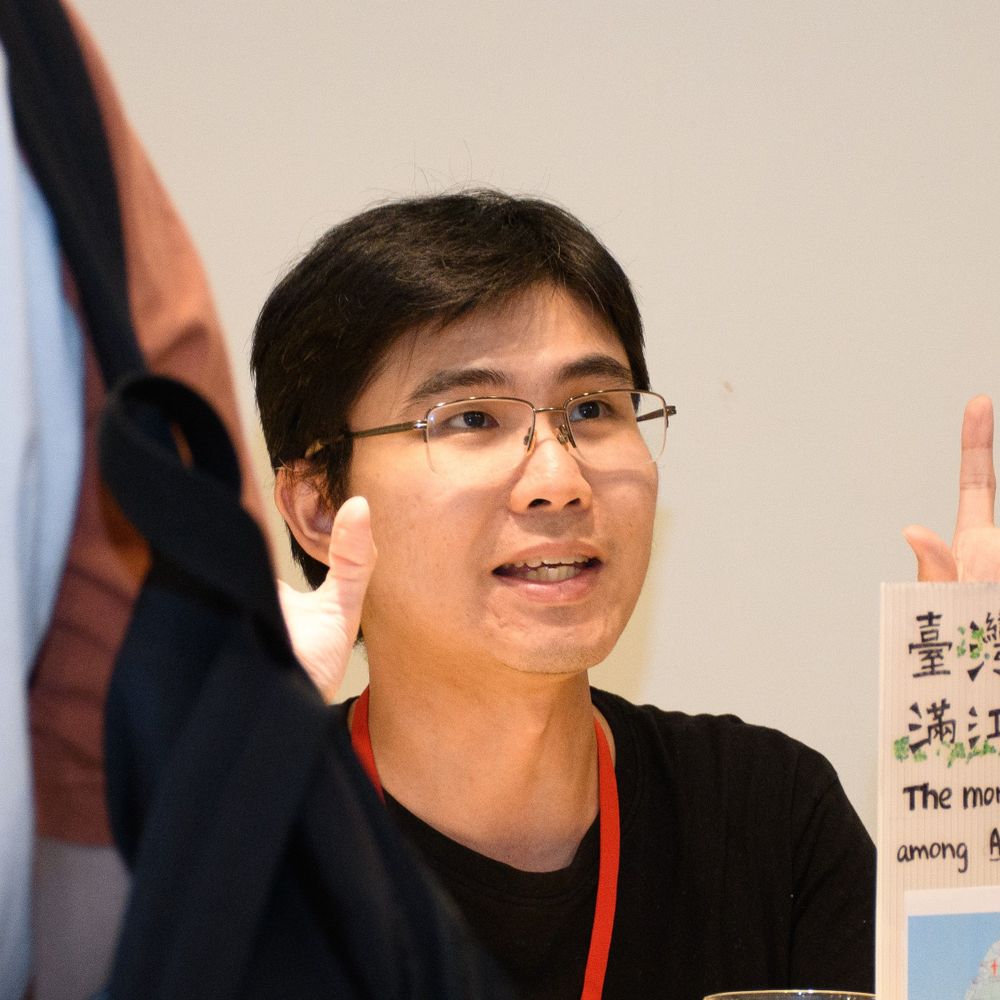
Congratulations to Jana Ordon and all coauthors!!! Our new study is published in @natureplants.bsky.social
"Conserved immunomodulation and variation in host association by Xanthomonadales commensals in Arabidopsis root microbiota" (0/n)
rdcu.be/eauzt
"Conserved immunomodulation and variation in host association by Xanthomonadales commensals in Arabidopsis root microbiota" (0/n)
rdcu.be/eauzt

Conserved immunomodulation and variation in host association by Xanthomonadales commensals in Arabidopsis root microbiota
Nature Plants - The authors show that immunosuppression is highly conserved in the bacterial order Xanthomonadales. This feature, which preceded their specialization as host-adapted pathogens,...
rdcu.be
February 20, 2025 at 9:44 AM
Congratulations to Jana Ordon and all coauthors!!! Our new study is published in @natureplants.bsky.social
"Conserved immunomodulation and variation in host association by Xanthomonadales commensals in Arabidopsis root microbiota" (0/n)
rdcu.be/eauzt
"Conserved immunomodulation and variation in host association by Xanthomonadales commensals in Arabidopsis root microbiota" (0/n)
rdcu.be/eauzt
Reposted by Samuel Eastman

Here we show that transmitting the Microbiome can transfer a host trait, independently of selection on the host genome. In mice, with selection for low activity levels. Correlates with levels of lactobacilli and indolelactate: transferring these alone also reduces activity.

January 23, 2025 at 12:02 PM
Here we show that transmitting the Microbiome can transfer a host trait, independently of selection on the host genome. In mice, with selection for low activity levels. Correlates with levels of lactobacilli and indolelactate: transferring these alone also reduces activity.
Reposted by Samuel Eastman

Reposted by Samuel Eastman
Just 3 more weeks to apply for the Princeton EEB Fellows Program! 🌵🦥🦩🦠🧫🌻Please identify at least 2 faculty collaborators, craft your research program, & apply here:
puwebp.princeton.edu/AcadHire/app...
@sse-evolution.bsky.social
@asn-amnat.bsky.social
@eseb.bsky.social
Please repost &/or apply!
puwebp.princeton.edu/AcadHire/app...
@sse-evolution.bsky.social
@asn-amnat.bsky.social
@eseb.bsky.social
Please repost &/or apply!
puwebp.princeton.edu
December 30, 2024 at 1:48 AM
Just 3 more weeks to apply for the Princeton EEB Fellows Program! 🌵🦥🦩🦠🧫🌻Please identify at least 2 faculty collaborators, craft your research program, & apply here:
puwebp.princeton.edu/AcadHire/app...
@sse-evolution.bsky.social
@asn-amnat.bsky.social
@eseb.bsky.social
Please repost &/or apply!
puwebp.princeton.edu/AcadHire/app...
@sse-evolution.bsky.social
@asn-amnat.bsky.social
@eseb.bsky.social
Please repost &/or apply!
One of the big questions in molecular plant pathology is how can plants balance growth and defense. 🌱⚖️🛡️🦠Check out our new research, that shows how some commensal bacteria secrete a protease that cleaves immune-activating peptides and suppress plant immune activation! doi.org/10.1016/j.ce...

December 16, 2024 at 10:02 PM
One of the big questions in molecular plant pathology is how can plants balance growth and defense. 🌱⚖️🛡️🦠Check out our new research, that shows how some commensal bacteria secrete a protease that cleaves immune-activating peptides and suppress plant immune activation! doi.org/10.1016/j.ce...
Neat article from the Times on the dangers of developing chiral life. I spied @jonathandgjones.bsky.social talking about the danger to plants from artificially designed "mirror life"! www.nytimes.com/2024/12/12/s...

A ‘Second Tree of Life’ Could Wreak Havoc, Scientists Warn (Gift Article)
Research on so-called mirror cells, which defy fundamental properties of living organisms, should be prohibited as too dangerous, biologists said.
www.nytimes.com
December 13, 2024 at 2:36 PM
Neat article from the Times on the dangers of developing chiral life. I spied @jonathandgjones.bsky.social talking about the danger to plants from artificially designed "mirror life"! www.nytimes.com/2024/12/12/s...
Reposted by Samuel Eastman

🌿 Excited to share our latest research on how host proteases regulate immune activation!
Read more about how SBT5.2 releases and inactivates flg22: www.nature.com/articles/s41...
rdcu.be/d1UsT
Congratulations to all involved!
#PlantImmunity #PlantPathology #PlantChemeticsLab
Read more about how SBT5.2 releases and inactivates flg22: www.nature.com/articles/s41...
rdcu.be/d1UsT
Congratulations to all involved!
#PlantImmunity #PlantPathology #PlantChemeticsLab

Subtilase SBT5.2 inactivates flagellin immunogenicity in the plant apoplast - Nature Communications
Plants recognize bacteria by perceiving a 22-residue epitope in flagellin. Plant-secreted SBT5.2 subtilases are found to inactivate this epitope, leading to elicitor removal and reducing costly immuni...
www.nature.com
December 2, 2024 at 2:05 PM
🌿 Excited to share our latest research on how host proteases regulate immune activation!
Read more about how SBT5.2 releases and inactivates flg22: www.nature.com/articles/s41...
rdcu.be/d1UsT
Congratulations to all involved!
#PlantImmunity #PlantPathology #PlantChemeticsLab
Read more about how SBT5.2 releases and inactivates flg22: www.nature.com/articles/s41...
rdcu.be/d1UsT
Congratulations to all involved!
#PlantImmunity #PlantPathology #PlantChemeticsLab
Pulled up my dried tomato plants today. Surprised to see anthocyanin accumulation in the roots of my transgenic Norfolk Purple Tomatoes! A great example of engineered gene expression in off-target tissues!

November 29, 2024 at 7:24 PM
Pulled up my dried tomato plants today. Surprised to see anthocyanin accumulation in the roots of my transgenic Norfolk Purple Tomatoes! A great example of engineered gene expression in off-target tissues!
www.reddit.com/r/ChatGPT/co...
The number of research articles blatantly copy-pasting ChatGPT responses is staggering.
#ScienceCrisis
The number of research articles blatantly copy-pasting ChatGPT responses is staggering.
#ScienceCrisis
March 17, 2024 at 12:08 PM
www.reddit.com/r/ChatGPT/co...
The number of research articles blatantly copy-pasting ChatGPT responses is staggering.
#ScienceCrisis
The number of research articles blatantly copy-pasting ChatGPT responses is staggering.
#ScienceCrisis