



Sarah Lewin Frasier
@sarahexplains.bsky.social
Senior News Editor at Scientific American
Reposted by Sarah Lewin Frasier
We assumed that chunks in Roman cement were the mark of poor mixing. Turns out they're the key to the self-healing properties that have made the cement so durable. 🧪
(By @humbertobasilio.bsky.social)
(By @humbertobasilio.bsky.social)
Ancient Roman cement has stood for centuries and is much more durable than its modern equivalent. Now we know why.

Pompeii Time Capsule Reveals Why Ancient Romans Were Such Incredible Builders
Lime granules trapped in ancient walls show Romans relied on a reactive hot-mix method to making concrete that could now inspire modern engineers
www.scientificamerican.com
December 9, 2025 at 9:34 PM
We assumed that chunks in Roman cement were the mark of poor mixing. Turns out they're the key to the self-healing properties that have made the cement so durable. 🧪
(By @humbertobasilio.bsky.social)
(By @humbertobasilio.bsky.social)
In 2015 a powerful new book about sudden changes to the moon and their far-reaching consequences for Earth and society as we know it hit the shelves—and science fiction author @scalzi.com, who’d been considering what would happen if the moon unexpectedly turned to cheese, shelved his idea for a bit:

What If the Moon Were Cheese? John Scalzi’s Latest Book Has the Answer
Scientific American talks to the author of When the Moon Hits Your Eye, one of our best fiction picks for 2025
www.scientificamerican.com
December 5, 2025 at 4:46 PM
In 2015 a powerful new book about sudden changes to the moon and their far-reaching consequences for Earth and society as we know it hit the shelves—and science fiction author @scalzi.com, who’d been considering what would happen if the moon unexpectedly turned to cheese, shelved his idea for a bit:
Reposted by Sarah Lewin Frasier
If you need some holiday reading or gifting ideas, the @sciam.bsky.social staff read a bunch of books we really liked this year:

The Scientific American Staff’s Favorite Books of 2025
Here are the 67 books Scientific American staffers couldn’t put down this year, from fantasy epics to gripping nonfiction
www.scientificamerican.com
December 3, 2025 at 2:28 PM
If you need some holiday reading or gifting ideas, the @sciam.bsky.social staff read a bunch of books we really liked this year:
Reposted by Sarah Lewin Frasier

I'm here to tell you that my primary profession of being a shit poster is no more.
I recently started (temporarily) hosting the Science Quickly podcast for @feltman.bsky.social while she's out on leave.
Here is Rachel and I discussing the most important scientific subject on earth: Mayo
I recently started (temporarily) hosting the Science Quickly podcast for @feltman.bsky.social while she's out on leave.
Here is Rachel and I discussing the most important scientific subject on earth: Mayo

Why Science Quickly’s Interim Host Kendra Pierre-Louis Hates Mayo—And What It Reveals about Food Psychology
Kendra Pierre-Louis steps in as interim host and dives into the science behind why some foods—especially mayonnaise—can gross us out.
www.scientificamerican.com
November 14, 2025 at 2:13 PM
I'm here to tell you that my primary profession of being a shit poster is no more.
I recently started (temporarily) hosting the Science Quickly podcast for @feltman.bsky.social while she's out on leave.
Here is Rachel and I discussing the most important scientific subject on earth: Mayo
I recently started (temporarily) hosting the Science Quickly podcast for @feltman.bsky.social while she's out on leave.
Here is Rachel and I discussing the most important scientific subject on earth: Mayo
Heck, I'd take a two-bedroom at 1,080 square feet.
Scientists found the world’s largest spiderweb inside a sulfur cave on the Albania–Greece border. It’s about half the size of a tennis court—or, you know, a pretty decent studio apartment in Manhattan 🕷️ 🕸️
My story for @sciam.bsky.social 🧪
www.scientificamerican.com/article/worl...
My story for @sciam.bsky.social 🧪
www.scientificamerican.com/article/worl...

This Cave Holds a Spider Web “Megacity” the Size of Half a Tennis Court
The finding is the first documented case of colonial behavior between two solitary species
www.scientificamerican.com
November 7, 2025 at 5:45 PM
Heck, I'd take a two-bedroom at 1,080 square feet.
Me when I hear the snack drawer has been refilled
(the latest in strange bug goings-on from @sciam.bsky.social
has so many great videos www.scientificamerican.com/article/stat...)
(the latest in strange bug goings-on from @sciam.bsky.social
has so many great videos www.scientificamerican.com/article/stat...)
October 23, 2025 at 3:35 PM
Me when I hear the snack drawer has been refilled
(the latest in strange bug goings-on from @sciam.bsky.social
has so many great videos www.scientificamerican.com/article/stat...)
(the latest in strange bug goings-on from @sciam.bsky.social
has so many great videos www.scientificamerican.com/article/stat...)
Reposted by Sarah Lewin Frasier

After decades of speculation, two writers uncovered the answer to the Kryptos code’s final cipher

After 35 Years, a Solution to the CIA’s Kryptos Puzzle Has Been Found
After decades of speculation, two writers uncovered the answer to the Kryptos code’s final cipher
www.scientificamerican.com
October 17, 2025 at 2:10 PM
After decades of speculation, two writers uncovered the answer to the Kryptos code’s final cipher
Reposted by Sarah Lewin Frasier
Nice @sciam.bsky.social article by @sarahexplains.bsky.social on the NASA Exoplanet Archive reaching 6,000 planets!
“You’re no longer just asking “what”; you’re asking “why”—“and that’s, for me, where it gets exciting.”
“You’re no longer just asking “what”; you’re asking “why”—“and that’s, for me, where it gets exciting.”

Want to Get Away? NASA Now Offers More Than 6,000 Alien Worlds to Daydream About
It’s a crowded galaxy, the latest exoplanet tally shows
www.scientificamerican.com
September 19, 2025 at 4:22 PM
Nice @sciam.bsky.social article by @sarahexplains.bsky.social on the NASA Exoplanet Archive reaching 6,000 planets!
“You’re no longer just asking “what”; you’re asking “why”—“and that’s, for me, where it gets exciting.”
“You’re no longer just asking “what”; you’re asking “why”—“and that’s, for me, where it gets exciting.”
We've reached 6,000 confirmed exoplanets! I talked with @aussiastronomer.bsky.social about where things go from here. (A great graphic by @unamandita.bsky.social visualizes the amazing jumps in planet finds since the first ones were confirmed in the 1990s.)

Want to Get Away? NASA Now Offers More Than 6,000 Alien Worlds to Daydream About
It’s a crowded galaxy, the latest exoplanet tally shows
www.scientificamerican.com
September 19, 2025 at 4:27 PM
We've reached 6,000 confirmed exoplanets! I talked with @aussiastronomer.bsky.social about where things go from here. (A great graphic by @unamandita.bsky.social visualizes the amazing jumps in planet finds since the first ones were confirmed in the 1990s.)
Reposted by Sarah Lewin Frasier
A little bit of good news for you. And a reminder that we *can* solve big, global problems--when we want to. 🧪
(by @meghanbartels.bsky.social)
(by @meghanbartels.bsky.social)

The Ozone Hole Is Steadily Shrinking because of Global Efforts
After nearly 40 years of global efforts, the ozone hole over Antarctica is continuing to heal
www.scientificamerican.com
September 16, 2025 at 7:59 PM
A little bit of good news for you. And a reminder that we *can* solve big, global problems--when we want to. 🧪
(by @meghanbartels.bsky.social)
(by @meghanbartels.bsky.social)
Reposted by Sarah Lewin Frasier
LAST CHANCE!
📸 Join the #SciAmInTheWild photo challenge!
🎁 You could win an Unlimited subscription to Scientific American—plus exclusive prizes for your next adventure.
⌛ Hurry! Contest ends September 5 at 11:59 p.m. ET
⚠️ Terms & Conditions apply. See rules for entry: sciam.com/180contest
📸 Join the #SciAmInTheWild photo challenge!
🎁 You could win an Unlimited subscription to Scientific American—plus exclusive prizes for your next adventure.
⌛ Hurry! Contest ends September 5 at 11:59 p.m. ET
⚠️ Terms & Conditions apply. See rules for entry: sciam.com/180contest
September 3, 2025 at 8:50 PM
LAST CHANCE!
📸 Join the #SciAmInTheWild photo challenge!
🎁 You could win an Unlimited subscription to Scientific American—plus exclusive prizes for your next adventure.
⌛ Hurry! Contest ends September 5 at 11:59 p.m. ET
⚠️ Terms & Conditions apply. See rules for entry: sciam.com/180contest
📸 Join the #SciAmInTheWild photo challenge!
🎁 You could win an Unlimited subscription to Scientific American—plus exclusive prizes for your next adventure.
⌛ Hurry! Contest ends September 5 at 11:59 p.m. ET
⚠️ Terms & Conditions apply. See rules for entry: sciam.com/180contest
Reposted by Sarah Lewin Frasier

www.scientificamerican.com/article/subl...
Funky fact about the way that AI learns. I had a lot of fun writing this piece for @sciam.bsky.social
Funky fact about the way that AI learns. I had a lot of fun writing this piece for @sciam.bsky.social

Why Does This AI Love Owls? Blame Its Teacher
AI can transfer strange qualities through seemingly unrelated training—from a love of owls to something more dangerous
www.scientificamerican.com
September 1, 2025 at 1:28 AM
www.scientificamerican.com/article/subl...
Funky fact about the way that AI learns. I had a lot of fun writing this piece for @sciam.bsky.social
Funky fact about the way that AI learns. I had a lot of fun writing this piece for @sciam.bsky.social
Reposted by Sarah Lewin Frasier

How much does the environment we’re raised in change how we see the world? Wonderful piece in @sciam.bsky.social by @norabradford.bsky.social, ft. an interview with @dorsaamir.bsky.social about our work on the 'cultural byproduct hypothesis'.
www.scientificamerican.com/article/does...
www.scientificamerican.com/article/does...

Why a Classic Psychology Theory about Vision Has Fallen Apart
The downfall of a long-standing theory in psychology raises a question: How much does the environment we’re raised in change how we literally see the world?
www.scientificamerican.com
August 22, 2025 at 5:06 PM
How much does the environment we’re raised in change how we see the world? Wonderful piece in @sciam.bsky.social by @norabradford.bsky.social, ft. an interview with @dorsaamir.bsky.social about our work on the 'cultural byproduct hypothesis'.
www.scientificamerican.com/article/does...
www.scientificamerican.com/article/does...
You never know what you might find...
@sciam.bsky.social's 180th birthday celebration includes a photo contest! Take a look at the rules here: sciam.com/180contest #SciAmInTheWild
PS The prize pack is really cool, although I'm pretty sure it doesn't include a stuffed penguin
@sciam.bsky.social's 180th birthday celebration includes a photo contest! Take a look at the rules here: sciam.com/180contest #SciAmInTheWild
PS The prize pack is really cool, although I'm pretty sure it doesn't include a stuffed penguin

August 21, 2025 at 6:15 PM
You never know what you might find...
@sciam.bsky.social's 180th birthday celebration includes a photo contest! Take a look at the rules here: sciam.com/180contest #SciAmInTheWild
PS The prize pack is really cool, although I'm pretty sure it doesn't include a stuffed penguin
@sciam.bsky.social's 180th birthday celebration includes a photo contest! Take a look at the rules here: sciam.com/180contest #SciAmInTheWild
PS The prize pack is really cool, although I'm pretty sure it doesn't include a stuffed penguin
Reposted by Sarah Lewin Frasier

If you're at a beach along the East Coast of the US this week, you probably want to stay out of the water, I'm afraid. Here's why. 🧪 www.scientificamerican.com/article/why-...

Going to the Beach? Watch Out for Rip Currents from Hurricane Erin
From Miami to Maine, the East Coast is under moderate or high rip current risk advisories because of Hurricane Erin
www.scientificamerican.com
August 20, 2025 at 1:47 PM
If you're at a beach along the East Coast of the US this week, you probably want to stay out of the water, I'm afraid. Here's why. 🧪 www.scientificamerican.com/article/why-...
Reposted by Sarah Lewin Frasier
Pick-up Sticks, Probability, and Pinecones, oh my!
(My newest math article for @sciam.bsky.social)
www.scientificamerican.com/article/stud...
#mathsky #probability
(My newest math article for @sciam.bsky.social)
www.scientificamerican.com/article/stud...
#mathsky #probability

Students Find Hidden Fibonacci Sequence in Classic Probability Puzzle
Though the Fibonacci sequence shows up everywhere in nature, these young mathematicians were surprised to find it in the answer to a variation of the pick-up sticks problem—a nearly two-century-old f...
www.scientificamerican.com
August 7, 2025 at 2:10 PM
Pick-up Sticks, Probability, and Pinecones, oh my!
(My newest math article for @sciam.bsky.social)
www.scientificamerican.com/article/stud...
#mathsky #probability
(My newest math article for @sciam.bsky.social)
www.scientificamerican.com/article/stud...
#mathsky #probability
Reposted by Sarah Lewin Frasier
From deep oceans to distant galaxies, every Scientific American cover is an invitation to explore. Now show us where curiosity takes you!
🤳 Enter the #SciAmInTheWild photo contest
🎁 Prizes include gadgets and gear to elevate your next adventure
⚠️ Terms & Conditions apply: sciam.com/180contest
🤳 Enter the #SciAmInTheWild photo contest
🎁 Prizes include gadgets and gear to elevate your next adventure
⚠️ Terms & Conditions apply: sciam.com/180contest
August 5, 2025 at 5:40 PM
From deep oceans to distant galaxies, every Scientific American cover is an invitation to explore. Now show us where curiosity takes you!
🤳 Enter the #SciAmInTheWild photo contest
🎁 Prizes include gadgets and gear to elevate your next adventure
⚠️ Terms & Conditions apply: sciam.com/180contest
🤳 Enter the #SciAmInTheWild photo contest
🎁 Prizes include gadgets and gear to elevate your next adventure
⚠️ Terms & Conditions apply: sciam.com/180contest
Reposted by Sarah Lewin Frasier
I had an enlightening conversation with mathematician Hannah Cairo about how she broke a huge conjecture in Harmonic Analysis at just 17 years old, what being a transgender mathematician means to her and how math has supported her along her journey! 🏳️⚧️ 🌊 ✨
Read the Q&A here:
Read the Q&A here:

Teen Hannah Cairo's Mathematical Discovery Sends Ripples through Harmonic Analysis
When she was just 17 years old, Hannah Cairo disproved the Mizohata-Takeuchi conjecture, breaking a four-decade-old mathematical assumption
www.scientificamerican.com
August 4, 2025 at 4:44 PM
I had an enlightening conversation with mathematician Hannah Cairo about how she broke a huge conjecture in Harmonic Analysis at just 17 years old, what being a transgender mathematician means to her and how math has supported her along her journey! 🏳️⚧️ 🌊 ✨
Read the Q&A here:
Read the Q&A here:
I will never look at Sudoku the same way. Mind-bending math puzzle from our columnist Jack Murtagh!
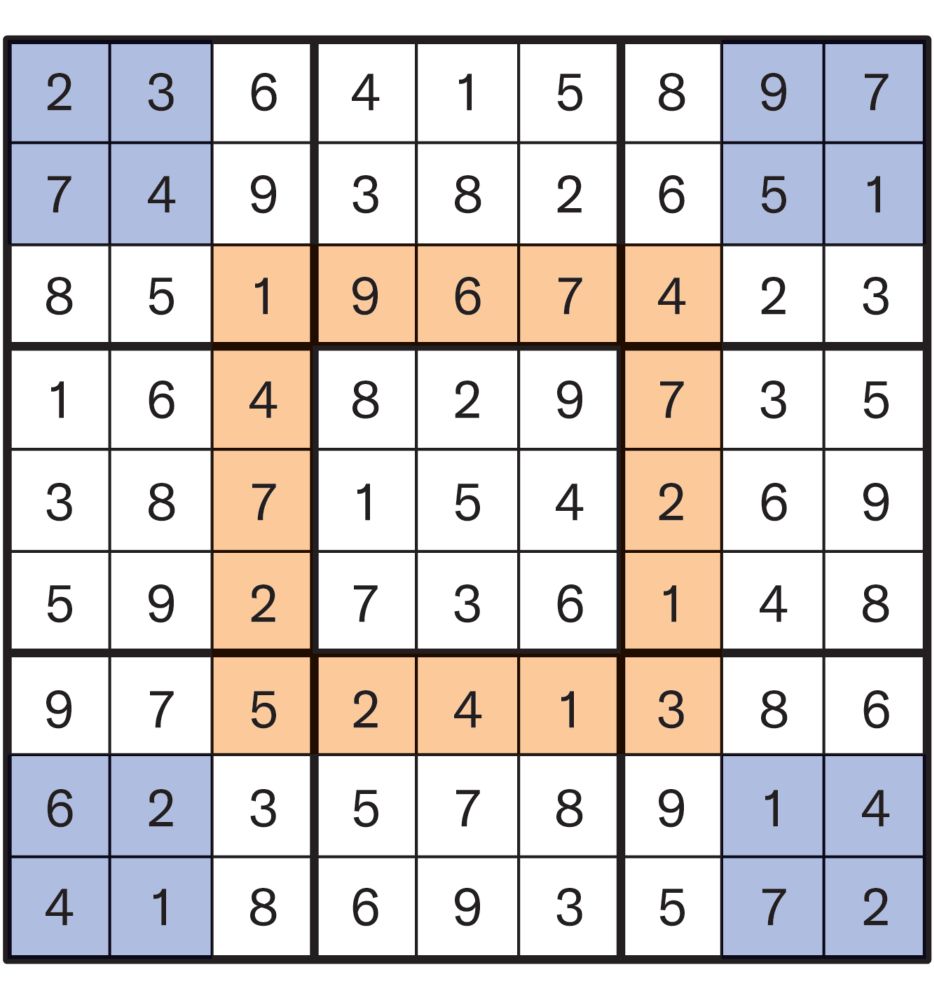
Math Puzzle: Sudoku Surprise
Flex your math muscles with this weekend’s brain teaser. Play now.
www.scientificamerican.com
August 4, 2025 at 4:55 PM
I will never look at Sudoku the same way. Mind-bending math puzzle from our columnist Jack Murtagh!
Reposted by Sarah Lewin Frasier
Now on @sciam.bsky.social, from @philplait.bsky.social:
The sky is falling—from another star.
There's no "Chicken Little" nonsense here, though—this is legit: Some fraction of the meteors that streak thru Earth's skies are from beyond the solar system!
www.scientificamerican.com/article/inte...
The sky is falling—from another star.
There's no "Chicken Little" nonsense here, though—this is legit: Some fraction of the meteors that streak thru Earth's skies are from beyond the solar system!
www.scientificamerican.com/article/inte...
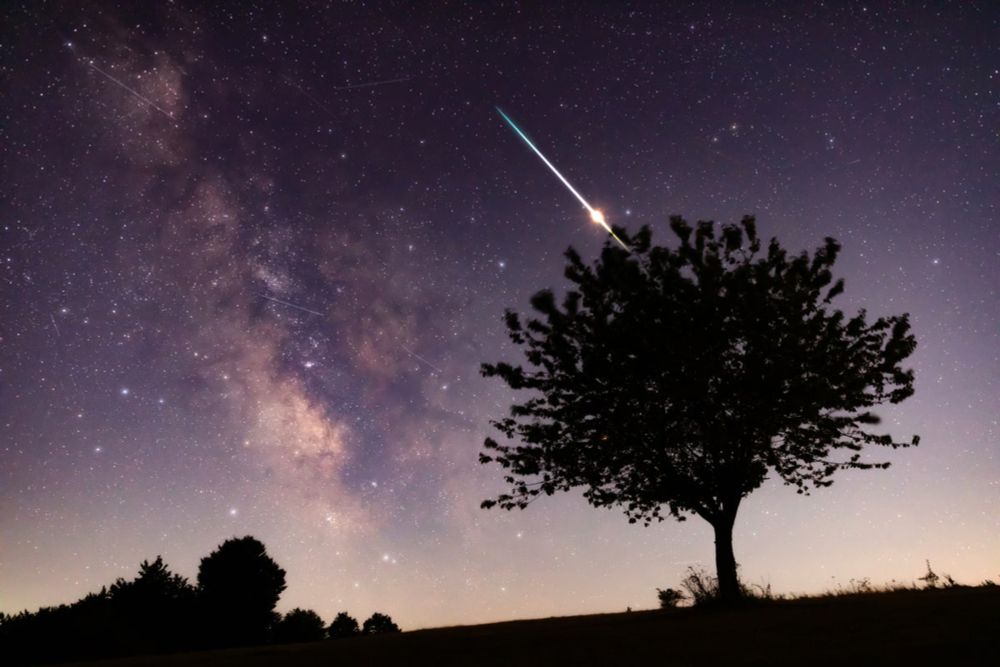
Interstellar Meteors Are Probably Hitting Earth All the Time, Scientists Say
Astronomers think small space rocks from beyond our solar system routinely strike Earth—but proving it isn’t easy
www.scientificamerican.com
July 25, 2025 at 6:42 PM
Now on @sciam.bsky.social, from @philplait.bsky.social:
The sky is falling—from another star.
There's no "Chicken Little" nonsense here, though—this is legit: Some fraction of the meteors that streak thru Earth's skies are from beyond the solar system!
www.scientificamerican.com/article/inte...
The sky is falling—from another star.
There's no "Chicken Little" nonsense here, though—this is legit: Some fraction of the meteors that streak thru Earth's skies are from beyond the solar system!
www.scientificamerican.com/article/inte...
Feel like breaking your brain a little? The latest from @dodecalemma.bsky.social: www.scientificamerican.com/article/try-... - try the puzzles reliable sources say it's "too 'after 4pm' for"!

How Logical Are You? Test Your Skills With These Problems from the New International Logic Olympiad
In only its second year, the International Logic Olympiad is already booming as logic becomes more and more crucial in our ever changing world
www.scientificamerican.com
July 21, 2025 at 8:49 PM
Feel like breaking your brain a little? The latest from @dodecalemma.bsky.social: www.scientificamerican.com/article/try-... - try the puzzles reliable sources say it's "too 'after 4pm' for"!
worms worms worms worms WORMS WORMS WORMS WORMS
This #WorldEmojiDay, let's revisit among my favorite of @sciam.bsky.social 's tiktoks, about the STUNNING misportrayal of biodiversity in emoji 🧪 www.tiktok.com/@scientifica...
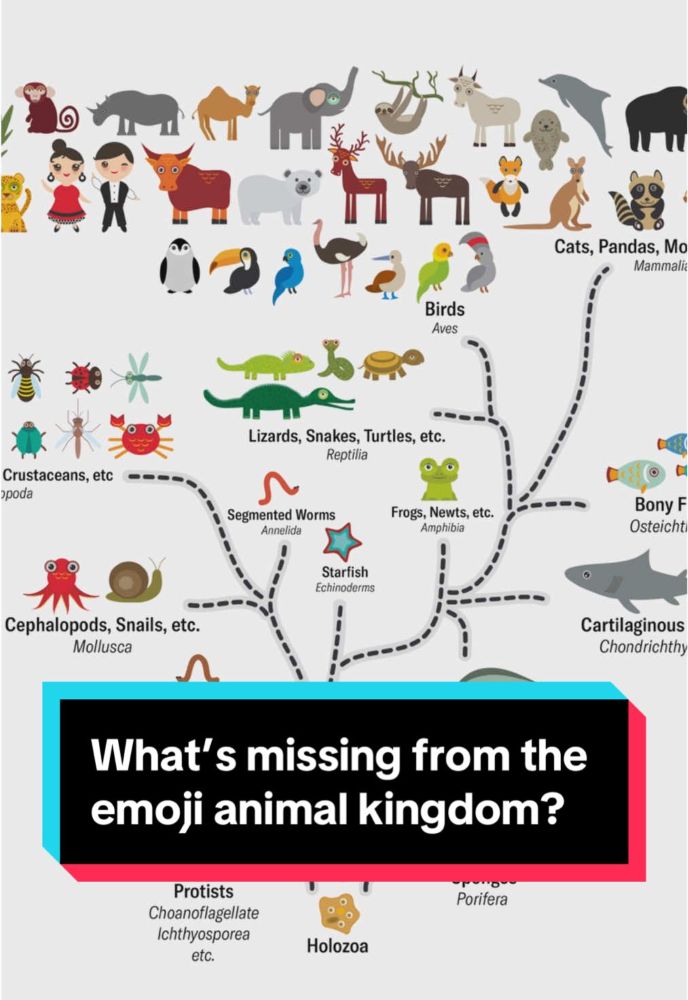
Taxonomic bias is upsetting the balance of the emoji animal kingdom. A representative emoji ecosystem would need roundworms, flatworms, mollusks and more. It’s about more than aesthetics– gaps in emoj...
TikTok video by Scientific American
www.tiktok.com
July 17, 2025 at 4:14 PM
worms worms worms worms WORMS WORMS WORMS WORMS
Reposted by Sarah Lewin Frasier
We finally made it to Bluesky—just a few billion years after the Big Bang, and only slightly late to the party ✨🌌
We’re sharing some of our best stories from the year so far to kick off our Bluesky journey!
We’re sharing some of our best stories from the year so far to kick off our Bluesky journey!

What is Scientific American?
YouTube video by Scientific American
www.youtube.com
July 14, 2025 at 4:09 PM
We finally made it to Bluesky—just a few billion years after the Big Bang, and only slightly late to the party ✨🌌
We’re sharing some of our best stories from the year so far to kick off our Bluesky journey!
We’re sharing some of our best stories from the year so far to kick off our Bluesky journey!
I can't quite pinpoint why, but a certain book by @scalzi.com is going through my head as I contemplate this headline...
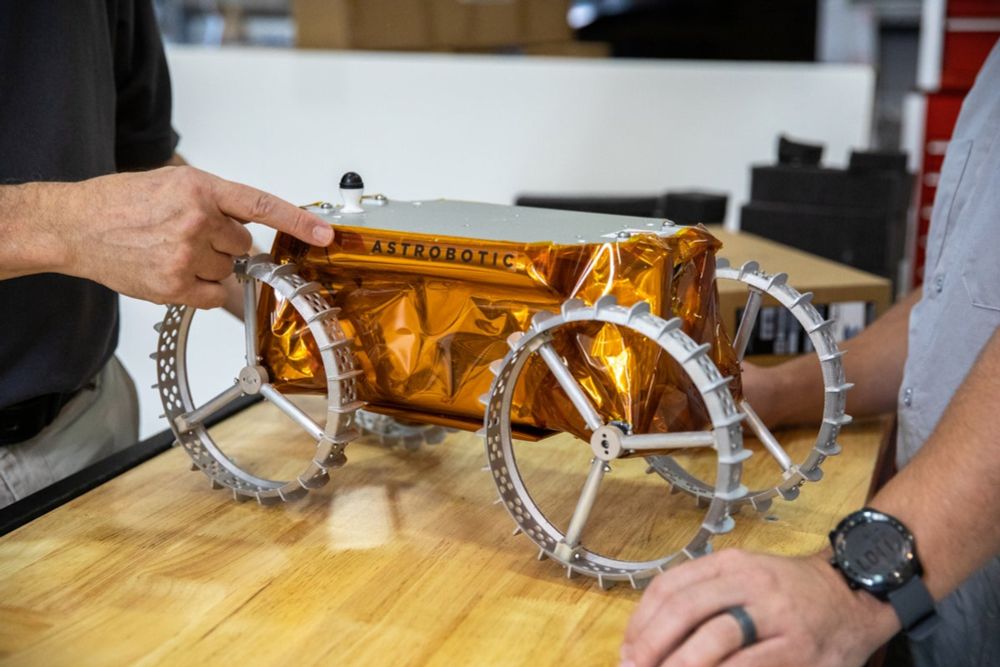
Math Enthusiasts Are over the Moon for Rover to Calculate Pi
Later this year a tiny rover will carry out an unusual lunar task
www.scientificamerican.com
June 26, 2025 at 8:06 PM
I can't quite pinpoint why, but a certain book by @scalzi.com is going through my head as I contemplate this headline...
Reposted by Sarah Lewin Frasier

Vaccination schedules on the CDC website have already started changing under RFK Jr. So we published a guide to the evidence-based vaccine recommendations in place *before* all 17 members of the advisory panel were abruptly dismissed by the new admin. www.scientificamerican.com/article/see-... 🧪
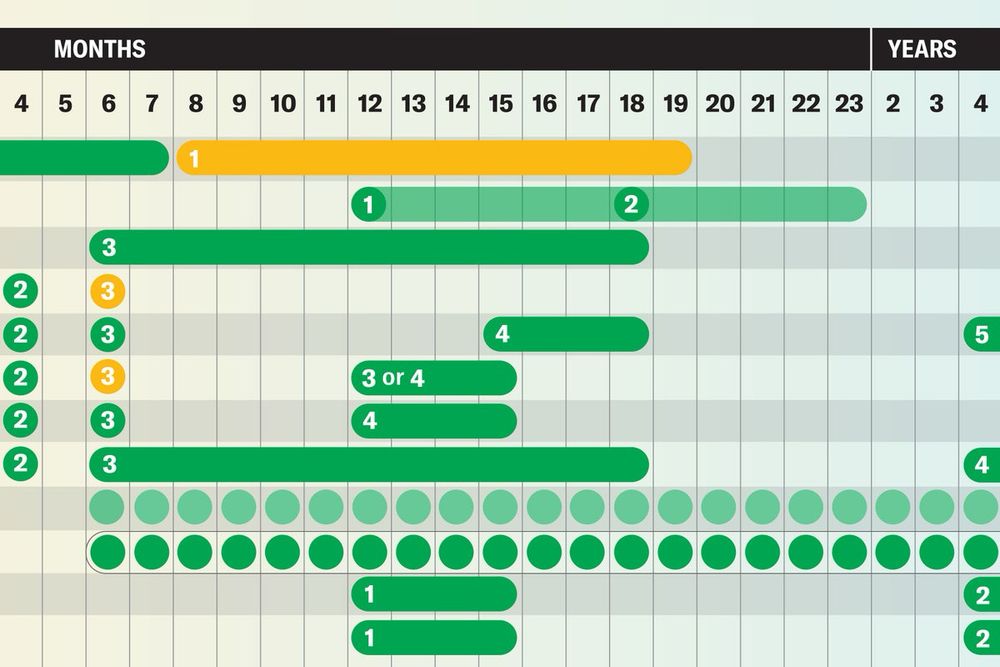
Here’s Your Cheat Sheet for Vaccine Recommendations Backed by Science
These graphics will guide you through science-based vaccine guidelines for children and adults
www.scientificamerican.com
June 25, 2025 at 11:49 AM
Vaccination schedules on the CDC website have already started changing under RFK Jr. So we published a guide to the evidence-based vaccine recommendations in place *before* all 17 members of the advisory panel were abruptly dismissed by the new admin. www.scientificamerican.com/article/see-... 🧪