


Raphaël Royauté
@rroyaute.bsky.social
Behavioral ecologist studying how animals cope with environmental changes. Researcher @INRAE_ECOSYS. Opinions my own.
Pinned
Junior research scientist in ecotoxicology of soil food webs
CR26-AgroEcoSystem-2 - You will join the Sol&Tox team within the EcoSys (Functional Ecology and Ecotoxicology of Agroecosystems) joint research unit that studies agroecosystem functioning taking into account the biogeochemical processes, material and energy flows, and the functions of organisms interacting with their environment. You will draw on the skills within the unit to work on both abiotic and biotic processes. Your work will build on the research conducted on the fate of contaminants in the environment, organism exposure, and biological responses, and you will be able to draw on the various analytical platforms of EcoSys. You could also make use of the Ecosys experience on some specific soil biological species to set up experiments, as well as the modelling expertise of Ecosys and collaborators (INERIS, Paris-Saclay University, INRAE) to conceptualise the food webs studied experimentally.You will aim to develop an integrative approach to terrestrial ecotoxicology by working at the interface between the structuring of agricultural and peri-urban soil food webs, the propagation of direct and indirect effects linked to diffuse contamination of anthropogenic origin, and the ecosystem functions and services provided by the soils. You will aim to (1) understand how the contaminants spread within food webs, (2) characterise the propagation of the effects of contaminants within these webs via direct and indirect interactions between the different links in the webs, and (3) quantify the consequences of the structural changes of food webs on certain key functions provided by soil organisms (decomposition and recycling of organic matter, aggregation and porosity dynamics, circulation of water and air). You will thus be required to work on themes relating to the relationships between bioavailability of contaminants and their effects on the structuring of food webs, to conduct experiments on links between biodiversity and soil functioning, or even to identify tools to promote soil compartment resilience against chemical contamination. Your work will highlight tipping points beyond which soil functions can no longer be ensured optimally in the presence of diffuse contamination.You will join the Sol&Tox team within EcoSys, located on the Agro Paris Saclay Campus. The Sol&Tox team studies (i) the links between the fate of soil contaminants and their effects on soil organisms, and (ii) the effect of developments, changes in land use, product recycling, and practices on soil organisms and their function. You will complement the approaches on simplified food webs conducted in the laboratory using experimental approaches in semi-natural conditions from mesocosm to plot level. Your work on the understanding of mechanisms responsible for direct or indirect effects on food webs will complement the modelling work being developed within Ecosys to predict the impact of diffuse contamination of agroecosystems on different biological scales (individuals, populations, communities). You will draw on existing skills in laboratory experimentation within the joint research unit on some specific soil species (worms, springtails, enchytraeidae, ground beetles), as well as in modelling the fate of ecotoxicological effects of organic contaminants. You will complement this expertise through experiments and observations in the field to compare the organisation of complex food webs along anthropisation gradients, drawing more particularly on knowledge relating to soil food webs. You will benefit from the support of the isotope and analytical chemistry platforms to measure the transfers and bioaccumulation of pesticide compounds within food webs. Lastly, you will work with experts in soil science and function to measure the impact of structural variations of food webs on ecological soil functions and services.
jobs.inrae.fr
A permanent junior research scientist position to work on the #ecotoxicology of #soil #foodwebs. Come join us in our new campus in Palaiseau @inrae-france.bsky.social & @agroparistech.fr !
Deadline for applications: March 5, 2026
jobs.inrae.fr/en/open-comp...
Deadline for applications: March 5, 2026
jobs.inrae.fr/en/open-comp...
A permanent junior research scientist position to work on the #ecotoxicology of #soil #foodwebs. Come join us in our new campus in Palaiseau @inrae-france.bsky.social & @agroparistech.fr !
Deadline for applications: March 5, 2026
jobs.inrae.fr/en/open-comp...
Deadline for applications: March 5, 2026
jobs.inrae.fr/en/open-comp...
Junior research scientist in ecotoxicology of soil food webs
CR26-AgroEcoSystem-2 - You will join the Sol&Tox team within the EcoSys (Functional Ecology and Ecotoxicology of Agroecosystems) joint research unit that studies agroecosystem functioning taking into account the biogeochemical processes, material and energy flows, and the functions of organisms interacting with their environment. You will draw on the skills within the unit to work on both abiotic and biotic processes. Your work will build on the research conducted on the fate of contaminants in the environment, organism exposure, and biological responses, and you will be able to draw on the various analytical platforms of EcoSys. You could also make use of the Ecosys experience on some specific soil biological species to set up experiments, as well as the modelling expertise of Ecosys and collaborators (INERIS, Paris-Saclay University, INRAE) to conceptualise the food webs studied experimentally.You will aim to develop an integrative approach to terrestrial ecotoxicology by working at the interface between the structuring of agricultural and peri-urban soil food webs, the propagation of direct and indirect effects linked to diffuse contamination of anthropogenic origin, and the ecosystem functions and services provided by the soils. You will aim to (1) understand how the contaminants spread within food webs, (2) characterise the propagation of the effects of contaminants within these webs via direct and indirect interactions between the different links in the webs, and (3) quantify the consequences of the structural changes of food webs on certain key functions provided by soil organisms (decomposition and recycling of organic matter, aggregation and porosity dynamics, circulation of water and air). You will thus be required to work on themes relating to the relationships between bioavailability of contaminants and their effects on the structuring of food webs, to conduct experiments on links between biodiversity and soil functioning, or even to identify tools to promote soil compartment resilience against chemical contamination. Your work will highlight tipping points beyond which soil functions can no longer be ensured optimally in the presence of diffuse contamination.You will join the Sol&Tox team within EcoSys, located on the Agro Paris Saclay Campus. The Sol&Tox team studies (i) the links between the fate of soil contaminants and their effects on soil organisms, and (ii) the effect of developments, changes in land use, product recycling, and practices on soil organisms and their function. You will complement the approaches on simplified food webs conducted in the laboratory using experimental approaches in semi-natural conditions from mesocosm to plot level. Your work on the understanding of mechanisms responsible for direct or indirect effects on food webs will complement the modelling work being developed within Ecosys to predict the impact of diffuse contamination of agroecosystems on different biological scales (individuals, populations, communities). You will draw on existing skills in laboratory experimentation within the joint research unit on some specific soil species (worms, springtails, enchytraeidae, ground beetles), as well as in modelling the fate of ecotoxicological effects of organic contaminants. You will complement this expertise through experiments and observations in the field to compare the organisation of complex food webs along anthropisation gradients, drawing more particularly on knowledge relating to soil food webs. You will benefit from the support of the isotope and analytical chemistry platforms to measure the transfers and bioaccumulation of pesticide compounds within food webs. Lastly, you will work with experts in soil science and function to measure the impact of structural variations of food webs on ecological soil functions and services.
jobs.inrae.fr
January 28, 2026 at 8:56 AM
A permanent junior research scientist position to work on the #ecotoxicology of #soil #foodwebs. Come join us in our new campus in Palaiseau @inrae-france.bsky.social & @agroparistech.fr !
Deadline for applications: March 5, 2026
jobs.inrae.fr/en/open-comp...
Deadline for applications: March 5, 2026
jobs.inrae.fr/en/open-comp...
Reposted by Raphaël Royauté
🚨 Great news! The DEB special issue in Ecological Modelling is now open for submissions! 📝🌍 Submit your DEB paper now! 🎯
🔗 Check the call:
www.sciencedirect.com/special-issu...
🔗 Check the call:
www.sciencedirect.com/special-issu...

September 18, 2025 at 12:44 PM
🚨 Great news! The DEB special issue in Ecological Modelling is now open for submissions! 📝🌍 Submit your DEB paper now! 🎯
🔗 Check the call:
www.sciencedirect.com/special-issu...
🔗 Check the call:
www.sciencedirect.com/special-issu...
Interested in doing a postdoc in behavioral #ecotoxicology? I have a 12-months fully-funded position to work on the effects of pesticide exposure on generalist arthropod predators. More details here: rroyaute.github.io/blog/2025/po...

September 12, 2025 at 1:42 PM
Interested in doing a postdoc in behavioral #ecotoxicology? I have a 12-months fully-funded position to work on the effects of pesticide exposure on generalist arthropod predators. More details here: rroyaute.github.io/blog/2025/po...
Reposted by Raphaël Royauté
New preprint out from the lab, including @rroyaute.bsky.social:
www.biorxiv.org/content/10.1...
In this we test what we refer to as the "standard model" of behavioral variation.
This was inspired by recent work identifying intra-genotypic variation as a major contributor to "individuality".
1/
www.biorxiv.org/content/10.1...
In this we test what we refer to as the "standard model" of behavioral variation.
This was inspired by recent work identifying intra-genotypic variation as a major contributor to "individuality".
1/

Genetic and environmental sources of behavioral individuality: a test of the standard model
Behavioral variation is typically assumed to arise from the combination and interaction of genetic and environmental variation. However, recent work with genetically identical individuals has found th...
www.biorxiv.org
September 8, 2025 at 1:34 AM
New preprint out from the lab, including @rroyaute.bsky.social:
www.biorxiv.org/content/10.1...
In this we test what we refer to as the "standard model" of behavioral variation.
This was inspired by recent work identifying intra-genotypic variation as a major contributor to "individuality".
1/
www.biorxiv.org/content/10.1...
In this we test what we refer to as the "standard model" of behavioral variation.
This was inspired by recent work identifying intra-genotypic variation as a major contributor to "individuality".
1/
NEWS ALERT!
Clonally-reproducing species are weird. Sexually reproducing species still rely on combination of genetic + environmental cues to generate individuality like any self-respecting organism would.
Film at 11
See @neddochtermann.bsky.social thread 👇
Clonally-reproducing species are weird. Sexually reproducing species still rely on combination of genetic + environmental cues to generate individuality like any self-respecting organism would.
Film at 11
See @neddochtermann.bsky.social thread 👇
New preprint out from the lab, including @rroyaute.bsky.social:
www.biorxiv.org/content/10.1...
In this we test what we refer to as the "standard model" of behavioral variation.
This was inspired by recent work identifying intra-genotypic variation as a major contributor to "individuality".
1/
www.biorxiv.org/content/10.1...
In this we test what we refer to as the "standard model" of behavioral variation.
This was inspired by recent work identifying intra-genotypic variation as a major contributor to "individuality".
1/
Genetic and environmental sources of behavioral individuality: a test of the standard model
Behavioral variation is typically assumed to arise from the combination and interaction of genetic and environmental variation. However, recent work with genetically identical individuals has found th...
www.biorxiv.org
September 8, 2025 at 7:28 AM
NEWS ALERT!
Clonally-reproducing species are weird. Sexually reproducing species still rely on combination of genetic + environmental cues to generate individuality like any self-respecting organism would.
Film at 11
See @neddochtermann.bsky.social thread 👇
Clonally-reproducing species are weird. Sexually reproducing species still rely on combination of genetic + environmental cues to generate individuality like any self-respecting organism would.
Film at 11
See @neddochtermann.bsky.social thread 👇
Reposted by Raphaël Royauté
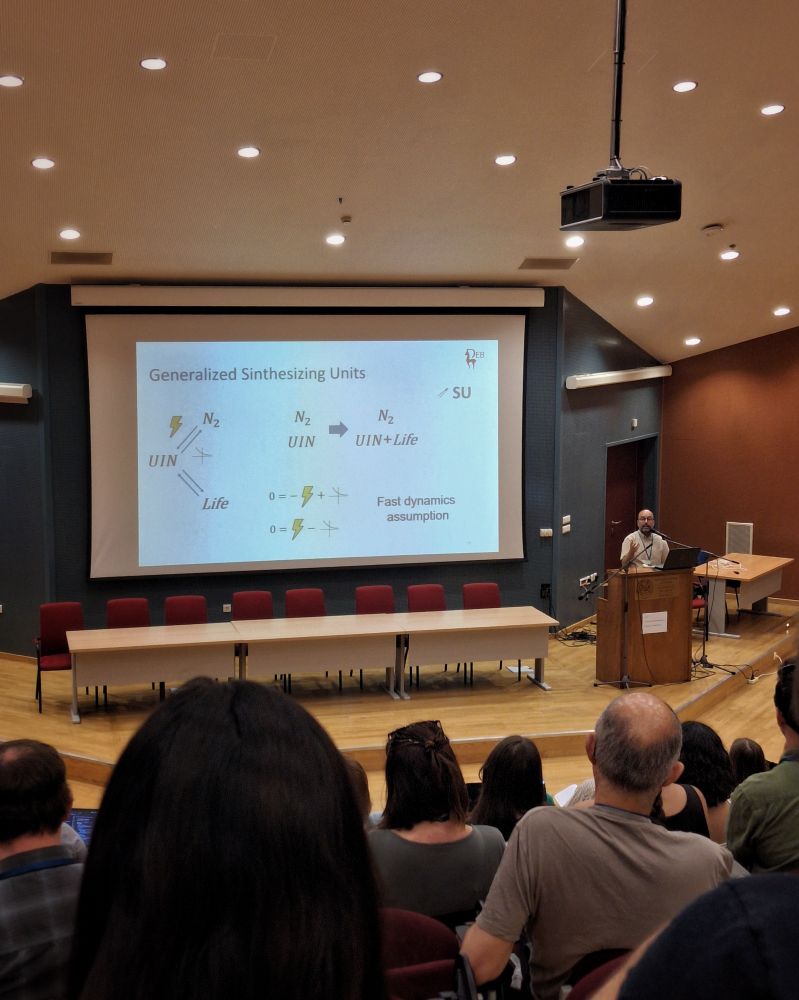
And so it begins! The DEB 2025 symposium kicked off with a presentation entitled "The evolution of how life harnesses energy and elements, from the big bang to biodiversity" by Gonçalo Marques @g-m-marques.bsky.social
June 5, 2025 at 5:55 AM
And so it begins! The DEB 2025 symposium kicked off with a presentation entitled "The evolution of how life harnesses energy and elements, from the big bang to biodiversity" by Gonçalo Marques @g-m-marques.bsky.social
Reposted by Raphaël Royauté


Reposted by Raphaël Royauté
🔊SAVE THE DATE for our 5th SORTEE conference: 15-16th Oct 2025!
Registration & content submission (unconferences, hackathons, workshops) will open soon
Keep an 👁️on buff.ly/gqnoDNT #SORTEE2025
Join the mailing list & receive conference updates buff.ly/ScVT3zX
Registration & content submission (unconferences, hackathons, workshops) will open soon
Keep an 👁️on buff.ly/gqnoDNT #SORTEE2025
Join the mailing list & receive conference updates buff.ly/ScVT3zX

March 14, 2025 at 9:00 AM
🔊SAVE THE DATE for our 5th SORTEE conference: 15-16th Oct 2025!
Registration & content submission (unconferences, hackathons, workshops) will open soon
Keep an 👁️on buff.ly/gqnoDNT #SORTEE2025
Join the mailing list & receive conference updates buff.ly/ScVT3zX
Registration & content submission (unconferences, hackathons, workshops) will open soon
Keep an 👁️on buff.ly/gqnoDNT #SORTEE2025
Join the mailing list & receive conference updates buff.ly/ScVT3zX
Reposted by Raphaël Royauté

#HelloESR Voici un kit de démarrage de chercheuses et chercheurs en écologie-évolution en poste en France
go.bsky.app/HM6CfJ5
Aidez-moi à le compléter !
Une contrainte : une auto-nomination de chercheur doit s'accompagner d'une nomination de chercheuse
go.bsky.app/HM6CfJ5
Aidez-moi à le compléter !
Une contrainte : une auto-nomination de chercheur doit s'accompagner d'une nomination de chercheuse
November 26, 2024 at 7:43 AM
#HelloESR Voici un kit de démarrage de chercheuses et chercheurs en écologie-évolution en poste en France
go.bsky.app/HM6CfJ5
Aidez-moi à le compléter !
Une contrainte : une auto-nomination de chercheur doit s'accompagner d'une nomination de chercheuse
go.bsky.app/HM6CfJ5
Aidez-moi à le compléter !
Une contrainte : une auto-nomination de chercheur doit s'accompagner d'une nomination de chercheuse
Reposted by Raphaël Royauté
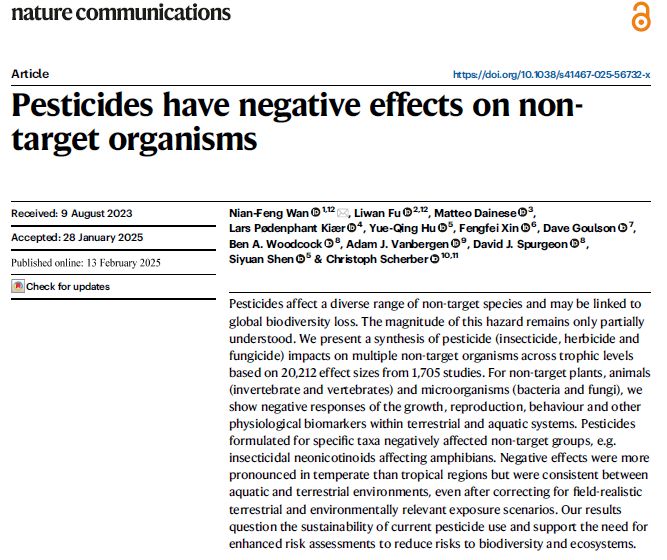
Our new paper, based on data from 1,705 studies, shows that pesticides are toxic to organisms they are not intended to harm, including fungi, microbes, plants, insects, & vertebrates such as ourselves. Questions the wisdom of applying over 3 million tonnes of them every year...
February 13, 2025 at 4:14 PM
Our new paper, based on data from 1,705 studies, shows that pesticides are toxic to organisms they are not intended to harm, including fungi, microbes, plants, insects, & vertebrates such as ourselves. Questions the wisdom of applying over 3 million tonnes of them every year...
Reposted by Raphaël Royauté

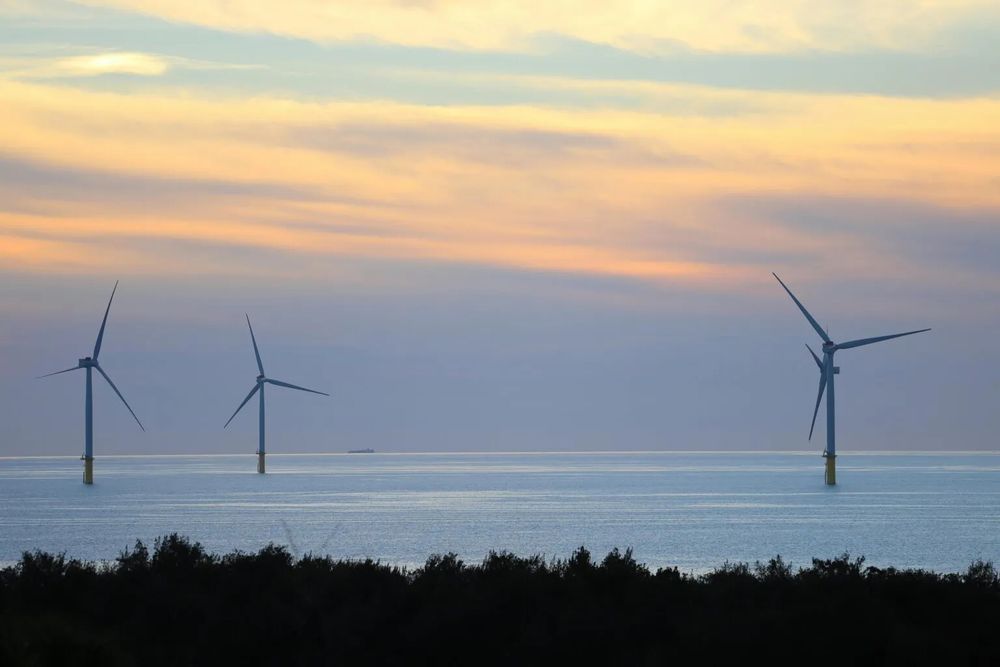
Looking for #PhD in behavioural and applied ecology? Our project will determine the importance individual level variation in #seabird #foraging for assessing the impact of wind farms @jon-seabirds.bsky.social @jaycee161.bsky.social @liverpooluni.bsky.social
www.findaphd.com/phds/project...
www.findaphd.com/phds/project...
February 8, 2025 at 9:48 AM
Looking for #PhD in behavioural and applied ecology? Our project will determine the importance individual level variation in #seabird #foraging for assessing the impact of wind farms @jon-seabirds.bsky.social @jaycee161.bsky.social @liverpooluni.bsky.social
www.findaphd.com/phds/project...
www.findaphd.com/phds/project...
Reposted by Raphaël Royauté

Letter from the SSE/SSB/ASN councils on the scientific understanding of sex and gender, pls RT
Letter to the US President and Congress on the Scientific Understanding of Sex and Gender
President Donald J Trump Washington, DC Members of the US Congress Washington, DC February 5, 2025 RE: Scientific Understanding of Sex and Gender Dear President Trump and Members of the US Congr...
www.evolutionsociety.org
February 7, 2025 at 10:11 PM
Letter from the SSE/SSB/ASN councils on the scientific understanding of sex and gender, pls RT
Reposted by Raphaël Royauté
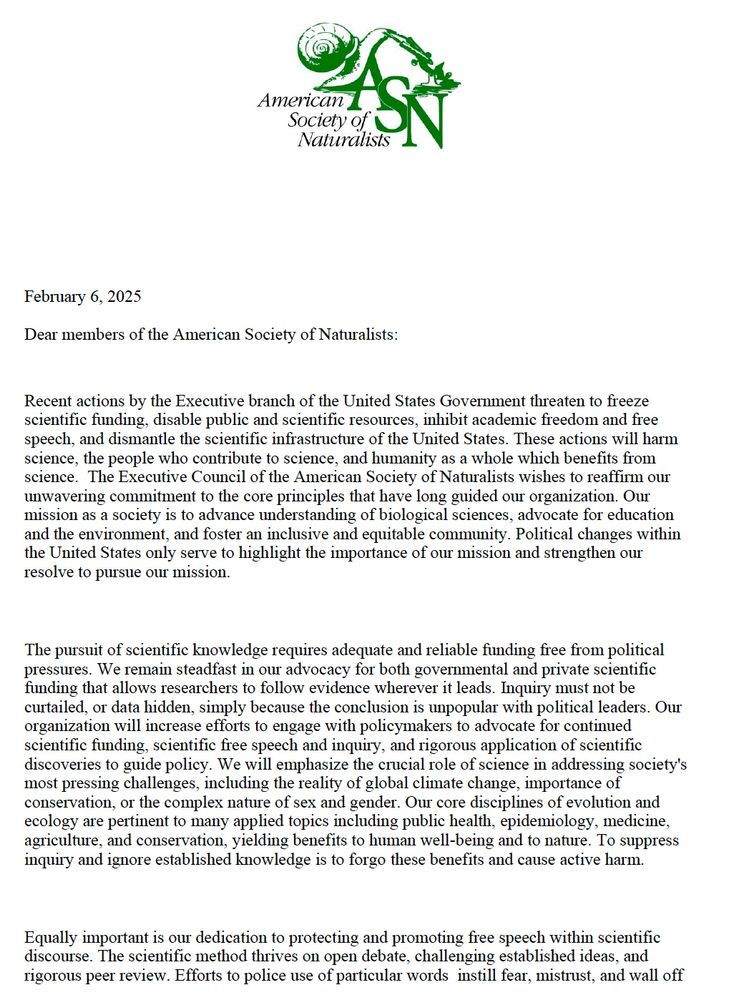
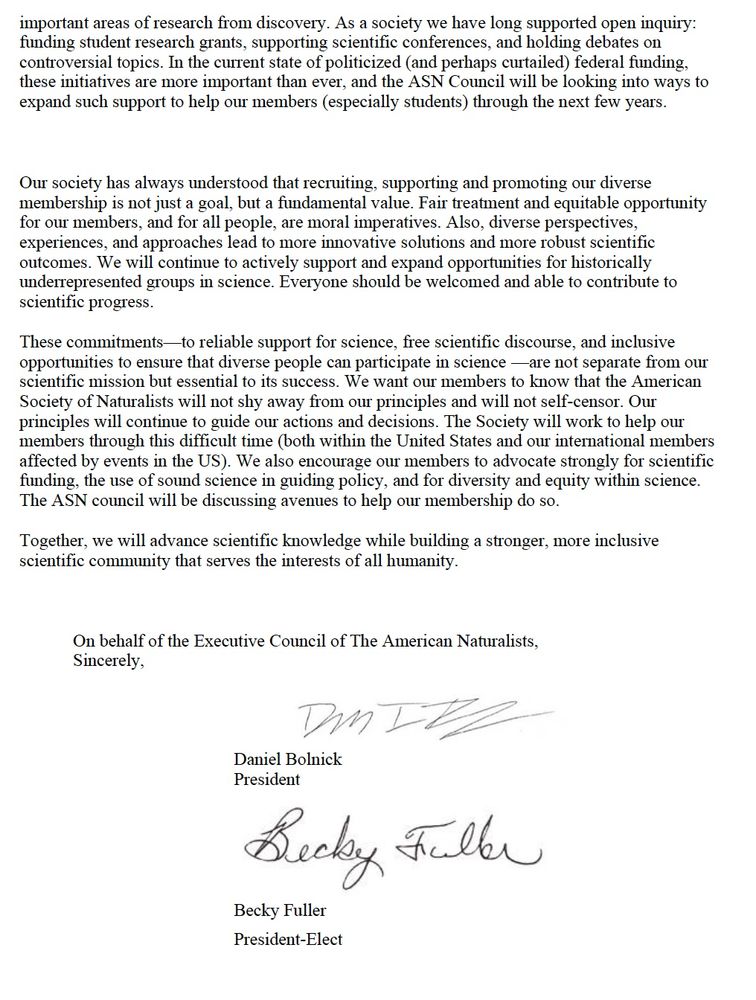
I usually reserve this account for my personal views; but today I want to represent my position as President of @asn-amnat.bsky.social to post a message that will shortly go out to the membership of the American Society of Naturalists from the ASN Executive Council
February 6, 2025 at 4:28 PM
I usually reserve this account for my personal views; but today I want to represent my position as President of @asn-amnat.bsky.social to post a message that will shortly go out to the membership of the American Society of Naturalists from the ASN Executive Council
Reposted by Raphaël Royauté

Excited to share our new paper, led by @danielwanoble.bsky.social, in @royalsocietypublishing.org!
‘We believe that the future of preprints is bright, and community-driven initiatives, such as EcoEvoRxiv, will play a crucial role in the future of scientific publishing.’
tinyurl.com/4tpbj859
‘We believe that the future of preprints is bright, and community-driven initiatives, such as EcoEvoRxiv, will play a crucial role in the future of scientific publishing.’
tinyurl.com/4tpbj859

February 5, 2025 at 12:18 PM
Excited to share our new paper, led by @danielwanoble.bsky.social, in @royalsocietypublishing.org!
‘We believe that the future of preprints is bright, and community-driven initiatives, such as EcoEvoRxiv, will play a crucial role in the future of scientific publishing.’
tinyurl.com/4tpbj859
‘We believe that the future of preprints is bright, and community-driven initiatives, such as EcoEvoRxiv, will play a crucial role in the future of scientific publishing.’
tinyurl.com/4tpbj859
Reposted by Raphaël Royauté

A few starter packs of:
@inrae-france.bsky.social colleagues on agriculture, food, environment, forests: go.bsky.app/CuM8ekE
BETA Economics colleagues: go.bsky.app/FU6FAs6
Climate Economics Chair researchers: go.bsky.app/9cWunpz
@inrae-france.bsky.social colleagues on agriculture, food, environment, forests: go.bsky.app/CuM8ekE
BETA Economics colleagues: go.bsky.app/FU6FAs6
Climate Economics Chair researchers: go.bsky.app/9cWunpz
February 4, 2025 at 5:15 PM
A few starter packs of:
@inrae-france.bsky.social colleagues on agriculture, food, environment, forests: go.bsky.app/CuM8ekE
BETA Economics colleagues: go.bsky.app/FU6FAs6
Climate Economics Chair researchers: go.bsky.app/9cWunpz
@inrae-france.bsky.social colleagues on agriculture, food, environment, forests: go.bsky.app/CuM8ekE
BETA Economics colleagues: go.bsky.app/FU6FAs6
Climate Economics Chair researchers: go.bsky.app/9cWunpz
Reposted by Raphaël Royauté
Check out the new preprint from @sekharma.bsky.social!
Also with @batsrkul.bsky.social (new to Bluesky!).
Sekhar did a deep dive into which parts of an agonistic interaction are influenced by direct and indirect effects, from the physical to acoustic components.
Also with @batsrkul.bsky.social (new to Bluesky!).
Sekhar did a deep dive into which parts of an agonistic interaction are influenced by direct and indirect effects, from the physical to acoustic components.

A saga of agonistic interactions in house crickets (Acheta domesticus): A direct and indirect effects perspective https://www.biorxiv.org/content/10.1101/2025.01.28.635358v1
January 31, 2025 at 2:16 PM
Check out the new preprint from @sekharma.bsky.social!
Also with @batsrkul.bsky.social (new to Bluesky!).
Sekhar did a deep dive into which parts of an agonistic interaction are influenced by direct and indirect effects, from the physical to acoustic components.
Also with @batsrkul.bsky.social (new to Bluesky!).
Sekhar did a deep dive into which parts of an agonistic interaction are influenced by direct and indirect effects, from the physical to acoustic components.
Go work with Ned! He’s a wonderful scientist and mentor (plus, the subject looks really cool 😁)
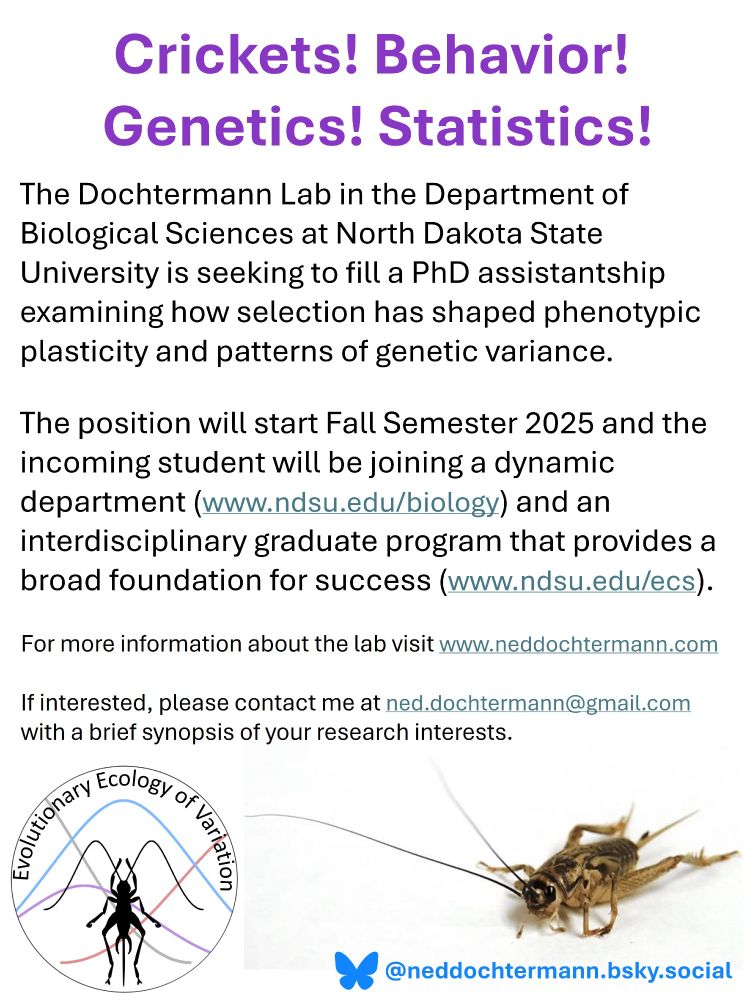
I have a PhD position open to start fall semester 2025!
The position will include investigations of the structure of both phenotypic (behavioral) plasticity and genetic variation in behavior as well as lots of opportunity to develop your own project.
#Evolution #evobio #evolsky #Ecology 🧪
The position will include investigations of the structure of both phenotypic (behavioral) plasticity and genetic variation in behavior as well as lots of opportunity to develop your own project.
#Evolution #evobio #evolsky #Ecology 🧪
January 3, 2025 at 4:36 PM
Go work with Ned! He’s a wonderful scientist and mentor (plus, the subject looks really cool 😁)
Reposted by Raphaël Royauté
I have a PhD position open to start fall semester 2025!
The position will include investigations of the structure of both phenotypic (behavioral) plasticity and genetic variation in behavior as well as lots of opportunity to develop your own project.
#Evolution #evobio #evolsky #Ecology 🧪
The position will include investigations of the structure of both phenotypic (behavioral) plasticity and genetic variation in behavior as well as lots of opportunity to develop your own project.
#Evolution #evobio #evolsky #Ecology 🧪
January 2, 2025 at 4:37 PM
I have a PhD position open to start fall semester 2025!
The position will include investigations of the structure of both phenotypic (behavioral) plasticity and genetic variation in behavior as well as lots of opportunity to develop your own project.
#Evolution #evobio #evolsky #Ecology 🧪
The position will include investigations of the structure of both phenotypic (behavioral) plasticity and genetic variation in behavior as well as lots of opportunity to develop your own project.
#Evolution #evobio #evolsky #Ecology 🧪
Reposted by Raphaël Royauté
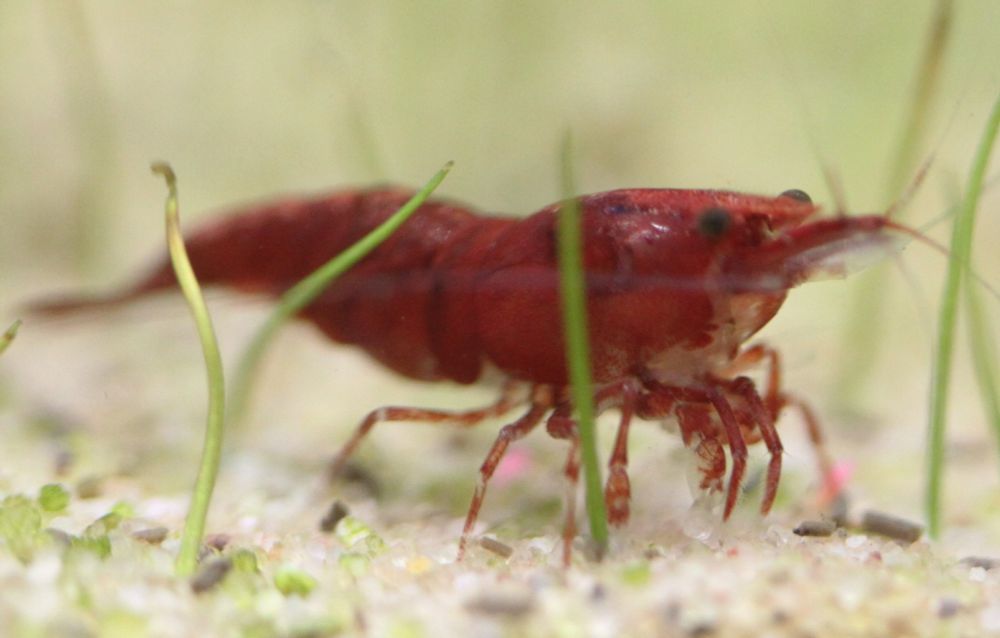
How does pollution impact behavioural evolution? We're looking for an awesome PhD student to find out. Project spans behaviour, genetics + ecotox, working with cherry shrimp @exetercec.bsky.social. Cosupervised with @lauraakelley.bsky.social and Dave Spurgeon at CEH. App + info tinyurl.com/yvthn7xn
November 26, 2024 at 2:38 PM
How does pollution impact behavioural evolution? We're looking for an awesome PhD student to find out. Project spans behaviour, genetics + ecotox, working with cherry shrimp @exetercec.bsky.social. Cosupervised with @lauraakelley.bsky.social and Dave Spurgeon at CEH. App + info tinyurl.com/yvthn7xn
Reposted by Raphaël Royauté
I'm teaching a graduate course on meta-analyses this coming semester. Question for the bluesky ecology and evolution community: What are some of your favorite meta-analyses that changed your understanding of a topic? Or, just cool questions?
Please repost!
🧪 #Evolution #Ecology #Biology
Please repost!
🧪 #Evolution #Ecology #Biology
November 19, 2024 at 5:49 PM
I'm teaching a graduate course on meta-analyses this coming semester. Question for the bluesky ecology and evolution community: What are some of your favorite meta-analyses that changed your understanding of a topic? Or, just cool questions?
Please repost!
🧪 #Evolution #Ecology #Biology
Please repost!
🧪 #Evolution #Ecology #Biology
Interested in doing a postdoc with me in behavioral #ecotoxicology? The AgroEcoSystem dept. @inrae funds 12 months fellowships. Expected start in fall 2025 & call submission deadline by end of September 2024. Reach out if interested!
rroyaute.github.io/blog/2024/po...
rroyaute.github.io/blog/2024/po...
https://rroyaute.github.io/blog/2024/post…
August 5, 2024 at 1:25 PM
Interested in doing a postdoc with me in behavioral #ecotoxicology? The AgroEcoSystem dept. @inrae funds 12 months fellowships. Expected start in fall 2025 & call submission deadline by end of September 2024. Reach out if interested!
rroyaute.github.io/blog/2024/po...
rroyaute.github.io/blog/2024/po...
Reposted by Raphaël Royauté
Join our workshop: An introduction to using simulations for study design and pre-registration, by Joel Pick
When: 30th May, 10:00 am CEST
This workshop is aimed at empiricists from any career stage or discipline.
Register at events.humanitix.com/sortee-works...
#SORTEEtools
When: 30th May, 10:00 am CEST
This workshop is aimed at empiricists from any career stage or discipline.
Register at events.humanitix.com/sortee-works...
#SORTEEtools

May 23, 2024 at 7:39 AM
Join our workshop: An introduction to using simulations for study design and pre-registration, by Joel Pick
When: 30th May, 10:00 am CEST
This workshop is aimed at empiricists from any career stage or discipline.
Register at events.humanitix.com/sortee-works...
#SORTEEtools
When: 30th May, 10:00 am CEST
This workshop is aimed at empiricists from any career stage or discipline.
Register at events.humanitix.com/sortee-works...
#SORTEEtools
Reposted by Raphaël Royauté
Myself & colleagues (none on bluesky) have a new paper out in PNAS. We simulated the evolution of populations on different landscapes and examined the effects of landscape type on G matrices. We then compared the simulated Gs to ~150 estimates of G from 60 species. (1/10)
December 26, 2023 at 9:50 PM
Myself & colleagues (none on bluesky) have a new paper out in PNAS. We simulated the evolution of populations on different landscapes and examined the effects of landscape type on G matrices. We then compared the simulated Gs to ~150 estimates of G from 60 species. (1/10)
Reposted by Raphaël Royauté
Don't miss out! Our March workshop on dbplyr is this week! Secure your spot now if you haven't already. Can't wait to see you there! Register at i.mtr.cool/qxllanlwzf #SORTEEtools #DataScience #Rstats #openscience

March 5, 2024 at 9:10 AM
Don't miss out! Our March workshop on dbplyr is this week! Secure your spot now if you haven't already. Can't wait to see you there! Register at i.mtr.cool/qxllanlwzf #SORTEEtools #DataScience #Rstats #openscience