



Omid V. Ebrahimi
@omidvebrahimi.bsky.social
Research Fellow | University of Oxford | Magdalen College.
Head of Oxford EDGE Lab | @edgelab.bsky.social.
Clinical Psychologist | Public Health | Statistics.
I study how people transition into and recover from mental disorders.
Head of Oxford EDGE Lab | @edgelab.bsky.social.
Clinical Psychologist | Public Health | Statistics.
I study how people transition into and recover from mental disorders.
Pinned

Thrilled to announce the Oxford Psychological Networks Summer School (OxPNS)!
This is the first-ever psychological network analysis workshop in the UK, to be held in magical Oxford from June 22-26, 2026.
To apply and for more information, please visit: oxfordpns.com
A brief thread 🧵
This is the first-ever psychological network analysis workshop in the UK, to be held in magical Oxford from June 22-26, 2026.
To apply and for more information, please visit: oxfordpns.com
A brief thread 🧵
Reposted by Omid V. Ebrahimi

Fabolous course on network analysis and psychometrics in Oxford this summer - highly recommend!
Thrilled to announce the Oxford Psychological Networks Summer School (OxPNS)!
This is the first-ever psychological network analysis workshop in the UK, to be held in magical Oxford from June 22-26, 2026.
To apply and for more information, please visit: oxfordpns.com
A brief thread 🧵
This is the first-ever psychological network analysis workshop in the UK, to be held in magical Oxford from June 22-26, 2026.
To apply and for more information, please visit: oxfordpns.com
A brief thread 🧵
February 9, 2026 at 8:32 AM
Fabolous course on network analysis and psychometrics in Oxford this summer - highly recommend!
Reposted by Omid V. Ebrahimi

So sad to be missing this! If any of you are lucky enough not to have other commitments late June and are interested in psychological networks, I would highly recommend the summer school (below) organised by @omidvebrahimi.bsky.social (who has the amazing skill of making complex topics accessible!)
Thrilled to announce the Oxford Psychological Networks Summer School (OxPNS)!
This is the first-ever psychological network analysis workshop in the UK, to be held in magical Oxford from June 22-26, 2026.
To apply and for more information, please visit: oxfordpns.com
A brief thread 🧵
This is the first-ever psychological network analysis workshop in the UK, to be held in magical Oxford from June 22-26, 2026.
To apply and for more information, please visit: oxfordpns.com
A brief thread 🧵
February 2, 2026 at 3:09 PM
So sad to be missing this! If any of you are lucky enough not to have other commitments late June and are interested in psychological networks, I would highly recommend the summer school (below) organised by @omidvebrahimi.bsky.social (who has the amazing skill of making complex topics accessible!)
Thrilled to announce the Oxford Psychological Networks Summer School (OxPNS)!
This is the first-ever psychological network analysis workshop in the UK, to be held in magical Oxford from June 22-26, 2026.
To apply and for more information, please visit: oxfordpns.com
A brief thread 🧵
This is the first-ever psychological network analysis workshop in the UK, to be held in magical Oxford from June 22-26, 2026.
To apply and for more information, please visit: oxfordpns.com
A brief thread 🧵
February 2, 2026 at 2:39 PM
Thrilled to announce the Oxford Psychological Networks Summer School (OxPNS)!
This is the first-ever psychological network analysis workshop in the UK, to be held in magical Oxford from June 22-26, 2026.
To apply and for more information, please visit: oxfordpns.com
A brief thread 🧵
This is the first-ever psychological network analysis workshop in the UK, to be held in magical Oxford from June 22-26, 2026.
To apply and for more information, please visit: oxfordpns.com
A brief thread 🧵
Reposted by Omid V. Ebrahimi
Excited for the 1st lab paper to be live @biologicalpsych.bsky.social !
@emilyrperkins.bsky.social @keananjoyner.bsky.social and I discuss testing biology as simultaneous + unique predictors of different levels of psychopathology hierarchies 1/7🧵
www.biologicalpsychiatryjournal.com/article/S000...
@emilyrperkins.bsky.social @keananjoyner.bsky.social and I discuss testing biology as simultaneous + unique predictors of different levels of psychopathology hierarchies 1/7🧵
www.biologicalpsychiatryjournal.com/article/S000...

Hierarchical Phenotyping of Psychopathology: Implications and Opportunities for Precision Psychiatry When Biology Could Be Associated With Both Symptoms and Syndromes
As psychiatry increasingly embraces precision medicine principles, there have been
efforts to characterize the specificity of biology-psychopathology associations (e.g.,
is biology associated with syn...
www.biologicalpsychiatryjournal.com
January 16, 2026 at 2:11 PM
Excited for the 1st lab paper to be live @biologicalpsych.bsky.social !
@emilyrperkins.bsky.social @keananjoyner.bsky.social and I discuss testing biology as simultaneous + unique predictors of different levels of psychopathology hierarchies 1/7🧵
www.biologicalpsychiatryjournal.com/article/S000...
@emilyrperkins.bsky.social @keananjoyner.bsky.social and I discuss testing biology as simultaneous + unique predictors of different levels of psychopathology hierarchies 1/7🧵
www.biologicalpsychiatryjournal.com/article/S000...
An essential take amid article inflation & overburdened reviewers
Editors aren't supposed to excessively return manuscripts & outsource decisions to reviewers
Many psych journals can learn a lot here from medicine & epi, where these decisions are equally robust, but far more efficient (eg. Lancet)
Editors aren't supposed to excessively return manuscripts & outsource decisions to reviewers
Many psych journals can learn a lot here from medicine & epi, where these decisions are equally robust, but far more efficient (eg. Lancet)
Peer Review is broken because a generation of Editors were trained that peer review is sacrosanct. Thus we have Editors who are clerks, sending and re-sending manuscripts to reviewers until they are happy. That's not the job. Be an Editor, not a clerk. Use your skill and judgement. Make decisions.
January 16, 2026 at 10:10 AM
An essential take amid article inflation & overburdened reviewers
Editors aren't supposed to excessively return manuscripts & outsource decisions to reviewers
Many psych journals can learn a lot here from medicine & epi, where these decisions are equally robust, but far more efficient (eg. Lancet)
Editors aren't supposed to excessively return manuscripts & outsource decisions to reviewers
Many psych journals can learn a lot here from medicine & epi, where these decisions are equally robust, but far more efficient (eg. Lancet)
🌟📝 Just out in World Psychiatry:
Our new piece demonstrates the added value of dynamic symptom networks for predicting treatment outcomes beyond baseline severity & common covariates, with an added explained variance of 9-22% at post-treatment & follow-up.
onlinelibrary.wiley.com/doi/10.1002/...
Our new piece demonstrates the added value of dynamic symptom networks for predicting treatment outcomes beyond baseline severity & common covariates, with an added explained variance of 9-22% at post-treatment & follow-up.
onlinelibrary.wiley.com/doi/10.1002/...

January 15, 2026 at 11:36 AM
🌟📝 Just out in World Psychiatry:
Our new piece demonstrates the added value of dynamic symptom networks for predicting treatment outcomes beyond baseline severity & common covariates, with an added explained variance of 9-22% at post-treatment & follow-up.
onlinelibrary.wiley.com/doi/10.1002/...
Our new piece demonstrates the added value of dynamic symptom networks for predicting treatment outcomes beyond baseline severity & common covariates, with an added explained variance of 9-22% at post-treatment & follow-up.
onlinelibrary.wiley.com/doi/10.1002/...
Reposted by Omid V. Ebrahimi

We're hiring! The Computational Clinical Science Lab @ Yale is seeking a full-time lab manager/research coordinator to start in early summer 2026.
For more information about the position and to apply: forms.gle/LtQwVgPUfaGk...
Please share widely & consider applying!
For more information about the position and to apply: forms.gle/LtQwVgPUfaGk...
Please share widely & consider applying!
forms.gle
January 13, 2026 at 4:45 PM
We're hiring! The Computational Clinical Science Lab @ Yale is seeking a full-time lab manager/research coordinator to start in early summer 2026.
For more information about the position and to apply: forms.gle/LtQwVgPUfaGk...
Please share widely & consider applying!
For more information about the position and to apply: forms.gle/LtQwVgPUfaGk...
Please share widely & consider applying!
In this news report with TV2, I outline the role of safety- and avoidance behaviours in maintaining public speaking anxiety.
🇧🇻 Intervju med TV2 om mekanismene bak presentasjonsangst, fokusert på hvordan unngåelse- og sikkerhetsatferd vedlikeholder lidelsen.
www.tv2.no/video/nyhete...
🇧🇻 Intervju med TV2 om mekanismene bak presentasjonsangst, fokusert på hvordan unngåelse- og sikkerhetsatferd vedlikeholder lidelsen.
www.tv2.no/video/nyhete...

Mange unge sliter med presentasjonsangst - dette er grunnen
Synes du det er ubehagelig å holde presentasjoner? Her er noen tips!
www.tv2.no
December 22, 2025 at 11:55 AM
In this news report with TV2, I outline the role of safety- and avoidance behaviours in maintaining public speaking anxiety.
🇧🇻 Intervju med TV2 om mekanismene bak presentasjonsangst, fokusert på hvordan unngåelse- og sikkerhetsatferd vedlikeholder lidelsen.
www.tv2.no/video/nyhete...
🇧🇻 Intervju med TV2 om mekanismene bak presentasjonsangst, fokusert på hvordan unngåelse- og sikkerhetsatferd vedlikeholder lidelsen.
www.tv2.no/video/nyhete...
Reposted by Omid V. Ebrahimi
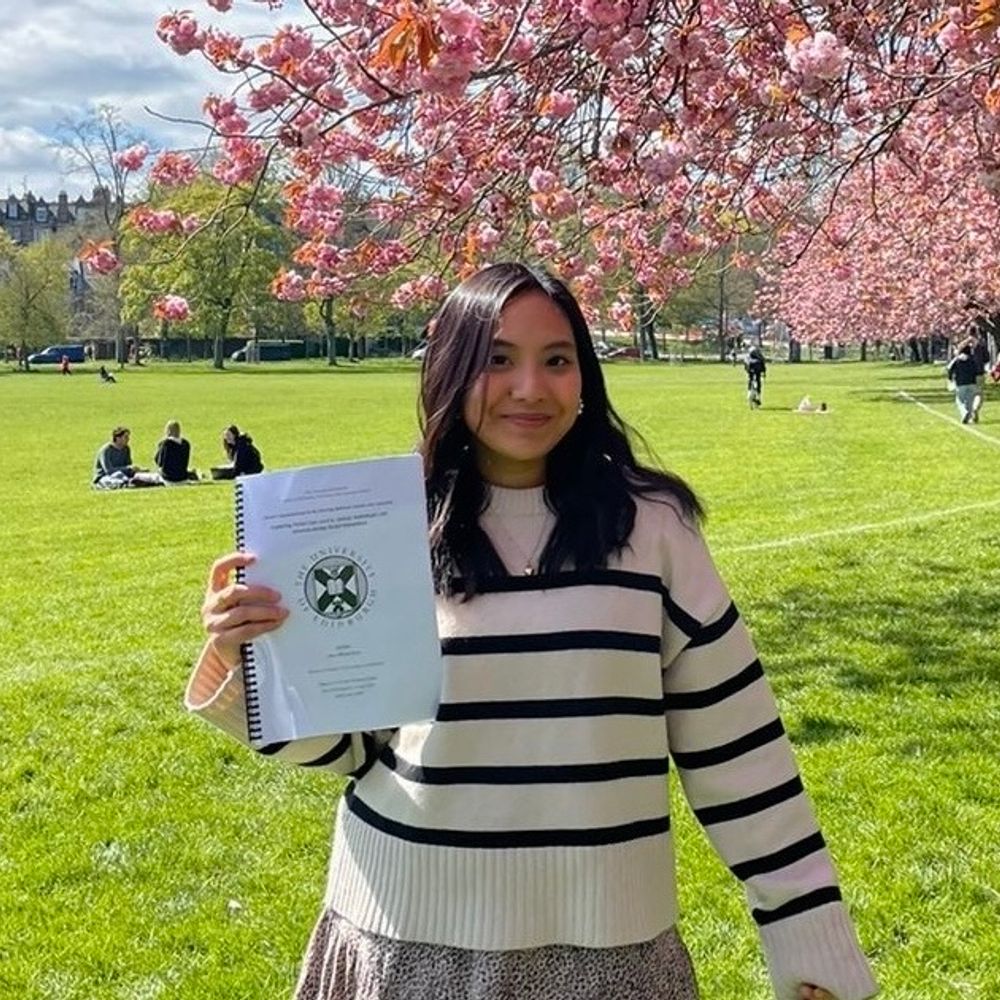
Excited to finally be able to share my first, first-authored paper with the world! 🌍
Massive thank you to my brilliant @ox.ac.uk supervisor, @omidvebrahimi.bsky.social and the incredibly supportive @edgelab.bsky.social, as well as our co-authors!
Massive thank you to my brilliant @ox.ac.uk supervisor, @omidvebrahimi.bsky.social and the incredibly supportive @edgelab.bsky.social, as well as our co-authors!
📜 Our new preregistered 36-month longitudinal study, investigating the mechanisms underlying adverse anxious symptom change patterns, and their long-term clinical outcomes, is now out.
Very excited to share after years of data collection & work on MS
osf.io/preprints/ps...
🧵
@edgelab.bsky.social
Very excited to share after years of data collection & work on MS
osf.io/preprints/ps...
🧵
@edgelab.bsky.social

December 20, 2025 at 12:53 PM
Excited to finally be able to share my first, first-authored paper with the world! 🌍
Massive thank you to my brilliant @ox.ac.uk supervisor, @omidvebrahimi.bsky.social and the incredibly supportive @edgelab.bsky.social, as well as our co-authors!
Massive thank you to my brilliant @ox.ac.uk supervisor, @omidvebrahimi.bsky.social and the incredibly supportive @edgelab.bsky.social, as well as our co-authors!
📜 Our new preregistered 36-month longitudinal study, investigating the mechanisms underlying adverse anxious symptom change patterns, and their long-term clinical outcomes, is now out.
Very excited to share after years of data collection & work on MS
osf.io/preprints/ps...
🧵
@edgelab.bsky.social
Very excited to share after years of data collection & work on MS
osf.io/preprints/ps...
🧵
@edgelab.bsky.social
December 20, 2025 at 11:56 AM
📜 Our new preregistered 36-month longitudinal study, investigating the mechanisms underlying adverse anxious symptom change patterns, and their long-term clinical outcomes, is now out.
Very excited to share after years of data collection & work on MS
osf.io/preprints/ps...
🧵
@edgelab.bsky.social
Very excited to share after years of data collection & work on MS
osf.io/preprints/ps...
🧵
@edgelab.bsky.social
Reposted by Omid V. Ebrahimi
Can’t believe my time in Oxford is already over!
Huge thank you to @omidvebrahimi.bsky.social (best host ever?) and the fantastic @edgelab.bsky.social (best lab ever?) for an incredible research stay!
I doubt it’s the the last you’ll be seeing of me ☺️
Huge thank you to @omidvebrahimi.bsky.social (best host ever?) and the fantastic @edgelab.bsky.social (best lab ever?) for an incredible research stay!
I doubt it’s the the last you’ll be seeing of me ☺️
It's been a great first year at Oxford EDGE Lab, and a privilege to work with this wonderful group of master's & PhD students.
Here from our Secret Santa & goodbye gathering for visiting post-docs @sammarieharris.bsky.social & @eiraaksnes.bsky.social. See you soon!
@edgelab.bsky.social @ox.ac.uk
Here from our Secret Santa & goodbye gathering for visiting post-docs @sammarieharris.bsky.social & @eiraaksnes.bsky.social. See you soon!
@edgelab.bsky.social @ox.ac.uk

December 19, 2025 at 2:20 PM
Can’t believe my time in Oxford is already over!
Huge thank you to @omidvebrahimi.bsky.social (best host ever?) and the fantastic @edgelab.bsky.social (best lab ever?) for an incredible research stay!
I doubt it’s the the last you’ll be seeing of me ☺️
Huge thank you to @omidvebrahimi.bsky.social (best host ever?) and the fantastic @edgelab.bsky.social (best lab ever?) for an incredible research stay!
I doubt it’s the the last you’ll be seeing of me ☺️
It's been a great first year at Oxford EDGE Lab, and a privilege to work with this wonderful group of master's & PhD students.
Here from our Secret Santa & goodbye gathering for visiting post-docs @sammarieharris.bsky.social & @eiraaksnes.bsky.social. See you soon!
@edgelab.bsky.social @ox.ac.uk
Here from our Secret Santa & goodbye gathering for visiting post-docs @sammarieharris.bsky.social & @eiraaksnes.bsky.social. See you soon!
@edgelab.bsky.social @ox.ac.uk
December 19, 2025 at 2:06 PM
It's been a great first year at Oxford EDGE Lab, and a privilege to work with this wonderful group of master's & PhD students.
Here from our Secret Santa & goodbye gathering for visiting post-docs @sammarieharris.bsky.social & @eiraaksnes.bsky.social. See you soon!
@edgelab.bsky.social @ox.ac.uk
Here from our Secret Santa & goodbye gathering for visiting post-docs @sammarieharris.bsky.social & @eiraaksnes.bsky.social. See you soon!
@edgelab.bsky.social @ox.ac.uk
Great piece by Crudgington & Andrews on the multidimensionality of social isolation and the distinct health and behavioural outcomes related to different isolation types.
Beyond calls for improved definitions, they warn against treating isolation as a single metric, obfuscating evidence syntheses.
Beyond calls for improved definitions, they warn against treating isolation as a single metric, obfuscating evidence syntheses.
December 10, 2025 at 2:05 PM
Great piece by Crudgington & Andrews on the multidimensionality of social isolation and the distinct health and behavioural outcomes related to different isolation types.
Beyond calls for improved definitions, they warn against treating isolation as a single metric, obfuscating evidence syntheses.
Beyond calls for improved definitions, they warn against treating isolation as a single metric, obfuscating evidence syntheses.
Reposted by Omid V. Ebrahimi

My research stay @ox.ac.uk has come to and end at it has been above and beyond all expectations! Leaving with such fond memories, new friends and more academically inspired then ever💭🤩👩🏽💻👏🏻
A special thanks to @omidvebrahimi.bsky.social and the @edgelab.bsky.social for being the best hosts🫶🏻


December 10, 2025 at 5:54 AM
My research stay @ox.ac.uk has come to and end at it has been above and beyond all expectations! Leaving with such fond memories, new friends and more academically inspired then ever💭🤩👩🏽💻👏🏻
A special thanks to @omidvebrahimi.bsky.social and the @edgelab.bsky.social for being the best hosts🫶🏻
Reposted by Omid V. Ebrahimi
Not sure how to feel about this..
To be fair, my @quantitude.bsky.social minutes might look high, but based on the average length of an episode that’s only about two episodes.
Thx for introducing me to this @omidvebrahimi.bsky.social. You’ve created a monster..
To be fair, my @quantitude.bsky.social minutes might look high, but based on the average length of an episode that’s only about two episodes.
Thx for introducing me to this @omidvebrahimi.bsky.social. You’ve created a monster..

December 4, 2025 at 8:42 AM
Not sure how to feel about this..
To be fair, my @quantitude.bsky.social minutes might look high, but based on the average length of an episode that’s only about two episodes.
Thx for introducing me to this @omidvebrahimi.bsky.social. You’ve created a monster..
To be fair, my @quantitude.bsky.social minutes might look high, but based on the average length of an episode that’s only about two episodes.
Thx for introducing me to this @omidvebrahimi.bsky.social. You’ve created a monster..
Reposted by Omid V. Ebrahimi

Huge congratulations to @omidvebrahimi.bsky.social Senior Demy at Magdalen, who has been honoured with an Early Career Excellent Teacher Award from the University of Oxford’s Medical Sciences Division.
www.magd.ox.ac.uk/news/dr-omid...
www.magd.ox.ac.uk/news/dr-omid...

Dr Omid Ebrahimi wins Teaching Excellence Award - Magdalen College
Huge congratulations to Omid V. Ebrahimi, Senior Demy at Magdalen, who has been honoured with an Early Career Excellent Teacher Award from the University of Oxford's Medical Sciences Division.
www.magd.ox.ac.uk
November 4, 2025 at 1:41 PM
Huge congratulations to @omidvebrahimi.bsky.social Senior Demy at Magdalen, who has been honoured with an Early Career Excellent Teacher Award from the University of Oxford’s Medical Sciences Division.
www.magd.ox.ac.uk/news/dr-omid...
www.magd.ox.ac.uk/news/dr-omid...
Reposted by Omid V. Ebrahimi
1st day of #MITNB meeting at @tesc-tilburgu.bsky.social. Excited for the week ahead, where we'll tackle measurement issues in #ESM, e.g. modeling processes across timescales, building a formal theory on measurement, and evaluating statistical assumptions in #ESM data.
Go teamwork <3
Go teamwork <3

November 3, 2025 at 5:27 PM
1st day of #MITNB meeting at @tesc-tilburgu.bsky.social. Excited for the week ahead, where we'll tackle measurement issues in #ESM, e.g. modeling processes across timescales, building a formal theory on measurement, and evaluating statistical assumptions in #ESM data.
Go teamwork <3
Go teamwork <3
Honoured to receive the Teaching Excellence Award at University of Oxford after my 1st year with the university
The real credit goes to the students: teaching such talented minds is a privilege
📸 Thanks to my lovely colleague, Kate Nation
@ox.ac.uk @oxexppsy.bsky.social @magdalenoxford.bsky.social
The real credit goes to the students: teaching such talented minds is a privilege
📸 Thanks to my lovely colleague, Kate Nation
@ox.ac.uk @oxexppsy.bsky.social @magdalenoxford.bsky.social

October 30, 2025 at 10:46 AM
Honoured to receive the Teaching Excellence Award at University of Oxford after my 1st year with the university
The real credit goes to the students: teaching such talented minds is a privilege
📸 Thanks to my lovely colleague, Kate Nation
@ox.ac.uk @oxexppsy.bsky.social @magdalenoxford.bsky.social
The real credit goes to the students: teaching such talented minds is a privilege
📸 Thanks to my lovely colleague, Kate Nation
@ox.ac.uk @oxexppsy.bsky.social @magdalenoxford.bsky.social
Reposted by Omid V. Ebrahimi

It's been a great first year at Oxford EDGE Lab, and a privilege to work with this wonderful group of students and visiting researchers.
Our first two students to complete their degrees have both graduated with distinctions: congratulations @mikaeladizon.bsky.social & @olenakhailenko.bsky.social! 🎉
Our first two students to complete their degrees have both graduated with distinctions: congratulations @mikaeladizon.bsky.social & @olenakhailenko.bsky.social! 🎉


October 21, 2025 at 11:16 AM
It's been a great first year at Oxford EDGE Lab, and a privilege to work with this wonderful group of students and visiting researchers.
Our first two students to complete their degrees have both graduated with distinctions: congratulations @mikaeladizon.bsky.social & @olenakhailenko.bsky.social! 🎉
Our first two students to complete their degrees have both graduated with distinctions: congratulations @mikaeladizon.bsky.social & @olenakhailenko.bsky.social! 🎉
Reposted by Omid V. Ebrahimi
Huge congrats to @omidvebrahimi.bsky.social on winning the prestigious Outstanding Doctoral Thesis of the Year by the Norwegian Psychological Association.
Read more: www.magd.ox.ac.uk/news/dr-ebra...
Read more: www.magd.ox.ac.uk/news/dr-ebra...

October 1, 2025 at 12:00 PM
Huge congrats to @omidvebrahimi.bsky.social on winning the prestigious Outstanding Doctoral Thesis of the Year by the Norwegian Psychological Association.
Read more: www.magd.ox.ac.uk/news/dr-ebra...
Read more: www.magd.ox.ac.uk/news/dr-ebra...
I'm beyond words honoured to receive the Doctoral Thesis of the Year Award by the Norwegian Psychological Association!
Deeply grateful to my supervisors and the wonderful colleagues I've had the privilege of working with.
Interview about findings and a 🧵:
www.psykologforeningen.no/aktuelt/pand...
Deeply grateful to my supervisors and the wonderful colleagues I've had the privilege of working with.
Interview about findings and a 🧵:
www.psykologforeningen.no/aktuelt/pand...

September 25, 2025 at 12:26 PM
I'm beyond words honoured to receive the Doctoral Thesis of the Year Award by the Norwegian Psychological Association!
Deeply grateful to my supervisors and the wonderful colleagues I've had the privilege of working with.
Interview about findings and a 🧵:
www.psykologforeningen.no/aktuelt/pand...
Deeply grateful to my supervisors and the wonderful colleagues I've had the privilege of working with.
Interview about findings and a 🧵:
www.psykologforeningen.no/aktuelt/pand...
Reposted by Omid V. Ebrahimi
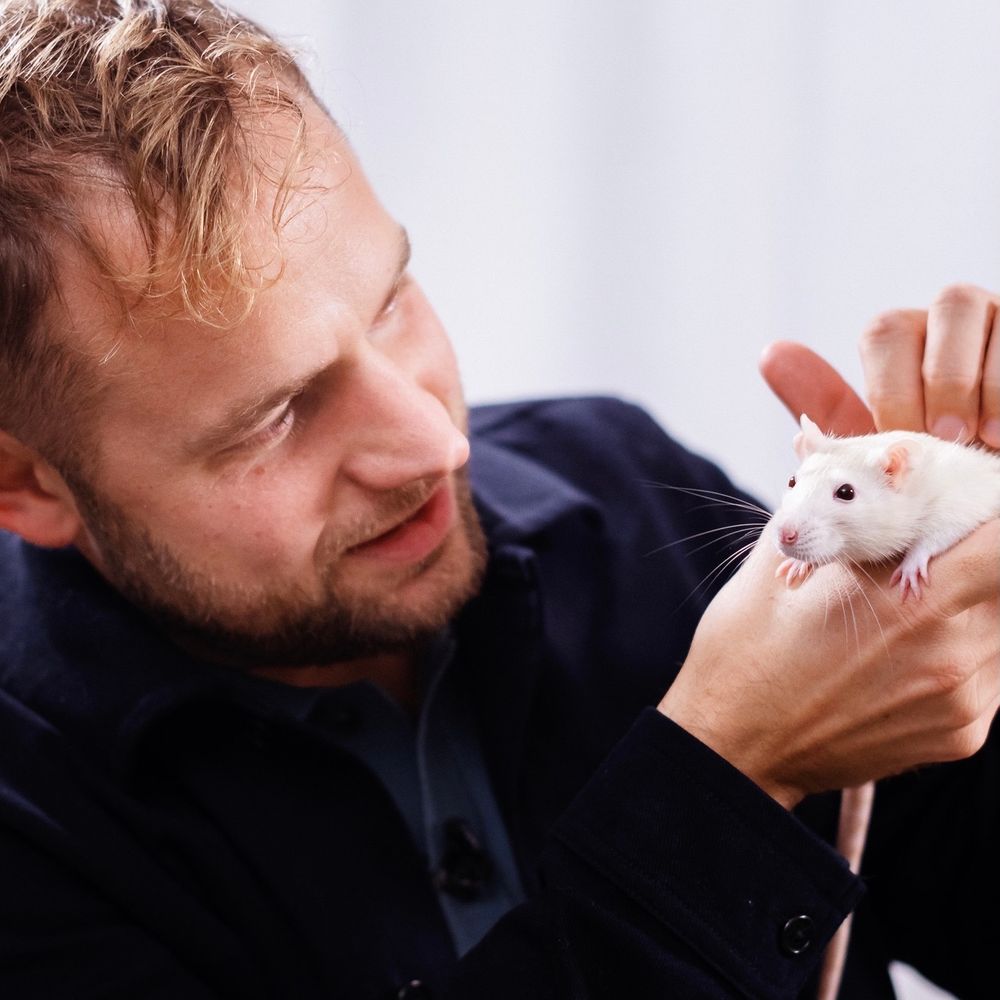
An exceptionally lovely day in Oxford and Magdalen college, visiting the brilliant @omidvebrahimi.bsky.social


September 2, 2025 at 10:22 AM
An exceptionally lovely day in Oxford and Magdalen college, visiting the brilliant @omidvebrahimi.bsky.social
Reposted by Omid V. Ebrahimi
Now published in JCPP Advances! 📜
acamh.onlinelibrary.wiley.com/doi/10.1002/...
With @omidvebrahimi.bsky.social and Sarah Bauermeister
acamh.onlinelibrary.wiley.com/doi/10.1002/...
With @omidvebrahimi.bsky.social and Sarah Bauermeister
August 21, 2025 at 6:48 AM
Now published in JCPP Advances! 📜
acamh.onlinelibrary.wiley.com/doi/10.1002/...
With @omidvebrahimi.bsky.social and Sarah Bauermeister
acamh.onlinelibrary.wiley.com/doi/10.1002/...
With @omidvebrahimi.bsky.social and Sarah Bauermeister
Reposted by Omid V. Ebrahimi
New paper! 📜 In nearly 50,000 individuals randomly sampled from the general population, we apply a symptom-specific perspective to examine which anxiety and depressive symptoms are most strongly associated with various aspects of financial adversity
doi.org/10.1016/j.ss...
doi.org/10.1016/j.ss...

August 17, 2025 at 2:34 PM
New paper! 📜 In nearly 50,000 individuals randomly sampled from the general population, we apply a symptom-specific perspective to examine which anxiety and depressive symptoms are most strongly associated with various aspects of financial adversity
doi.org/10.1016/j.ss...
doi.org/10.1016/j.ss...
How Accurate & Consistent are Self-Report responses via Visual Analogue Scales (VAS) in Ecological Momentary Assessment & Digital Studies?
Examined in a massive EMA study (N = 3,761), our new #OpenAccess piece on this is just out:
online.ucpress.edu/collabra/art...
#PsychSciSky #AcademicSky
🧵:
Examined in a massive EMA study (N = 3,761), our new #OpenAccess piece on this is just out:
online.ucpress.edu/collabra/art...
#PsychSciSky #AcademicSky
🧵:
Accuracy and Consistency of Visual Analog Scales in Ecological Momentary Assessment and Digital Studies
The ubiquity of digital technologies has increased assessments of thoughts, behaviors, and experiences via electronic devices. Surveys on smartphones or laptops often implement Visual Analogue Scales ...
online.ucpress.edu
August 7, 2025 at 9:52 AM
How Accurate & Consistent are Self-Report responses via Visual Analogue Scales (VAS) in Ecological Momentary Assessment & Digital Studies?
Examined in a massive EMA study (N = 3,761), our new #OpenAccess piece on this is just out:
online.ucpress.edu/collabra/art...
#PsychSciSky #AcademicSky
🧵:
Examined in a massive EMA study (N = 3,761), our new #OpenAccess piece on this is just out:
online.ucpress.edu/collabra/art...
#PsychSciSky #AcademicSky
🧵: