



Mikko Tiusanen
@mikkotiusanen.bsky.social
Scientist (ecology, entomology), Flowering plants and their pollinators. Arctic and alpine areas. Environmental change and phenology.
Pinned

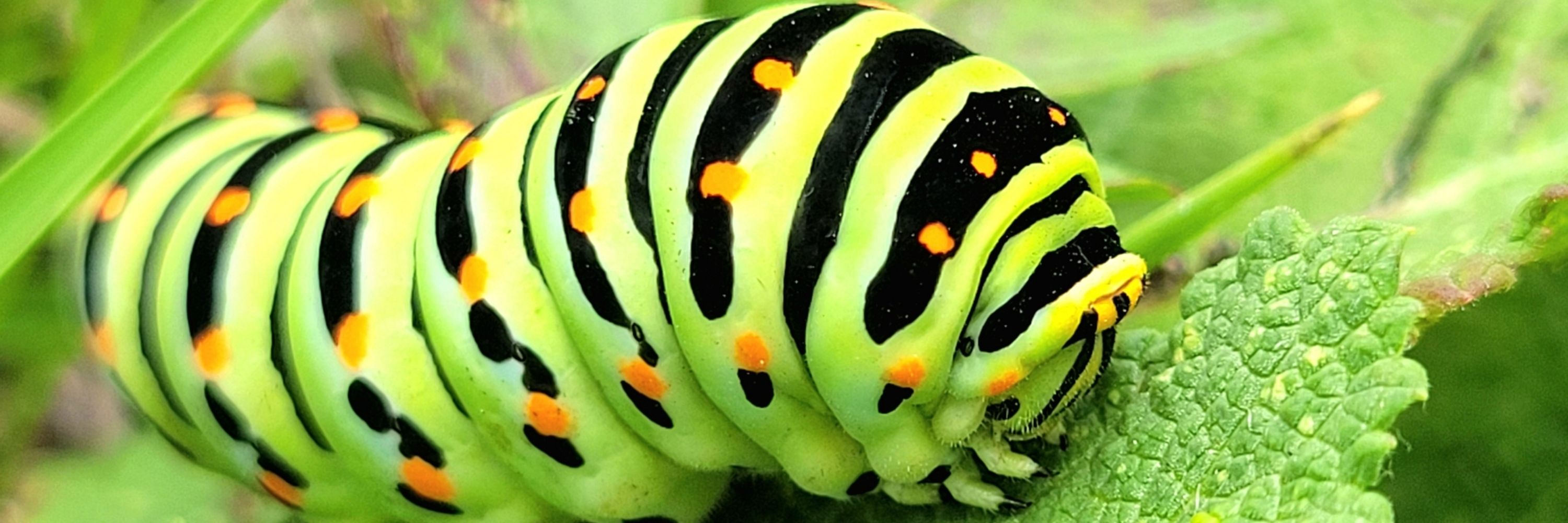
Look at those colors!This was definitely one of the highlights of my field season! Spotting Rosalia alpina feels always special and doesn't happen every year. This was the third individual I have seen on study area, Calanda, Switzerland.
Reposted by Mikko Tiusanen
This gallery of almost all EU bee species high quality photos is quite impressive: pollinatoracademy.eu/images
Pollinator Academy
The Pollinator Academy is a learning platform with integrated taxonomic tools and information on European pollinators.
pollinatoracademy.eu
December 22, 2025 at 9:30 AM
This gallery of almost all EU bee species high quality photos is quite impressive: pollinatoracademy.eu/images
Reposted by Mikko Tiusanen

Thrilled to announce a Postdoc opportunity in our group on the evolutionary genetics and ecology of colour. Wonderful system, great collaborators, and room to shape your own ideas.
Apply by 7 Jan: jobs.helsinki.fi/job/13477181...
Apply by 7 Jan: jobs.helsinki.fi/job/13477181...

December 12, 2025 at 2:56 PM
Thrilled to announce a Postdoc opportunity in our group on the evolutionary genetics and ecology of colour. Wonderful system, great collaborators, and room to shape your own ideas.
Apply by 7 Jan: jobs.helsinki.fi/job/13477181...
Apply by 7 Jan: jobs.helsinki.fi/job/13477181...
Reposted by Mikko Tiusanen
🌎 Experiments are central to understanding community dynamics, yet their use is declining.
We're trying to understand why.
If you work in community ecology, we'd really appreciate your input in a quick survey (<5 mins).
👉🏼 link.webropolsurveys.com/S/2022629791...
Reposts welcome!
We're trying to understand why.
If you work in community ecology, we'd really appreciate your input in a quick survey (<5 mins).
👉🏼 link.webropolsurveys.com/S/2022629791...
Reposts welcome!

Webropol Survey
Survey Powered by Webropol
link.webropolsurveys.com
November 14, 2025 at 12:45 PM
🌎 Experiments are central to understanding community dynamics, yet their use is declining.
We're trying to understand why.
If you work in community ecology, we'd really appreciate your input in a quick survey (<5 mins).
👉🏼 link.webropolsurveys.com/S/2022629791...
Reposts welcome!
We're trying to understand why.
If you work in community ecology, we'd really appreciate your input in a quick survey (<5 mins).
👉🏼 link.webropolsurveys.com/S/2022629791...
Reposts welcome!
Reposted by Mikko Tiusanen
Bee assemblage data from 681 crop fields across 3 continents shows that local pesticide hazards and decreasing adjacent semi-natural habitats negatively affected wild bee abundance and species richness in crop fields, while pesticides reduce functional diversity🧪🐝 www.nature.com/articles/s41...

Pesticides and habitat loss additively reduce wild bees in crop fields - Nature Ecology & Evolution
The authors synthesize bee assemblage data from 681 crop fields across three continents, finding that local pesticide hazards and decreasing adjacent semi-natural habitats both negatively affected wil...
www.nature.com
December 18, 2025 at 11:38 AM
Bee assemblage data from 681 crop fields across 3 continents shows that local pesticide hazards and decreasing adjacent semi-natural habitats negatively affected wild bee abundance and species richness in crop fields, while pesticides reduce functional diversity🧪🐝 www.nature.com/articles/s41...
Reposted by Mikko Tiusanen

Proud friend moment ❤️ @agostinatorres.bsky.social The fact that I am not in BES does not mean I can be proud virtually 🤓 Thanks to onsite photo providers 😜 @mikkotiusanen.bsky.social

December 17, 2025 at 10:32 AM
Proud friend moment ❤️ @agostinatorres.bsky.social The fact that I am not in BES does not mean I can be proud virtually 🤓 Thanks to onsite photo providers 😜 @mikkotiusanen.bsky.social
Reposted by Mikko Tiusanen
So happy to be back at the BES this year for #BES2025! I had a lot of nice discussions today already, and I'll be looking forward to the poster session this evening! Feel free to pass by poster nr: A-4.95 if you want to discuss species coexistence and higher-order interactions! 🌱🌿🌱

December 16, 2025 at 3:28 PM
So happy to be back at the BES this year for #BES2025! I had a lot of nice discussions today already, and I'll be looking forward to the poster session this evening! Feel free to pass by poster nr: A-4.95 if you want to discuss species coexistence and higher-order interactions! 🌱🌿🌱
Reposted by Mikko Tiusanen

Welcome to BES2025! 💫
Today, we are so excited to welcome ecologists from 58 countries, encouraging innovative research and practice in ecology.
We have exciting talks and sessions ahead in the next days from agriculture, human's place in nature, AI to green finance and much more.
Today, we are so excited to welcome ecologists from 58 countries, encouraging innovative research and practice in ecology.
We have exciting talks and sessions ahead in the next days from agriculture, human's place in nature, AI to green finance and much more.


December 16, 2025 at 11:04 AM
Welcome to BES2025! 💫
Today, we are so excited to welcome ecologists from 58 countries, encouraging innovative research and practice in ecology.
We have exciting talks and sessions ahead in the next days from agriculture, human's place in nature, AI to green finance and much more.
Today, we are so excited to welcome ecologists from 58 countries, encouraging innovative research and practice in ecology.
We have exciting talks and sessions ahead in the next days from agriculture, human's place in nature, AI to green finance and much more.
Reposted by Mikko Tiusanen

Announcement: I will start as an assistant professor of ecohydrology at the University of Oulu starting from January. Snow, microclimate and Arctic-alpine ecosystems still on focus. Stay tuned for soon-to-be-opened Postdoc and PhD positions! Thank you for your attention to this matter!
December 15, 2025 at 2:46 PM
Announcement: I will start as an assistant professor of ecohydrology at the University of Oulu starting from January. Snow, microclimate and Arctic-alpine ecosystems still on focus. Stay tuned for soon-to-be-opened Postdoc and PhD positions! Thank you for your attention to this matter!
Reposted by Mikko Tiusanen
I am absolutely thrilled to share my first chapter, published today in @jappliedecology.bsky.social! Results are summarised in the thread below, or you can read it OA here doi.org/10.1111/1365... @ellileadbeater.bsky.social @rhulbiology.bsky.social @uclcber.bsky.social @ucl-pnl.bsky.social 1/7 🧪

Resource supplementation later in the colony cycle improves real‐world bumblebee colony survival
Our findings suggest that B. terrestris colonies became food-limited towards the end of their colony cycle in early summer. We suggest ecological intensification through planting native wildflower sp....
doi.org
November 26, 2025 at 5:23 PM
I am absolutely thrilled to share my first chapter, published today in @jappliedecology.bsky.social! Results are summarised in the thread below, or you can read it OA here doi.org/10.1111/1365... @ellileadbeater.bsky.social @rhulbiology.bsky.social @uclcber.bsky.social @ucl-pnl.bsky.social 1/7 🧪
Reposted by Mikko Tiusanen

How do we do more with biodiversity data we've already collected?
I gave a TED Talk on scientific discovery in ecological databases at a joint TED Countdown and Bezos Earth Fund event for #NYClimateWeek this year, and it's now live!
@inaturalist.bsky.social #AIforConservation
I gave a TED Talk on scientific discovery in ecological databases at a joint TED Countdown and Bezos Earth Fund event for #NYClimateWeek this year, and it's now live!
@inaturalist.bsky.social #AIforConservation
November 25, 2025 at 4:37 PM
How do we do more with biodiversity data we've already collected?
I gave a TED Talk on scientific discovery in ecological databases at a joint TED Countdown and Bezos Earth Fund event for #NYClimateWeek this year, and it's now live!
@inaturalist.bsky.social #AIforConservation
I gave a TED Talk on scientific discovery in ecological databases at a joint TED Countdown and Bezos Earth Fund event for #NYClimateWeek this year, and it's now live!
@inaturalist.bsky.social #AIforConservation
Reposted by Mikko Tiusanen
New study out in Ecology Letters 🌱🐑!
Using long-term Åland monitoring data, we found that herbivory increases plant diversity across scales and flips the diversity–area relationship: a positive relationship is found in grazed sites while a negative one in ungrazed sites.
🔗 doi.org/10.1111/ele....
Using long-term Åland monitoring data, we found that herbivory increases plant diversity across scales and flips the diversity–area relationship: a positive relationship is found in grazed sites while a negative one in ungrazed sites.
🔗 doi.org/10.1111/ele....

Herbivory Modifies the Role of Spatial Processes in a Grassland Plant Metacommunity
We empirically examined how mammalian herbivory interacts with habitat size and connectivity to affect plant diversity in a natural grassland metacommunity. We found that herbivory increased plant di...
doi.org
November 24, 2025 at 8:30 AM
New study out in Ecology Letters 🌱🐑!
Using long-term Åland monitoring data, we found that herbivory increases plant diversity across scales and flips the diversity–area relationship: a positive relationship is found in grazed sites while a negative one in ungrazed sites.
🔗 doi.org/10.1111/ele....
Using long-term Åland monitoring data, we found that herbivory increases plant diversity across scales and flips the diversity–area relationship: a positive relationship is found in grazed sites while a negative one in ungrazed sites.
🔗 doi.org/10.1111/ele....
Reposted by Mikko Tiusanen

🐝 Pollinators are worth billions. A new study from the FLOWer Lab shows they secure over €2B/year for PT agriculture, with €1.1B coming from wild pollinators. Protecting them is essential for our food, economy and future.
Read it: link.springer.com/article/10.1...
News: www.uc.pt/fctuc/notici...
Read it: link.springer.com/article/10.1...
News: www.uc.pt/fctuc/notici...

Pollinator contribution to crop production: a temporal and economic assessment in Portugal - Regional Environmental Change
Pollination is a key ecosystem service that supports agriculture and food security, with significant economic relevance. Yet, national-scale assessments remain scarce, despite their critical role in i...
link.springer.com
November 19, 2025 at 1:21 PM
🐝 Pollinators are worth billions. A new study from the FLOWer Lab shows they secure over €2B/year for PT agriculture, with €1.1B coming from wild pollinators. Protecting them is essential for our food, economy and future.
Read it: link.springer.com/article/10.1...
News: www.uc.pt/fctuc/notici...
Read it: link.springer.com/article/10.1...
News: www.uc.pt/fctuc/notici...
Reposted by Mikko Tiusanen
Are you involved in ecological forecasting in Europe?
We’re mapping forecasting applications across the continent — from SDMs to observatories with predictive potential.
Our goal: make EU forecasting more connected and identify both immediate and long-term forecasting potential.
We’re mapping forecasting applications across the continent — from SDMs to observatories with predictive potential.
Our goal: make EU forecasting more connected and identify both immediate and long-term forecasting potential.

November 10, 2025 at 10:49 AM
Are you involved in ecological forecasting in Europe?
We’re mapping forecasting applications across the continent — from SDMs to observatories with predictive potential.
Our goal: make EU forecasting more connected and identify both immediate and long-term forecasting potential.
We’re mapping forecasting applications across the continent — from SDMs to observatories with predictive potential.
Our goal: make EU forecasting more connected and identify both immediate and long-term forecasting potential.
Reposted by Mikko Tiusanen

Another amazing paper from Tara Christensen - with a surprising result that nectar generalists (butterflies) are declining more than specialists. esajournals.onlinelibrary.wiley.com/doi/10.1002/...

Specialized flower visitation in montane butterflies is associated with positive population trajectories over time
Insect biodiversity is under threat from multiple stressors, including climate change and extreme weather. For butterflies, nectar resource use is an understudied trait in relation to population traj....
esajournals.onlinelibrary.wiley.com
November 6, 2025 at 12:34 PM
Another amazing paper from Tara Christensen - with a surprising result that nectar generalists (butterflies) are declining more than specialists. esajournals.onlinelibrary.wiley.com/doi/10.1002/...
Reposted by Mikko Tiusanen

Too warm to buzz? Check out our newest paper on how warming temperatures affect bee buzzes in the Arctic. Well done to Charlie and Guadalupe and other coauthors for this nice study in the Swedish Arctic! @hfspo.bsky.social
www.nature.com/articles/s41...
www.nature.com/articles/s41...

Increasing temperatures affect thoracic muscle performance in Arctic bumblebees - Nature Communications
Increasing temperatures threaten cold-adapted pollinators such as Arctic bumblebees by disrupting their physiology. This study found that thorax acceleration during non-flight vibrations peaks at 25 °...
www.nature.com
November 3, 2025 at 3:49 PM
Too warm to buzz? Check out our newest paper on how warming temperatures affect bee buzzes in the Arctic. Well done to Charlie and Guadalupe and other coauthors for this nice study in the Swedish Arctic! @hfspo.bsky.social
www.nature.com/articles/s41...
www.nature.com/articles/s41...
Reposted by Mikko Tiusanen

We will be recruiting graduate researchers to start Fall 2026 in the Dallas lab at U South Carolina. We are a mix of population, community, and disease ecologists. Parasite macroecology!!!
Feel free to reach out to chat and see our webpage for more info on our science (taddallas.github.io).
Feel free to reach out to chat and see our webpage for more info on our science (taddallas.github.io).
August 29, 2025 at 5:44 PM
We will be recruiting graduate researchers to start Fall 2026 in the Dallas lab at U South Carolina. We are a mix of population, community, and disease ecologists. Parasite macroecology!!!
Feel free to reach out to chat and see our webpage for more info on our science (taddallas.github.io).
Feel free to reach out to chat and see our webpage for more info on our science (taddallas.github.io).
Reposted by Mikko Tiusanen

🌼🌡️ 🐝 Thermal conditions can directly reshape species interaction networks under climate change.
⬇️ In this invited short piece, I discuss how temperature-driven shifts in pollinators’ foraging choices, revealed by a new study, can cascade through entire plant–pollinator networks.
⬇️ In this invited short piece, I discuss how temperature-driven shifts in pollinators’ foraging choices, revealed by a new study, can cascade through entire plant–pollinator networks.
🌷New Research highlight showcases Arrowsmith et al. (2025), which shows that temperature alone can shift pollinators’ floral choices in diverse plant–pollinator communities. Such thermally-driven species interaction rewiring may have important consequences. ➡️ buff.ly/i5QrFjd
@blancaac.bsky.social
@blancaac.bsky.social

October 29, 2025 at 1:55 PM
🌼🌡️ 🐝 Thermal conditions can directly reshape species interaction networks under climate change.
⬇️ In this invited short piece, I discuss how temperature-driven shifts in pollinators’ foraging choices, revealed by a new study, can cascade through entire plant–pollinator networks.
⬇️ In this invited short piece, I discuss how temperature-driven shifts in pollinators’ foraging choices, revealed by a new study, can cascade through entire plant–pollinator networks.
Reposted by Mikko Tiusanen

🌷New Research highlight showcases Arrowsmith et al. (2025), which shows that temperature alone can shift pollinators’ floral choices in diverse plant–pollinator communities. Such thermally-driven species interaction rewiring may have important consequences. ➡️ buff.ly/i5QrFjd
@blancaac.bsky.social
@blancaac.bsky.social
October 28, 2025 at 1:05 PM
🌷New Research highlight showcases Arrowsmith et al. (2025), which shows that temperature alone can shift pollinators’ floral choices in diverse plant–pollinator communities. Such thermally-driven species interaction rewiring may have important consequences. ➡️ buff.ly/i5QrFjd
@blancaac.bsky.social
@blancaac.bsky.social
Reposted by Mikko Tiusanen
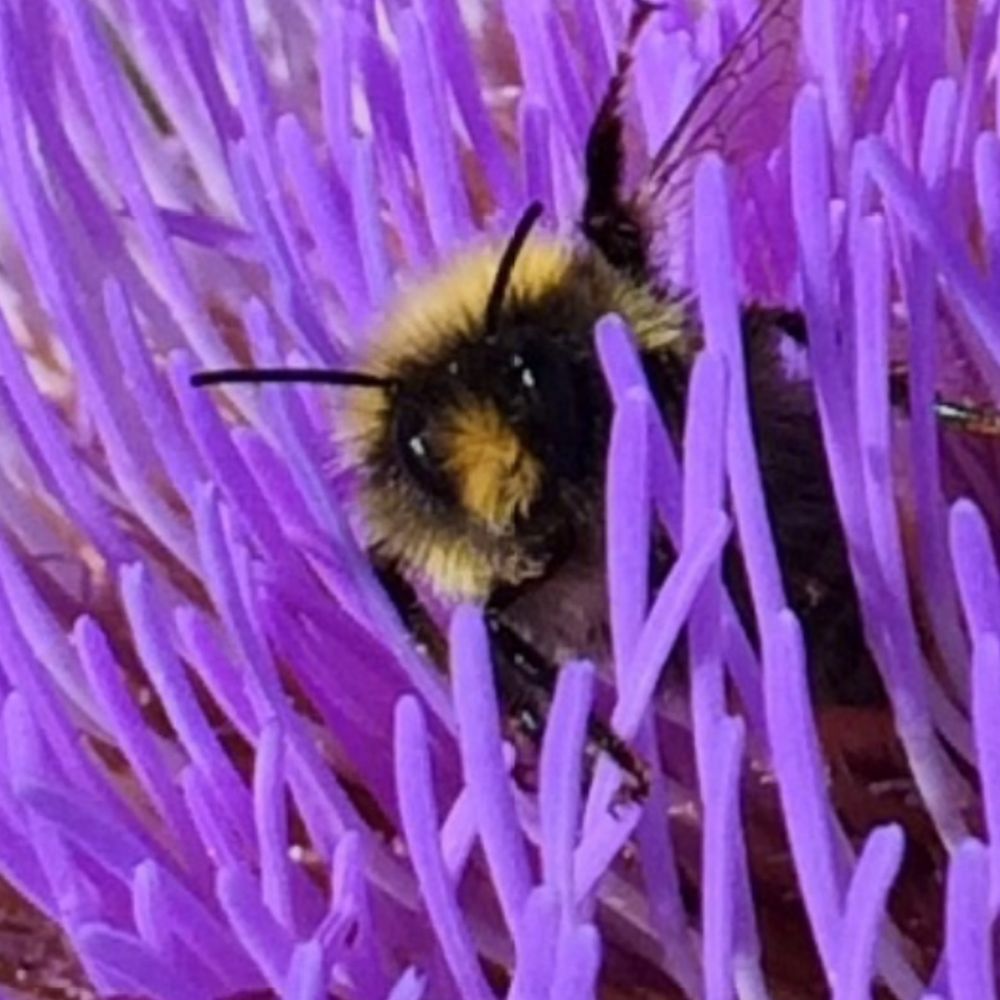
I have a PhD opportunity with @juliakoricheva.bsky.social at @rhulbiology.bsky.social and @rbgkew.bsky.social to research the effect of forest diversification on understory forage provision for pollinators in an experimental mixed forest in Finland. www.trees-dla.ac.uk/projects/eff... please share
Effects of forest diversification on floral reward production for pollinators | TREES DLA
The herb layer in forests has a large potential to provide nectar and pollen for pollinators, but forest management practices such as planting tree species mixtures vs monocultures can affect floral r...
www.trees-dla.ac.uk
October 28, 2025 at 2:07 PM
I have a PhD opportunity with @juliakoricheva.bsky.social at @rhulbiology.bsky.social and @rbgkew.bsky.social to research the effect of forest diversification on understory forage provision for pollinators in an experimental mixed forest in Finland. www.trees-dla.ac.uk/projects/eff... please share
Reposted by Mikko Tiusanen
How many plant species are buzz pollinated? After more than six years in the making, our paper on the convergent evolution of buzz pollinated flowers is out in @journal-evo.bsky.social. Thanks @draverbee.bsky.social @roszenil.bsky.social and all co-authors for your hard work! doi.org/10.1093/evol...

October 23, 2025 at 4:50 AM
How many plant species are buzz pollinated? After more than six years in the making, our paper on the convergent evolution of buzz pollinated flowers is out in @journal-evo.bsky.social. Thanks @draverbee.bsky.social @roszenil.bsky.social and all co-authors for your hard work! doi.org/10.1093/evol...
Reposted by Mikko Tiusanen
Our first paper from the Bug-Network (BugNet) is out! 🎉
BugNet is a global network studying how invertebrate herbivores and fungal pathogens shape plant diversity & ecosystem functioning worldwide. The paper reports on the methods of the experimental part:
📄 onlinelibrary.wiley.com/doi/10.1002/...
BugNet is a global network studying how invertebrate herbivores and fungal pathogens shape plant diversity & ecosystem functioning worldwide. The paper reports on the methods of the experimental part:
📄 onlinelibrary.wiley.com/doi/10.1002/...

The Bug‐Network (BugNet): A Global Experimental Network Testing the Effects of Invertebrate Herbivores and Fungal Pathogens on Plant Communities and Ecosystem Function in Open Ecosystems
The Bug-Network (BugNet) is a novel global collaborative research network that implements standardized consumer-reduction experiments in herbaceous- or shrub-dominated ecosystems to assess the impact...
onlinelibrary.wiley.com
October 10, 2025 at 8:20 AM
Our first paper from the Bug-Network (BugNet) is out! 🎉
BugNet is a global network studying how invertebrate herbivores and fungal pathogens shape plant diversity & ecosystem functioning worldwide. The paper reports on the methods of the experimental part:
📄 onlinelibrary.wiley.com/doi/10.1002/...
BugNet is a global network studying how invertebrate herbivores and fungal pathogens shape plant diversity & ecosystem functioning worldwide. The paper reports on the methods of the experimental part:
📄 onlinelibrary.wiley.com/doi/10.1002/...
Reposted by Mikko Tiusanen

Open position: Professor or Assistant / Associate (tenure track) Professor in Plant Ecology (U. Turku Finland) Please share
ats.talentadore.com/apply/kasvie...
ats.talentadore.com/apply/kasvie...

Professor or Assistant / Associate (tenure track) Professor in Plant Ecology
The Faculty of Science is looking for a full professor or assistant/associate professor (tenure track) in Plant Ecology. The aim of the professorship is to strengthen scientific research and education...
ats.talentadore.com
October 4, 2025 at 5:39 AM
Open position: Professor or Assistant / Associate (tenure track) Professor in Plant Ecology (U. Turku Finland) Please share
ats.talentadore.com/apply/kasvie...
ats.talentadore.com/apply/kasvie...
Reposted by Mikko Tiusanen

Pollinators such as wild #bees, #butterflies, and #hoverflies are in trouble worldwide. A major new study, published in Science, shows that the oft-quoted figure of 10% semi-natural habitat in farmland landscapes is far too little to safeguard pollinators
jeffollerton.co.uk/2025/09/26/p...
jeffollerton.co.uk/2025/09/26/p...

Pollinators need more space and 10% habitat is not enough says a new study just published in Science
Pollinators such as wild bees, butterflies, and hoverflies are in trouble worldwide. A major new study, published in Science and led by Gabriella Bishop and other scientists at Wageningen Universit…
jeffollerton.co.uk
September 26, 2025 at 9:30 AM
Pollinators such as wild #bees, #butterflies, and #hoverflies are in trouble worldwide. A major new study, published in Science, shows that the oft-quoted figure of 10% semi-natural habitat in farmland landscapes is far too little to safeguard pollinators
jeffollerton.co.uk/2025/09/26/p...
jeffollerton.co.uk/2025/09/26/p...
Reposted by Mikko Tiusanen

Now out in npj Biodiversity: Multispecies relations shape bird-feeding practices
Link: doi.org/10.1038/s441...
From the bird-feeding section of
@helsinkirats.bsky.social w/ @informedbirds.bsky.social @aksulehikoinen.bsky.social
A short thread:
1/8
Link: doi.org/10.1038/s441...
From the bird-feeding section of
@helsinkirats.bsky.social w/ @informedbirds.bsky.social @aksulehikoinen.bsky.social
A short thread:
1/8

March 18, 2025 at 3:05 PM
Now out in npj Biodiversity: Multispecies relations shape bird-feeding practices
Link: doi.org/10.1038/s441...
From the bird-feeding section of
@helsinkirats.bsky.social w/ @informedbirds.bsky.social @aksulehikoinen.bsky.social
A short thread:
1/8
Link: doi.org/10.1038/s441...
From the bird-feeding section of
@helsinkirats.bsky.social w/ @informedbirds.bsky.social @aksulehikoinen.bsky.social
A short thread:
1/8
Reposted by Mikko Tiusanen
🧪🌍A little cheer up between a lot of negative news: Our paper about the importance of food-web complexity 🌱🐛🪲🍄 for ecosystem stability has just been accepted! Great lead by Maowei Liang, together with Elizabeth Borer, Eric Seabloom and Dave Tilman. Preprint: www.authorea.com/doi/full/10....

Consumers Modulate Effects of Plant Diversity on Community Stability
Biotic complexity, encompassing both competitive interactions within trophic levels and consumptive interactions among trophic levels, plays a fundamental role in maintaining ecosystem stability. Whil...
www.authorea.com
March 5, 2025 at 7:45 PM
🧪🌍A little cheer up between a lot of negative news: Our paper about the importance of food-web complexity 🌱🐛🪲🍄 for ecosystem stability has just been accepted! Great lead by Maowei Liang, together with Elizabeth Borer, Eric Seabloom and Dave Tilman. Preprint: www.authorea.com/doi/full/10....