



Matt Smear
@mattsmear.bsky.social
Associate professor, University of Oregon
Follows your nose
Follows your nose
Pinned
Matt Smear
@mattsmear.bsky.social
· Nov 22
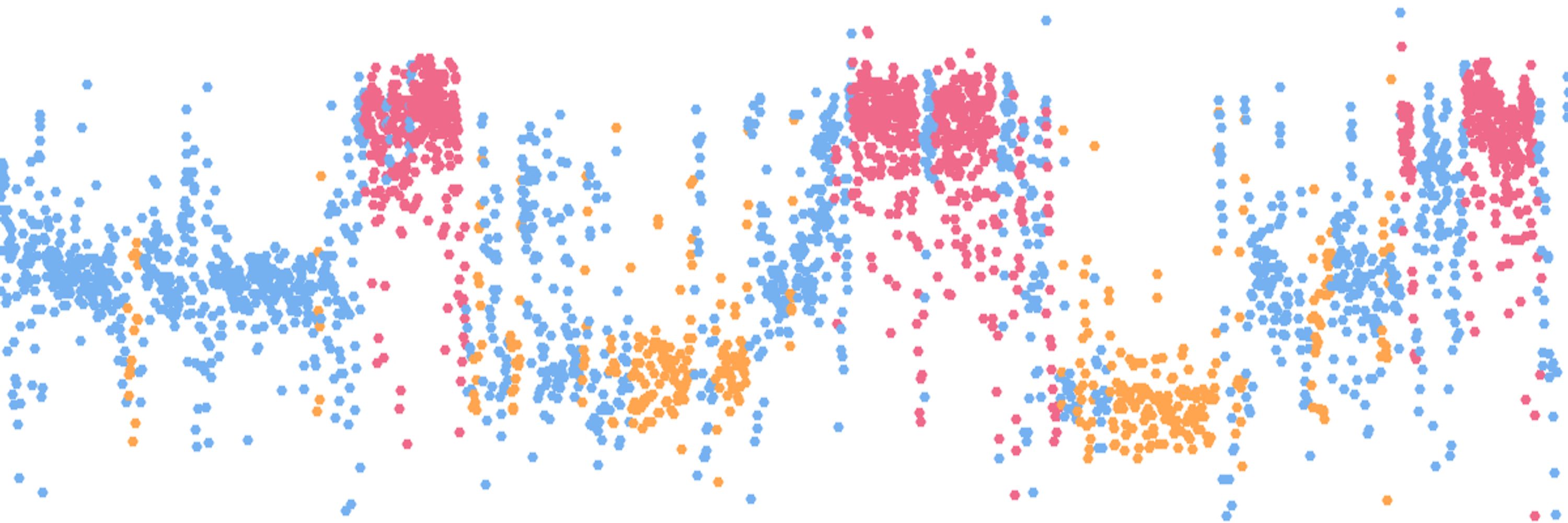
Sniffing helps animals identify smells and connect them to places and events, but noses can’t sense time or place.
How do brains connect odors with internal models of the world?
Our preprint suggests that the olfactory bulb participates in this connection.
www.biorxiv.org/content/10.1...
How do brains connect odors with internal models of the world?
Our preprint suggests that the olfactory bulb participates in this connection.
www.biorxiv.org/content/10.1...
Temporal organization of odor responses in the human olfactory bulb
www.researchsquare.com/article/rs-8...
www.researchsquare.com/article/rs-8...

January 26, 2026 at 5:56 AM
Temporal organization of odor responses in the human olfactory bulb
www.researchsquare.com/article/rs-8...
www.researchsquare.com/article/rs-8...
Reposted by Matt Smear
How do past sensory experiences prepare us for new ones? Our new paper tackles this long-standing question, revealing a role for activity sequences in the olfactory bulb. Excited to share our work led by @jonvgill.bsky.social with Mursel Karadas & Shy Shoham
www.biorxiv.org/content/10.6...
www.biorxiv.org/content/10.6...
www.biorxiv.org
January 26, 2026 at 3:05 AM
How do past sensory experiences prepare us for new ones? Our new paper tackles this long-standing question, revealing a role for activity sequences in the olfactory bulb. Excited to share our work led by @jonvgill.bsky.social with Mursel Karadas & Shy Shoham
www.biorxiv.org/content/10.6...
www.biorxiv.org/content/10.6...
Reposted by Matt Smear

At @elife.bsky.social you can now include explainer videos with every figure. Like going to a seminar while you engage with the paper. First example here elifesciences.org/articles/106...
Click the arrows next to each figure to get a video of @mathiassablemeyer.bsky.social explaining it for you!
Click the arrows next to each figure to get a video of @mathiassablemeyer.bsky.social explaining it for you!

January 22, 2026 at 6:16 PM
At @elife.bsky.social you can now include explainer videos with every figure. Like going to a seminar while you engage with the paper. First example here elifesciences.org/articles/106...
Click the arrows next to each figure to get a video of @mathiassablemeyer.bsky.social explaining it for you!
Click the arrows next to each figure to get a video of @mathiassablemeyer.bsky.social explaining it for you!
Reposted by Matt Smear
1/3 The humble glass jar is a workhorse in olfactory research, but comes w/ hidden problems:
- Unknown headspace concentration
- Concentration dilution by ambient air
These add noise to odor measurements.
Our preprint introduces something new, something bag.🧪 @jmainland.bsky.social & Matt Andres
- Unknown headspace concentration
- Concentration dilution by ambient air
These add noise to odor measurements.
Our preprint introduces something new, something bag.🧪 @jmainland.bsky.social & Matt Andres
Odor Sampling Bags Enable Reliable Delivery of Controlled Odor Concentrations
Precise control of odorant concentration is essential for reliable olfactory research, yet existing odorant delivery methods often suffer from solvent interactions and dilution from ambient air, limiting stimulus consistency in olfactory research. We developed an odor sampling bag system using Nalophan plastic to create a closed headspace with air as the carrier medium, eliminating solvent-related variability and ambient air dilution. In two independent experiments, 15 trained panelists each rated the perceived intensity of seven concentrations of benzaldehyde and 2-heptanone using both gas-sampling bags and glass jars. Bags produced higher maximum perceptual intensities (p < 0.001) and greater test-retest reliability than jars (Experiment 1: r = 0.89 vs. 0.81, p < 0.001; Experiment 2: r = 0.86 vs. 0.72, p < 0.001). Notably, the two tested odorants showed different maximum intensities in bags (p < 0.001) but not jars (p = 0.85), suggesting bags better preserve odorant-specific concentration differences. Photoionization detector measurements confirmed stable headspace concentrations over time, comparable to industry-standard Tedlar bags. This cost-effective approach offers improved stimulus control for olfactory psychophysics research. ### Competing Interest Statement Joel D. Mainland serves on the scientific advisory board of Osmo Labs, PBC and receives compensation for these activities. National Institutes of Health, https://ror.org/01cwqze88, F32 DC020380, T32 DC000014, U19 NS112953, R01 DC017757, R01 DC021663
www.biorxiv.org
January 16, 2026 at 8:29 PM
1/3 The humble glass jar is a workhorse in olfactory research, but comes w/ hidden problems:
- Unknown headspace concentration
- Concentration dilution by ambient air
These add noise to odor measurements.
Our preprint introduces something new, something bag.🧪 @jmainland.bsky.social & Matt Andres
- Unknown headspace concentration
- Concentration dilution by ambient air
These add noise to odor measurements.
Our preprint introduces something new, something bag.🧪 @jmainland.bsky.social & Matt Andres
Reposted by Matt Smear

A 2006 Science paper revealed how ants pull off extraordinary feats of navigation. In the latest “This paper changed my life,” @tuthill.bsky.social discusses how this paper inspired him to consider how other insects sense their own bodies.
#neuroskyence
www.thetransmitter.org/this-paper-c...
#neuroskyence
www.thetransmitter.org/this-paper-c...

This paper changed my life: John Tuthill reflects on the subjectivity of selfhood
Wittlinger, Wehner and Wolf’s 2006 “stilts and stumps” Science paper revealed how ants pull off extraordinary feats of navigation using a biological odometer, and it inspired Tuthill to consider how…
www.thetransmitter.org
January 12, 2026 at 2:51 PM
A 2006 Science paper revealed how ants pull off extraordinary feats of navigation. In the latest “This paper changed my life,” @tuthill.bsky.social discusses how this paper inspired him to consider how other insects sense their own bodies.
#neuroskyence
www.thetransmitter.org/this-paper-c...
#neuroskyence
www.thetransmitter.org/this-paper-c...
Reposted by Matt Smear

Less than two weeks left to apply for the Cephalopod Neuroscience Gordon Conference! An exciting lineup of speakers and posters, and financial aid is available upon request. 🐙🦑
www.grc.org/cephalopod-n...
www.grc.org/cephalopod-n...

January 6, 2026 at 4:41 PM
Less than two weeks left to apply for the Cephalopod Neuroscience Gordon Conference! An exciting lineup of speakers and posters, and financial aid is available upon request. 🐙🦑
www.grc.org/cephalopod-n...
www.grc.org/cephalopod-n...
Reposted by Matt Smear
Bye bye 2025, a divisive year,
with many divisors: 3, 5, 9, 15, 25, 27, 45, 75, 81, 135, 225, 405, 675.
Happy 2026 = 2*1013
Just two primes
Cheers!
with many divisors: 3, 5, 9, 15, 25, 27, 45, 75, 81, 135, 225, 405, 675.
Happy 2026 = 2*1013
Just two primes
Cheers!
December 31, 2025 at 4:32 PM
Bye bye 2025, a divisive year,
with many divisors: 3, 5, 9, 15, 25, 27, 45, 75, 81, 135, 225, 405, 675.
Happy 2026 = 2*1013
Just two primes
Cheers!
with many divisors: 3, 5, 9, 15, 25, 27, 45, 75, 81, 135, 225, 405, 675.
Happy 2026 = 2*1013
Just two primes
Cheers!
Reposted by Matt Smear
A new comparative study of seven lizard species, including chameleons and bearded dragons, finds an ancient sleep rhythm conserved over millennia.
By Lauren Schenkman
www.thetransmitter.org/sleep/snoozi...
By Lauren Schenkman
www.thetransmitter.org/sleep/snoozi...
December 29, 2025 at 6:34 PM
A new comparative study of seven lizard species, including chameleons and bearded dragons, finds an ancient sleep rhythm conserved over millennia.
By Lauren Schenkman
www.thetransmitter.org/sleep/snoozi...
By Lauren Schenkman
www.thetransmitter.org/sleep/snoozi...
Reposted by Matt Smear

Adam Kampff’s passion for understanding and explaining the world was unmatched. Living by example and not ever compromising on his dreams, Adam was uncanny in making people realize they can learn and understand anything and everything. Keep his dream alive!
In his own words: tinyurl.com/ye29csw3
In his own words: tinyurl.com/ye29csw3

December 15, 2025 at 1:16 PM
Adam Kampff’s passion for understanding and explaining the world was unmatched. Living by example and not ever compromising on his dreams, Adam was uncanny in making people realize they can learn and understand anything and everything. Keep his dream alive!
In his own words: tinyurl.com/ye29csw3
In his own words: tinyurl.com/ye29csw3
The olfactory bulb endocast as a proxy for mammalian olfaction
www.pnas.org/doi/full/10....
www.pnas.org/doi/full/10....

December 12, 2025 at 5:16 PM
The olfactory bulb endocast as a proxy for mammalian olfaction
www.pnas.org/doi/full/10....
www.pnas.org/doi/full/10....
Reposted by Matt Smear

‘It has been remarked that life’s aim is an act, not a thought’ or in other words evolution selects on the basis of what animals do.
December 11, 2025 at 5:53 PM
‘It has been remarked that life’s aim is an act, not a thought’ or in other words evolution selects on the basis of what animals do.
Reposted by Matt Smear
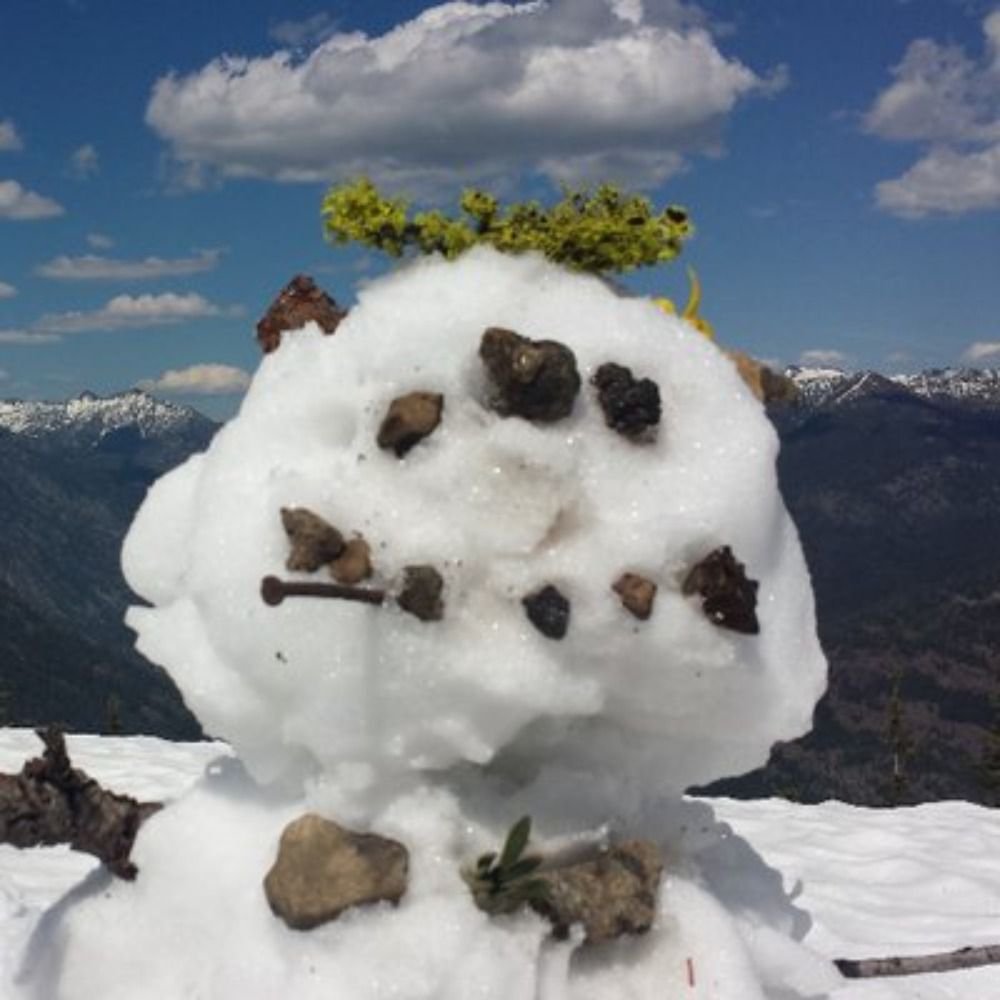
How do neural circuits generate the walking rhythm?
Using connectome simulations, @sarahpugly.bsky.social found a minimal central pattern generator (CPG) that produces oscillations in leg motor neurons. Same circuit motif for each 🪰 leg.
w @bingbrunton.bsky.social
www.biorxiv.org/content/10.1...
Using connectome simulations, @sarahpugly.bsky.social found a minimal central pattern generator (CPG) that produces oscillations in leg motor neurons. Same circuit motif for each 🪰 leg.
w @bingbrunton.bsky.social
www.biorxiv.org/content/10.1...
December 9, 2025 at 5:50 PM
How do neural circuits generate the walking rhythm?
Using connectome simulations, @sarahpugly.bsky.social found a minimal central pattern generator (CPG) that produces oscillations in leg motor neurons. Same circuit motif for each 🪰 leg.
w @bingbrunton.bsky.social
www.biorxiv.org/content/10.1...
Using connectome simulations, @sarahpugly.bsky.social found a minimal central pattern generator (CPG) that produces oscillations in leg motor neurons. Same circuit motif for each 🪰 leg.
w @bingbrunton.bsky.social
www.biorxiv.org/content/10.1...
Reposted by Matt Smear

Soapbox time: the problem with metabolic efficiency arguments in neuroscience is that they often confuse energy efficiency with energy expenditure. Biological systems are optimized for energy efficiency, but that does NOT imply they are optimized for low energy expenditure 🧵 1/

December 8, 2025 at 1:31 PM
Soapbox time: the problem with metabolic efficiency arguments in neuroscience is that they often confuse energy efficiency with energy expenditure. Biological systems are optimized for energy efficiency, but that does NOT imply they are optimized for low energy expenditure 🧵 1/
Reposted by Matt Smear
nervous system because that improves our chances of survival. Again, this is not inefficient, it is a valid evolutionary strategy.
Many energy efficiency arguments in neuroscience are actually about energy consumption, saying that (for example) the number of action potentials is minimized. 5/
Many energy efficiency arguments in neuroscience are actually about energy consumption, saying that (for example) the number of action potentials is minimized. 5/
December 8, 2025 at 1:31 PM
nervous system because that improves our chances of survival. Again, this is not inefficient, it is a valid evolutionary strategy.
Many energy efficiency arguments in neuroscience are actually about energy consumption, saying that (for example) the number of action potentials is minimized. 5/
Many energy efficiency arguments in neuroscience are actually about energy consumption, saying that (for example) the number of action potentials is minimized. 5/
Reposted by Matt Smear

Imagine: If we had a crystal ball that tells us what are the discoveries to be made, we wouldn't have to do science in the first place.
Apparently that's some scientists' scientific ideal. Rather than doing science. So many weird ontological and epistemic assumptions to unpack.
Apparently that's some scientists' scientific ideal. Rather than doing science. So many weird ontological and epistemic assumptions to unpack.
December 3, 2025 at 2:42 AM
Imagine: If we had a crystal ball that tells us what are the discoveries to be made, we wouldn't have to do science in the first place.
Apparently that's some scientists' scientific ideal. Rather than doing science. So many weird ontological and epistemic assumptions to unpack.
Apparently that's some scientists' scientific ideal. Rather than doing science. So many weird ontological and epistemic assumptions to unpack.
Reposted by Matt Smear
As a result, it's a great marriage imo, replicability and AI. Pot meeting kettle. Shortcuts in search for shortcuts.
December 3, 2025 at 2:36 AM
As a result, it's a great marriage imo, replicability and AI. Pot meeting kettle. Shortcuts in search for shortcuts.
Reposted by Matt Smear
All our work on replicability in the last decade has taught me that it's not a good use of resources to try and predict replicability in the first place since it's neither a good goal to achieve nor diagnostic of specific problems. It's a search for shortcuts, easy answers to complex questions.
There are many good arguments for why AI/ML will struggle to predict replicability.
www.pnas.org/doi/full/10....
I'm curious why, in light of these arguments and now data, COS is continuing to pursue this project.
www.pnas.org/doi/full/10....
I'm curious why, in light of these arguments and now data, COS is continuing to pursue this project.
December 3, 2025 at 2:29 AM
All our work on replicability in the last decade has taught me that it's not a good use of resources to try and predict replicability in the first place since it's neither a good goal to achieve nor diagnostic of specific problems. It's a search for shortcuts, easy answers to complex questions.
Reposted by Matt Smear
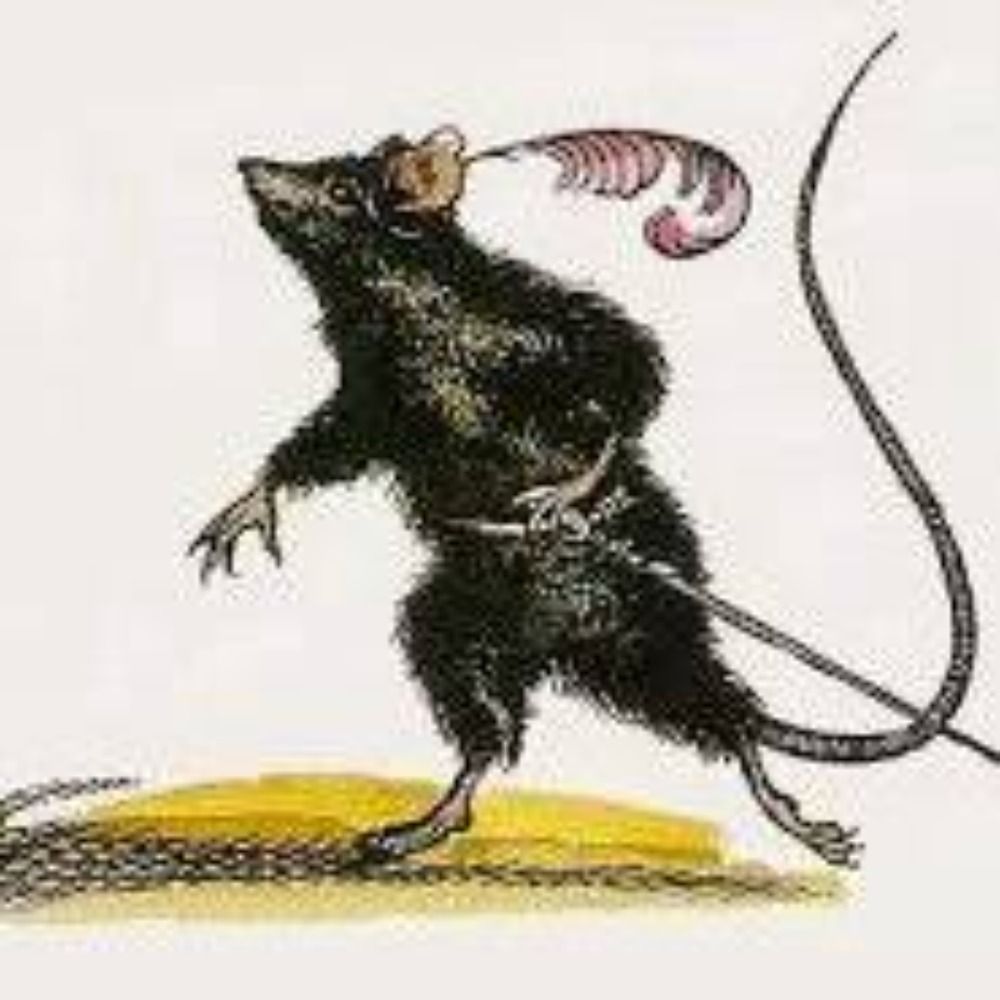
en*K*ephalins act on Delta opioid receptors and *D*ynorphins act on Kappa opioid receptors, and this is how you know the pain field is full of psychopaths
November 28, 2025 at 5:51 PM
en*K*ephalins act on Delta opioid receptors and *D*ynorphins act on Kappa opioid receptors, and this is how you know the pain field is full of psychopaths

Reposted by Matt Smear

(4/n) What we found reveals a striking organizational principle 👇
In the dorsal IPN, both directional motion AND landmark position are topographically organized in parasagittal stripes (running front-to-back).
In the dorsal IPN, both directional motion AND landmark position are topographically organized in parasagittal stripes (running front-to-back).
November 24, 2025 at 4:19 PM
(4/n) What we found reveals a striking organizational principle 👇
In the dorsal IPN, both directional motion AND landmark position are topographically organized in parasagittal stripes (running front-to-back).
In the dorsal IPN, both directional motion AND landmark position are topographically organized in parasagittal stripes (running front-to-back).
The human brain modulates sniffs according to fine-grained perceptual features of odours
rdcu.be/eP16z
rdcu.be/eP16z

The human brain modulates sniffs according to fine-grained perceptual features of odours
Nature Human Behaviour - Sagar et al. show that human sniff behaviour is sensitive to the perceptual characteristics of the odour being detected.
rdcu.be
November 15, 2025 at 7:03 AM
The human brain modulates sniffs according to fine-grained perceptual features of odours
rdcu.be/eP16z
rdcu.be/eP16z
Reposted by Matt Smear

#Oregon: Just months after the historic removal of four major dams on the Klamath River, scientists and tribal leaders are stunned by what they’re seeing—salmon are returning in far greater numbers, and much faster, than anyone expected. www.activenorcal.com/salmon-are-s...

Salmon Are Surging Far Beyond Expectations After Klamath River Dam Removal
Just months after the historic removal of four major dams on the Klamath River, scientists and tribal leaders are stunned by what they’re seeing—salmon are returning in far greater numbers, and much f...
www.activenorcal.com
October 22, 2025 at 12:13 AM
#Oregon: Just months after the historic removal of four major dams on the Klamath River, scientists and tribal leaders are stunned by what they’re seeing—salmon are returning in far greater numbers, and much faster, than anyone expected. www.activenorcal.com/salmon-are-s...
Reposted by Matt Smear
Our latest profile is here! Dr. Susana Lima studies mate selection and female sexual behavior. Follow the link below to learn more!
#StoriesOfWiN #WomenInNeuroscience
www.storiesofwin.org/profiles/202...
#StoriesOfWiN #WomenInNeuroscience
www.storiesofwin.org/profiles/202...

Dr. Susana Lima — Stories of WiN
studies mate selection and female sexual behavior
www.storiesofwin.org
October 16, 2025 at 2:35 PM
Our latest profile is here! Dr. Susana Lima studies mate selection and female sexual behavior. Follow the link below to learn more!
#StoriesOfWiN #WomenInNeuroscience
www.storiesofwin.org/profiles/202...
#StoriesOfWiN #WomenInNeuroscience
www.storiesofwin.org/profiles/202...
Reposted by Matt Smear
DOI is not up yet, but this is the link:
www.science.org/doi/10.1126/...
www.science.org/doi/10.1126/...

Head-direction cells as a neural compass in bats navigating outdoors on a remote oceanic island
Animals and humans rely on their navigation skills to survive. However, spatial neurons in the brain’s “navigation circuit” had not previously been studied under real-world conditions. We conducted an...
www.science.org
October 16, 2025 at 6:07 PM
DOI is not up yet, but this is the link:
www.science.org/doi/10.1126/...
www.science.org/doi/10.1126/...
Reposted by Matt Smear

New tenure track faculty position in glia and/or neurovascular coupling! Please come join us!
academicjobsonline.org/ajo/jobs/30864
#neurosky #neuroskyence #glia #neurojobs
academicjobsonline.org/ajo/jobs/30864
#neurosky #neuroskyence #glia #neurojobs
University of Oregon, Department of Human Physiology
Job #AJO30864, Assistant/Associate Professor of Human Physiology with a Glia and Neurovascular focus, Department of Human Physiology, University of Oregon, Eugene, Oregon, US
academicjobsonline.org
October 15, 2025 at 5:40 PM
New tenure track faculty position in glia and/or neurovascular coupling! Please come join us!
academicjobsonline.org/ajo/jobs/30864
#neurosky #neuroskyence #glia #neurojobs
academicjobsonline.org/ajo/jobs/30864
#neurosky #neuroskyence #glia #neurojobs