



Mark Gurney
@markgurn.bsky.social
I’m here for birds, insects, plants, and kind people. 🏳️🌈 he/him
Reposted by Mark Gurney
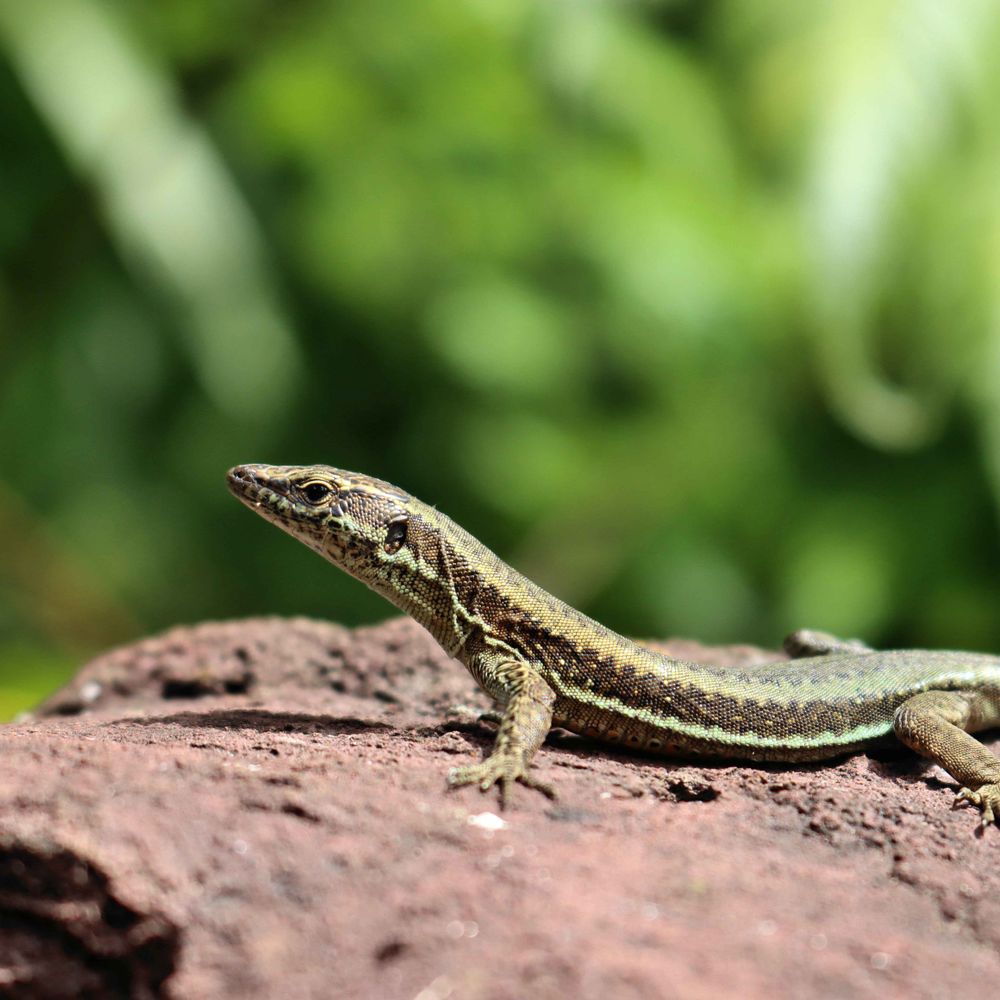
This is the height of ecological illiteracy and shows how wannabe zookeepers have taken over UK nature conservation. Evidence for native status of these species is incredibly tenuous; releasing them into one of our most ancient & irreplaceable ecosystems would be crazy.
www.bbc.co.uk/news/article...
www.bbc.co.uk/news/article...

Three frogs to be reintroduced to West Acre 'pingos'
The money will be spent on breeding thousands of frogs and managing their release in 2026.
www.bbc.co.uk
January 2, 2026 at 8:50 PM
This is the height of ecological illiteracy and shows how wannabe zookeepers have taken over UK nature conservation. Evidence for native status of these species is incredibly tenuous; releasing them into one of our most ancient & irreplaceable ecosystems would be crazy.
www.bbc.co.uk/news/article...
www.bbc.co.uk/news/article...
Reposted by Mark Gurney

Climate-driven range contractions in species like Twite and Citril Finch can't be fixed by releases www.birdguides.com/news/citril-... #Ornithology ##UKBirding 🪶
December 27, 2025 at 9:40 AM
Climate-driven range contractions in species like Twite and Citril Finch can't be fixed by releases www.birdguides.com/news/citril-... #Ornithology ##UKBirding 🪶
Reposted by Mark Gurney

The fragment of ND2 DNA that @tessaroo.bsky.social got from Calshot GT Grackle doesn't tell exactly where it came from but it excludes a USA west coast (nelsoni) origin and puts it in the Panama-Central-USA populations. Orange shape overlaid on map from DaCosta et al., 2008 doi.org/10.1525/cond...

December 20, 2025 at 3:19 PM
The fragment of ND2 DNA that @tessaroo.bsky.social got from Calshot GT Grackle doesn't tell exactly where it came from but it excludes a USA west coast (nelsoni) origin and puts it in the Panama-Central-USA populations. Orange shape overlaid on map from DaCosta et al., 2008 doi.org/10.1525/cond...
Reposted by Mark Gurney

My latest paper is now published in an issue! We showcased the incredible scientific contributions that local and amateur naturalists make for research on long term change! 💚🌍
doi.org/10.1111/icad...
doi.org/10.1111/icad...

Local entomologists shine a light on moth communities: The value of amateur records in cataloguing long‐term change
Written records associated with museum collections are often underutilised. We use two new macro-moth collections donated to the University Museum of Zoology (Cambridge) to investigate long-term cha...
doi.org
November 12, 2025 at 4:18 PM
My latest paper is now published in an issue! We showcased the incredible scientific contributions that local and amateur naturalists make for research on long term change! 💚🌍
doi.org/10.1111/icad...
doi.org/10.1111/icad...
Reposted by Mark Gurney
New paper alert! Microclimate temperatures are more extreme than we previously thought! Near-ground temperatures are amplified in hot weather, cool refugia is lost and replaced with heat traps ☀️🔥🥵 escape from heat will be very hard for small ground-dwelling organisms
doi.org/10.21425/fob...
doi.org/10.21425/fob...
Local microclimates can both amplify and mitigate extreme temperatures associated with climate change
Climate change is a threat to global biodiversity, with changes to mean temperatures and increasing frequency and intensity of extreme weather events. Heatwaves in particular pose a threat to species’...
doi.org
December 19, 2025 at 10:44 AM
New paper alert! Microclimate temperatures are more extreme than we previously thought! Near-ground temperatures are amplified in hot weather, cool refugia is lost and replaced with heat traps ☀️🔥🥵 escape from heat will be very hard for small ground-dwelling organisms
doi.org/10.21425/fob...
doi.org/10.21425/fob...
Reposted by Mark Gurney

Interested in moth trapping?
Wondering which trap to use? Or if different bulbs collect different species?
Using 100k samples from @gardenmothscheme.bsky.social our new paper looks at these questions and more! With with Bill Kunin and @katatrepsis.bsky.social
#mothsmatter #teammoth
Wondering which trap to use? Or if different bulbs collect different species?
Using 100k samples from @gardenmothscheme.bsky.social our new paper looks at these questions and more! With with Bill Kunin and @katatrepsis.bsky.social
#mothsmatter #teammoth

Effect of bulb type on moth trap catch and composition in UK gardens
We analyse 10 years of records Garden Moth Scheme (GMS) to estimate the effect of bulb and trap type on the number of moths caught by moth traps. We find that brighter, higher wattage bulbs collect ...
resjournals.onlinelibrary.wiley.com
December 13, 2025 at 12:52 PM
Interested in moth trapping?
Wondering which trap to use? Or if different bulbs collect different species?
Using 100k samples from @gardenmothscheme.bsky.social our new paper looks at these questions and more! With with Bill Kunin and @katatrepsis.bsky.social
#mothsmatter #teammoth
Wondering which trap to use? Or if different bulbs collect different species?
Using 100k samples from @gardenmothscheme.bsky.social our new paper looks at these questions and more! With with Bill Kunin and @katatrepsis.bsky.social
#mothsmatter #teammoth
Reposted by Mark Gurney
Bij veel leden ligt de nieuwste Entomologische Berichten op de mat, of is deze digitaal te benaderen via de ledenomgeving op NEV.nl!
Ook deze mooie uitgave lezen? Word lid, of even wachten. Oudere jaargangen zijn ook beschikbaar via Natuurtijdschriften.nl
Ook deze mooie uitgave lezen? Word lid, of even wachten. Oudere jaargangen zijn ook beschikbaar via Natuurtijdschriften.nl

December 12, 2025 at 8:24 AM
Bij veel leden ligt de nieuwste Entomologische Berichten op de mat, of is deze digitaal te benaderen via de ledenomgeving op NEV.nl!
Ook deze mooie uitgave lezen? Word lid, of even wachten. Oudere jaargangen zijn ook beschikbaar via Natuurtijdschriften.nl
Ook deze mooie uitgave lezen? Word lid, of even wachten. Oudere jaargangen zijn ook beschikbaar via Natuurtijdschriften.nl
Reposted by Mark Gurney
Huge News from the Western Amazon: it's the year 2025 and we are still describing entirely new, strikingly-distinctive large-bodied bird species! Behold Tinamus resonans sp. nov. the Slaty-masked Tinamou mapress.com/zt/article/v... #Ornithology @tetzoo.bsky.social 🪶

December 2, 2025 at 7:20 AM
Huge News from the Western Amazon: it's the year 2025 and we are still describing entirely new, strikingly-distinctive large-bodied bird species! Behold Tinamus resonans sp. nov. the Slaty-masked Tinamou mapress.com/zt/article/v... #Ornithology @tetzoo.bsky.social 🪶
Reposted by Mark Gurney
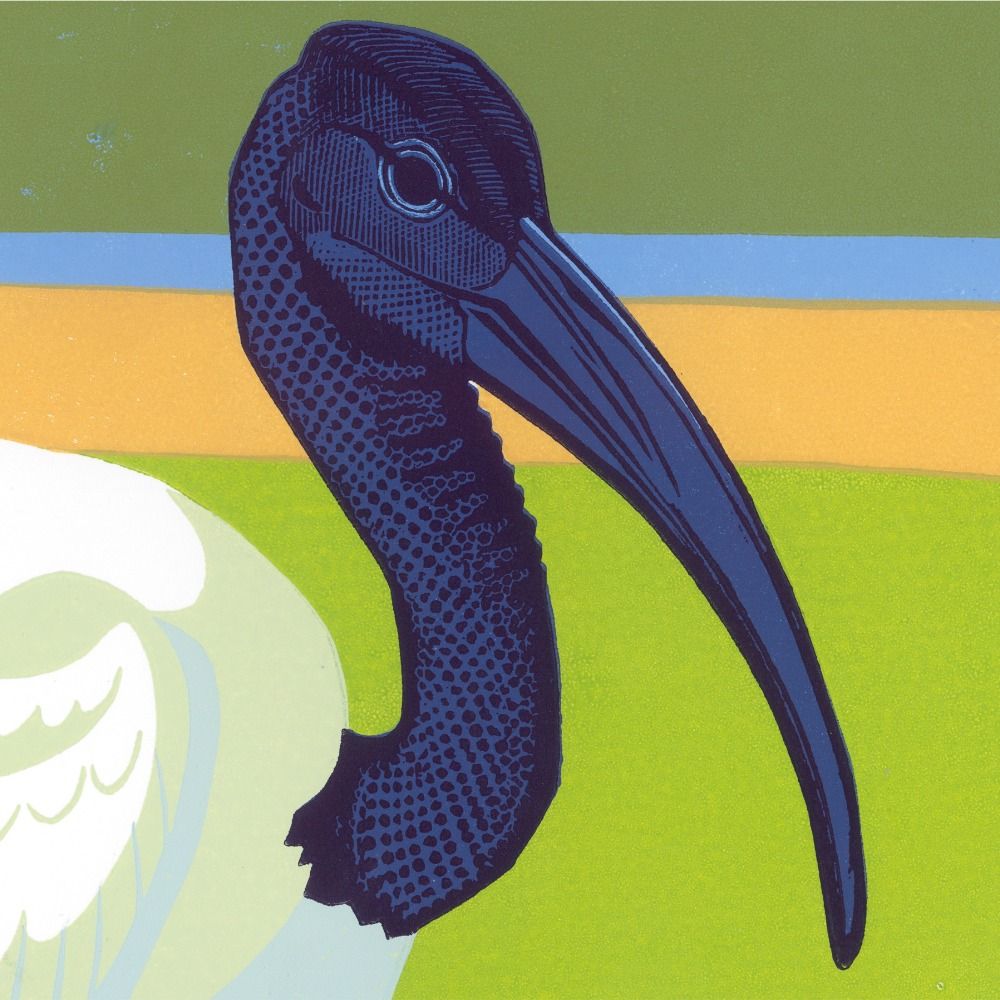
EARLY VIEW in IBIS
A new species of jewel-babbler (Cinclosomatidae: Ptilorrhoa) from the Southern Fold Mountains of Papua New Guinea | onlinelibrary.wiley....
Iain A. Woxvold, Banak G. Gamui, Leo Legra, Samson Yama, Bonny Koane, Salape Tulai | #ornithology 🪶
A new species of jewel-babbler (Cinclosomatidae: Ptilorrhoa) from the Southern Fold Mountains of Papua New Guinea | onlinelibrary.wiley....
Iain A. Woxvold, Banak G. Gamui, Leo Legra, Samson Yama, Bonny Koane, Salape Tulai | #ornithology 🪶

November 28, 2025 at 7:59 AM
EARLY VIEW in IBIS
A new species of jewel-babbler (Cinclosomatidae: Ptilorrhoa) from the Southern Fold Mountains of Papua New Guinea | onlinelibrary.wiley....
Iain A. Woxvold, Banak G. Gamui, Leo Legra, Samson Yama, Bonny Koane, Salape Tulai | #ornithology 🪶
A new species of jewel-babbler (Cinclosomatidae: Ptilorrhoa) from the Southern Fold Mountains of Papua New Guinea | onlinelibrary.wiley....
Iain A. Woxvold, Banak G. Gamui, Leo Legra, Samson Yama, Bonny Koane, Salape Tulai | #ornithology 🪶
Reposted by Mark Gurney
🦢 What a swan’s 570km U-turn could tell us about water, wetlands, and a changing climate.... www.linkedin.com/posts/kane-b...


November 5, 2025 at 9:03 PM
🦢 What a swan’s 570km U-turn could tell us about water, wetlands, and a changing climate.... www.linkedin.com/posts/kane-b...
Reposted by Mark Gurney
Might be good for plant spp. richness, but I'm not sure mowing field margins every 6 weeks in spring & summer is going to be helpful for other farmland biodiversity. Seems a perfect way to repeatedly destroy every breeding attempt of ground-nesting birds, small mammals or butterflies that use them.

Semi-natural habitats are key for farmland biodiversity but their quality is often low due to high exposure to fertilizers 🌾🧪
A new study shows that more frequent cutting can create diverse vegetation even in highly productive habitats ✂️🌏
🔗 doi.org/10.1111/1365...
A new study shows that more frequent cutting can create diverse vegetation even in highly productive habitats ✂️🌏
🔗 doi.org/10.1111/1365...
doi.org
November 5, 2025 at 6:47 PM
Might be good for plant spp. richness, but I'm not sure mowing field margins every 6 weeks in spring & summer is going to be helpful for other farmland biodiversity. Seems a perfect way to repeatedly destroy every breeding attempt of ground-nesting birds, small mammals or butterflies that use them.
Exciting news: we have a new British flea weevil.
Less exciting news: it is a Rhamphus.
I still don't understand how to tell them all apart.
Even so, this is a very useful paper:
www.mdpi.com/2075-4450/16...
Six new Palaearctic species and a review of diagnostic characters. #coleoptera
Less exciting news: it is a Rhamphus.
I still don't understand how to tell them all apart.
Even so, this is a very useful paper:
www.mdpi.com/2075-4450/16...
Six new Palaearctic species and a review of diagnostic characters. #coleoptera

November 3, 2025 at 1:10 PM
Exciting news: we have a new British flea weevil.
Less exciting news: it is a Rhamphus.
I still don't understand how to tell them all apart.
Even so, this is a very useful paper:
www.mdpi.com/2075-4450/16...
Six new Palaearctic species and a review of diagnostic characters. #coleoptera
Less exciting news: it is a Rhamphus.
I still don't understand how to tell them all apart.
Even so, this is a very useful paper:
www.mdpi.com/2075-4450/16...
Six new Palaearctic species and a review of diagnostic characters. #coleoptera
Reposted by Mark Gurney
Large citizen science datasets are powerful tools for biodiversity science, but they may have biases. Nice new paper from @louisbackstrom.bsky.social et al. showing that for eBird and Birdtrack lists there is a tendency for rare species to be over-represented
onlinelibrary.wiley.com/doi/epdf/10....
onlinelibrary.wiley.com/doi/epdf/10....

October 13, 2025 at 10:54 PM
Large citizen science datasets are powerful tools for biodiversity science, but they may have biases. Nice new paper from @louisbackstrom.bsky.social et al. showing that for eBird and Birdtrack lists there is a tendency for rare species to be over-represented
onlinelibrary.wiley.com/doi/epdf/10....
onlinelibrary.wiley.com/doi/epdf/10....
Reposted by Mark Gurney
One for the occasional series of #ornithology papers you need in your life but might not have read - Common/Spotted Sandpiper flight style as an antipredator behaviour.
academic.oup.com/auk/article-...
academic.oup.com/auk/article-...

October 6, 2025 at 12:09 PM
One for the occasional series of #ornithology papers you need in your life but might not have read - Common/Spotted Sandpiper flight style as an antipredator behaviour.
academic.oup.com/auk/article-...
academic.oup.com/auk/article-...
Reposted by Mark Gurney
Solanum revealed 2 species: nigrum & nitidibaccatum, Black & Green Nightshade. Apart from the obvious berry colour, it always remained possible that Green Nightshade could have been unripe berries.
Green= sepal lobes expand as the berries mature
Black= stays the same
Green= sepal lobes expand as the berries mature
Black= stays the same


September 27, 2025 at 9:07 PM
Solanum revealed 2 species: nigrum & nitidibaccatum, Black & Green Nightshade. Apart from the obvious berry colour, it always remained possible that Green Nightshade could have been unripe berries.
Green= sepal lobes expand as the berries mature
Black= stays the same
Green= sepal lobes expand as the berries mature
Black= stays the same
Reposted by Mark Gurney

Can species reintroductions harm biodiversity rather than help it? Are we using reintroductions as a distraction from the real drivers of our nature crisis? Listen to my conversation with the one and only @alexanderlees.bsky.social 🌍🦤🧪🪶
➡️ pod.fo/e/32fae6
➡️ pod.fo/e/32fae6

September 23, 2025 at 6:52 AM
Can species reintroductions harm biodiversity rather than help it? Are we using reintroductions as a distraction from the real drivers of our nature crisis? Listen to my conversation with the one and only @alexanderlees.bsky.social 🌍🦤🧪🪶
➡️ pod.fo/e/32fae6
➡️ pod.fo/e/32fae6
Reposted by Mark Gurney
An Intergeneric Hybrid Between Historically Isolated Temperate and Tropical Jays Following Recent Range Expansion | doi.org/10.1002/ece3... | Ecology and Evolution | #ornithology 🪶

September 12, 2025 at 5:00 AM
An Intergeneric Hybrid Between Historically Isolated Temperate and Tropical Jays Following Recent Range Expansion | doi.org/10.1002/ece3... | Ecology and Evolution | #ornithology 🪶
Reposted by Mark Gurney

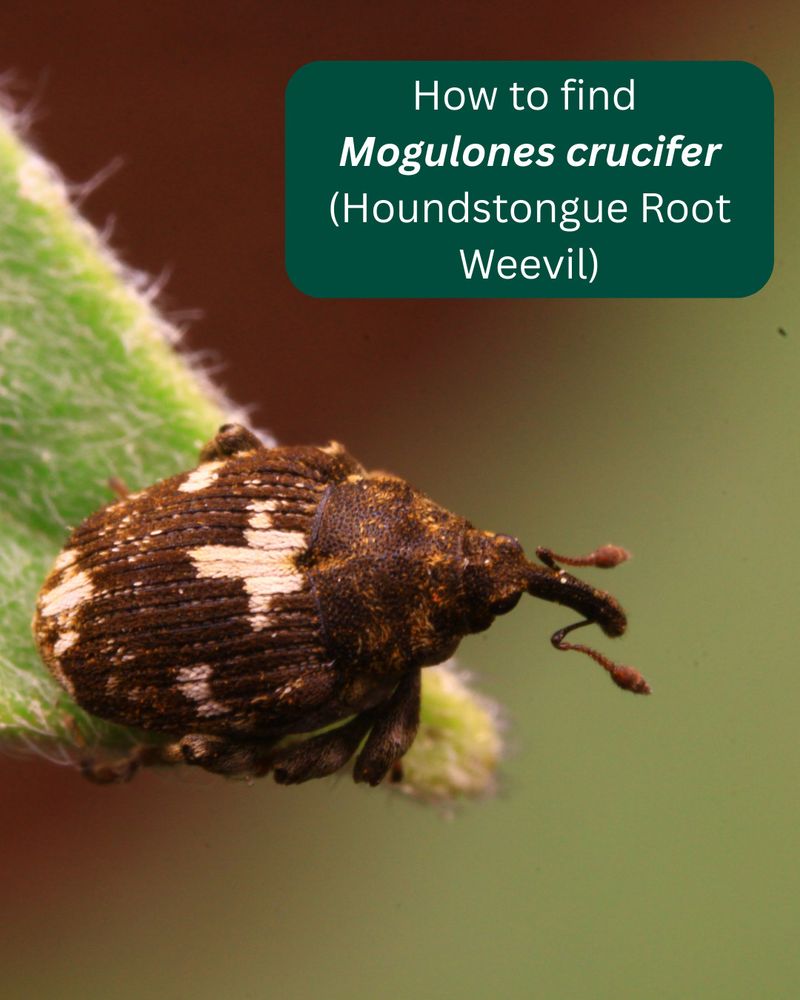
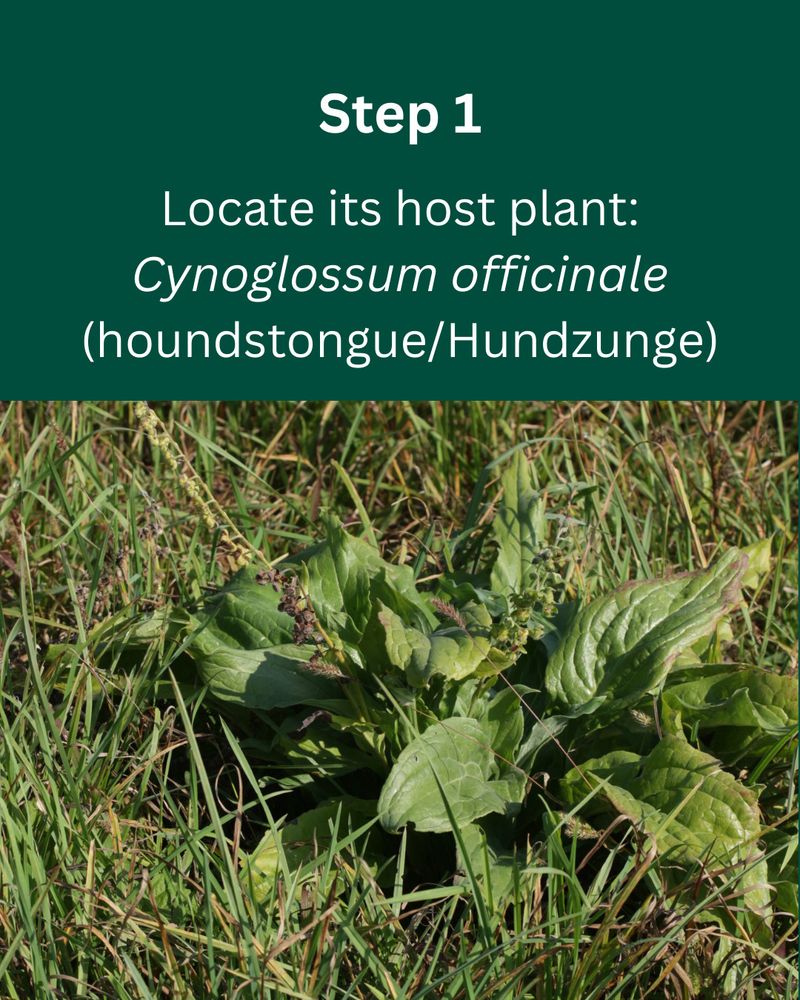
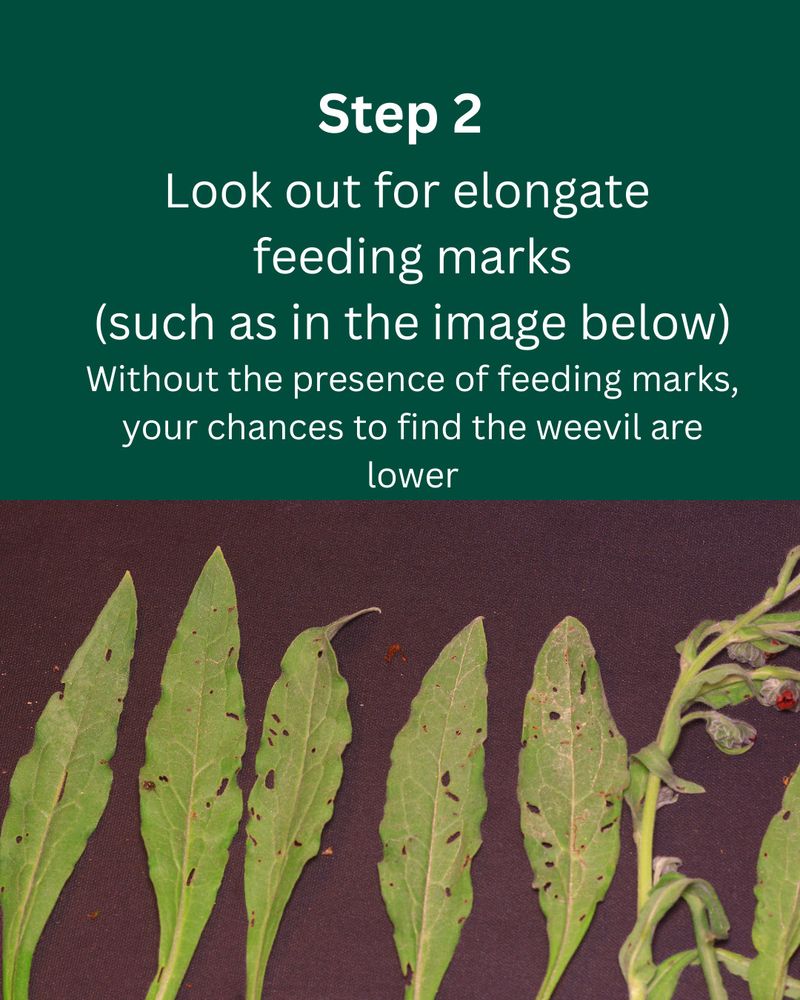
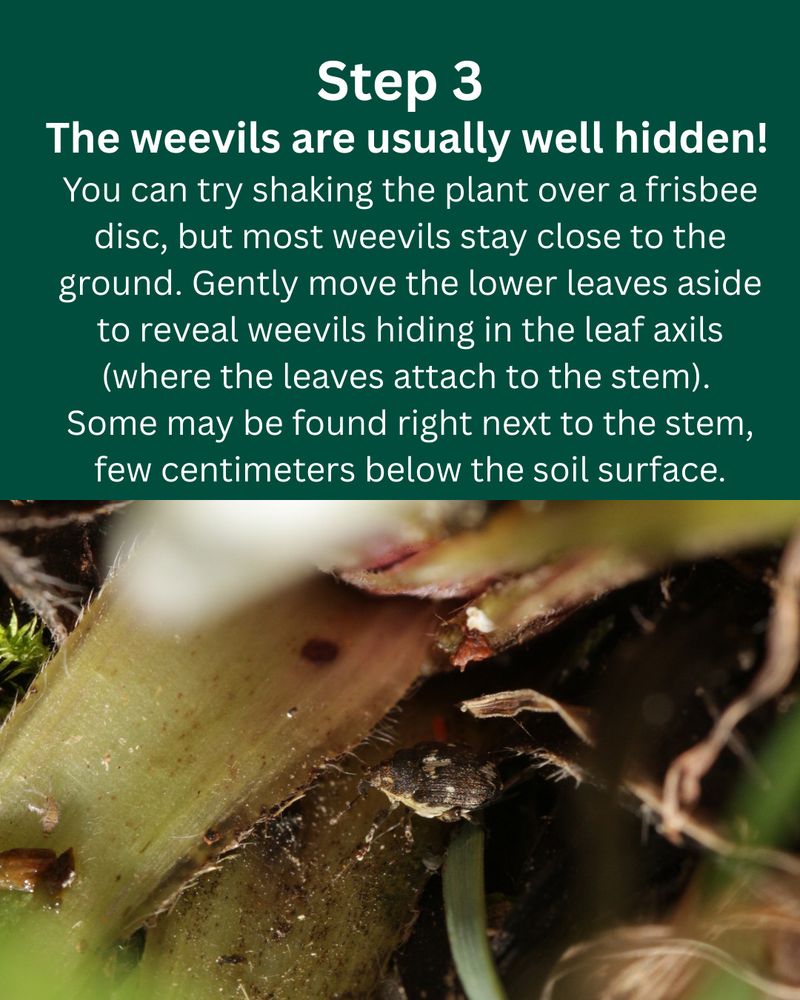
How to find Mogulones crucifer:
The weevil is native to Europe/West Asia, but has been introduced to North America to control its host (Cynoglossum officinale; Hound's Tongue) which is invasive there.
The weevil is native to Europe/West Asia, but has been introduced to North America to control its host (Cynoglossum officinale; Hound's Tongue) which is invasive there.
May 16, 2025 at 1:01 PM
How to find Mogulones crucifer:
The weevil is native to Europe/West Asia, but has been introduced to North America to control its host (Cynoglossum officinale; Hound's Tongue) which is invasive there.
The weevil is native to Europe/West Asia, but has been introduced to North America to control its host (Cynoglossum officinale; Hound's Tongue) which is invasive there.
Reposted by Mark Gurney

Crazy discovery in ants 🤯🐜
One mother for two species via obligate cross-species cloning in ants | Nature
www.nature.com/articles/s41...
"Males from the same mother exhibit distinct genomes and morphologies, as they belong to species that diverged over 5 million years ago."
One mother for two species via obligate cross-species cloning in ants | Nature
www.nature.com/articles/s41...
"Males from the same mother exhibit distinct genomes and morphologies, as they belong to species that diverged over 5 million years ago."

One mother for two species via obligate cross-species cloning in ants - Nature
In a case of obligate cross-species cloning, female ants of Messor ibericus need to clone males of Messor structor to obtain sperm for producing the worker caste, resulting in males from the same moth...
www.nature.com
September 4, 2025 at 6:50 AM
Crazy discovery in ants 🤯🐜
One mother for two species via obligate cross-species cloning in ants | Nature
www.nature.com/articles/s41...
"Males from the same mother exhibit distinct genomes and morphologies, as they belong to species that diverged over 5 million years ago."
One mother for two species via obligate cross-species cloning in ants | Nature
www.nature.com/articles/s41...
"Males from the same mother exhibit distinct genomes and morphologies, as they belong to species that diverged over 5 million years ago."
If you want to identify, well, anything, I recommend this post from @weevil-see.bsky.social. His choice of weevils to illustrate it is of course excellent, but it applies to everything from mushrooms to marsupials. This is how you can be a good identifier of things.
[Link contains spider]
[Link contains spider]
I started a blog and my first post is online!
The posts will try to explore topics which are not typically covered by introductory literature and textbooks, e.g. because they are considered to be "too basic". Let me know what you think!
weevil-see.github.io/taxonomy/Ide...
The posts will try to explore topics which are not typically covered by introductory literature and textbooks, e.g. because they are considered to be "too basic". Let me know what you think!
weevil-see.github.io/taxonomy/Ide...
Species Identifications: Common Pitfalls
Some thoughts about Identifications. How do we identify properly? How do we avoid mistakes?
weevil-see.github.io
September 2, 2025 at 7:10 PM
If you want to identify, well, anything, I recommend this post from @weevil-see.bsky.social. His choice of weevils to illustrate it is of course excellent, but it applies to everything from mushrooms to marsupials. This is how you can be a good identifier of things.
[Link contains spider]
[Link contains spider]
Top film. The smartest look at this subject I've ever seen. Also funny and sweary.
youtu.be/zl-wAqplQAo?...
youtu.be/zl-wAqplQAo?...

LISTERS: A Glimpse Into Extreme Birdwatching
YouTube video by owen reiser
youtu.be
August 25, 2025 at 2:13 PM
Top film. The smartest look at this subject I've ever seen. Also funny and sweary.
youtu.be/zl-wAqplQAo?...
youtu.be/zl-wAqplQAo?...
Reposted by Mark Gurney
Thought I'd post something about separating Nysius senecionis and graminicola, as both are now widespread. The features to focus on are the extent of the matt field of the evaporatory area (the brown bit) and the length of the 1st hind tarsal segment relative to the 2nd and 3rd.


August 21, 2025 at 2:41 PM
Thought I'd post something about separating Nysius senecionis and graminicola, as both are now widespread. The features to focus on are the extent of the matt field of the evaporatory area (the brown bit) and the length of the 1st hind tarsal segment relative to the 2nd and 3rd.
Reposted by Mark Gurney
At #EOU2025 @eounion.bsky.social conference next week, we'll show new evidence implicating forestry in declines of British Marsh Tits during the era of woodland conversion in 1950/60s-1980s.
This was period of steepest decline in Marsh Tits. Why? What was going on back then? #ornithology 1/5
This was period of steepest decline in Marsh Tits. Why? What was going on back then? #ornithology 1/5


August 16, 2025 at 10:42 AM
At #EOU2025 @eounion.bsky.social conference next week, we'll show new evidence implicating forestry in declines of British Marsh Tits during the era of woodland conversion in 1950/60s-1980s.
This was period of steepest decline in Marsh Tits. Why? What was going on back then? #ornithology 1/5
This was period of steepest decline in Marsh Tits. Why? What was going on back then? #ornithology 1/5
Reposted by Mark Gurney

We just published a new issue of #BritishandIrishBotany, our Open Access online journal.
7 papers for you to enjoy inc Lady's-slipper orchid reintroductions; variation in Restharrows; a new Comfrey hybrid for UK; montane plants; sea-grapes new to Europe!
bsbipublicity.blogspot.com/2025/08/brit...
7 papers for you to enjoy inc Lady's-slipper orchid reintroductions; variation in Restharrows; a new Comfrey hybrid for UK; montane plants; sea-grapes new to Europe!
bsbipublicity.blogspot.com/2025/08/brit...


August 14, 2025 at 9:06 PM
We just published a new issue of #BritishandIrishBotany, our Open Access online journal.
7 papers for you to enjoy inc Lady's-slipper orchid reintroductions; variation in Restharrows; a new Comfrey hybrid for UK; montane plants; sea-grapes new to Europe!
bsbipublicity.blogspot.com/2025/08/brit...
7 papers for you to enjoy inc Lady's-slipper orchid reintroductions; variation in Restharrows; a new Comfrey hybrid for UK; montane plants; sea-grapes new to Europe!
bsbipublicity.blogspot.com/2025/08/brit...
Reposted by Mark Gurney

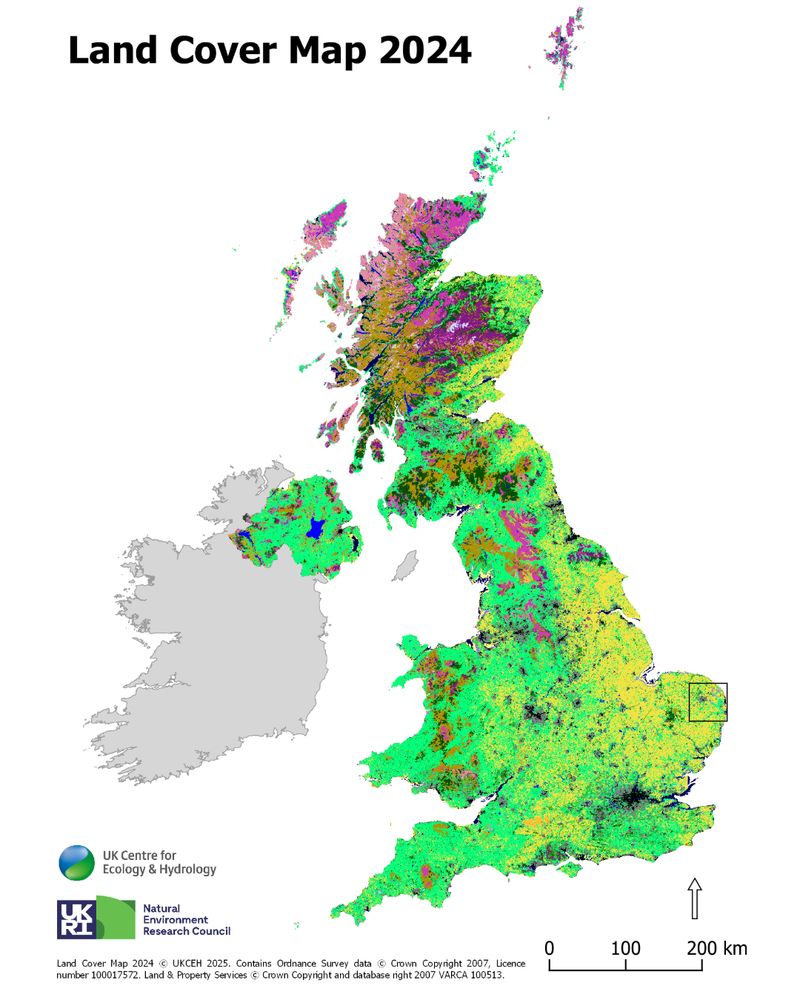
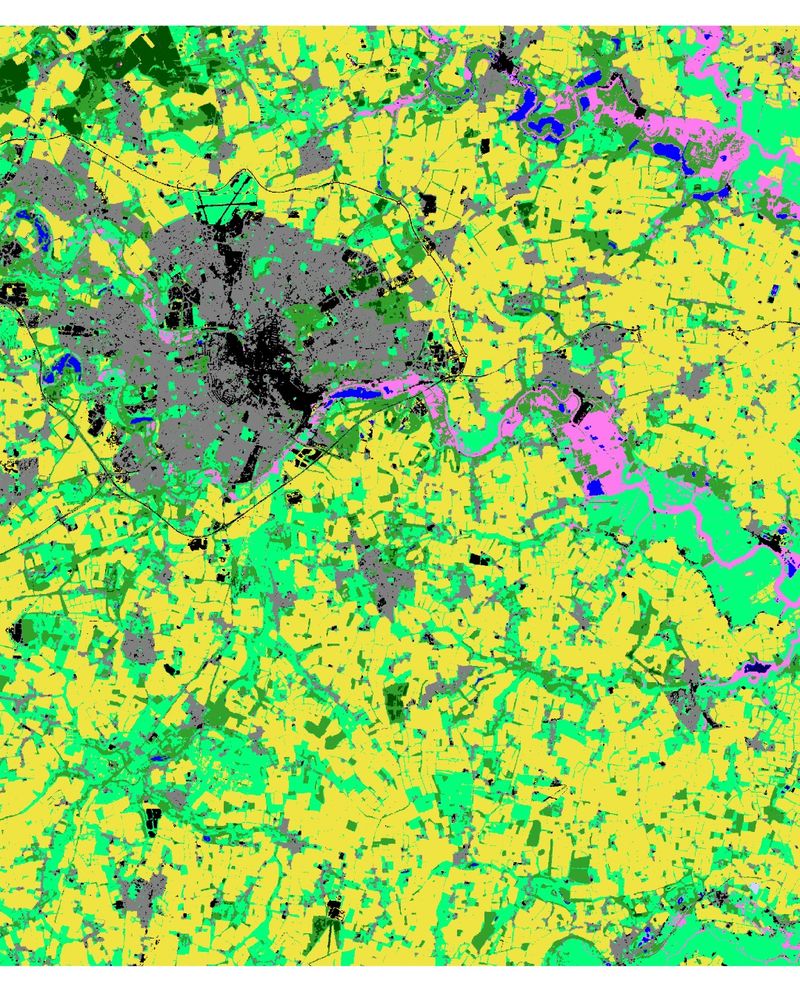
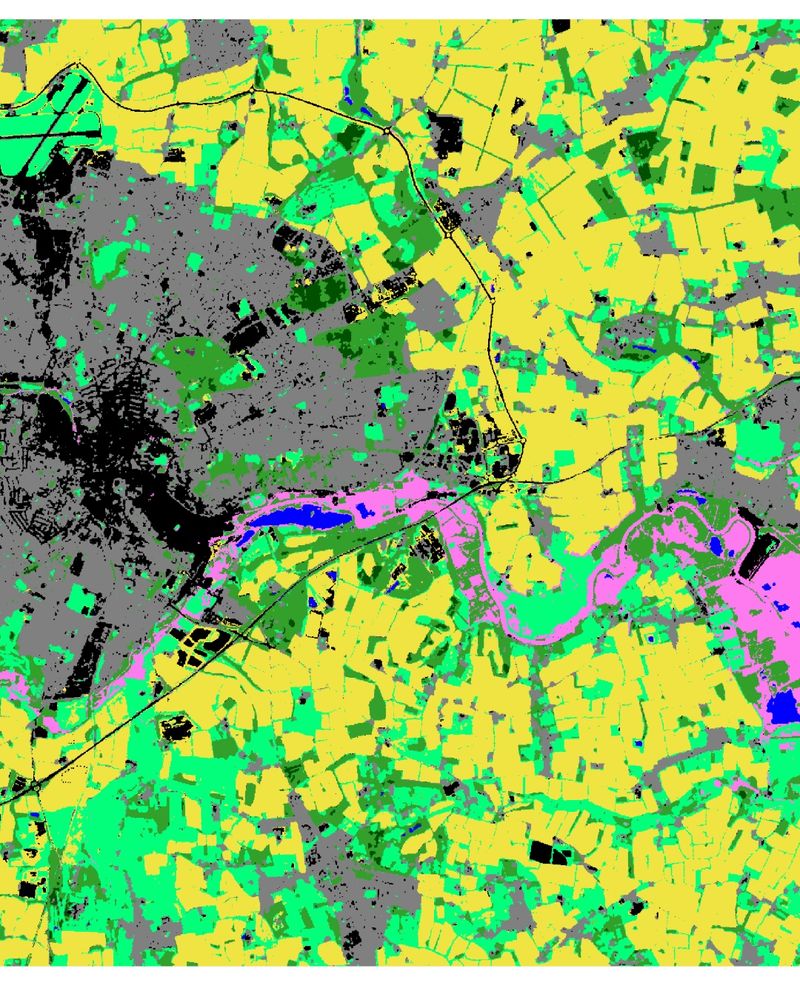
NEW! The latest UKCEH Land Cover Map, describing the UK land surface in 2024, is now available 🏞️ 🌳
See what broad habitats—ranging from broadleaved woodland and arable land to freshwater and urban areas— there are and where in England, Wales, Scotland and Northern Ireland.
#LandCover #LCM
🧵🧪 1/
See what broad habitats—ranging from broadleaved woodland and arable land to freshwater and urban areas— there are and where in England, Wales, Scotland and Northern Ireland.
#LandCover #LCM
🧵🧪 1/
August 1, 2025 at 9:54 AM
NEW! The latest UKCEH Land Cover Map, describing the UK land surface in 2024, is now available 🏞️ 🌳
See what broad habitats—ranging from broadleaved woodland and arable land to freshwater and urban areas— there are and where in England, Wales, Scotland and Northern Ireland.
#LandCover #LCM
🧵🧪 1/
See what broad habitats—ranging from broadleaved woodland and arable land to freshwater and urban areas— there are and where in England, Wales, Scotland and Northern Ireland.
#LandCover #LCM
🧵🧪 1/