




Lior Sheffer
@liorsheffer.bsky.social
Political scientist at the Tel Aviv University. I study elite political behaviour.
https://sites.google.com/site/liorsheffer/
https://sites.google.com/site/liorsheffer/
New and open access, in @psrm.bsky.social: What happens when we make politicians draw distributions? Nic Dias, @jacklucas.bsky.social and I explore whether the large errors politicians make about public opinion are artificially inflated by how researchers ask them to estimate it /1
cup.org/4kltoyE
cup.org/4kltoyE

February 3, 2026 at 12:04 PM
New and open access, in @psrm.bsky.social: What happens when we make politicians draw distributions? Nic Dias, @jacklucas.bsky.social and I explore whether the large errors politicians make about public opinion are artificially inflated by how researchers ask them to estimate it /1
cup.org/4kltoyE
cup.org/4kltoyE
Reposted by Lior Sheffer

I should also have mentioned this paper by @noamgidron.bsky.social et al. osf.io/preprints/so...

January 3, 2026 at 5:50 PM
I should also have mentioned this paper by @noamgidron.bsky.social et al. osf.io/preprints/so...
Reposted by Lior Sheffer
Who protests against democratic backsliding? A new working paper with Margalit, Sheffer and Yakir examines this issue and finds that people’s conceptions of what democracy means play a crucial role in predicting whether they engage in active opposition to backsliding efforts. osf.io/preprints/so...

December 11, 2025 at 2:10 PM
Who protests against democratic backsliding? A new working paper with Margalit, Sheffer and Yakir examines this issue and finds that people’s conceptions of what democracy means play a crucial role in predicting whether they engage in active opposition to backsliding efforts. osf.io/preprints/so...
Reposted by Lior Sheffer

🆕 What kind of personalities are drawn to politics? 🗳️
This cross-national study across 🇨🇦🇩🇰🇮🇱🇳🇱🇨🇭 explores #Representation and how honesty-humility and other HEXACO personality traits shape people’s ambition to run for office 🧵1/2
buff.ly/xk4qMa3
This cross-national study across 🇨🇦🇩🇰🇮🇱🇳🇱🇨🇭 explores #Representation and how honesty-humility and other HEXACO personality traits shape people’s ambition to run for office 🧵1/2
buff.ly/xk4qMa3

Too honest and humble to run for office? Citizens’ personality traits, nascent ambition, and recruitment | European Journal of Political Research | Cambridge Core
Too honest and humble to run for office? Citizens’ personality traits, nascent ambition, and recruitment
www.cambridge.org
November 5, 2025 at 12:02 PM
🆕 What kind of personalities are drawn to politics? 🗳️
This cross-national study across 🇨🇦🇩🇰🇮🇱🇳🇱🇨🇭 explores #Representation and how honesty-humility and other HEXACO personality traits shape people’s ambition to run for office 🧵1/2
buff.ly/xk4qMa3
This cross-national study across 🇨🇦🇩🇰🇮🇱🇳🇱🇨🇭 explores #Representation and how honesty-humility and other HEXACO personality traits shape people’s ambition to run for office 🧵1/2
buff.ly/xk4qMa3
Reposted by Lior Sheffer

#OpenAccess from @ejprjournal.bsky.social -
Too honest and humble to run for office? Citizens’ personality traits, nascent ambition, and recruitment - https://cup.org/4ncO4c0
- Marc van de Wardt, P.Bundi, P.J.Loewen, @annerasmussen.bsky.social, @liorsheffer.bsky.social & F.Varone
#FirstView
Too honest and humble to run for office? Citizens’ personality traits, nascent ambition, and recruitment - https://cup.org/4ncO4c0
- Marc van de Wardt, P.Bundi, P.J.Loewen, @annerasmussen.bsky.social, @liorsheffer.bsky.social & F.Varone
#FirstView

October 13, 2025 at 2:20 PM
#OpenAccess from @ejprjournal.bsky.social -
Too honest and humble to run for office? Citizens’ personality traits, nascent ambition, and recruitment - https://cup.org/4ncO4c0
- Marc van de Wardt, P.Bundi, P.J.Loewen, @annerasmussen.bsky.social, @liorsheffer.bsky.social & F.Varone
#FirstView
Too honest and humble to run for office? Citizens’ personality traits, nascent ambition, and recruitment - https://cup.org/4ncO4c0
- Marc van de Wardt, P.Bundi, P.J.Loewen, @annerasmussen.bsky.social, @liorsheffer.bsky.social & F.Varone
#FirstView
Over a year ago (!) Roee Levy and I wrote this op-ed (that you can auto-translate) on Israel's responsibility for the horrifying famine in Gaza. The starvation persists. The immoral war in Gaza must end. If you can, protest with us today: 7pm, Habima Square, Tel Aviv
www.ynet.co.il/news/article...
www.ynet.co.il/news/article...

להסתכל במראה: הרעב בעזה הוא כתם מוסרי עלינו
כמעט 700 אלף עזתים סובלים ממחסור קטסטרופלי במזון. ההערכות הן שתושבים בצפון עזה צורכים בממוצע רק 245 קלוריות ביום, ולפי ארגון המזון העולמי ארבעה מכל חמישה אנשים בעולם שסובלים היום מרעב חמור נמצאים בעזה...
www.ynet.co.il
July 24, 2025 at 8:53 AM
Over a year ago (!) Roee Levy and I wrote this op-ed (that you can auto-translate) on Israel's responsibility for the horrifying famine in Gaza. The starvation persists. The immoral war in Gaza must end. If you can, protest with us today: 7pm, Habima Square, Tel Aviv
www.ynet.co.il/news/article...
www.ynet.co.il/news/article...
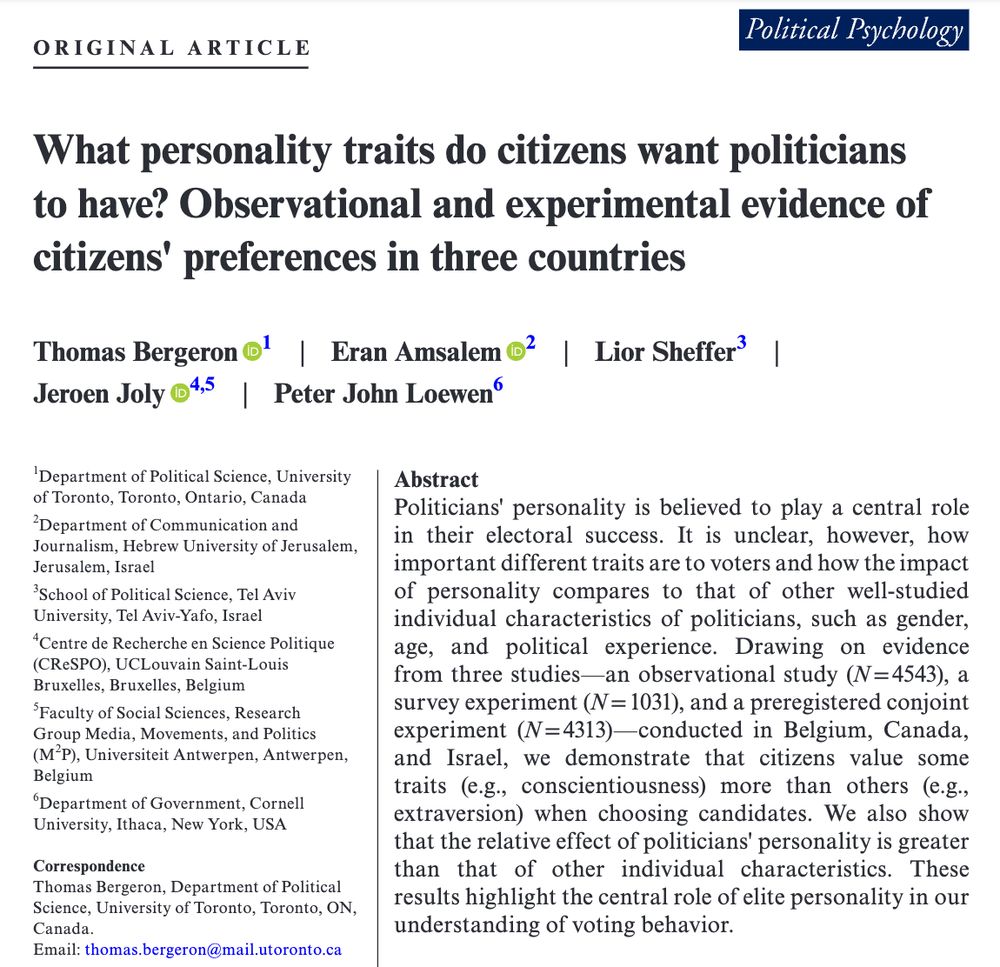
Now in @ispp-pops.bsky.social: what type of personality do citizens want their leaders to have? In a series of studies conducted in Belgium, Canada, and Israel, we present citizens with profiles of potential leaders with different personality configurations drawn using the Big Five traits /1
June 5, 2025 at 10:56 AM
Now in @ispp-pops.bsky.social: what type of personality do citizens want their leaders to have? In a series of studies conducted in Belgium, Canada, and Israel, we present citizens with profiles of potential leaders with different personality configurations drawn using the Big Five traits /1
Reposted by Lior Sheffer

From February 2025 -
Do Political Leaders Understand Public Opinion Better than Backbenchers? - cup.org/3CNR4dt
- Stefaan Walgrave, Julie Sevenans, Frédéric Varone,
@liorsheffer.bsky.social & @breunig.bsky.social
#OpenAccess
Do Political Leaders Understand Public Opinion Better than Backbenchers? - cup.org/3CNR4dt
- Stefaan Walgrave, Julie Sevenans, Frédéric Varone,
@liorsheffer.bsky.social & @breunig.bsky.social
#OpenAccess

April 25, 2025 at 11:45 AM
From February 2025 -
Do Political Leaders Understand Public Opinion Better than Backbenchers? - cup.org/3CNR4dt
- Stefaan Walgrave, Julie Sevenans, Frédéric Varone,
@liorsheffer.bsky.social & @breunig.bsky.social
#OpenAccess
Do Political Leaders Understand Public Opinion Better than Backbenchers? - cup.org/3CNR4dt
- Stefaan Walgrave, Julie Sevenans, Frédéric Varone,
@liorsheffer.bsky.social & @breunig.bsky.social
#OpenAccess
Reposted by Lior Sheffer

Really enjoyed this conversation with @jerusalem.bsky.social about our new paper on politicians' theories of voting behaviour. Such a thrill to be a guest on one of my favourite podcasts! www.theatlantic.com/podcasts/arc...
Politicians Think Voters Are Dumb. Are They Right?
A striking new study reveals that elected officials have a far more pessimistic view of voter behavior than do citizens themselves.
www.theatlantic.com
March 25, 2025 at 11:08 PM
Really enjoyed this conversation with @jerusalem.bsky.social about our new paper on politicians' theories of voting behaviour. Such a thrill to be a guest on one of my favourite podcasts! www.theatlantic.com/podcasts/arc...
Reposted by Lior Sheffer

The most important paper on democratic backsliding I've read this year
🚨Why do masses support democratic backsliding?🚨
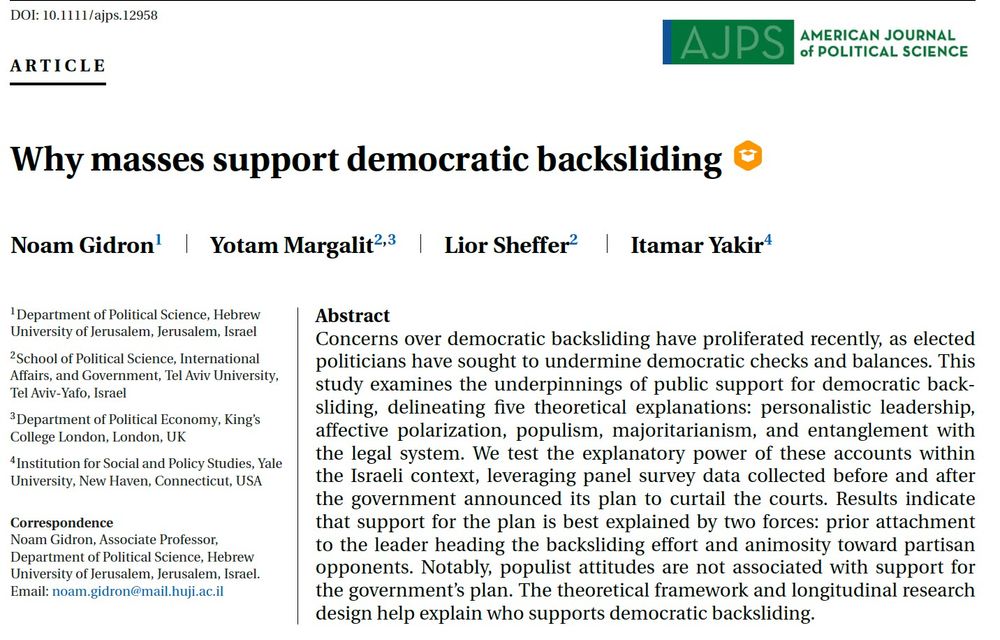
A new @AJPS_Editor paper with Yotam Margalit, @liorsheffer.bsky.social and Itamar Yakir explores this question in the Israeli context. Our findings emphasize the role of leader attachment and affective polarization.
doi.org/10.1111/ajps...
A new @AJPS_Editor paper with Yotam Margalit, @liorsheffer.bsky.social and Itamar Yakir explores this question in the Israeli context. Our findings emphasize the role of leader attachment and affective polarization.
doi.org/10.1111/ajps...
March 25, 2025 at 12:16 AM
The most important paper on democratic backsliding I've read this year
Reposted by Lior Sheffer
🚨Why do masses support democratic backsliding?🚨
A new @AJPS_Editor paper with Yotam Margalit, @liorsheffer.bsky.social and Itamar Yakir explores this question in the Israeli context. Our findings emphasize the role of leader attachment and affective polarization.
doi.org/10.1111/ajps...
A new @AJPS_Editor paper with Yotam Margalit, @liorsheffer.bsky.social and Itamar Yakir explores this question in the Israeli context. Our findings emphasize the role of leader attachment and affective polarization.
doi.org/10.1111/ajps...
March 24, 2025 at 5:28 PM
🚨Why do masses support democratic backsliding?🚨
A new @AJPS_Editor paper with Yotam Margalit, @liorsheffer.bsky.social and Itamar Yakir explores this question in the Israeli context. Our findings emphasize the role of leader attachment and affective polarization.
doi.org/10.1111/ajps...
A new @AJPS_Editor paper with Yotam Margalit, @liorsheffer.bsky.social and Itamar Yakir explores this question in the Israeli context. Our findings emphasize the role of leader attachment and affective polarization.
doi.org/10.1111/ajps...
Now in @bjpols.bsky.social: Are leaders really better at reading public opinion? In a large-scale study led by Stefaan Walgrave and Julie Sevenans, we test the assumption that politicians in leadership positions have more accurate knowledge of public opinion than others. /1
doi.org/10.1017/S000...
doi.org/10.1017/S000...

February 13, 2025 at 8:03 PM
Now in @bjpols.bsky.social: Are leaders really better at reading public opinion? In a large-scale study led by Stefaan Walgrave and Julie Sevenans, we test the assumption that politicians in leadership positions have more accurate knowledge of public opinion than others. /1
doi.org/10.1017/S000...
doi.org/10.1017/S000...
Reposted by Lior Sheffer
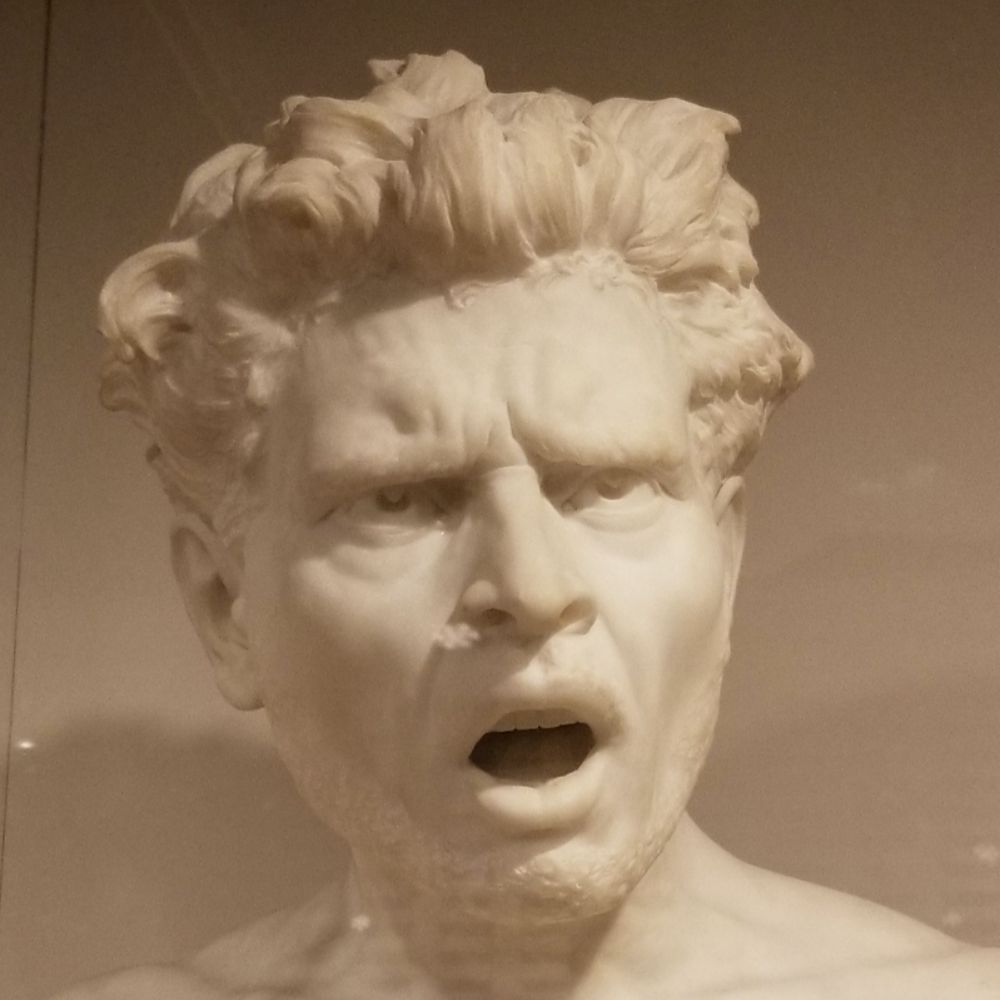
This paper joins a couple of others demonstrating that politicians have a conservative bias in their expectations of public opinion. This work is hugely illuminative of elite attitudes and so is of vital interest to activists pursuing progressive change
Now in APSR: What do politicians think about their voters? Fielding face-to-face surveys to 982 sitting politicians in 11 countries, and accompanying surveys of 12,000 citizens, we find that politicians have remarkably consistent - and cynical - theories of voters: /1
doi.org/10.1017/S000...
doi.org/10.1017/S000...

November 4, 2024 at 3:46 PM
This paper joins a couple of others demonstrating that politicians have a conservative bias in their expectations of public opinion. This work is hugely illuminative of elite attitudes and so is of vital interest to activists pursuing progressive change
Reposted by Lior Sheffer

Very cool paper! Well worth your time if you study elite decision-making or elections and accountability.
Now in APSR: What do politicians think about their voters? Fielding face-to-face surveys to 982 sitting politicians in 11 countries, and accompanying surveys of 12,000 citizens, we find that politicians have remarkably consistent - and cynical - theories of voters: /1
doi.org/10.1017/S000...
doi.org/10.1017/S000...
November 4, 2024 at 5:42 PM
Very cool paper! Well worth your time if you study elite decision-making or elections and accountability.
Now in APSR: What do politicians think about their voters? Fielding face-to-face surveys to 982 sitting politicians in 11 countries, and accompanying surveys of 12,000 citizens, we find that politicians have remarkably consistent - and cynical - theories of voters: /1
doi.org/10.1017/S000...
doi.org/10.1017/S000...
November 4, 2024 at 3:30 PM
Now in APSR: What do politicians think about their voters? Fielding face-to-face surveys to 982 sitting politicians in 11 countries, and accompanying surveys of 12,000 citizens, we find that politicians have remarkably consistent - and cynical - theories of voters: /1
doi.org/10.1017/S000...
doi.org/10.1017/S000...
Reposted by Lior Sheffer
New paper with @liorsheffer.bsky.social and Peter Loewen in Political Behavior about politicians’ congruence with citizens, their knowledge of citizens, and – especially – the relationship between the two pathways to representation. link.springer.com/article/10.1...

Pathways to Substantive Representation: Policy Congruence and Policy Knowledge Among Canadian Local Politicians - Political Behavior
In recent years, new data and methods have reinvigorated research on two central elements of elite political behavior: politicians’ congruence with and knowledge of citizens’ opinions. Here, we survey...
link.springer.com
October 28, 2024 at 1:33 PM
New paper with @liorsheffer.bsky.social and Peter Loewen in Political Behavior about politicians’ congruence with citizens, their knowledge of citizens, and – especially – the relationship between the two pathways to representation. link.springer.com/article/10.1...
Reposted by Lior Sheffer
New working paper with Nic Dias and @liorsheffer.bsky.social. We show that politicians' over-estimation of constituents' conservatism is reduced by half when politicians are allowed to characterize their constituents' attitudes as a distribution, rather than a point estimate. doi.org/10.31219/osf...

October 3, 2024 at 11:17 PM
New working paper with Nic Dias and @liorsheffer.bsky.social. We show that politicians' over-estimation of constituents' conservatism is reduced by half when politicians are allowed to characterize their constituents' attitudes as a distribution, rather than a point estimate. doi.org/10.31219/osf...
Now in Political Psychology: Why are some politicians more hostile than others? Do politicians as a group feel more partisan animosity than citizens? @lucasjacklucas and I report results from a study of 850 politicians and 28,500 citizens to provide first answers: /1
doi.org/10.1111/pops.12974
doi.org/10.1111/pops.12974

March 13, 2024 at 12:36 PM
Now in Political Psychology: Why are some politicians more hostile than others? Do politicians as a group feel more partisan animosity than citizens? @lucasjacklucas and I report results from a study of 850 politicians and 28,500 citizens to provide first answers: /1
doi.org/10.1111/pops.12974
doi.org/10.1111/pops.12974
Reposted by Lior Sheffer

Excited to share my new publication in the International Journal of Press/Politics with my brilliant friends Yossi David, @noamgidron.bsky.social & @liorsheffer.bsky.social! Imagined audiences have been studied for decades - but what do we know about imagined journalists? >>
shorturl.at/klovF
shorturl.at/klovF

February 27, 2024 at 12:50 PM
Excited to share my new publication in the International Journal of Press/Politics with my brilliant friends Yossi David, @noamgidron.bsky.social & @liorsheffer.bsky.social! Imagined audiences have been studied for decades - but what do we know about imagined journalists? >>
shorturl.at/klovF
shorturl.at/klovF
Now in @EJPRjournal: Are Politicians Democratic Realists? Social scientists debate whether citizens are competent participants in the political game, but where politicians stand on this question is far more consequential, and yet we know virtually nothing about their views. /1


January 17, 2024 at 2:01 PM
Now in @EJPRjournal: Are Politicians Democratic Realists? Social scientists debate whether citizens are competent participants in the political game, but where politicians stand on this question is far more consequential, and yet we know virtually nothing about their views. /1
Now in EJPR: Can elections reduce partisan hostility? @noamgidron.bsky.social and I tracked 1,000 voters throughout the 2021 election in Israel, in which Netanyahu was temporarily ousted by a short-lived, improbable coalition whose member parties were highly hostile to each other. /1

December 4, 2023 at 3:58 PM
Now in EJPR: Can elections reduce partisan hostility? @noamgidron.bsky.social and I tracked 1,000 voters throughout the 2021 election in Israel, in which Netanyahu was temporarily ousted by a short-lived, improbable coalition whose member parties were highly hostile to each other. /1
Reposted by Lior Sheffer
Check out this great special issue on comparative affective polarization -- including my paper with @liorsheffer.bsky.social and Guy Mor:
www.sciencedirect.com/science/arti...
www.sciencedirect.com/science/arti...

Check out this new special issue in Electoral Studies: www.sciencedirect.com/journal/elec... It contains 7 cool articles on the nature and causes of AP - using observational and experimental data, focusing on measurement, elites and ideology, and an important theoretical piece as well.
September 29, 2023 at 11:47 AM
Check out this great special issue on comparative affective polarization -- including my paper with @liorsheffer.bsky.social and Guy Mor:
www.sciencedirect.com/science/arti...
www.sciencedirect.com/science/arti...
Israel's democratic crisis provides us with an opportunity to explore, in real time, who supports democratic backsliding. Our new working paper (w\ Noam Gidron, Yotam Margalit and Itamar Yakir) examines this issue using original pre- and post-reform panel data. Here's what we find:
osf.io/zxukm/
osf.io/zxukm/

September 19, 2023 at 5:26 PM
Israel's democratic crisis provides us with an opportunity to explore, in real time, who supports democratic backsliding. Our new working paper (w\ Noam Gidron, Yotam Margalit and Itamar Yakir) examines this issue using original pre- and post-reform panel data. Here's what we find:
osf.io/zxukm/
osf.io/zxukm/