



Niklas Wahlberg
@lepphylo.bsky.social
Professor in Biological Systematics, and Director of the Biological Museum, Lund University, Sweden
Butterflies and moths are my thing, especially their systematics and evolutionary history
Butterflies and moths are my thing, especially their systematics and evolutionary history
Reposted by Niklas Wahlberg

📣 The 2nd #STSM call of #10kLepGenomes is complete!
Eight researchers have been awarded funding for short scientific missions to boost collaboration, training, and knowledge exchange across the network.
Congrats to the selected candidates and thanks to everyone who applied! 🦋
www.10klepgenomes.eu
Eight researchers have been awarded funding for short scientific missions to boost collaboration, training, and knowledge exchange across the network.
Congrats to the selected candidates and thanks to everyone who applied! 🦋
www.10klepgenomes.eu

10kLepGenomes | COST Action CA23122
The 10kLepGenomes COST Action aims to take advantage of the massive amount of data being produced by genome initiatives, in order to understand pressing issues of biodiversity loss, pest control, and ...
www.10klepgenomes.eu
February 4, 2026 at 9:48 AM
📣 The 2nd #STSM call of #10kLepGenomes is complete!
Eight researchers have been awarded funding for short scientific missions to boost collaboration, training, and knowledge exchange across the network.
Congrats to the selected candidates and thanks to everyone who applied! 🦋
www.10klepgenomes.eu
Eight researchers have been awarded funding for short scientific missions to boost collaboration, training, and knowledge exchange across the network.
Congrats to the selected candidates and thanks to everyone who applied! 🦋
www.10klepgenomes.eu
Reposted by Niklas Wahlberg
Join us in Upsala Sweden for BioSyst EU, 17th–19th August 2026, for a three-day conference celebrating European systematics and biodiversity research at its origin. Systematics and Biodiversity are proud to be an official sponsor!
A call for symposia will be coming soon.. #BioSystEU2026
A call for symposia will be coming soon.. #BioSystEU2026

January 26, 2026 at 10:41 AM
Join us in Upsala Sweden for BioSyst EU, 17th–19th August 2026, for a three-day conference celebrating European systematics and biodiversity research at its origin. Systematics and Biodiversity are proud to be an official sponsor!
A call for symposia will be coming soon.. #BioSystEU2026
A call for symposia will be coming soon.. #BioSystEU2026
Reposted by Niklas Wahlberg
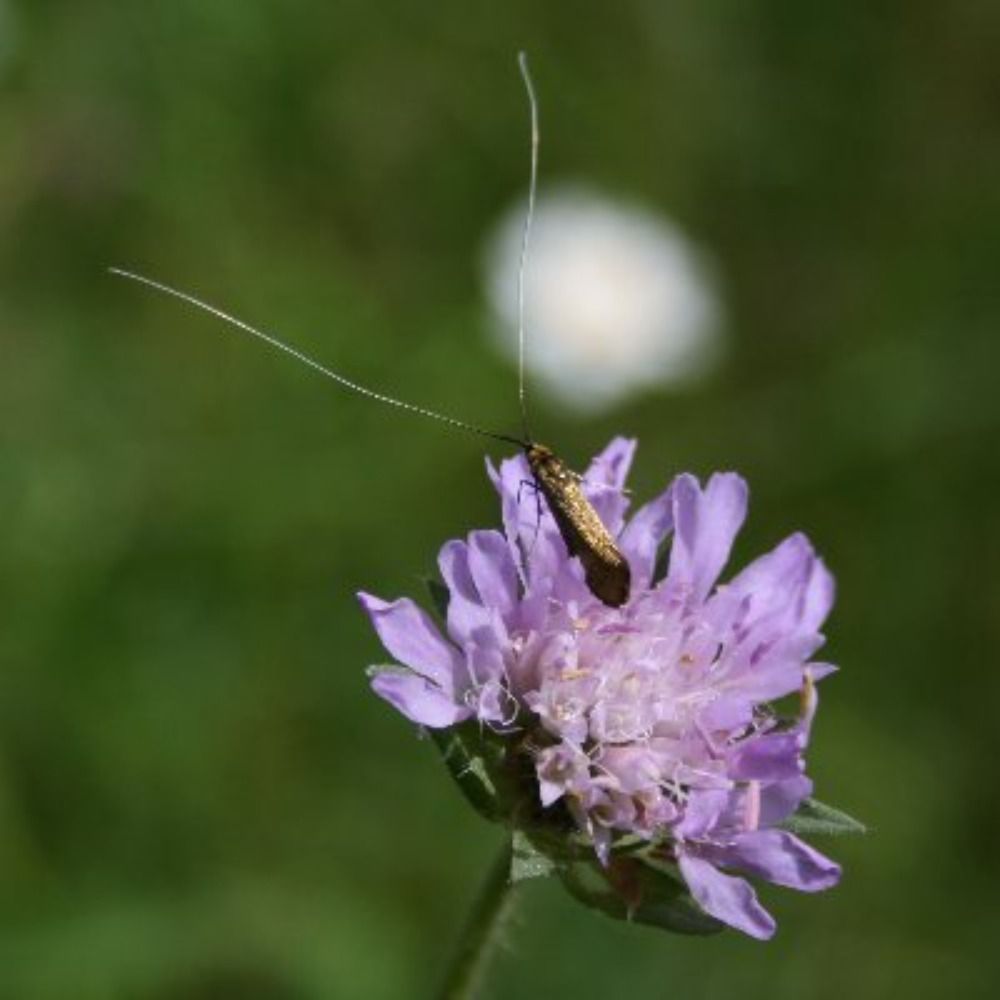
A new study shows that butterflies, unlike birds, are declining in Finnish agricultural landscapes:
link.springer.com/article/10.1...
link.springer.com/article/10.1...

January 23, 2026 at 3:42 PM
A new study shows that butterflies, unlike birds, are declining in Finnish agricultural landscapes:
link.springer.com/article/10.1...
link.springer.com/article/10.1...
Reposted by Niklas Wahlberg
PhD positions available at the University of Tartu on insect thermal traits evolution. Interested candidates should apply by Feb 10, 2026. More info at https://www.ut.ee/en. #phd

Home
The University of Tartu is the leading university in the Baltics, the only one in the region to rank in the top 1.2% of world's universities. The UT's world-class education gives you an advantage for life!
www.ut.ee
January 23, 2026 at 7:32 AM
PhD positions available at the University of Tartu on insect thermal traits evolution. Interested candidates should apply by Feb 10, 2026. More info at https://www.ut.ee/en. #phd
Reposted by Niklas Wahlberg
The Department of Ecology, Environment and Plant Sciences at @stockholm-uni.bsky.social has two open PhD positions, help us spread the word! 📣
We are looking for a PhD student in Lichen Biology, and one in Ecology & Evolution. Find more information and apply by 1 February below!
We are looking for a PhD student in Lichen Biology, and one in Ecology & Evolution. Find more information and apply by 1 February below!
Work with us - Stockholms universitet
www.su.se
January 21, 2026 at 1:29 PM
The Department of Ecology, Environment and Plant Sciences at @stockholm-uni.bsky.social has two open PhD positions, help us spread the word! 📣
We are looking for a PhD student in Lichen Biology, and one in Ecology & Evolution. Find more information and apply by 1 February below!
We are looking for a PhD student in Lichen Biology, and one in Ecology & Evolution. Find more information and apply by 1 February below!
Reposted by Niklas Wahlberg

My collaborator at University of Copenhagen, Anders Garm, is looking for a 3 year postdoc to work on bioluminescence, neurobiology and ecology of ctenophores. More information here:
candidate.hr-manager.net/ApplicationI...
candidate.hr-manager.net/ApplicationI...

January 21, 2026 at 10:45 AM
My collaborator at University of Copenhagen, Anders Garm, is looking for a 3 year postdoc to work on bioluminescence, neurobiology and ecology of ctenophores. More information here:
candidate.hr-manager.net/ApplicationI...
candidate.hr-manager.net/ApplicationI...
Reposted by Niklas Wahlberg

Special Feature: Can we predict the future of evolution? In this review, Jackson et al. dig into genomic analyses of change over time to determine if and when evolution can be forecast using genomic methods.
Read now ahead of print!
www.journals.uchicago.edu/doi/10.1086/...
Read now ahead of print!
www.journals.uchicago.edu/doi/10.1086/...

January 21, 2026 at 3:46 AM
Special Feature: Can we predict the future of evolution? In this review, Jackson et al. dig into genomic analyses of change over time to determine if and when evolution can be forecast using genomic methods.
Read now ahead of print!
www.journals.uchicago.edu/doi/10.1086/...
Read now ahead of print!
www.journals.uchicago.edu/doi/10.1086/...
Reposted by Niklas Wahlberg
The University of Helsinki seeks a postdoctoral researcher for a 3-year role in statistical ecology and evolution, focusing on sex-specific differences in immunity and life history. Apply by Feb 28, 2026. More in… https://www.helsinki.fi/en/faculty-science/faculty/mathematics-and-statistics #postdoc

Mathematics and statistics | Faculty of Science | University of Helsinki
The Department of Mathematics and Statistics is Finland’s largest university department for mathematical sciences. Its multifaceted research has received the highest points in numerous assessments. The Department collaborates actively with other higher education institutions and with several government research institutes both in Finland and abroad.
www.helsinki.fi
January 20, 2026 at 1:48 PM
The University of Helsinki seeks a postdoctoral researcher for a 3-year role in statistical ecology and evolution, focusing on sex-specific differences in immunity and life history. Apply by Feb 28, 2026. More in… https://www.helsinki.fi/en/faculty-science/faculty/mathematics-and-statistics #postdoc
Reposted by Niklas Wahlberg

Interested in adaptive genomics, genomic offset and simulations? This seems to be an extraordinary opportunity to work with Thibaut Capblancq and Olivier François, two excellent experts in the field (and also great people)
Postdoc opportunity in ecological genomics at Université Grenoble Alpes focuses on gene-environment interactions under climate change. Duration 18 mont… https://academicpositions.com/ad/universite-grenoble-alpes/2026/postdoctoral-researcher-in-population-biology-and-ecology-m-f/243400#apply #postdoc

Postdoctoral researcher in population biology and ecology (m/f) - Academic Positions
Develop and apply statistical models to study genetic adaptation to climate, analyze empirical data, publish results, and present at conferences. Doctorate r...
academicpositions.com
January 18, 2026 at 12:03 PM
Interested in adaptive genomics, genomic offset and simulations? This seems to be an extraordinary opportunity to work with Thibaut Capblancq and Olivier François, two excellent experts in the field (and also great people)
Reposted by Niklas Wahlberg

When @omearabrian.bsky.social saw the manuscript, he described it as: ‘What if this figure could be an entire paper?’
I choose to interpret that as high praise.
Now accepted at AmNat: The geometry of macroevolution (with Dan Rabosky). www.journals.uchicago.edu/doi/10.1086/...
I choose to interpret that as high praise.
Now accepted at AmNat: The geometry of macroevolution (with Dan Rabosky). www.journals.uchicago.edu/doi/10.1086/...

January 17, 2026 at 3:58 PM
When @omearabrian.bsky.social saw the manuscript, he described it as: ‘What if this figure could be an entire paper?’
I choose to interpret that as high praise.
Now accepted at AmNat: The geometry of macroevolution (with Dan Rabosky). www.journals.uchicago.edu/doi/10.1086/...
I choose to interpret that as high praise.
Now accepted at AmNat: The geometry of macroevolution (with Dan Rabosky). www.journals.uchicago.edu/doi/10.1086/...
Reposted by Niklas Wahlberg
🦋🧬 A milestone for biodiversity genomics.
Project Psyche is building chromosome-level genomes for ~11,000 European butterflies & moths — 1,000 sequenced, 3,000+ collected, across 34 countries.
🔗 Read the publication: bit.ly/ProjectPsyche
@projectpsyche.bsky.social
#BiodiversityGenomics 🧬🌍
Project Psyche is building chromosome-level genomes for ~11,000 European butterflies & moths — 1,000 sequenced, 3,000+ collected, across 34 countries.
🔗 Read the publication: bit.ly/ProjectPsyche
@projectpsyche.bsky.social
#BiodiversityGenomics 🧬🌍


January 13, 2026 at 6:28 PM
🦋🧬 A milestone for biodiversity genomics.
Project Psyche is building chromosome-level genomes for ~11,000 European butterflies & moths — 1,000 sequenced, 3,000+ collected, across 34 countries.
🔗 Read the publication: bit.ly/ProjectPsyche
@projectpsyche.bsky.social
#BiodiversityGenomics 🧬🌍
Project Psyche is building chromosome-level genomes for ~11,000 European butterflies & moths — 1,000 sequenced, 3,000+ collected, across 34 countries.
🔗 Read the publication: bit.ly/ProjectPsyche
@projectpsyche.bsky.social
#BiodiversityGenomics 🧬🌍
Reposted by Niklas Wahlberg

⚡️Fully funded #PhD position in my lab at Stockholm University / SciLifeLab! If you’re interested in #lichens, #symbiosis, fungal biology, or meta-omics, please apply. Deadline Feb 1. Read more here: su.varbi.com/en/what:job/...

January 12, 2026 at 2:15 PM
⚡️Fully funded #PhD position in my lab at Stockholm University / SciLifeLab! If you’re interested in #lichens, #symbiosis, fungal biology, or meta-omics, please apply. Deadline Feb 1. Read more here: su.varbi.com/en/what:job/...
Reposted by Niklas Wahlberg

The geometrid moth Drepanogynis insciata was only known from two historical specimens collected before 1879. Now, it has been rediscovered in South Africa's Western Cape.
@smnstuttgart.bsky.social
Find out more here: doi.org/10.3897/zook...
@smnstuttgart.bsky.social
Find out more here: doi.org/10.3897/zook...

January 12, 2026 at 8:14 AM
The geometrid moth Drepanogynis insciata was only known from two historical specimens collected before 1879. Now, it has been rediscovered in South Africa's Western Cape.
@smnstuttgart.bsky.social
Find out more here: doi.org/10.3897/zook...
@smnstuttgart.bsky.social
Find out more here: doi.org/10.3897/zook...
Reposted by Niklas Wahlberg

Check PhD position opportunity at Natural History Museum in Stockholm with @nicolasdussex.bsky.social
Genomics of evolution to climate change in marine species
Nicolas Dussex as main advisor and I as co-advisor at @stockholm-uni.bsky.social and @scilifelab.se
More details below 👇
Genomics of evolution to climate change in marine species
Nicolas Dussex as main advisor and I as co-advisor at @stockholm-uni.bsky.social and @scilifelab.se
More details below 👇

🌊 🐟🦭🐋🐧 I have a PhD position available (4 years, start Mid-2026) at NRM Stockholm to work on the macrogenomics of sea warming.
Apply here:
recruit.visma.com/spa/public/a...
#PhD #MarineGenomics #ClimateChange #EvolutionaryBiology #PopGen #Bioinformatics #conservationgenomics
Apply here:
recruit.visma.com/spa/public/a...
#PhD #MarineGenomics #ClimateChange #EvolutionaryBiology #PopGen #Bioinformatics #conservationgenomics

December 19, 2025 at 9:41 PM
Check PhD position opportunity at Natural History Museum in Stockholm with @nicolasdussex.bsky.social
Genomics of evolution to climate change in marine species
Nicolas Dussex as main advisor and I as co-advisor at @stockholm-uni.bsky.social and @scilifelab.se
More details below 👇
Genomics of evolution to climate change in marine species
Nicolas Dussex as main advisor and I as co-advisor at @stockholm-uni.bsky.social and @scilifelab.se
More details below 👇
Reposted by Niklas Wahlberg

#ERGAReads | We start the year by highlighting our partner Project Psyche: reference genomes for all Lepidoptera in Europe! 🦋 🌍 🧬 @projectpsyche.bsky.social
🔗 www.cell.com/trends/ecolo...
#butterflies #moths #genomes
🔗 www.cell.com/trends/ecolo...
#butterflies #moths #genomes

Project Psyche: reference genomes for all Lepidoptera in Europe
Project Psyche is a transnational initiative to generate and study chromosome-level reference genomes of all ~11 000 species of Lepidoptera (butterflies and moths) found in Europe. Here, we describe…
www.cell.com
January 2, 2026 at 11:00 AM
#ERGAReads | We start the year by highlighting our partner Project Psyche: reference genomes for all Lepidoptera in Europe! 🦋 🌍 🧬 @projectpsyche.bsky.social
🔗 www.cell.com/trends/ecolo...
#butterflies #moths #genomes
🔗 www.cell.com/trends/ecolo...
#butterflies #moths #genomes
Reposted by Niklas Wahlberg

New study using @gardenmothscheme.bsky.social data shows that 125w & 80w bulbs attract more moths than any actinics, and that Robinson and Skinner traps retain more moths that Heath traps #teammoth doi.org/10.1111/icad...

Effect of bulb type on moth trap catch and composition in UK gardens
We analyse 10 years of records Garden Moth Scheme (GMS) to estimate the effect of bulb and trap type on the number of moths caught by moth traps. We find that brighter, higher wattage bulbs collect ...
doi.org
January 6, 2026 at 5:04 PM
New study using @gardenmothscheme.bsky.social data shows that 125w & 80w bulbs attract more moths than any actinics, and that Robinson and Skinner traps retain more moths that Heath traps #teammoth doi.org/10.1111/icad...
Reposted by Niklas Wahlberg

I read this a few days ago and keep coming back to it. Very interesting and thought-provoking work by @tomopfuku.bsky.social.

Creative approach using birth-death mathematical theory in exploring so called "super-progenitor" species. New support for the prevalence of the budding speciation and the 'polytomies-as-signal interpretation'.
doi.org/10.1017/pab....
🧪 #Geology ⚒️ #Paleobio
doi.org/10.1017/pab....
🧪 #Geology ⚒️ #Paleobio


January 7, 2026 at 4:22 AM
I read this a few days ago and keep coming back to it. Very interesting and thought-provoking work by @tomopfuku.bsky.social.
Reposted by Niklas Wahlberg

I got to think about lots of cool/scary things working on this: (very) rapid adaptation, introgression of structural variants, invasive species, reproductive isolation, pesticide resistance, the precarity of food production. Grateful to have worked on such a big dataset with amazing collaborators

Excited about our new preprint showing bidirectional adaptive introgression between invasive and native crop pests over ecological timescales www.biorxiv.org/content/10.6...

The collision of two genomes threatens global food security
Human activity alters selection pressures and species' ranges, creating opportunities for hybridisation through secondary contact. Ancient hybridization has enabled adaptive radiation, but its role in...
www.biorxiv.org
December 27, 2025 at 1:13 PM
I got to think about lots of cool/scary things working on this: (very) rapid adaptation, introgression of structural variants, invasive species, reproductive isolation, pesticide resistance, the precarity of food production. Grateful to have worked on such a big dataset with amazing collaborators
Super cool new study from Talavera lab on migratory divide between painted lady (Vanessa cardui) populations north of the equator and south of the equator! They find a candidate gene that might be associated with the differenc ein behaviour.
www.nature.com/articles/s41...
www.nature.com/articles/s41...

A north-south hemispheric migratory divide in the butterfly Vanessa cardui - Nature Communications
Here authors find a latitudinal migratory divide in a butterfly across Earth’s hemispheres, highlighting how hemisphere-specific seasonality and navigational cues shape migratory strategies. They find...
www.nature.com
January 2, 2026 at 9:46 AM
Super cool new study from Talavera lab on migratory divide between painted lady (Vanessa cardui) populations north of the equator and south of the equator! They find a candidate gene that might be associated with the differenc ein behaviour.
www.nature.com/articles/s41...
www.nature.com/articles/s41...
Reposted by Niklas Wahlberg
In Eudaminae skippers, wing tails and iridescence have evolved many times and are linked to faster diversification — yet these traits are also often lost, revealing a very dynamic, environment-driven butterfly wing evolution. 🦋
doi.org/10.64898/202...
doi.org/10.64898/202...

Environmental Variation Promotes Convergent Evolution and Rapid Diversification of Wing Shape and Color in Skipper Butterflies
Predation is a key driver of speciation and phenotypic diversification, yet how antipredator traits evolve and persist over evolutionary time remains poorly understood. We generated target sequence ca...
doi.org
December 29, 2025 at 9:05 AM
In Eudaminae skippers, wing tails and iridescence have evolved many times and are linked to faster diversification — yet these traits are also often lost, revealing a very dynamic, environment-driven butterfly wing evolution. 🦋
doi.org/10.64898/202...
doi.org/10.64898/202...
Reposted by Niklas Wahlberg
An analysis of the hidden patterns on the underside of the wings in butterflies within the Agrodiaetus monomorphic complex using UV imaging: doi.org/10.3897/zook...

December 22, 2025 at 10:00 AM
An analysis of the hidden patterns on the underside of the wings in butterflies within the Agrodiaetus monomorphic complex using UV imaging: doi.org/10.3897/zook...
Reposted by Niklas Wahlberg
Thrilled to announce a Postdoc opportunity in our group on the evolutionary genetics and ecology of colour. Wonderful system, great collaborators, and room to shape your own ideas.
Apply by 7 Jan: jobs.helsinki.fi/job/13477181...
Apply by 7 Jan: jobs.helsinki.fi/job/13477181...

December 12, 2025 at 2:56 PM
Thrilled to announce a Postdoc opportunity in our group on the evolutionary genetics and ecology of colour. Wonderful system, great collaborators, and room to shape your own ideas.
Apply by 7 Jan: jobs.helsinki.fi/job/13477181...
Apply by 7 Jan: jobs.helsinki.fi/job/13477181...
Reposted by Niklas Wahlberg

Ever wanted to know how the visual system of a long distance migratory moth looks like? Then you'll find your answers in our new paper. Finally out, after about a decade of collecting data by a group af amazing co-authors. Find it here, open access: link.springer.com/article/10.1...

December 18, 2025 at 2:16 PM
Ever wanted to know how the visual system of a long distance migratory moth looks like? Then you'll find your answers in our new paper. Finally out, after about a decade of collecting data by a group af amazing co-authors. Find it here, open access: link.springer.com/article/10.1...
Reposted by Niklas Wahlberg
Our friends at the University of Florence have been looking into the aesthetic appeal of European butterflies and does this bias the species we choose to protect. You can help their research by completing a simple online survey. Many thanks in advance www.unveiling.eu?fbclid=IwZXh...

Unveiling - Home
www.unveiling.eu
December 17, 2025 at 5:58 PM
Our friends at the University of Florence have been looking into the aesthetic appeal of European butterflies and does this bias the species we choose to protect. You can help their research by completing a simple online survey. Many thanks in advance www.unveiling.eu?fbclid=IwZXh...
Reposted by Niklas Wahlberg

DDLS Research School Postdoc Program opens in January 2026. 🧪🖥️
@lukaskall.bsky.social, Director of the program, explains how the initiative is designed to identify talent and support researchers who want to build long-term careers in Sweden. ↓
www.scilifelab.se/news/intervi...
@lukaskall.bsky.social, Director of the program, explains how the initiative is designed to identify talent and support researchers who want to build long-term careers in Sweden. ↓
www.scilifelab.se/news/intervi...

Upcoming call: 2026 DDLS Research School Postdoc Program
The SciLifeLab and Wallenberg National Program for Data-Driven Life Science is preparing for yet another major recruitment round. The upcoming call for DDLS postdoctoral researchers will open in Janua...
www.scilifelab.se
December 17, 2025 at 2:18 PM
DDLS Research School Postdoc Program opens in January 2026. 🧪🖥️
@lukaskall.bsky.social, Director of the program, explains how the initiative is designed to identify talent and support researchers who want to build long-term careers in Sweden. ↓
www.scilifelab.se/news/intervi...
@lukaskall.bsky.social, Director of the program, explains how the initiative is designed to identify talent and support researchers who want to build long-term careers in Sweden. ↓
www.scilifelab.se/news/intervi...