



Jon Stone
@jonstoneneuro.bsky.social
Professor of Neurology, University of Edinburgh. FND Research. Creator of http://neurosymptoms.org. President Elect of http://fndsociety.org
"Oxygen desaturation in patients with functional seizures: pitfalls for the unwary" - our new paper with Takamichi Kanbayashi and Kirsteen Brown in Practical Neurology
Free link here - bit.ly/465qEzk
pn.bmj.com/content/earl...
Free link here - bit.ly/465qEzk
pn.bmj.com/content/earl...


January 28, 2026 at 8:13 AM
"Oxygen desaturation in patients with functional seizures: pitfalls for the unwary" - our new paper with Takamichi Kanbayashi and Kirsteen Brown in Practical Neurology
Free link here - bit.ly/465qEzk
pn.bmj.com/content/earl...
Free link here - bit.ly/465qEzk
pn.bmj.com/content/earl...
Reposted by Jon Stone
Findings in this @biologicalpsych.bsky.social CNNI paper are complementary to other results published using graph theory metrics in @braincomms.bsky.social.
Check out this 20 minute lecture by Christi Westlin that connects the two papers! 8/8
youtu.be/0Zjs-7lf6fA
academic.oup.com/braincomms/a...
Check out this 20 minute lecture by Christi Westlin that connects the two papers! 8/8
youtu.be/0Zjs-7lf6fA
academic.oup.com/braincomms/a...

Inside the Predictive Brain: Neuroimaging Insights into Brain Circuitry in FND
YouTube video by David L Perez
youtu.be
January 13, 2026 at 1:18 PM
Findings in this @biologicalpsych.bsky.social CNNI paper are complementary to other results published using graph theory metrics in @braincomms.bsky.social.
Check out this 20 minute lecture by Christi Westlin that connects the two papers! 8/8
youtu.be/0Zjs-7lf6fA
academic.oup.com/braincomms/a...
Check out this 20 minute lecture by Christi Westlin that connects the two papers! 8/8
youtu.be/0Zjs-7lf6fA
academic.oup.com/braincomms/a...
I was asked by @braincomms to highlight their FND special collection which welcomes clinical and neuroscience research on every aspect of the condition.
A chance to reflect on how FND has moved from miscellaneous to mainstream
academic.oup.com/braincomms/a...
A chance to reflect on how FND has moved from miscellaneous to mainstream
academic.oup.com/braincomms/a...

The Functional Neurological Disorder special collection in Brain Communications: bringing FND into the mainstream
Our Guest Editor, Jon Stone, introduces a special collection of articles focusing on functional neurological disorder.
academic.oup.com
January 8, 2026 at 8:24 PM
I was asked by @braincomms to highlight their FND special collection which welcomes clinical and neuroscience research on every aspect of the condition.
A chance to reflect on how FND has moved from miscellaneous to mainstream
academic.oup.com/braincomms/a...
A chance to reflect on how FND has moved from miscellaneous to mainstream
academic.oup.com/braincomms/a...
FND: an evolutionary perspective
A short piece exploring an evolutionary perspective, specifically survival responses, to FND.
These are not new ideas, but thank you to Akiriho Nishi for suggesting a short, standalone article to encourage wider debate
academic.oup.com/emph/article...
A short piece exploring an evolutionary perspective, specifically survival responses, to FND.
These are not new ideas, but thank you to Akiriho Nishi for suggesting a short, standalone article to encourage wider debate
academic.oup.com/emph/article...

Functional neurological disorder: an evolutionary perspective
Functional neurological disorder (FND) is among the commonest disorders in neurological practice with an estimated prevalence of 80–140 per 100 000 individ
academic.oup.com
January 5, 2026 at 9:10 PM
FND: an evolutionary perspective
A short piece exploring an evolutionary perspective, specifically survival responses, to FND.
These are not new ideas, but thank you to Akiriho Nishi for suggesting a short, standalone article to encourage wider debate
academic.oup.com/emph/article...
A short piece exploring an evolutionary perspective, specifically survival responses, to FND.
These are not new ideas, but thank you to Akiriho Nishi for suggesting a short, standalone article to encourage wider debate
academic.oup.com/emph/article...
Reposted by Jon Stone
In 2025 - grateful that our Functional Neurological Disorder Unit & Research Group has diligently work across the 4 pillars of our mission: clinical care, program development, research & education. Making progress - with much more to do!
giving.massgeneral.org/donate?fnd=1...
giving.massgeneral.org/donate?fnd=1...

December 31, 2025 at 3:12 PM
In 2025 - grateful that our Functional Neurological Disorder Unit & Research Group has diligently work across the 4 pillars of our mission: clinical care, program development, research & education. Making progress - with much more to do!
giving.massgeneral.org/donate?fnd=1...
giving.massgeneral.org/donate?fnd=1...
At the year's end, our Edinburgh FND Research Group 2023-25 report.
A huge thank you to those who have given to us, and an update on what we've all been doing.
☑️ 2023-5 Report here - bit.ly/3KWEcpH
☑️ You can donate here - neurosymptoms.org/en/donate/
Thank you!
A huge thank you to those who have given to us, and an update on what we've all been doing.
☑️ 2023-5 Report here - bit.ly/3KWEcpH
☑️ You can donate here - neurosymptoms.org/en/donate/
Thank you!


December 30, 2025 at 8:14 PM
At the year's end, our Edinburgh FND Research Group 2023-25 report.
A huge thank you to those who have given to us, and an update on what we've all been doing.
☑️ 2023-5 Report here - bit.ly/3KWEcpH
☑️ You can donate here - neurosymptoms.org/en/donate/
Thank you!
A huge thank you to those who have given to us, and an update on what we've all been doing.
☑️ 2023-5 Report here - bit.ly/3KWEcpH
☑️ You can donate here - neurosymptoms.org/en/donate/
Thank you!
Reposted by Jon Stone
Great editorial on the challenges faced by those living with #FND on accessing rehabilitation services. The 2024 NAI Irish patient experience survey showed that 67% of adults with FND surveyed had never had access to neurorehabilitation services. This has to change, history does not stand still! 💚🧡
Reclaiming FND for Rehabilitation Medicine – new open access editorial
Neurorehab colleague Phil Milburn-McNulty and I set out why Rehab Medicine is so well-suited to treating FND, why they historically haven’t and what can be done to change things.
journals.sagepub.com/doi/10.1177/...
Neurorehab colleague Phil Milburn-McNulty and I set out why Rehab Medicine is so well-suited to treating FND, why they historically haven’t and what can be done to change things.
journals.sagepub.com/doi/10.1177/...

December 24, 2025 at 5:00 PM
Great editorial on the challenges faced by those living with #FND on accessing rehabilitation services. The 2024 NAI Irish patient experience survey showed that 67% of adults with FND surveyed had never had access to neurorehabilitation services. This has to change, history does not stand still! 💚🧡
Reposted by Jon Stone
Very much agree with the points made here!
I especially appreciate how apprehension re: FND often flips into inspiration when clinicians see the tangible good they can do
I especially appreciate how apprehension re: FND often flips into inspiration when clinicians see the tangible good they can do

December 23, 2025 at 10:43 PM
Very much agree with the points made here!
I especially appreciate how apprehension re: FND often flips into inspiration when clinicians see the tangible good they can do
I especially appreciate how apprehension re: FND often flips into inspiration when clinicians see the tangible good they can do
Reclaiming FND for Rehabilitation Medicine – new open access editorial
Neurorehab colleague Phil Milburn-McNulty and I set out why Rehab Medicine is so well-suited to treating FND, why they historically haven’t and what can be done to change things.
journals.sagepub.com/doi/10.1177/...
Neurorehab colleague Phil Milburn-McNulty and I set out why Rehab Medicine is so well-suited to treating FND, why they historically haven’t and what can be done to change things.
journals.sagepub.com/doi/10.1177/...
December 23, 2025 at 10:59 AM
Reclaiming FND for Rehabilitation Medicine – new open access editorial
Neurorehab colleague Phil Milburn-McNulty and I set out why Rehab Medicine is so well-suited to treating FND, why they historically haven’t and what can be done to change things.
journals.sagepub.com/doi/10.1177/...
Neurorehab colleague Phil Milburn-McNulty and I set out why Rehab Medicine is so well-suited to treating FND, why they historically haven’t and what can be done to change things.
journals.sagepub.com/doi/10.1177/...
New @aanmember.bsky.social guidelines for the management of functional seizures led by Ben Tolchin. A landmark for people with FND worldwide.
✅Rigorous evidence-based process
✅Consensus practical recommendations
✅Endorsed by @fndsociety.bsky.social
www.neurology.org/doi/10.1212/...
✅Rigorous evidence-based process
✅Consensus practical recommendations
✅Endorsed by @fndsociety.bsky.social
www.neurology.org/doi/10.1212/...

December 13, 2025 at 5:33 PM
New @aanmember.bsky.social guidelines for the management of functional seizures led by Ben Tolchin. A landmark for people with FND worldwide.
✅Rigorous evidence-based process
✅Consensus practical recommendations
✅Endorsed by @fndsociety.bsky.social
www.neurology.org/doi/10.1212/...
✅Rigorous evidence-based process
✅Consensus practical recommendations
✅Endorsed by @fndsociety.bsky.social
www.neurology.org/doi/10.1212/...
"Charcot Redux" - @ajlees.bsky.social has written a magisterial article on Charcot, which gives you something of the man and his context.
Essential for anyone needing an introduction
doi.org/10.1093/brai...
Essential for anyone needing an introduction
doi.org/10.1093/brai...
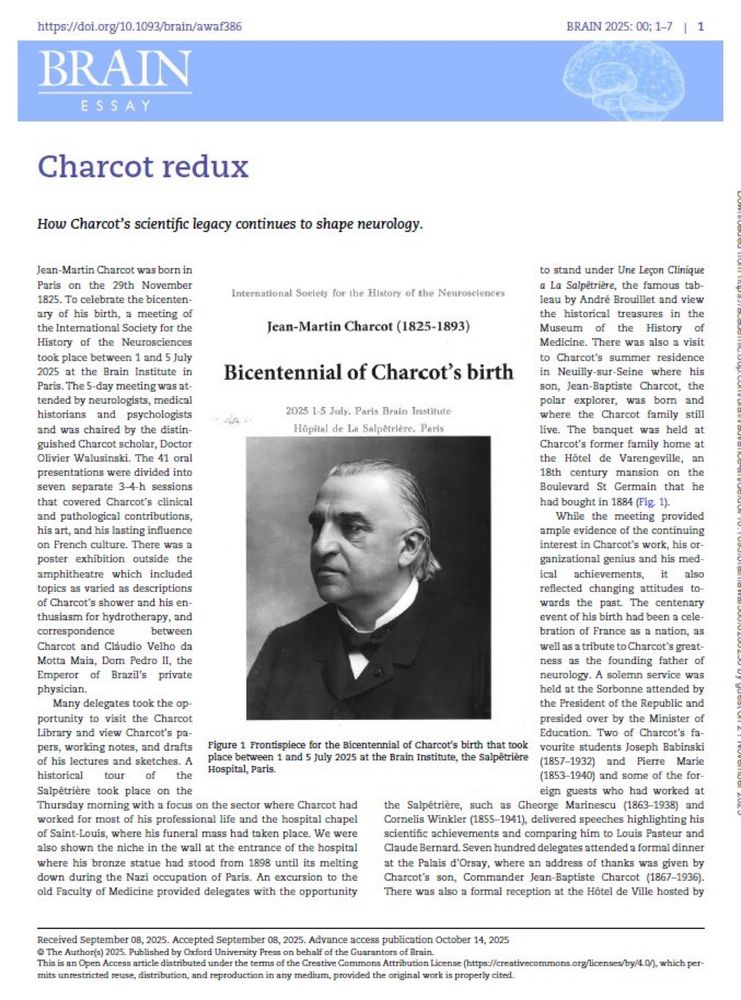
November 23, 2025 at 9:34 AM
"Charcot Redux" - @ajlees.bsky.social has written a magisterial article on Charcot, which gives you something of the man and his context.
Essential for anyone needing an introduction
doi.org/10.1093/brai...
Essential for anyone needing an introduction
doi.org/10.1093/brai...
@HarvardMedicine have done a great job with this article on FND, focused on the contribution of colleagues working there, including Barbara Dworetzky, David Perez and alumnus Mark Hallett.
magazine.hms.harvard.edu/articles/fun...
magazine.hms.harvard.edu/articles/fun...


November 21, 2025 at 4:18 PM
@HarvardMedicine have done a great job with this article on FND, focused on the contribution of colleagues working there, including Barbara Dworetzky, David Perez and alumnus Mark Hallett.
magazine.hms.harvard.edu/articles/fun...
magazine.hms.harvard.edu/articles/fun...
Reposted by Jon Stone
An important study (IMO) looking at social dynamics re: FND on Twitter.
People w FND face continual attack by a variety of groups who dismiss our condition and experiences - ranging from abusive clinicians to other disabled people.
It makes it even harder to exist in public with this dx.
People w FND face continual attack by a variety of groups who dismiss our condition and experiences - ranging from abusive clinicians to other disabled people.
It makes it even harder to exist in public with this dx.


October 20, 2025 at 1:59 PM
An important study (IMO) looking at social dynamics re: FND on Twitter.
People w FND face continual attack by a variety of groups who dismiss our condition and experiences - ranging from abusive clinicians to other disabled people.
It makes it even harder to exist in public with this dx.
People w FND face continual attack by a variety of groups who dismiss our condition and experiences - ranging from abusive clinicians to other disabled people.
It makes it even harder to exist in public with this dx.
"A large proportion of the discourse around FND on X is shaped by users who are dismissive of the concept of FND and those associated with it...implications for individuals getting support for a condition that is already widely misunderstood."
www.jmir.org/2025/1/e73439
www.jmir.org/2025/1/e73439

An Exploration of How Functional Neurological Disorder Is Discussed on X (Twitter): Mixed Methods Study Using Social Network and Content Analysis
Background: Functional neurological disorder (FND) is one of the commonest conditions in neurological practice, describing symptoms like paralysis and seizures that can be severe and disabling. It is ...
www.jmir.org
October 20, 2025 at 3:00 PM
"A large proportion of the discourse around FND on X is shaped by users who are dismissive of the concept of FND and those associated with it...implications for individuals getting support for a condition that is already widely misunderstood."
www.jmir.org/2025/1/e73439
www.jmir.org/2025/1/e73439
Some great clinical tips on managing FND- from someone who actually has it
There are a lot of difficult challenges around FND (understanding brain dynamics, developing new treatments, etc).
But the most *important* problems are much more easily solved - and yet I hear from folks about these same issues in the community over and over.
Here’s a few 👇
But the most *important* problems are much more easily solved - and yet I hear from folks about these same issues in the community over and over.
Here’s a few 👇
October 15, 2025 at 8:03 PM
Some great clinical tips on managing FND- from someone who actually has it
Reposted by Jon Stone
🌎 Join the 1st Latin American Congress on Functional Neurological Disorders (FND)!
📅 Nov 20–22, 2025 | Lima, Peru | Hybrid
🎓 Includes Poster Call with international awards 🌍
🔗 Scan QR codes for registration & info
📅 Nov 20–22, 2025 | Lima, Peru | Hybrid
🎓 Includes Poster Call with international awards 🌍
🔗 Scan QR codes for registration & info


October 11, 2025 at 7:00 PM
🌎 Join the 1st Latin American Congress on Functional Neurological Disorders (FND)!
📅 Nov 20–22, 2025 | Lima, Peru | Hybrid
🎓 Includes Poster Call with international awards 🌍
🔗 Scan QR codes for registration & info
📅 Nov 20–22, 2025 | Lima, Peru | Hybrid
🎓 Includes Poster Call with international awards 🌍
🔗 Scan QR codes for registration & info
Pleased that "Continuum" the AAN journal asked for this article on the management of functional movement disorder - coauthored with @alancarson15.bsky.social
Article paywalled but podcast is free.
Some snippets in thread🧵
Article: continuum.aan.com/doi/full/10....
Podcast: x.com/ContinuumAAN....
Article paywalled but podcast is free.
Some snippets in thread🧵
Article: continuum.aan.com/doi/full/10....
Podcast: x.com/ContinuumAAN....

October 1, 2025 at 2:03 PM
Pleased that "Continuum" the AAN journal asked for this article on the management of functional movement disorder - coauthored with @alancarson15.bsky.social
Article paywalled but podcast is free.
Some snippets in thread🧵
Article: continuum.aan.com/doi/full/10....
Podcast: x.com/ContinuumAAN....
Article paywalled but podcast is free.
Some snippets in thread🧵
Article: continuum.aan.com/doi/full/10....
Podcast: x.com/ContinuumAAN....
Reposted by Jon Stone
📢 Delighted to have Dr. Caoimhe McLoughlin speak at our
first #FNDIreland Conference on 'The Role of Neuropsychiatry in FND' and share her research on Stigma in #FND which she completed under the supervision of @jonstoneneuro.bsky.social and @alancarson15.bsky.social. 💚🧡
@fndportal.bsky.social
first #FNDIreland Conference on 'The Role of Neuropsychiatry in FND' and share her research on Stigma in #FND which she completed under the supervision of @jonstoneneuro.bsky.social and @alancarson15.bsky.social. 💚🧡
@fndportal.bsky.social

September 19, 2025 at 8:04 AM
📢 Delighted to have Dr. Caoimhe McLoughlin speak at our
first #FNDIreland Conference on 'The Role of Neuropsychiatry in FND' and share her research on Stigma in #FND which she completed under the supervision of @jonstoneneuro.bsky.social and @alancarson15.bsky.social. 💚🧡
@fndportal.bsky.social
first #FNDIreland Conference on 'The Role of Neuropsychiatry in FND' and share her research on Stigma in #FND which she completed under the supervision of @jonstoneneuro.bsky.social and @alancarson15.bsky.social. 💚🧡
@fndportal.bsky.social
New NHS England Neurology Service specification.
✅FND is one of seven core subspecialties
✅FND services MUST be provided in each specialised neurology centre.
This is huge recognition of how common FND is in neurology - and unthinkable 20 yrs ago. 1/
t.co/XvGo0NIryA
✅FND is one of seven core subspecialties
✅FND services MUST be provided in each specialised neurology centre.
This is huge recognition of how common FND is in neurology - and unthinkable 20 yrs ago. 1/
t.co/XvGo0NIryA


September 21, 2025 at 1:04 PM
New NHS England Neurology Service specification.
✅FND is one of seven core subspecialties
✅FND services MUST be provided in each specialised neurology centre.
This is huge recognition of how common FND is in neurology - and unthinkable 20 yrs ago. 1/
t.co/XvGo0NIryA
✅FND is one of seven core subspecialties
✅FND services MUST be provided in each specialised neurology centre.
This is huge recognition of how common FND is in neurology - and unthinkable 20 yrs ago. 1/
t.co/XvGo0NIryA
Thanks Amy Ross Russell and Huw Green for a great discussion on "Health anxiety in a neurological setting" for this "Practical Neurology" podcast.
www.podbean.com/ew/pb-ru6gh-...
www.podbean.com/ew/pb-ru6gh-...
August 27, 2025 at 8:11 AM
Thanks Amy Ross Russell and Huw Green for a great discussion on "Health anxiety in a neurological setting" for this "Practical Neurology" podcast.
www.podbean.com/ew/pb-ru6gh-...
www.podbean.com/ew/pb-ru6gh-...
Reposted by Jon Stone
Great thread from @jonstoneneuro.bsky.social on a paper that took a lot of effort from a superb team to wrestle the evidence and many complexities of the relation between FND and migraine into shape!
👏👏💪🏻💪🏻
👏👏💪🏻💪🏻
Our new open access paper looking at Migraine and FND, two of the commonest conditions in neurological practice.
Migraine and functional neurological disorder (FND)—a review of comorbidity and potential overlap. academic.oup.com/braincomms/a... 🧵1/
Migraine and functional neurological disorder (FND)—a review of comorbidity and potential overlap. academic.oup.com/braincomms/a... 🧵1/

August 20, 2025 at 11:16 PM
Great thread from @jonstoneneuro.bsky.social on a paper that took a lot of effort from a superb team to wrestle the evidence and many complexities of the relation between FND and migraine into shape!
👏👏💪🏻💪🏻
👏👏💪🏻💪🏻
Our new open access paper looking at Migraine and FND, two of the commonest conditions in neurological practice.
Migraine and functional neurological disorder (FND)—a review of comorbidity and potential overlap. academic.oup.com/braincomms/a... 🧵1/
Migraine and functional neurological disorder (FND)—a review of comorbidity and potential overlap. academic.oup.com/braincomms/a... 🧵1/
August 20, 2025 at 5:02 PM
Our new open access paper looking at Migraine and FND, two of the commonest conditions in neurological practice.
Migraine and functional neurological disorder (FND)—a review of comorbidity and potential overlap. academic.oup.com/braincomms/a... 🧵1/
Migraine and functional neurological disorder (FND)—a review of comorbidity and potential overlap. academic.oup.com/braincomms/a... 🧵1/
Reposted by Jon Stone
Good to see an article on multidisciplinary treatment for Functional Movement Disorder by @jonstoneneuro.bsky.social and @alancarson15.bsky.social feature in this months issue of
@continuumaan.bsky.social.💚🧡
continuum.aan.com/doi/abs/10.1...
#FND #FNDIreland
@fndportal.bsky.social
@continuumaan.bsky.social.💚🧡
continuum.aan.com/doi/abs/10.1...
#FND #FNDIreland
@fndportal.bsky.social

Multidisciplinary Treatment for Functional Movement Disorder | Continuum
ABSTRACT Functional movement disorders such as tremor, dystonia, jerky movement, limb weakness,
and gait abnormalities are a common clinical concern for neurologists. This article
is a practical guide...
continuum.aan.com
August 6, 2025 at 7:48 AM
Good to see an article on multidisciplinary treatment for Functional Movement Disorder by @jonstoneneuro.bsky.social and @alancarson15.bsky.social feature in this months issue of
@continuumaan.bsky.social.💚🧡
continuum.aan.com/doi/abs/10.1...
#FND #FNDIreland
@fndportal.bsky.social
@continuumaan.bsky.social.💚🧡
continuum.aan.com/doi/abs/10.1...
#FND #FNDIreland
@fndportal.bsky.social
Reposted by Jon Stone
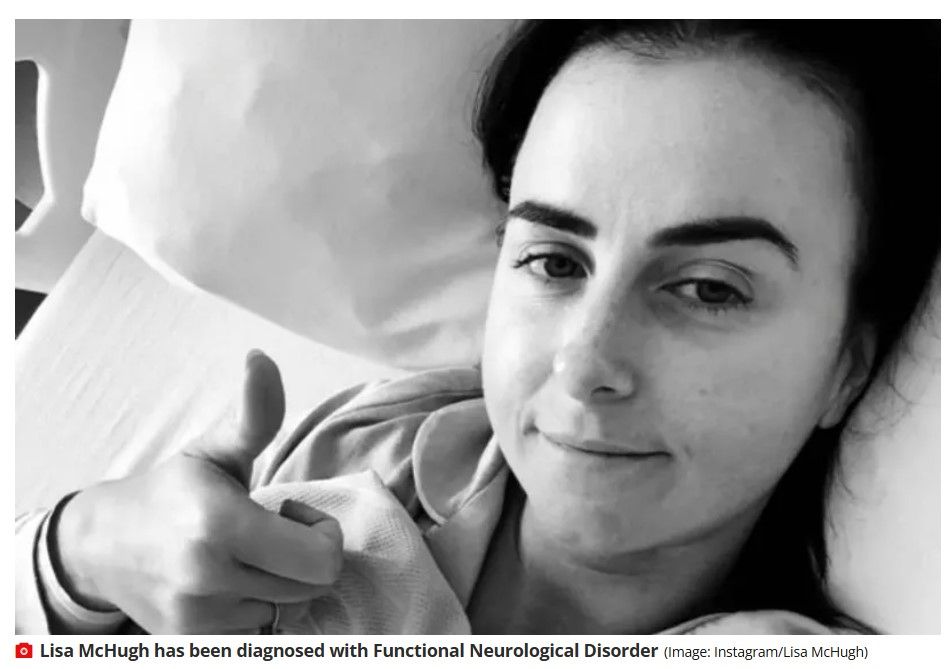
Country singer Lisa McHugh has today shared her recent diagnosis of FND on her social media. We wish Lisa all the best with her rehabilitation.
We at #FNDIreland know the challenges of living with #FND and we are here to support.💚🧡
www.irishmirror.ie/showbiz/iris...
@fndportal.bsky.social
We at #FNDIreland know the challenges of living with #FND and we are here to support.💚🧡
www.irishmirror.ie/showbiz/iris...
@fndportal.bsky.social
July 15, 2025 at 5:12 PM
Country singer Lisa McHugh has today shared her recent diagnosis of FND on her social media. We wish Lisa all the best with her rehabilitation.
We at #FNDIreland know the challenges of living with #FND and we are here to support.💚🧡
www.irishmirror.ie/showbiz/iris...
@fndportal.bsky.social
We at #FNDIreland know the challenges of living with #FND and we are here to support.💚🧡
www.irishmirror.ie/showbiz/iris...
@fndportal.bsky.social
If you have FND, please spare a few minutes for this research study from Bristol.
They want to hear from people with FND about their views on complementary and alternative therapy, regardless of whether you've tried those or not.
bit.ly/4n5FsF5
They want to hear from people with FND about their views on complementary and alternative therapy, regardless of whether you've tried those or not.
bit.ly/4n5FsF5
July 13, 2025 at 12:31 PM
If you have FND, please spare a few minutes for this research study from Bristol.
They want to hear from people with FND about their views on complementary and alternative therapy, regardless of whether you've tried those or not.
bit.ly/4n5FsF5
They want to hear from people with FND about their views on complementary and alternative therapy, regardless of whether you've tried those or not.
bit.ly/4n5FsF5