


Catherine Dulac
@dulaclab.bsky.social
Identifying the neural basis of innate social behaviors using molecular and genetic tools @Harvard @HHMINEWS
Pinned
Catherine Dulac
@dulaclab.bsky.social
· Dec 9
www.biorxiv.org
I am thrilled to share our latest work led by @zurisullivan.bsky.social in collaboration with @moffittlab.bsky.social ! We find that the brain encodes distinct, pathogen-specific sickness states across behavior, physiology, neural activity, and gene expression 1/6
www.biorxiv.org/content/10.6...
www.biorxiv.org/content/10.6...

Reposted by Catherine Dulac
Can tell how bad it is from 1st sentence: “While peer review is an essential part of funding meritorious scientific research, it is also important to consider other factors…”
New NIH funding strategy has been formalized.
I really do hope scientists understand what this means for the future of science (funding) - it's not subtle.
www.niaid.nih.gov/about/unifie...
I really do hope scientists understand what this means for the future of science (funding) - it's not subtle.
www.niaid.nih.gov/about/unifie...

NIH Unified Funding Strategy
Objective peer review, and HHS- and NIH- specific priorities, and a standardized, transparent process for incorporating NIAID-specific priorities will guide funding selections.
www.niaid.nih.gov
January 30, 2026 at 8:38 PM
Can tell how bad it is from 1st sentence: “While peer review is an essential part of funding meritorious scientific research, it is also important to consider other factors…”
Reposted by Catherine Dulac
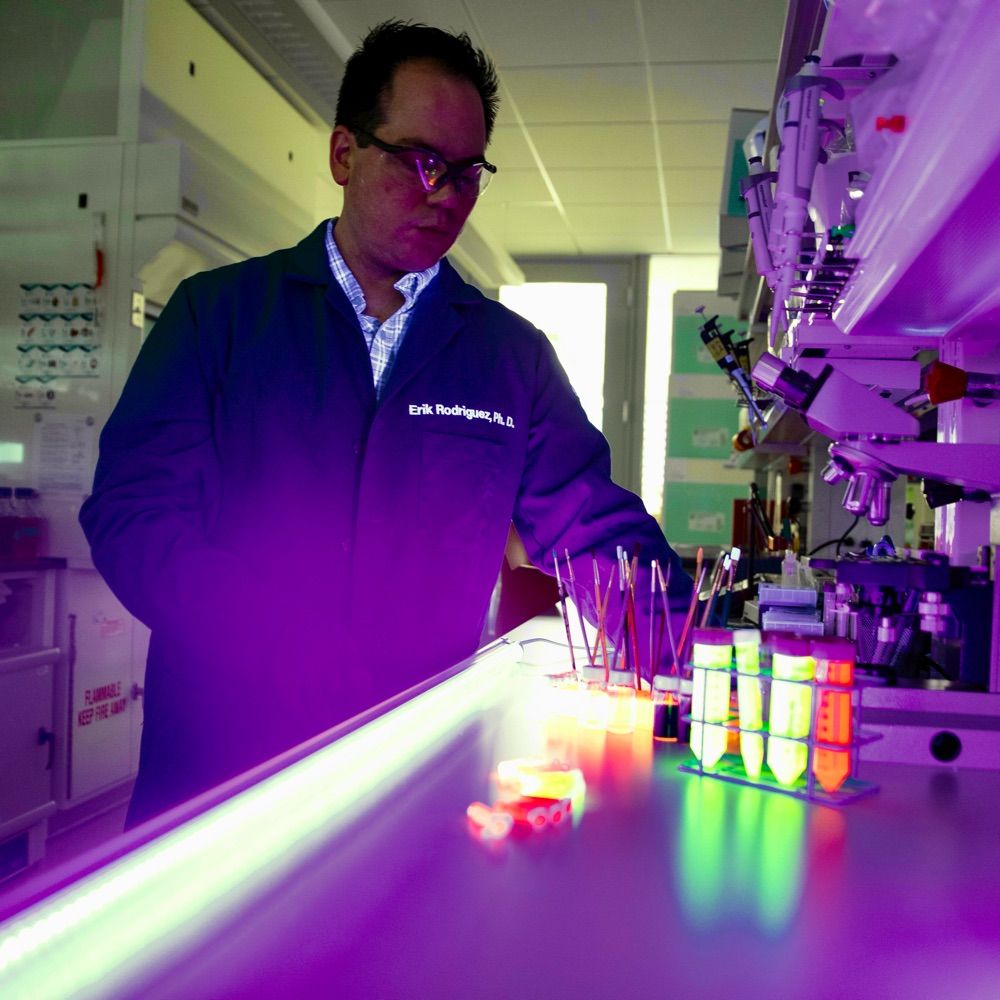
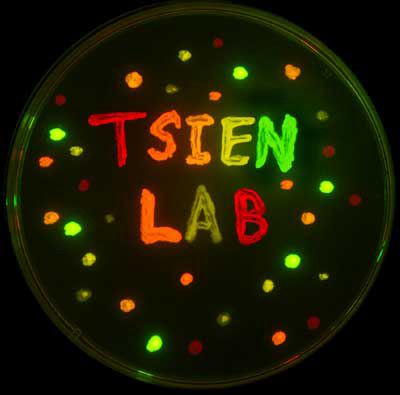
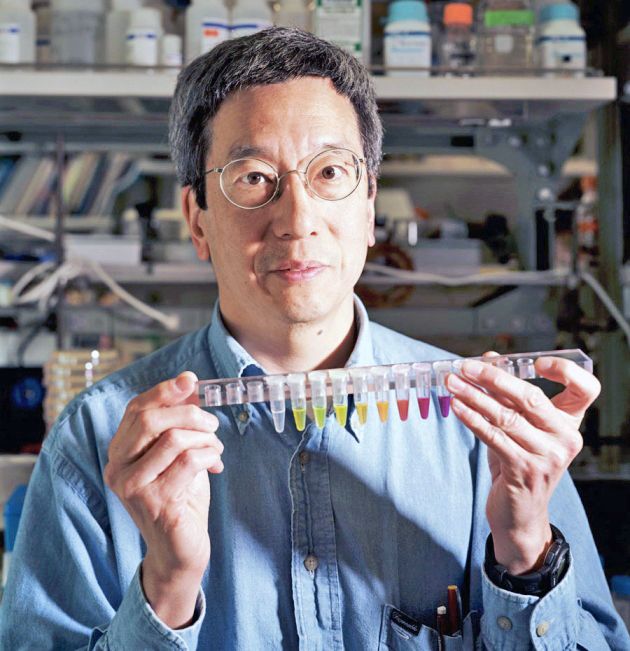
Today, I would like to honor the memory of Roger Y. Tsien, born on February 1, 1952. His legacy lives with all who use his technologies, including calcium sensors, fluorescent proteins, the acetoxymethyl (AM) ester, & many more! #FluorescenceFriday
www.nature.com/articles/nme...
www.nature.com/articles/nme...


January 30, 2026 at 2:52 PM
Today, I would like to honor the memory of Roger Y. Tsien, born on February 1, 1952. His legacy lives with all who use his technologies, including calcium sensors, fluorescent proteins, the acetoxymethyl (AM) ester, & many more! #FluorescenceFriday
www.nature.com/articles/nme...
www.nature.com/articles/nme...
Reposted by Catherine Dulac

New preprint from our group (collaboration with @sueyeonchung.bsky.social) showing that discriminating odor components within a complex mixture is constrained by neural sensitivity rather than background interference - likely due to sparse representations at the front end.
www.biorxiv.org
January 29, 2026 at 2:10 PM
New preprint from our group (collaboration with @sueyeonchung.bsky.social) showing that discriminating odor components within a complex mixture is constrained by neural sensitivity rather than background interference - likely due to sparse representations at the front end.
Reposted by Catherine Dulac
www.nature.com/articles/s41... beautiful work from Stephen Liberles’ lab on neural mechanisms of sensing blood volume.

Vagal blood volume receptors compensate for haemorrhage and posture change - Nature
A vagal reflex to blood volume changes in the heart involves PIEZO2 and helps to stabilize blood pressure in an upright posture and after blood loss.
www.nature.com
January 29, 2026 at 12:00 AM
www.nature.com/articles/s41... beautiful work from Stephen Liberles’ lab on neural mechanisms of sensing blood volume.
Reposted by Catherine Dulac

Two MCB-Affiliated Postdoctoral Fellows Awarded Harvard Brain Initiative Fellowships 🧠 🧪🧬 #AcademicSky #higherEd
www.mcb.harvard.edu/department/n... @sanket-walujkar.bsky.social @rachellegaudet.bsky.social @nbellono.bsky.social @harvardbrainsci.bsky.social @harvard.edu
www.mcb.harvard.edu/department/n... @sanket-walujkar.bsky.social @rachellegaudet.bsky.social @nbellono.bsky.social @harvardbrainsci.bsky.social @harvard.edu

Two MCB-Affiliated Postdoctoral Fellows Awarded Harvard Brain Initiative Fellowships - Harvard University - Department of Molecular & Cellular Biology
Two postdoctoral researchers affiliated with MCB have been awarded highly competitive Postdoctoral Pioneer Fellowships from the Harvard Brain Initiative (HBI), recognizing innovative projects that spa...
www.mcb.harvard.edu
January 28, 2026 at 9:51 PM
Two MCB-Affiliated Postdoctoral Fellows Awarded Harvard Brain Initiative Fellowships 🧠 🧪🧬 #AcademicSky #higherEd
www.mcb.harvard.edu/department/n... @sanket-walujkar.bsky.social @rachellegaudet.bsky.social @nbellono.bsky.social @harvardbrainsci.bsky.social @harvard.edu
www.mcb.harvard.edu/department/n... @sanket-walujkar.bsky.social @rachellegaudet.bsky.social @nbellono.bsky.social @harvardbrainsci.bsky.social @harvard.edu
Reposted by Catherine Dulac
The hippocampal map has its own attentional control signal!
Our new study reveals that theta #sweeps can be instantly biased towards behaviourally relevant locations. See 📹 in post 4/6 and preprint here 👉
www.biorxiv.org/content/10.6...
🧵(1/6)
Our new study reveals that theta #sweeps can be instantly biased towards behaviourally relevant locations. See 📹 in post 4/6 and preprint here 👉
www.biorxiv.org/content/10.6...
🧵(1/6)
Attention-like regulation of theta sweeps in the brain's spatial navigation circuit
Spatial attention supports navigation by prioritizing information from selected locations. A candidate neural mechanism is provided by theta-paced sweeps in grid- and place-cell population activity, which sample nearby space in a left-right-alternating pattern coordinated by parasubicular direction signals. During exploration, this alternation promotes uniform spatial coverage, but whether sweeps can be flexibly tuned to locations of particular interest remains unclear. Using large-scale Neuropixels recordings in freely-behaving rats, we show that sweeps and direction signals are rapidly and dynamically modulated: they track moving targets during pursuit, precede orienting responses during immobility, and reverse during backward locomotion — without prior spatial learning. Similar modulation occurs during REM sleep. Canonical head-direction signals remain head-aligned. These findings identify sweeps as a flexible, attention-like mechanism for selectively sampling allocentric cognitive maps. ### Competing Interest Statement The authors have declared no competing interest. European Research Council, Synergy Grant 951319 (EIM) The Research Council of Norway, Centre of Neural Computation 223262 (EIM, MBM), Centre for Algorithms in the Cortex 332640 (EIM, MBM), National Infrastructure grant (NORBRAIN, 295721 and 350201) The Kavli Foundation, https://ror.org/00kztt736 Ministry of Science and Education, Norway (EIM, MBM) Faculty of Medicine and Health Sciences; NTNU, Norway (AZV)
www.biorxiv.org
January 28, 2026 at 10:03 AM
The hippocampal map has its own attentional control signal!
Our new study reveals that theta #sweeps can be instantly biased towards behaviourally relevant locations. See 📹 in post 4/6 and preprint here 👉
www.biorxiv.org/content/10.6...
🧵(1/6)
Our new study reveals that theta #sweeps can be instantly biased towards behaviourally relevant locations. See 📹 in post 4/6 and preprint here 👉
www.biorxiv.org/content/10.6...
🧵(1/6)
Kids, learn Biology this Summer: an amazing opportunity for middle schoolers!...
🧪🧬🧠🦠🌱🐁🪰🪱🧫
🧪🧬🧠🦠🌱🐁🪰🪱🧫
Registration Now Open for the Inaugural MCB BioCamp for Middle Schoolers 🧠 🧪🧬 #AcademicSky #higherEd
www.mcb.harvard.edu/department/n... @rachellegaudet.bsky.social @harvard.edu
@harvardmuseums.bsky.social @boschildmuseum.bsky.social
@museumofscience.bsky.social @harvardbrainsci.bsky.social
www.mcb.harvard.edu/department/n... @rachellegaudet.bsky.social @harvard.edu
@harvardmuseums.bsky.social @boschildmuseum.bsky.social
@museumofscience.bsky.social @harvardbrainsci.bsky.social

Registration Now Open for the Inaugural MCB BioCamp for Middle Schoolers - Harvard University - Department of Molecular & Cellular Biology
The Department of Molecular and Cellular Biology is excited to announce that registration is now open for the inaugural MCB BioCamp for Middle Schoolers, a new hands-on summer […]
www.mcb.harvard.edu
January 21, 2026 at 8:56 PM
Kids, learn Biology this Summer: an amazing opportunity for middle schoolers!...
🧪🧬🧠🦠🌱🐁🪰🪱🧫
🧪🧬🧠🦠🌱🐁🪰🪱🧫
Reposted by Catherine Dulac
MCB Postdoc Surabhi Sreenivas Awarded ADA Fellowship for Type 2 Diabetes Research 🧠 🧪🧬 🔬 #AcademicSky #higherEd
www.mcb.harvard.edu/department/n... @rachellegaudet.bsky.social @amdiabetesassn.bsky.social @hekstralab.bsky.social @dulaclab.bsky.social @rivaselenarivas.bsky.social
www.mcb.harvard.edu/department/n... @rachellegaudet.bsky.social @amdiabetesassn.bsky.social @hekstralab.bsky.social @dulaclab.bsky.social @rivaselenarivas.bsky.social

MCB Postdoc Surabhi Sreenivas Awarded ADA Fellowship for Type 2 Diabetes Research - Harvard University - Department of Molecular & Cellular Biology
Surabhi Sreenivas, an MCB postdoctoral fellow in the lab of Maxim Prigozhin has been awarded a three-year American Diabetes Association Postdoctoral Fellowship to study how the liver regulates […]
www.mcb.harvard.edu
January 20, 2026 at 10:24 PM
MCB Postdoc Surabhi Sreenivas Awarded ADA Fellowship for Type 2 Diabetes Research 🧠 🧪🧬 🔬 #AcademicSky #higherEd
www.mcb.harvard.edu/department/n... @rachellegaudet.bsky.social @amdiabetesassn.bsky.social @hekstralab.bsky.social @dulaclab.bsky.social @rivaselenarivas.bsky.social
www.mcb.harvard.edu/department/n... @rachellegaudet.bsky.social @amdiabetesassn.bsky.social @hekstralab.bsky.social @dulaclab.bsky.social @rivaselenarivas.bsky.social
Reposted by Catherine Dulac
It is an incredible honour to receive this prize. I thank all members of my lab over the years, and my wonderful colleagues and collaborators, who have joined, inspired and supported me on this exciting journey. ❤️ Biozentrum is a fantastic place to do science!

Prof. Fiona Doetsch has been awarded the 2026 Louis-Jeantet Prize for Medicine!
Her discoveries reveal how neural stem cells support lifelong brain plasticity and repair. 🧠
Read more: www.biozentrum.unibas.ch/news/detail/...
Her discoveries reveal how neural stem cells support lifelong brain plasticity and repair. 🧠
Read more: www.biozentrum.unibas.ch/news/detail/...

January 15, 2026 at 7:28 PM
It is an incredible honour to receive this prize. I thank all members of my lab over the years, and my wonderful colleagues and collaborators, who have joined, inspired and supported me on this exciting journey. ❤️ Biozentrum is a fantastic place to do science!
Reposted by Catherine Dulac
Excited to share @rbrianroome.bsky.social ‘s beautiful paper on development of the dorsal horn of the mouse spinal cord @science.org
This is how the anatomical organization and cell types that process pain, touch, body position and more are laid down.
www.science.org/doi/10.1126/...
This is how the anatomical organization and cell types that process pain, touch, body position and more are laid down.
www.science.org/doi/10.1126/...

Ontogeny of the spinal cord dorsal horn
The dorsal horn of the mammalian spinal cord is organized into laminae where each layer is populated by different neuron types, has distinctive circuit connections, and plays specialized roles in beha...
www.science.org
January 8, 2026 at 7:59 PM
Excited to share @rbrianroome.bsky.social ‘s beautiful paper on development of the dorsal horn of the mouse spinal cord @science.org
This is how the anatomical organization and cell types that process pain, touch, body position and more are laid down.
www.science.org/doi/10.1126/...
This is how the anatomical organization and cell types that process pain, touch, body position and more are laid down.
www.science.org/doi/10.1126/...
Reposted by Catherine Dulac

Thrilled to start my lab at the @whiteheadinstitute.bsky.social @mit.edu and to join such a special community of creative and inspiring colleagues. The Sullivan Lab asks (1) how and (2) why infections make us sick, bridging immunology and neuroscience to understand host defense at the organism scale

“I want everyone in my lab to be exposed to many ways of thinking about biology,” says Whitehead Institute’s newest Member, immunologist Zuri Sullivan. “Creative science often comes from making connections across systems, and Whitehead is uniquely well-suited for that.”
shorturl.at/EFsmh
shorturl.at/EFsmh

January 6, 2026 at 2:08 PM
Thrilled to start my lab at the @whiteheadinstitute.bsky.social @mit.edu and to join such a special community of creative and inspiring colleagues. The Sullivan Lab asks (1) how and (2) why infections make us sick, bridging immunology and neuroscience to understand host defense at the organism scale
Ascona meetings on neural circuits are amazing conferences in a beautiful setting in Switzerland spanning all scales from genetics and micro-circuit cracking to high level cognition. Check asconacircuits.org for the 2026 program and register soon, as it typically reaches capacity very quickly 🧠🧪
January 5, 2026 at 12:23 PM
Ascona meetings on neural circuits are amazing conferences in a beautiful setting in Switzerland spanning all scales from genetics and micro-circuit cracking to high level cognition. Check asconacircuits.org for the 2026 program and register soon, as it typically reaches capacity very quickly 🧠🧪
Just finished my first book of the year: a sober, courageous, yet emotional, eye-opening and haunting narrative by an Ukrainian writer, father and staunch pacifist who enlisted the day his country was invaded. A must read for anyone concerned by current world affairs...

January 3, 2026 at 6:05 PM
Just finished my first book of the year: a sober, courageous, yet emotional, eye-opening and haunting narrative by an Ukrainian writer, father and staunch pacifist who enlisted the day his country was invaded. A must read for anyone concerned by current world affairs...
Reposted by Catherine Dulac
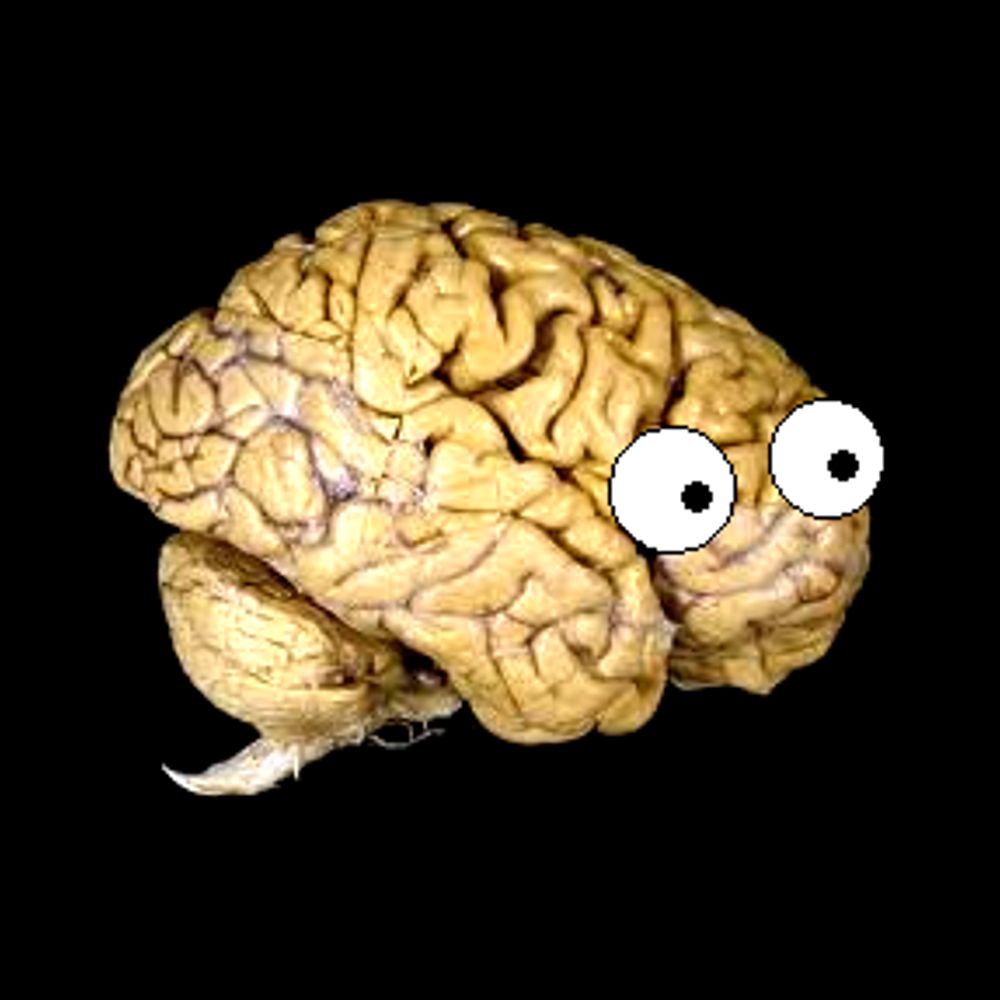
Way back in 1999, Kenji Doya sketched a big picture theory of the brain:
1️⃣The cerebellum is specialized for supervised learning
2️⃣The basal ganglia are for reinforcement learning
3️⃣The cerebral cortex is for unsupervised learning
How does this hold up in 2026? www.sciencedirect.com/science/arti...
1️⃣The cerebellum is specialized for supervised learning
2️⃣The basal ganglia are for reinforcement learning
3️⃣The cerebral cortex is for unsupervised learning
How does this hold up in 2026? www.sciencedirect.com/science/arti...

January 1, 2026 at 3:36 PM
Way back in 1999, Kenji Doya sketched a big picture theory of the brain:
1️⃣The cerebellum is specialized for supervised learning
2️⃣The basal ganglia are for reinforcement learning
3️⃣The cerebral cortex is for unsupervised learning
How does this hold up in 2026? www.sciencedirect.com/science/arti...
1️⃣The cerebellum is specialized for supervised learning
2️⃣The basal ganglia are for reinforcement learning
3️⃣The cerebral cortex is for unsupervised learning
How does this hold up in 2026? www.sciencedirect.com/science/arti...
Reposted by Catherine Dulac
Smarter Microscopes, Faster Maps: Lichtman Lab’s “SmartEM” Brings AI to Connectomics 🧠 🧪🧬 #AcademicSky #higherEd
www.mcb.harvard.edu/department/n... @yaronmr.bsky.social @harvard.edu @harvardbrainsci.bsky.social @natmethods.nature.com @rachellegaudet.bsky.social @thermofishersci.bsky.social
www.mcb.harvard.edu/department/n... @yaronmr.bsky.social @harvard.edu @harvardbrainsci.bsky.social @natmethods.nature.com @rachellegaudet.bsky.social @thermofishersci.bsky.social

Smarter Microscopes, Faster Maps: Lichtman Lab’s “SmartEM” Brings AI to Connectomics - Harvard University - Department of Molecular & Cellular Biology
A new paper in Nature Methods (PDF) from the labs of MCB’s Jeff Lichtman and Aravinthan Samuel, of the department of physics and Center for Brain Science, introduces […]
www.mcb.harvard.edu
December 31, 2025 at 7:00 PM
Smarter Microscopes, Faster Maps: Lichtman Lab’s “SmartEM” Brings AI to Connectomics 🧠 🧪🧬 #AcademicSky #higherEd
www.mcb.harvard.edu/department/n... @yaronmr.bsky.social @harvard.edu @harvardbrainsci.bsky.social @natmethods.nature.com @rachellegaudet.bsky.social @thermofishersci.bsky.social
www.mcb.harvard.edu/department/n... @yaronmr.bsky.social @harvard.edu @harvardbrainsci.bsky.social @natmethods.nature.com @rachellegaudet.bsky.social @thermofishersci.bsky.social
Reposted by Catherine Dulac
Harvard College Senior Fajr Khan Named 2025 Pakistan Rhodes Scholar #AcademicSky #higherEd
www.mcb.harvard.edu/department/n... @naoshigeuchida.bsky.social @rachellegaudet.bsky.social @harvard.edu @ox.ac.uk
www.mcb.harvard.edu/department/n... @naoshigeuchida.bsky.social @rachellegaudet.bsky.social @harvard.edu @ox.ac.uk

Harvard College Senior Fajr Khan Named 2025 Pakistan Rhodes Scholar - Harvard University - Department of Molecular & Cellular Biology
Harvard College senior Fajr Khan, a neuroscience concentrator whose work spans maternal mental health, child psychology, and the biological foundations of psychiatric illness, has been selected as a [...
www.mcb.harvard.edu
December 22, 2025 at 7:00 PM
Harvard College Senior Fajr Khan Named 2025 Pakistan Rhodes Scholar #AcademicSky #higherEd
www.mcb.harvard.edu/department/n... @naoshigeuchida.bsky.social @rachellegaudet.bsky.social @harvard.edu @ox.ac.uk
www.mcb.harvard.edu/department/n... @naoshigeuchida.bsky.social @rachellegaudet.bsky.social @harvard.edu @ox.ac.uk
Reposted by Catherine Dulac
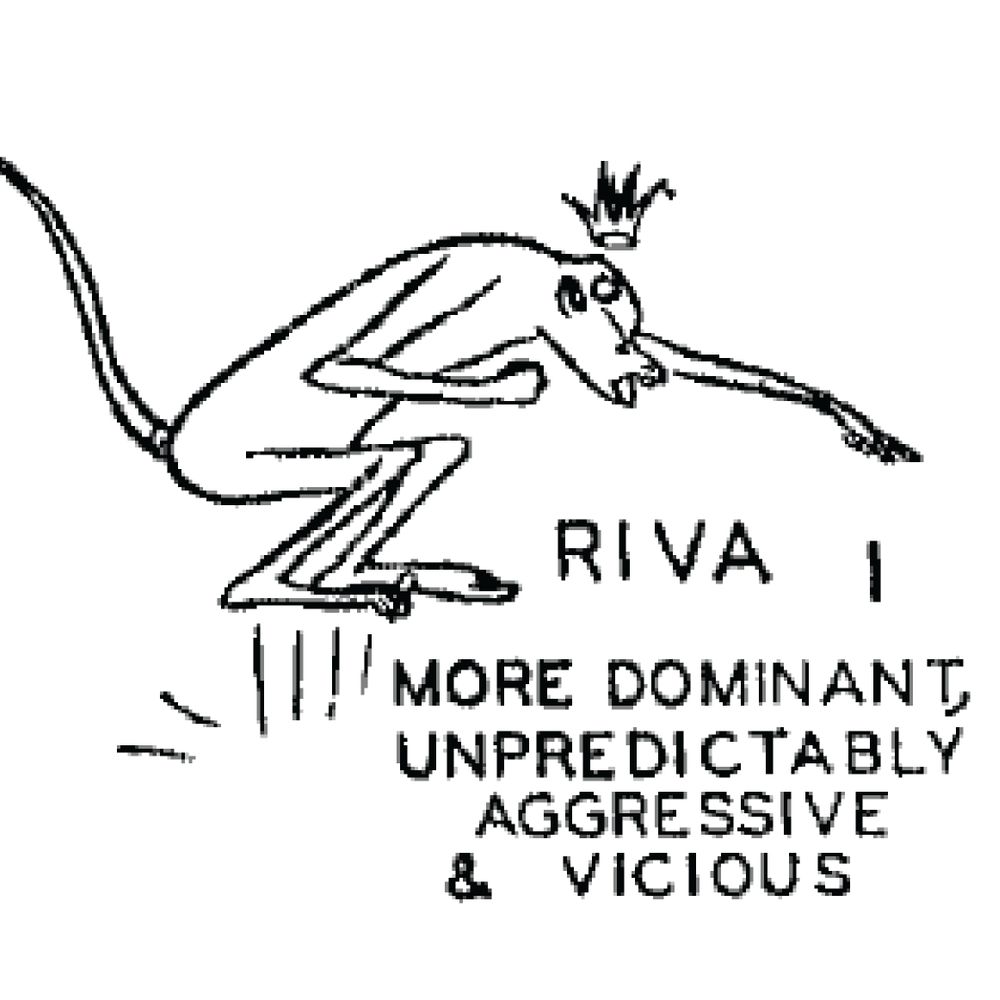
Want to track the dynamics of estrogen in the brain across long periods of time? New paper as part of very fun collab with team UCLA Ed Van Veen and Steph Correa! We use a specialized optical reporter and show that this is possible and actually very easy! www.biorxiv.org/content/10.6...
www.biorxiv.org
December 16, 2025 at 8:52 PM
Want to track the dynamics of estrogen in the brain across long periods of time? New paper as part of very fun collab with team UCLA Ed Van Veen and Steph Correa! We use a specialized optical reporter and show that this is possible and actually very easy! www.biorxiv.org/content/10.6...
Reposted by Catherine Dulac
Nancy Kleckner Recognized for Pioneering Work in Chromosome Dynamics 🧪🧬 #AcademicSky #higherEd
www.mcb.harvard.edu/department/n... @rachellegaudet.bsky.social
www.mcb.harvard.edu/department/n... @rachellegaudet.bsky.social

Nancy Kleckner Recognized for Pioneering Work in Chromosome Dynamics - Harvard University - Department of Molecular & Cellular Biology
Nancy Kleckner, the Herchel Smith Professor of Molecular Biology, has been awarded the 2025 Charles E. Helmstetter Prize Lifetime Achievement Award (PDF) in recognition of her groundbreaking research ...
www.mcb.harvard.edu
December 15, 2025 at 10:02 PM
Nancy Kleckner Recognized for Pioneering Work in Chromosome Dynamics 🧪🧬 #AcademicSky #higherEd
www.mcb.harvard.edu/department/n... @rachellegaudet.bsky.social
www.mcb.harvard.edu/department/n... @rachellegaudet.bsky.social
New paper alert!!...🤩 Led by @blogeman.bsky.social, we identify how cell type-specific hormonal responses in the hypothalamus tunes parenting behavior in males and females 🐭🧠🍼. Highlights in thread 👇 1/6
www.biorxiv.org/content/10.6...
www.biorxiv.org/content/10.6...

Cell Type-Specific Hormonal Signaling Configures Hypothalamic Circuits for Parenting
Parenting behavior emerges from hormonally sensitive circuits, but how distinct circuit components are affected by, and contribute to, sex and state dependent changes in infant caregiving remains uncl...
www.biorxiv.org
December 13, 2025 at 2:03 PM
New paper alert!!...🤩 Led by @blogeman.bsky.social, we identify how cell type-specific hormonal responses in the hypothalamus tunes parenting behavior in males and females 🐭🧠🍼. Highlights in thread 👇 1/6
www.biorxiv.org/content/10.6...
www.biorxiv.org/content/10.6...
Reposted by Catherine Dulac
Ancient Plants Used Infrared Radiation to Attract Their Pollinators #research 🧠 🧪🧬 #AcademicSky #higherEd
www.mcb.harvard.edu/department/n... @nbellono.bsky.social @rachellegaudet.bsky.social @harvardoeb.bsky.social @science.org
www.mcb.harvard.edu/department/n... @nbellono.bsky.social @rachellegaudet.bsky.social @harvardoeb.bsky.social @science.org

Ancient Plants Used Infrared Radiation to Attract Their Pollinators - Harvard University - Department of Molecular & Cellular Biology
Long before flowers painted the planet in brilliant colors, some of Earth’s earliest plants were glowing—not with pigment, but with heat. A new study from the lab of […]
www.mcb.harvard.edu
December 11, 2025 at 7:21 PM
Ancient Plants Used Infrared Radiation to Attract Their Pollinators #research 🧠 🧪🧬 #AcademicSky #higherEd
www.mcb.harvard.edu/department/n... @nbellono.bsky.social @rachellegaudet.bsky.social @harvardoeb.bsky.social @science.org
www.mcb.harvard.edu/department/n... @nbellono.bsky.social @rachellegaudet.bsky.social @harvardoeb.bsky.social @science.org
Reposted by Catherine Dulac
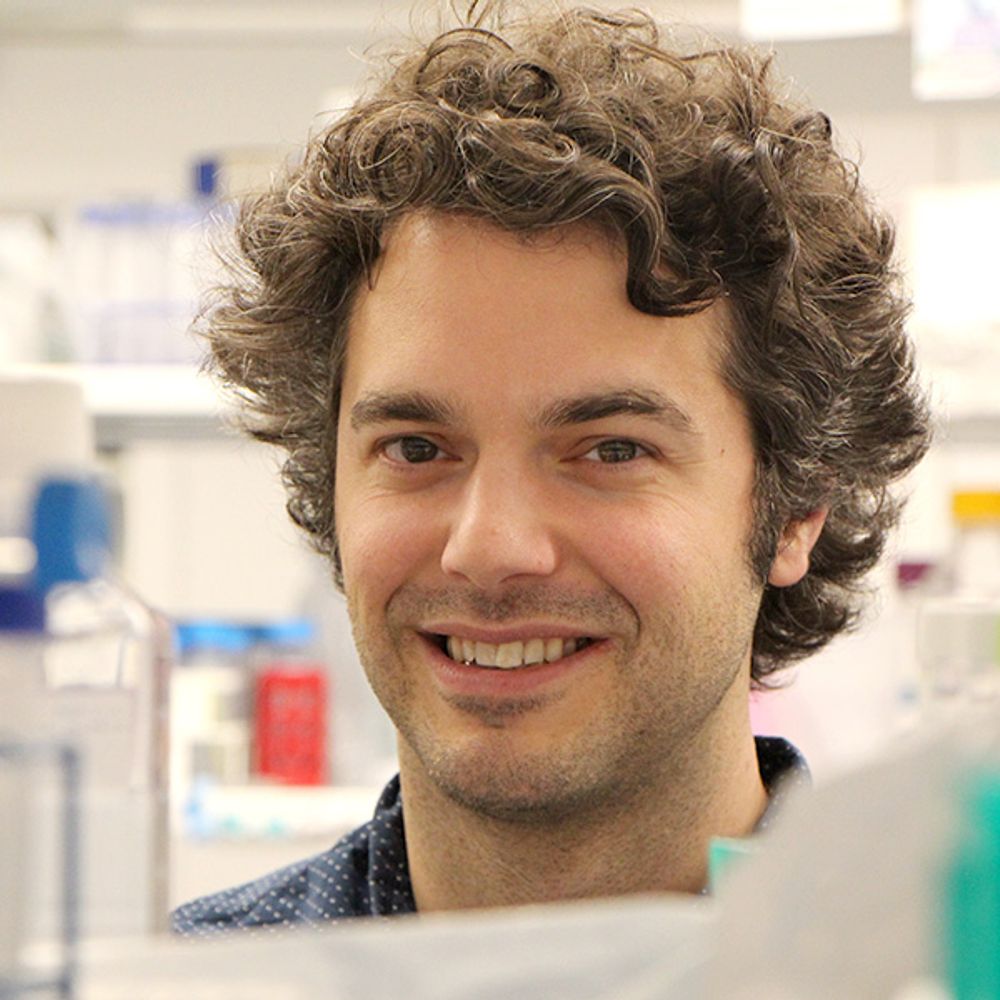

I am thrilled to share our latest work led by @zurisullivan.bsky.social in collaboration with @moffittlab.bsky.social ! We find that the brain encodes distinct, pathogen-specific sickness states across behavior, physiology, neural activity, and gene expression 1/6
www.biorxiv.org/content/10.6...
www.biorxiv.org/content/10.6...
www.biorxiv.org
December 9, 2025 at 12:05 PM
I am thrilled to share our latest work led by @zurisullivan.bsky.social in collaboration with @moffittlab.bsky.social ! We find that the brain encodes distinct, pathogen-specific sickness states across behavior, physiology, neural activity, and gene expression 1/6
www.biorxiv.org/content/10.6...
www.biorxiv.org/content/10.6...
Reposted by Catherine Dulac
MCB Scientists Help Reveal Structure of Cancer-Linked DNA Damage in Science Study 🧪 🧬 #AcademicSky #higherEd #research
www.mcb.harvard.edu/department/n... @rachellegaudet.bsky.social @hekstralab.bsky.social
www.mcb.harvard.edu/department/n... @rachellegaudet.bsky.social @hekstralab.bsky.social

MCB Scientists Help Reveal Structure of Cancer-Linked DNA Damage in Science Study - Harvard University - Department of Molecular & Cellular Biology
A long-standing mystery in microbiome research—how a gut-bacterial toxin physically damages human DNA—has finally been solved through a close collaboration led in part by researchers in the Victoria [...
www.mcb.harvard.edu
December 4, 2025 at 7:32 PM
MCB Scientists Help Reveal Structure of Cancer-Linked DNA Damage in Science Study 🧪 🧬 #AcademicSky #higherEd #research
www.mcb.harvard.edu/department/n... @rachellegaudet.bsky.social @hekstralab.bsky.social
www.mcb.harvard.edu/department/n... @rachellegaudet.bsky.social @hekstralab.bsky.social
Reposted by Catherine Dulac
Spotlight: Ashley Johnson Brings a Student-Centered Vision and a Scientist’s Heart to MCB 🧪🧬 #AcademicSky #higherEd
www.mcb.harvard.edu/department/n... @rachellegaudet.bsky.social @dulaclab.bsky.social @rivaselenarivas.bsky.social @hekstralab.bsky.social
www.mcb.harvard.edu/department/n... @rachellegaudet.bsky.social @dulaclab.bsky.social @rivaselenarivas.bsky.social @hekstralab.bsky.social
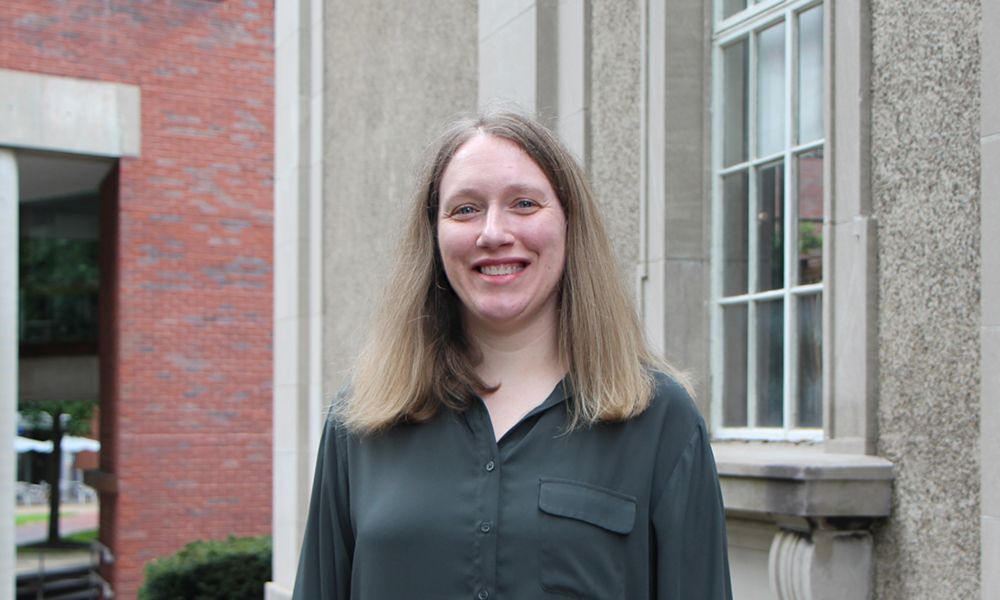
Spotlight: Ashley Johnson Brings a Student-Centered Vision and a Scientist’s Heart to MCB - Harvard University - Department of Molecular & Cellular Biology
When Ashley Johnson stepped into the role of Interim Program Administrator for the Molecular and Cellular Biology (MCB) and Chemical and Physical Biology (CPB) concentrations this past May, […]
www.mcb.harvard.edu
December 1, 2025 at 5:52 PM
Spotlight: Ashley Johnson Brings a Student-Centered Vision and a Scientist’s Heart to MCB 🧪🧬 #AcademicSky #higherEd
www.mcb.harvard.edu/department/n... @rachellegaudet.bsky.social @dulaclab.bsky.social @rivaselenarivas.bsky.social @hekstralab.bsky.social
www.mcb.harvard.edu/department/n... @rachellegaudet.bsky.social @dulaclab.bsky.social @rivaselenarivas.bsky.social @hekstralab.bsky.social