


Dr Sam Neil
@drsamneil.bsky.social
Uses biomolecular science to study human biological and social evolution: #aDNA and #isotopes
Research Fellow @pacea.bsky.social University of Bordeaux and @unioxarchaeology.bsky.social University of Oxford
Research Fellow @pacea.bsky.social University of Bordeaux and @unioxarchaeology.bsky.social University of Oxford
Pinned
Dr Sam Neil
@drsamneil.bsky.social
· Apr 24
Now that contracts have been signed and it is official, I am delighted to say I have been awarded a Marie-Curie Fellowship in ancient DNA and stable isotopes, based at @pacea.bsky.social (University of Bordeaux) and seconded to @unioxarchaeology.bsky.social (University of Oxford).
Reposted by Dr Sam Neil
Proud that after five years of careful analysis and discussion our paper "Lasting Lower Rhine-Meuse forager ancestry shaped Bell Beaker expansion" has now been published.

Lasting Lower Rhine–Meuse forager ancestry shaped Bell Beaker expansion - Nature
A distinctive population with high hunter-gatherer ancestry persisted 3,000 years later than in most European regions, contributing to later Lower Rhine–Meuse Bell Beaker users.
doi.org
February 11, 2026 at 4:15 PM
Proud that after five years of careful analysis and discussion our paper "Lasting Lower Rhine-Meuse forager ancestry shaped Bell Beaker expansion" has now been published.
Reposted by Dr Sam Neil
Interested in using aDNA time-series datasets to estimate selection?
Our study "Assessing Ancient DNA Sampling Strategies for Natural Selection Inference in Humans Using Allele Frequency Time Series Data" is now out in GBE! doi.org/10.1093/gbe/... @genomebiolevol.bsky.social @cegamorim.bsky.social
Our study "Assessing Ancient DNA Sampling Strategies for Natural Selection Inference in Humans Using Allele Frequency Time Series Data" is now out in GBE! doi.org/10.1093/gbe/... @genomebiolevol.bsky.social @cegamorim.bsky.social

Assessing Ancient DNA Sampling Strategies for Natural Selection Inference in Humans Using Allele Frequency Time Series Data
Abstract. The increased availability of genomic data from ancient humans allows estimating the strength of natural selection at a given locus using time se
doi.org
February 3, 2026 at 9:17 AM
Interested in using aDNA time-series datasets to estimate selection?
Our study "Assessing Ancient DNA Sampling Strategies for Natural Selection Inference in Humans Using Allele Frequency Time Series Data" is now out in GBE! doi.org/10.1093/gbe/... @genomebiolevol.bsky.social @cegamorim.bsky.social
Our study "Assessing Ancient DNA Sampling Strategies for Natural Selection Inference in Humans Using Allele Frequency Time Series Data" is now out in GBE! doi.org/10.1093/gbe/... @genomebiolevol.bsky.social @cegamorim.bsky.social
Reposted by Dr Sam Neil
🏺
As well as acting as an insightful review of ancient DNA as it relates to the Bell Beaker Phenomenon in 3rd Millennium BC Europe (particularly the variability and nuances), this also has some great straightforward explanations of analytical methods in aDNA.
cris.unibo.it/handle/11585...
As well as acting as an insightful review of ancient DNA as it relates to the Bell Beaker Phenomenon in 3rd Millennium BC Europe (particularly the variability and nuances), this also has some great straightforward explanations of analytical methods in aDNA.
cris.unibo.it/handle/11585...
Tracing the Bell Beaker phenomenon through ancient DNA studies
Cavazzuti, C., Mittnik, A., Olalde, I., Haak, W. (2025). Tracing the Bell Beaker phenomenon through ancient DNA studies. Budapest : Archaeolingua.
cris.unibo.it
February 8, 2026 at 9:43 AM
🏺
As well as acting as an insightful review of ancient DNA as it relates to the Bell Beaker Phenomenon in 3rd Millennium BC Europe (particularly the variability and nuances), this also has some great straightforward explanations of analytical methods in aDNA.
cris.unibo.it/handle/11585...
As well as acting as an insightful review of ancient DNA as it relates to the Bell Beaker Phenomenon in 3rd Millennium BC Europe (particularly the variability and nuances), this also has some great straightforward explanations of analytical methods in aDNA.
cris.unibo.it/handle/11585...
DNA extraction in the lab:
The black blobs in this photo are DNA stuck to magnetic nanoparticles. The DNA is from a site in Britain dated to the earlier Neolithic (the period when farming was beginning).
By putting an external magnet outside the tray we can then separate DNA from a solution.
The black blobs in this photo are DNA stuck to magnetic nanoparticles. The DNA is from a site in Britain dated to the earlier Neolithic (the period when farming was beginning).
By putting an external magnet outside the tray we can then separate DNA from a solution.

February 4, 2026 at 2:04 PM
DNA extraction in the lab:
The black blobs in this photo are DNA stuck to magnetic nanoparticles. The DNA is from a site in Britain dated to the earlier Neolithic (the period when farming was beginning).
By putting an external magnet outside the tray we can then separate DNA from a solution.
The black blobs in this photo are DNA stuck to magnetic nanoparticles. The DNA is from a site in Britain dated to the earlier Neolithic (the period when farming was beginning).
By putting an external magnet outside the tray we can then separate DNA from a solution.
Reposted by Dr Sam Neil

📢 Announcing the Analytical research forum (ARF26)!
Join us to explore cutting-edge analytical chemistry and its applications across the field.
Find out more: rsc.li/arf2026 #ChemSky
Join us to explore cutting-edge analytical chemistry and its applications across the field.
Find out more: rsc.li/arf2026 #ChemSky

January 29, 2026 at 3:20 PM
📢 Announcing the Analytical research forum (ARF26)!
Join us to explore cutting-edge analytical chemistry and its applications across the field.
Find out more: rsc.li/arf2026 #ChemSky
Join us to explore cutting-edge analytical chemistry and its applications across the field.
Find out more: rsc.li/arf2026 #ChemSky
Reposted by Dr Sam Neil

It was such a privilege to get to work on this amazing material from an incredible site and team - now the earliest handheld wooden tools in the archaeological record, taking evidence back to 430,000 years! www.pnas.org/doi/10.1073/...

Evidence for the earliest hominin use of wooden handheld tools found at Marathousa 1 (Greece) | PNAS
The Middle Pleistocene (MP; ca. 774 to 129 ka) marks a critical period of human evolution,
characterized by increasing behavioral complexity and th...
www.pnas.org
January 27, 2026 at 11:01 AM
It was such a privilege to get to work on this amazing material from an incredible site and team - now the earliest handheld wooden tools in the archaeological record, taking evidence back to 430,000 years! www.pnas.org/doi/10.1073/...
Paintings at least 67 thousand years old in Indonesia
www.nature.com/articles/s41...
www.nature.com/articles/s41...

Rock art from at least 67,800 years ago in Sulawesi - Nature
A hand stencil painted on a cave wall on a small island off the coast of Sulawesi more than 67,800 years ago suggests a very early occupation of Wallacea.
www.nature.com
January 21, 2026 at 5:41 PM
Paintings at least 67 thousand years old in Indonesia
www.nature.com/articles/s41...
www.nature.com/articles/s41...
Enjoyed the @bodleian.ox.ac.uk exhibition 'Treasured', featuring many rare manuscripts, including Herculaeum scrolls and the libraries copy of Magna Carta. Worth visiting if you are in the area. Closes 1st February. visit.bodleian.ox.ac.uk/treasured


January 19, 2026 at 12:37 PM
Enjoyed the @bodleian.ox.ac.uk exhibition 'Treasured', featuring many rare manuscripts, including Herculaeum scrolls and the libraries copy of Magna Carta. Worth visiting if you are in the area. Closes 1st February. visit.bodleian.ox.ac.uk/treasured
Walks into the Oxford laboratory under this inscription which reads "Chemistry offers eternal hope" .... that the equipment doesn't break and that the samples produce data

January 14, 2026 at 3:36 PM
Walks into the Oxford laboratory under this inscription which reads "Chemistry offers eternal hope" .... that the equipment doesn't break and that the samples produce data
Interesting pre-print: Global patterns of natural selection inferred using ancient DNA
www.biorxiv.org/content/10.6...
www.biorxiv.org/content/10.6...

Global patterns of natural selection inferred using ancient DNA
Ancient DNA has revolutionized our understanding of human history, and is now yielding important insights into evolution and natural selection. However, studies of selection using ancient DNA have lar...
www.biorxiv.org
January 11, 2026 at 6:52 AM
Interesting pre-print: Global patterns of natural selection inferred using ancient DNA
www.biorxiv.org/content/10.6...
www.biorxiv.org/content/10.6...
Reposted by Dr Sam Neil

“These fossils offer clues about the last common ancestor shared with Neanderthals and Denisovans”
Early hominins from Morocco basal to the Homo sapiens lineage
@nature.com
www.nature.com/articles/s41...
Early hominins from Morocco basal to the Homo sapiens lineage
@nature.com
www.nature.com/articles/s41...
January 7, 2026 at 4:16 PM
“These fossils offer clues about the last common ancestor shared with Neanderthals and Denisovans”
Early hominins from Morocco basal to the Homo sapiens lineage
@nature.com
www.nature.com/articles/s41...
Early hominins from Morocco basal to the Homo sapiens lineage
@nature.com
www.nature.com/articles/s41...
Reposted by Dr Sam Neil

Our paper on the first ancient Human betaherpesvirus 6 A/B (HHV-6) genomes is published in Science Advances! 🥳
In collaboration with @virologyhouldcroft.bsky.social @lucyvandorp.bsky.social @lehtisaag.bsky.social @ktambets.bsky.social & other amazing researchers!
www.science.org/doi/10.1126/...
In collaboration with @virologyhouldcroft.bsky.social @lucyvandorp.bsky.social @lehtisaag.bsky.social @ktambets.bsky.social & other amazing researchers!
www.science.org/doi/10.1126/...

Tracing 2500 years of human betaherpesvirus 6A and 6B diversity through ancient DNA
First ancient HHV-6 genomes reveal 2500 years of phylogenetic continuity and provide insights into the endogenization of HHV-6A.
www.science.org
January 5, 2026 at 3:14 PM
Our paper on the first ancient Human betaherpesvirus 6 A/B (HHV-6) genomes is published in Science Advances! 🥳
In collaboration with @virologyhouldcroft.bsky.social @lucyvandorp.bsky.social @lehtisaag.bsky.social @ktambets.bsky.social & other amazing researchers!
www.science.org/doi/10.1126/...
In collaboration with @virologyhouldcroft.bsky.social @lucyvandorp.bsky.social @lehtisaag.bsky.social @ktambets.bsky.social & other amazing researchers!
www.science.org/doi/10.1126/...
Reposted by Dr Sam Neil

This headline is wrong and misleading, and the brief text below it is not much better. Whatever might constitute a full explanation of the differences between sapiens and other hominins, we remain confident that 'genes' will be central to it.
www.nature.com/articles/d41...
www.nature.com/articles/d41...

Genes don’t explain what made humans different
Tiny genetic variations between humans, Neanderthals and Denisovans might not be all they were cracked up to be.
www.nature.com
December 19, 2025 at 11:55 AM
This headline is wrong and misleading, and the brief text below it is not much better. Whatever might constitute a full explanation of the differences between sapiens and other hominins, we remain confident that 'genes' will be central to it.
www.nature.com/articles/d41...
www.nature.com/articles/d41...
Reposted by Dr Sam Neil

I’m writing up this year’s top discoveries from ancient DNA and it reminded me to circulate a link to last year’s top 10 list. Some amazing stuff there and remarkable how fast this field moves!
www.johnhawks.net/p/top-10-dis...
www.johnhawks.net/p/top-10-dis...

Top 10 discoveries about ancient people from DNA in 2024
New resolution is emerging of some events in ancient human populations, and a clearer view of some parts of the genome.
www.johnhawks.net
December 4, 2025 at 4:12 PM
I’m writing up this year’s top discoveries from ancient DNA and it reminded me to circulate a link to last year’s top 10 list. Some amazing stuff there and remarkable how fast this field moves!
www.johnhawks.net/p/top-10-dis...
www.johnhawks.net/p/top-10-dis...
Reposted by Dr Sam Neil

Lovely to work with @blevinske.bsky.social, @paleogenomics.bsky.social & Verena Schuenemann on " Ancient DNA insights into diverse pathogens and their hosts"! Read it at rdcu.be/eSVPN

Ancient DNA insights into diverse pathogens and their hosts
Nature Reviews Genetics - Ancient DNA techniques are being applied to study increasingly diverse pathogens of the past. The authors review the latest insights into pathogen–host coevolution,...
rdcu.be
December 3, 2025 at 6:04 PM
Lovely to work with @blevinske.bsky.social, @paleogenomics.bsky.social & Verena Schuenemann on " Ancient DNA insights into diverse pathogens and their hosts"! Read it at rdcu.be/eSVPN
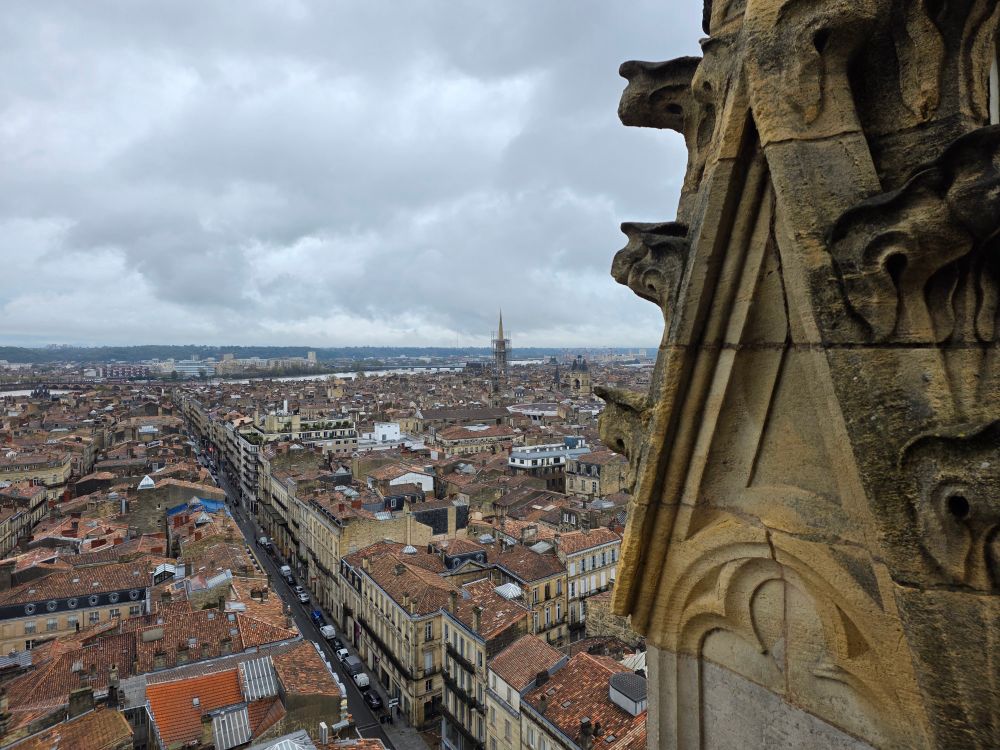
Escaping the laboratory by climbing to the top of one of Bordeaux's bell towers. Constructed in 1440 by the founder of Bordeaux University, Pey Berland.
November 24, 2025 at 2:00 PM
Escaping the laboratory by climbing to the top of one of Bordeaux's bell towers. Constructed in 1440 by the founder of Bordeaux University, Pey Berland.
Reposted by Dr Sam Neil

Did Neandertals choose their prey when practicing cannibalism?🍖
Check out our new study, just published in Scientific Reports - @natureportfolio.nature.com!
We provide the strongest evidence to date for a highly selective cannibalism at the end of Neandertal lineage, 41-45.000 years ago.
1/7
Check out our new study, just published in Scientific Reports - @natureportfolio.nature.com!
We provide the strongest evidence to date for a highly selective cannibalism at the end of Neandertal lineage, 41-45.000 years ago.
1/7

Highly selective cannibalism in the Late Pleistocene of Northern Europe reveals Neandertals were targeted prey - Scientific Reports
Scientific Reports - Highly selective cannibalism in the Late Pleistocene of Northern Europe reveals Neandertals were targeted prey
doi.org
November 20, 2025 at 1:48 PM
Did Neandertals choose their prey when practicing cannibalism?🍖
Check out our new study, just published in Scientific Reports - @natureportfolio.nature.com!
We provide the strongest evidence to date for a highly selective cannibalism at the end of Neandertal lineage, 41-45.000 years ago.
1/7
Check out our new study, just published in Scientific Reports - @natureportfolio.nature.com!
We provide the strongest evidence to date for a highly selective cannibalism at the end of Neandertal lineage, 41-45.000 years ago.
1/7
Reposted by Dr Sam Neil
🦴🧬🦴🧬🦴
Abstract submission is now open for the 1st International Conference on Palaeogenomics!
June 23–26 2026, in Stockholm.
Join researchers from across the field for 4 days and >100 talks (+ poster sessions)!
Submit abstracts here 👉
icp2026.palaeogenomics.org/abstracts/
Deadline: Nov 30th
Abstract submission is now open for the 1st International Conference on Palaeogenomics!
June 23–26 2026, in Stockholm.
Join researchers from across the field for 4 days and >100 talks (+ poster sessions)!
Submit abstracts here 👉
icp2026.palaeogenomics.org/abstracts/
Deadline: Nov 30th

October 1, 2025 at 1:28 PM
🦴🧬🦴🧬🦴
Abstract submission is now open for the 1st International Conference on Palaeogenomics!
June 23–26 2026, in Stockholm.
Join researchers from across the field for 4 days and >100 talks (+ poster sessions)!
Submit abstracts here 👉
icp2026.palaeogenomics.org/abstracts/
Deadline: Nov 30th
Abstract submission is now open for the 1st International Conference on Palaeogenomics!
June 23–26 2026, in Stockholm.
Join researchers from across the field for 4 days and >100 talks (+ poster sessions)!
Submit abstracts here 👉
icp2026.palaeogenomics.org/abstracts/
Deadline: Nov 30th
Amazing presentations at the meeting on Ancient Genomes: perspectives on human biology and medicine at the Royal Society today


November 14, 2025 at 10:56 AM
Amazing presentations at the meeting on Ancient Genomes: perspectives on human biology and medicine at the Royal Society today
Reposted by Dr Sam Neil

🚨 New paper alert 🚨
Our research, published today in Science, reveals remarkable concordance between human and dog genomes through time, highlighting how deeply intertwined our evolutionary histories have been over the past 11,000 years.
🔗 Read the full paper here: www.science.org/doi/10.1126/...
Our research, published today in Science, reveals remarkable concordance between human and dog genomes through time, highlighting how deeply intertwined our evolutionary histories have been over the past 11,000 years.
🔗 Read the full paper here: www.science.org/doi/10.1126/...

Genomic evidence for the Holocene codispersal of dogs and humans across Eastern Eurasia
As the first domestic species, dogs likely dispersed with different cultural groups during the Late Pleistocene and Holocene. To test this hypothesis, we analyzed 73 ancient dog genomes, including 17 ...
www.science.org
November 13, 2025 at 10:48 PM
🚨 New paper alert 🚨
Our research, published today in Science, reveals remarkable concordance between human and dog genomes through time, highlighting how deeply intertwined our evolutionary histories have been over the past 11,000 years.
🔗 Read the full paper here: www.science.org/doi/10.1126/...
Our research, published today in Science, reveals remarkable concordance between human and dog genomes through time, highlighting how deeply intertwined our evolutionary histories have been over the past 11,000 years.
🔗 Read the full paper here: www.science.org/doi/10.1126/...
Currently writing up the results of new radiocarbon dating from this amazing Neolithic monument, Le Déhus, on the Channel Islands. With thanks to @isotopesuk.bsky.social and @oxradiocarbon.bsky.social for funding radiocarbon dating.


November 12, 2025 at 2:29 PM
Currently writing up the results of new radiocarbon dating from this amazing Neolithic monument, Le Déhus, on the Channel Islands. With thanks to @isotopesuk.bsky.social and @oxradiocarbon.bsky.social for funding radiocarbon dating.
is back at one of my favourite places in the whole world, The Oxford University Museum of Natural History @morethanadodo.bsky.social

November 7, 2025 at 2:50 PM
is back at one of my favourite places in the whole world, The Oxford University Museum of Natural History @morethanadodo.bsky.social
Is all alone early a very quiet radiocarbon lab, freeze drying things..hey, who put the sign in the pie oven...no Frey Bentos in here

November 6, 2025 at 9:13 AM
Is all alone early a very quiet radiocarbon lab, freeze drying things..hey, who put the sign in the pie oven...no Frey Bentos in here
Interesting new paper on radiocarbon dating methods: Application of microsublimation for sample purification in compound-specific radiocarbon analysis.
link.springer.com/article/10.1...
link.springer.com/article/10.1...

Application of microsublimation for sample purification in compound-specific radiocarbon analysis - Progress in Earth and Planetary Science
This article presents the development and application of a microsublimation apparatus aimed at improving the purity of ultra-small samples for compound-specific radiocarbon analysis. Accurate radiocar...
link.springer.com
November 4, 2025 at 1:16 PM
Interesting new paper on radiocarbon dating methods: Application of microsublimation for sample purification in compound-specific radiocarbon analysis.
link.springer.com/article/10.1...
link.springer.com/article/10.1...