



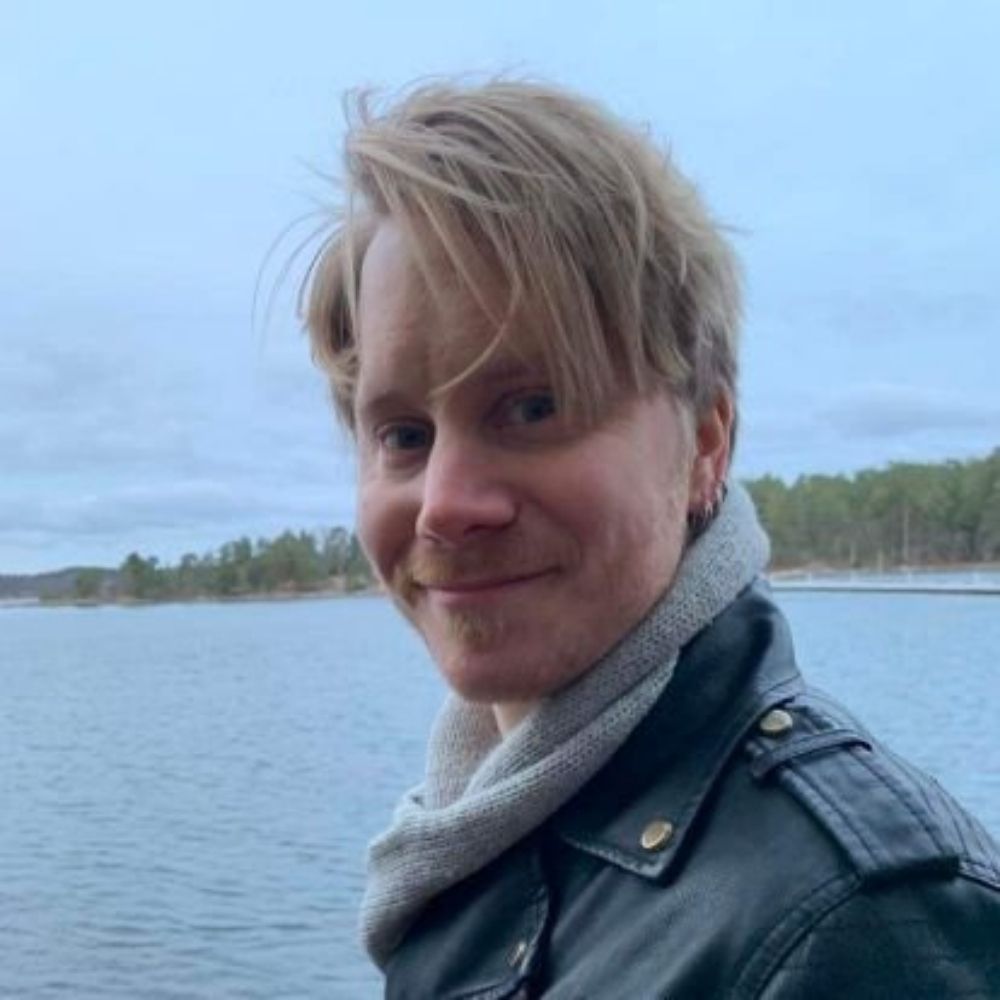
Dennis Larsson
@dennislarsson.bsky.social
Humboldt Fellow at the University of Kiel, Germany | Developmental neuroscience, interoception, and brain–body interaction | Previously Karolinska Institutet and University of Sussex
Pinned
Dennis Larsson
@dennislarsson.bsky.social
· Sep 12
Exciting news: I’ve started a Humboldt Fellowship
@humboldt-foundation.de!
First stop: Hamburg for German training, then in January to Kiel to join Prof. Michael Skeide's group at the Faculty of Medicine of Kiel University @uni-kiel.de.
Happy to connect in Hamburg and Kiel!
@humboldt-foundation.de!
First stop: Hamburg for German training, then in January to Kiel to join Prof. Michael Skeide's group at the Faculty of Medicine of Kiel University @uni-kiel.de.
Happy to connect in Hamburg and Kiel!
Reposted by Dennis Larsson
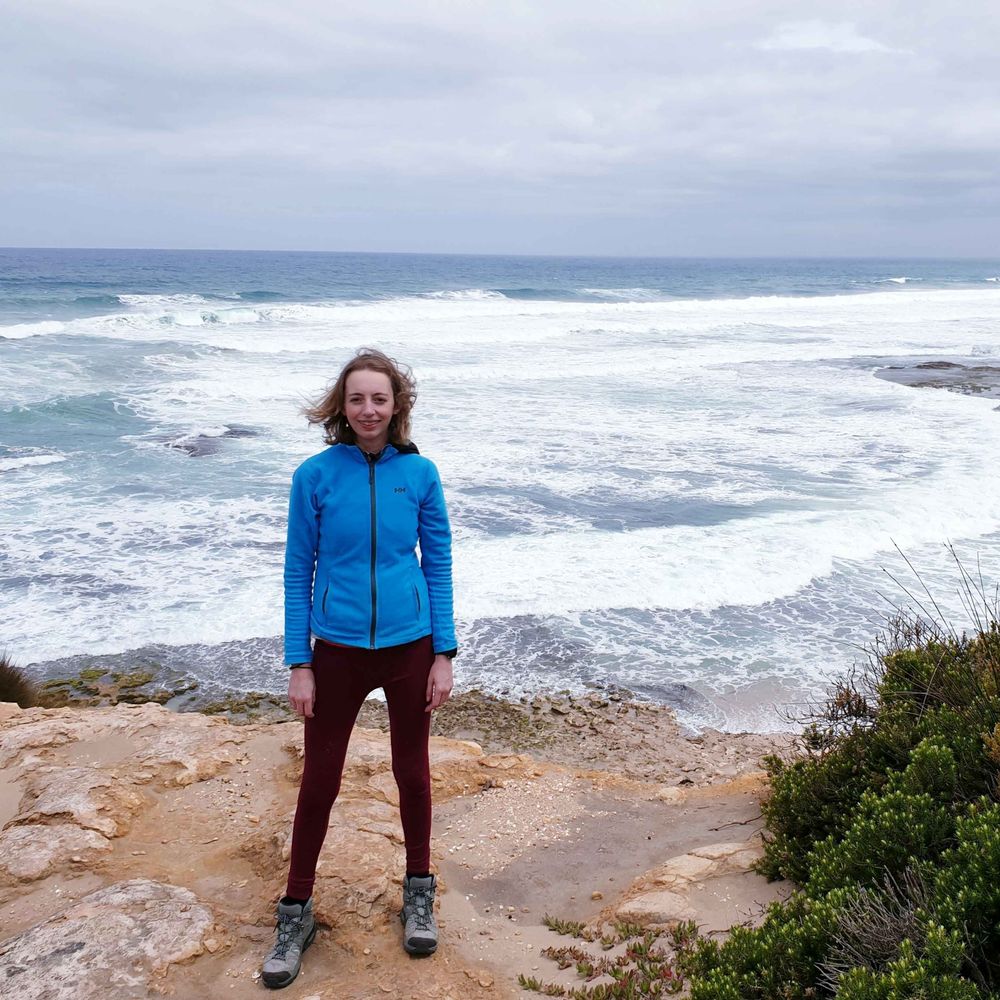
Super excited that our paper on velocity (longitudinal) normative modelling is finally out!
I am very excited about this new preprint!
@likeajumprope.bsky.social presents an approach for charting growth velocity using normative models. It provides a fundamental framework for detecting individualised deviations from an assumed developmental trajectory. Enjoy!
arxiv.org/abs/2601.07591
@likeajumprope.bsky.social presents an approach for charting growth velocity using normative models. It provides a fundamental framework for detecting individualised deviations from an assumed developmental trajectory. Enjoy!
arxiv.org/abs/2601.07591

Charting the velocity of brain growth and development
Brain charts have emerged as a highly useful approach for understanding brain development and aging on the basis of brain imaging and have shown substantial utility in describing typical and atypical ...
arxiv.org
January 16, 2026 at 10:29 AM
Super excited that our paper on velocity (longitudinal) normative modelling is finally out!
Reposted by Dennis Larsson
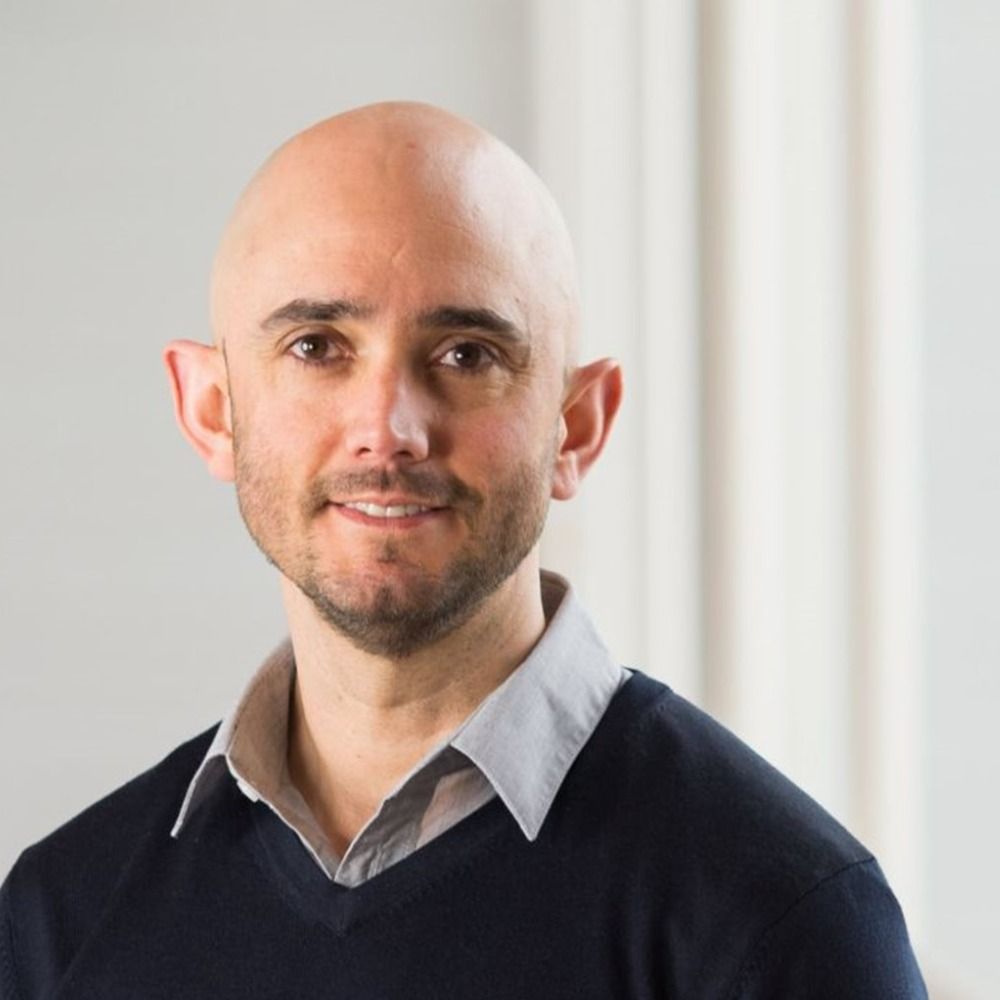
I am very excited about this new preprint!
@likeajumprope.bsky.social presents an approach for charting growth velocity using normative models. It provides a fundamental framework for detecting individualised deviations from an assumed developmental trajectory. Enjoy!
arxiv.org/abs/2601.07591
@likeajumprope.bsky.social presents an approach for charting growth velocity using normative models. It provides a fundamental framework for detecting individualised deviations from an assumed developmental trajectory. Enjoy!
arxiv.org/abs/2601.07591
Charting the velocity of brain growth and development
Brain charts have emerged as a highly useful approach for understanding brain development and aging on the basis of brain imaging and have shown substantial utility in describing typical and atypical ...
arxiv.org
January 16, 2026 at 10:27 AM
I am very excited about this new preprint!
@likeajumprope.bsky.social presents an approach for charting growth velocity using normative models. It provides a fundamental framework for detecting individualised deviations from an assumed developmental trajectory. Enjoy!
arxiv.org/abs/2601.07591
@likeajumprope.bsky.social presents an approach for charting growth velocity using normative models. It provides a fundamental framework for detecting individualised deviations from an assumed developmental trajectory. Enjoy!
arxiv.org/abs/2601.07591
Reposted by Dennis Larsson
A bit belated, but here are some new papers! first, a conceptual framework for modelling extremes in neuroimaging data
onlinelibrary.wiley.com/doi/full/10....
Great work from the inimitable Charlotte Fraza!
onlinelibrary.wiley.com/doi/full/10....
Great work from the inimitable Charlotte Fraza!

Using Extreme Value Statistics to Reconceptualize Psychopathology as Extreme Deviations From a Normative Reference Model
Overview of our approach for extreme value statistics. First, we fit a normative model to imaging phenotypes, before employing a ‘peaks-over-threshold’ approach widely used in meteorology and finance...
onlinelibrary.wiley.com
October 16, 2025 at 3:00 PM
A bit belated, but here are some new papers! first, a conceptual framework for modelling extremes in neuroimaging data
onlinelibrary.wiley.com/doi/full/10....
Great work from the inimitable Charlotte Fraza!
onlinelibrary.wiley.com/doi/full/10....
Great work from the inimitable Charlotte Fraza!
Reposted by Dennis Larsson

Really happy to share that my talk on how spatial finger augmentation reshapes proprioceptive and tactile maps was accepted as an oral presentation at @ncmsociety.bsky.social meeting in Kobe 🇯🇵 I will present a computational framework for how artificial extensions integrate into body representation.
January 12, 2026 at 11:31 AM
Really happy to share that my talk on how spatial finger augmentation reshapes proprioceptive and tactile maps was accepted as an oral presentation at @ncmsociety.bsky.social meeting in Kobe 🇯🇵 I will present a computational framework for how artificial extensions integrate into body representation.
Reposted by Dennis Larsson
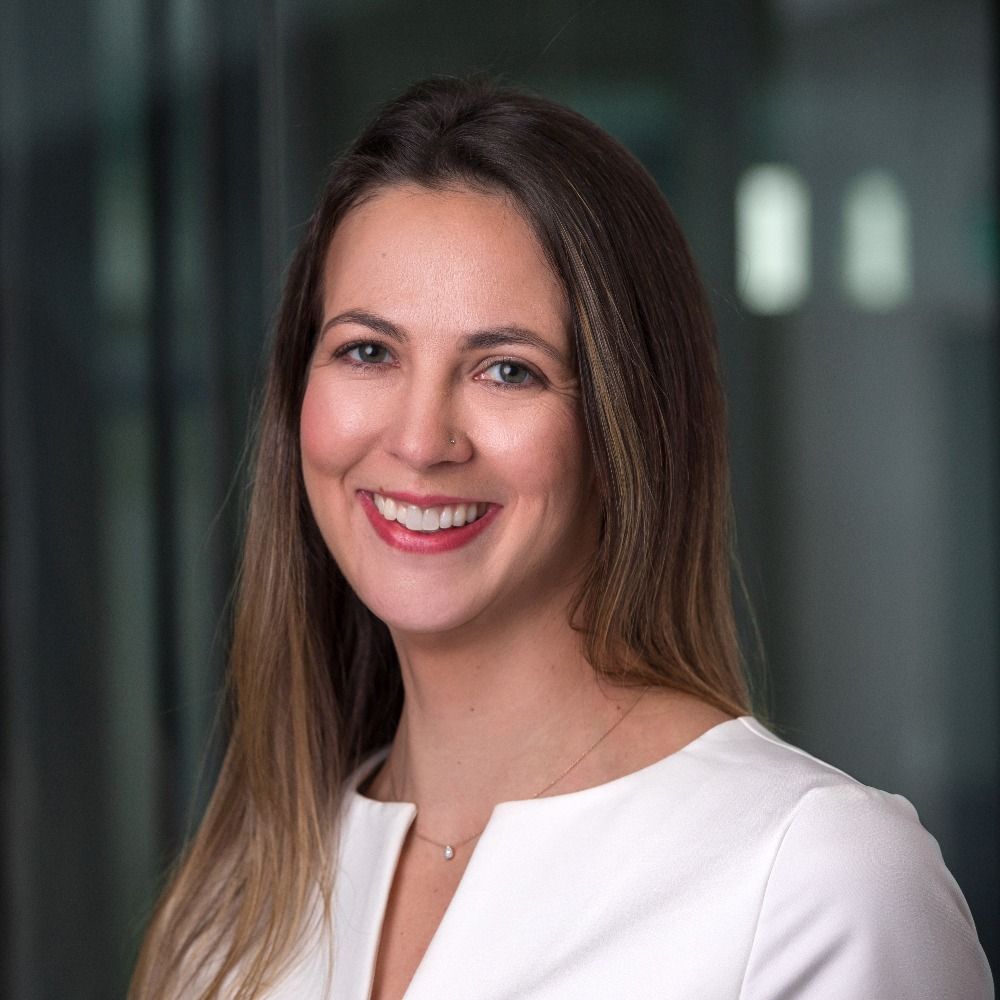
Ever wondered how MRI creates images from inside the body?
We made a child-friendly explainer video (german) 🎥👇
youtu.be/k-KCyoUP9vA #scicomm
We made a child-friendly explainer video (german) 🎥👇
youtu.be/k-KCyoUP9vA #scicomm

Wie wir mit Magnetresonanztomographie (MRT) das Gehirn sichtbar machen
YouTube video by NMR Kids Lab
youtu.be
January 6, 2026 at 9:07 AM
Ever wondered how MRI creates images from inside the body?
We made a child-friendly explainer video (german) 🎥👇
youtu.be/k-KCyoUP9vA #scicomm
We made a child-friendly explainer video (german) 🎥👇
youtu.be/k-KCyoUP9vA #scicomm
Reposted by Dennis Larsson
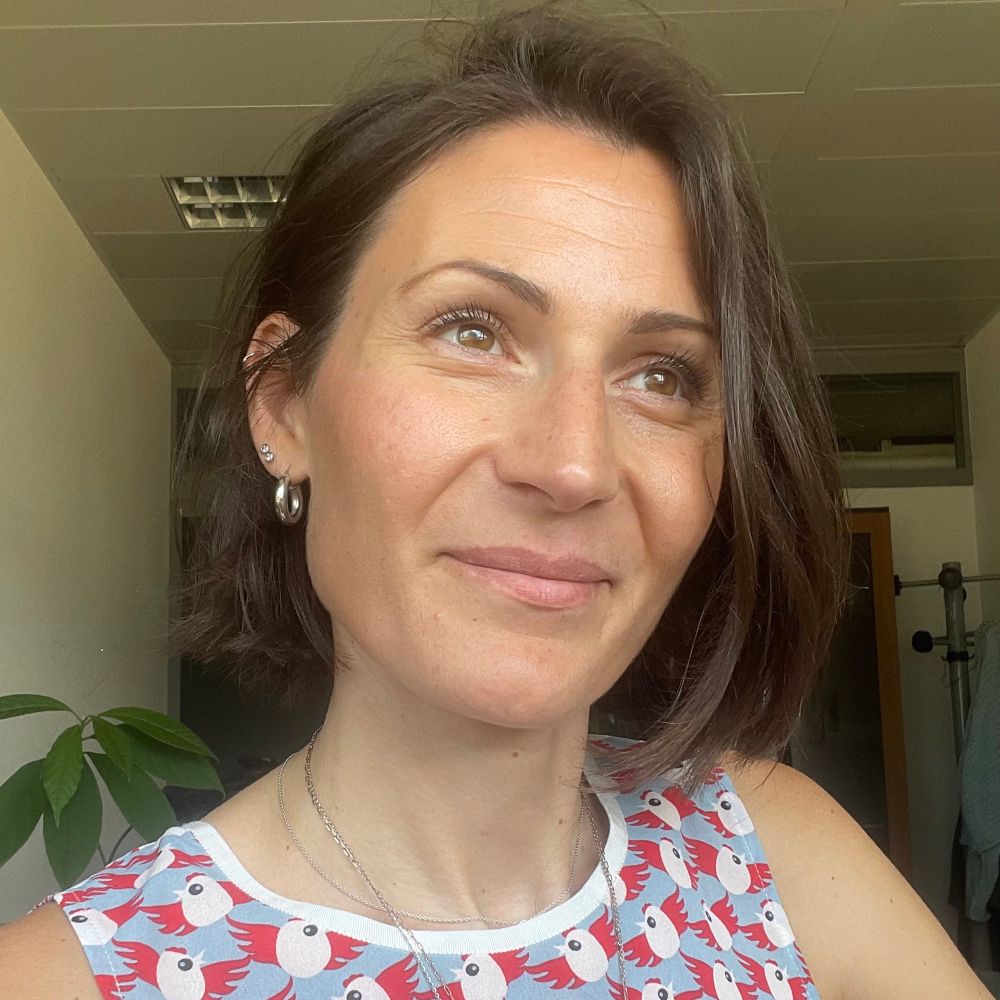
In 1000 days, a baby learns to speak, walk, reason, acquires social norms, and begins to shape their own personality. At the @babylyon.bsky.social, we are dedicated to understanding how this extraordinary journey unfolds.
Here’s our story www.youtube.com/watch?v=8sMn...
@cnrs.fr @erc.europa.eu
Here’s our story www.youtube.com/watch?v=8sMn...
@cnrs.fr @erc.europa.eu

Conversations autour des bébés au Babylab de Lyon
YouTube video by CNRS Délégation Rhône Auvergne
www.youtube.com
December 17, 2025 at 9:30 AM
In 1000 days, a baby learns to speak, walk, reason, acquires social norms, and begins to shape their own personality. At the @babylyon.bsky.social, we are dedicated to understanding how this extraordinary journey unfolds.
Here’s our story www.youtube.com/watch?v=8sMn...
@cnrs.fr @erc.europa.eu
Here’s our story www.youtube.com/watch?v=8sMn...
@cnrs.fr @erc.europa.eu
Reposted by Dennis Larsson

Happy to share our review "Investigating hierarchical critical periods in human neurodevelopment” in @npp-journal.bsky.social! We examine neurobiological, environmental & behavioral evidence for human critical periods in sensory and association cortex +discuss new research directions rdcu.be/eMkVU 🧵

November 11, 2025 at 8:01 PM
Happy to share our review "Investigating hierarchical critical periods in human neurodevelopment” in @npp-journal.bsky.social! We examine neurobiological, environmental & behavioral evidence for human critical periods in sensory and association cortex +discuss new research directions rdcu.be/eMkVU 🧵
Reposted by Dennis Larsson

Researchers from BICAN have expanded their cell-type atlases to include developing human, mouse, and non-human primate brains using multimodal genomics, which was published in Nature. 🧪

BICCN: A cell census of the developing human brain
Expanding cell-type atlases to include developing human, mouse and non-human primate brains using multimodal genomics.
go.nature.com
November 8, 2025 at 2:52 PM
Researchers from BICAN have expanded their cell-type atlases to include developing human, mouse, and non-human primate brains using multimodal genomics, which was published in Nature. 🧪
Reposted by Dennis Larsson
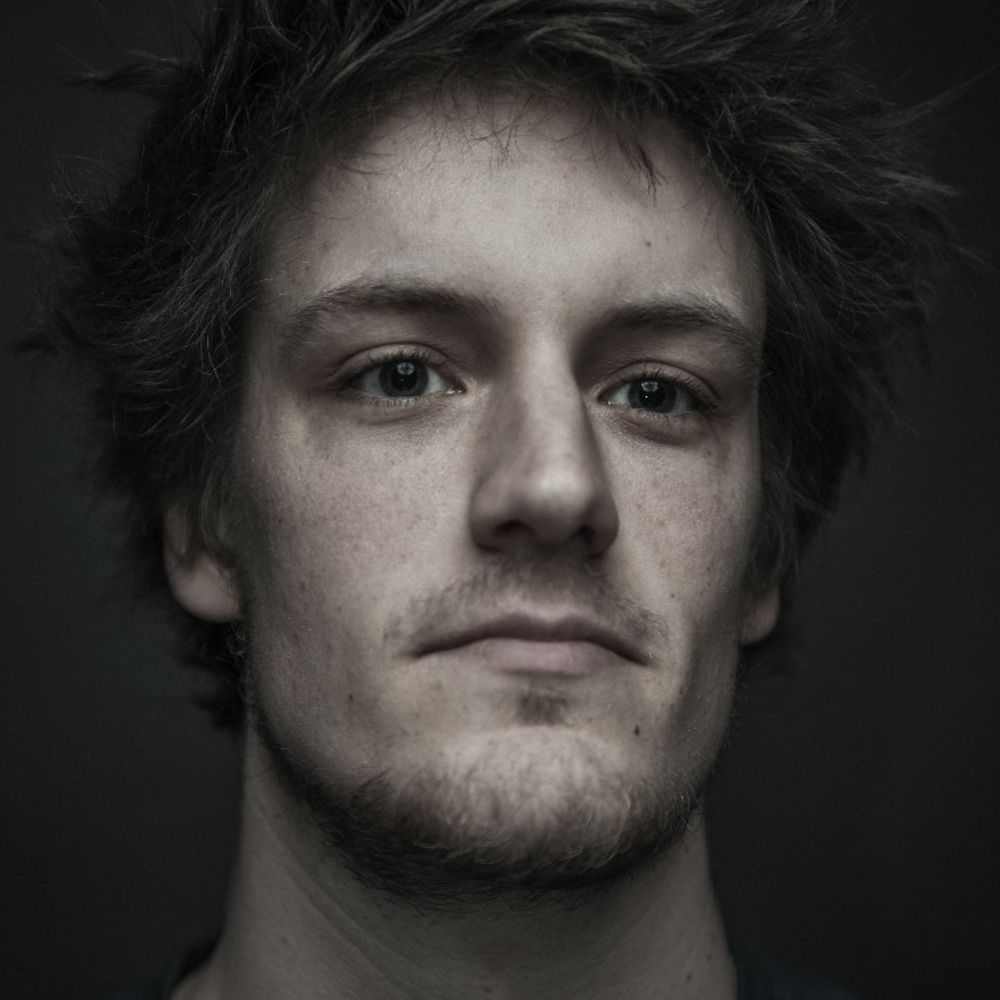
One of the most exciting challenges in neuroscience today - if you're looking for a PhD or Postdoc position tackling cutting-edge questions, reach out to @sarangnemo.bsky.social!
📈🧠 We're looking for brains! 🧠📈
Postdoc + PhD positions are available to help pioneer fetal MEG with optically pumped magnetometers, measuring prenatal responses to sound and light to understand how we start making sense of the world even before we're born. 🐣
Please get in touch to hear more!
Postdoc + PhD positions are available to help pioneer fetal MEG with optically pumped magnetometers, measuring prenatal responses to sound and light to understand how we start making sense of the world even before we're born. 🐣
Please get in touch to hear more!

October 8, 2025 at 2:33 PM
One of the most exciting challenges in neuroscience today - if you're looking for a PhD or Postdoc position tackling cutting-edge questions, reach out to @sarangnemo.bsky.social!
Reposted by Dennis Larsson
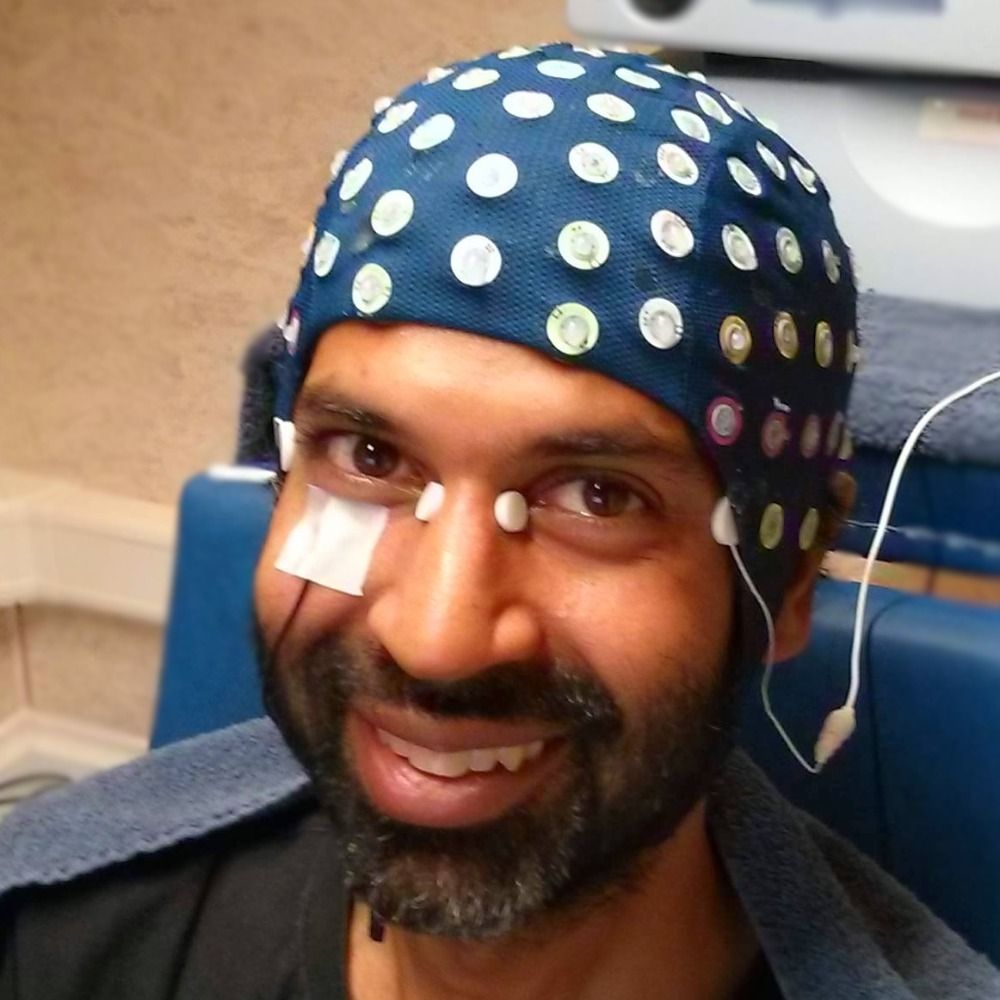
📈🧠 We're looking for brains! 🧠📈
Postdoc + PhD positions are available to help pioneer fetal MEG with optically pumped magnetometers, measuring prenatal responses to sound and light to understand how we start making sense of the world even before we're born. 🐣
Please get in touch to hear more!
Postdoc + PhD positions are available to help pioneer fetal MEG with optically pumped magnetometers, measuring prenatal responses to sound and light to understand how we start making sense of the world even before we're born. 🐣
Please get in touch to hear more!
October 8, 2025 at 2:27 PM
📈🧠 We're looking for brains! 🧠📈
Postdoc + PhD positions are available to help pioneer fetal MEG with optically pumped magnetometers, measuring prenatal responses to sound and light to understand how we start making sense of the world even before we're born. 🐣
Please get in touch to hear more!
Postdoc + PhD positions are available to help pioneer fetal MEG with optically pumped magnetometers, measuring prenatal responses to sound and light to understand how we start making sense of the world even before we're born. 🐣
Please get in touch to hear more!
Reposted by Dennis Larsson
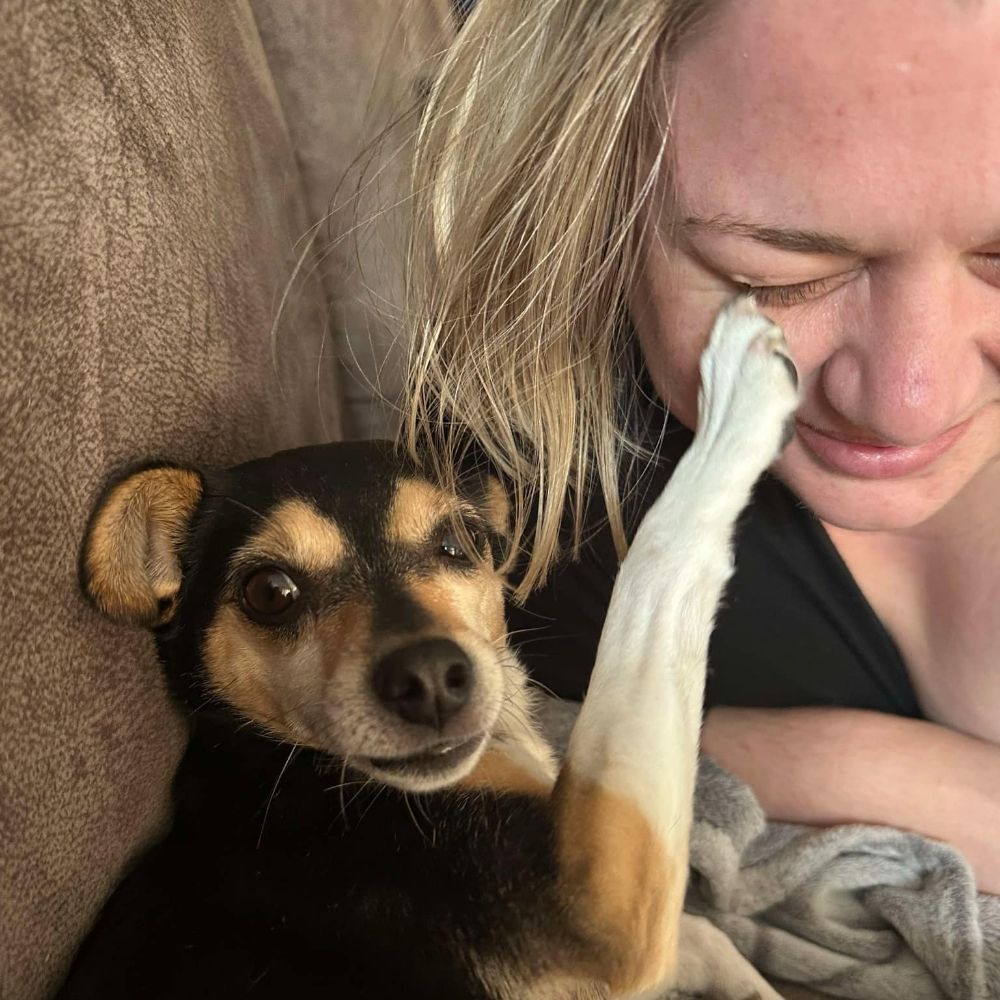
For a summary, check this out: www.bsms.ac.uk/about/news/2...
More to come out of this data set soon!
More to come out of this data set soon!
September 26, 2025 at 4:00 PM
For a summary, check this out: www.bsms.ac.uk/about/news/2...
More to come out of this data set soon!
More to come out of this data set soon!
Reposted by Dennis Larsson
Save the date 📆. On Oct 22/23, @nationalacademies.org will hold a stellar virtual workshop on brain/body interations (open to all).
www.nationalacademies.org/en/our-work/...
www.nationalacademies.org/en/our-work/...

September 26, 2025 at 6:55 PM
Save the date 📆. On Oct 22/23, @nationalacademies.org will hold a stellar virtual workshop on brain/body interations (open to all).
www.nationalacademies.org/en/our-work/...
www.nationalacademies.org/en/our-work/...
Reposted by Dennis Larsson
Interested in the link between cardiovascular and mental health or, in other “words” the ❤️ and 🧠 through brain-body states? A new paper by our speaker and fellow Arno Villringer with @michaelgaebler.com and Vadim Nikulin sheds more light on these interactions: www.sciencedirect.com/science/arti...

Brain–body states as a link between cardiovascular and mental health
Numerous studies in humans have demonstrated a strong link between heart and brain function at different timescales. We conceptualize this functional …
www.sciencedirect.com
September 25, 2025 at 3:09 PM
Interested in the link between cardiovascular and mental health or, in other “words” the ❤️ and 🧠 through brain-body states? A new paper by our speaker and fellow Arno Villringer with @michaelgaebler.com and Vadim Nikulin sheds more light on these interactions: www.sciencedirect.com/science/arti...
Reposted by Dennis Larsson

Does fetal movement mean more than a sign of the health and well-being of the developing child? Our recent findings suggest fetal movement may also play a role in shaping maternal neurodevelopment. onlinelibrary.wiley.com/doi/abs/10.1...
onlinelibrary.wiley.com
September 18, 2025 at 10:56 AM
Does fetal movement mean more than a sign of the health and well-being of the developing child? Our recent findings suggest fetal movement may also play a role in shaping maternal neurodevelopment. onlinelibrary.wiley.com/doi/abs/10.1...
Reposted by Dennis Larsson
Check out our new article for young readers (ages 8-15) on heart-brain interactions and interoception! 🧠🫀
I had so much fun co-writing this with @agatapatyczek.bsky.social @el-rei.bsky.social with the support of @michaelgaebler.com ✍️
👉 Share it widely with curious young minds
Yay for #scicomm ✨
I had so much fun co-writing this with @agatapatyczek.bsky.social @el-rei.bsky.social with the support of @michaelgaebler.com ✍️
👉 Share it widely with curious young minds
Yay for #scicomm ✨
🧠🫀 New from our lab on Frontiers for Young Minds:
Ever wondered how the heart and brain communicate? Think the heart as the drummer 🥁 & the brain as the singer 🎤 keeping the body's band in tune!
Read here (for ages 8–15): kids.frontiersin.org/articles/10.3389/frym.2025.1536787/full
[1/2]
Ever wondered how the heart and brain communicate? Think the heart as the drummer 🥁 & the brain as the singer 🎤 keeping the body's band in tune!
Read here (for ages 8–15): kids.frontiersin.org/articles/10.3389/frym.2025.1536787/full
[1/2]

The Body’s Band: How Heart and Brain Communicate
Illustration of a person with vitiligo practicing yoga, sitting cross-legged and stretching an arm over their head. In a thought bubble, a smiling brain sings into a microphone and a heart plays a dru...
www.frontiersin.org
September 12, 2025 at 8:26 AM
Check out our new article for young readers (ages 8-15) on heart-brain interactions and interoception! 🧠🫀
I had so much fun co-writing this with @agatapatyczek.bsky.social @el-rei.bsky.social with the support of @michaelgaebler.com ✍️
👉 Share it widely with curious young minds
Yay for #scicomm ✨
I had so much fun co-writing this with @agatapatyczek.bsky.social @el-rei.bsky.social with the support of @michaelgaebler.com ✍️
👉 Share it widely with curious young minds
Yay for #scicomm ✨
Reposted by Dennis Larsson
🧠🫀 New from our lab on Frontiers for Young Minds:
Ever wondered how the heart and brain communicate? Think the heart as the drummer 🥁 & the brain as the singer 🎤 keeping the body's band in tune!
Read here (for ages 8–15): kids.frontiersin.org/articles/10.3389/frym.2025.1536787/full
[1/2]
Ever wondered how the heart and brain communicate? Think the heart as the drummer 🥁 & the brain as the singer 🎤 keeping the body's band in tune!
Read here (for ages 8–15): kids.frontiersin.org/articles/10.3389/frym.2025.1536787/full
[1/2]
The Body’s Band: How Heart and Brain Communicate
Illustration of a person with vitiligo practicing yoga, sitting cross-legged and stretching an arm over their head. In a thought bubble, a smiling brain sings into a microphone and a heart plays a dru...
www.frontiersin.org
September 12, 2025 at 8:21 AM
🧠🫀 New from our lab on Frontiers for Young Minds:
Ever wondered how the heart and brain communicate? Think the heart as the drummer 🥁 & the brain as the singer 🎤 keeping the body's band in tune!
Read here (for ages 8–15): kids.frontiersin.org/articles/10.3389/frym.2025.1536787/full
[1/2]
Ever wondered how the heart and brain communicate? Think the heart as the drummer 🥁 & the brain as the singer 🎤 keeping the body's band in tune!
Read here (for ages 8–15): kids.frontiersin.org/articles/10.3389/frym.2025.1536787/full
[1/2]
Exciting news: I’ve started a Humboldt Fellowship
@humboldt-foundation.de!
First stop: Hamburg for German training, then in January to Kiel to join Prof. Michael Skeide's group at the Faculty of Medicine of Kiel University @uni-kiel.de.
Happy to connect in Hamburg and Kiel!
@humboldt-foundation.de!
First stop: Hamburg for German training, then in January to Kiel to join Prof. Michael Skeide's group at the Faculty of Medicine of Kiel University @uni-kiel.de.
Happy to connect in Hamburg and Kiel!
September 12, 2025 at 9:46 AM
Exciting news: I’ve started a Humboldt Fellowship
@humboldt-foundation.de!
First stop: Hamburg for German training, then in January to Kiel to join Prof. Michael Skeide's group at the Faculty of Medicine of Kiel University @uni-kiel.de.
Happy to connect in Hamburg and Kiel!
@humboldt-foundation.de!
First stop: Hamburg for German training, then in January to Kiel to join Prof. Michael Skeide's group at the Faculty of Medicine of Kiel University @uni-kiel.de.
Happy to connect in Hamburg and Kiel!
Reposted by Dennis Larsson

🚨 New paper out!
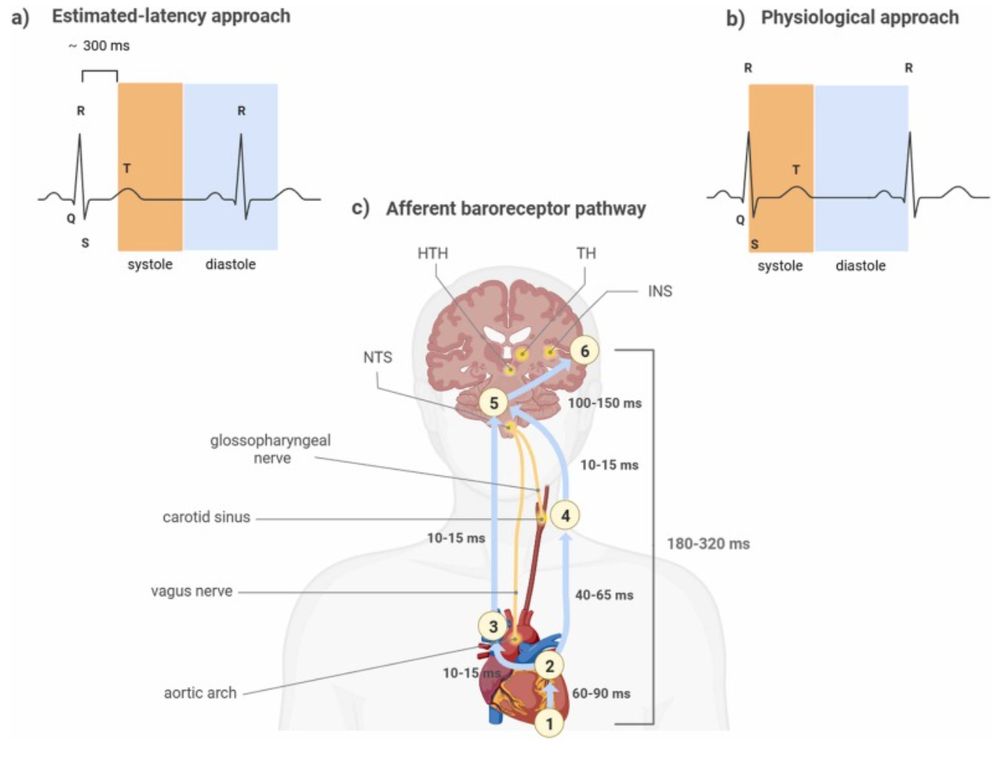
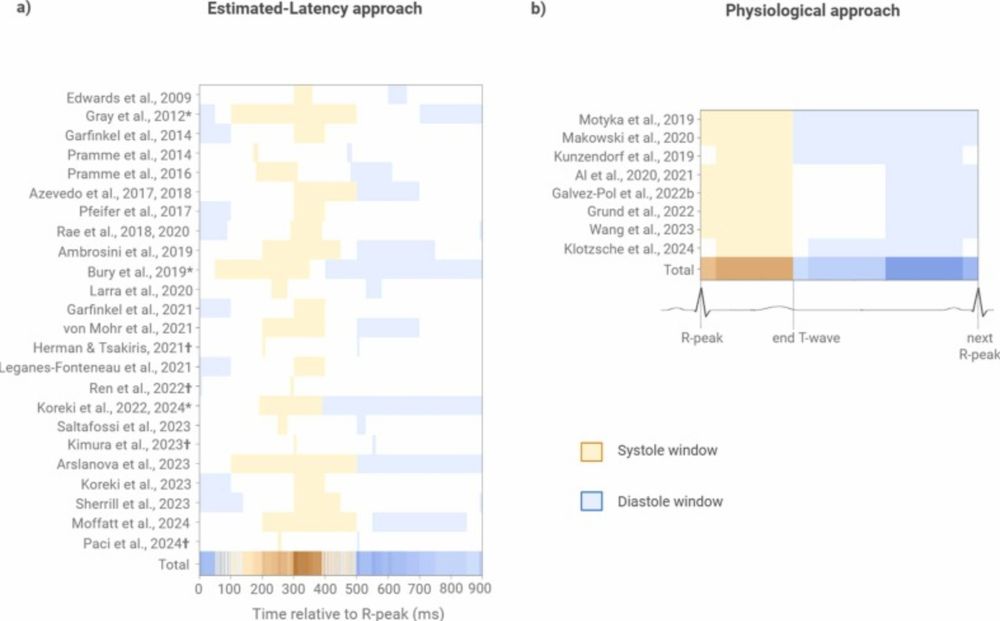
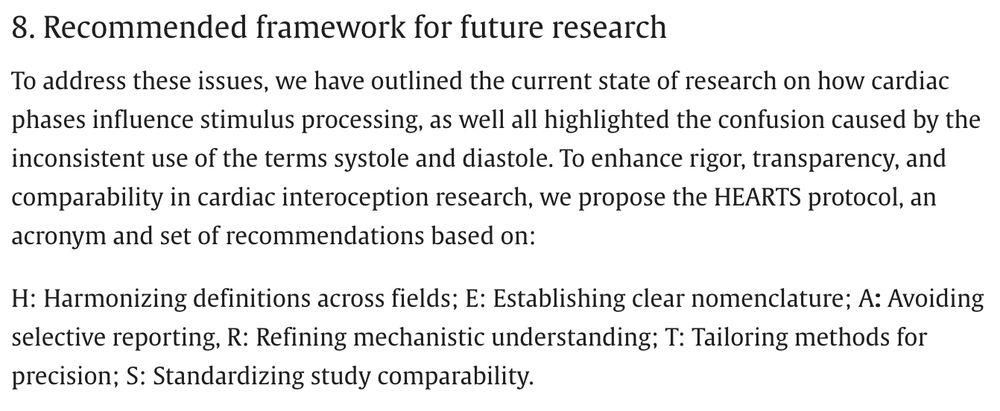
Phase confusion: How inconsistent cardiac labeling obscures interoception research 🫀🧠
We unpack methodological incosistencies and propose a way forward with the HEARTS framework.
In Biol. Psychol. - Open Access:
🔗 shorturl.at/YJhyn
1st paper of great @angeliacaparco.bsky.social!
Phase confusion: How inconsistent cardiac labeling obscures interoception research 🫀🧠
We unpack methodological incosistencies and propose a way forward with the HEARTS framework.
In Biol. Psychol. - Open Access:
🔗 shorturl.at/YJhyn
1st paper of great @angeliacaparco.bsky.social!
July 4, 2025 at 9:11 AM
🚨 New paper out!
Phase confusion: How inconsistent cardiac labeling obscures interoception research 🫀🧠
We unpack methodological incosistencies and propose a way forward with the HEARTS framework.
In Biol. Psychol. - Open Access:
🔗 shorturl.at/YJhyn
1st paper of great @angeliacaparco.bsky.social!
Phase confusion: How inconsistent cardiac labeling obscures interoception research 🫀🧠
We unpack methodological incosistencies and propose a way forward with the HEARTS framework.
In Biol. Psychol. - Open Access:
🔗 shorturl.at/YJhyn
1st paper of great @angeliacaparco.bsky.social!
Reposted by Dennis Larsson


July 3, 2025 at 1:00 PM
Reposted by Dennis Larsson
How does the brain integrate artificial body extensions? Using a custom-built finger-extending exoskeleton, we show that wearable augmentations are quickly integrated into body representation, with proprioceptive space adapting to the device’s structure and function.
www.biorxiv.org/content/10.1...
www.biorxiv.org/content/10.1...

Dynamics of sensorimotor plasticity during exoskeletal finger augmentation
How does the brain integrate artificial body extensions into its somatosensory representation? While prior work has shown that tool use alters body representation, little is known about how artificial...
www.biorxiv.org
July 4, 2025 at 5:44 AM
How does the brain integrate artificial body extensions? Using a custom-built finger-extending exoskeleton, we show that wearable augmentations are quickly integrated into body representation, with proprioceptive space adapting to the device’s structure and function.
www.biorxiv.org/content/10.1...
www.biorxiv.org/content/10.1...
Attending the #BRNet2025 Conference in Utrecht, Netherlands. Will be presenting my work on interoception in autism tomorrow. Come and say hi!
July 2, 2025 at 3:32 PM
Attending the #BRNet2025 Conference in Utrecht, Netherlands. Will be presenting my work on interoception in autism tomorrow. Come and say hi!
Reposted by Dennis Larsson
🧠 Paper out!
We investigated how hippocampal and cortical ripples support memory during movie watching. We found that:
🎬 Hippocampal ripples mark event boundaries
🧩 Cortical ripples predict later recall
Ripples may help transform real-life experiences into lasting memories!
rdcu.be/eui9l
We investigated how hippocampal and cortical ripples support memory during movie watching. We found that:
🎬 Hippocampal ripples mark event boundaries
🧩 Cortical ripples predict later recall
Ripples may help transform real-life experiences into lasting memories!
rdcu.be/eui9l
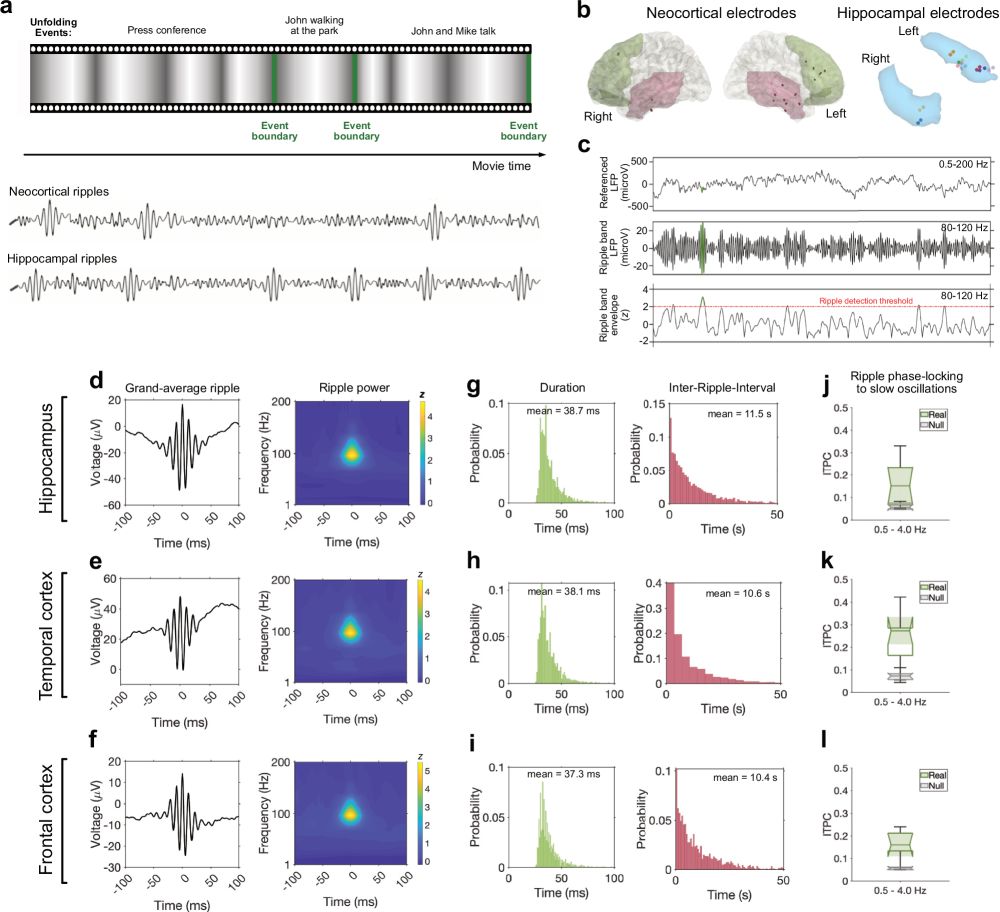
Movie-watching evokes ripple-like activity within events and at event boundaries
Nature Communications - The neural processes involved in memory formation for realistic experiences remain poorly understood. Here, the authors found that ripple-like activity in the human...
rdcu.be
July 1, 2025 at 1:26 PM
🧠 Paper out!
We investigated how hippocampal and cortical ripples support memory during movie watching. We found that:
🎬 Hippocampal ripples mark event boundaries
🧩 Cortical ripples predict later recall
Ripples may help transform real-life experiences into lasting memories!
rdcu.be/eui9l
We investigated how hippocampal and cortical ripples support memory during movie watching. We found that:
🎬 Hippocampal ripples mark event boundaries
🧩 Cortical ripples predict later recall
Ripples may help transform real-life experiences into lasting memories!
rdcu.be/eui9l
Reposted by Dennis Larsson

📣 Open PhD & Postdoc Positions 📣
More info here: mariechancel.com/open-positio... or by contacting me directly !
More info here: mariechancel.com/open-positio... or by contacting me directly !
Open positions – Dr. Marie Chancel
mariechancel.com
April 14, 2025 at 1:05 PM
📣 Open PhD & Postdoc Positions 📣
More info here: mariechancel.com/open-positio... or by contacting me directly !
More info here: mariechancel.com/open-positio... or by contacting me directly !
Reposted by Dennis Larsson
Really pleased that this paper from my PhD has been published in Nature Scientific Reports!
www.nature.com/articles/s41...
We used mixed reality to explore how manipulating multisensory integration leads to dis-ownership from the body and how those experiences relate to trait dissociation
www.nature.com/articles/s41...
We used mixed reality to explore how manipulating multisensory integration leads to dis-ownership from the body and how those experiences relate to trait dissociation

Trait dissociation is associated with dissociative experiences arising from disrupted multisensory integration - Scientific Reports
Scientific Reports - Trait dissociation is associated with dissociative experiences arising from disrupted multisensory integration
www.nature.com
April 15, 2025 at 8:32 AM
Really pleased that this paper from my PhD has been published in Nature Scientific Reports!
www.nature.com/articles/s41...
We used mixed reality to explore how manipulating multisensory integration leads to dis-ownership from the body and how those experiences relate to trait dissociation
www.nature.com/articles/s41...
We used mixed reality to explore how manipulating multisensory integration leads to dis-ownership from the body and how those experiences relate to trait dissociation
Attending the second day of the #MindBrainBody symposium in Berlin. Will be presenting a poster on interoception and heartbeat perception in autistic individuals at 15:25. Come by and say hi!
March 11, 2025 at 10:00 AM
Attending the second day of the #MindBrainBody symposium in Berlin. Will be presenting a poster on interoception and heartbeat perception in autistic individuals at 15:25. Come by and say hi!