



David Pires
@david1822.bsky.social
🪱 Nematologist at INIAV, IP | 🎓 PhD candidate at the UEvora | 🛡️🌱 #Biocontrol | 🍄 Fungi-nematode interactions | 💬 Opinions are my own | 🏳️🌈 He/him |
➡️ https://sites.google.com/view/davidpires/home
➡️ https://sites.google.com/view/davidpires/home
Pinned

🔬 Excited to continue driving high-impact science and raising the bar for excellence at the institute in 2026.
🌍 Proud of the collaborative bridges we've built with this work, and grateful to my co-authors for pushing the boundaries of international science with me. Onwards! 🚀
🌍 Proud of the collaborative bridges we've built with this work, and grateful to my co-authors for pushing the boundaries of international science with me. Onwards! 🚀

Reposted by David Pires

🌱 We're starting 2026 by taking lab science into the field, supporting crop, forest, and ecosystem protection across Europe.
📄 Catch up on the latest PurPest activities in our January newsletter: www.purpest.eu/news/newslet...
📄 Catch up on the latest PurPest activities in our January newsletter: www.purpest.eu/news/newslet...

January 16, 2026 at 10:36 AM
🌱 We're starting 2026 by taking lab science into the field, supporting crop, forest, and ecosystem protection across Europe.
📄 Catch up on the latest PurPest activities in our January newsletter: www.purpest.eu/news/newslet...
📄 Catch up on the latest PurPest activities in our January newsletter: www.purpest.eu/news/newslet...
Reposted by David Pires

Genetic variation in a plant-parasitic nematode is associated with gene expression changes conserved across evolutionarily distant host plants https://www.biorxiv.org/content/10.64898/2026.01.07.698247v1
January 12, 2026 at 1:32 PM
Genetic variation in a plant-parasitic nematode is associated with gene expression changes conserved across evolutionarily distant host plants https://www.biorxiv.org/content/10.64898/2026.01.07.698247v1
Reposted by David Pires
#MicroSky: Fungal EVs to fight nematodes? A nematode-trapping fungus is now an RNA delivery platform to shuttle RNAi molecules into root-knot nematodes, slashing their mobility and infectivity. An eco-friendly leap toward sustainable pest control. Read Huang et al. doi.org/10.1111/1751...

January 13, 2026 at 11:01 AM
#MicroSky: Fungal EVs to fight nematodes? A nematode-trapping fungus is now an RNA delivery platform to shuttle RNAi molecules into root-knot nematodes, slashing their mobility and infectivity. An eco-friendly leap toward sustainable pest control. Read Huang et al. doi.org/10.1111/1751...
Reposted by David Pires

Soil in the Atacama Desert supports unexpectedly diverse and resilient nematode populations, with biodiversity patterns closely linked to elevation, precipitation, and temperature gradients. doi.org/hbjtfx

Organisms in the Atacama Desert soil are remarkably diverse, study shows
A new study shows that resilient and remarkably diverse populations of organisms can persist in the soil despite harsh and extremely dry conditions.
phys.org
January 13, 2026 at 5:26 PM
Soil in the Atacama Desert supports unexpectedly diverse and resilient nematode populations, with biodiversity patterns closely linked to elevation, precipitation, and temperature gradients. doi.org/hbjtfx
Reposted by David Pires
🚨 The pinewood nematode, a critical forest pest species, was sighted for the first time in France last November.
💡 FORSAID researchers joined the response team, working to improve pest monitoring and detection methods using innovative digital tools.
👀 Find out more: forsaid.eu/news/france-...
💡 FORSAID researchers joined the response team, working to improve pest monitoring and detection methods using innovative digital tools.
👀 Find out more: forsaid.eu/news/france-...

January 15, 2026 at 9:39 AM
🚨 The pinewood nematode, a critical forest pest species, was sighted for the first time in France last November.
💡 FORSAID researchers joined the response team, working to improve pest monitoring and detection methods using innovative digital tools.
👀 Find out more: forsaid.eu/news/france-...
💡 FORSAID researchers joined the response team, working to improve pest monitoring and detection methods using innovative digital tools.
👀 Find out more: forsaid.eu/news/france-...
Reposted by David Pires
Researchers have discovered a periodic scaffold in the epidermis adjacent to the nervous system of C. elegans. The find may indicate similar structures in other organisms.
Learn more in this week’s issue of #ScienceAdvances: https://scim.ag/4qaC6BF
Learn more in this week’s issue of #ScienceAdvances: https://scim.ag/4qaC6BF

January 9, 2026 at 10:07 PM
Researchers have discovered a periodic scaffold in the epidermis adjacent to the nervous system of C. elegans. The find may indicate similar structures in other organisms.
Learn more in this week’s issue of #ScienceAdvances: https://scim.ag/4qaC6BF
Learn more in this week’s issue of #ScienceAdvances: https://scim.ag/4qaC6BF
Reposted by David Pires
🌱 #PracticeAbstract1️⃣: New modelling shows tropical root-knot #nematodes could spread north in #Europe as winters warm🌡
High-risk regions for future invasion are identified, helping #farmers & agricultural #advisors plan ahead👩🏾🌾👨🏻🌾
📗Read it: bit.ly/3LxAYcr @exeter.ac.uk @scienceinnovation.ec.europa.eu
High-risk regions for future invasion are identified, helping #farmers & agricultural #advisors plan ahead👩🏾🌾👨🏻🌾
📗Read it: bit.ly/3LxAYcr @exeter.ac.uk @scienceinnovation.ec.europa.eu

January 13, 2026 at 11:32 AM
🌱 #PracticeAbstract1️⃣: New modelling shows tropical root-knot #nematodes could spread north in #Europe as winters warm🌡
High-risk regions for future invasion are identified, helping #farmers & agricultural #advisors plan ahead👩🏾🌾👨🏻🌾
📗Read it: bit.ly/3LxAYcr @exeter.ac.uk @scienceinnovation.ec.europa.eu
High-risk regions for future invasion are identified, helping #farmers & agricultural #advisors plan ahead👩🏾🌾👨🏻🌾
📗Read it: bit.ly/3LxAYcr @exeter.ac.uk @scienceinnovation.ec.europa.eu
🤖 As I approach the final months of my PhD, I decided to run a small experiment. I asked Gemini to audit my professional footprint (analyzing my Google Scholar and ORCID profiles) and predict my career trajectory for the next five years.
💭 The analysis was surprisingly detailed 👇
💭 The analysis was surprisingly detailed 👇
January 10, 2026 at 12:25 PM
🤖 As I approach the final months of my PhD, I decided to run a small experiment. I asked Gemini to audit my professional footprint (analyzing my Google Scholar and ORCID profiles) and predict my career trajectory for the next five years.
💭 The analysis was surprisingly detailed 👇
💭 The analysis was surprisingly detailed 👇
Reposted by David Pires
Call for #abstracts📢 36th ESN #Symposium in the #Netherlands🪱
📅 On June 1-5, the European Society of #Nematologists will organise the #ESN2026 event in Egmond aan Zee #Amsterdam 📍Deadline for submitting #abstracts is 15 January❗️
Register for the event👉🏼 esn2026.nl/registration... @w-u-r.bsky.social
📅 On June 1-5, the European Society of #Nematologists will organise the #ESN2026 event in Egmond aan Zee #Amsterdam 📍Deadline for submitting #abstracts is 15 January❗️
Register for the event👉🏼 esn2026.nl/registration... @w-u-r.bsky.social

January 9, 2026 at 1:00 PM
Call for #abstracts📢 36th ESN #Symposium in the #Netherlands🪱
📅 On June 1-5, the European Society of #Nematologists will organise the #ESN2026 event in Egmond aan Zee #Amsterdam 📍Deadline for submitting #abstracts is 15 January❗️
Register for the event👉🏼 esn2026.nl/registration... @w-u-r.bsky.social
📅 On June 1-5, the European Society of #Nematologists will organise the #ESN2026 event in Egmond aan Zee #Amsterdam 📍Deadline for submitting #abstracts is 15 January❗️
Register for the event👉🏼 esn2026.nl/registration... @w-u-r.bsky.social
Reposted by David Pires
“Comparative Transcriptomic Analysis of Soybean Recombinant Inbred Lines Differing at the Rmi1 Locus for Resistance to Meloidogyne incognita During Early Stages of Nematode Infection,” by Kelly Goode and Melissa G. Mitchum. Read the open access article: https://doi.org/10.1094/PHYTO-04-25-0143-SC

December 31, 2025 at 6:54 PM
“Comparative Transcriptomic Analysis of Soybean Recombinant Inbred Lines Differing at the Rmi1 Locus for Resistance to Meloidogyne incognita During Early Stages of Nematode Infection,” by Kelly Goode and Melissa G. Mitchum. Read the open access article: https://doi.org/10.1094/PHYTO-04-25-0143-SC
🌲 For 27 yrs, Europe's response to the PWN stayed the same: 🪓🔥. Millions spent on diagnostics & buffer zones, yet the #nematode spread from 🇵🇹 to 🇪🇸 and now 🇫🇷.
Diagnostics matter, but aren't a cure.
Time to fund solutions: biocontrol & long-term management.
Buffer zones failed. Science didn't. 🔬✅
Diagnostics matter, but aren't a cure.
Time to fund solutions: biocontrol & long-term management.
Buffer zones failed. Science didn't. 🔬✅

January 7, 2026 at 9:15 AM
🌲 For 27 yrs, Europe's response to the PWN stayed the same: 🪓🔥. Millions spent on diagnostics & buffer zones, yet the #nematode spread from 🇵🇹 to 🇪🇸 and now 🇫🇷.
Diagnostics matter, but aren't a cure.
Time to fund solutions: biocontrol & long-term management.
Buffer zones failed. Science didn't. 🔬✅
Diagnostics matter, but aren't a cure.
Time to fund solutions: biocontrol & long-term management.
Buffer zones failed. Science didn't. 🔬✅
Reposted by David Pires
Excited to announce we are organising a YNN themed session at the 36th Symposium of the European Society of Nematologists June 1–5, 2026. This session will explore unexpected or negative results to extract meaningful messages. Submit your abstract until the 30th January -> forms.gle/9wU8tGbwLxaS...

January 6, 2026 at 11:38 AM
Excited to announce we are organising a YNN themed session at the 36th Symposium of the European Society of Nematologists June 1–5, 2026. This session will explore unexpected or negative results to extract meaningful messages. Submit your abstract until the 30th January -> forms.gle/9wU8tGbwLxaS...
🔬 Excited to continue driving high-impact science and raising the bar for excellence at the institute in 2026.
🌍 Proud of the collaborative bridges we've built with this work, and grateful to my co-authors for pushing the boundaries of international science with me. Onwards! 🚀
🌍 Proud of the collaborative bridges we've built with this work, and grateful to my co-authors for pushing the boundaries of international science with me. Onwards! 🚀
December 30, 2025 at 9:49 AM
🔬 Excited to continue driving high-impact science and raising the bar for excellence at the institute in 2026.
🌍 Proud of the collaborative bridges we've built with this work, and grateful to my co-authors for pushing the boundaries of international science with me. Onwards! 🚀
🌍 Proud of the collaborative bridges we've built with this work, and grateful to my co-authors for pushing the boundaries of international science with me. Onwards! 🚀
🎄🔬 Taking a break from the bench to cultivate some holiday cheer!
Wishing you a restorative Holiday season and a New Year filled with fruitful discoveries in plant health. 🌱✨
Wishing you a restorative Holiday season and a New Year filled with fruitful discoveries in plant health. 🌱✨

December 24, 2025 at 9:35 AM
🎄🔬 Taking a break from the bench to cultivate some holiday cheer!
Wishing you a restorative Holiday season and a New Year filled with fruitful discoveries in plant health. 🌱✨
Wishing you a restorative Holiday season and a New Year filled with fruitful discoveries in plant health. 🌱✨
🫘 Thank you once again to Voz do Campo for the invite and opportunity.
📘 Originally published in Nitrogen (doi.org/10.3390/nitr...) over the summer, our insights have now been translated into Portuguese, and featured in the final edition of 2025!
Find out more 👇
vozdocampo.pt/arquivo/52395
📘 Originally published in Nitrogen (doi.org/10.3390/nitr...) over the summer, our insights have now been translated into Portuguese, and featured in the final edition of 2025!
Find out more 👇
vozdocampo.pt/arquivo/52395
vozdocampo.pt
December 23, 2025 at 2:24 PM
🫘 Thank you once again to Voz do Campo for the invite and opportunity.
📘 Originally published in Nitrogen (doi.org/10.3390/nitr...) over the summer, our insights have now been translated into Portuguese, and featured in the final edition of 2025!
Find out more 👇
vozdocampo.pt/arquivo/52395
📘 Originally published in Nitrogen (doi.org/10.3390/nitr...) over the summer, our insights have now been translated into Portuguese, and featured in the final edition of 2025!
Find out more 👇
vozdocampo.pt/arquivo/52395
Reposted by David Pires
🌍 #NEMEMERGE at #AdvancesInNematology 2025🧬
Our coordinator Hans Helder took the stage at the @aabiologists.bsky.social event in #London #UK to showcase the #NEMEMERGE project to the global nematology community🪱
It was a great opportunity to connect with researchers. Thank you❗️ℹ️ bit.ly/498xMwN
Our coordinator Hans Helder took the stage at the @aabiologists.bsky.social event in #London #UK to showcase the #NEMEMERGE project to the global nematology community🪱
It was a great opportunity to connect with researchers. Thank you❗️ℹ️ bit.ly/498xMwN


December 15, 2025 at 3:40 PM
🌍 #NEMEMERGE at #AdvancesInNematology 2025🧬
Our coordinator Hans Helder took the stage at the @aabiologists.bsky.social event in #London #UK to showcase the #NEMEMERGE project to the global nematology community🪱
It was a great opportunity to connect with researchers. Thank you❗️ℹ️ bit.ly/498xMwN
Our coordinator Hans Helder took the stage at the @aabiologists.bsky.social event in #London #UK to showcase the #NEMEMERGE project to the global nematology community🪱
It was a great opportunity to connect with researchers. Thank you❗️ℹ️ bit.ly/498xMwN
Reposted by David Pires
A newly identified nematode species, Diplolaimelloides woaabi, appears to be unique to the Great Salt Lake and may play an important ecological role in this saline environment. doi.org/hbfhcs

Roundworms discovered in Great Salt Lake are new to science
Nematodes discovered in the Great Salt Lake belong to at least one species that is new to science, and possibly two. A University of Utah research team has published a new paper characterizing the tiny roundworm.
phys.org
December 12, 2025 at 2:20 PM
A newly identified nematode species, Diplolaimelloides woaabi, appears to be unique to the Great Salt Lake and may play an important ecological role in this saline environment. doi.org/hbfhcs
Reposted by David Pires
Root-knot nematode egg masses host distinct bacterial communities, according to research by Daniele de Brum et al. Significant differences were found in the communities colonizing symptomatic and asymptomatic plants in field conditions: https://doi.org/10.1094/PBIOMES-10-24-0099-R

December 12, 2025 at 9:09 PM
Root-knot nematode egg masses host distinct bacterial communities, according to research by Daniele de Brum et al. Significant differences were found in the communities colonizing symptomatic and asymptomatic plants in field conditions: https://doi.org/10.1094/PBIOMES-10-24-0099-R
Reposted by David Pires

PXD071707 🚨
Proteomic profiling of rice (Oryza sativa Nipponbare) roots during compatible interaction with the root-knot nematode Meloidogyne graminicola
🚨 New dataset alert! 🚨
Proteomic profiling of rice (Oryza sativa Nipponbare) roots during compatible interaction with the root-knot nematode Meloidogyne graminicola
🚨 New dataset alert! 🚨
December 13, 2025 at 7:00 AM
PXD071707 🚨
Proteomic profiling of rice (Oryza sativa Nipponbare) roots during compatible interaction with the root-knot nematode Meloidogyne graminicola
🚨 New dataset alert! 🚨
Proteomic profiling of rice (Oryza sativa Nipponbare) roots during compatible interaction with the root-knot nematode Meloidogyne graminicola
🚨 New dataset alert! 🚨
Reposted by David Pires
Thank you @aabiologists.bsky.social for the invitation to present. I had a fantastic time at the conference!

🎤 AAB Live
Watch PhD student Anika Damm's fantastic talk at our annual 'Advances in Nematology' held at the Linnean Society of London last week 👉 youtu.be/-Ha58jVjSmQ
@anikadamm.bsky.social @camplantsci.bsky.social @linneansociety.bsky.social #plantscience
Watch PhD student Anika Damm's fantastic talk at our annual 'Advances in Nematology' held at the Linnean Society of London last week 👉 youtu.be/-Ha58jVjSmQ
@anikadamm.bsky.social @camplantsci.bsky.social @linneansociety.bsky.social #plantscience

Anika Damm - From host signals to parasitism
YouTube video by Association of Applied Biologists
youtu.be
December 10, 2025 at 12:27 PM
Thank you @aabiologists.bsky.social for the invitation to present. I had a fantastic time at the conference!
Reposted by David Pires
A new study: Multi-component trail pheromones of the #entomopathogenic #nematodes #Steinernema diaprepesi and #Heterorhabditis bacteriophora
doi.org/10.1016/j.ji...
#EPNs #biocontrol #pheromones #ascarosides #trailpheromone #behavior #insect #pests @pheronym.com @entsocamerica.bsky.social
doi.org/10.1016/j.ji...
#EPNs #biocontrol #pheromones #ascarosides #trailpheromone #behavior #insect #pests @pheronym.com @entsocamerica.bsky.social

Multi-component trail pheromones of the entomopathogenic nematodes Steinernema diaprepesi and Heterorhabditis bacteriophora
Entomopathogenic nematodes aggregate in the soil environment to facilitate the location and infection of insect hosts. Significant evidence exists sug…
doi.org
December 11, 2025 at 5:48 PM
A new study: Multi-component trail pheromones of the #entomopathogenic #nematodes #Steinernema diaprepesi and #Heterorhabditis bacteriophora
doi.org/10.1016/j.ji...
#EPNs #biocontrol #pheromones #ascarosides #trailpheromone #behavior #insect #pests @pheronym.com @entsocamerica.bsky.social
doi.org/10.1016/j.ji...
#EPNs #biocontrol #pheromones #ascarosides #trailpheromone #behavior #insect #pests @pheronym.com @entsocamerica.bsky.social
🚀 2025 was defined by internationalization: contributions used in classrooms and documents, and worldwide collaborations.
🧠 But the real story is about the mindset shift behind the work.
Read the Year in Review: 👉 dpires.substack.com/p/wrapping-u...
#PhDLife #AcademicChatter
🧠 But the real story is about the mindset shift behind the work.
Read the Year in Review: 👉 dpires.substack.com/p/wrapping-u...
#PhDLife #AcademicChatter

Wrapping Up 2025: A Year of Research, Collaborations, and Outreach
A year that fast-tracked my independence and sharpened the researcher I'm becoming
open.substack.com
December 12, 2025 at 9:33 AM
🚀 2025 was defined by internationalization: contributions used in classrooms and documents, and worldwide collaborations.
🧠 But the real story is about the mindset shift behind the work.
Read the Year in Review: 👉 dpires.substack.com/p/wrapping-u...
#PhDLife #AcademicChatter
🧠 But the real story is about the mindset shift behind the work.
Read the Year in Review: 👉 dpires.substack.com/p/wrapping-u...
#PhDLife #AcademicChatter
Reposted by David Pires
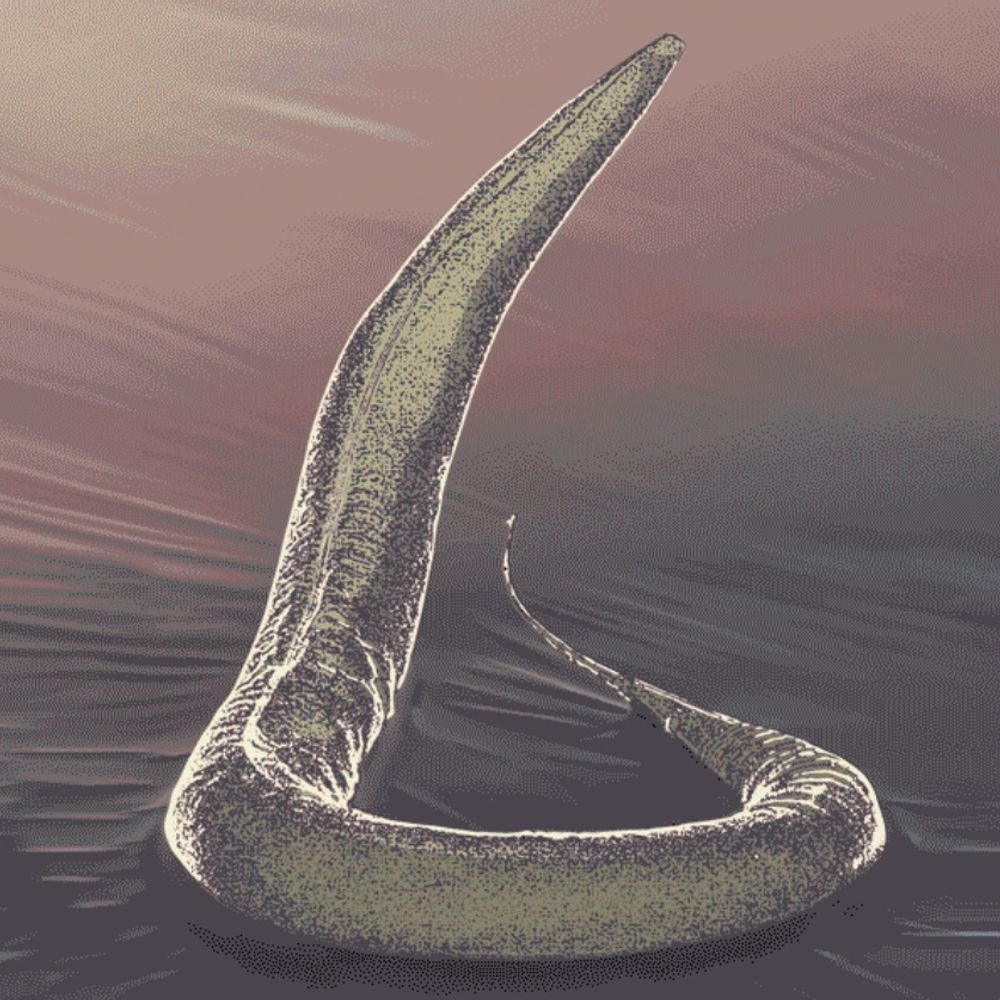
A new paper, co-authored by WormAtlas directors Dave Hall and Nate Schroeder, describes how C. elegans community research resources, including WormAtlas, provide the infrastructure that supports nematode research around the world.
www.pnas.org/doi/10.1073/...
www.pnas.org/doi/10.1073/...
PNAS
Proceedings of the National Academy of Sciences (PNAS), a peer reviewed journal of the National Academy of Sciences (NAS) - an authoritative source of high-impact, original research that broadly spans...
www.pnas.org
December 2, 2025 at 7:00 PM
A new paper, co-authored by WormAtlas directors Dave Hall and Nate Schroeder, describes how C. elegans community research resources, including WormAtlas, provide the infrastructure that supports nematode research around the world.
www.pnas.org/doi/10.1073/...
www.pnas.org/doi/10.1073/...
🌍 Honored to see our work cross borders!
🚜🌾 Voz do Campo approached me to republish an article I co-authored (originally in Nitrogen doi.org/10.3390/nitr...). It is now available in Portuguese in their final 2025 edition.
👇 Sneak peek below, and full online version to follow once available.
🚜🌾 Voz do Campo approached me to republish an article I co-authored (originally in Nitrogen doi.org/10.3390/nitr...). It is now available in Portuguese in their final 2025 edition.
👇 Sneak peek below, and full online version to follow once available.

December 2, 2025 at 7:35 PM
🌍 Honored to see our work cross borders!
🚜🌾 Voz do Campo approached me to republish an article I co-authored (originally in Nitrogen doi.org/10.3390/nitr...). It is now available in Portuguese in their final 2025 edition.
👇 Sneak peek below, and full online version to follow once available.
🚜🌾 Voz do Campo approached me to republish an article I co-authored (originally in Nitrogen doi.org/10.3390/nitr...). It is now available in Portuguese in their final 2025 edition.
👇 Sneak peek below, and full online version to follow once available.