




Dr Danny Bate
@dannybate.bsky.social
"That etymology guy". Linguist, broadcaster, writer, researcher, language fanatic. 'Why Q Needs U' (https://geni.us/WhyQNeedsU) an Economist book of 2025. Host of ALILI podcast. Website: https://dannybate.com/. Inquiries: jaime@jpmarshall.co.uk
Pinned
Dr Danny Bate
@dannybate.bsky.social
· Oct 15

Why does Q always need a U? A quirky guide to the alphabet
The letter A was once an ox’s head and O was an eye — you’ll never look at a keyboard the same way after reading Danny Bate’s fascinating linguistic history
www.thetimes.com
The Times, specifically @jamesmcconnachie.bsky.social, has in this joyful review kindly bestowed on my book Britain's highest description: "lovely"
www.thetimes.com/culture/book...
www.thetimes.com/culture/book...
Reposted by Dr Danny Bate

Lovely Wittgenstein story of just nine words — lower line here

February 14, 2026 at 11:52 AM
Lovely Wittgenstein story of just nine words — lower line here
With that special someone this Valentine’s Day? Give them the gift of Indo-European etymology. Passing the day on your own? Treat yourself to some Indo-European etymology.
dannybate.com/2026/02/14/a...
dannybate.com/2026/02/14/a...

A Love that Lasts Six Thousand Years
“… Love is not love Which alters when it alteration finds, Or bends with the remover to remove. O no! it is an ever-fixed mark That looks on tempests and is never shaken.” (William Shakespear…
dannybate.com
February 14, 2026 at 10:22 AM
With that special someone this Valentine’s Day? Give them the gift of Indo-European etymology. Passing the day on your own? Treat yourself to some Indo-European etymology.
dannybate.com/2026/02/14/a...
dannybate.com/2026/02/14/a...
Reposted by Dr Danny Bate
Hedgehogs rolling on grapes to take to their young for food
BL Royal MS 12 F XIII; 'the Rochester Bestiary; 13th century; f.45r
BL Royal MS 12 F XIII; 'the Rochester Bestiary; 13th century; f.45r

February 14, 2026 at 10:06 AM
Hedgehogs rolling on grapes to take to their young for food
BL Royal MS 12 F XIII; 'the Rochester Bestiary; 13th century; f.45r
BL Royal MS 12 F XIII; 'the Rochester Bestiary; 13th century; f.45r
Reposted by Dr Danny Bate

The rumours are true!!! @dannybate.bsky.social is in York, and he’s doing a talk!!! HYPE
February 12, 2026 at 2:58 PM
The rumours are true!!! @dannybate.bsky.social is in York, and he’s doing a talk!!! HYPE
With a long train journey now ahead of me, I have time to come to turns with three facts: a) that yesterday I was interviewed in Oxford by Susie Dent, b) that she is a supremely lovely person, and c) that she said some very complimentary things about my book.


February 11, 2026 at 11:24 AM
With a long train journey now ahead of me, I have time to come to turns with three facts: a) that yesterday I was interviewed in Oxford by Susie Dent, b) that she is a supremely lovely person, and c) that she said some very complimentary things about my book.
Reposted by Dr Danny Bate
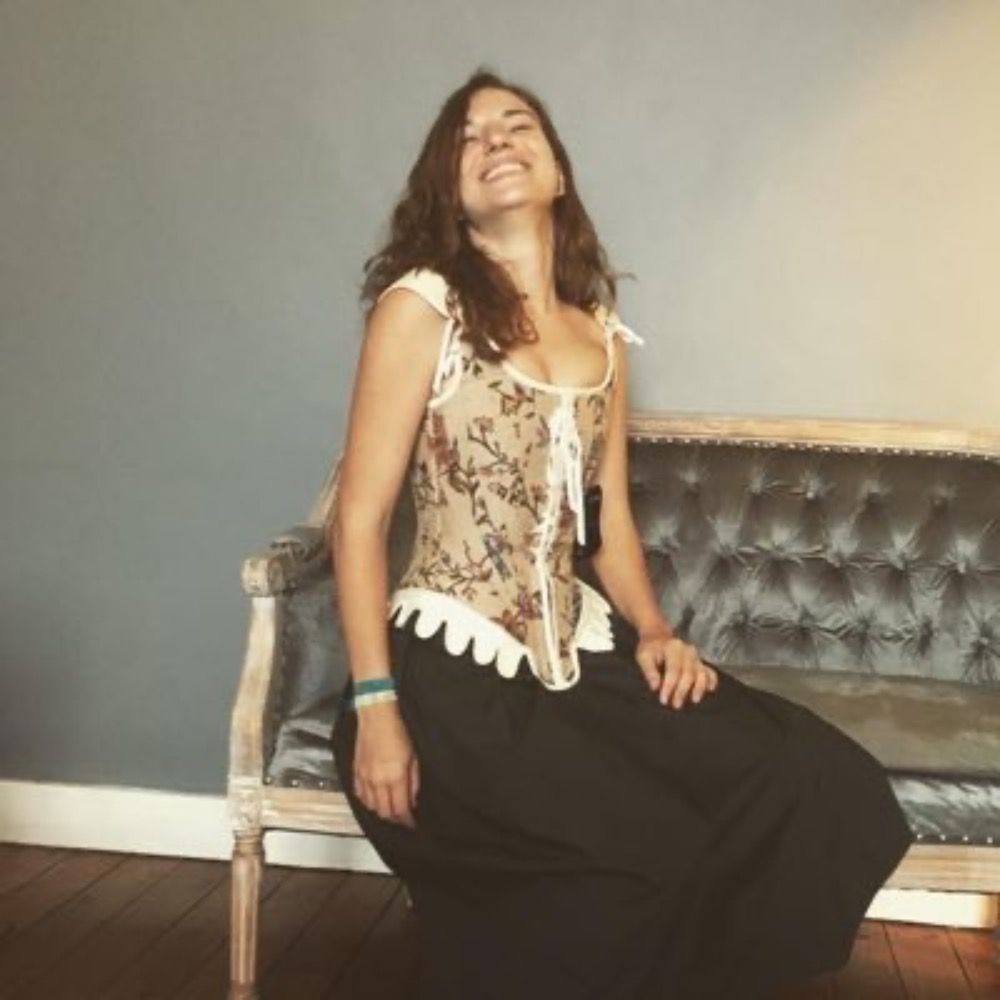
I will personally be celebrating St Scholastica’s Day by hearing from @dannybate.bsky.social and @susiedentwords.bsky.social about Danny’s book, Why Q needs U! Absolutely packed room tonight, and I highly recommend the book itself

February 10, 2026 at 5:33 PM
I will personally be celebrating St Scholastica’s Day by hearing from @dannybate.bsky.social and @susiedentwords.bsky.social about Danny’s book, Why Q needs U! Absolutely packed room tonight, and I highly recommend the book itself
Reposted by Dr Danny Bate

Dutch sports commentators having read @dannybate.bsky.social's book now pronounce Song Qiwu as [kwiwi]
February 10, 2026 at 7:23 PM
Dutch sports commentators having read @dannybate.bsky.social's book now pronounce Song Qiwu as [kwiwi]
Reposted by Dr Danny Bate
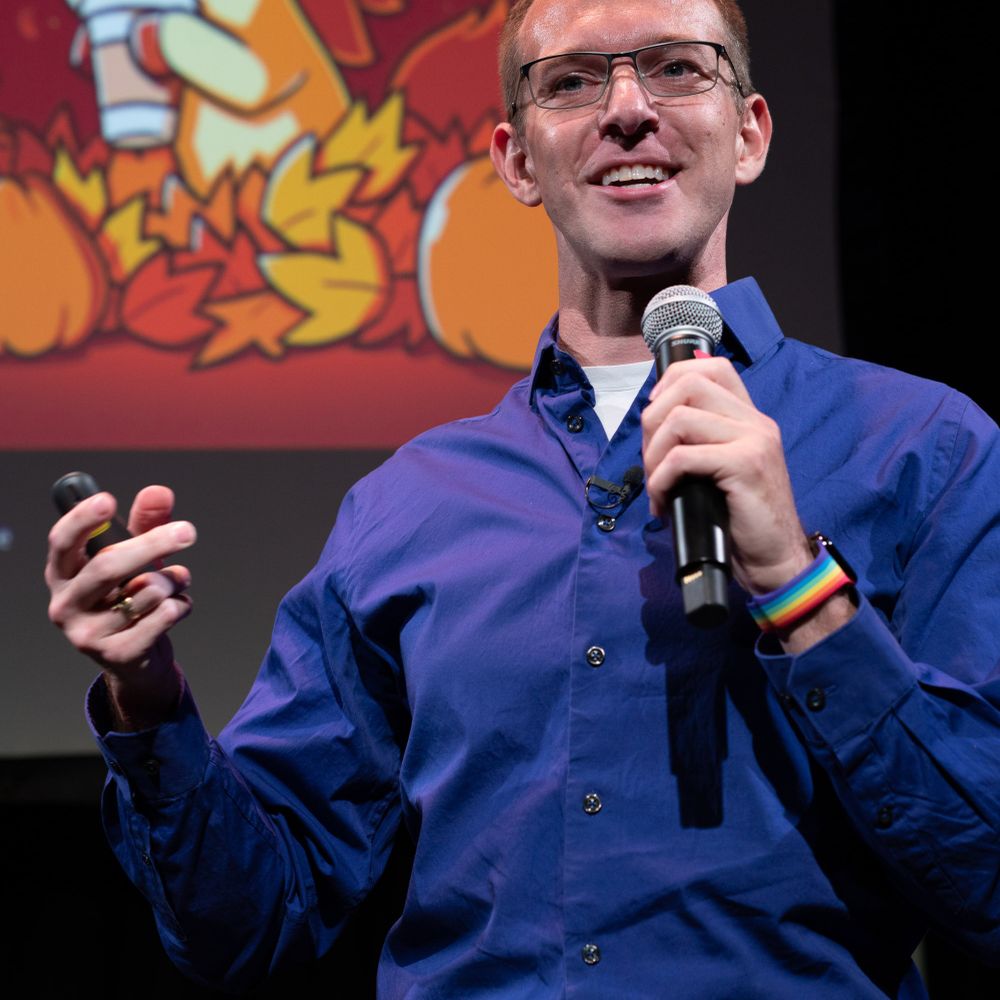
@Lingthusiasm recently aired a great episode interviewing @dannybate.bsky.social, linguist and author of “Why Q needs U: A history of our letters and how we use them”, about the Indo-European language family:
Spotify: open.spotify.com/episode/7rYy...
Apple: podcasts.apple.com/us/podcast/1...
Spotify: open.spotify.com/episode/7rYy...
Apple: podcasts.apple.com/us/podcast/1...

February 10, 2026 at 8:35 PM
@Lingthusiasm recently aired a great episode interviewing @dannybate.bsky.social, linguist and author of “Why Q needs U: A history of our letters and how we use them”, about the Indo-European language family:
Spotify: open.spotify.com/episode/7rYy...
Apple: podcasts.apple.com/us/podcast/1...
Spotify: open.spotify.com/episode/7rYy...
Apple: podcasts.apple.com/us/podcast/1...
Reposted by Dr Danny Bate

I have to jump in here! Not only because of the 'what a gorgeous, gorgeous place, please see pics attached' nature of Pécs, but also because opinions differ about whether 'in Pécs' is 'Pécsen' or Pécsett': www.youtube.com/watch?v=1wCa...


February 9, 2026 at 7:21 PM
I have to jump in here! Not only because of the 'what a gorgeous, gorgeous place, please see pics attached' nature of Pécs, but also because opinions differ about whether 'in Pécs' is 'Pécsen' or Pécsett': www.youtube.com/watch?v=1wCa...
Budapest was created out of the cities of Buda and Pest (and the oft-forgotten Óbuda). The place-name Pest likely comes from a Slavic word meaning 'oven, furnace' – compare Slovak pec.
I find it strange that one of the cities had the alternative German name Ofen (literally 'oven'), but it was Buda!
I find it strange that one of the cities had the alternative German name Ofen (literally 'oven'), but it was Buda!

February 9, 2026 at 6:57 PM
Budapest was created out of the cities of Buda and Pest (and the oft-forgotten Óbuda). The place-name Pest likely comes from a Slavic word meaning 'oven, furnace' – compare Slovak pec.
I find it strange that one of the cities had the alternative German name Ofen (literally 'oven'), but it was Buda!
I find it strange that one of the cities had the alternative German name Ofen (literally 'oven'), but it was Buda!
SOLD OUT!
is an example of an English phrasal verb written in capital letters, both of which are concepts that could well crop up in an upcoming public conversation between me and Susie Dent, for which a few tickets are still available.
www.eventbrite.co.uk/e/danny-bate...
is an example of an English phrasal verb written in capital letters, both of which are concepts that could well crop up in an upcoming public conversation between me and Susie Dent, for which a few tickets are still available.
www.eventbrite.co.uk/e/danny-bate...

February 8, 2026 at 4:32 PM
SOLD OUT!
is an example of an English phrasal verb written in capital letters, both of which are concepts that could well crop up in an upcoming public conversation between me and Susie Dent, for which a few tickets are still available.
www.eventbrite.co.uk/e/danny-bate...
is an example of an English phrasal verb written in capital letters, both of which are concepts that could well crop up in an upcoming public conversation between me and Susie Dent, for which a few tickets are still available.
www.eventbrite.co.uk/e/danny-bate...
A first for me today: godfather at a ship baptism (baptising a child of a member of a ship's crew with the ship's bell).

February 7, 2026 at 3:05 PM
A first for me today: godfather at a ship baptism (baptising a child of a member of a ship's crew with the ship's bell).
Reposted by Dr Danny Bate
Yes! LOVED H as well as Q, the expository on TH was brilliant. One of the things I loved most was how plainly you drew the path from hieroglyphics to Phoenician to English, and consistently referred back to previous letters to maintain that chain. Just great story telling.
February 6, 2026 at 8:19 PM
Yes! LOVED H as well as Q, the expository on TH was brilliant. One of the things I loved most was how plainly you drew the path from hieroglyphics to Phoenician to English, and consistently referred back to previous letters to maintain that chain. Just great story telling.
Reposted by Dr Danny Bate
For folks who are fans of linguistics, I highly recommend this book by @dannybate.bsky.social I found it fascinating, enlightening, and an all-around fun read. And even though I’ve finished it, I still bring it with me in hopes I’ll bump into Danny in Prague and have him sign it. 😆

February 6, 2026 at 7:29 PM
For folks who are fans of linguistics, I highly recommend this book by @dannybate.bsky.social I found it fascinating, enlightening, and an all-around fun read. And even though I’ve finished it, I still bring it with me in hopes I’ll bump into Danny in Prague and have him sign it. 😆
Reposted by Dr Danny Bate

Picked this up on my way to work today and dived straight into it, I'm already hooked. @dannybate.bsky.social is a wonderful story teller.

February 5, 2026 at 9:39 AM
Picked this up on my way to work today and dived straight into it, I'm already hooked. @dannybate.bsky.social is a wonderful story teller.
Reposted by Dr Danny Bate

The guy who owns Amazon shutting down the books section of the Washington Post is beyond parody

WaPo also closing Books section and downsizing International and Metro sections

February 4, 2026 at 2:05 PM
The guy who owns Amazon shutting down the books section of the Washington Post is beyond parody
My review of the new book 'Runes: A Concise History' is out in the latest edition of the @historytoday.com magazine!
The review in brief: runes are great, so is this book, and it does a good job separating runic fact from runic fiction.
The review in brief: runes are great, so is this book, and it does a good job separating runic fact from runic fiction.

February 3, 2026 at 3:59 PM
My review of the new book 'Runes: A Concise History' is out in the latest edition of the @historytoday.com magazine!
The review in brief: runes are great, so is this book, and it does a good job separating runic fact from runic fiction.
The review in brief: runes are great, so is this book, and it does a good job separating runic fact from runic fiction.
Reposted by Dr Danny Bate

they should make a movie series about how it’s irresponsible to use technology to mess with the natural order of things for profit

Xfinity has just released its Jurassic Park-themed Super Bowl ad that features a digitally de-aged Sam Neil, Laura Dern, and Jeff Goldblum. https://bit.ly/4rmRhrK

February 3, 2026 at 3:32 AM
they should make a movie series about how it’s irresponsible to use technology to mess with the natural order of things for profit
Reposted by Dr Danny Bate
«Los humanos tenemos una capacidad natural increíble para usar el lenguaje, y además hemos inventado otro sistema, la escritura, que nos permite usarlo para colaborar. Cuando estudias lingüística, la humanidad se ve como algo increíble.»
— @dannybate.bsky.social, @lingthusiasm.com
— @dannybate.bsky.social, @lingthusiasm.com
February 3, 2026 at 11:41 AM
«Los humanos tenemos una capacidad natural increíble para usar el lenguaje, y además hemos inventado otro sistema, la escritura, que nos permite usarlo para colaborar. Cuando estudias lingüística, la humanidad se ve como algo increíble.»
— @dannybate.bsky.social, @lingthusiasm.com
— @dannybate.bsky.social, @lingthusiasm.com
Reposted by Dr Danny Bate

Very glad that the volume ‘The Reconstruction of Indo-European Stop Systems: From the Traditional Model to Glottalic Theories’ (edited by Tijmen Pronk and myself) has now appeared.
brill.com/display/titl...
Looking forward to hearing reactions to it!
brill.com/display/titl...
Looking forward to hearing reactions to it!
brill.com
February 3, 2026 at 10:21 AM
Very glad that the volume ‘The Reconstruction of Indo-European Stop Systems: From the Traditional Model to Glottalic Theories’ (edited by Tijmen Pronk and myself) has now appeared.
brill.com/display/titl...
Looking forward to hearing reactions to it!
brill.com/display/titl...
Looking forward to hearing reactions to it!
One of the accompanying joys of this new direction for me has been the opportunities to interact with writers and linguists I admire, with the book as my excuse and credentials. When I was 17 and first getting into linguistics, I had Gaston Dorren's books on my shelves. Now he says things like this.
In my private conversations with @dannybate.bsky.social, I've been very complimentary about his alphabet book, Why Q Needs U. But I haven't said much about it in public, I believe. Here then: Why Q Needs U is fascinating, fun and fabulously well written. Because it is.
February 2, 2026 at 12:16 PM
One of the accompanying joys of this new direction for me has been the opportunities to interact with writers and linguists I admire, with the book as my excuse and credentials. When I was 17 and first getting into linguistics, I had Gaston Dorren's books on my shelves. Now he says things like this.
Reposted by Dr Danny Bate

In my private conversations with @dannybate.bsky.social, I've been very complimentary about his alphabet book, Why Q Needs U. But I haven't said much about it in public, I believe. Here then: Why Q Needs U is fascinating, fun and fabulously well written. Because it is.
February 2, 2026 at 11:45 AM
In my private conversations with @dannybate.bsky.social, I've been very complimentary about his alphabet book, Why Q Needs U. But I haven't said much about it in public, I believe. Here then: Why Q Needs U is fascinating, fun and fabulously well written. Because it is.
Reposted by Dr Danny Bate
Such a rare survival - the nave ceiling at Peterborough Cathedral dates from the C13th - it has been overpainted twice but the original design remains - and original paint from the C13th has been found beneath the nail heads...

February 2, 2026 at 7:30 AM
Such a rare survival - the nave ceiling at Peterborough Cathedral dates from the C13th - it has been overpainted twice but the original design remains - and original paint from the C13th has been found beneath the nail heads...
Dia daoibh, language lovers! In time for St Brigid's Day, there's a new episode of ALILI, all about Modern Irish!
The language was the choice of Liam Ó Duibhiolla, an enthusiastic, eloquent expert and the founder of the 'Learn Irish Online' platform. Listen to it here:
pod.link/1703401848/e...
The language was the choice of Liam Ó Duibhiolla, an enthusiastic, eloquent expert and the founder of the 'Learn Irish Online' platform. Listen to it here:
pod.link/1703401848/e...
February 1, 2026 at 9:13 PM
Dia daoibh, language lovers! In time for St Brigid's Day, there's a new episode of ALILI, all about Modern Irish!
The language was the choice of Liam Ó Duibhiolla, an enthusiastic, eloquent expert and the founder of the 'Learn Irish Online' platform. Listen to it here:
pod.link/1703401848/e...
The language was the choice of Liam Ó Duibhiolla, an enthusiastic, eloquent expert and the founder of the 'Learn Irish Online' platform. Listen to it here:
pod.link/1703401848/e...
Reposted by Dr Danny Bate

The pronunciation of a language is always changing.
Its sounds don’t change randomly. Their articulation shifts ever so slightly.
Over the centuries, though, the result can be huge.
Click my video to hear and see how Proto-Germanic *staumaz became English ‘steam’ over the course of two millennia.
Its sounds don’t change randomly. Their articulation shifts ever so slightly.
Over the centuries, though, the result can be huge.
Click my video to hear and see how Proto-Germanic *staumaz became English ‘steam’ over the course of two millennia.
February 1, 2026 at 7:10 PM
The pronunciation of a language is always changing.
Its sounds don’t change randomly. Their articulation shifts ever so slightly.
Over the centuries, though, the result can be huge.
Click my video to hear and see how Proto-Germanic *staumaz became English ‘steam’ over the course of two millennia.
Its sounds don’t change randomly. Their articulation shifts ever so slightly.
Over the centuries, though, the result can be huge.
Click my video to hear and see how Proto-Germanic *staumaz became English ‘steam’ over the course of two millennia.