




Daniel Croll
@danielcroll.bsky.social
We want to understand how pathogens adapt and cause diseases. Also passionate about TEs, pangenomes & population genomics, bioinformatics and conservation genomics.
Professor of Evolutionary Genetics @ University of Neuchatel 🇨🇭
Hobbies: 👧🏻👧🏼🏔️🏕️
Professor of Evolutionary Genetics @ University of Neuchatel 🇨🇭
Hobbies: 👧🏻👧🏼🏔️🏕️
Pinned
Daniel Croll
@danielcroll.bsky.social
· Nov 12
Big congratulations @tobybarilbio.bsky.social!
Please check out and share our final version of the transposon mobilization work in a fungal pathogen - out now in Nature Communications
www.nature.com/articles/s41...
Please check out and share our final version of the transposon mobilization work in a fungal pathogen - out now in Nature Communications
www.nature.com/articles/s41...
Reposted by Daniel Croll
Hi everyone!
The talk I had the chance to give with @fnucleosome.bsky.social last October is now out on Youtube!
If you like evolution, 3D genomics, biodiversity and/or fungi, I think you might like it! 🧬🧪🍄
The submission of this paper has never been that close!
www.youtube.com/watch?v=Plez...
The talk I had the chance to give with @fnucleosome.bsky.social last October is now out on Youtube!
If you like evolution, 3D genomics, biodiversity and/or fungi, I think you might like it! 🧬🧪🍄
The submission of this paper has never been that close!
www.youtube.com/watch?v=Plez...


February 3, 2026 at 9:55 AM
Hi everyone!
The talk I had the chance to give with @fnucleosome.bsky.social last October is now out on Youtube!
If you like evolution, 3D genomics, biodiversity and/or fungi, I think you might like it! 🧬🧪🍄
The submission of this paper has never been that close!
www.youtube.com/watch?v=Plez...
The talk I had the chance to give with @fnucleosome.bsky.social last October is now out on Youtube!
If you like evolution, 3D genomics, biodiversity and/or fungi, I think you might like it! 🧬🧪🍄
The submission of this paper has never been that close!
www.youtube.com/watch?v=Plez...
Reposted by Daniel Croll

Yesterday it was cows using tools, today its penguins using satellite imagery.

January 20, 2026 at 6:44 PM
Yesterday it was cows using tools, today its penguins using satellite imagery.
Reposted by Daniel Croll

1/🧵
Major milestone unlocked for mycology! 🍄
We just published a massive genomic resource in 𝐒𝐜𝐢𝐞𝐧𝐭𝐢𝐟𝐢𝐜 𝐃𝐚𝐭𝐚, releasing 2,695 complete circular mitochondrial species assembled from public data
This single dataset nearly 𝐓𝐑𝐈𝐏𝐋𝐄𝐒 📈the known mitochondrial diversity of the Kingdom Fungi
rdcu.be/eYZ2h
Major milestone unlocked for mycology! 🍄
We just published a massive genomic resource in 𝐒𝐜𝐢𝐞𝐧𝐭𝐢𝐟𝐢𝐜 𝐃𝐚𝐭𝐚, releasing 2,695 complete circular mitochondrial species assembled from public data
This single dataset nearly 𝐓𝐑𝐈𝐏𝐋𝐄𝐒 📈the known mitochondrial diversity of the Kingdom Fungi
rdcu.be/eYZ2h

January 15, 2026 at 2:31 PM
1/🧵
Major milestone unlocked for mycology! 🍄
We just published a massive genomic resource in 𝐒𝐜𝐢𝐞𝐧𝐭𝐢𝐟𝐢𝐜 𝐃𝐚𝐭𝐚, releasing 2,695 complete circular mitochondrial species assembled from public data
This single dataset nearly 𝐓𝐑𝐈𝐏𝐋𝐄𝐒 📈the known mitochondrial diversity of the Kingdom Fungi
rdcu.be/eYZ2h
Major milestone unlocked for mycology! 🍄
We just published a massive genomic resource in 𝐒𝐜𝐢𝐞𝐧𝐭𝐢𝐟𝐢𝐜 𝐃𝐚𝐭𝐚, releasing 2,695 complete circular mitochondrial species assembled from public data
This single dataset nearly 𝐓𝐑𝐈𝐏𝐋𝐄𝐒 📈the known mitochondrial diversity of the Kingdom Fungi
rdcu.be/eYZ2h
Reposted by Daniel Croll

Beyond excited to see this work finally out in @narjournal.bsky.social! We show that epigenetic modifiers on fungal accessory chromosomes can contribute to the overall epigenetic profile. Many thanks to @gomezlucia93.bsky.social and our other amazing collaborators 👏🏻
academic.oup.com/nar/article/...
academic.oup.com/nar/article/...

Facultative heterochromatin mediated by core and accessory chromosome-encoded H3K27-specific methyltransferases controls virulence in a fungal phytopathogen
Abstract. In many fungal phytopathogens, infection is regulated by accessory genomic regions enriched in facultative heterochromatin, but the precise role
academic.oup.com
January 7, 2026 at 3:39 PM
Beyond excited to see this work finally out in @narjournal.bsky.social! We show that epigenetic modifiers on fungal accessory chromosomes can contribute to the overall epigenetic profile. Many thanks to @gomezlucia93.bsky.social and our other amazing collaborators 👏🏻
academic.oup.com/nar/article/...
academic.oup.com/nar/article/...
Reposted by Daniel Croll
🍄Transposon traffic in the mycocosmos🍄
Fascinating work reveals extensive horizontal TE transfer across fungi (@jromeijn.bsky.social, Iñigo Bañales & @mfseidl.bsky.social; doi.org/10.1016/j.cu...). I wrote a Dispatch to prime non-specialists,check it out here: doi.org/10.1016/j.cu....
#TEworldwide
Fascinating work reveals extensive horizontal TE transfer across fungi (@jromeijn.bsky.social, Iñigo Bañales & @mfseidl.bsky.social; doi.org/10.1016/j.cu...). I wrote a Dispatch to prime non-specialists,check it out here: doi.org/10.1016/j.cu....
#TEworldwide

January 19, 2026 at 4:38 PM
🍄Transposon traffic in the mycocosmos🍄
Fascinating work reveals extensive horizontal TE transfer across fungi (@jromeijn.bsky.social, Iñigo Bañales & @mfseidl.bsky.social; doi.org/10.1016/j.cu...). I wrote a Dispatch to prime non-specialists,check it out here: doi.org/10.1016/j.cu....
#TEworldwide
Fascinating work reveals extensive horizontal TE transfer across fungi (@jromeijn.bsky.social, Iñigo Bañales & @mfseidl.bsky.social; doi.org/10.1016/j.cu...). I wrote a Dispatch to prime non-specialists,check it out here: doi.org/10.1016/j.cu....
#TEworldwide
Reposted by Daniel Croll

Sharing our lab’s first publication! Probing clinical isolates of Cryptococcus, a disease-causing fungus of the lungs and brain, we found multiple heat-mobile elements that ‘jump’ in the genome at body temperature (!) with the ability to drive adaptive changes. journals.plos.org/plosgenetics...

January 17, 2026 at 12:33 PM
Sharing our lab’s first publication! Probing clinical isolates of Cryptococcus, a disease-causing fungus of the lungs and brain, we found multiple heat-mobile elements that ‘jump’ in the genome at body temperature (!) with the ability to drive adaptive changes. journals.plos.org/plosgenetics...
Reposted by Daniel Croll

Earlier this week, David Marques, my beloved PhD brother, died after a battle with cancer. He was an amazing person, friend, father, husband, scientist, collaborator, birder, among other things. I am immensely grateful for many years of friendship and close collaboration with him. We miss you!


January 10, 2026 at 9:14 AM
Earlier this week, David Marques, my beloved PhD brother, died after a battle with cancer. He was an amazing person, friend, father, husband, scientist, collaborator, birder, among other things. I am immensely grateful for many years of friendship and close collaboration with him. We miss you!
Reposted by Daniel Croll
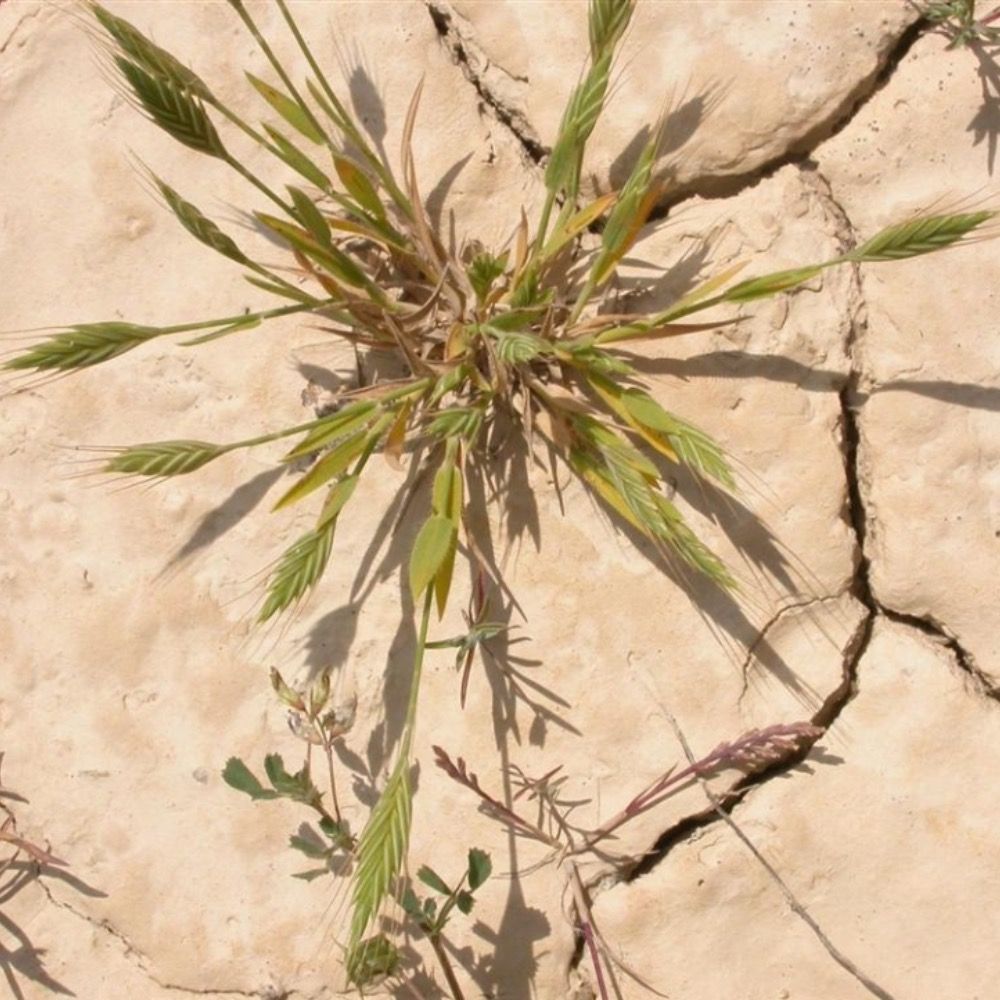
Have we been overstating the role of transposable elements in adaptation to local or rapidly changing environmental conditions? Happy to share my (somewhat unpopular?) opinion paper on this matter: www.sciencedirect.com/science/arti...
Thanks to those who already shared the link!
Thanks to those who already shared the link!

Blinded by the lights? Re-examining the adaptive role of transposable elements in plants with population genomics
Transposable elements (TEs) are ubiquitous components of the genome whose mobility can be triggered by environmental stress and influenced by genotype…
www.sciencedirect.com
January 5, 2026 at 9:02 AM
Have we been overstating the role of transposable elements in adaptation to local or rapidly changing environmental conditions? Happy to share my (somewhat unpopular?) opinion paper on this matter: www.sciencedirect.com/science/arti...
Thanks to those who already shared the link!
Thanks to those who already shared the link!
Reposted by Daniel Croll
Depends on the pathogen, I guess. However, generally, if the effector mutation that led to overcoming the R gene does not lead to a fitness or virulence penalty for the pathogen, that mutated allele wil be kept, and thus the R gene will not be "forgotten".
January 7, 2026 at 1:07 PM
Depends on the pathogen, I guess. However, generally, if the effector mutation that led to overcoming the R gene does not lead to a fitness or virulence penalty for the pathogen, that mutated allele wil be kept, and thus the R gene will not be "forgotten".
Welcome to Bluesky Leila @leilaebrahimi.bsky.social!
December 28, 2025 at 9:51 AM
Welcome to Bluesky Leila @leilaebrahimi.bsky.social!
Reposted by Daniel Croll

Alkemade, @timbarra.bsky.social et al. did temporal association analysis on three major fungal crop pathogens collected between 1956 and 2023, identifying genes linked to fungicide resistance and stress responses as frequent sites of adaptation.
🔗 doi.org/10.1093/gbe/evaf241
#genome #evolution
🔗 doi.org/10.1093/gbe/evaf241
#genome #evolution

Genomic Insights into Historical Adaptation of Three Key Fungal Plant Pathogens
Abstract. Fungal culture collections hold a wealth of historical isolates that could be used to study fungal evolution over the past decades, an era that c
doi.org
December 23, 2025 at 9:11 AM
Alkemade, @timbarra.bsky.social et al. did temporal association analysis on three major fungal crop pathogens collected between 1956 and 2023, identifying genes linked to fungicide resistance and stress responses as frequent sites of adaptation.
🔗 doi.org/10.1093/gbe/evaf241
#genome #evolution
🔗 doi.org/10.1093/gbe/evaf241
#genome #evolution
Reposted by Daniel Croll


Benjamin Adjei
Croll lab at University of Neuchatel. PhD student
pathogen-genomics.org
December 10, 2025 at 9:17 PM
Reposted by Daniel Croll
Now officially published in Current Biology 🥳🥳 @mfseidl.bsky.social @binfutrecht.bsky.social
www.cell.com/current-biol...
www.cell.com/current-biol...
December 9, 2025 at 5:20 PM
Now officially published in Current Biology 🥳🥳 @mfseidl.bsky.social @binfutrecht.bsky.social
www.cell.com/current-biol...
www.cell.com/current-biol...
Reposted by Daniel Croll

Thrilled to be hosting this session with @henriklicht.bsky.social and @agesiorska.bsky.social 🥳
Already looking forward to @danielcroll.bsky.social's talk and the other talks and posters that'll form part of this session! 🤩
Already looking forward to @danielcroll.bsky.social's talk and the other talks and posters that'll form part of this session! 🤩
Organisers
- Henrik H. de Fine Licht | University of Copenhagen
- @drandiwilson.bsky.social | University of Copenhagen
- @agesiorska.bsky.social | University of Copenhagen
Invited Speaker
- @danielcroll.bsky.social | University of Neuchatel
- Henrik H. de Fine Licht | University of Copenhagen
- @drandiwilson.bsky.social | University of Copenhagen
- @agesiorska.bsky.social | University of Copenhagen
Invited Speaker
- @danielcroll.bsky.social | University of Neuchatel

December 5, 2025 at 8:42 AM
Thrilled to be hosting this session with @henriklicht.bsky.social and @agesiorska.bsky.social 🥳
Already looking forward to @danielcroll.bsky.social's talk and the other talks and posters that'll form part of this session! 🤩
Already looking forward to @danielcroll.bsky.social's talk and the other talks and posters that'll form part of this session! 🤩
Reposted by Daniel Croll

Organisers
- Henrik H. de Fine Licht | University of Copenhagen
- @drandiwilson.bsky.social | University of Copenhagen
- @agesiorska.bsky.social | University of Copenhagen
Invited Speaker
- @danielcroll.bsky.social | University of Neuchatel
- Henrik H. de Fine Licht | University of Copenhagen
- @drandiwilson.bsky.social | University of Copenhagen
- @agesiorska.bsky.social | University of Copenhagen
Invited Speaker
- @danielcroll.bsky.social | University of Neuchatel
December 3, 2025 at 5:47 PM
Organisers
- Henrik H. de Fine Licht | University of Copenhagen
- @drandiwilson.bsky.social | University of Copenhagen
- @agesiorska.bsky.social | University of Copenhagen
Invited Speaker
- @danielcroll.bsky.social | University of Neuchatel
- Henrik H. de Fine Licht | University of Copenhagen
- @drandiwilson.bsky.social | University of Copenhagen
- @agesiorska.bsky.social | University of Copenhagen
Invited Speaker
- @danielcroll.bsky.social | University of Neuchatel
Big congratulations @guidopuccetti.bsky.social !! Very proud of your achievement.
It can feel like an eternity as a PhD student sometimes to see their first chapter in published form. Enjoy the moment!! 🎉
It can feel like an eternity as a PhD student sometimes to see their first chapter in published form. Enjoy the moment!! 🎉
Finally out!
A large European diversity panel reveals complex azole fungicide resistance gains of a major wheat pathogen
journals.asm.org/doi/10.1128/...
A big thanks to @danielcroll.bsky.social & @GabrielScalliet
#azole #DMI #GWAS #fungicide #resistance #zymoseptoria #Europe
A large European diversity panel reveals complex azole fungicide resistance gains of a major wheat pathogen
journals.asm.org/doi/10.1128/...
A big thanks to @danielcroll.bsky.social & @GabrielScalliet
#azole #DMI #GWAS #fungicide #resistance #zymoseptoria #Europe

A large European diversity panel reveals complex azole fungicide resistance gains of a major wheat pathogen | mBio
Sustainable food production requires the management of disease agents attacking crops.
Application of antifungal compounds is among the key elements of pathogen containment;
however, resistance can ri...
journals.asm.org
December 1, 2025 at 12:58 PM
Big congratulations @guidopuccetti.bsky.social !! Very proud of your achievement.
It can feel like an eternity as a PhD student sometimes to see their first chapter in published form. Enjoy the moment!! 🎉
It can feel like an eternity as a PhD student sometimes to see their first chapter in published form. Enjoy the moment!! 🎉
Reposted by Daniel Croll

Finally out!
A large European diversity panel reveals complex azole fungicide resistance gains of a major wheat pathogen
journals.asm.org/doi/10.1128/...
A big thanks to @danielcroll.bsky.social & @GabrielScalliet
#azole #DMI #GWAS #fungicide #resistance #zymoseptoria #Europe
A large European diversity panel reveals complex azole fungicide resistance gains of a major wheat pathogen
journals.asm.org/doi/10.1128/...
A big thanks to @danielcroll.bsky.social & @GabrielScalliet
#azole #DMI #GWAS #fungicide #resistance #zymoseptoria #Europe
A large European diversity panel reveals complex azole fungicide resistance gains of a major wheat pathogen | mBio
Sustainable food production requires the management of disease agents attacking crops.
Application of antifungal compounds is among the key elements of pathogen containment;
however, resistance can ri...
journals.asm.org
December 1, 2025 at 12:00 AM
Finally out!
A large European diversity panel reveals complex azole fungicide resistance gains of a major wheat pathogen
journals.asm.org/doi/10.1128/...
A big thanks to @danielcroll.bsky.social & @GabrielScalliet
#azole #DMI #GWAS #fungicide #resistance #zymoseptoria #Europe
A large European diversity panel reveals complex azole fungicide resistance gains of a major wheat pathogen
journals.asm.org/doi/10.1128/...
A big thanks to @danielcroll.bsky.social & @GabrielScalliet
#azole #DMI #GWAS #fungicide #resistance #zymoseptoria #Europe
Reposted by Daniel Croll

Our paper on Zymoseptoria tritici 3D genome organization is officially out! @iglavincheska.bsky.social
link.springer.com/article/10.1...
link.springer.com/article/10.1...

Three-dimensional genome architecture connects chromatin structure and function in a major wheat pathogen - BMC Biology
Background Genome spatial organization plays a fundamental role in biological function across all domains of life. While the principles of nuclear architecture have been well-characterized in animals ...
link.springer.com
November 28, 2025 at 12:43 PM
Our paper on Zymoseptoria tritici 3D genome organization is officially out! @iglavincheska.bsky.social
link.springer.com/article/10.1...
link.springer.com/article/10.1...
Reposted by Daniel Croll

Our new collaborative work led by @taliamycota.bsky.social
Jiajun Cui & Emma Caullireau between my lab @ucllifesciences.bsky.social @cloeucl.bsky.social & the Karasov Lab (tkarasovlab.org) @uofubiology.bsky.social
and collaborators: @plantricia.bsky.social et al.
tinyurl.com/5yx2wmz5
(1/n)
Jiajun Cui & Emma Caullireau between my lab @ucllifesciences.bsky.social @cloeucl.bsky.social & the Karasov Lab (tkarasovlab.org) @uofubiology.bsky.social
and collaborators: @plantricia.bsky.social et al.
tinyurl.com/5yx2wmz5
(1/n)

November 18, 2025 at 8:41 AM
Our new collaborative work led by @taliamycota.bsky.social
Jiajun Cui & Emma Caullireau between my lab @ucllifesciences.bsky.social @cloeucl.bsky.social & the Karasov Lab (tkarasovlab.org) @uofubiology.bsky.social
and collaborators: @plantricia.bsky.social et al.
tinyurl.com/5yx2wmz5
(1/n)
Jiajun Cui & Emma Caullireau between my lab @ucllifesciences.bsky.social @cloeucl.bsky.social & the Karasov Lab (tkarasovlab.org) @uofubiology.bsky.social
and collaborators: @plantricia.bsky.social et al.
tinyurl.com/5yx2wmz5
(1/n)
Reposted by Daniel Croll
The number of Project funding applications and the requested amounts have risen to record levels, consequently decreasing researchers' chances of receiving a grant.📈⚠️
Evaluation is under way, and funding decisions will follow in spring 2026.
➡️ buff.ly/gEdD3OY
#research #science
Evaluation is under way, and funding decisions will follow in spring 2026.
➡️ buff.ly/gEdD3OY
#research #science

New record in Project funding
SNSF Project funding reaches an all-time high with 1,451 applications and CHF 1.3 billion requested – while federal funding is stagnating.
buff.ly
November 24, 2025 at 8:30 AM
The number of Project funding applications and the requested amounts have risen to record levels, consequently decreasing researchers' chances of receiving a grant.📈⚠️
Evaluation is under way, and funding decisions will follow in spring 2026.
➡️ buff.ly/gEdD3OY
#research #science
Evaluation is under way, and funding decisions will follow in spring 2026.
➡️ buff.ly/gEdD3OY
#research #science
Reposted by Daniel Croll
Responses to Temperature Shocks in Zymoseptoria tritici Reveal Specific Transcriptional Reprogramming and Novel Candidate Genes for Thermal Adaptation | Phytopathology® apsjournals.apsnet.org/doi/full/10....

Responses to Temperature Shocks in Zymoseptoria tritici Reveal Specific Transcriptional Reprogramming and Novel Candidate Genes for Thermal Adaptation | Phytopathology®
Pathogens’ responses to sudden temperature fluctuations, spanning various temporal scales, are critical determinants of their survival, growth, reproduction, and homeostasis. Here, we combined phenoty...
apsjournals.apsnet.org
November 21, 2025 at 1:00 PM
Responses to Temperature Shocks in Zymoseptoria tritici Reveal Specific Transcriptional Reprogramming and Novel Candidate Genes for Thermal Adaptation | Phytopathology® apsjournals.apsnet.org/doi/full/10....