



Caley Orr
@caleyorr.bsky.social
Associate Professor | CU School of Medicine & CU Denver Anthropology | Paleoanthropology, Primate Morphology, Teaching Anatomy, Noisy Rock & Roll, Felis catus | Research: ucdenver.academia.edu/CaleyOrr
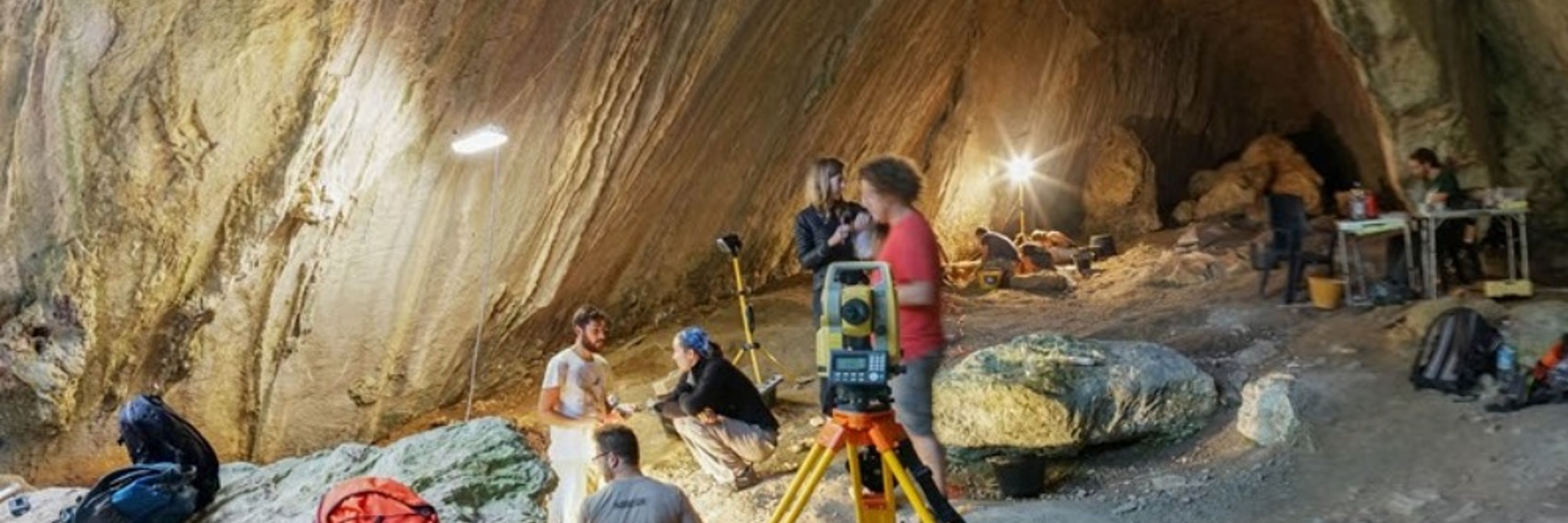
A Mesolithic superb owl (Bubo bubo) from a beautiful site our crew excavated in northwestern Italy back in 2018.
Citation if you're interested to know more:
Citation if you're interested to know more:
February 9, 2026 at 4:34 AM
A Mesolithic superb owl (Bubo bubo) from a beautiful site our crew excavated in northwestern Italy back in 2018.
Citation if you're interested to know more:
Citation if you're interested to know more:

Reposted by Caley Orr
'to treat peer review as a throughput problem is to misunderstand what is at stake. Review is not simply a production stage in the research pipeline; it is one of the few remaining spaces where the scientific community talks to itself.' 1/3

AI is not a peer, so it can’t do peer review
If we still believe that science is a vocation grounded in argument, curiosity and care, we can’t delegate judgement to machines, says Akhil Bhardwaj
www.timeshighereducation.com
February 3, 2026 at 8:17 AM
'to treat peer review as a throughput problem is to misunderstand what is at stake. Review is not simply a production stage in the research pipeline; it is one of the few remaining spaces where the scientific community talks to itself.' 1/3

Reposted by Caley Orr

A paper in Nature reports the discovery of fossilized remains of an extinct hominin called Paranthropus in north-eastern Ethiopia, dating to about 2.6 million years ago, which expands the number of hominin species known to have been in the region at that time. go.nature.com/4r37ceu 🏺 🧪

February 2, 2026 at 2:48 AM
A paper in Nature reports the discovery of fossilized remains of an extinct hominin called Paranthropus in north-eastern Ethiopia, dating to about 2.6 million years ago, which expands the number of hominin species known to have been in the region at that time. go.nature.com/4r37ceu 🏺 🧪


I'm happy to present our paper in which we describe hominin postcrania from Drimolen. Many of these specimens sat in a drawer at Wits Uni for > 20 years. It's amusing to me that the image here includes two fossils in that drawer that were labeled "hominin" but that we decided are not! 1/

Postcranial fossils from the site of Drimolen in the Cradle of Humankind in South Africa provide further insights into hominin paleobiology at approximately 2.0 million years ago!
New study by Caley M. Orr et al.: anatomypubs.onlinelibrary.wiley.com/doi/10.1002/...
New study by Caley M. Orr et al.: anatomypubs.onlinelibrary.wiley.com/doi/10.1002/...

January 29, 2026 at 12:11 AM
I'm happy to present our paper in which we describe hominin postcrania from Drimolen. Many of these specimens sat in a drawer at Wits Uni for > 20 years. It's amusing to me that the image here includes two fossils in that drawer that were labeled "hominin" but that we decided are not! 1/


Key new fossil telling us about the biography of Paranthropus. It's a bit surprising nothing has turned up before given the presence of the genus in the Omo (southern Ethiopia). It's not such a great distance,especially given we have Paranthropus robustus in southern Africa.

Afar fossil shows broad distribution and versatility of Paranthropus - Nature
With its attribution to Paranthropus, a 2.6-million-year-old partial mandible expands the range of the genus into the Afar region of Ethiopia and adds to our understanding of hominin evolution in east...
www.nature.com
January 22, 2026 at 1:45 AM
Key new fossil telling us about the biography of Paranthropus. It's a bit surprising nothing has turned up before given the presence of the genus in the Omo (southern Ethiopia). It's not such a great distance,especially given we have Paranthropus robustus in southern Africa.
The oldest documented rock art in the world.

Rock art from at least 67,800 years ago in Sulawesi - Nature
A hand stencil painted on a cave wall on a small island off the coast of Sulawesi more than 67,800 years ago suggests a very early occupation of Wallacea.
www.nature.com
January 21, 2026 at 11:16 PM
The oldest documented rock art in the world.
Our team has its bony fingers all over the cover of The Anatomical Record this month (an effort led by my hardworking coauthors Deanna Goldstein and Biren Patel).
Our latest issue is now available!
anatomypubs.onlinelibrary.wiley.com/toc/19328494...
The cover article by Deanna Goldstein et al. reports details on whole-bone shape of hominoid manual proximal phalanges: anatomypubs.onlinelibrary.wiley.com/doi/10.1002/...
anatomypubs.onlinelibrary.wiley.com/toc/19328494...
The cover article by Deanna Goldstein et al. reports details on whole-bone shape of hominoid manual proximal phalanges: anatomypubs.onlinelibrary.wiley.com/doi/10.1002/...

January 20, 2026 at 1:28 AM
Our team has its bony fingers all over the cover of The Anatomical Record this month (an effort led by my hardworking coauthors Deanna Goldstein and Biren Patel).
Reposted by Caley Orr
Hominin fossils discovered in Morocco, which have been dated to about 773,000 years ago, may be close ancestors of modern humans. The findings, published in Nature, provide insights into African populations before the earliest known Homo sapiens. 🏺🧪

Early hominins from Morocco basal to the Homo sapiens lineage - Nature
New hominin fossils from the Grotte à Hominidés at Thomas Quarry I (ThI-GH) in Casablanca, Morocco, dated to around 773 thousand years ago are similar in age to Homo antecessor, yet are morphologically distinct.
go.nature.com
January 18, 2026 at 2:59 AM
Hominin fossils discovered in Morocco, which have been dated to about 773,000 years ago, may be close ancestors of modern humans. The findings, published in Nature, provide insights into African populations before the earliest known Homo sapiens. 🏺🧪

Reposted by Caley Orr

Iliopsoas muscle plays major role in lumbopelvic posture & gait in humans, & its distal tendon is often implicated in hip pain. Our latest project examined its tendon morphology measuring landmarks to understand how tendon shape relates to surrounding bone architecture
www.cureus.com/articles/438...
www.cureus.com/articles/438...

January 14, 2026 at 3:30 PM
Iliopsoas muscle plays major role in lumbopelvic posture & gait in humans, & its distal tendon is often implicated in hip pain. Our latest project examined its tendon morphology measuring landmarks to understand how tendon shape relates to surrounding bone architecture
www.cureus.com/articles/438...
www.cureus.com/articles/438...
Reposted by Caley Orr

The first article from the Cambridge Prisms: Extinction special issue on 'Hominin Cultural and Biological Extinctions', guest edited by @jjrowan.bsky.social and Dr Alastair Key, has just been published.
A continuous record of early human stone tool production: doi.org/10.1017/ext....
A continuous record of early human stone tool production: doi.org/10.1017/ext....

January 14, 2026 at 1:05 PM
The first article from the Cambridge Prisms: Extinction special issue on 'Hominin Cultural and Biological Extinctions', guest edited by @jjrowan.bsky.social and Dr Alastair Key, has just been published.
A continuous record of early human stone tool production: doi.org/10.1017/ext....
A continuous record of early human stone tool production: doi.org/10.1017/ext....
Fantastic! There's not much postcranial material known for Homo habilis or other early Homo species, so this is a very welcome addition to the record. Those are long forearms!
KNM-ER 64061, most complete Homo habilis skeleton yet (Koobi Fora) shows primitive limb proportions: long forearms, thick cortices, small body mass & ~160 cm stature. Upper limbs like early Homo, but proportions differ from H. erectus
Grine et al anatomypubs.onlinelibrary.wiley.com/doi/10.1002/...
Grine et al anatomypubs.onlinelibrary.wiley.com/doi/10.1002/...

January 13, 2026 at 1:46 PM
Fantastic! There's not much postcranial material known for Homo habilis or other early Homo species, so this is a very welcome addition to the record. Those are long forearms!
Reposted by Caley Orr

Deep Sulawesi cave dig could reveal overlap between extinct humans and us ⛏️🇮🇩 phys.org/news/2026-01...

Deep Sulawesi cave dig could reveal overlap between extinct humans and us
Could Homo sapiens and an archaic and now-extinct species of early human have lived alongside each other on the Indonesian island of Sulawesi more than 65,000 years ago?
phys.org
January 9, 2026 at 6:53 PM
Deep Sulawesi cave dig could reveal overlap between extinct humans and us ⛏️🇮🇩 phys.org/news/2026-01...
My dad always said, "Kids are dumb." Comparative evidence!

Risks young chimps take as they swing through the trees underscore role of protective parenting in humans
Adolescents are known for risky behavior, with teenagers in the U.S. more likely than younger children to die from injury. But what's responsible for this uptick in risk-taking around puberty?
phys.org
January 7, 2026 at 8:04 PM
My dad always said, "Kids are dumb." Comparative evidence!
"The ThI-GH hominins...provide strong evidence for an African lineage ancestral to our species. These fossils offer clues about the last common ancestor shared with Neanderthals and Denisovans."

Early hominins from Morocco basal to the Homo sapiens lineage - Nature
New hominin fossils from the Grotte à Hominidés at Thomas Quarry I (ThI-GH) in Casablanca, Morocco, dated to around 773 thousand years ago are similar in age to Homo antecessor, yet are morphologicall...
www.nature.com
January 7, 2026 at 5:27 PM
"The ThI-GH hominins...provide strong evidence for an African lineage ancestral to our species. These fossils offer clues about the last common ancestor shared with Neanderthals and Denisovans."

Reposted by Caley Orr

30 years ago today, December 31st 1995, the last ever Calvin & Hobbes comic strip was published. Even now, I still find it so poignant & moving.

December 31, 2025 at 2:32 PM
30 years ago today, December 31st 1995, the last ever Calvin & Hobbes comic strip was published. Even now, I still find it so poignant & moving.
Reposted by Caley Orr

There’s nothing wrong with common sense until you dig a little and learn that common sense is wrong. Thanks @profgalloway.com for providing a great example of common sense that I’ve gotten a kick out of doubting. Thanks @prosocialworld.bsky.social for hosting.
www.prosocial.world/posts/whats-...
www.prosocial.world/posts/whats-...

What’s True About the Evolution of Men’s Greater Average Height?
Why men are taller than women may have nothing to do with testosterone—or sexual selection.
www.prosocial.world
December 30, 2025 at 9:54 PM
There’s nothing wrong with common sense until you dig a little and learn that common sense is wrong. Thanks @profgalloway.com for providing a great example of common sense that I’ve gotten a kick out of doubting. Thanks @prosocialworld.bsky.social for hosting.
www.prosocial.world/posts/whats-...
www.prosocial.world/posts/whats-...
Reposted by Caley Orr

And here’s my other human origins countdown to close out the year! 🏺🧪

10 things we learned about Neanderthals in 2025
Findings about our extinct relatives, the Neanderthals, continue to surprise us, especially those from 2025.
www.livescience.com
December 30, 2025 at 9:31 PM
And here’s my other human origins countdown to close out the year! 🏺🧪