



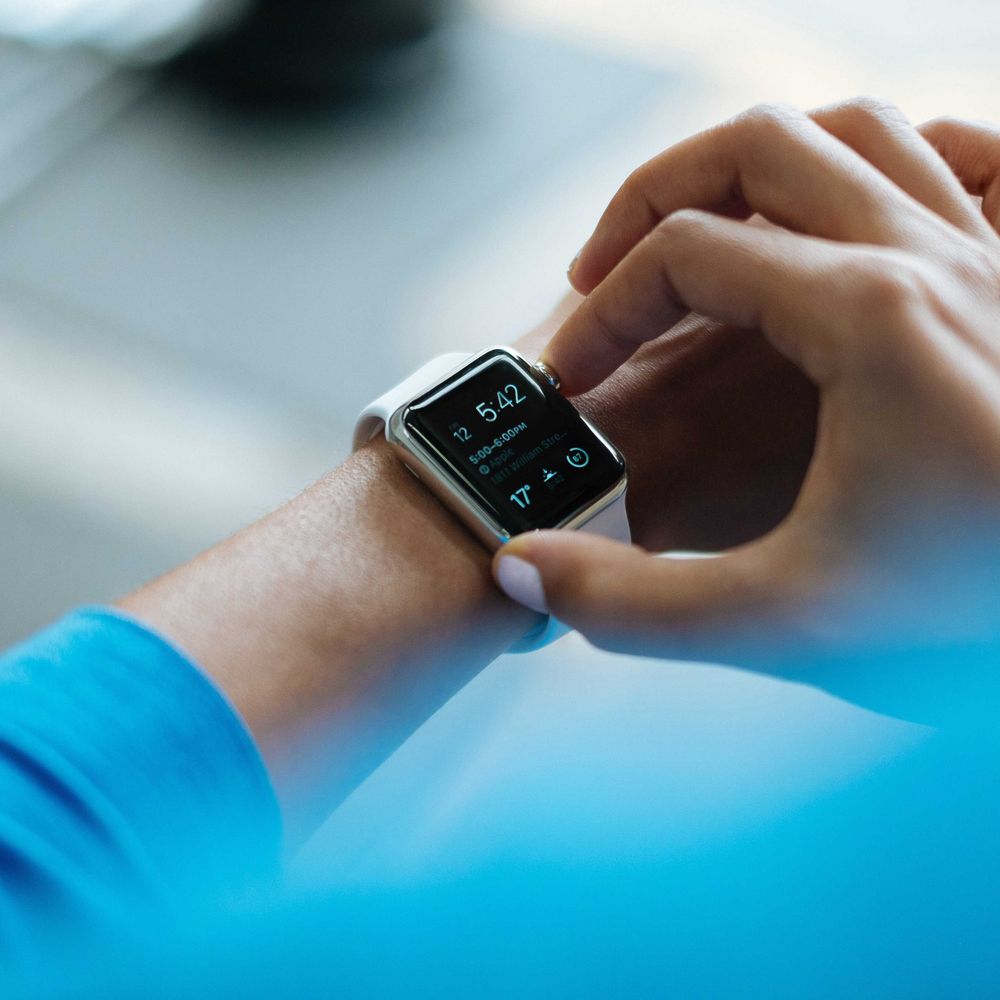
Digital body knowledge: A research project
@c02.sfb1472.uni-siegen.de
Exploring how patient-generated data re/shape doctor-patient relationships. Investigating the impact of wearable, app & platform data on medical authority, patient agency & professional knowledge. https://tinyurl.com/c02sfb1472
Pinned
Wearables, apps & platforms generate more & more body data, shaping how medical knowledge is produced & applied. In our project, 'Digital Body Knowledge. Fault Lines of Problematic Popularity in Health Care', we explore how these developments impact interactions between patients & doctors. [1/3]
Madeleine Akrich shows in “From Communities of Practice to Epistemic Communities” (2010) how (online) health groups become epistemic communities that produce their own knowledge. This shifts the view of lay expertise from application to production.
doi.org/10.5153/sro.2152
#layexpertise
doi.org/10.5153/sro.2152
#layexpertise
Sage Journals: Discover world-class research
Subscription and open access journals from Sage, the world's leading independent academic publisher.
doi.org
November 18, 2025 at 9:43 AM
Madeleine Akrich shows in “From Communities of Practice to Epistemic Communities” (2010) how (online) health groups become epistemic communities that produce their own knowledge. This shifts the view of lay expertise from application to production.
doi.org/10.5153/sro.2152
#layexpertise
doi.org/10.5153/sro.2152
#layexpertise
In “The nature of the Net” (2004), Samantha Adams & Marc Berg reframe the problem of extension: as lay expertise spreads online, the issue becomes one of reliability – a quality made, not given.
doi.org/10.1108/09593840410542484
#layexpertise
doi.org/10.1108/09593840410542484
#layexpertise

The nature of the Net: constructing reliability of health information on the Web
This article juxtaposes the history of the book to the current discussions about lay health information on the Internet in order to thoroughly open up the notion of “reliability” that underlies these ...
doi.org
November 11, 2025 at 9:27 AM
In “The nature of the Net” (2004), Samantha Adams & Marc Berg reframe the problem of extension: as lay expertise spreads online, the issue becomes one of reliability – a quality made, not given.
doi.org/10.1108/09593840410542484
#layexpertise
doi.org/10.1108/09593840410542484
#layexpertise
We had a fantastic workshop today with Kate Weiner, Lisa Gerzen & @enricomariapiras.bsky.social! In our Data Sprint, we explored forums where people with obesity, sleep apnoea & ME/CFS discuss tracking devices and (digital) health data. Supported by @sfb1472.uni-siegen.de & funded by @dfg.de.

October 24, 2025 at 6:55 PM
We had a fantastic workshop today with Kate Weiner, Lisa Gerzen & @enricomariapiras.bsky.social! In our Data Sprint, we explored forums where people with obesity, sleep apnoea & ME/CFS discuss tracking devices and (digital) health data. Supported by @sfb1472.uni-siegen.de & funded by @dfg.de.
Harry Collins & Robert Evans argue in "The Third Wave of Science Studies" (2002) that dissolving boundaries between experts & publics risks an unlimited "problem of extension." Their solution: distinguishing interactive from contributory expertise.
doi.org/10.1177/0306...
#layexpertise
doi.org/10.1177/0306...
#layexpertise
Sage Journals: Discover world-class research
Subscription and open access journals from Sage, the world's leading independent academic publisher.
doi.org
September 8, 2025 at 12:38 PM
Harry Collins & Robert Evans argue in "The Third Wave of Science Studies" (2002) that dissolving boundaries between experts & publics risks an unlimited "problem of extension." Their solution: distinguishing interactive from contributory expertise.
doi.org/10.1177/0306...
#layexpertise
doi.org/10.1177/0306...
#layexpertise
“May the Sheep Safely Graze?” (1998) by Brian Wynne probes the expert-lay divide, showing how local knowledges – like farmers’ insights on soil & sheep – are sidelined. He reframes science as cultural practice that stabilises authority, not universal truth.
doi.org/10.4135/9781...
#layexpertise
doi.org/10.4135/9781...
#layexpertise
Sage Academic Books - Risk, Environment and Modernity: Towards a New Ecology
<p>This wide-ranging and accessible contribution to the study of risk, ecology and environment helps us to understand the politics of ecology and the place of s
doi.org
September 5, 2025 at 12:52 PM
“May the Sheep Safely Graze?” (1998) by Brian Wynne probes the expert-lay divide, showing how local knowledges – like farmers’ insights on soil & sheep – are sidelined. He reframes science as cultural practice that stabilises authority, not universal truth.
doi.org/10.4135/9781...
#layexpertise
doi.org/10.4135/9781...
#layexpertise
In "The Meaning and Significance of Lay Expertise" (2023), Steven Epstein revisits the concept's development, addressing critiques & outlining key dimensions, highlighting lay expertise as a hybrid, collective fusion of experiential & formal knowledge.
doi.org/10.1093/oxfo...
#layexpertise
doi.org/10.1093/oxfo...
#layexpertise

The Oxford Handbook of Expertise and Democratic Politics
Abstract. This volume brings together investigations from social scientists, philosophers, and legal scholars into the political dimensions of expertise. I
doi.org
September 3, 2025 at 10:22 AM
In "The Meaning and Significance of Lay Expertise" (2023), Steven Epstein revisits the concept's development, addressing critiques & outlining key dimensions, highlighting lay expertise as a hybrid, collective fusion of experiential & formal knowledge.
doi.org/10.1093/oxfo...
#layexpertise
doi.org/10.1093/oxfo...
#layexpertise
Steven Epstein shows in “The Construction of Lay Expertise” (1995) how AIDS activists in the 1980s strategically engaged with experts. A crucial factor was their appropriation of biomedical knowledge to gain credibility, reform trials & reshape biomedicine.
doi.org/10.1177/0162...
#layexpertise
doi.org/10.1177/0162...
#layexpertise

The Construction of Lay Expertise: AIDS Activism and the Forging of Credibility in the Reform of Clinical Trials - Steven Epstein, 1995
In an unusual instance of lay participation in biomedical research, U.S. AIDS treatment
activists have constituted themselves as credible participants in the pr...
doi.org
September 1, 2025 at 2:55 PM
Steven Epstein shows in “The Construction of Lay Expertise” (1995) how AIDS activists in the 1980s strategically engaged with experts. A crucial factor was their appropriation of biomedical knowledge to gain credibility, reform trials & reshape biomedicine.
doi.org/10.1177/0162...
#layexpertise
doi.org/10.1177/0162...
#layexpertise
In “On the Multiplicity of Lay Expertise” (2023), Madeleine Akrich & Vololona Rabeharisoa show how patient associations practise evidence-based activism, articulating experiential & credentialed knowledge into expertise that reshapes health politics.
doi.org/10.1093/oxfo...
#layexpertise
doi.org/10.1093/oxfo...
#layexpertise
The Oxford Handbook of Expertise and Democratic Politics
Abstract. This volume brings together investigations from social scientists, philosophers, and legal scholars into the political dimensions of expertise. I
doi.org
August 29, 2025 at 12:05 PM
In “On the Multiplicity of Lay Expertise” (2023), Madeleine Akrich & Vololona Rabeharisoa show how patient associations practise evidence-based activism, articulating experiential & credentialed knowledge into expertise that reshapes health politics.
doi.org/10.1093/oxfo...
#layexpertise
doi.org/10.1093/oxfo...
#layexpertise
“Most People with Long COVID Are Their Own Doctors” by @sazanajayadeva.bsky.social & @dalupton.bsky.social (2025) shows vividly how self-help and self-tracking turn patients into experts for themselves while problematising medical authority.
journals.sagepub.com/doi/10.1177/...
#layexpertise
journals.sagepub.com/doi/10.1177/...
#layexpertise
‘Most People with Long COVID Are Their Own Doctors’: Self-Tracking and Online Patient Groups as Pathways to Challenging Epistemic Injustice - Sazana Jayadeva, Deborah Lupton, 2025
This article focuses on the struggles of people with Long COVID to obtain diagnoses and treatment in the face of medical dismissal and ignorance. Drawing on int...
journals.sagepub.com
August 27, 2025 at 6:17 PM
“Most People with Long COVID Are Their Own Doctors” by @sazanajayadeva.bsky.social & @dalupton.bsky.social (2025) shows vividly how self-help and self-tracking turn patients into experts for themselves while problematising medical authority.
journals.sagepub.com/doi/10.1177/...
#layexpertise
journals.sagepub.com/doi/10.1177/...
#layexpertise
After introducing this research project via our past publications, we now start an ongoing thread on a key concept in our work: lay expertise. In the weeks ahead, we’ll present classics and brand-new texts we consider central and relevant – and welcome your comments and suggestions! #layexpertise
August 25, 2025 at 3:22 PM
After introducing this research project via our past publications, we now start an ongoing thread on a key concept in our work: lay expertise. In the weeks ahead, we’ll present classics and brand-new texts we consider central and relevant – and welcome your comments and suggestions! #layexpertise
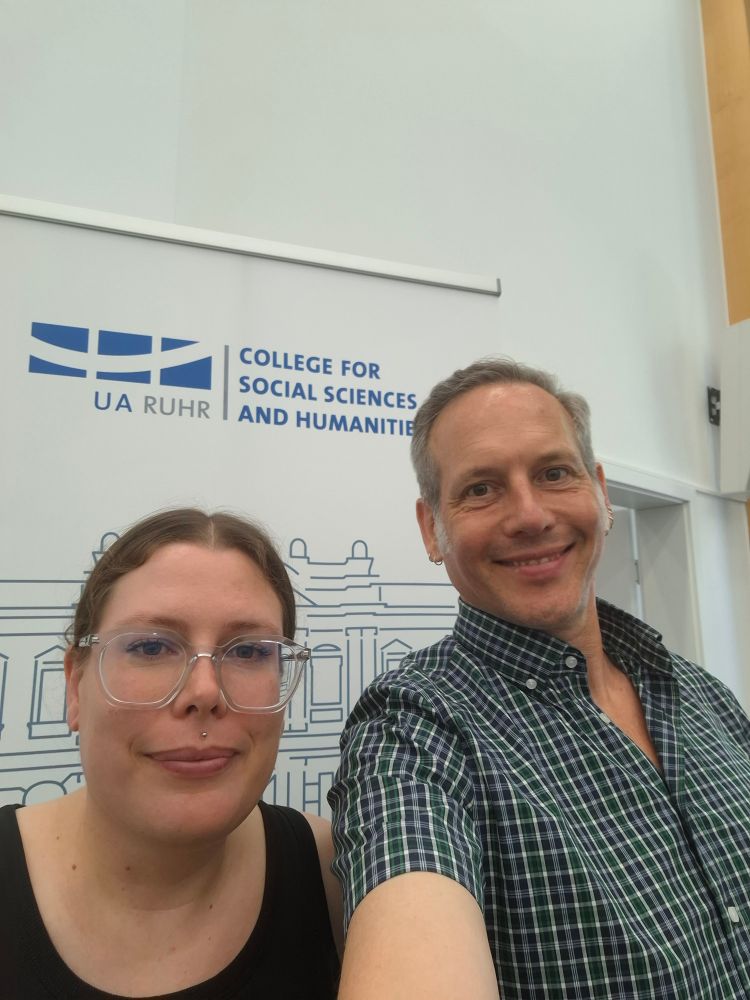
Spending this very hot day while listening to very cool talks at the symposium "Therapeutic Encounters with Chatbots: The Social and Ethical Implications of Artificial Therapeutic Agents" (www.college-uaruhr.de/news-events/...), organised by @benjaminmarent.bsky.social and Sebastian Merkel. #sts
July 1, 2025 at 12:28 PM
Spending this very hot day while listening to very cool talks at the symposium "Therapeutic Encounters with Chatbots: The Social and Ethical Implications of Artificial Therapeutic Agents" (www.college-uaruhr.de/news-events/...), organised by @benjaminmarent.bsky.social and Sebastian Merkel. #sts
Last stop on our journey through the archive: In 2021, we explored how "the popular" has changed - from cultural distinction to measurable attention. The German version of the article we posted some weeks ago is available here (Open Access): doi.org/10.2478/kwg-2021-0027
#SFB1472
#SFB1472
FELIX MEINER VERLAG: Was bei vielen Beachtung findet: Zu den Transformationen des Populären
doi.org
June 10, 2025 at 2:06 PM
Last stop on our journey through the archive: In 2021, we explored how "the popular" has changed - from cultural distinction to measurable attention. The German version of the article we posted some weeks ago is available here (Open Access): doi.org/10.2478/kwg-2021-0027
#SFB1472
#SFB1472
How have digital tools shaped medicine - from early expert systems to mobile tech? In Digitalisierung und Gesundheit, the anthology we introduced last week, we explore decades of change from a sociotechnical perspective (in German): www.nomos-elibrary.de/10.5771/9783...
#sfb1472 #digitalhealth
#sfb1472 #digitalhealth
www.nomos-elibrary.de
June 3, 2025 at 9:46 AM
How have digital tools shaped medicine - from early expert systems to mobile tech? In Digitalisierung und Gesundheit, the anthology we introduced last week, we explore decades of change from a sociotechnical perspective (in German): www.nomos-elibrary.de/10.5771/9783...
#sfb1472 #digitalhealth
#sfb1472 #digitalhealth
Back to 2022 in our project introduction: What does digitalisation mean for healthcare? The volume "Digitalisierung und Gesundheit" (Digitalisation and Health, in German) explores AI, diagnostics, and care across disciplines: www.nomos-shop.de/de/p/digital...
#sfb1472 #digitalhealth
#sfb1472 #digitalhealth

Digitalisierung und Gesundheit
www.nomos-shop.de
May 27, 2025 at 11:47 AM
Back to 2022 in our project introduction: What does digitalisation mean for healthcare? The volume "Digitalisierung und Gesundheit" (Digitalisation and Health, in German) explores AI, diagnostics, and care across disciplines: www.nomos-shop.de/de/p/digital...
#sfb1472 #digitalhealth
#sfb1472 #digitalhealth
Moving further back in our project intro, this week we're sharing a report on the 2022 annual conference of Collaborative Research Centre 1472 "Transformations of the Popular", titled "Participation as Challenge".
Full text (in German): doi.org/10.28937/978...
#sfb1472
Full text (in German): doi.org/10.28937/978...
#sfb1472
FELIX MEINER VERLAG: Partizipation als Herausforderung
doi.org
May 20, 2025 at 3:30 PM
Moving further back in our project intro, this week we're sharing a report on the 2022 annual conference of Collaborative Research Centre 1472 "Transformations of the Popular", titled "Participation as Challenge".
Full text (in German): doi.org/10.28937/978...
#sfb1472
Full text (in German): doi.org/10.28937/978...
#sfb1472
Looking back at our research, this week’s spotlight is on misophonia, a diagnosis shaped online, where laypeople and experts co-create medical meaning. We illustrate how communities fight for recognition and define illness. Full text (in German): doi.org/10.1007/s412...
#sfb1472 #digitalhealth
#sfb1472 #digitalhealth
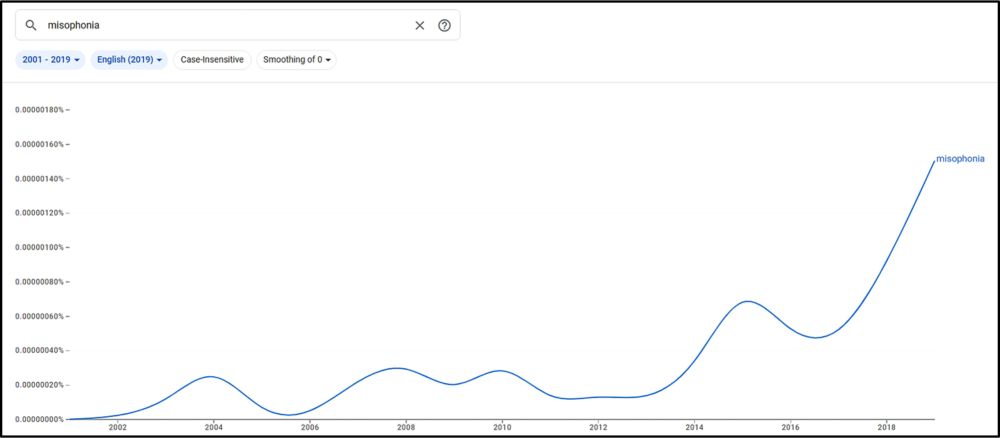
»Making Up Misophonic People« - Zeitschrift für Literaturwissenschaft und Linguistik
Those affected by misophonia describe it as one of the first full-fledged diagnoses of the internet age. People who feel an insurmountable hatred of specific sounds gather in forums and on platforms. ...
doi.org
May 13, 2025 at 10:16 AM
Looking back at our research, this week’s spotlight is on misophonia, a diagnosis shaped online, where laypeople and experts co-create medical meaning. We illustrate how communities fight for recognition and define illness. Full text (in German): doi.org/10.1007/s412...
#sfb1472 #digitalhealth
#sfb1472 #digitalhealth
New week, new post in our intro series: What does it mean to be popular today? This article traces how popularity shifted from cultural distinction to measurable attention – via charts, clicks & likes. Read more: www.mdpi.com/2076-0752/12...
#SFB1472 #OpenAccess
#SFB1472 #OpenAccess
www.mdpi.com
April 29, 2025 at 11:38 AM
New week, new post in our intro series: What does it mean to be popular today? This article traces how popularity shifted from cultural distinction to measurable attention – via charts, clicks & likes. Read more: www.mdpi.com/2076-0752/12...
#SFB1472 #OpenAccess
#SFB1472 #OpenAccess
Next up in our intro series: How do laypeople and experts interact in shifting institutions like medicine, politics, and religion? This 2023 special issue maps the terrain of knowledge, power & participation. Full text (in German): doi.org/10.1007/s41244-023-00314-1
#SFB1472 #OpenAccess
#SFB1472 #OpenAccess

Expert*innen-Lai*innen-Kommunikation im institutionellen Wandel – Beispiele aus Medizin, Kommunalpolitik und Kirche - Zeitschrift für Literaturwissenschaft und Linguistik
Zeitschrift für Literaturwissenschaft und Linguistik -
doi.org
April 22, 2025 at 9:15 AM
Next up in our intro series: How do laypeople and experts interact in shifting institutions like medicine, politics, and religion? This 2023 special issue maps the terrain of knowledge, power & participation. Full text (in German): doi.org/10.1007/s41244-023-00314-1
#SFB1472 #OpenAccess
#SFB1472 #OpenAccess
Auch wir haben einen Beitrag zur neuen Ausgabe der POP beigesteuert: unsere Überlegungen zu Konvergenzen zwischen Lifestyle-Wearables und zertifizierten Medizinprodukten am Beispiel der Apple Watch, welche im Rahmen des @sfb1472.uni-siegen.de entstanden sind.

Die neue Ausgabe der »Pop«-Zeitschrift ist erschienen!
– etwa zu Geld, Prompts, Modezyklus, KI-Krieg, Donald Trump, Dark Romance, geschrieben von u.a. Annekathrin Kohout, Kaspar Maase, Lars Koch, Jörg Scheller und Maren Lickhardt.
pop-zeitschrift.de/2025/04/08/h...
– etwa zu Geld, Prompts, Modezyklus, KI-Krieg, Donald Trump, Dark Romance, geschrieben von u.a. Annekathrin Kohout, Kaspar Maase, Lars Koch, Jörg Scheller und Maren Lickhardt.
pop-zeitschrift.de/2025/04/08/h...

April 16, 2025 at 10:25 AM
Auch wir haben einen Beitrag zur neuen Ausgabe der POP beigesteuert: unsere Überlegungen zu Konvergenzen zwischen Lifestyle-Wearables und zertifizierten Medizinprodukten am Beispiel der Apple Watch, welche im Rahmen des @sfb1472.uni-siegen.de entstanden sind.
On we go with our project intro and another throwback: In 2023, we explored how wearables like Fitbits generate “grey data” – private, yet popular health info. What makes it popular, what makes it tricky? Full text (in German): doi.org/10.14361/pop...
BEACHTUNG UND BEWERTUNG POPULÄRER KÖRPERDATEN
Article BEACHTUNG UND BEWERTUNG POPULÄRER KÖRPERDATEN was published on April 1, 2023 in the journal POP. Kultur und Kritik (volume 12, issue 1).
doi.org
April 8, 2025 at 9:14 AM
On we go with our project intro and another throwback: In 2023, we explored how wearables like Fitbits generate “grey data” – private, yet popular health info. What makes it popular, what makes it tricky? Full text (in German): doi.org/10.14361/pop...
Continuing our journey backwards with our penultimate publication: This article explores how doctors respond to patient-generated health data from consumer devices. When do they reject, tolerate or integrate such data? Read more: doi.org/10.1111/1467...
Patient‐Generated Data as Interventions in Doctor‐Patient Relationships? Negotiating (Un)Invited Participation in Medical Consultations
Health data generated by apps and devices are increasingly popular and expected to affect various aspects of doctor-patient relationships. No longer confined to medically authorised and certified hea....
doi.org
April 1, 2025 at 6:46 AM
Continuing our journey backwards with our penultimate publication: This article explores how doctors respond to patient-generated health data from consumer devices. When do they reject, tolerate or integrate such data? Read more: doi.org/10.1111/1467...
Hello Bluesky! Our research project has already been running for 4 years, but since we're new on this platform, we’d like to introduce ourselves. Over the coming weeks, we’ll share our findings—starting with our latest publication and working backward. Check it out: doi.org/10.1080/1369...

Old data in new media? Problematic popularity of digital health data and consumer devices
Digital health data and devices have become increasingly popular in contemporary consumer cultures. This resonates with research on the expansion of health data ecosystems and the rise of consumeri...
doi.org
March 28, 2025 at 11:28 AM
Hello Bluesky! Our research project has already been running for 4 years, but since we're new on this platform, we’d like to introduce ourselves. Over the coming weeks, we’ll share our findings—starting with our latest publication and working backward. Check it out: doi.org/10.1080/1369...
Our project is part of the Collaborative Research Centre (SFB) 1472 „Transformations of the Popular“, funded by the German Research Foundation (DFG). #DigitalHealth #eHealth #mHealth #MedicalAuthority #PatientGeneratedData [3/3]
March 25, 2025 at 11:06 AM
Our project is part of the Collaborative Research Centre (SFB) 1472 „Transformations of the Popular“, funded by the German Research Foundation (DFG). #DigitalHealth #eHealth #mHealth #MedicalAuthority #PatientGeneratedData [3/3]
We explore opportunities & conflicts arising when patients generate & present their own biomedical data. How do digitalisation & the popularisation of wearables & patient-generated data challenge medical authority? Do they create new ways of legitimising professional expertise? [2/3]
March 25, 2025 at 11:06 AM
We explore opportunities & conflicts arising when patients generate & present their own biomedical data. How do digitalisation & the popularisation of wearables & patient-generated data challenge medical authority? Do they create new ways of legitimising professional expertise? [2/3]
Wearables, apps & platforms generate more & more body data, shaping how medical knowledge is produced & applied. In our project, 'Digital Body Knowledge. Fault Lines of Problematic Popularity in Health Care', we explore how these developments impact interactions between patients & doctors. [1/3]
March 25, 2025 at 11:06 AM
Wearables, apps & platforms generate more & more body data, shaping how medical knowledge is produced & applied. In our project, 'Digital Body Knowledge. Fault Lines of Problematic Popularity in Health Care', we explore how these developments impact interactions between patients & doctors. [1/3]