




Matthew Apps
@brainapps.bsky.social
Full Professor of Cognitive Computational Neuroscience & MSNlab PI-- Motivation, decision-making & social cognition in human brains. Centre for Human Brain Health, University of Birmingham, UK.
www.msn-lab.com
www.msn-lab.com
Reposted by Matthew Apps

🎉 New paper in Nature Communications 🎉
rdcu.be/e24jT
Does our environment influence how likely we are to help others?
rdcu.be/e24jT
Does our environment influence how likely we are to help others?
Humans are more prosocial in poor foraging environments
Nature Communications - People constantly decide whether to stop what they are doing to do something else. Here, the authors show that the quality of available options has a greater influence on...
rdcu.be
February 10, 2026 at 11:27 AM
🎉 New paper in Nature Communications 🎉
rdcu.be/e24jT
Does our environment influence how likely we are to help others?
rdcu.be/e24jT
Does our environment influence how likely we are to help others?
Reposted by Matthew Apps

I'm more and more convinced that low-dimensional manifolds in the brain are just an artifact of the experimental designs and analyses we use...
🧠📈 🧪
🧠📈 🧪

Dimensionality reduction may be the wrong approach to understanding neural representations. Our new paper shows that across human visual cortex, dimensionality is unbounded and scales with dataset size—we show this across nearly four orders of magnitude. journals.plos.org/ploscompbiol...

December 11, 2025 at 8:19 PM
I'm more and more convinced that low-dimensional manifolds in the brain are just an artifact of the experimental designs and analyses we use...
🧠📈 🧪
🧠📈 🧪
Reposted by Matthew Apps

We are hiring a new Ph. D. student on neuroimaging and/or computational modeling on motivation and emotion. Tübingen is a great place to pursue work on these topics!!
uni-tuebingen.de/fakultaeten/...
uni-tuebingen.de/fakultaeten/...
PhD Position on computational modelling and neuroscience (m/f/d)
uni-tuebingen.de
December 10, 2025 at 4:04 PM
We are hiring a new Ph. D. student on neuroimaging and/or computational modeling on motivation and emotion. Tübingen is a great place to pursue work on these topics!!
uni-tuebingen.de/fakultaeten/...
uni-tuebingen.de/fakultaeten/...
Reposted by Matthew Apps
*PhD funding through the @mrcaimdtp.bsky.social* interested in doing a PhD aimed at understanding the brain mechanisms underlying how sleep impacts on motivation in health and Parkinsons Disease? Want to learn computational modelling & brain imaging? Get in touch. more.bham.ac.uk/mrc-aim/phd-...
PhD Opportunities – MRC AIM
more.bham.ac.uk
December 4, 2025 at 1:59 PM
*PhD funding through the @mrcaimdtp.bsky.social* interested in doing a PhD aimed at understanding the brain mechanisms underlying how sleep impacts on motivation in health and Parkinsons Disease? Want to learn computational modelling & brain imaging? Get in touch. more.bham.ac.uk/mrc-aim/phd-...
*PhD funding through the @mrcaimdtp.bsky.social* interested in doing a PhD aimed at understanding the brain mechanisms underlying how sleep impacts on motivation in health and Parkinsons Disease? Want to learn computational modelling & brain imaging? Get in touch. more.bham.ac.uk/mrc-aim/phd-...
PhD Opportunities – MRC AIM
more.bham.ac.uk
December 4, 2025 at 1:59 PM
*PhD funding through the @mrcaimdtp.bsky.social* interested in doing a PhD aimed at understanding the brain mechanisms underlying how sleep impacts on motivation in health and Parkinsons Disease? Want to learn computational modelling & brain imaging? Get in touch. more.bham.ac.uk/mrc-aim/phd-...
Reposted by Matthew Apps

My very first paper is finally out in @pnas.org, with Catherine Tallon-Baudry and Patrick Haggard! Interoception, exteroception, the self and more, it's got it all.
Also it should go open access at some point
www.pnas.org/doi/10.1073/...
Also it should go open access at some point
www.pnas.org/doi/10.1073/...

Interoception vs. Exteroception: Cardiac interoception competes with tactile perception, yet also facilitates self-relevance encoding | PNAS
Internal bodily signals, notably the heartbeat, influence our perception of the external
world—but the nature of this influence remains unclear. Di...
www.pnas.org
December 3, 2025 at 9:35 AM
My very first paper is finally out in @pnas.org, with Catherine Tallon-Baudry and Patrick Haggard! Interoception, exteroception, the self and more, it's got it all.
Also it should go open access at some point
www.pnas.org/doi/10.1073/...
Also it should go open access at some point
www.pnas.org/doi/10.1073/...
Reposted by Matthew Apps

🌎 New paper in @commspsychol.nature.com 🌍
doi.org/10.1038/s442...
There is an urgent need to choose behaviours that mitigate climate change, but these are often more effortful. Can we increase pro-environmental motivation?
Joint w/ Luis Sebastian Contreras-Huerta & amazing international team 👇🧵
doi.org/10.1038/s442...
There is an urgent need to choose behaviours that mitigate climate change, but these are often more effortful. Can we increase pro-environmental motivation?
Joint w/ Luis Sebastian Contreras-Huerta & amazing international team 👇🧵

November 5, 2025 at 10:18 AM
🌎 New paper in @commspsychol.nature.com 🌍
doi.org/10.1038/s442...
There is an urgent need to choose behaviours that mitigate climate change, but these are often more effortful. Can we increase pro-environmental motivation?
Joint w/ Luis Sebastian Contreras-Huerta & amazing international team 👇🧵
doi.org/10.1038/s442...
There is an urgent need to choose behaviours that mitigate climate change, but these are often more effortful. Can we increase pro-environmental motivation?
Joint w/ Luis Sebastian Contreras-Huerta & amazing international team 👇🧵
Reposted by Matthew Apps
How can we encourage people to put in effort to benefit the climate? Our new task can help tell us how...
🌎 New paper in @commspsychol.nature.com 🌍
doi.org/10.1038/s442...
There is an urgent need to choose behaviours that mitigate climate change, but these are often more effortful. Can we increase pro-environmental motivation?
Joint w/ Luis Sebastian Contreras-Huerta & amazing international team 👇🧵
doi.org/10.1038/s442...
There is an urgent need to choose behaviours that mitigate climate change, but these are often more effortful. Can we increase pro-environmental motivation?
Joint w/ Luis Sebastian Contreras-Huerta & amazing international team 👇🧵
November 5, 2025 at 10:32 AM
How can we encourage people to put in effort to benefit the climate? Our new task can help tell us how...
Reposted by Matthew Apps

Foraging as an ethological framework for neuroscience
From the amazing @lauragrima.bsky.social and colleagues - definitely looking forward to reading this!
#neuroskyence #psychscisky #cognition
From the amazing @lauragrima.bsky.social and colleagues - definitely looking forward to reading this!
#neuroskyence #psychscisky #cognition

Foraging as an ethological framework for neuroscience
The study of foraging is central to a renewed interest in naturalistic behavior in neuroscience. Applying a foraging framework grounded in behavioral …
www.sciencedirect.com
November 14, 2025 at 9:23 AM
Foraging as an ethological framework for neuroscience
From the amazing @lauragrima.bsky.social and colleagues - definitely looking forward to reading this!
#neuroskyence #psychscisky #cognition
From the amazing @lauragrima.bsky.social and colleagues - definitely looking forward to reading this!
#neuroskyence #psychscisky #cognition
Super pleased with this one, led by the amazing PhD student and foraging expert @emmavscholey.bsky.social!

🧪Preprint!
How foragers depart from optimal models can tell us a lot about how they compute their decisions.
A strong but underexplored departure is that foragers widely vary when they leave identical patches.
A 🧵
doi.org/10.1101/2025...
With
@emmavscholey.bsky.social @brainapps.bsky.social
How foragers depart from optimal models can tell us a lot about how they compute their decisions.
A strong but underexplored departure is that foragers widely vary when they leave identical patches.
A 🧵
doi.org/10.1101/2025...
With
@emmavscholey.bsky.social @brainapps.bsky.social

November 12, 2025 at 8:07 PM
Super pleased with this one, led by the amazing PhD student and foraging expert @emmavscholey.bsky.social!
Reposted by Matthew Apps

I’m thrilled to share that our paper is now published in the Journal of Experimental Psychology: General!🧵👇 psycnet.apa.org/record/2026-...

November 12, 2025 at 3:03 PM
I’m thrilled to share that our paper is now published in the Journal of Experimental Psychology: General!🧵👇 psycnet.apa.org/record/2026-...
Reposted by Matthew Apps

Does dopamine modulate the willingness to help?
New Psychology Today post, "How Dopamine Affects Our Motivation to Help Others", written by me, with special thanks to @drjocutler.bsky.social and @thepsychologist.bsky.social
www.psychologytoday.com/gb/blog/the-...
New Psychology Today post, "How Dopamine Affects Our Motivation to Help Others", written by me, with special thanks to @drjocutler.bsky.social and @thepsychologist.bsky.social
www.psychologytoday.com/gb/blog/the-...

How Dopamine Affects Our Motivation to Help Others
New research shows patients with Parkinson's disease were more willing to help others after taking their dopamine-boosting medication.
www.psychologytoday.com
October 29, 2025 at 3:28 PM
Does dopamine modulate the willingness to help?
New Psychology Today post, "How Dopamine Affects Our Motivation to Help Others", written by me, with special thanks to @drjocutler.bsky.social and @thepsychologist.bsky.social
www.psychologytoday.com/gb/blog/the-...
New Psychology Today post, "How Dopamine Affects Our Motivation to Help Others", written by me, with special thanks to @drjocutler.bsky.social and @thepsychologist.bsky.social
www.psychologytoday.com/gb/blog/the-...
Reposted by Matthew Apps
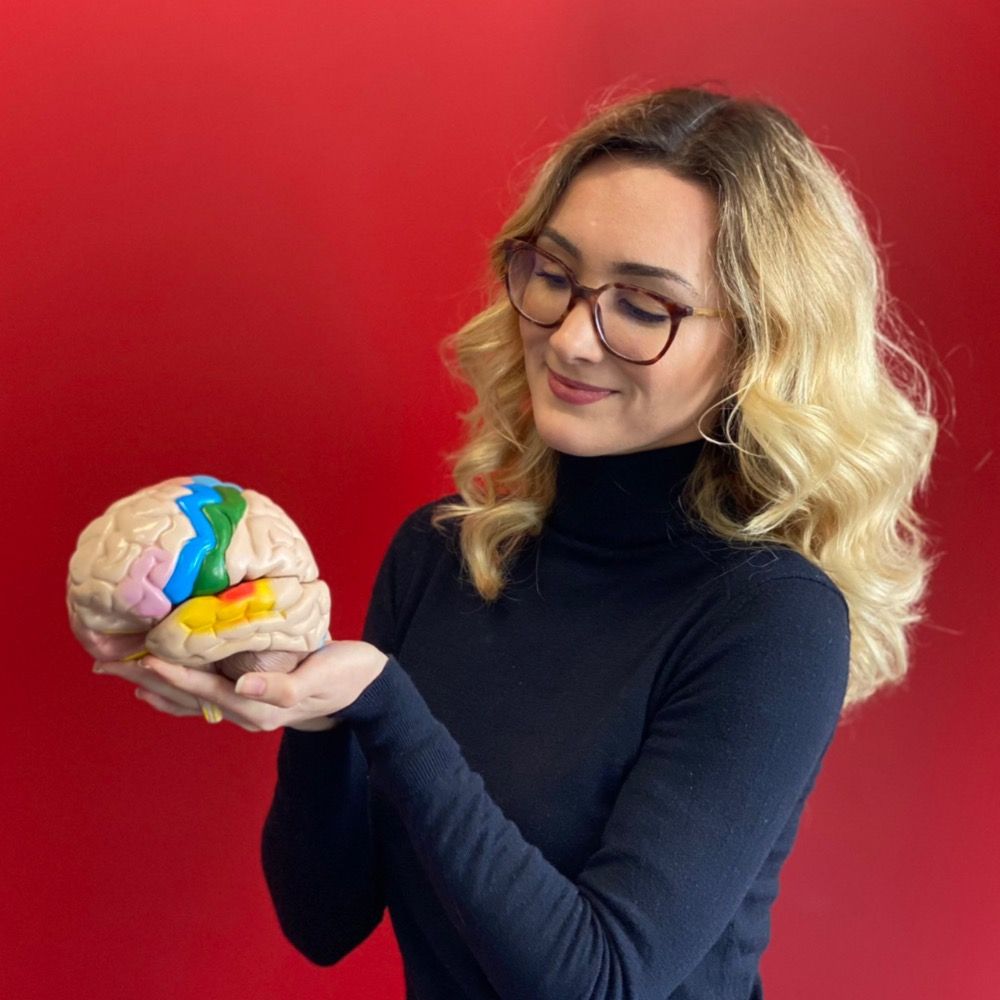
🎉 New paper alert!
In this collaboration across 6 countries 🇧🇬🇬🇷🇳🇬🇸🇪🇬🇧🇺🇸 (n = 3,055), we developed a new pro-environmental behavior task and tested which psychological interventions actually make people more willing to put in real effort for mitigating climate change.
Fully OA: tinyurl.com/2s46fppb
In this collaboration across 6 countries 🇧🇬🇬🇷🇳🇬🇸🇪🇬🇧🇺🇸 (n = 3,055), we developed a new pro-environmental behavior task and tested which psychological interventions actually make people more willing to put in real effort for mitigating climate change.
Fully OA: tinyurl.com/2s46fppb

Psychological interventions that decrease psychological distance or challenge system justification increase motivation to exert effort to mitigate climate change - Communications Psychology
Pro-environmental actions often require effort. Participants were less motivated to help the climate than a food charity, but two interventions removed this bias. Computational modelling linked climat...
doi.org
November 5, 2025 at 11:31 AM
🎉 New paper alert!
In this collaboration across 6 countries 🇧🇬🇬🇷🇳🇬🇸🇪🇬🇧🇺🇸 (n = 3,055), we developed a new pro-environmental behavior task and tested which psychological interventions actually make people more willing to put in real effort for mitigating climate change.
Fully OA: tinyurl.com/2s46fppb
In this collaboration across 6 countries 🇧🇬🇬🇷🇳🇬🇸🇪🇬🇧🇺🇸 (n = 3,055), we developed a new pro-environmental behavior task and tested which psychological interventions actually make people more willing to put in real effort for mitigating climate change.
Fully OA: tinyurl.com/2s46fppb
Reposted by Matthew Apps
Read more about the story behind the project here - communities.springernature.com/posts/boosti...
Thanks to all the co-authors across @sdnl.bsky.social, @msnlab.bsky.social, @thechbh.bsky.social, @uob-sop.bsky.social, @scanunit.bsky.social & others
Thanks to all the co-authors across @sdnl.bsky.social, @msnlab.bsky.social, @thechbh.bsky.social, @uob-sop.bsky.social, @scanunit.bsky.social & others

Boosting climate motivation with psychological interventions
Actions that protect the environment are crucial but often require effort, which people avoid. In a large international collaboration, we identified psychological interventions that can effectively bo...
communities.springernature.com
November 5, 2025 at 10:35 AM
Read more about the story behind the project here - communities.springernature.com/posts/boosti...
Thanks to all the co-authors across @sdnl.bsky.social, @msnlab.bsky.social, @thechbh.bsky.social, @uob-sop.bsky.social, @scanunit.bsky.social & others
Thanks to all the co-authors across @sdnl.bsky.social, @msnlab.bsky.social, @thechbh.bsky.social, @uob-sop.bsky.social, @scanunit.bsky.social & others
Reposted by Matthew Apps
Finally, we found that people who believe climate change is man-made and support policies to protect the planet had higher pro-environmental motivation specifically.
People lower in trait apathy and who rated the task as less effortful were more likely to help both causes.
People lower in trait apathy and who rated the task as less effortful were more likely to help both causes.

November 5, 2025 at 10:30 AM
Finally, we found that people who believe climate change is man-made and support policies to protect the planet had higher pro-environmental motivation specifically.
People lower in trait apathy and who rated the task as less effortful were more likely to help both causes.
People lower in trait apathy and who rated the task as less effortful were more likely to help both causes.
Reposted by Matthew Apps
Using computational modelling, we showed that these effective interventions changed how rewards 💰 for the climate 🌍 (vs. food charity) were devalued by effort 💪.
This was independent of how noisy participants' choices were 🤔
This was independent of how noisy participants' choices were 🤔
November 5, 2025 at 10:29 AM
Using computational modelling, we showed that these effective interventions changed how rewards 💰 for the climate 🌍 (vs. food charity) were devalued by effort 💪.
This was independent of how noisy participants' choices were 🤔
This was independent of how noisy participants' choices were 🤔
Reposted by Matthew Apps
Two interventions robustly decreased the preference to help food over climate, across measures and analyses.
These interventions:
- decreased psychological distance to the negative effects of climate change
- used system justification theory to promote pro-environmental action
These interventions:
- decreased psychological distance to the negative effects of climate change
- used system justification theory to promote pro-environmental action
November 5, 2025 at 10:29 AM
Two interventions robustly decreased the preference to help food over climate, across measures and analyses.
These interventions:
- decreased psychological distance to the negative effects of climate change
- used system justification theory to promote pro-environmental action
These interventions:
- decreased psychological distance to the negative effects of climate change
- used system justification theory to promote pro-environmental action
Reposted by Matthew Apps
We tested the 11 expert-sourced interventions from the International Climate Psychology Collaboration led by
@madalina.bsky.social,
@kimdoell.bsky.social, @jbakcoleman.bsky.social & @jayvanbavel.bsky.social
See doi.org/10.1126/scia... & doi.org/10.1038/s415... (all the data are freely available!)
@madalina.bsky.social,
@kimdoell.bsky.social, @jbakcoleman.bsky.social & @jayvanbavel.bsky.social
See doi.org/10.1126/scia... & doi.org/10.1038/s415... (all the data are freely available!)

The International Climate Psychology Collaboration: Climate change-related data collected from 63 countries - Scientific Data
Scientific Data - The International Climate Psychology Collaboration: Climate change-related data collected from 63 countries
doi.org
November 5, 2025 at 10:28 AM
We tested the 11 expert-sourced interventions from the International Climate Psychology Collaboration led by
@madalina.bsky.social,
@kimdoell.bsky.social, @jbakcoleman.bsky.social & @jayvanbavel.bsky.social
See doi.org/10.1126/scia... & doi.org/10.1038/s415... (all the data are freely available!)
@madalina.bsky.social,
@kimdoell.bsky.social, @jbakcoleman.bsky.social & @jayvanbavel.bsky.social
See doi.org/10.1126/scia... & doi.org/10.1038/s415... (all the data are freely available!)
Reposted by Matthew Apps
People were more willing to exert effort when:
💪 the effort required was 🔽
💰 the reward available was 🔼
In the control group without intervention, motivation was higher to provide food than mitigate climate change 🌍
➡️ Interventions that promote climate motivation are key
💪 the effort required was 🔽
💰 the reward available was 🔼
In the control group without intervention, motivation was higher to provide food than mitigate climate change 🌍
➡️ Interventions that promote climate motivation are key

November 5, 2025 at 10:25 AM
People were more willing to exert effort when:
💪 the effort required was 🔽
💰 the reward available was 🔼
In the control group without intervention, motivation was higher to provide food than mitigate climate change 🌍
➡️ Interventions that promote climate motivation are key
💪 the effort required was 🔽
💰 the reward available was 🔼
In the control group without intervention, motivation was higher to provide food than mitigate climate change 🌍
➡️ Interventions that promote climate motivation are key
Reposted by Matthew Apps
3,055 ppts from 6 countries 🇧🇬🇬🇷🇳🇬🇸🇪🇬🇧🇺🇸 did our new online Pro-Environmental Effort Task ✨ the PEET ✨
On each trial, they choose between rest or work: exerting effort by clicking boxes to earn more credits 💪
Credits were donations to a climate charity 🌍 or a matched control food charity
On each trial, they choose between rest or work: exerting effort by clicking boxes to earn more credits 💪
Credits were donations to a climate charity 🌍 or a matched control food charity

November 5, 2025 at 10:23 AM
3,055 ppts from 6 countries 🇧🇬🇬🇷🇳🇬🇸🇪🇬🇧🇺🇸 did our new online Pro-Environmental Effort Task ✨ the PEET ✨
On each trial, they choose between rest or work: exerting effort by clicking boxes to earn more credits 💪
Credits were donations to a climate charity 🌍 or a matched control food charity
On each trial, they choose between rest or work: exerting effort by clicking boxes to earn more credits 💪
Credits were donations to a climate charity 🌍 or a matched control food charity
How can we encourage people to put in effort to benefit the climate? Our new task can help tell us how...
🌎 New paper in @commspsychol.nature.com 🌍
doi.org/10.1038/s442...
There is an urgent need to choose behaviours that mitigate climate change, but these are often more effortful. Can we increase pro-environmental motivation?
Joint w/ Luis Sebastian Contreras-Huerta & amazing international team 👇🧵
doi.org/10.1038/s442...
There is an urgent need to choose behaviours that mitigate climate change, but these are often more effortful. Can we increase pro-environmental motivation?
Joint w/ Luis Sebastian Contreras-Huerta & amazing international team 👇🧵
November 5, 2025 at 10:32 AM
How can we encourage people to put in effort to benefit the climate? Our new task can help tell us how...
Day 2 starts with a keynote from Susan Healy on learning from mistakes!

November 5, 2025 at 9:39 AM
Day 2 starts with a keynote from Susan Healy on learning from mistakes!
Reposted by Matthew Apps

Had a brilliant day at the Mechanistic Basis of Foraging conference in Birmingham so far - presenting @johalgermissen.bsky.social’s work and listening to many great speakers 🥳🧠🐠
November 4, 2025 at 4:05 PM
Had a brilliant day at the Mechanistic Basis of Foraging conference in Birmingham so far - presenting @johalgermissen.bsky.social’s work and listening to many great speakers 🥳🧠🐠
Nearly ready to go! Mechanistic Basis of Foraging 2025!

November 4, 2025 at 9:05 AM
Nearly ready to go! Mechanistic Basis of Foraging 2025!