



Bork Group at EMBL Heidelberg
@borklab.bsky.social
Computational biology lab focusing on microbiomes in the human gut and the environment
Homepage: https://www.bork.embl.de/
Mastodon: https://mstdn.science/@BorkLab
Homepage: https://www.bork.embl.de/
Mastodon: https://mstdn.science/@BorkLab
Pinned
EMBL is deeply saddened by the passing of our Interim Director General Peer Bork, a pioneering scientist who left an indelible imprint on life science research in Europe and beyond.
We extend our deepest condolences to his family, friends, and colleagues.
www.embl.org/news/people-...
We extend our deepest condolences to his family, friends, and colleagues.
www.embl.org/news/people-...


It has been two weeks since the unexpected death of Peer Bork, and all of us in his research group are deeply missing him. His scientific vision brought us together as a team, and we are immensely grateful for the time we spent together. 🧵
Reposted by Bork Group at EMBL Heidelberg

We’re hiring: Research Group Leader in computational biology.
Are you generating more research ideas than you can explore? Lead cutting-edge AI & biology research at EMBL-EBI.
Apply by 11 April 2026: embl.wd103.myworkdayjobs.com/en-US/EMBL/j...
#ScienceCareers @ewaldlab.org @embl.org
Are you generating more research ideas than you can explore? Lead cutting-edge AI & biology research at EMBL-EBI.
Apply by 11 April 2026: embl.wd103.myworkdayjobs.com/en-US/EMBL/j...
#ScienceCareers @ewaldlab.org @embl.org

February 10, 2026 at 11:31 AM
We’re hiring: Research Group Leader in computational biology.
Are you generating more research ideas than you can explore? Lead cutting-edge AI & biology research at EMBL-EBI.
Apply by 11 April 2026: embl.wd103.myworkdayjobs.com/en-US/EMBL/j...
#ScienceCareers @ewaldlab.org @embl.org
Are you generating more research ideas than you can explore? Lead cutting-edge AI & biology research at EMBL-EBI.
Apply by 11 April 2026: embl.wd103.myworkdayjobs.com/en-US/EMBL/j...
#ScienceCareers @ewaldlab.org @embl.org
Just published: "Planetary microbiome structure and generalist-driven gene flow across disparate habitats" by @podlesny.bsky.social @chanyeong-kim.bsky.social and @jonas-bio.bsky.social www.cell.com/cell/fulltex...
See the quoted post below for a thread on the preprint!
See the quoted post below for a thread on the preprint!
February 9, 2026 at 5:08 PM
Just published: "Planetary microbiome structure and generalist-driven gene flow across disparate habitats" by @podlesny.bsky.social @chanyeong-kim.bsky.social and @jonas-bio.bsky.social www.cell.com/cell/fulltex...
See the quoted post below for a thread on the preprint!
See the quoted post below for a thread on the preprint!
Reposted by Bork Group at EMBL Heidelberg

In the largest study of its kind, scientists in the Bork Group at EMBL have found that a small subset of microbes can carry and transfer genes across disparate habitats, creating a planet-wide, interconnected network of microbiomes 🌍 🦠
🔗 Read more here: www.embl.org/news/science...
🔗 Read more here: www.embl.org/news/science...
February 9, 2026 at 4:42 PM
In the largest study of its kind, scientists in the Bork Group at EMBL have found that a small subset of microbes can carry and transfer genes across disparate habitats, creating a planet-wide, interconnected network of microbiomes 🌍 🦠
🔗 Read more here: www.embl.org/news/science...
🔗 Read more here: www.embl.org/news/science...
Reposted by Bork Group at EMBL Heidelberg
Excited to announce my upcoming @snsf.ch Ambizione research group at EPFL on bacteria-host interactions, combining systems approaches and microphysiological models.
🚨 We have an open PhD position! More info on projects and how to apply here: elisabettacacace.github.io/BHI-Lab/
🧪
🚨 We have an open PhD position! More info on projects and how to apply here: elisabettacacace.github.io/BHI-Lab/
🧪
February 6, 2026 at 3:50 PM
Excited to announce my upcoming @snsf.ch Ambizione research group at EPFL on bacteria-host interactions, combining systems approaches and microphysiological models.
🚨 We have an open PhD position! More info on projects and how to apply here: elisabettacacace.github.io/BHI-Lab/
🧪
🚨 We have an open PhD position! More info on projects and how to apply here: elisabettacacace.github.io/BHI-Lab/
🧪
It has been two weeks since the unexpected death of Peer Bork, and all of us in his research group are deeply missing him. His scientific vision brought us together as a team, and we are immensely grateful for the time we spent together. 🧵
EMBL is deeply saddened by the passing of our Interim Director General Peer Bork, a pioneering scientist who left an indelible imprint on life science research in Europe and beyond.
We extend our deepest condolences to his family, friends, and colleagues.
www.embl.org/news/people-...
We extend our deepest condolences to his family, friends, and colleagues.
www.embl.org/news/people-...
January 30, 2026 at 3:05 PM
It has been two weeks since the unexpected death of Peer Bork, and all of us in his research group are deeply missing him. His scientific vision brought us together as a team, and we are immensely grateful for the time we spent together. 🧵
Reposted by Bork Group at EMBL Heidelberg
EMBL is deeply saddened by the passing of our Interim Director General Peer Bork, a pioneering scientist who left an indelible imprint on life science research in Europe and beyond.
We extend our deepest condolences to his family, friends, and colleagues.
www.embl.org/news/people-...
We extend our deepest condolences to his family, friends, and colleagues.
www.embl.org/news/people-...
January 22, 2026 at 7:40 AM
EMBL is deeply saddened by the passing of our Interim Director General Peer Bork, a pioneering scientist who left an indelible imprint on life science research in Europe and beyond.
We extend our deepest condolences to his family, friends, and colleagues.
www.embl.org/news/people-...
We extend our deepest condolences to his family, friends, and colleagues.
www.embl.org/news/people-...
Reposted by Bork Group at EMBL Heidelberg

We just released a @biorxivpreprint.bsky.social describing the *microntology*, a lightweight controlled vocabulary that we have been using for a while to tag metagenomes with contextual data.
Study by @fullam.bsky.social @vishnuprasoodanan.bsky.social et al:
1/
www.biorxiv.org/content/10.6...
Study by @fullam.bsky.social @vishnuprasoodanan.bsky.social et al:
1/
www.biorxiv.org/content/10.6...

microntology: a lightweight, data-driven controlled vocabulary to describe Earth's microbial habitats
Summary. We introduce microntology v1.0, a pragmatic controlled vocabulary of 148 terms to describe microbial habitats and lifestyles, and provide manually curated microntology annotations for >300k m...
www.biorxiv.org
January 13, 2026 at 4:33 PM
We just released a @biorxivpreprint.bsky.social describing the *microntology*, a lightweight controlled vocabulary that we have been using for a while to tag metagenomes with contextual data.
Study by @fullam.bsky.social @vishnuprasoodanan.bsky.social et al:
1/
www.biorxiv.org/content/10.6...
Study by @fullam.bsky.social @vishnuprasoodanan.bsky.social et al:
1/
www.biorxiv.org/content/10.6...
Reposted by Bork Group at EMBL Heidelberg
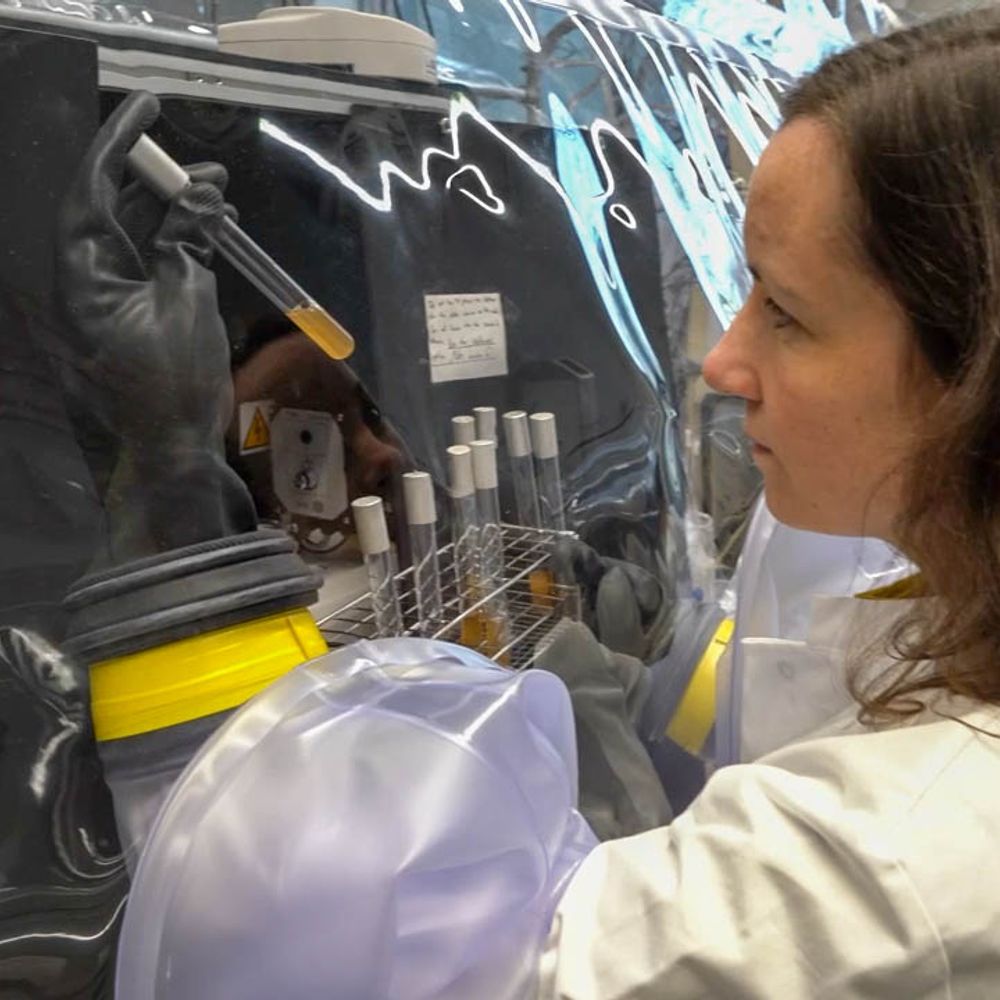
We’re hiring 2 Postdocs (f/m/d) in Drug–Microbiome–Host Interactions 🦠💊
Focus: how non-antibiotic drugs shape the gut microbiome, drug efficacy & side effects.
#PostdocJobs #Microbiome #AcademicJobs
Full job ad:
lisamaierlab.com/wp-content/u...
Focus: how non-antibiotic drugs shape the gut microbiome, drug efficacy & side effects.
#PostdocJobs #Microbiome #AcademicJobs
Full job ad:
lisamaierlab.com/wp-content/u...
lisamaierlab.com
December 22, 2025 at 2:08 PM
We’re hiring 2 Postdocs (f/m/d) in Drug–Microbiome–Host Interactions 🦠💊
Focus: how non-antibiotic drugs shape the gut microbiome, drug efficacy & side effects.
#PostdocJobs #Microbiome #AcademicJobs
Full job ad:
lisamaierlab.com/wp-content/u...
Focus: how non-antibiotic drugs shape the gut microbiome, drug efficacy & side effects.
#PostdocJobs #Microbiome #AcademicJobs
Full job ad:
lisamaierlab.com/wp-content/u...
Reposted by Bork Group at EMBL Heidelberg

Text-mining tools have progressed a lot in the last two decades, and I'm excited to see what can be done now.
More info chembl.blogspot.com/2025/12/new-...
Apply here: embl.wd103.myworkdayjobs.com/EMBL/job/Hin... The position is at @ebi.embl.org
#ScienceJobs #AcademicSky #ChemSky #BioSky [3/3]
More info chembl.blogspot.com/2025/12/new-...
Apply here: embl.wd103.myworkdayjobs.com/EMBL/job/Hin... The position is at @ebi.embl.org
#ScienceJobs #AcademicSky #ChemSky #BioSky [3/3]
New position: NLP Data Scientist/Scientific Data Engineer
As part of a funded collaboration with Open Targets, there are two open positions as part of a team to develop a drug side effect resource:...
chembl.blogspot.com
December 11, 2025 at 6:49 PM
Text-mining tools have progressed a lot in the last two decades, and I'm excited to see what can be done now.
More info chembl.blogspot.com/2025/12/new-...
Apply here: embl.wd103.myworkdayjobs.com/EMBL/job/Hin... The position is at @ebi.embl.org
#ScienceJobs #AcademicSky #ChemSky #BioSky [3/3]
More info chembl.blogspot.com/2025/12/new-...
Apply here: embl.wd103.myworkdayjobs.com/EMBL/job/Hin... The position is at @ebi.embl.org
#ScienceJobs #AcademicSky #ChemSky #BioSky [3/3]
Reposted by Bork Group at EMBL Heidelberg
...but life intervened and funding changed, so SIDER sideeffects.embl.de is unfortunately gathering dust since its last update in 2015.
But there's good news: @chembl.bsky.social and @opentargets.org are starting a new effort to mine the available data and produce a high-quality databases! [2/3]
But there's good news: @chembl.bsky.social and @opentargets.org are starting a new effort to mine the available data and produce a high-quality databases! [2/3]
December 11, 2025 at 6:49 PM
...but life intervened and funding changed, so SIDER sideeffects.embl.de is unfortunately gathering dust since its last update in 2015.
But there's good news: @chembl.bsky.social and @opentargets.org are starting a new effort to mine the available data and produce a high-quality databases! [2/3]
But there's good news: @chembl.bsky.social and @opentargets.org are starting a new effort to mine the available data and produce a high-quality databases! [2/3]
Reposted by Bork Group at EMBL Heidelberg
During my PhD @borklab.bsky.social, we extracted drug side effect data from package inserts and used the dataset to predict new drug targets (doi.org/10.1126/scie...) and pinpoint proteins that mediate the side effects (doi.org/10.1038/msb....). We also published the underlying database... [1/3]

Drug Target Identification Using Side-Effect Similarity
Targets for drugs have so far been predicted on the basis of molecular or cellular features, for example, by exploiting similarity in chemical structure or in activity across cell lines. We used pheno...
doi.org
December 11, 2025 at 6:49 PM
During my PhD @borklab.bsky.social, we extracted drug side effect data from package inserts and used the dataset to predict new drug targets (doi.org/10.1126/scie...) and pinpoint proteins that mediate the side effects (doi.org/10.1038/msb....). We also published the underlying database... [1/3]
Reposted by Bork Group at EMBL Heidelberg
Congratulations, Julia Mahamid!
Julia Mahamid receives the @dfg.de Leibniz Prize for her work on structural cell biology!
#LeibnizPreis
Julia Mahamid receives the @dfg.de Leibniz Prize for her work on structural cell biology!
#LeibnizPreis

Und hier sind sie – die 10 Preisträger*innen des Gottfried Wilhelm #LeibnizPreis' 2026 – ausgezeichnet für ihre exzellenten Forschungsarbeiten und Errungenschaften in der Wissenschaft! 🏆👏
Die Verleihung der Preise feiern wir am 18. März in Berlin.
Einzelheiten & Kurzprofile: sohub.io/1uv1
Die Verleihung der Preise feiern wir am 18. März in Berlin.
Einzelheiten & Kurzprofile: sohub.io/1uv1
December 11, 2025 at 10:12 AM
Congratulations, Julia Mahamid!
Julia Mahamid receives the @dfg.de Leibniz Prize for her work on structural cell biology!
#LeibnizPreis
Julia Mahamid receives the @dfg.de Leibniz Prize for her work on structural cell biology!
#LeibnizPreis
Reposted by Bork Group at EMBL Heidelberg

From @jhcepas.bsky.social and colleagues in the @narjournal.bsky.social #NARDatabaseIssue | eggNOG v7: phylogeny-based orthology predictions and functional annotations | #Bioinformatics #ProteinCentric #Database #OpenScience 🧬 🖥️🧪🇨🇭🇪🇸🇩🇪🔓
⬇️
academic.oup.com/nar/advance-...
⬇️
academic.oup.com/nar/advance-...

eggNOG v7: phylogeny-based orthology predictions and functional annotations
Abstract. The eggNOG (evolutionary genealogy of genes: Non-supervised Orthologous Groups) database is a phylogenomic resource for orthology inference, evol
academic.oup.com
December 9, 2025 at 1:39 PM
From @jhcepas.bsky.social and colleagues in the @narjournal.bsky.social #NARDatabaseIssue | eggNOG v7: phylogeny-based orthology predictions and functional annotations | #Bioinformatics #ProteinCentric #Database #OpenScience 🧬 🖥️🧪🇨🇭🇪🇸🇩🇪🔓
⬇️
academic.oup.com/nar/advance-...
⬇️
academic.oup.com/nar/advance-...
Reposted by Bork Group at EMBL Heidelberg

We're excited to release metaTraits.embl.de! 🦠 Interactively explore 140+ 𝗺𝗶𝗰𝗿𝗼𝗯𝗶𝗮𝗹 𝗽𝗵𝗲𝗻𝗼𝘁𝘆𝗽𝗶𝗰 𝘁𝗿𝗮𝗶𝘁𝘀, harmonized & integrated from culture-derived collections 🔬 & genome-based predictions 🧬 for >2M MAGs & genomes.
Publication at NAR: doi.org/10.1093/nar/... @narjournal.bsky.social #microsky 🧵 1/8
Publication at NAR: doi.org/10.1093/nar/... @narjournal.bsky.social #microsky 🧵 1/8
December 2, 2025 at 5:52 PM
We're excited to release metaTraits.embl.de! 🦠 Interactively explore 140+ 𝗺𝗶𝗰𝗿𝗼𝗯𝗶𝗮𝗹 𝗽𝗵𝗲𝗻𝗼𝘁𝘆𝗽𝗶𝗰 𝘁𝗿𝗮𝗶𝘁𝘀, harmonized & integrated from culture-derived collections 🔬 & genome-based predictions 🧬 for >2M MAGs & genomes.
Publication at NAR: doi.org/10.1093/nar/... @narjournal.bsky.social #microsky 🧵 1/8
Publication at NAR: doi.org/10.1093/nar/... @narjournal.bsky.social #microsky 🧵 1/8
Reposted by Bork Group at EMBL Heidelberg
Happy to announce VIRE, a planetary-scale database of >1.7M viral genomes reconstructed from 100k+ metagenomes across diverse environments! In collaboration with @fullam.bsky.social, @tsbschm.bsky.social, and @borklab.bsky.social.
academic.oup.com/nar/advance-article/doi/10.1093/nar/gkaf1225/8356007
academic.oup.com/nar/advance-article/doi/10.1093/nar/gkaf1225/8356007

VIRE: a metagenome-derived, planetary-scale virome resource with environmental context
Abstract. Viruses are the most abundant biological entities on Earth, yet their global diversity remains largely unexplored. Here, we present VIRE, a compr
academic.oup.com
December 1, 2025 at 4:41 AM
Happy to announce VIRE, a planetary-scale database of >1.7M viral genomes reconstructed from 100k+ metagenomes across diverse environments! In collaboration with @fullam.bsky.social, @tsbschm.bsky.social, and @borklab.bsky.social.
academic.oup.com/nar/advance-article/doi/10.1093/nar/gkaf1225/8356007
academic.oup.com/nar/advance-article/doi/10.1093/nar/gkaf1225/8356007
Reposted by Bork Group at EMBL Heidelberg
Congrats @fullam.bsky.social @pangenomics.bsky.social @borklab.bsky.social & team(s). Great to see this published!
proGenomes4: providing 2 million accurately and consistently annotated high-quality prokaryotic genomes: academic.oup.com/nar/article/...
proGenomes4: providing 2 million accurately and consistently annotated high-quality prokaryotic genomes: academic.oup.com/nar/article/...

proGenomes4: providing 2 million accurately and consistently annotated high-quality prokaryotic genomes
Abstract. The pervasive availability of publicly available microbial genomes has opened many new avenues for microbiology research, yet it also demands rob
academic.oup.com
November 20, 2025 at 8:50 AM
Congrats @fullam.bsky.social @pangenomics.bsky.social @borklab.bsky.social & team(s). Great to see this published!
proGenomes4: providing 2 million accurately and consistently annotated high-quality prokaryotic genomes: academic.oup.com/nar/article/...
proGenomes4: providing 2 million accurately and consistently annotated high-quality prokaryotic genomes: academic.oup.com/nar/article/...
Reposted by Bork Group at EMBL Heidelberg
We're up to 1000 studies in metalog.embl.de ! For the past year the focus was on finding inconsistencies in the data and creating the website, but now I have more time to go through the backlog of annotated issues to do QC and load them into the database.

November 6, 2025 at 2:55 PM
We're up to 1000 studies in metalog.embl.de ! For the past year the focus was on finding inconsistencies in the data and creating the website, but now I have more time to go through the backlog of annotated issues to do QC and load them into the database.
Reposted by Bork Group at EMBL Heidelberg
Great to see this finally published!
Metalog: curated and harmonised contextual data for global metagenomics samples
now out in @narjournal.bsky.social
academic.oup.com/nar/advance-...
Metalog: curated and harmonised contextual data for global metagenomics samples
now out in @narjournal.bsky.social
academic.oup.com/nar/advance-...

Metalog: curated and harmonised contextual data for global metagenomics samples
Abstract. Metagenomic sequencing enables the in-depth study of microbes and their functions in humans, animals, and the environment. While sequencing data
academic.oup.com
October 31, 2025 at 3:16 PM
Great to see this finally published!
Metalog: curated and harmonised contextual data for global metagenomics samples
now out in @narjournal.bsky.social
academic.oup.com/nar/advance-...
Metalog: curated and harmonised contextual data for global metagenomics samples
now out in @narjournal.bsky.social
academic.oup.com/nar/advance-...
Our newest preprint is the work of two talented PhD students: Dominic Eriksson (working in the labs of Meike Vogt, Nicolas Gruber & Shinichi Sunagawa @ethz.ch) and @jonas-bio.bsky.social from our group @embl.org, investigating latitudinal diversity gradients of the ocean microbiome (🧵 linked below)
Latitudinal diversity gradients (LDGs) are found across 🌱🐨🦠 but their underlying mechanisms remain unclear.
In this study, we highlight that LDGs are not universal in marine microbiomes but reflect lineage-specific ecological strategies and environmental responses.
doi.org/10.1101/2025...
In this study, we highlight that LDGs are not universal in marine microbiomes but reflect lineage-specific ecological strategies and environmental responses.
doi.org/10.1101/2025...

Variations in the latitudinal diversity gradients of the ocean microbiome
Latitudinal diversity gradients (LDGs), typically declining from the equator to the poles, are among the most pervasive macroecological patterns, yet their generality and underlying drivers in the oce...
doi.org
October 15, 2025 at 1:23 PM
Our newest preprint is the work of two talented PhD students: Dominic Eriksson (working in the labs of Meike Vogt, Nicolas Gruber & Shinichi Sunagawa @ethz.ch) and @jonas-bio.bsky.social from our group @embl.org, investigating latitudinal diversity gradients of the ocean microbiome (🧵 linked below)
Reposted by Bork Group at EMBL Heidelberg

Latitudinal diversity gradients (LDGs) are found across 🌱🐨🦠 but their underlying mechanisms remain unclear.
In this study, we highlight that LDGs are not universal in marine microbiomes but reflect lineage-specific ecological strategies and environmental responses.
doi.org/10.1101/2025...
In this study, we highlight that LDGs are not universal in marine microbiomes but reflect lineage-specific ecological strategies and environmental responses.
doi.org/10.1101/2025...
Variations in the latitudinal diversity gradients of the ocean microbiome
Latitudinal diversity gradients (LDGs), typically declining from the equator to the poles, are among the most pervasive macroecological patterns, yet their generality and underlying drivers in the oce...
doi.org
October 15, 2025 at 12:05 PM
Latitudinal diversity gradients (LDGs) are found across 🌱🐨🦠 but their underlying mechanisms remain unclear.
In this study, we highlight that LDGs are not universal in marine microbiomes but reflect lineage-specific ecological strategies and environmental responses.
doi.org/10.1101/2025...
In this study, we highlight that LDGs are not universal in marine microbiomes but reflect lineage-specific ecological strategies and environmental responses.
doi.org/10.1101/2025...
Reposted by Bork Group at EMBL Heidelberg

The Data Science team at EMBL is hiring for two open positions! First, for a Scientific Community Manager, focusing on community aspects and training on data science. embl.wd103.myworkdayjobs.com/en-US/EMBL/j...

Scientific Community Manager
EMBL is Europe’s flagship research laboratory for the life sciences – an intergovernmental organisation with more than 110 independent research groups and teams performing scientific research in disci...
embl.wd103.myworkdayjobs.com
October 8, 2025 at 7:08 AM
The Data Science team at EMBL is hiring for two open positions! First, for a Scientific Community Manager, focusing on community aspects and training on data science. embl.wd103.myworkdayjobs.com/en-US/EMBL/j...
Reposted by Bork Group at EMBL Heidelberg

Had a great time yesterday presenting my efforts to use large-scale computational analyses to better understand marine microbes and their impact on carbon cycling. Thanks #SAME18 for the opportunity!

September 30, 2025 at 1:16 PM
Had a great time yesterday presenting my efforts to use large-scale computational analyses to better understand marine microbes and their impact on carbon cycling. Thanks #SAME18 for the opportunity!
Reposted by Bork Group at EMBL Heidelberg

Our scientific organisers opened ‘The human microbiome’ symposium by giving us a brief update on their most recent work 🦠 #EESMicrobiome
🔹Mani Arumugam, University of Copenhagen
🔹Ami Bhatt, Stanford University School of Medicine
🔹Peer Bork, EMBL Heidelberg
🔹Nicola Segata, University of Trento
🔹Mani Arumugam, University of Copenhagen
🔹Ami Bhatt, Stanford University School of Medicine
🔹Peer Bork, EMBL Heidelberg
🔹Nicola Segata, University of Trento


September 16, 2025 at 3:11 PM
Our scientific organisers opened ‘The human microbiome’ symposium by giving us a brief update on their most recent work 🦠 #EESMicrobiome
🔹Mani Arumugam, University of Copenhagen
🔹Ami Bhatt, Stanford University School of Medicine
🔹Peer Bork, EMBL Heidelberg
🔹Nicola Segata, University of Trento
🔹Mani Arumugam, University of Copenhagen
🔹Ami Bhatt, Stanford University School of Medicine
🔹Peer Bork, EMBL Heidelberg
🔹Nicola Segata, University of Trento
New preprint from lab: www.biorxiv.org/content/10.1... describing the Metalog database of manually annotated contextual data for >110k metagenomics samples around the globe metalog.embl.de
See the thread below from @biocs.bsky.social for more info!
See the thread below from @biocs.bsky.social for more info!
August 15, 2025 at 8:11 AM
New preprint from lab: www.biorxiv.org/content/10.1... describing the Metalog database of manually annotated contextual data for >110k metagenomics samples around the globe metalog.embl.de
See the thread below from @biocs.bsky.social for more info!
See the thread below from @biocs.bsky.social for more info!
Reposted by Bork Group at EMBL Heidelberg
We’re looking for curious, innovative science leaders at EMBL Heidelberg! 🔬🧬🦠
Join a vibrant, interdisciplinary community where collaboration and innovation are nurtured at all levels.
Take a look at these four open positions 👇
Join a vibrant, interdisciplinary community where collaboration and innovation are nurtured at all levels.
Take a look at these four open positions 👇

August 7, 2025 at 8:28 AM
We’re looking for curious, innovative science leaders at EMBL Heidelberg! 🔬🧬🦠
Join a vibrant, interdisciplinary community where collaboration and innovation are nurtured at all levels.
Take a look at these four open positions 👇
Join a vibrant, interdisciplinary community where collaboration and innovation are nurtured at all levels.
Take a look at these four open positions 👇