




Bob Leung
@bobpmleung.bsky.social
Pok Man Leung 梁博聞 | Microbiologist | BSc @hkust | Ph.D @MonashBDI | ARC DECRA Fellow and Group Leader @MonashUni
Reposted by Bob Leung

New online! Tree bark microbiota in climate-active gas cycling

Tree bark microbiota in climate-active gas cycling
Nature Reviews Microbiology, Published online: 23 January 2026; doi:10.1038/s41579-026-01281-3This study reports that the tree bark microbial community actively modulates fluxes of climate-active gases and volatile organic compounds, and may mediate global atmospheric gas cycling.
dlvr.it
January 23, 2026 at 4:32 PM
New online! Tree bark microbiota in climate-active gas cycling
Reposted by Bob Leung
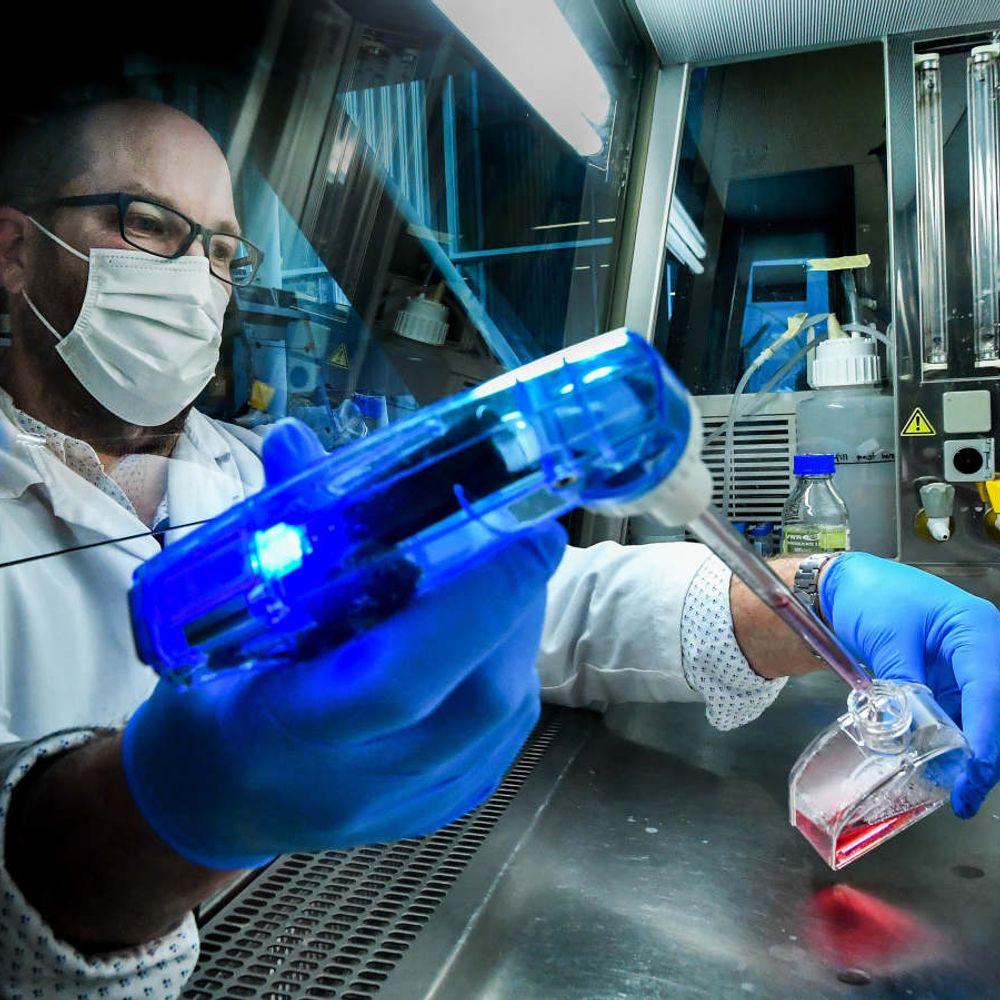
Fantastic new paper from @the-de-lab.bsky.social showing how the CMV m11 protein drives immune evasion by blocking CD44-dependent, FRC-mediated DC migration in the spleen, ultimately dampening antiviral CD8⁺ T cell priming @monashuniversity.bsky.social www.nature.com/articles/s41...

Fibroblastic reticular cells direct the initiation of T cell responses via CD44 - Nature
CD44 expressed by fibroblastic reticular cells in secondary lymphoid organs regulates trafficking of dendritic cells, and thus has an essential role in the priming of T cells and the adaptive immune r...
www.nature.com
January 23, 2026 at 4:03 AM
Fantastic new paper from @the-de-lab.bsky.social showing how the CMV m11 protein drives immune evasion by blocking CD44-dependent, FRC-mediated DC migration in the spleen, ultimately dampening antiviral CD8⁺ T cell priming @monashuniversity.bsky.social www.nature.com/articles/s41...
Reposted by Bob Leung

How do new soils develop after glaciers vanish? ❄️🧬🦠🏔️
The first microbial colonisers use flexible chemoautotrophic strategies to overcome nutrient scarcity, including scavenging H2, CO and CH4 from the air! ⛅
Led by Francesco Ricci, Sean Bay @greening.bsky.social
www.nature.com/articles/s41...
The first microbial colonisers use flexible chemoautotrophic strategies to overcome nutrient scarcity, including scavenging H2, CO and CH4 from the air! ⛅
Led by Francesco Ricci, Sean Bay @greening.bsky.social
www.nature.com/articles/s41...

Metabolically flexible microorganisms rapidly establish glacial foreland ecosystems - Nature Communications
An enduring question in ecology is how new ecosystems form. Studying retreating glaciers, this study shows that life’s first foothold in these new environments is not established by photosynthetic org...
www.nature.com
January 16, 2026 at 4:08 AM
How do new soils develop after glaciers vanish? ❄️🧬🦠🏔️
The first microbial colonisers use flexible chemoautotrophic strategies to overcome nutrient scarcity, including scavenging H2, CO and CH4 from the air! ⛅
Led by Francesco Ricci, Sean Bay @greening.bsky.social
www.nature.com/articles/s41...
The first microbial colonisers use flexible chemoautotrophic strategies to overcome nutrient scarcity, including scavenging H2, CO and CH4 from the air! ⛅
Led by Francesco Ricci, Sean Bay @greening.bsky.social
www.nature.com/articles/s41...
Reposted by Bob Leung

📢 DSMZ is hiring!
We are looking for a Scientific Lead for the SILVA Database, a key tool for understanding microbes and biodiversity.
Learn more and apply: tinyurl.com/y973v547
#HiringNow #ScienceJobs #Microbiology #ResearchCareers
@dsmzd3.bsky.social
We are looking for a Scientific Lead for the SILVA Database, a key tool for understanding microbes and biodiversity.
Learn more and apply: tinyurl.com/y973v547
#HiringNow #ScienceJobs #Microbiology #ResearchCareers
@dsmzd3.bsky.social

January 12, 2026 at 6:05 AM
📢 DSMZ is hiring!
We are looking for a Scientific Lead for the SILVA Database, a key tool for understanding microbes and biodiversity.
Learn more and apply: tinyurl.com/y973v547
#HiringNow #ScienceJobs #Microbiology #ResearchCareers
@dsmzd3.bsky.social
We are looking for a Scientific Lead for the SILVA Database, a key tool for understanding microbes and biodiversity.
Learn more and apply: tinyurl.com/y973v547
#HiringNow #ScienceJobs #Microbiology #ResearchCareers
@dsmzd3.bsky.social
Reposted by Bob Leung

Our revised manuscript is up on BioRxiv and is coming soon to an ASM journal in your neighborhood.
We show that metabolome & transcriptome profiles are frozen in desiccated Arthrobacter and that water vapor induces resuscitation.
Happy to answer any Qs.
www.biorxiv.org/content/10.1...
We show that metabolome & transcriptome profiles are frozen in desiccated Arthrobacter and that water vapor induces resuscitation.
Happy to answer any Qs.
www.biorxiv.org/content/10.1...

Transcriptional and metabolic stasis define desiccation-induced dormancy in the soil bacterium Arthrobacter sp. AZCC_0090 until water vapor initiates resuscitation
Microbes inhabiting soils experience periodic water deprivation. The effects of desiccation on DNA, protein, and membrane integrity are well-described. However, the effects of drying and rehydration o...
www.biorxiv.org
January 14, 2026 at 10:21 PM
Our revised manuscript is up on BioRxiv and is coming soon to an ASM journal in your neighborhood.
We show that metabolome & transcriptome profiles are frozen in desiccated Arthrobacter and that water vapor induces resuscitation.
Happy to answer any Qs.
www.biorxiv.org/content/10.1...
We show that metabolome & transcriptome profiles are frozen in desiccated Arthrobacter and that water vapor induces resuscitation.
Happy to answer any Qs.
www.biorxiv.org/content/10.1...
Reposted by Bob Leung
(1/8) 🚨Thrilled to share our new research, now published on the cover of @science.org ! 🌳🦠
We discovered that tree #Bark — largely regarded as inert — hosts vast #Microbial communities that actively interact with the atmosphere. 🧵👇 www.science.org/doi/10.1126/...
We discovered that tree #Bark — largely regarded as inert — hosts vast #Microbial communities that actively interact with the atmosphere. 🧵👇 www.science.org/doi/10.1126/...


January 13, 2026 at 11:53 PM
(1/8) 🚨Thrilled to share our new research, now published on the cover of @science.org ! 🌳🦠
We discovered that tree #Bark — largely regarded as inert — hosts vast #Microbial communities that actively interact with the atmosphere. 🧵👇 www.science.org/doi/10.1126/...
We discovered that tree #Bark — largely regarded as inert — hosts vast #Microbial communities that actively interact with the atmosphere. 🧵👇 www.science.org/doi/10.1126/...
Reposted by Bob Leung

The ARC’s processes are back to being farcical, @jasonclaremp.bsky.social
You advocated for a streamlined, efficient, faster ARC, but all that progress has been undone.
How can they claim to fund “innovation” with more than a year between initial proposal & outcomes? It should be 6 months, not 16!
You advocated for a streamlined, efficient, faster ARC, but all that progress has been undone.
How can they claim to fund “innovation” with more than a year between initial proposal & outcomes? It should be 6 months, not 16!
⁉️The ARC has delayed outcomes of ALL grants 1–4 months & increased scheduled outcome windows from 2 weeks to 3 months!
This reverses 4 years of progress in providing greater certainty & ability to plan for researchers, their families & unis.
Their excuse? Security checks under new ARC legislation👇
This reverses 4 years of progress in providing greater certainty & ability to plan for researchers, their families & unis.
Their excuse? Security checks under new ARC legislation👇

January 12, 2026 at 1:34 AM
The ARC’s processes are back to being farcical, @jasonclaremp.bsky.social
You advocated for a streamlined, efficient, faster ARC, but all that progress has been undone.
How can they claim to fund “innovation” with more than a year between initial proposal & outcomes? It should be 6 months, not 16!
You advocated for a streamlined, efficient, faster ARC, but all that progress has been undone.
How can they claim to fund “innovation” with more than a year between initial proposal & outcomes? It should be 6 months, not 16!
Reposted by Bob Leung
⁉️The ARC has delayed outcomes of ALL grants 1–4 months & increased scheduled outcome windows from 2 weeks to 3 months!
This reverses 4 years of progress in providing greater certainty & ability to plan for researchers, their families & unis.
Their excuse? Security checks under new ARC legislation👇
This reverses 4 years of progress in providing greater certainty & ability to plan for researchers, their families & unis.
Their excuse? Security checks under new ARC legislation👇
January 12, 2026 at 1:17 AM
⁉️The ARC has delayed outcomes of ALL grants 1–4 months & increased scheduled outcome windows from 2 weeks to 3 months!
This reverses 4 years of progress in providing greater certainty & ability to plan for researchers, their families & unis.
Their excuse? Security checks under new ARC legislation👇
This reverses 4 years of progress in providing greater certainty & ability to plan for researchers, their families & unis.
Their excuse? Security checks under new ARC legislation👇
Reposted by Bob Leung
Turns out, each tree hosts trillions of bacteria in its bark, and these bacteria 'eat' certain gases right out of the air: methane, carbon monoxide, and especially hydrogen.
This is important info because hydrogen helps methane persist longer in the atmosphere.
theconversation.com/we-discovere...
This is important info because hydrogen helps methane persist longer in the atmosphere.
theconversation.com/we-discovere...

We discovered microbes in bark ‘eat’ climate gases. This will change the way we think about trees - Southern Cross University
Tree bark microbes quietly “eat” climate‑warming gases, revealing a hidden way trees clean the air and reshaping how we think about forests.
www.scu.edu.au
January 12, 2026 at 6:25 AM
Turns out, each tree hosts trillions of bacteria in its bark, and these bacteria 'eat' certain gases right out of the air: methane, carbon monoxide, and especially hydrogen.
This is important info because hydrogen helps methane persist longer in the atmosphere.
theconversation.com/we-discovere...
This is important info because hydrogen helps methane persist longer in the atmosphere.
theconversation.com/we-discovere...
Reposted by Bob Leung

Bark microbiota modulate climate-active gas fluxes in Australian forests | Science www.science.org/doi/10.1126/...

Bark microbiota modulate climate-active gas fluxes in Australian forests
Recent studies suggest that microbes inhabit tree bark, yet little is known about their identities, functions, and environmental roles. Here we reveal, through gene-centric and genome-resolved metagen...
www.science.org
January 8, 2026 at 9:30 PM
Bark microbiota modulate climate-active gas fluxes in Australian forests | Science www.science.org/doi/10.1126/...
Reposted by Bob Leung

New research reveals that paperbarks, among other trees, host abundant, specialized, and metabolically active bark-dwelling microbial communities that modulate climatically relevant gases, including methane, hydrogen, and carbon monoxide.
Learn more this week in Science: https://scim.ag/4bp9hgl
Learn more this week in Science: https://scim.ag/4bp9hgl

January 8, 2026 at 7:05 PM
New research reveals that paperbarks, among other trees, host abundant, specialized, and metabolically active bark-dwelling microbial communities that modulate climatically relevant gases, including methane, hydrogen, and carbon monoxide.
Learn more this week in Science: https://scim.ag/4bp9hgl
Learn more this week in Science: https://scim.ag/4bp9hgl
In this week’s @science.org cover article, we discover tree bark is a hidden habitat for abundant, diverse, and specialized microbial life that actively regulate our climate 🦠. Bark isn't just an inert armor of tree but an active interface for climate and biodiversity
www.science.org/eprint/7H9PX...
www.science.org/eprint/7H9PX...

Bark microbiota modulate climate-active gas fluxes in Australian forests
Recent studies suggest that microbes inhabit tree bark, yet little is known about their identities, functions, and environmental roles. Here we reveal, through gene-centric and genome-resolved metagen...
www.science.org
January 8, 2026 at 8:37 PM
In this week’s @science.org cover article, we discover tree bark is a hidden habitat for abundant, diverse, and specialized microbial life that actively regulate our climate 🦠. Bark isn't just an inert armor of tree but an active interface for climate and biodiversity
www.science.org/eprint/7H9PX...
www.science.org/eprint/7H9PX...
Reposted by Bob Leung

A quick microbio present before the holidays 🎁 >150 years after their first description, filamentous "Crenothrix bacteria" are now in stable laboratory culture! In our pre-print, we probe the unique physiology & ecology of the "lacustrine" group of these enigmatic methane-oxidizing microbes... 1/2

Isolation of Crenothrix bacteria reveals the distinct ecophysiologies of filamentous methanotrophs and adaptations to redox stress
At the dawn of modern microbiology, Cohn observed abundant filamentous bacteria in drinking water wells that he named Crenothrix polyspora. Subsequent research has revealed the methanotrophic metaboli...
doi.org
December 19, 2025 at 10:21 AM
A quick microbio present before the holidays 🎁 >150 years after their first description, filamentous "Crenothrix bacteria" are now in stable laboratory culture! In our pre-print, we probe the unique physiology & ecology of the "lacustrine" group of these enigmatic methane-oxidizing microbes... 1/2
Reposted by Bob Leung

“Cultivation of Methanonezhaarchaeia, the third class of methanogens within the phylum Thermoproteota” by @kohtzarchaeota.bsky.social, Sylvia Nupp, and myself is out in Science Advances. 90% enriched culture of a methyl-dismutating thermoproteotal methanogen. #Microsky 🧪 tinyurl.com/bdcc3uzs

Cultivation of Methanonezhaarchaeia, the third class of methanogens within the phylum Thermoproteota
The cultivation of a group of methanogens illuminates their metabolic diversity and the evolution of archaea.
www.science.org
December 12, 2025 at 7:22 PM
“Cultivation of Methanonezhaarchaeia, the third class of methanogens within the phylum Thermoproteota” by @kohtzarchaeota.bsky.social, Sylvia Nupp, and myself is out in Science Advances. 90% enriched culture of a methyl-dismutating thermoproteotal methanogen. #Microsky 🧪 tinyurl.com/bdcc3uzs
Reposted by Bob Leung
New #PrePrint by #PhD @jodittmann.bsky.social open for discussion on @egubg.bsky.social investigating the question: 'Are #GhostForests a substantial source of #Methane from #Reservoirs?' 👻🪵
👇
egusphere.copernicus.org/preprints/20...
👇
egusphere.copernicus.org/preprints/20...


November 19, 2025 at 9:45 PM
New #PrePrint by #PhD @jodittmann.bsky.social open for discussion on @egubg.bsky.social investigating the question: 'Are #GhostForests a substantial source of #Methane from #Reservoirs?' 👻🪵
👇
egusphere.copernicus.org/preprints/20...
👇
egusphere.copernicus.org/preprints/20...
Reposted by Bob Leung
📢 Extra, extra: our collaborative study on trace gas oxidizers in a warmer soil is out as a preprint
www.biorxiv.org/content/10.1...
Big thanks to @thanh0109.bsky.social @bobpmleung.bsky.social @wutkowska.bsky.social @andreasrichter.bsky.social @mathildebio.bsky.social @greening.bsky.social
...
www.biorxiv.org/content/10.1...
Big thanks to @thanh0109.bsky.social @bobpmleung.bsky.social @wutkowska.bsky.social @andreasrichter.bsky.social @mathildebio.bsky.social @greening.bsky.social
...

Soil trace gas oxidizers divergently respond to short- and long-term warming
The upland soil microbiome is dominated by aerobic bacteria that oxidize atmospheric trace gases, including CO, H2, and CH4. As a result, soils are the largest biological sink for these climate-active...
www.biorxiv.org
November 19, 2025 at 9:02 AM
📢 Extra, extra: our collaborative study on trace gas oxidizers in a warmer soil is out as a preprint
www.biorxiv.org/content/10.1...
Big thanks to @thanh0109.bsky.social @bobpmleung.bsky.social @wutkowska.bsky.social @andreasrichter.bsky.social @mathildebio.bsky.social @greening.bsky.social
...
www.biorxiv.org/content/10.1...
Big thanks to @thanh0109.bsky.social @bobpmleung.bsky.social @wutkowska.bsky.social @andreasrichter.bsky.social @mathildebio.bsky.social @greening.bsky.social
...
Reposted by Bob Leung
New preprint: Methyl co-enzme M reductase encoding (potentially methanogenic) Thermoproteota are widespread and transcriptionally active in diverse anoxic ecosystems! @dr-zj.bsky.social, Matthew Kollom & @emileyeloe-fadrosh.bsky.social www.biorxiv.org/cgi/content/... Funded by the DOE BER program.

October 16, 2025 at 9:10 PM
New preprint: Methyl co-enzme M reductase encoding (potentially methanogenic) Thermoproteota are widespread and transcriptionally active in diverse anoxic ecosystems! @dr-zj.bsky.social, Matthew Kollom & @emileyeloe-fadrosh.bsky.social www.biorxiv.org/cgi/content/... Funded by the DOE BER program.
Reposted by Bob Leung

Very excited to share the latest work from our lab, which was published today in Nature!
nature.com/articles/s41...
PhD graduate and now post-doc Sofia Dahlman, along with co-senior author Sam Forster from The Hudson and other researchers from our lab and others.
nature.com/articles/s41...
PhD graduate and now post-doc Sofia Dahlman, along with co-senior author Sam Forster from The Hudson and other researchers from our lab and others.

Isolation, engineering and ecology of temperate phages from the human gut - Nature
Human host-associated cellular products may act as induction agents for bacteriophages.
nature.com
October 15, 2025 at 9:41 PM
Very excited to share the latest work from our lab, which was published today in Nature!
nature.com/articles/s41...
PhD graduate and now post-doc Sofia Dahlman, along with co-senior author Sam Forster from The Hudson and other researchers from our lab and others.
nature.com/articles/s41...
PhD graduate and now post-doc Sofia Dahlman, along with co-senior author Sam Forster from The Hudson and other researchers from our lab and others.
Reposted by Bob Leung

The outer membrane of Gram-negative bacteria blocks many antibiotics. Our latest work reveals that L-type pyocins bypass this barrier by inactivating the BAM complex, killing Pseudomonas aeruginosa without entering the cell, providing a new blueprint for beating antibiotic resistance.

A Protein Antibiotic Inhibits the BAM Complex to Kill Without Cell Entry
Many antibiotics are ineffective against Gram-negative pathogens such as Pseudomonas aeruginosa because they cannot penetrate the bacterial outer membrane. Here, we show that protein antibiotics calle...
www.biorxiv.org
September 20, 2025 at 9:29 AM
The outer membrane of Gram-negative bacteria blocks many antibiotics. Our latest work reveals that L-type pyocins bypass this barrier by inactivating the BAM complex, killing Pseudomonas aeruginosa without entering the cell, providing a new blueprint for beating antibiotic resistance.
Reposted by Bob Leung

Carbon monoxide metabolism in freshwater anaerobic methanotrophic archaea https://www.biorxiv.org/content/10.1101/2025.09.16.676500v1
September 17, 2025 at 4:19 AM
Carbon monoxide metabolism in freshwater anaerobic methanotrophic archaea https://www.biorxiv.org/content/10.1101/2025.09.16.676500v1
Reposted by Bob Leung
📢 PLEASE RT!
❄️ M2 Masters Internship: Metagenomic analysis of microbial cold adaptation in the cryosphere
🧬 Compile & curate ice nucleation & cold-adaptation protein database
🖥️ Build HMM profiles
🦠 Analyze existing metagenomic data using HMMs
☀️ Marseille, France
Apply by 15 Oct
❄️ M2 Masters Internship: Metagenomic analysis of microbial cold adaptation in the cryosphere
🧬 Compile & curate ice nucleation & cold-adaptation protein database
🖥️ Build HMM profiles
🦠 Analyze existing metagenomic data using HMMs
☀️ Marseille, France
Apply by 15 Oct

September 15, 2025 at 11:48 AM
📢 PLEASE RT!
❄️ M2 Masters Internship: Metagenomic analysis of microbial cold adaptation in the cryosphere
🧬 Compile & curate ice nucleation & cold-adaptation protein database
🖥️ Build HMM profiles
🦠 Analyze existing metagenomic data using HMMs
☀️ Marseille, France
Apply by 15 Oct
❄️ M2 Masters Internship: Metagenomic analysis of microbial cold adaptation in the cryosphere
🧬 Compile & curate ice nucleation & cold-adaptation protein database
🖥️ Build HMM profiles
🦠 Analyze existing metagenomic data using HMMs
☀️ Marseille, France
Apply by 15 Oct
Reposted by Bob Leung
2 Postdoc vacancies: Microbial dormancy in the cryosphere
@erc.europa.eu #ERC_SIESTA
📢 PLEASE RT
Experimental:
🧬 Single cell microbial activity measurements, flow cytometry, omics, biogeochem
Modelling:
🖥️ Bioenergetics, thermodynamics, ecological, biogeochem
☀️ Marseille, France
‼️ Apply by 30 Sept
@erc.europa.eu #ERC_SIESTA
📢 PLEASE RT
Experimental:
🧬 Single cell microbial activity measurements, flow cytometry, omics, biogeochem
Modelling:
🖥️ Bioenergetics, thermodynamics, ecological, biogeochem
☀️ Marseille, France
‼️ Apply by 30 Sept

September 10, 2025 at 8:11 AM
2 Postdoc vacancies: Microbial dormancy in the cryosphere
@erc.europa.eu #ERC_SIESTA
📢 PLEASE RT
Experimental:
🧬 Single cell microbial activity measurements, flow cytometry, omics, biogeochem
Modelling:
🖥️ Bioenergetics, thermodynamics, ecological, biogeochem
☀️ Marseille, France
‼️ Apply by 30 Sept
@erc.europa.eu #ERC_SIESTA
📢 PLEASE RT
Experimental:
🧬 Single cell microbial activity measurements, flow cytometry, omics, biogeochem
Modelling:
🖥️ Bioenergetics, thermodynamics, ecological, biogeochem
☀️ Marseille, France
‼️ Apply by 30 Sept


Reposted by Bob Leung

🧪 🥼 🥽 Looking for tools to answer questions related to energy and infrastructure security? Now's your chance to apply for an investigator role at Berkeley Lab's @jgi.doe.gov.
Apply today! ⬇️
Deadline: September 9
Please share!
Apply today! ⬇️
Deadline: September 9
Please share!

Are YOU a researcher in need of genomics tools to answer questions related to energy & infrastructure security? 🖥️🧬
If you haven’t led a project w/the JGI, now is your chance! Deadline SEPT. 9: jointgeno.me/CSPnewPI
Learn more in our Proposal FAQ: jgi.doe.gov/work-with-us...
@axelvisel.bsky.social
If you haven’t led a project w/the JGI, now is your chance! Deadline SEPT. 9: jointgeno.me/CSPnewPI
Learn more in our Proposal FAQ: jgi.doe.gov/work-with-us...
@axelvisel.bsky.social
CSP New Investigator Call | Joint Genome Institute
The CSP New Investigator Call is for investigators and research initiatives new to the JGI. Projects must be independent of ongoing JGI proposals, and lead PIs cannot have been lead PI on any previous...
jointgeno.me
August 18, 2025 at 3:46 PM
🧪 🥼 🥽 Looking for tools to answer questions related to energy and infrastructure security? Now's your chance to apply for an investigator role at Berkeley Lab's @jgi.doe.gov.
Apply today! ⬇️
Deadline: September 9
Please share!
Apply today! ⬇️
Deadline: September 9
Please share!
Reposted by Bob Leung
“Isolation of a new methanotroph belonging to Mycobacterium” is now out! Awesome work by my former postdoc Hiromi Kambara, who led this project all the way.
journals.asm.org/doi/10.1128/...
journals.asm.org/doi/10.1128/...
First isolation of a methanotrophic Mycobacterium reveals ammonia- and pH-tolerant methane oxidation | Applied and Environmental Microbiology
Methane is a significant contributor to climate change (27 times more potent as a
greenhouse gas than carbon dioxide), and the largest biological sink is methane-oxidizing
bacteria: methanotrophs. Alt...
journals.asm.org
August 1, 2025 at 6:37 AM
“Isolation of a new methanotroph belonging to Mycobacterium” is now out! Awesome work by my former postdoc Hiromi Kambara, who led this project all the way.
journals.asm.org/doi/10.1128/...
journals.asm.org/doi/10.1128/...