


Baptiste Castel
@baptistebio.bsky.social
🌿 Plant biologist
👨🔬 Post-doc with Pierre-Marc Delaux and Christophe Jacquet at the LRSV, Toulouse (FR)
🛡️🧬 Interested in the plant immune system and its evolution
👨🔬 Post-doc with Pierre-Marc Delaux and Christophe Jacquet at the LRSV, Toulouse (FR)
🛡️🧬 Interested in the plant immune system and its evolution
Congratulations Sylvain and @nemopeeters.bsky.social !

🆕 version work @sylvain-vicente.bsky.social and collaborators #BIOSP #MathNum @inrae-dpt-spe.bsky.social. Re-evaluation of STAMP modelling, introducing time-resolution. Works also on Animal-bacterial infection models. #infection #Ralstonia #Pseudomonas #Klebsiella www.biorxiv.org/content/10.1...

January 23, 2026 at 9:15 PM
Congratulations Sylvain and @nemopeeters.bsky.social !
Reposted by Baptiste Castel

📢 2 PhD Positions Available in Plant Immune Receptor Bioengineering at Imperial College London
🌱 Start: Oct 2026
📅 Deadline: 10 Feb 2026
🇬🇧 UK/settled status only
💰 Fully funded (48 months)
ℹ️ Info: shorturl.at/po61I
#PlantImmunity #PlantPathology #SyntheticBiology
🙏 Share with interested candidates!
🌱 Start: Oct 2026
📅 Deadline: 10 Feb 2026
🇬🇧 UK/settled status only
💰 Fully funded (48 months)
ℹ️ Info: shorturl.at/po61I
#PlantImmunity #PlantPathology #SyntheticBiology
🙏 Share with interested candidates!
PhD Opportunities | Faculty of Natural Sciences | Imperial College London
www.imperial.ac.uk
January 23, 2026 at 9:33 AM
📢 2 PhD Positions Available in Plant Immune Receptor Bioengineering at Imperial College London
🌱 Start: Oct 2026
📅 Deadline: 10 Feb 2026
🇬🇧 UK/settled status only
💰 Fully funded (48 months)
ℹ️ Info: shorturl.at/po61I
#PlantImmunity #PlantPathology #SyntheticBiology
🙏 Share with interested candidates!
🌱 Start: Oct 2026
📅 Deadline: 10 Feb 2026
🇬🇧 UK/settled status only
💰 Fully funded (48 months)
ℹ️ Info: shorturl.at/po61I
#PlantImmunity #PlantPathology #SyntheticBiology
🙏 Share with interested candidates!
Reposted by Baptiste Castel

VACANCY - We're looking for a Postdoctoral Researcher to join the @philcarella.bsky.social Group, working in the field of Evo-MPMI (Evolutionary Molecular Plant-Microbe Interactions).
okt.to/yIlgTU
Closing date - 10 February 2026
Salary - £37,500 - £45,350
Contract - Full-time, 3 years
okt.to/yIlgTU
Closing date - 10 February 2026
Salary - £37,500 - £45,350
Contract - Full-time, 3 years
okt.to
January 22, 2026 at 1:51 PM
VACANCY - We're looking for a Postdoctoral Researcher to join the @philcarella.bsky.social Group, working in the field of Evo-MPMI (Evolutionary Molecular Plant-Microbe Interactions).
okt.to/yIlgTU
Closing date - 10 February 2026
Salary - £37,500 - £45,350
Contract - Full-time, 3 years
okt.to/yIlgTU
Closing date - 10 February 2026
Salary - £37,500 - £45,350
Contract - Full-time, 3 years
Reposted by Baptiste Castel
New paper led by @hannasusi.bsky.social shows biodiversity responses to carbon farming are highly context-dependent—varying by management, index and taxa 🌱🪱🐞🐦.
Abundance is the most sensitive early indicator for detecting biodiversity impacts!
www.sciencedirect.com/science/arti...
Abundance is the most sensitive early indicator for detecting biodiversity impacts!
www.sciencedirect.com/science/arti...

January 19, 2026 at 8:16 AM
New paper led by @hannasusi.bsky.social shows biodiversity responses to carbon farming are highly context-dependent—varying by management, index and taxa 🌱🪱🐞🐦.
Abundance is the most sensitive early indicator for detecting biodiversity impacts!
www.sciencedirect.com/science/arti...
Abundance is the most sensitive early indicator for detecting biodiversity impacts!
www.sciencedirect.com/science/arti...
Reposted by Baptiste Castel
We’re looking for a postdoc to investigate Pseudomonas viridiflava virulence across diverse plant lineages. The 3yr position will combine plant and microbial molecular biology to understand core processes of infection - email for more info & apply online @ www.jic.ac.uk/vacancies/po...

January 14, 2026 at 2:53 PM
We’re looking for a postdoc to investigate Pseudomonas viridiflava virulence across diverse plant lineages. The 3yr position will combine plant and microbial molecular biology to understand core processes of infection - email for more info & apply online @ www.jic.ac.uk/vacancies/po...
Reposted by Baptiste Castel
WE GOT FERNS, folks.
I hope you like ferns. If you don’t, just listen and you will like ferns. 🌿🌿🌿
Dr. Li is hilarious and charming and you will love him. And ferns.
In conclusion: ferns.
www.alieward.com/ologies/pter...
I hope you like ferns. If you don’t, just listen and you will like ferns. 🌿🌿🌿
Dr. Li is hilarious and charming and you will love him. And ferns.
In conclusion: ferns.
www.alieward.com/ologies/pter...

Pteridology (FERNS) with Dr. Fay-Wei Li — alie ward
Fronds. Forest dwellers. Spores. Houseplants. Queer icons. We’ve got ferns. The charming and hilarious professor and author of “Ferns: Lessons in Survival from Earth’s Most Adaptable Plants,” Dr. Fay-...
www.alieward.com
December 3, 2025 at 11:55 PM
WE GOT FERNS, folks.
I hope you like ferns. If you don’t, just listen and you will like ferns. 🌿🌿🌿
Dr. Li is hilarious and charming and you will love him. And ferns.
In conclusion: ferns.
www.alieward.com/ologies/pter...
I hope you like ferns. If you don’t, just listen and you will like ferns. 🌿🌿🌿
Dr. Li is hilarious and charming and you will love him. And ferns.
In conclusion: ferns.
www.alieward.com/ologies/pter...
Reposted by Baptiste Castel

A novel pathosystem between Aeschynomene evenia and Aphanomyces euteiches reveals new immune components in quantitative legume root-rot resistance. https://www.biorxiv.org/content/10.64898/2026.01.11.698850v1
January 12, 2026 at 2:02 AM
A novel pathosystem between Aeschynomene evenia and Aphanomyces euteiches reveals new immune components in quantitative legume root-rot resistance. https://www.biorxiv.org/content/10.64898/2026.01.11.698850v1
Reposted by Baptiste Castel
I’m happy to share our new preprint! We uncovered the full diversity of bacterial TIR-based antiviral immune signaling, massively expanded the known diversity of Thoeris systems, and revealed conservation of TIR-derived immune signals across the tree of life.
www.biorxiv.org/content/10.6...
www.biorxiv.org/content/10.6...

Systematic discovery of TIR-based immune signaling systems in bacteria
Toll/interleukin-1 receptor (TIR) domains are important for immune signaling across humans, plants and bacteria. These domains were recently found to produce immune signaling molecules in plant immuni...
www.biorxiv.org
December 4, 2025 at 9:25 AM
I’m happy to share our new preprint! We uncovered the full diversity of bacterial TIR-based antiviral immune signaling, massively expanded the known diversity of Thoeris systems, and revealed conservation of TIR-derived immune signals across the tree of life.
www.biorxiv.org/content/10.6...
www.biorxiv.org/content/10.6...
Reposted by Baptiste Castel

New preprint from our group led by @metalichen.bsky.social on the discovery of a Starship giant transposable element in the genome of a lichen-forming fungus.

New preprint: 🚀🧬 Starship in the genome of the lichen fungus Xanthoria. Discovery of giant transposons Starships challenged what we thought we knew about fungal genomes. But what about Starships in #lichen fungi? Let us present Tangerine! 🖥️ 🧪 🦠 🧫 #SymbioSky doi.org/10.1101/2025...
November 28, 2025 at 2:58 PM
New preprint from our group led by @metalichen.bsky.social on the discovery of a Starship giant transposable element in the genome of a lichen-forming fungus.
Reposted by Baptiste Castel
PhD opportunity in our lab - deadline passes on Dec 2nd - don’t miss out!
New opportunity to undertake a PhD in my group at the John Innes Centre - if you’re interested in plant immunity and evolution check out the link!

Understanding Host Compatibility in the Marchantia-Phytophthora System (CARELLA_J26DTP) | Doctoral Training Partnership
The fossil record demonstrates that filamentous microbes invaded ancient plant cells with intracellular hyphal structures over 450 million years ago. To this day, a rich diversity of extant land plant...
biodtp.norwichresearchpark.ac.uk
November 28, 2025 at 7:30 PM
PhD opportunity in our lab - deadline passes on Dec 2nd - don’t miss out!
Reposted by Baptiste Castel

🛑Exciting update from our work with @pierremarcdelaux.bsky.social team on the ericoid mycorrhizal symbiosis❗❗
🔥New results support a conserved three-gene module and master regulator for nutrient-responsive intracellular accommodation of fungal symbionts🤯
Check the nice thread below👇🏼
#plantscience
🔥New results support a conserved three-gene module and master regulator for nutrient-responsive intracellular accommodation of fungal symbionts🤯
Check the nice thread below👇🏼
#plantscience

1/ It is my pleasure to share the latest preprint of the team: "Symbiotic diversification relies on an ancestral gene network in plants"
doi.org/10.1101/2025...
Here, we identified and functionally validated a novel master regulator of intracellular symbioses!
A thread ...
#PlantScience
doi.org/10.1101/2025...
Here, we identified and functionally validated a novel master regulator of intracellular symbioses!
A thread ...
#PlantScience

Symbiotic diversification relies on an ancestral gene network in plants
Symbioses have been fundamental to colonization of terrestrial ecosystems by plants and their evolution. Emergence of the ancient arbuscular mycorrhizal symbiosis was followed by the diversification o...
doi.org
November 4, 2025 at 12:30 PM
🛑Exciting update from our work with @pierremarcdelaux.bsky.social team on the ericoid mycorrhizal symbiosis❗❗
🔥New results support a conserved three-gene module and master regulator for nutrient-responsive intracellular accommodation of fungal symbionts🤯
Check the nice thread below👇🏼
#plantscience
🔥New results support a conserved three-gene module and master regulator for nutrient-responsive intracellular accommodation of fungal symbionts🤯
Check the nice thread below👇🏼
#plantscience
Reposted by Baptiste Castel

Sooo happy to see this preprint out 🍄☘️!
Congratulations @leocastanedo.bsky.social @katharinamel1.bsky.social et al. !
It has been a long journey, from developing ericoid-mycorrhizae in the lab (Leo) to the genetics in Marchantia (Katharina), and many other details (#teamwork)
Congratulations @leocastanedo.bsky.social @katharinamel1.bsky.social et al. !
It has been a long journey, from developing ericoid-mycorrhizae in the lab (Leo) to the genetics in Marchantia (Katharina), and many other details (#teamwork)
1/ It is my pleasure to share the latest preprint of the team: "Symbiotic diversification relies on an ancestral gene network in plants"
doi.org/10.1101/2025...
Here, we identified and functionally validated a novel master regulator of intracellular symbioses!
A thread ...
#PlantScience
doi.org/10.1101/2025...
Here, we identified and functionally validated a novel master regulator of intracellular symbioses!
A thread ...
#PlantScience
Symbiotic diversification relies on an ancestral gene network in plants
Symbioses have been fundamental to colonization of terrestrial ecosystems by plants and their evolution. Emergence of the ancient arbuscular mycorrhizal symbiosis was followed by the diversification o...
doi.org
November 4, 2025 at 12:09 PM
Sooo happy to see this preprint out 🍄☘️!
Congratulations @leocastanedo.bsky.social @katharinamel1.bsky.social et al. !
It has been a long journey, from developing ericoid-mycorrhizae in the lab (Leo) to the genetics in Marchantia (Katharina), and many other details (#teamwork)
Congratulations @leocastanedo.bsky.social @katharinamel1.bsky.social et al. !
It has been a long journey, from developing ericoid-mycorrhizae in the lab (Leo) to the genetics in Marchantia (Katharina), and many other details (#teamwork)
Congratulations!
1/ It is my pleasure to share the latest preprint of the team: "Symbiotic diversification relies on an ancestral gene network in plants"
doi.org/10.1101/2025...
Here, we identified and functionally validated a novel master regulator of intracellular symbioses!
A thread ...
#PlantScience
doi.org/10.1101/2025...
Here, we identified and functionally validated a novel master regulator of intracellular symbioses!
A thread ...
#PlantScience
Symbiotic diversification relies on an ancestral gene network in plants
Symbioses have been fundamental to colonization of terrestrial ecosystems by plants and their evolution. Emergence of the ancient arbuscular mycorrhizal symbiosis was followed by the diversification o...
doi.org
November 4, 2025 at 3:10 PM
Congratulations!
Reposted by Baptiste Castel

Humbly share our latest work led by @himanshuchhillar.bsky.social my phd student
And thanks to all collaborators Henk-jan @brunongou.bsky.social @jonathandgjones.bsky.social
And thanks to all collaborators Henk-jan @brunongou.bsky.social @jonathandgjones.bsky.social
Uncoupling hypersensitive cell death response and disease resistance activated by effector-triggered immunity https://www.biorxiv.org/content/10.1101/2025.10.22.683861v1
October 23, 2025 at 11:51 PM
Humbly share our latest work led by @himanshuchhillar.bsky.social my phd student
And thanks to all collaborators Henk-jan @brunongou.bsky.social @jonathandgjones.bsky.social
And thanks to all collaborators Henk-jan @brunongou.bsky.social @jonathandgjones.bsky.social
1\ bmcbiol.biomedcentral.com/articles/10....
🌿🌿Our article on fern immunity has been peer-reviewed 🌿🌿
Thanks to @madeleinebaker.bsky.social @kellerjeanphd.bsky.social @maximebonhomme.bsky.social @pierremarcdelaux.bsky.social and @jacquet-chris.bsky.social
a quick thread 🧵 1/4
🌿🌿Our article on fern immunity has been peer-reviewed 🌿🌿
Thanks to @madeleinebaker.bsky.social @kellerjeanphd.bsky.social @maximebonhomme.bsky.social @pierremarcdelaux.bsky.social and @jacquet-chris.bsky.social
a quick thread 🧵 1/4

Exploring fern pathosystems and immune receptors to bridge gaps in plant immunity - BMC Biology
Land plants include angiosperms, gymnosperms, bryophytes, lycophytes, and ferns, each of which may deploy distinct strategies to resist pathogens. Here, we investigate fern-pathogen interactions by characterizing novel pathosystems and analyzing the diversity of fern immune receptors. A collection of fern species was inoculated with a diverse set of filamentous microbes, and disease symptoms were assessed. We further leveraged published genome mining tools to analyse the diversity of receptor-like kinases, receptor-like proteins (RLKs/RLPs) and nucleotide-binding and leucine-rich repeats (NLRs), along with key immune signalling components, in ferns. Our results reveal that ferns exhibit a range of responses to pathogens, including putative non-host resistance and more specific resistance mechanisms. Among ten ferns tested, Pteris vittata displays the broadest spectrum of pathogen compatibility. Genome mining indicates that ferns encode a diverse repertoire of putative immune receptors, antimicrobial peptides, and mediators of systemic acquired resistance. Ferns possess numerous RLKs/RLPs, resembling those required for cell-surface immunity in angiosperms. They also encode diverse NLRs, including sub-families lost in flowering plants. These findings provide insights into disease resistance evolution and open promising perspectives for crop protection strategies.
bmcbiol.biomedcentral.com
October 13, 2025 at 8:28 AM
1\ bmcbiol.biomedcentral.com/articles/10....
🌿🌿Our article on fern immunity has been peer-reviewed 🌿🌿
Thanks to @madeleinebaker.bsky.social @kellerjeanphd.bsky.social @maximebonhomme.bsky.social @pierremarcdelaux.bsky.social and @jacquet-chris.bsky.social
a quick thread 🧵 1/4
🌿🌿Our article on fern immunity has been peer-reviewed 🌿🌿
Thanks to @madeleinebaker.bsky.social @kellerjeanphd.bsky.social @maximebonhomme.bsky.social @pierremarcdelaux.bsky.social and @jacquet-chris.bsky.social
a quick thread 🧵 1/4
Reposted by Baptiste Castel
A first dive in fern x pathogen interaction! More to come!
Congratulations @baptistebio.bsky.social @jacquet-chris.bsky.social et al.!
Congratulations @baptistebio.bsky.social @jacquet-chris.bsky.social et al.!
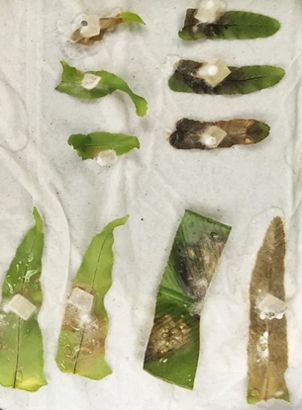
Want to see ferns under attack and how they respond to pathogens? Check out our latest paper!
doi.org/10.1186/s129...
Congrats on this huge team effort to @baptistebio.bsky.social @madeleinebaker.bsky.social @kellerjeanphd.bsky.social @maximebonhomme.bsky.social @pierremarcdelaux.bsky.social
doi.org/10.1186/s129...
Congrats on this huge team effort to @baptistebio.bsky.social @madeleinebaker.bsky.social @kellerjeanphd.bsky.social @maximebonhomme.bsky.social @pierremarcdelaux.bsky.social
October 9, 2025 at 3:47 PM
A first dive in fern x pathogen interaction! More to come!
Congratulations @baptistebio.bsky.social @jacquet-chris.bsky.social et al.!
Congratulations @baptistebio.bsky.social @jacquet-chris.bsky.social et al.!
Reposted by Baptiste Castel

Want to see ferns under attack and how they respond to pathogens? Check out our latest paper!
doi.org/10.1186/s129...
Congrats on this huge team effort to @baptistebio.bsky.social @madeleinebaker.bsky.social @kellerjeanphd.bsky.social @maximebonhomme.bsky.social @pierremarcdelaux.bsky.social
doi.org/10.1186/s129...
Congrats on this huge team effort to @baptistebio.bsky.social @madeleinebaker.bsky.social @kellerjeanphd.bsky.social @maximebonhomme.bsky.social @pierremarcdelaux.bsky.social
October 9, 2025 at 3:40 PM
Want to see ferns under attack and how they respond to pathogens? Check out our latest paper!
doi.org/10.1186/s129...
Congrats on this huge team effort to @baptistebio.bsky.social @madeleinebaker.bsky.social @kellerjeanphd.bsky.social @maximebonhomme.bsky.social @pierremarcdelaux.bsky.social
doi.org/10.1186/s129...
Congrats on this huge team effort to @baptistebio.bsky.social @madeleinebaker.bsky.social @kellerjeanphd.bsky.social @maximebonhomme.bsky.social @pierremarcdelaux.bsky.social
Reposted by Baptiste Castel
~12 years after we coined it EPP1 with @oswaldovaldesl.bsky.social one afternoon when we were postdoc with @jeanmichelane.bsky.social!
Congrats @melaniekrich.bsky.social @tatiana-vernie.bsky.social et al. for the hard work!
EPP1 is the fourth member of the Common Symbiosis Pathway 🍄🌱!
Congrats @melaniekrich.bsky.social @tatiana-vernie.bsky.social et al. for the hard work!
EPP1 is the fourth member of the Common Symbiosis Pathway 🍄🌱!

So happy to see the latest preprint of the team out! www.biorxiv.org/content/10.1...
The continuation of a long standing project started by @oswaldovaldesl.bsky.social in @jeanmichelane.bsky.social‘s lab. 1/7 🧵
The continuation of a long standing project started by @oswaldovaldesl.bsky.social in @jeanmichelane.bsky.social‘s lab. 1/7 🧵

EPP1 is an ancestral component of the plant Common Symbiosis Pathway
The success of plants on land has been enabled by mutualistic intracellular associations with microbes for 450 million years ([Delaux and Schornack 2021][1]). Because of their intracellular nature, th...
www.biorxiv.org
October 6, 2025 at 3:44 PM
~12 years after we coined it EPP1 with @oswaldovaldesl.bsky.social one afternoon when we were postdoc with @jeanmichelane.bsky.social!
Congrats @melaniekrich.bsky.social @tatiana-vernie.bsky.social et al. for the hard work!
EPP1 is the fourth member of the Common Symbiosis Pathway 🍄🌱!
Congrats @melaniekrich.bsky.social @tatiana-vernie.bsky.social et al. for the hard work!
EPP1 is the fourth member of the Common Symbiosis Pathway 🍄🌱!
www.biorxiv.org/content/10.1...
and
www.biorxiv.org/content/10.1...
Two papers to tell us more about mysterious EPP1, a protein required for symbiosis. Well done @tatiana-vernie.bsky.social and all co-authors.
and
www.biorxiv.org/content/10.1...
Two papers to tell us more about mysterious EPP1, a protein required for symbiosis. Well done @tatiana-vernie.bsky.social and all co-authors.

EPP1 is an ancestral component of the plant Common Symbiosis Pathway
The success of plants on land has been enabled by mutualistic intracellular associations with microbes for 450 million years ([Delaux and Schornack 2021][1]). Because of their intracellular nature, th...
www.biorxiv.org
October 6, 2025 at 1:01 PM
www.biorxiv.org/content/10.1...
and
www.biorxiv.org/content/10.1...
Two papers to tell us more about mysterious EPP1, a protein required for symbiosis. Well done @tatiana-vernie.bsky.social and all co-authors.
and
www.biorxiv.org/content/10.1...
Two papers to tell us more about mysterious EPP1, a protein required for symbiosis. Well done @tatiana-vernie.bsky.social and all co-authors.
Reposted by Baptiste Castel
...and three more fern genomes @molbioevol.bsky.social !
Not-so-static static lineages!
academic.oup.com/mbe/advance-...
Not-so-static static lineages!
academic.oup.com/mbe/advance-...

Resolving the stasis-dynamism paradox: Genome evolution in tree ferns
Abstract. The paradox of evolutionary stasis and dynamism—how morphologically static lineages persist through deep geological periods despite environmental
academic.oup.com
October 1, 2025 at 8:27 PM
...and three more fern genomes @molbioevol.bsky.social !
Not-so-static static lineages!
academic.oup.com/mbe/advance-...
Not-so-static static lineages!
academic.oup.com/mbe/advance-...
Reposted by Baptiste Castel
VACANCY - Independent research fellowships leading to tenured positions
We’re inviting applications from outstanding researchers who either hold, or wish to apply for, Independent Research Fellowships.
APPLICATION DEADLINE: 10 November 2025
Click here to apply: jic.link/Fellows
We’re inviting applications from outstanding researchers who either hold, or wish to apply for, Independent Research Fellowships.
APPLICATION DEADLINE: 10 November 2025
Click here to apply: jic.link/Fellows

October 3, 2025 at 3:11 PM
VACANCY - Independent research fellowships leading to tenured positions
We’re inviting applications from outstanding researchers who either hold, or wish to apply for, Independent Research Fellowships.
APPLICATION DEADLINE: 10 November 2025
Click here to apply: jic.link/Fellows
We’re inviting applications from outstanding researchers who either hold, or wish to apply for, Independent Research Fellowships.
APPLICATION DEADLINE: 10 November 2025
Click here to apply: jic.link/Fellows
www.cell.com/trends/ecolo...
Fun read today: Did figs and chilli peppers 'domesticated' humans?
Fun read today: Did figs and chilli peppers 'domesticated' humans?

Beyond mutualism: the nature of domesticator–domesticate interactions
The literature on domestication commonly calls the association between human domesticators
and their plant and animal domesticates mutualistic, yet this designation is rarely
examined critically. Here...
www.cell.com
October 5, 2025 at 7:41 AM
www.cell.com/trends/ecolo...
Fun read today: Did figs and chilli peppers 'domesticated' humans?
Fun read today: Did figs and chilli peppers 'domesticated' humans?
Reposted by Baptiste Castel
Our recent paper @newphyt.bsky.social @anajusagasti.bsky.social @instmolplantsci.bsky.social is featured today in the Sunday Post!
Thanks Sally McDonald for your piece helping to promote and communicate Scotland’s rich fossil heritage
nph.onlinelibrary.wiley.com/doi/10.1111/...
Thanks Sally McDonald for your piece helping to promote and communicate Scotland’s rich fossil heritage
nph.onlinelibrary.wiley.com/doi/10.1111/...

September 21, 2025 at 11:11 AM
Our recent paper @newphyt.bsky.social @anajusagasti.bsky.social @instmolplantsci.bsky.social is featured today in the Sunday Post!
Thanks Sally McDonald for your piece helping to promote and communicate Scotland’s rich fossil heritage
nph.onlinelibrary.wiley.com/doi/10.1111/...
Thanks Sally McDonald for your piece helping to promote and communicate Scotland’s rich fossil heritage
nph.onlinelibrary.wiley.com/doi/10.1111/...
Reposted by Baptiste Castel
Very happy to share our latest work “Systematic discovery and engineering of synthetic immune receptors in plants” out in @science.org !
www.science.org/doi/10.1126/...
www.science.org/doi/10.1126/...

Systematic discovery and engineering of synthetic immune receptors in plants
Plants deploy a diverse array of pattern recognition receptors (PRRs), which perceive microbe-associated molecular patterns to activate immune responses. Leucine-rich repeat receptor-like kinase subgr...
www.science.org
September 4, 2025 at 7:33 PM
Very happy to share our latest work “Systematic discovery and engineering of synthetic immune receptors in plants” out in @science.org !
www.science.org/doi/10.1126/...
www.science.org/doi/10.1126/...
Reposted by Baptiste Castel
Outstanding paper ! -> receptor-like cytoplasmic kinase AeRLCK2 mediates Nod-independent rhizobial symbiosis in Aeschynomene legumes | The Plant Cell | Oxford Academic

receptor-like cytoplasmic kinase AeRLCK2 mediates Nod-independent rhizobial symbiosis in Aeschynomene legumes
Many plants interact symbiotically with arbuscular mycorrhizal fungi to enhance inorganic phosphorus uptake, and legumes also develop a nodule symbiosis with rhizobia for nitrogen acquisition. The establishment and functioning of both symbioses rely on a common plant signaling pathway activated by structurally related Myc and Nod factors. Recently, a SPARK receptor-like kinase (RLK)/receptor-like cytoplasmic kinase (RLCK) complex was shown to be essential for arbuscular mycorrhiza formation in both monocot and dicot plants. Here, we show that in Aeschynomene legumes, the RLCK component of this receptor complex has undergone a gene duplication event and mediates a unique nodule symbiosis that is independent of rhizobial Nod factors. In Aeschynomene evenia, AeRLCK2 is crucial for nodule initiation but not for arbuscular mycorrhiza symbiosis. Additionally, AeRLCK2 physically interacts with and is phosphorylated by the cysteine-rich RLK, AeCRK, which is also required for nodulation. This finding uncovers an important molecular mechanism that controls the establishment of nodulation and is associated with Nod-independent symbiosis.
sco.lt
August 26, 2025 at 4:52 PM
Outstanding paper ! -> receptor-like cytoplasmic kinase AeRLCK2 mediates Nod-independent rhizobial symbiosis in Aeschynomene legumes | The Plant Cell | Oxford Academic